
Bagna cauda
A warm dip of garlic, anchovy and olive oil, often enriched with butter, that Piedmont serves over a flame with raw and cooked vegetables and bread.
 FermenteaWhere food goes to change
Traditional method
Tapenade · Tapenade Marseille · Tapenade marseillaise · Tapenade provençale
A Provençal olive spread built around olives and capers, with anchovy, garlic, lemon and olive oil in Marseille’s current recipe. Both coarse and finely worked versions are documented.
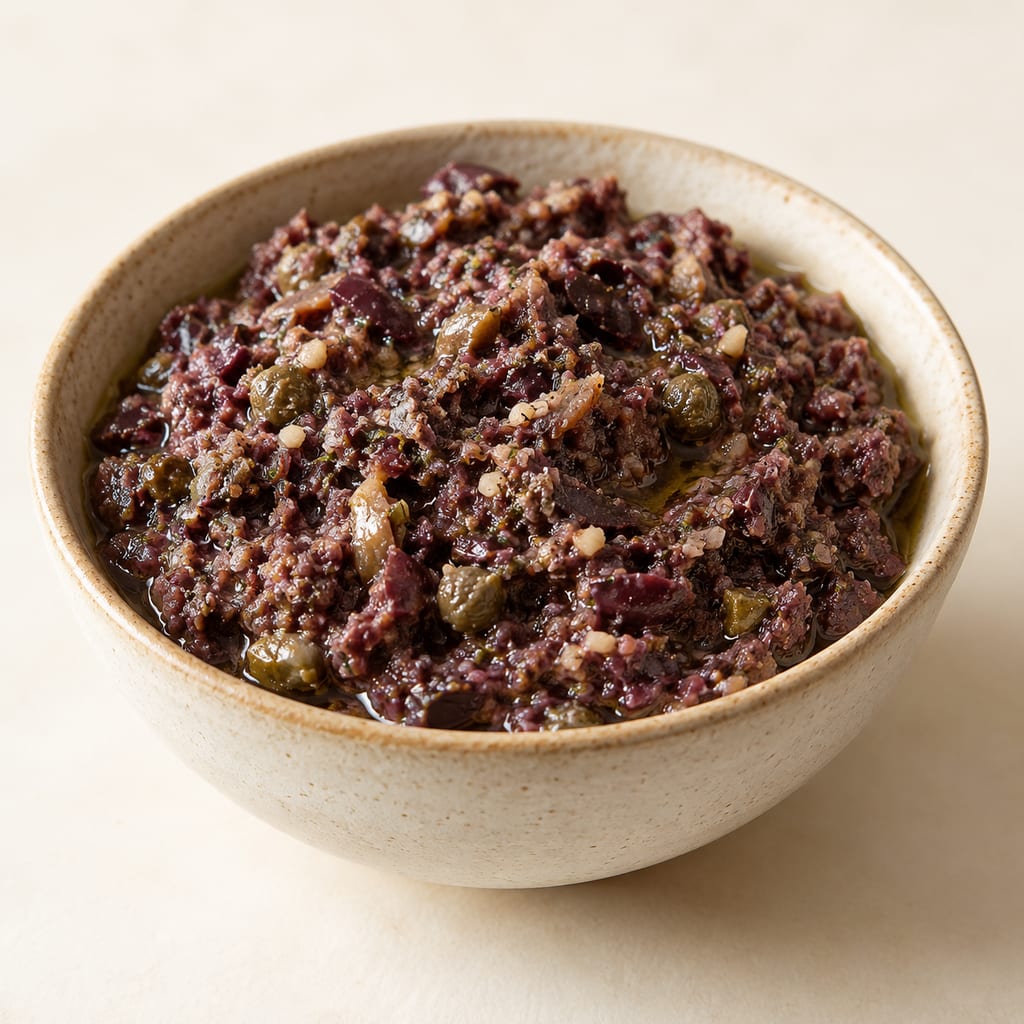
Tapenade is a Provençal olive paste whose name comes from the Provençal word tapeno, meaning caper. The Académie française records that derivation and defines the food as an olive paste that may also include capers, thyme, garlic, lemon or tuna. The Marseille Tourism recipe uses black olives, capers, anchovies, garlic, lemon and olive oil; the caper is not an incidental garnish but the ingredient that gives the preparation its name.
The finished spread can be worked to different textures. Marseille Tourism blends its version smooth and creamy after first chopping the ingredients; the regional research dossier recommends preserving some texture, while the nineteenth-century recipe reproduced from Reboul calls for crushing the ingredients very finely and passing them through a sieve. These are documented preferences, not a single rule. The defining idea is a concentrated olive-and-caper paste, not a mandatory appliance or a fixed degree of smoothness.
The named condiment has a documented modern history in Marseille. In his 1897 cookbook La Cuisinière provençale, Jean-Baptiste Reboul names Meynier, a cook at the Maison Dorée, as its inventor. Patrick Boulanger’s later history in the municipal Revue Marseille places Meynier at that restaurant and discusses the cookbook as the source of the attribution. The story is specific to the named tapenade; it does not mean that people around the Mediterranean had never pounded olives into sauces before the word became established.
A short English report about breakfast in Marseille from 1882, recounted in later etymological coverage, already uses the word tapenade and describes a spread of capers, anchovies and gherkins preserved in oil. The details do not match every later recipe, and the report is not a complete recipe. It shows that the name and the restaurant’s claim were in circulation by that date. Reboul’s 1897 account is more useful for the ingredient list and attribution; neither source proves that Meynier was the first person ever to prepare an olive paste.
That distinction helps keep culinary memory in proportion. Olive pastes have older Mediterranean cousins, but historians and food writers distinguish them from tapenade by the caper and by the later Marseille name. The Académie française places the word’s borrowing from Provençal in the twentieth century, while the older press report shows the food-name in English-language use by the 1880s. The named condiment’s origin story is well anchored in Marseille, while the broader practice of crushing olives is much older and less exclusive.
The Marseille Tourism formula gives a practical, measured version: 200 g pitted black olives, 2 tablespoons capers, 4 drained anchovy fillets in oil, a peeled garlic clove, 2 tablespoons fresh lemon juice and 3 tablespoons extra-virgin olive oil. Ground black pepper is optional. The page does not name an olive cultivar, specify the olives’ curing style, or give a batch yield, so those details should not be guessed.
Pulse the olives, capers, anchovies and garlic until coarsely chopped before adding lemon juice and oil. A second blend combines the ingredients into a smoother spread. Chopping first lets the cook stop at a coarse consistency if desired; continuing the blend produces the creamy texture on the tourism page. There is no fermentation stage: the flavor comes from the cured olives, brined capers, preserved anchovies, fresh garlic and lemon, then the mixture rests cold so the flavors mingle.
After seasoning, place the spread in an airtight container and refrigerate it for at least an hour. The cited recipe then briefly brings it toward room temperature for serving. This rest is not aging or fermentation; it is a short chilling step that allows the ingredients’ salty, acidic and aromatic notes to settle together.
Black olives provide the bulk, color and fruitiness. Their curing method and natural salt level vary, and the Marseille source does not specify one style, so the exact balance can shift with the olives chosen. Capers add a sharper briny note and connect the recipe to its name. Their salt and acidity matter when adjusting seasoning; the recipe includes no added salt.
Anchovies deepen the savory character and contribute salt. Their preservation in oil or salt is already part of their ingredient history; this recipe does not culture or cook them. Garlic adds a fresh allium edge, while lemon juice lifts the rich, salty paste with acidity. Extra-virgin olive oil binds the chopped ingredients and softens the texture, though the recipe uses a modest amount rather than turning the spread into a loose dressing.
Because several ingredients are cured or brined, taste before adding pepper or any other seasoning. An especially salty olive or caper can shift the balance. The recipe’s optional black pepper adds heat and aroma but is not required to make the recognizable olive-caper base. Changes such as omitting anchovy, replacing lemon with vinegar or using green olives can still make a good spread, but they produce a different version rather than an exact copy of this Marseille formula.
The recipe reproduced from Reboul is richer and more laborious than the current tourism version. It combines equal weights of black olives and capers with anchovy and marinated tuna, then adds mustard, olive oil, cognac or brandy, pepper and aromatic herbs. The ingredients are crushed in a mortar, sieved, and worked with oil and spirit added gradually. Reboul’s version uses a different balance and a different sequence from the modern six-ingredient recipe; the two should be read as distinct historical and current formulations, not blended.
Tuna appears in Reboul’s account and in historical descriptions of tapenade, but it is absent from Marseille Tourism’s contemporary recipe. Some modern cooks omit tuna and spirit for simplicity. The historical source itself notes that simplified versions were acceptable even in its later reprint. That flexibility reflects a household condiment shaped by ingredients and available time, while the exact named source recipe remains useful for understanding one period’s formal version.
Green tapenade is another later branch, made with green olives and often a changed seasoning balance. Le Monde’s 1999 account describes green as a relatively recent commercial and culinary expansion compared with black tapenade. The color is not merely decorative: green olives differ from fully mature black olives in ripeness and flavor. A green version can be discussed as tapenade, but its taste and appearance should not be folded into the black-olive recipe above.
The mortar-and-sieve method in Reboul’s recipe produces a very fine paste and requires physical effort. It also gives the cook control over when to add oil and cognac, gradually incorporating them after the olives, capers, anchovies and tuna are crushed. This method suits the older formula’s richer ingredients and texture. A blender or food processor is faster and is the appliance named by Marseille Tourism; pulsing early prevents the mixture from becoming smooth before the cook has checked its texture.
The recipe’s stages are simple but each serves a purpose. Coarse chopping breaks down the firm ingredients without immediately releasing all their oil. Adding lemon and olive oil afterward helps them combine. Chilling for an hour is a flavor-resting step and helps the mixture hold together; it does not substitute for safe refrigeration. Bringing only the serving portion briefly toward room temperature makes it easier to spread without leaving the whole container warm.
Salt is not added in the Marseille recipe because olives, capers and anchovies already bring salt from their curing or brining. If the mixture tastes too salty, more oil or lemon may change the balance, but the evidence here does not establish a universal correction ratio. Adjust in small amounts and keep the named ingredients recognizable.
Marseille Tourism frames tapenade as an aperitif accompaniment rather than a main dish. It suggests toast, crackers and raw vegetable sticks, and also lists crostini, cheeses and salads. The spread’s concentrated salt and olive flavor means a small amount can season a plain base; it is more at home as a smear or dip than as a thick layer on every bite.
The National Gallery of Art’s French culinary teaching material offers other examples: serve tapenade at room temperature on bread, or use it as stuffing for zucchini or seeded tomatoes. The older recipe reproduced from Reboul suggests toast and a summer aperitif with chilled rosé, and even pairing it with barbecued lamb chops. These uses show how the same paste can work as a snack, a filling or a seasoning, depending on the amount and the other ingredients.
The Marseille recipe pairs naturally with vegetables, bread and mild cheeses because their textures and flavors give the salty paste somewhere to sit. When used in a salad or sauce, it can contribute much of the salt and oil on its own; taste before adding more dressing. These are serving suggestions rather than a claim that every Provençal household uses the same pairings.
A coarse tapenade shows visible olive pieces and gives more bite; a long blend makes a smoother, more uniform paste. Neither texture alone proves whether a version is traditional. The Marseille Tourism recipe blends to a smooth finish, while the regional dossier recommends keeping some texture and Reboul’s recipe uses a sieve for a fine historical paste. A cook can select a texture to suit toast, vegetable crudités or stuffing without changing the core identity.
The balance depends on the starting ingredients. Salty capers or anchovies can dominate; a mild olive may require a larger share of caper or lemon to remain vivid. Garlic strength varies with the clove, and lemon juice changes sharpness as well as freshness. These are ordinary ingredient differences, not signs that the food has fermented or gone wrong.
If a green version is made, expect a different olive character from the black-olive recipe. The green tapenade documented in modern sources is a genuine variation, not simply a color correction. Keep its ingredients and proportions in their own recipe if they are materially different, and use this Marseille black-olive formula as the reference point rather than silently swapping ingredients.
Marseille Tourism advises keeping tapenade in an airtight container in the refrigerator for several days. It suggests an olive-oil layer over the surface to limit air exposure and oxidation. That layer is a surface treatment, not a room-temperature preservation method. The recipe does not provide a tested shelf life, pH value, heat process or canning instruction, so do not convert its brief refrigerator guidance into a longer storage claim.
This version contains anchovies, a fish ingredient; check the anchovy packaging for any additional allergens or cross-contact information. Caper, olive and anchovy products vary by brand and preserve method, so read their labels if salt, fish or other listed ingredients matter to the cook or guests.
Tapenade is ready to eat once mixed and chilled. It is not a fermented product and has no microbial fermentation stage. Its savory intensity comes from cured ingredients and their combination, not from a culture developing during the one-hour refrigerator rest.
The name is Provençal in origin. Marseille historical accounts trace the named condiment to the late nineteenth century: Jean-Baptiste Reboul's 1897 cookbook attributes its invention to Meynier of the Maison Dorée, and an 1882 English report already describes a Marseille tapenade. These sources support a modern documented history, not an ancient origin.
Scaling: source batch only
The recipe contains anchovy. Fish is a major food allergen; people with fish allergy need to avoid it.
Hazard sourceThis ready-to-eat spread contains fish and is stored chilled; leaving perishable food warm can allow foodborne hazards to grow.
Hazard sourceKeep the spread refrigerated at 4°C or below and return the container to refrigeration promptly after serving.
Control sourceName anchovy clearly when serving and do not serve this version to anyone who must avoid fish.
Control sourceThis version contains anchovy, a fish allergen.
The recipe source says to refrigerate for several days but gives no validated shelf life for this homemade preparation. Do not infer a longer storage period or room-temperature stability from an oil layer.
Marseille is the documented setting for the named style and recipe; this does not claim exclusive production or a single universal formula.
A warm dip of garlic, anchovy and olive oil, often enriched with butter, that Piedmont serves over a flame with raw and cooked vegetables and bread.

Bechamel is a white sauce of milk thickened with a butter and flour roux, one of the French mother sauces, and the base from which Mornay and other cheese and cream sauces are made.
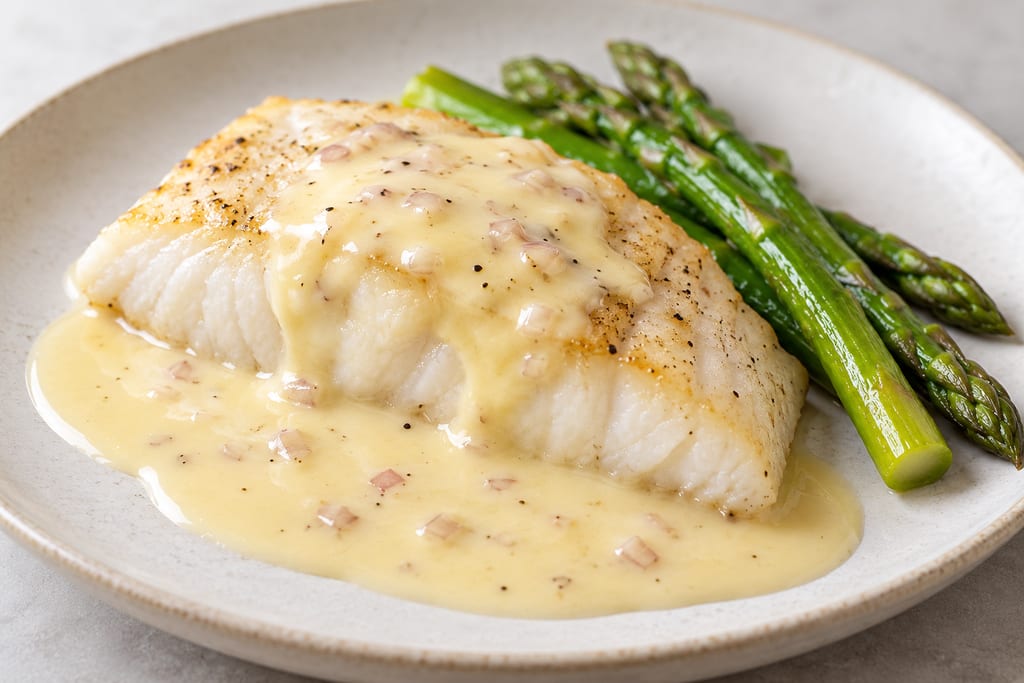
Beurre blanc is a warm emulsion of cold butter whisked into a reduction of white wine, vinegar or lemon juice and shallot, a sauce from the Loire Valley and its red-wine version, beurre rouge.

A thin, pourable custard sauce of egg yolks, sugar and hot milk or cream, cooked gently until it coats a spoon and no further.
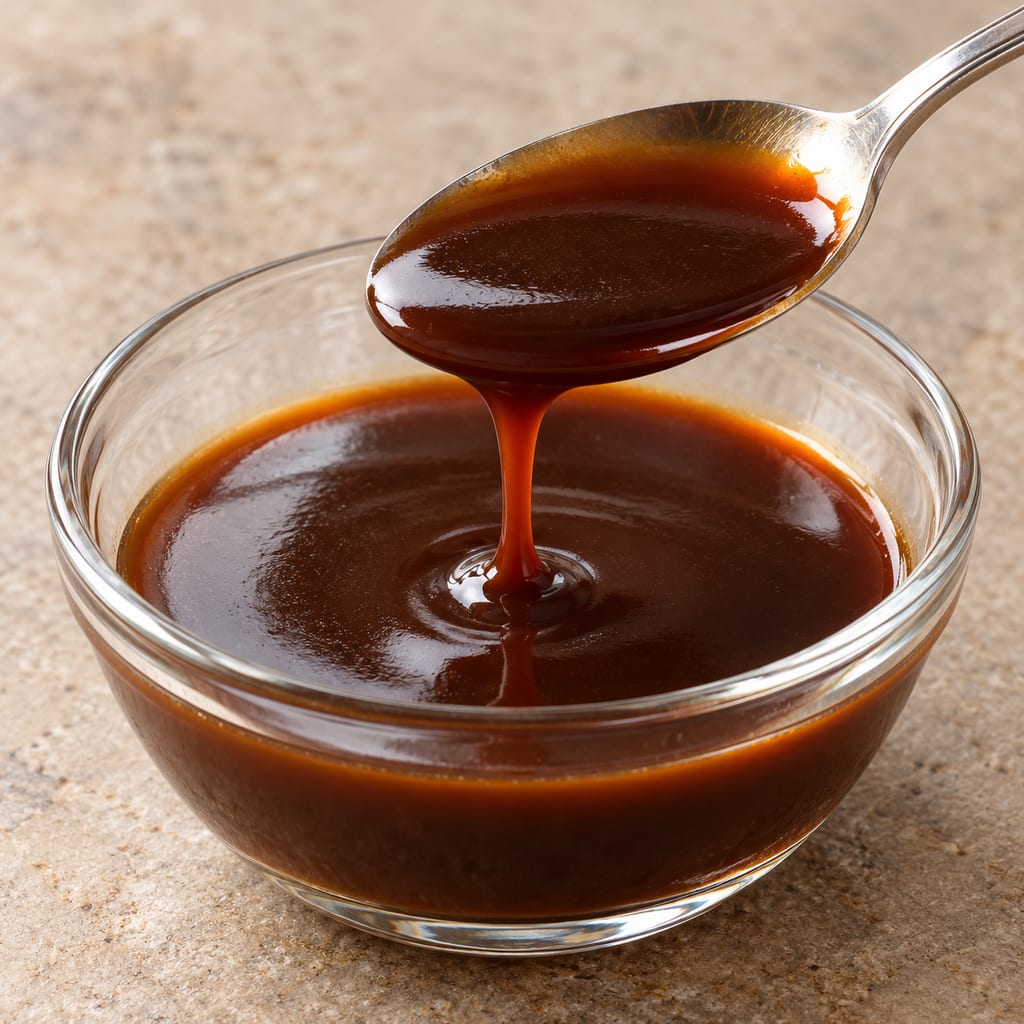
Demi-glace is a rich brown sauce of French cookery, classically made by reducing equal parts espagnole sauce and brown stock by half. It is used on its own or as a base for other sauces.
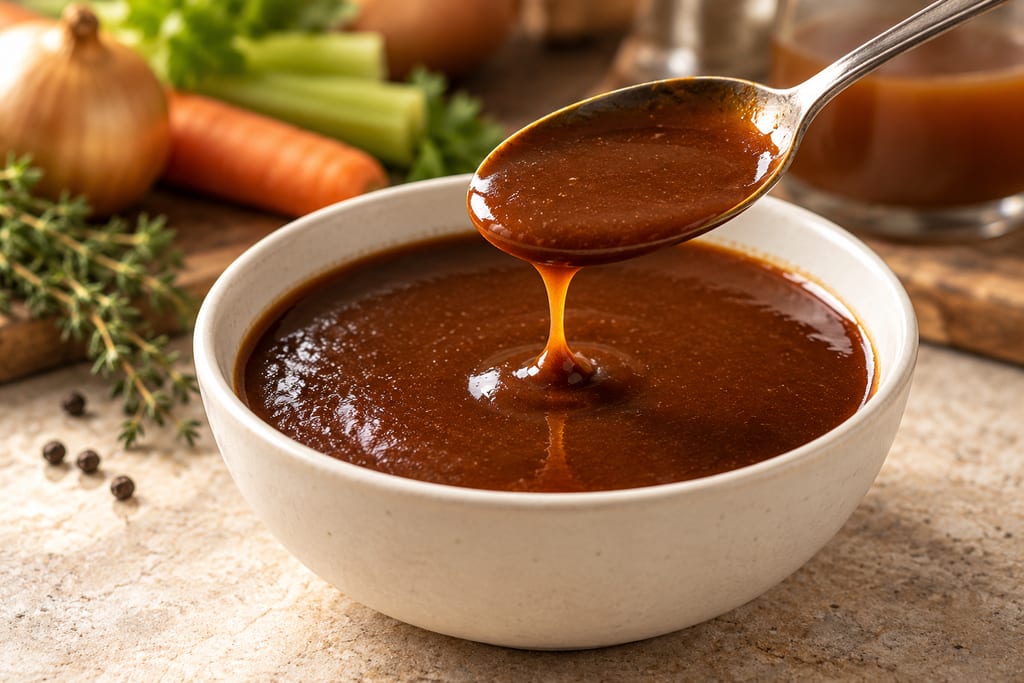
Espagnole is a brown mother sauce built on a dark roux, brown veal or beef stock and tomato, the base from which demi-glace and many brown sauces are made.
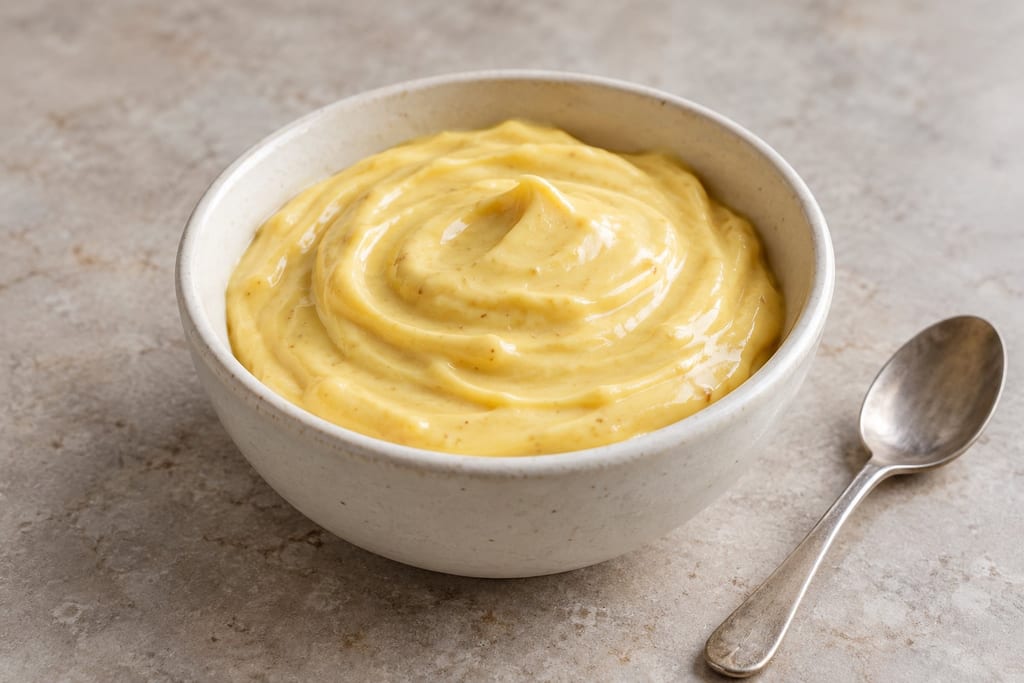
An untested home mayonnaise development formula with more Dijon mustard and no added sugar. A current French-market Dijon mayonnaise informs its flavor direction; this is not that product’s formula.
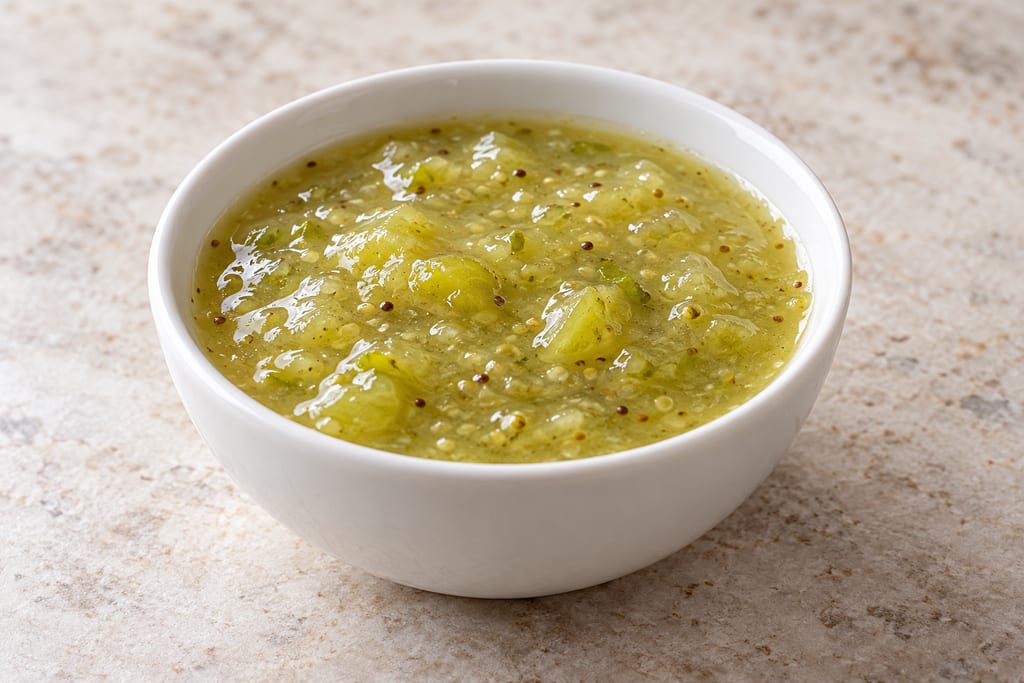
Gooseberry sauce is a soft, tart sauce of cooked green gooseberries, sharpened with wine or vinegar and lightly sweetened, traditionally served with mackerel.
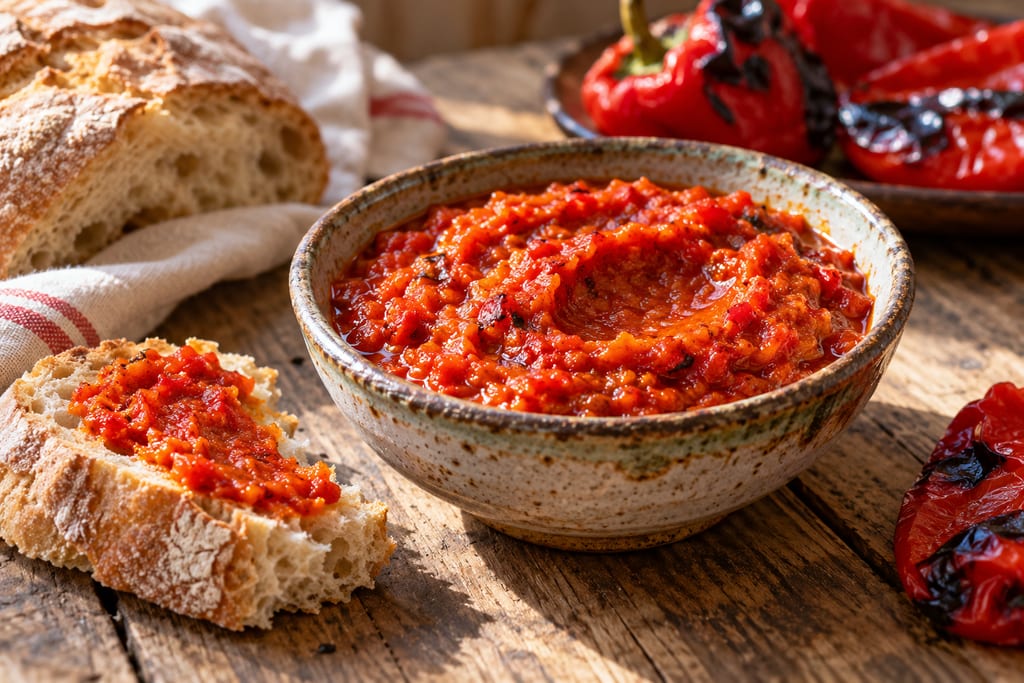
Ajvar is a cooked Balkan pepper preserve built around roasted red peppers, peeled, drained, ground and slowly fried with oil and seasoning. Leskovac’s protected version is a pepper specialty; regional versions vary.
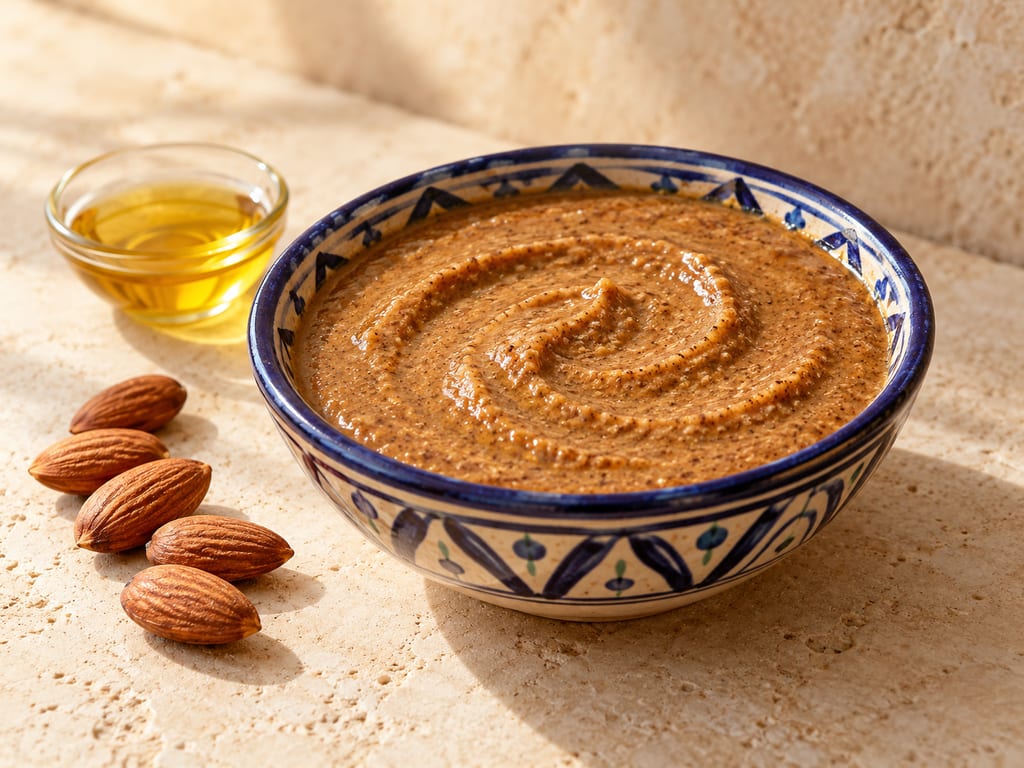
Amlou is a nutty, lightly sweet Moroccan spread of roasted almonds, culinary argan oil and honey. The almonds are ground first, then loosened with oil and sweetened; the balance can range from a thick spread to a dip.
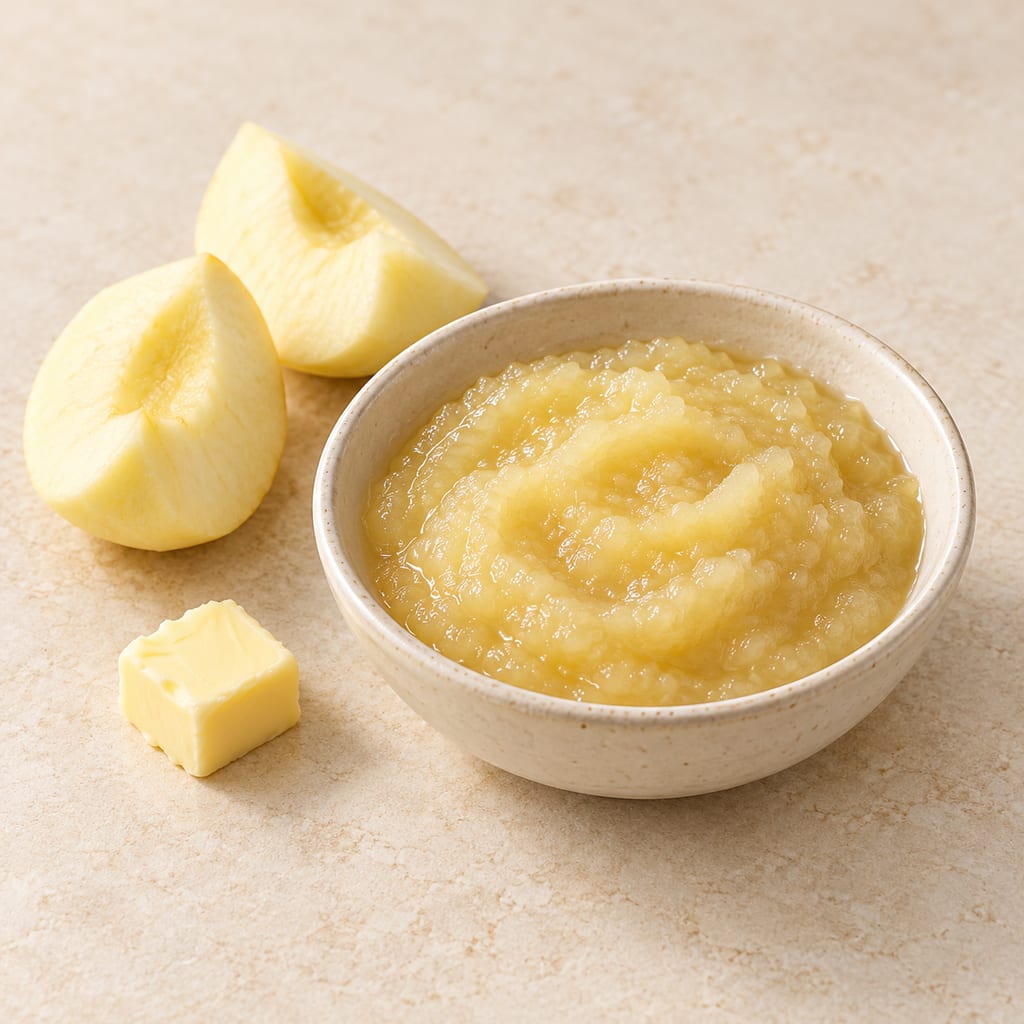
Apple sauce for goose and pork is a plain English accompaniment: cooked apples pulped with water, then sweetened with sugar and finished with a little butter.
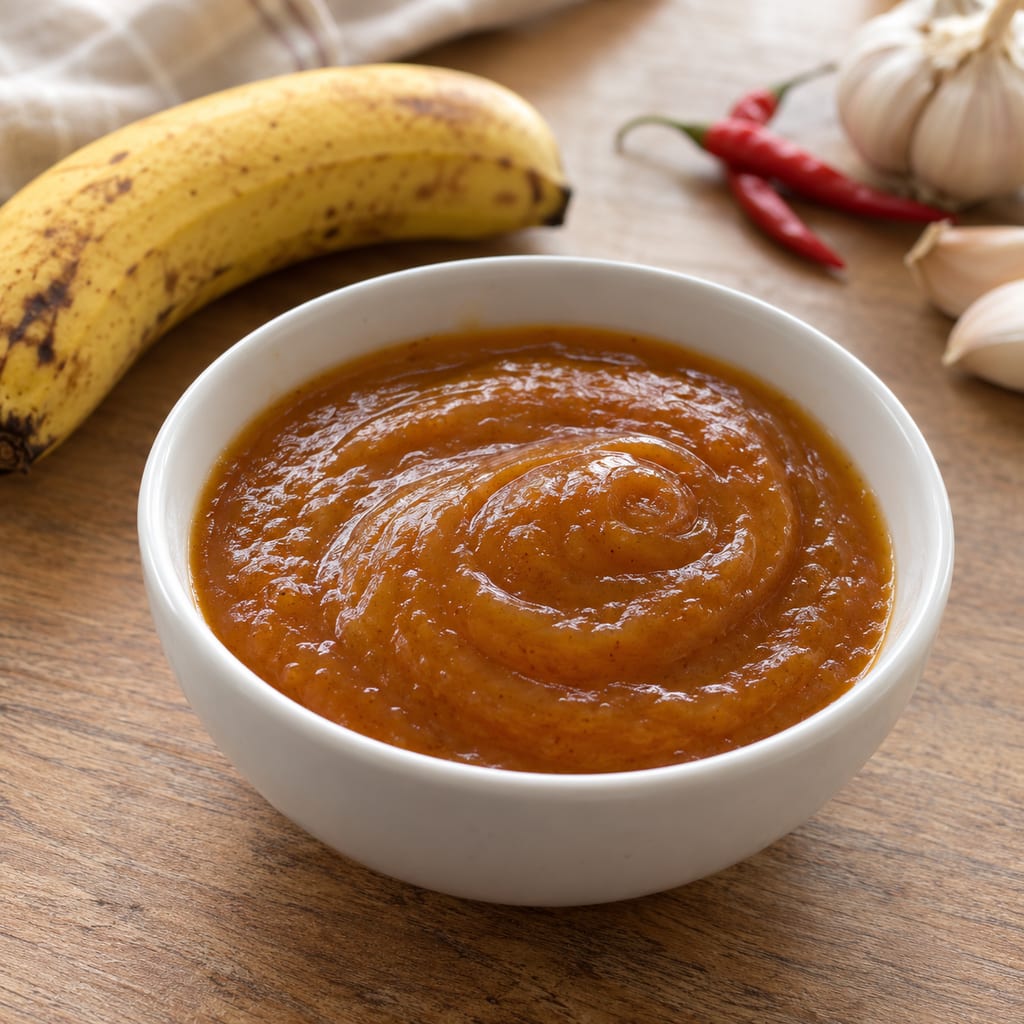
A sweet-hot table sauce of ripe banana simmered with vinegar, sugar, onion, garlic and fresh chilli, in the manner of Philippine banana ketchup. An untested development batch of about 500 g.
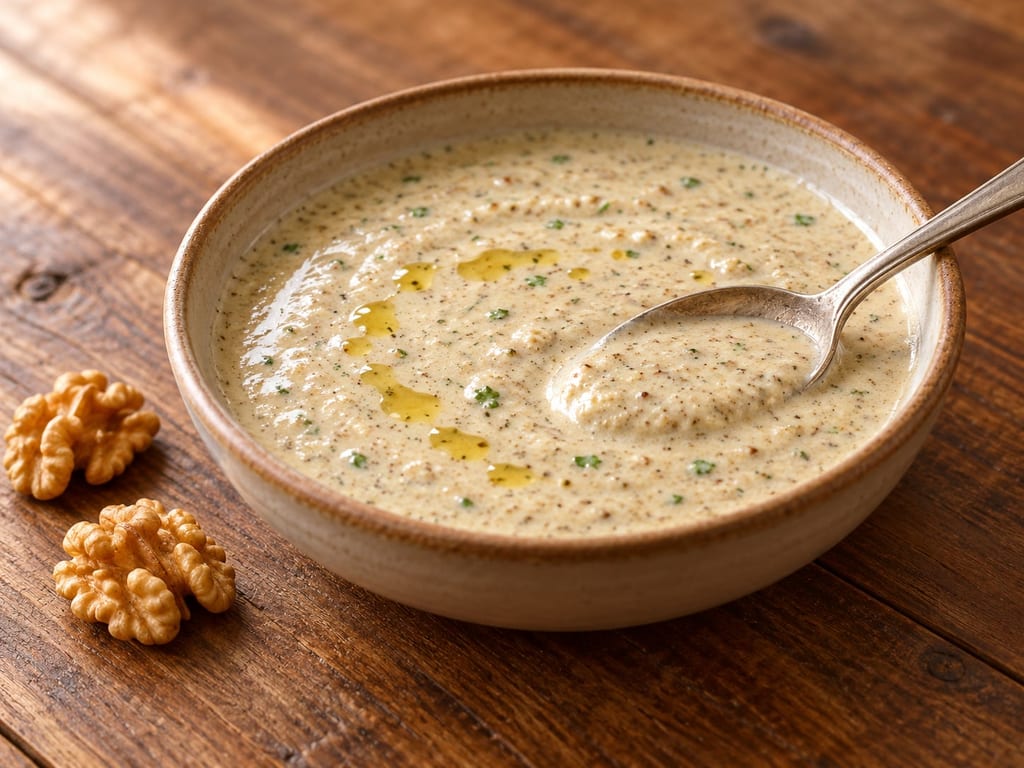
A Georgian walnut sauce of ground walnuts, garlic, vinegar and spices, thinned with water or broth. It is served with poultry, vegetables and bread, and is the sauce of the dish satsivi.
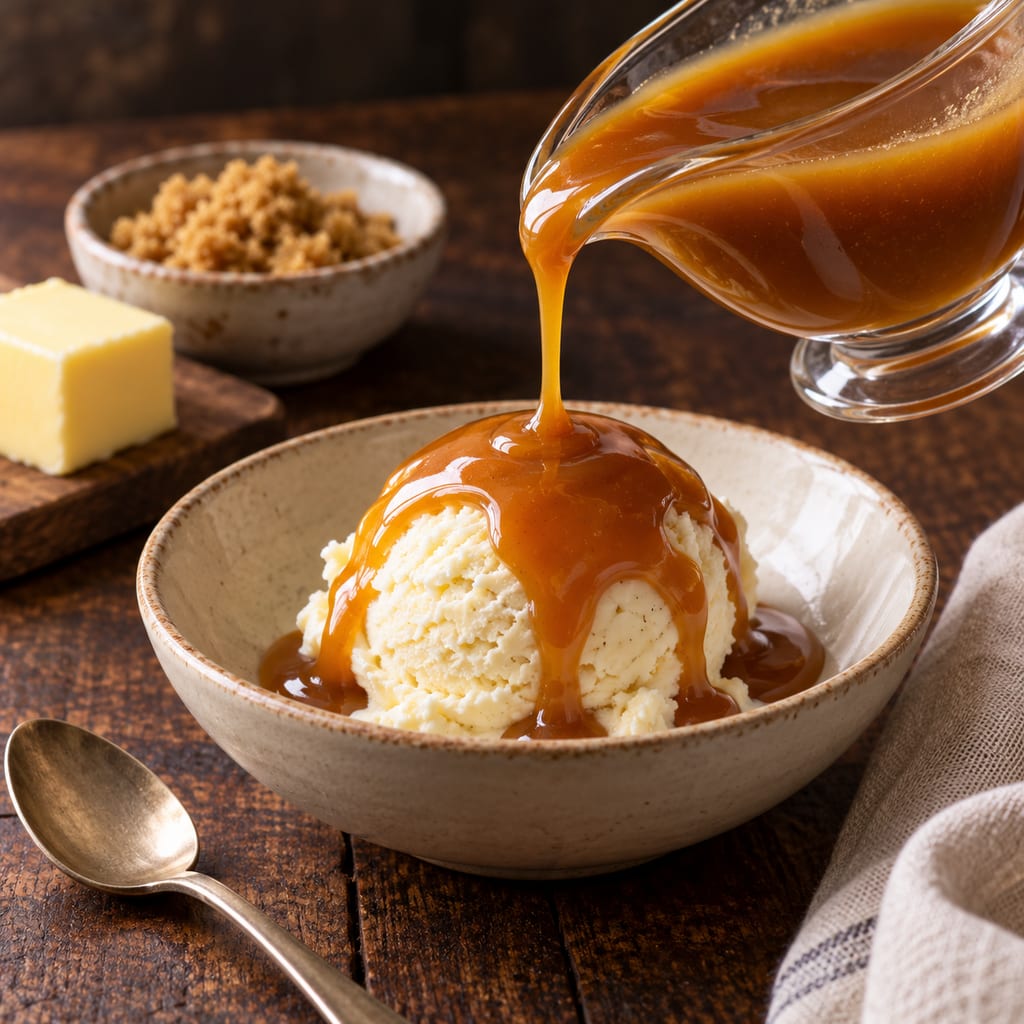
A pourable dessert sauce of brown sugar, butter and cream, with a little corn syrup and salt. It is the sauce form of the butterscotch confection and is made without water, unlike caramel.
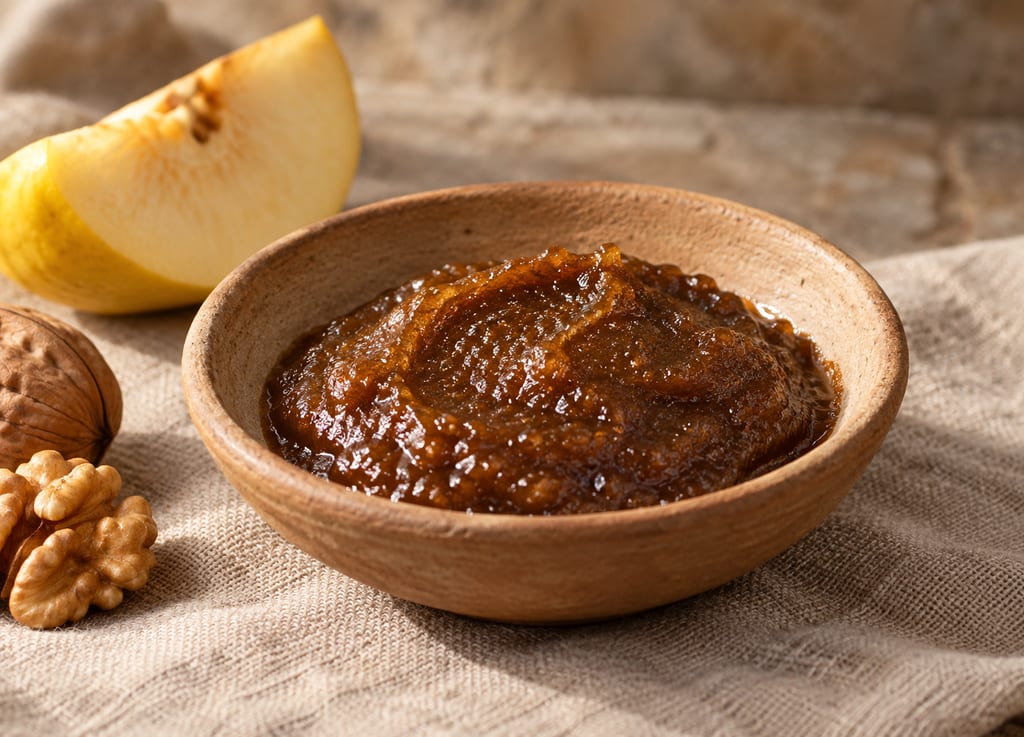
Byzantine murrī is a cooked imitation of murrī from the medieval Arabic repertoire, made from scorched honey, toasted bread, walnuts, quince, carob and spices rather than from a long grain fermentation.
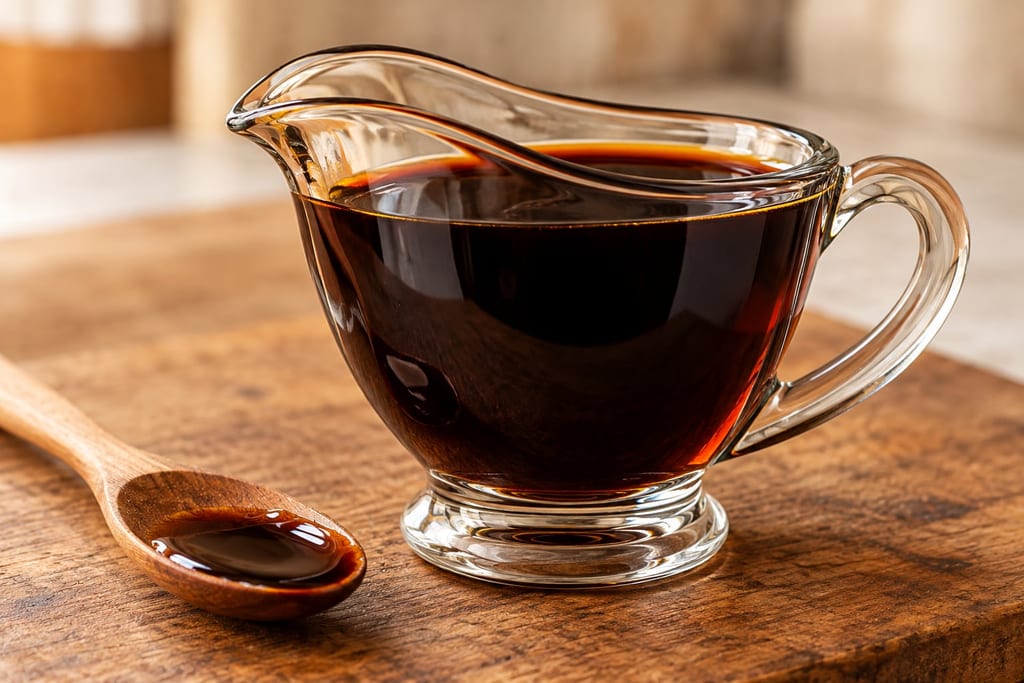
Caribbean browning is a dark liquid of deeply caramelised sugar, used in small amounts for colour and a smoky, bitter-sweet flavour in stews and black cake.

A Cap-Pelé boucanière is an Acadian herring-smoking building. The documented Willie Niles example is a one-storey wood-frame structure with a ridge smoke vent and interior bays for hanging fish-bearing cannes.

Achcharu is a family of Sri Lankan vinegar pickles made with mixed vegetables or seasonal fruit and a piquant spice dressing. This version is a quick, refrigerated, non-fermented mixed-vegetable pickle.

The acocote is a long, hollowed and dried gourd used to draw aguamiel from a mature maguey. It is a harvesting tool: the sap is transferred to a separate vessel before it ferments into pulque.

Adrak murabba preserves young ginger in sugar syrup, a sweet South Asian preparation recorded in Indian cookery and food-processing sources.

Parkia biglobosa seeds are fermented into regional West African seasonings, including nététou, iru, dawadawa and soumbala. The yellow fruit pulp is a separate food, and names and methods vary by place.

Japanese reddish-brown vinegar from sake lees matured about three years, turned to vinegar by acetic bacteria; the vinegar of Handa and Edomae sushi rice.

A refined common-wheat flour blended for a broad range of baking; its protein and behavior vary with wheat, milling and market.

The almond mushroom, Agaricus subrufescens, was cultivated in eastern North America in the 1800s, lost its market, and returned as a cultivated mushroom from Brazil, where it is grown under several names.
No community contributions have been published for this entry yet.
Sign in to contribute. Published comments and photos are free to read.
Marseille TourismRecipe · Ingredients · Method · Serving · Storage
TapenadeProvides the exact 200 g olive recipe, ingredient quantities, blender method, one-hour refrigerated rest and serving suggestions.
Calls it a traditional Provençal recipe and gives refrigeration guidance for several days.
Cited in: What makes it tapenade; The Marseille recipe in the kitchen; Why the ingredients work together; From mortar to processor; Serving and culinary role; Reading the result; Storage and practical limits
Ville de Marseille, Revue Marseille no. 221History · Geography · Ingredients
La tapenade de Marseille: Meynier et ReboulPatrick Boulanger's article discusses Marseille's named preparation, Meynier at the Maison Dorée and Jean-Baptiste Reboul's 1897 cookbook attribution.
Cited in: A Marseille story with a late nineteenth-century record
INRIA, using Jean-Baptiste Reboul's 1897 cookbookHistorical recipe · Method · Variation · Serving
The real Tapenade: a recipe drawn from La Cuisinière ProvençaleReproduces a historical recipe with black olives, capers, anchovy, tuna, mustard, oil, cognac and spices; uses a mortar, sieve and slow incorporation of oil.
Cited in: What makes it tapenade; A Marseille story with a late nineteenth-century record; The Marseille recipe in the kitchen; Why the ingredients work together; Meynier’s older formula and later adaptations; From mortar to processor; Serving and culinary role; Storage and practical limits
Académie françaiseEtymology · Identity · Variation
Tapenade, Dictionnaire de l’Académie française, 9e éditionGives the Provençal derivation from tapeno, caper, and describes tapenade as a Provençal olive paste with optional additions.
Cited in: What makes it tapenade; A Marseille story with a late nineteenth-century record; Meynier’s older formula and later adaptations
Le MondeHistory · Variation · Uses
La tapenadeReports the Reboul attribution, historical ingredients and later growth of green olive tapenade as a distinct modern variation.
Cited in: A Marseille story with a late nineteenth-century record; Meynier’s older formula and later adaptations; Reading the result
National Gallery of ArtDocumented variation · Serving · Method
Picturing France 1830–1900: GastronomieProvides another black-olive version with capers, anchovies, garlic, herbs and olive oil and describes serving it on bread or as a stuffing.
Cited in: Why the ingredients work together; Serving and culinary role; Reading the result
U.S. Food and Drug AdministrationAllergen safety
What is a “major food allergen”?Identifies fish as a major food allergen.
FoodSafety.govStorage safety
4 Steps to Food SafetyRecommends keeping refrigerators at 4°C or below and refrigerating perishable food within 2 hours, or within 1 hour above 32°C.