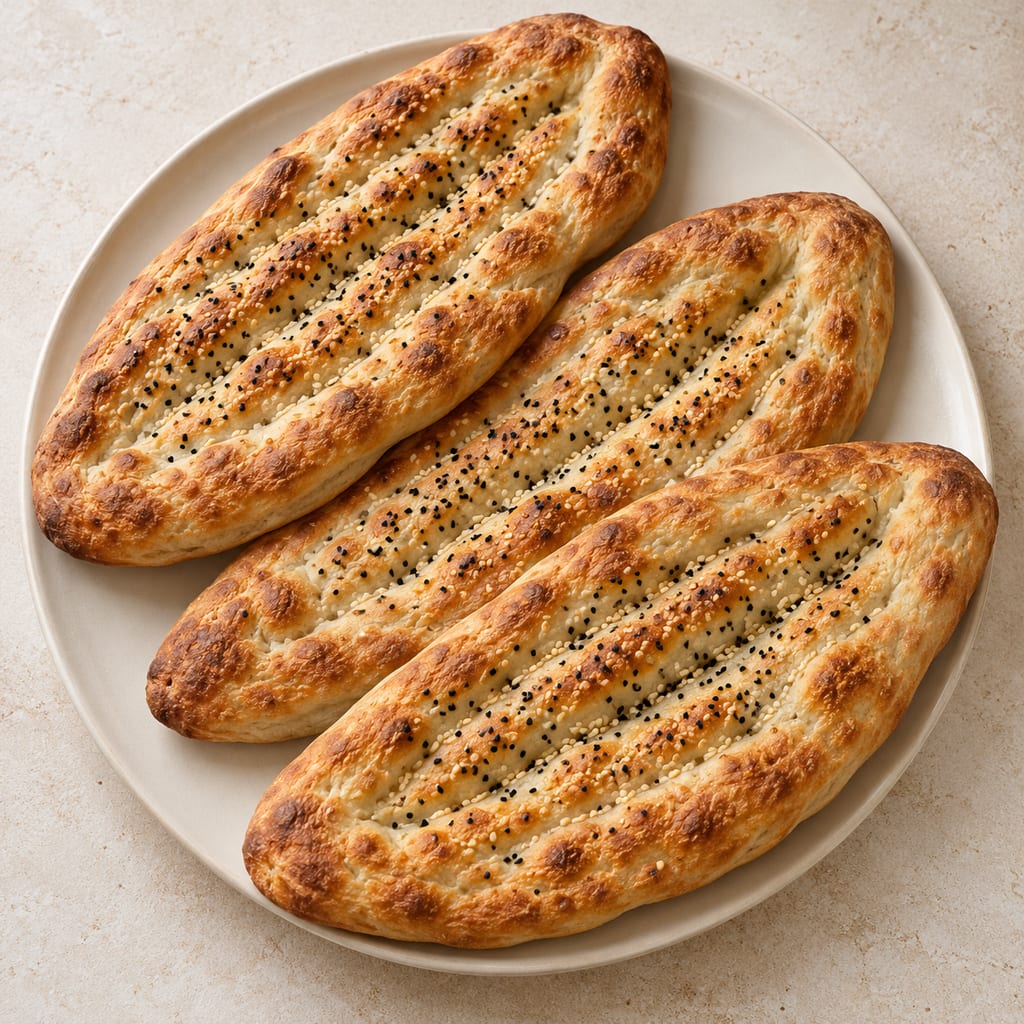
Afghan naan
A long oval Afghan wheat bread, leavened with yeast, grooved along its length and baked until crisp outside and chewy within.
 FermenteaWhere food goes to change
Traditional method
Gosh-naan is a Uyghur meat-filled bread in one family recipe: lamb, onion and cumin are sealed in yeast dough, pan-cooked, and checked at a safe centre temperature.
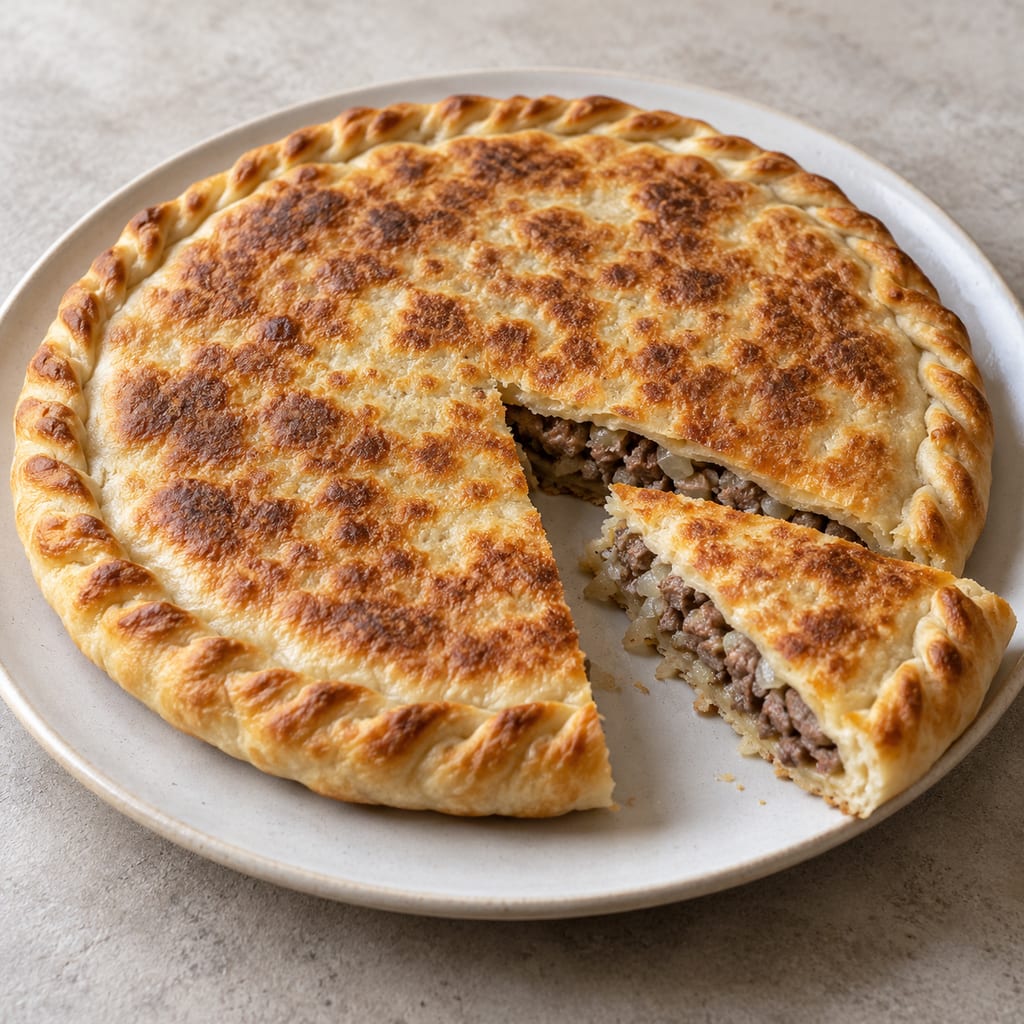
Aliya’s account of gosh-naan is a family recipe credited to her grandmother. It makes two round breads from yeast dough filled with small pieces of lamb, white onion, cumin, salt, black pepper and olive oil. The dough is divided into four pieces; each bread uses one thin round for its base and another for its top, sealed around the filling.
The account describes a long dough rise, a short rest after dividing, and skillet cooking under a lid. The author serves the bread in wedges and pairs it with milk tea and salads. This is one documented family version, not a claim that all Uyghur gosh-naan uses this exact filling, dough or pan method. The source does not establish a dated origin.
The lamb is cut into small pieces, but the recipe does not identify which cut to buy. It gives a pan time and a golden-colour cue without a measured filling endpoint. Those cues describe the source method; they cannot confirm that meat inside the sealed bread has reached a safe temperature.
The Food Standards Agency says the middle of food should reach 70°C for 2 minutes, or one of its listed alternative time-temperature combinations, checked with a clean food thermometer. This recipe uses that general centre-of-food target because the source does not specify the lamb cut. Probe a large piece of lamb near the centre of each bread through its edge. If the filling has not reached the target, continue cooking over low heat and check again. Do not rely on time, colour, smell or taste.
Keep the raw lamb separate from ready-to-eat food and wash hands and utensils after handling it. The source cooks with oil under a lid and warns of steam and splatter when opening the skillet, so keep hands and face clear and lift the lid carefully.
This is one modernly documented family version. The author credits her grandmother and describes Uyghur family practice; this supports the attributed account but does not establish a dated origin or universal recipe.
Yield 2 breads · Scaling: source batch only
The bread encloses raw lamb pieces; the source gives approximate pan times and browning cues but no internal-temperature endpoint.
Hazard sourceRaw filling is handled and sealed into dough before cooking.
Hazard sourceThe source cooks the bread in oil under a lid and warns that escaping steam or splatter may burn.
Hazard sourceUse a clean food thermometer to check the centre of the filling. Cook the middle of each bread to 70°C (158°F) for 2 minutes; if it has not reached this combination, continue over low heat and check again.
Control sourceKeep raw lamb and its utensils separate from ready-to-eat food; wash hands and equipment after handling the filling.
Control sourceUse oven mitts or other heat protection, and lift the lid away from the face and hands.
Control sourceThe source reports about 8 minutes per side but gives no temperature endpoint; cooking time and browning alone do not establish safety.
The source does not specify the lamb cut or a storage duration. It recommends serving the breads immediately.
Opening the covered skillet can release steam and oil splatter.
The source is an Uyghur author's family account. It does not identify a more precise place of origin.
A long oval Afghan wheat bread, leavened with yeast, grooved along its length and baked until crisp outside and chewy within.
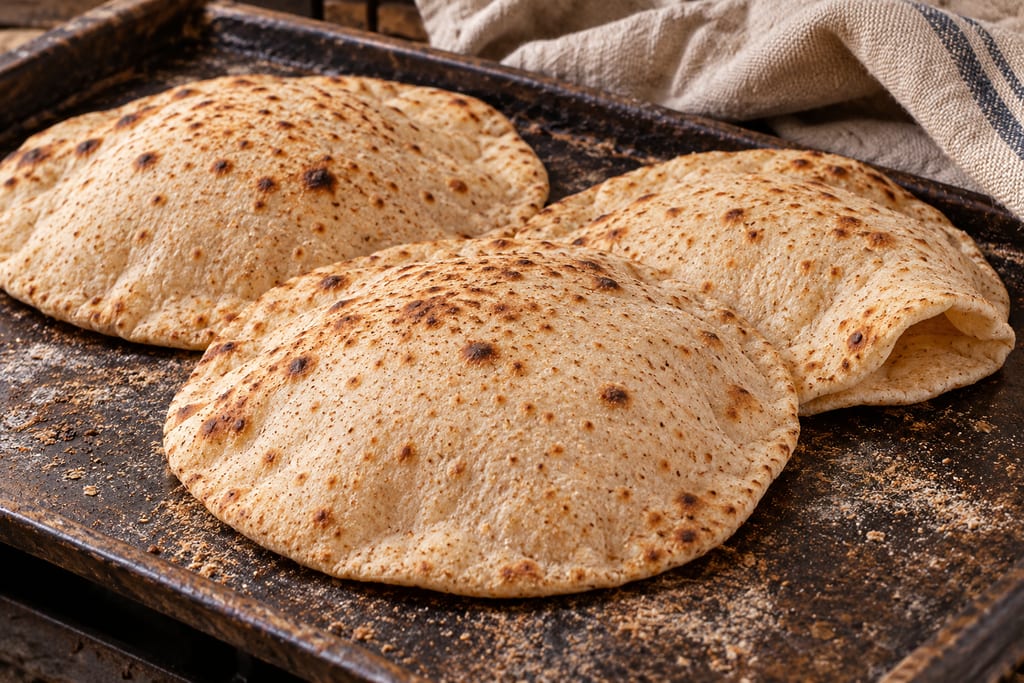
This home adaptation of Egyptian aish baladi uses a refrigerated yeast biga, whole-wheat dough, bran dusting and a very hot baking surface to make 16 pocketed rounds.
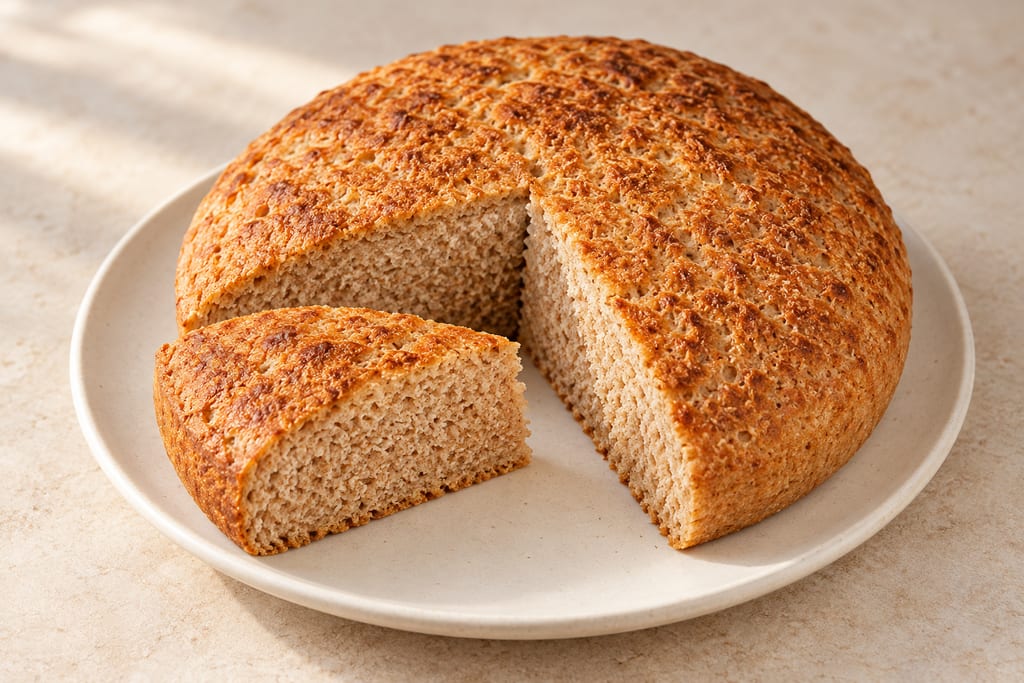
This oven-baked Amdo balep uses yeast, whole-wheat and white flour, a long covered rise and a two-sided bake in a heavy oven-safe pot.
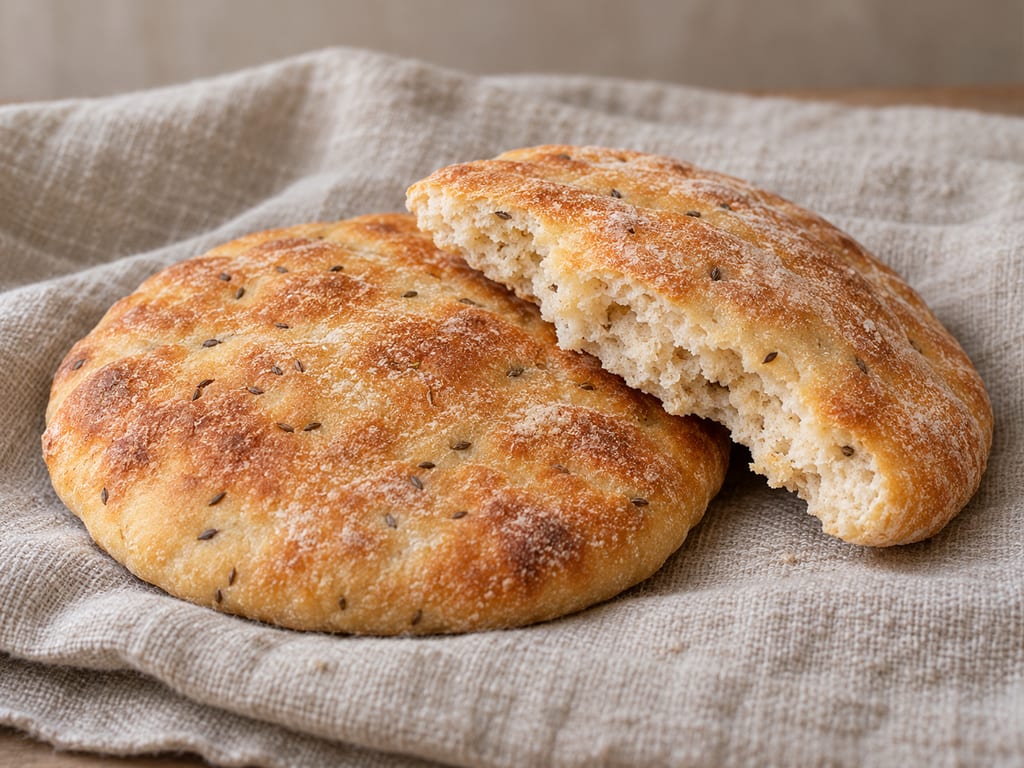
A measured, yeast-raised Ayacucho chapla home method shared by Thermomix Peru presenter Roxanna Salaverry. It makes thin, anise-scented rounds baked at 240°C; the historic qunchu-leavened form is documented separately.
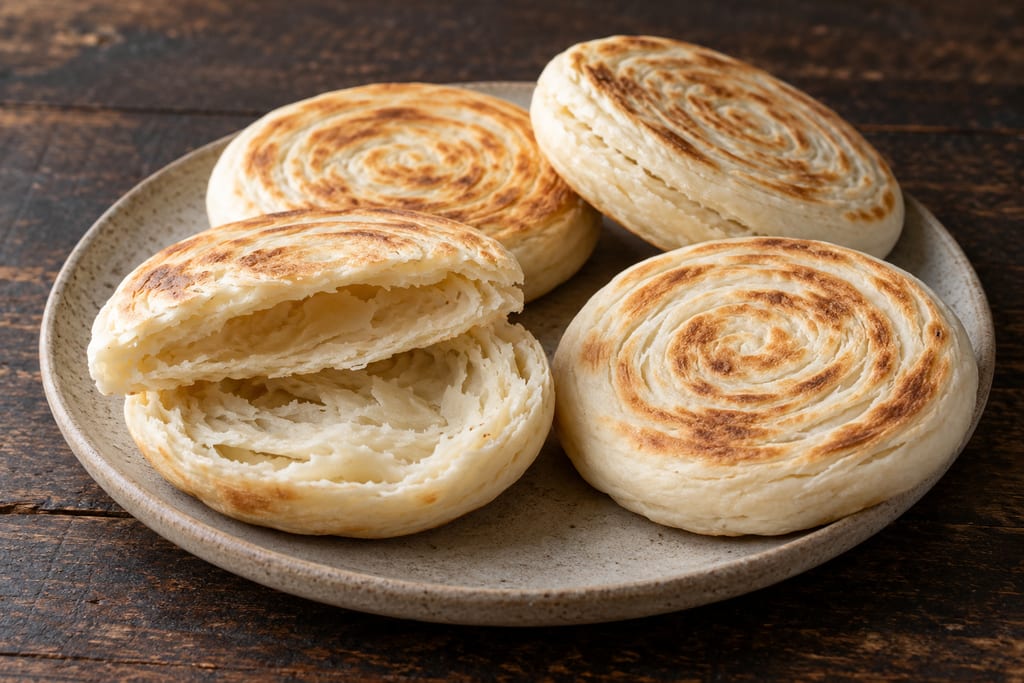
This Shaanxi-associated yeast flatbread uses a simple water dough, coiled shaping and a skillet bake. It is the bread used in roujiamo, not the filled meat dish.
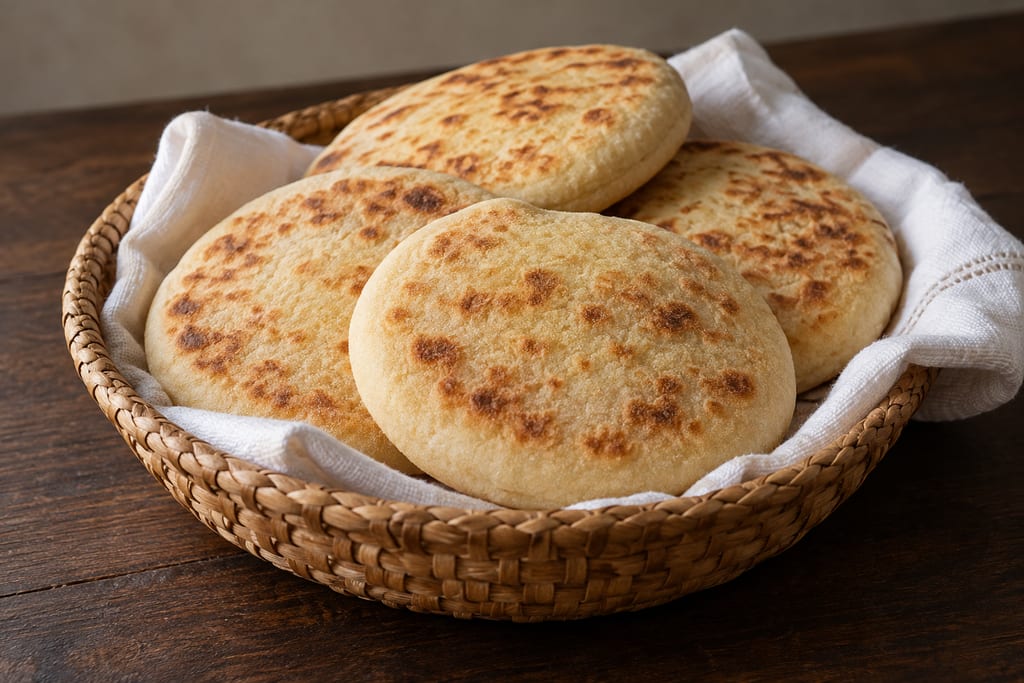
A Moroccan yeast-raised semolina pocket bread cooked on a dry pan or griddle; this measured batch makes about twenty 4-inch rounds.
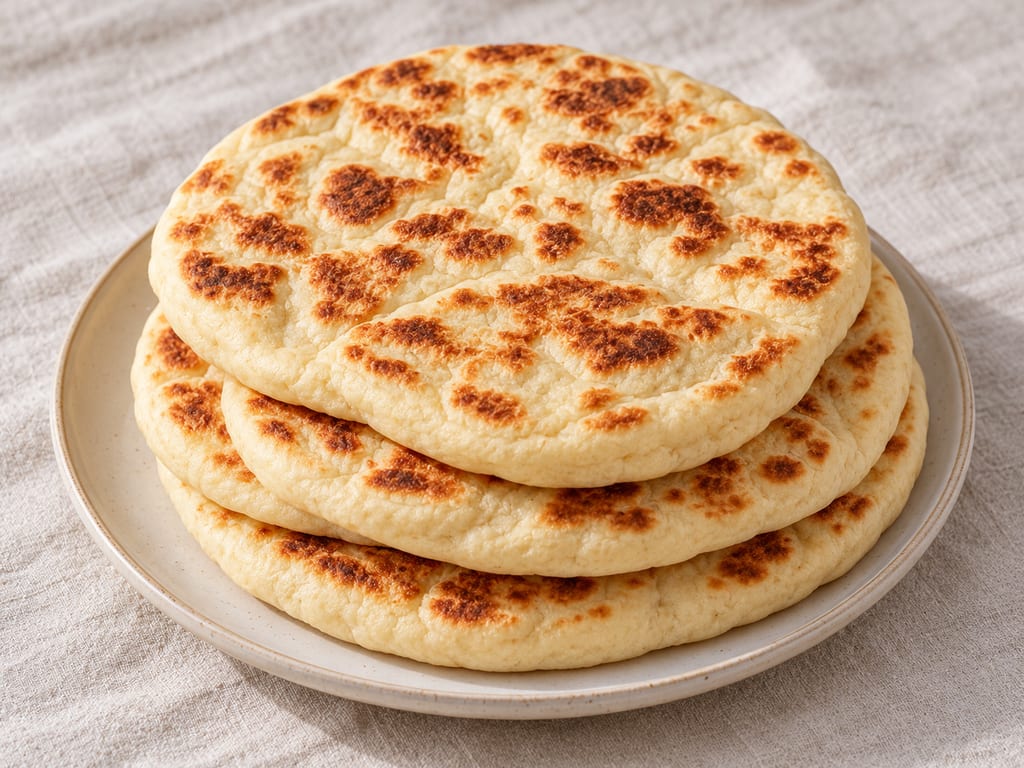
This Turkish bazlama uses yeast, plain yogurt and olive oil for a soft dough cooked in a skillet. Shape it into twelve small or six larger rounds, flip as bubbles appear, and wrap the breads to keep them soft.
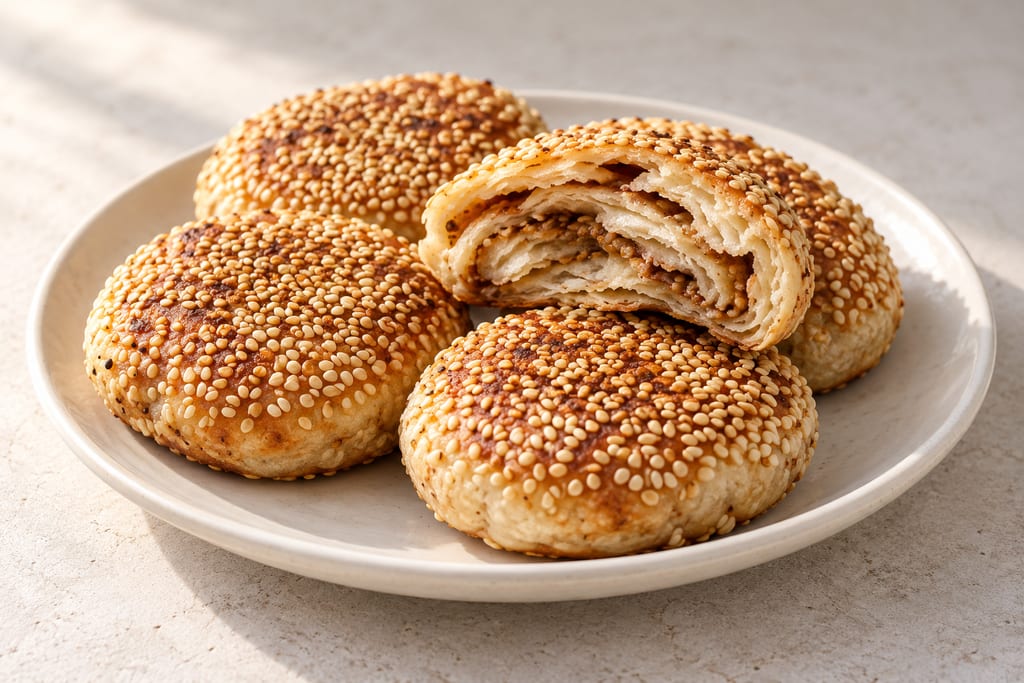
A Beijing-style yeast dough is layered with seasoned sesame paste, sealed into small buns, briefly pan-fried, seeded, and baked.
No community contributions have been published for this entry yet.
Sign in to contribute. Published comments and photos are free to read.
DolanChickInspiration · Recipe · Geographic context
Meat Bread: Grandma’s Gosh-naan (ئانامنىڭ گۆشنېنى)Uyghur author's family account and two-piece yield.
Dough and filling quantities, rise/rest cues, shaping, pan-cooking sequence and serving context.
The page reports about 8 minutes per side and golden colour but no meat temperature; it warns about steam and oil splatter.
Cited in: One Uyghur family recipe; Cook the enclosed filling through
USDA Food Safety and Inspection ServiceFood safety reference
What is a safe internal temperature for cooking meat and poultry?Distinguishes whole lamb cuts from ground lamb mixtures and advises using a food thermometer. The recipe specifies lamb pieces but not their originating cut.
Food Standards AgencyCooking safety
Cooking your foodThe middle of food should reach 70°C for 2 minutes or a listed equivalent; check with a clean food thermometer.
Keep raw meat separate from ready-to-eat food and clean hands and equipment after raw handling.
Cited in: Cook the enclosed filling through