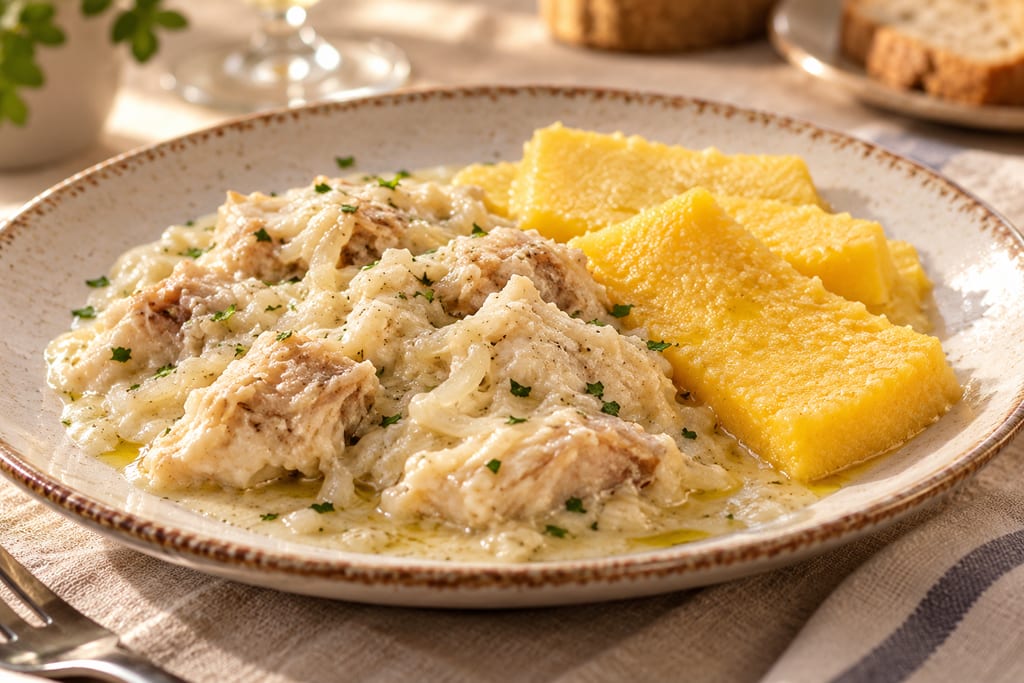
Bacalà alla vicentina
Stockfish from Vicenza, left barely bubbling for hours with onion, preserved anchovy, olive oil, milk and a little cheese until it is tender under a dense pale sauce, and eaten with polenta.
 FermenteaWhere food goes to change
Modern method
Speckknödel
Four-person South Tyrolean bread dumplings with finished Speck, herbs and a broth or soup accompaniment.
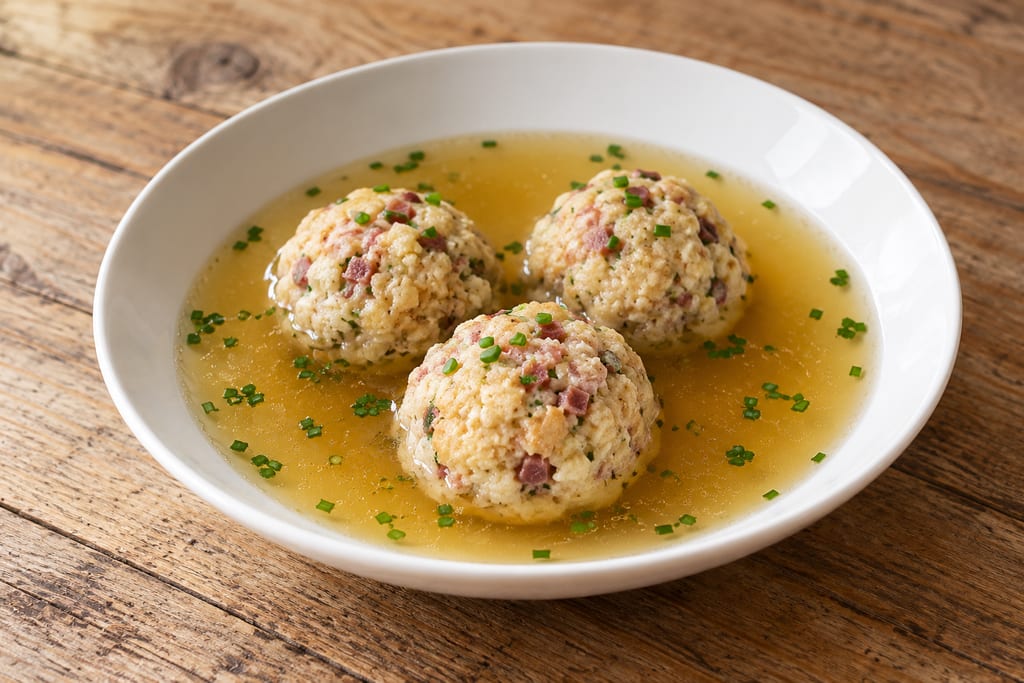
Südtiroler Speckknödel are bread dumplings made with South Tyrolean cured and lightly smoked pork, eggs, flour, onion and herbs.
In Italian, related dishes are called canederli allo speck.
The name Knödel refers to dumplings, while Speck identifies the cured pork component.
The recorded recipe is published by the Südtiroler Speck Consortium and credited to chef Herbert Hintner.
It uses the protected product Südtiroler Speck g.g.A., equivalent to Speck Alto Adige IGP in Italian.
The dumplings are formed from bread cubes and cured meat, rested briefly, then simmered in salted water.
They are served in soup or broth with chopped chives.
This is a cooking recipe using finished Speck. It does not describe the protected ham's curing or smoking procedure.
South Tyrol occupies an Alpine region where German- and Italian-language culinary traditions overlap.
Its food culture reflects mountain farming, cereals, dairy products, pork preservation and trade across the Alpine passes.
Bread dumplings are a particularly effective example of food preparation using available household ingredients.
Bread that has become too firm to eat comfortably can be rehydrated with milk and eggs, then shaped into a filling dish.
Cured pork adds flavour and calories.
This is a practical combination in a food culture where conserving ingredients was important.
Historical accounts of Tyrolean dumplings describe bread, flour, eggs, milk and locally available additions.
An Austrian traditional-food register documents several regional dumpling traditions and discusses historical references to fasting dumplings in the late sixteenth century.
However, this does not establish that the exact 100 g Speck and 200 g bread formulation existed then.
The modern recipe is a standardised preparation within a much older dumpling tradition.
The meat ingredient has a protected geographical identity.
Speck Alto Adige PGI combines salting, gentle smoking and air-drying.
The consortium describes this as a combination of northern European smoking and Mediterranean air-curing traditions.
The product is made from selected pork legs and seasoned with salt and spices.
The smoking is deliberately mild compared with some strongly smoked European cured meats.
The protected production process involves prolonged maturation, producing a firm texture and concentrated flavour.
The consortium summarises the guiding principle as little salt, little smoke and abundant fresh mountain air.
Its current production description identifies maturation lasting at least 22 weeks.
The culinary recipe uses finished diced Speck, so those manufacturing conditions are context rather than home preparation instructions.
FOUR-PERSON SOURCE RECIPE
Ingredient — Quantity
Südtiroler Speck g.g.A., diced — 100 g
White bread, cubed — 200 g
Flour — 40 g
Braised onion — 50 g
Chives or parsley, finely chopped — 1 tbsp
Eggs — 3
Milk — Some; amount unspecified
Salt — To taste
Black pepper — Unspecified
Salt for boiling water — Unspecified
Chives for garnish — Unspecified
Soup or broth for serving — Unspecified
The milk amount is not given.
The source calls for some milk to form a workable mixture but provides no exact volume.
The same applies to salt, pepper, garnish and serving broth.
The four-person yield and forty-five-minute total time are specified.
White bread supplies starch and the principal structural material.
Cubed bread absorbs moisture from eggs and milk, softens and can be compressed into dumplings.
Speck provides salt, cured-pork flavour, fat and a gentle smoky aroma.
Flour adds starch and proteins, helping bind the mixture.
Braised onion provides savoury and mildly sweet flavour.
Eggs contribute water and proteins that coagulate during cooking, helping maintain the dumpling's shape.
Milk hydrates the bread.
Chives or parsley provide freshness and herbal contrast.
Salt and pepper adjust flavour.
Broth acts as the serving liquid. Its recipe and quantity are not specified.
A mixing bowl is required for the dumpling mixture.
A knife and chopping board are needed for bread, Speck and herbs.
A spoon or hands can be used to shape the dumplings.
A large saucepan is needed for simmering.
The recipe also requires a way to remove the cooked dumplings from the water without breaking them.
No specialist dumpling mould is necessary.
Stage 1 — Prepare the bread
Cut 200 g white bread into cubes.
The source does not specify exact cube dimensions.
Stage 2 — Dice the Speck
Cut 100 g finished Südtiroler Speck into cubes.
The recipe does not describe removing the rind or trimming fat.
Those decisions depend on the purchased product and intended texture.
Stage 3 — Combine the base
Place the bread cubes and diced Speck in a mixing bowl.
Add 50 g braised onion and 40 g flour.
Mix together.
Stage 4 — Season
Add salt and black pepper.
The source gives no exact quantities.
Because Speck is already cured and salted, seasoning depends on the finished ingredient.
Stage 5 — Add herbs
Mix in 1 tablespoon finely chopped chives or parsley.
Either herb is permitted.
Stage 6 — Add eggs
Add three eggs.
Mix them into the bread mixture.
Stage 7 — Add milk
Add some milk.
Work the mixture into a smooth, cohesive dumpling mass.
No measured liquid volume or target hydration ratio is supplied.
Stage 8 — Rest
Leave the mixture for ten minutes.
This allows moisture to move into the bread pieces and helps the dough become more cohesive.
Stage 9 — Shape
Form dumplings approximately 6 cm in diameter, using hands or a spoon.
The recipe does not specify the exact number of dumplings produced.
Stage 10 — Prepare cooking water
Bring salted water to a boil.
The amount of water and salt are unspecified.
Stage 11 — Simmer
Place the dumplings into the water.
Simmer for approximately eight to ten minutes.
The source does not give a numerical internal temperature.
Stage 12 — Serve
Transfer the cooked dumplings into soup or broth.
Garnish with chopped chives.
The recipe does not supply the broth's ingredients or preparation.
The structure of Speckknödel depends on hydration and protein coagulation.
Bread contains starch and proteins that have already undergone changes during baking.
When mixed with eggs and milk, the dry crumb absorbs moisture.
The ten-minute rest allows further hydration and redistribution of liquid.
Flour contributes additional starch and proteins.
During simmering, egg proteins coagulate and the mixture becomes more firmly bound.
Starch also absorbs water and contributes cohesion.
The result is a dumpling that should remain intact while retaining a soft interior.
The amount of milk is important, but the original does not quantify it.
Too little may leave the mixture crumbly; too much may produce a soft mass that cannot hold its shape.
The correct consistency is therefore determined in the source through the qualitative instruction to form a smooth, workable mixture.
Speck has already undergone salting, smoking and maturation.
Its salt and reduced moisture influence flavour and texture.
The cure and drying processes concentrate certain sensory characteristics.
Smoke-derived compounds contribute mild smoky aromas.
During dumpling cooking, the diced Speck warms and some fat may soften or melt.
Its flavour becomes distributed through the moist bread matrix.
The difference from using uncured fresh pork is considerable.
Raw pork would not supply the same concentrated flavour or processing status and would require different safety considerations.
Likewise, ordinary cooked bacon is not chemically identical to protected South Tyrolean Speck.
Bread dumplings occur across the Alpine region.
Some versions include more herbs, cheese, different cured meats or additional vegetables.
The texture varies with bread type and hydration.
Some dumplings are served in clear broth, while others appear alongside cabbage or other substantial dishes.
South Tyrolean canederli include several families, such as cheese dumplings and spinach dumplings.
These are related regional foods, but they are not identical to the protected-Speck version.
The documented recipe permits chives or parsley.
It does not specify other meat substitutes or a different bread quantity.
Variations should therefore remain clearly separated from the measured preparation.
The dumplings are served hot in soup or broth.
They can function as a first course.
This is a warm starter rather than a dessert or cold snack.
Broth provides moisture and a savoury contrast to the dense dumplings.
Chives add freshness.
The consortium suggests pairing the dish with a fresh, fruity South Tyrolean wine, specifically Kalterersee.
That is a serving suggestion rather than a required ingredient.
The dumpling mixture should hold together when shaped.
The resting stage helps prevent the bread from remaining dry in the centre.
During simmering, dumplings should retain their rounded form.
If they disintegrate, possible causes include excessive liquid, inadequate binding or overly vigorous boiling.
A very dense result may reflect insufficient hydration or excessive compression.
A strong salt flavour may result from cured Speck combined with unnecessary added salt.
The broth should complement rather than obscure the dumplings.
The original recipe gives no exact target texture, finished mass or moisture measurement.
Use purchased Speck according to its label and storage requirements.
The protected product has undergone controlled processing, but the source recipe does not validate its manufacture.
Eggs are incorporated into the raw dumpling mixture and subsequently cooked.
The eight-to-ten-minute simmer is a culinary instruction rather than a measured internal-temperature endpoint.
The size of the dumplings and cooking conditions can affect heat transfer.
Handle the finished dumplings hygienically and serve promptly.
No validated storage or reheating period is specified.
The recipe is credited to Herbert Hintner and uses purchased South Tyrolean PGI Speck. This meal record does not represent a home process for that product.
Yield 4 people · Scaling: source batch only
EFSA consumer guidance explains that ready-to-eat foods can be contaminated after cooking or through contact with raw food. It gives general handling advice, not a product-specific assessment of purchased Speck or dumplings.
Hazard sourceFollow the purchased Speck’s label for storage and use-by. EFSA consumer guidance recommends refrigeration below 5°C for perishable foods, separating raw/cooked/ready-to-eat foods, clean utensils, handwashing and prompt consumption; it supplies no Speck-specific interval.
Control sourceThe source’s 8–10-minute simmer is a cooking instruction, not a measured product endpoint. It gives no package status or storage directions for the Speck or cooked dumplings.
No maturation stage is part of this cooking recipe.
The recipe belongs to the consortium’s South Tyrolean product context; it uses the finished product.
Stockfish from Vicenza, left barely bubbling for hours with onion, preserved anchovy, olive oil, milk and a little cheese until it is tender under a dense pale sauce, and eaten with polenta.
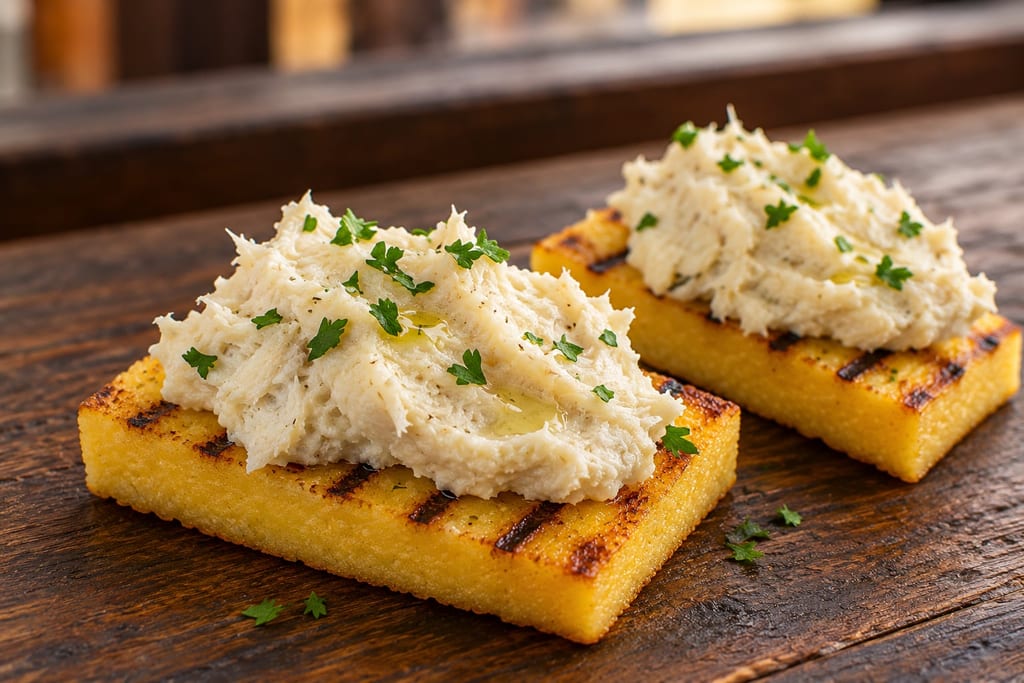
A Venetian cicchetto of cooked unsalted stockfish beaten with oil until it turns into a pale, aerated cream, spooned onto grilled polenta in the city's wine bars.
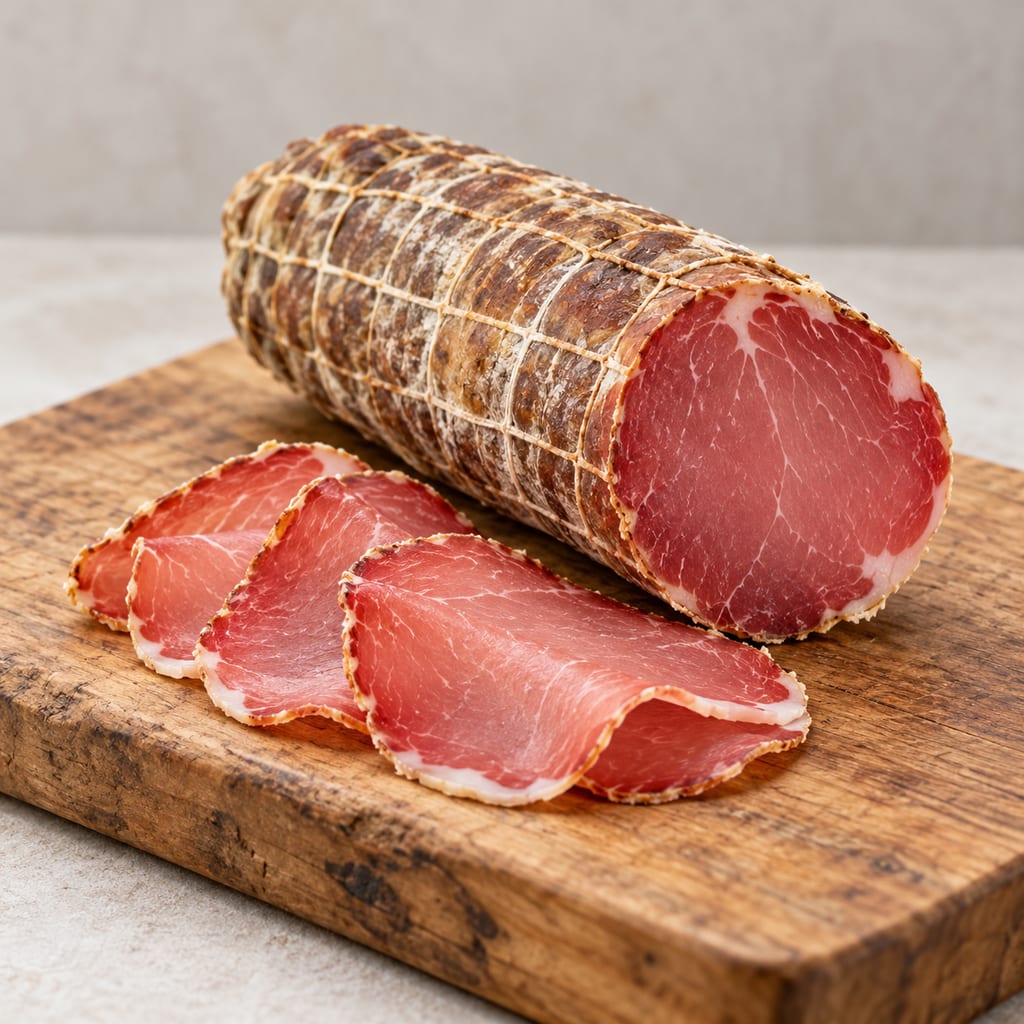
Documentary account of Italian regional cured-loin traditions, including Tuscan and Marche variations; no home-cure instructions are provided because the published professional methods lack validated safety controls.
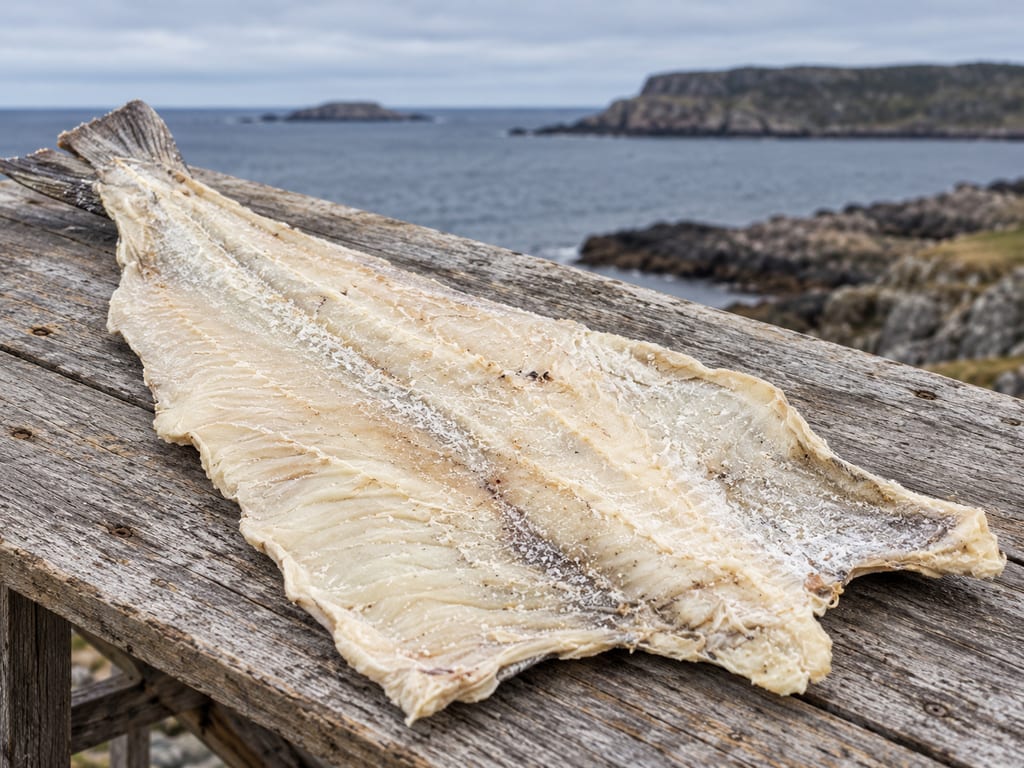
Atlantic cod split, salted and dried on raised flakes along the Newfoundland and Labrador shore, manufactured ashore for markets across the Atlantic.
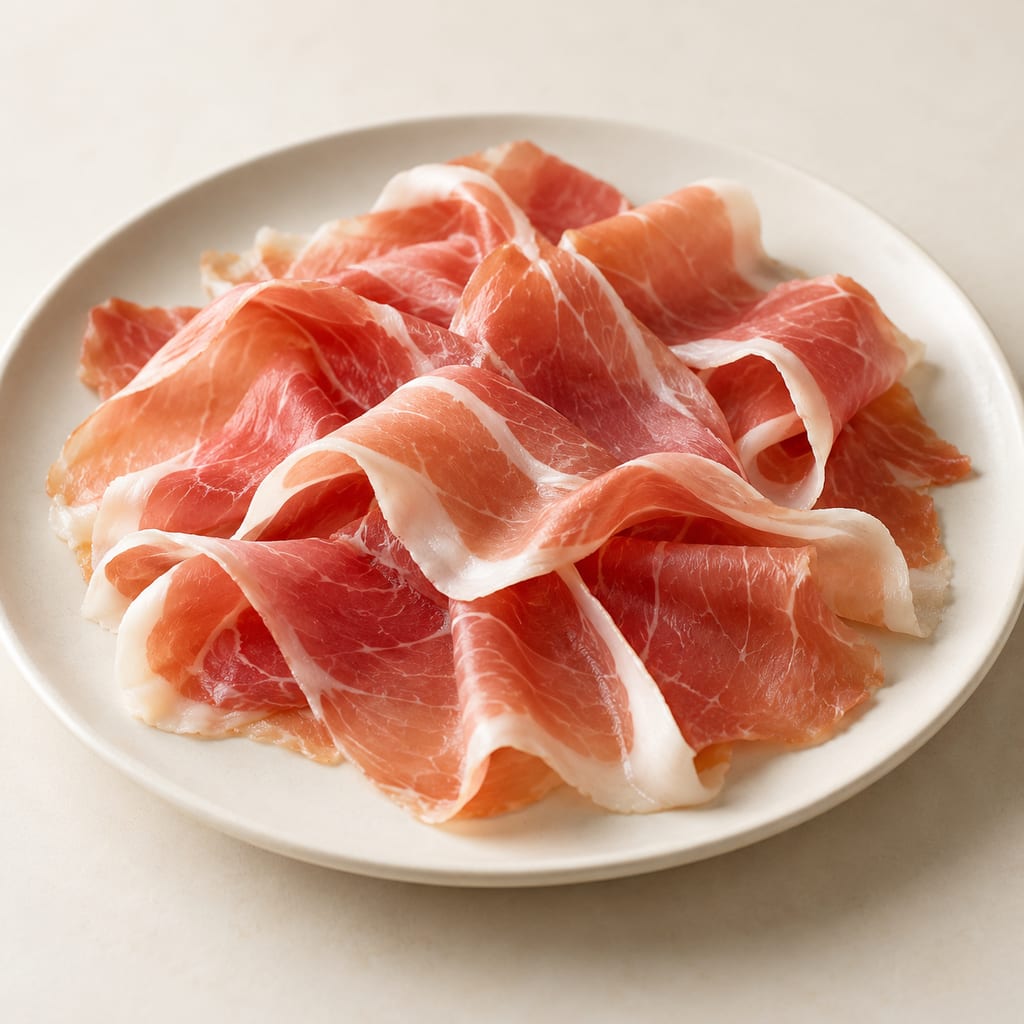
Prosciutto di Parma is a dry-cured, unsmoked ham from the Province of Parma, made from fresh pork legs salted with sea salt and matured for at least 14 months under the protected designation.
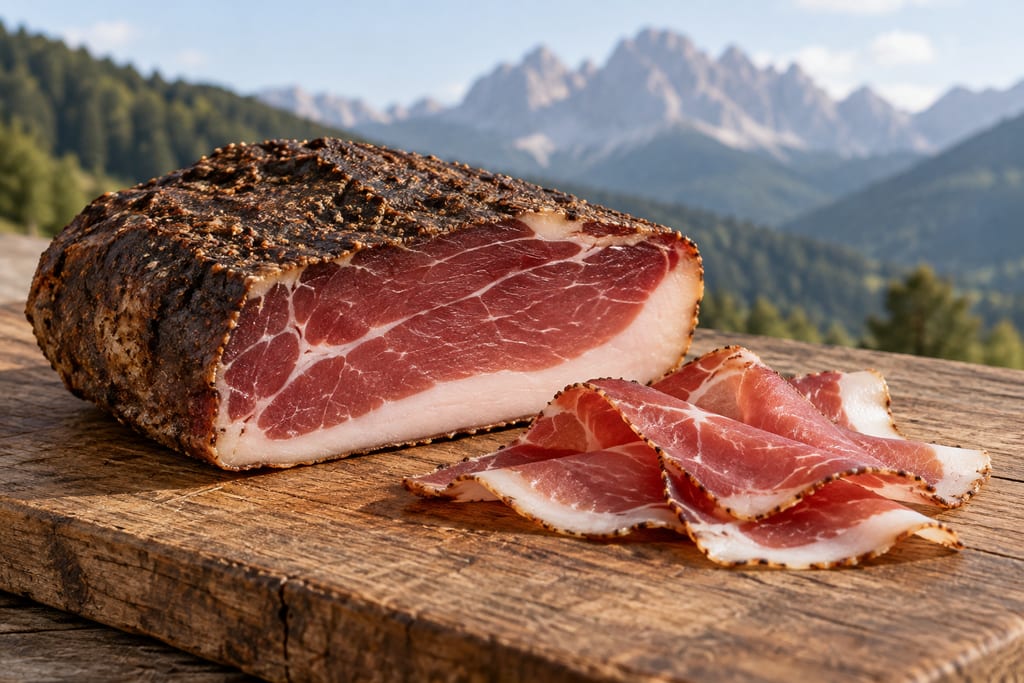
A documentary account of one modern home-video demonstration of Speck-style cured pork. It preserves the food and regional context without presenting the unvalidated cure, smoking and drying sequence as instructions.
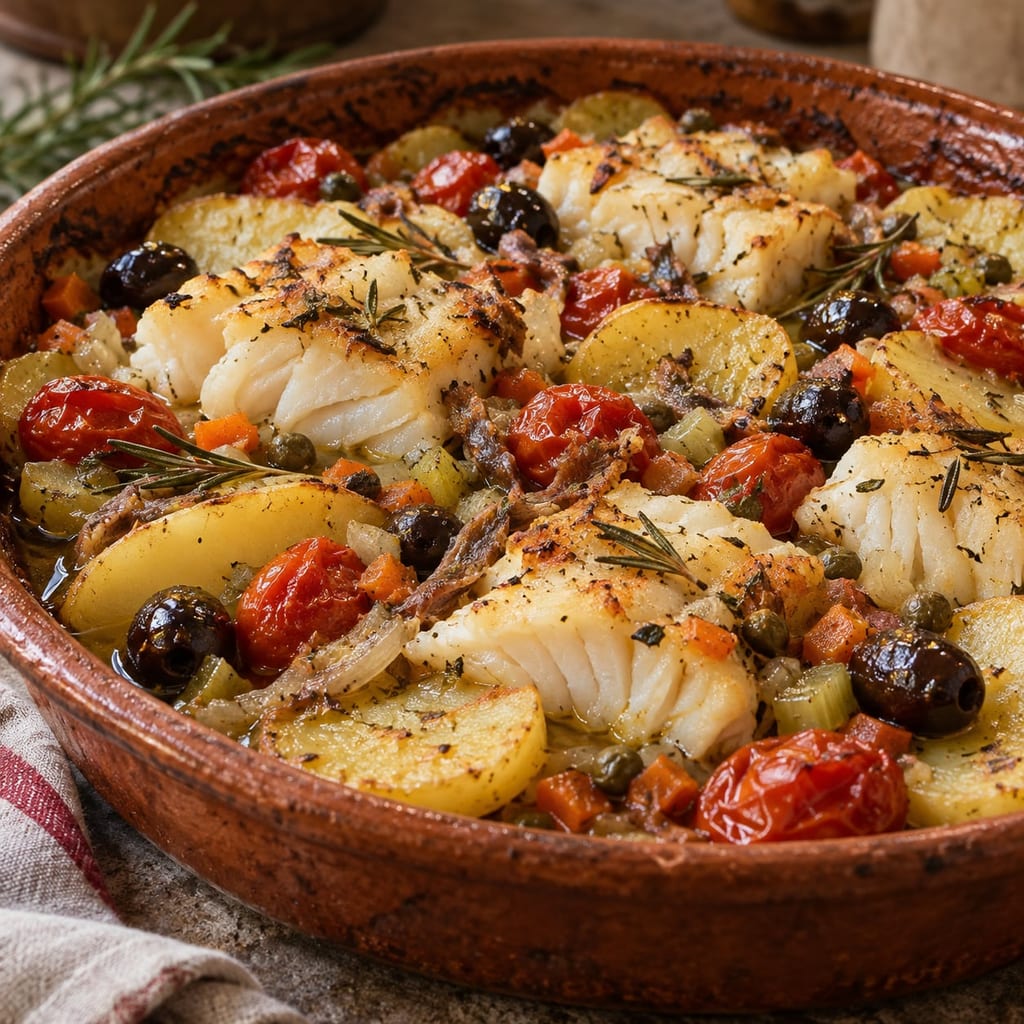
Ancona's baked stockfish: thick pieces layered with potatoes, tomatoes, olives, capers and anchovy under olive oil and white wine, cooked slowly in a covered dish.

Soft, spreadable Calabrian pork sausage made with a great deal of red chilli and fatty pork, stuffed into natural casings, sometimes smoked and matured while staying soft.
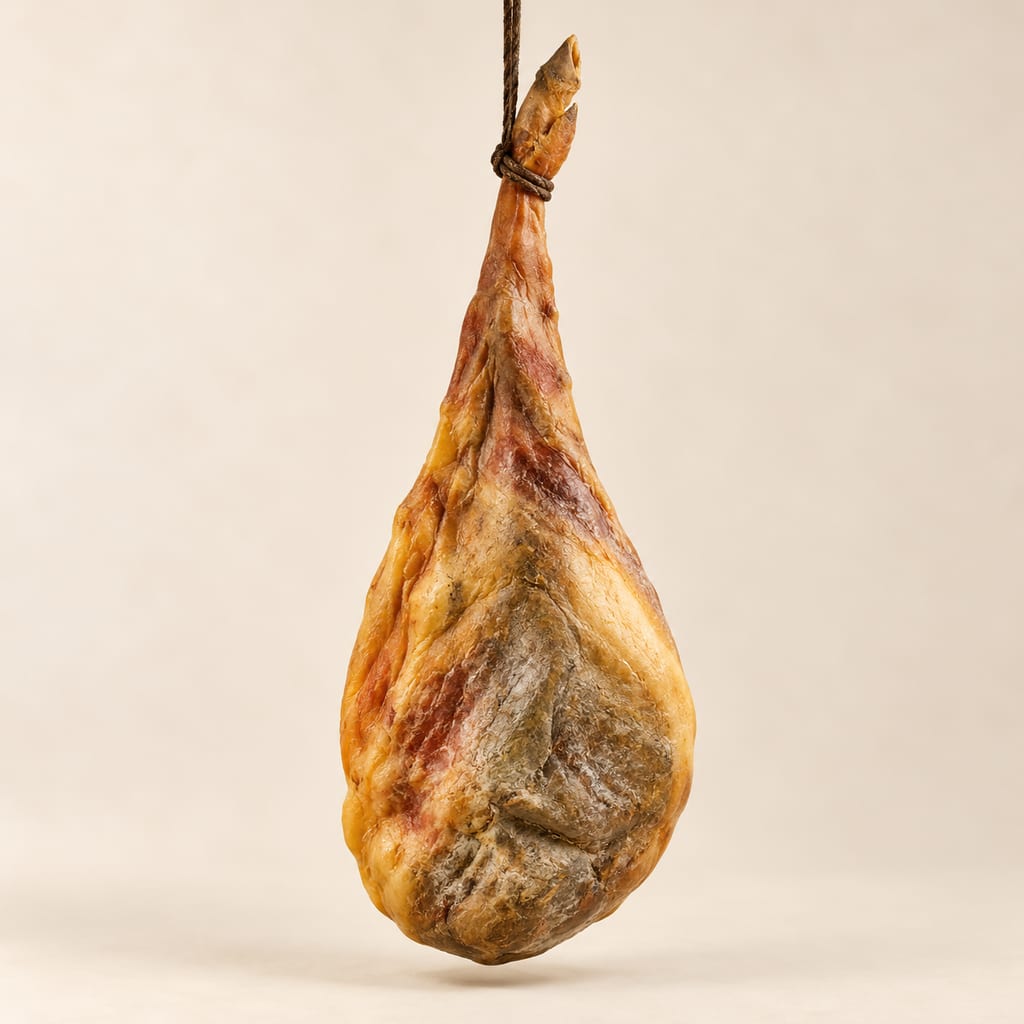
Cato the Elder records a second-century BCE sequence for salting, air-drying, and smoking ham. This historical account is not a validated modern curing protocol.
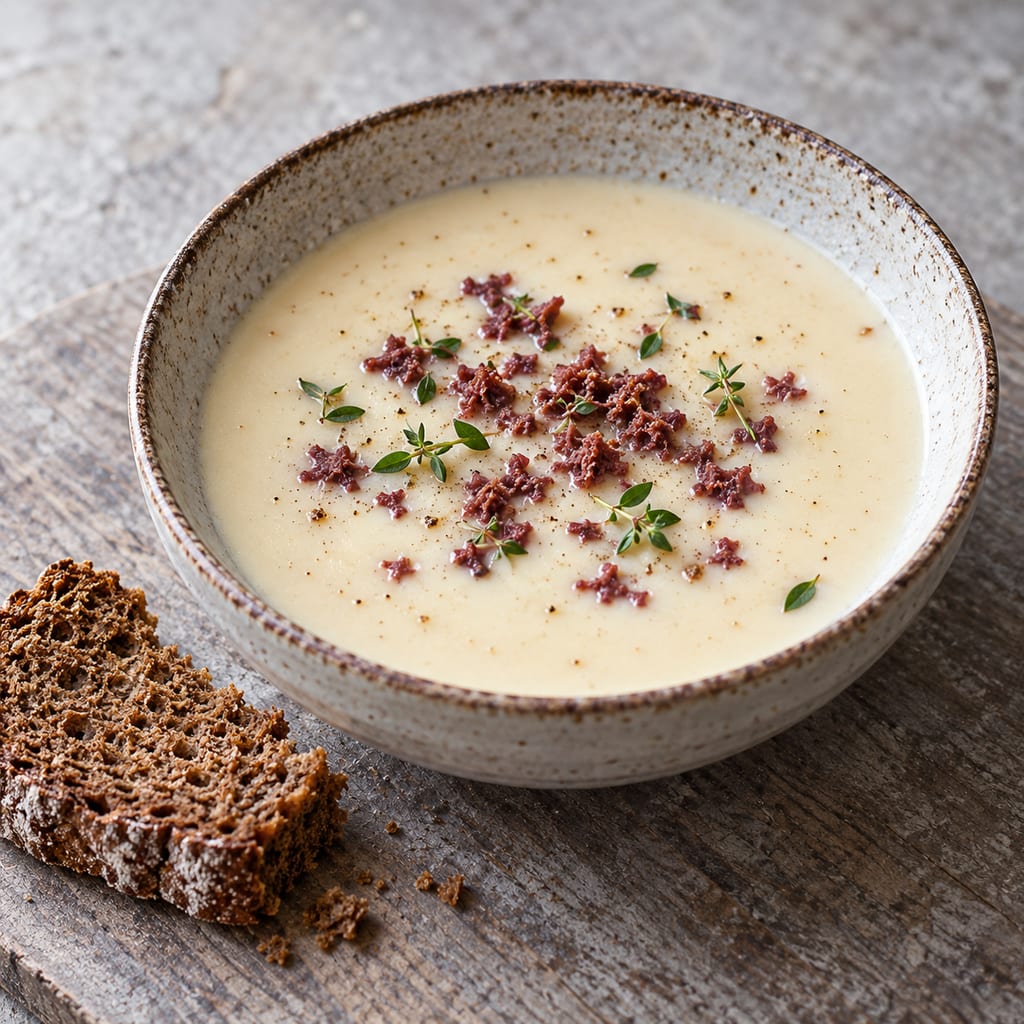
Kylmäsavuporokeitto is a creamy cold-smoked reindeer soup with onion, stock and cheese, served with bread.
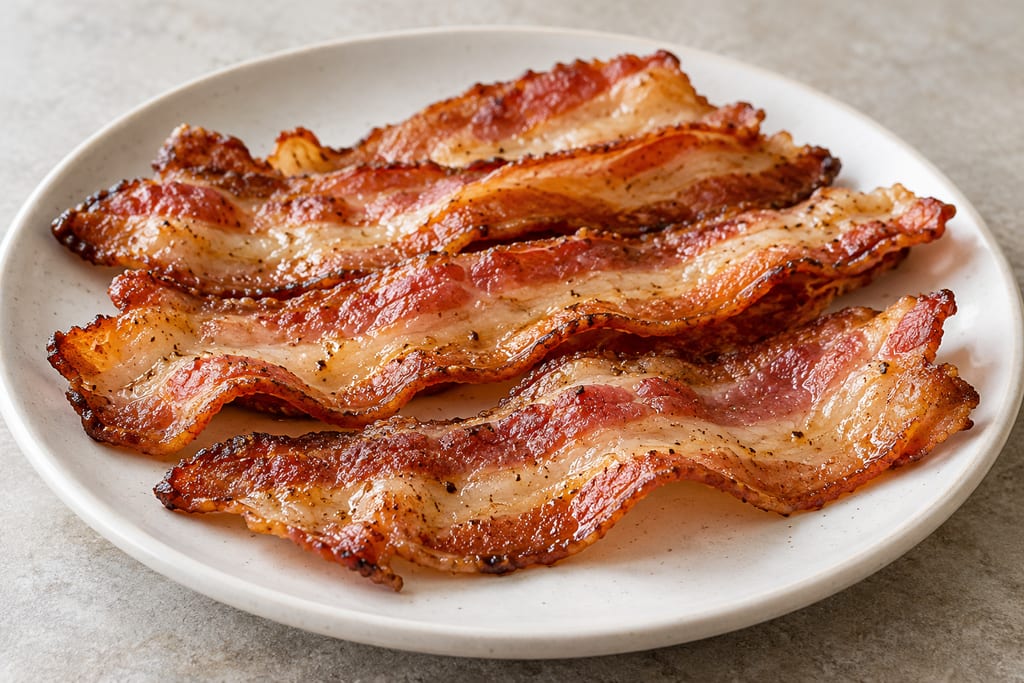
Pork belly receives a measured salt-and-sugar cure with coffee and spices, then is refrigerated before cooking or hot smoking.

Finnish pea soup simmers dried peas with palvikinkku or a vegetable alternative, then is served with mustard and chopped onion.
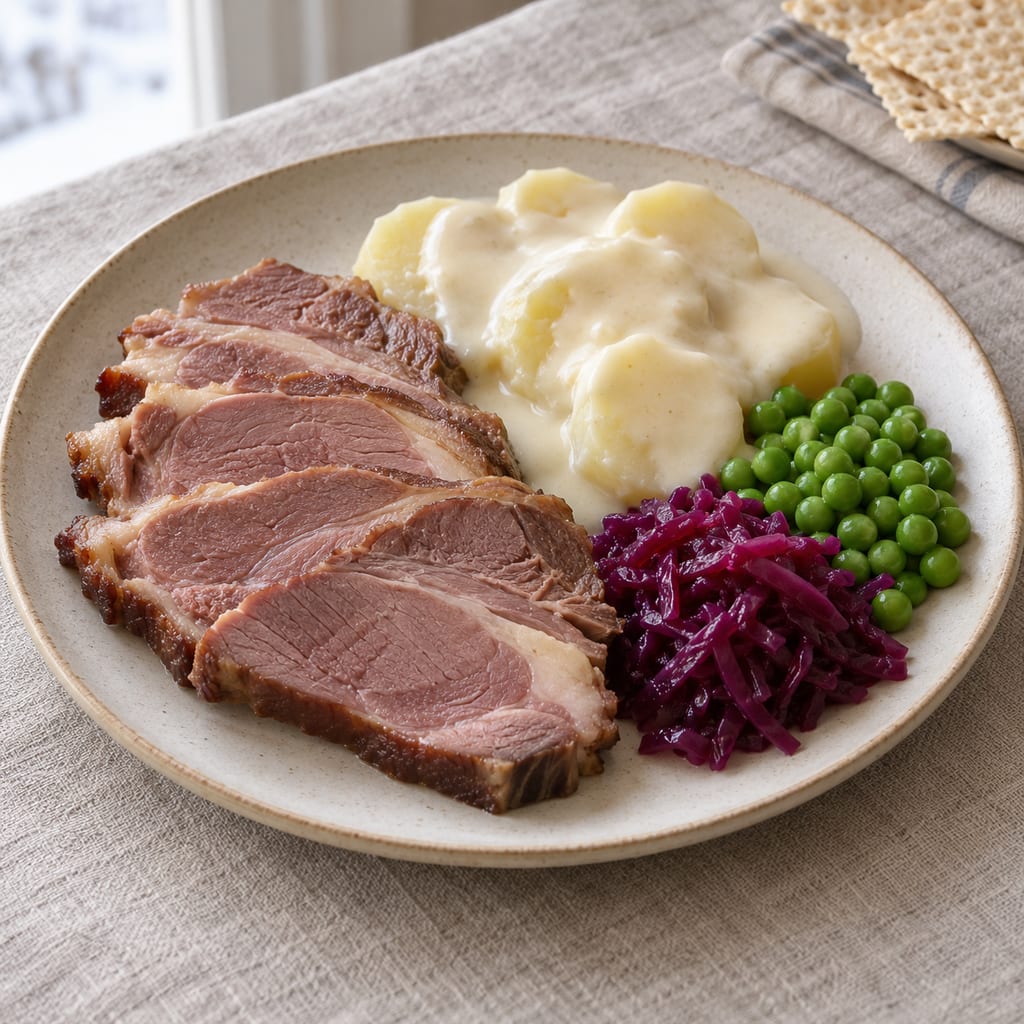
A six-person Icelandic Lamb serving recipe for deboned hangikjöt with potato bechamel, pickled cabbage, peas and laufabrauð. It cooks the product; it does not smoke or cure it.
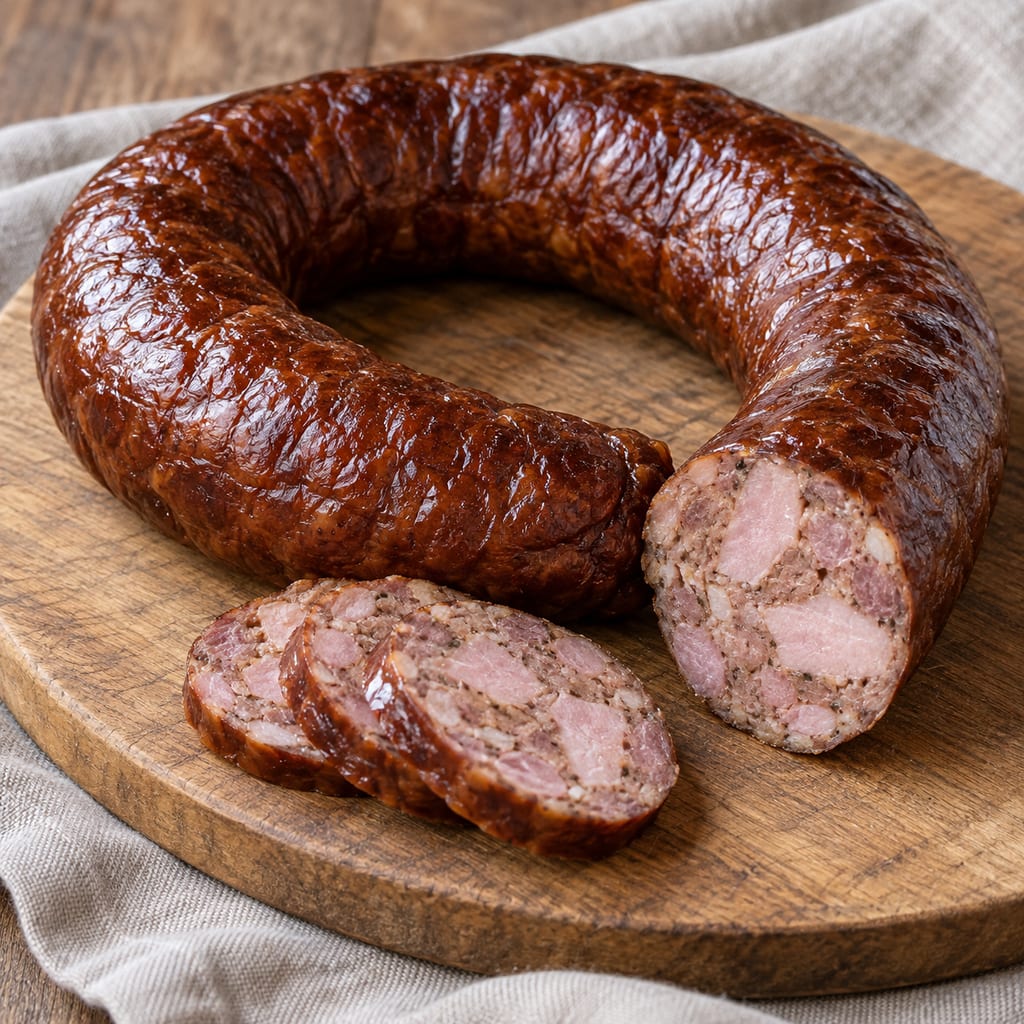
A protected pork sausage associated with Liszki and Czernichów; its application describes commercial curing and smoking, not a home batch.
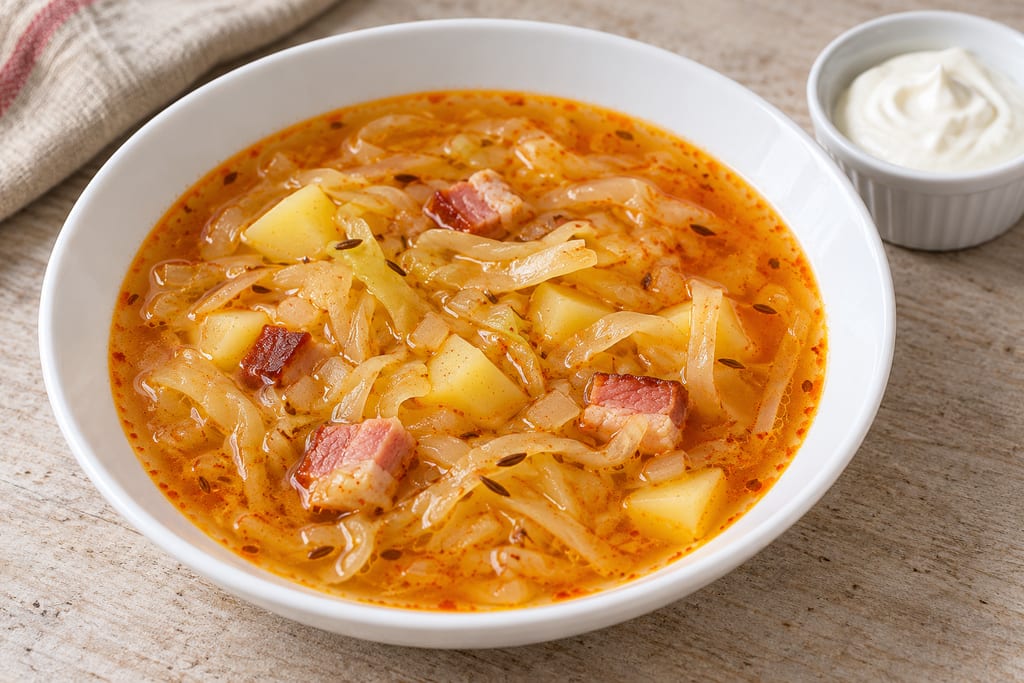
A two-portion cabbage soup with onion, potato and finished Geselchtes, served with garlic sour cream.
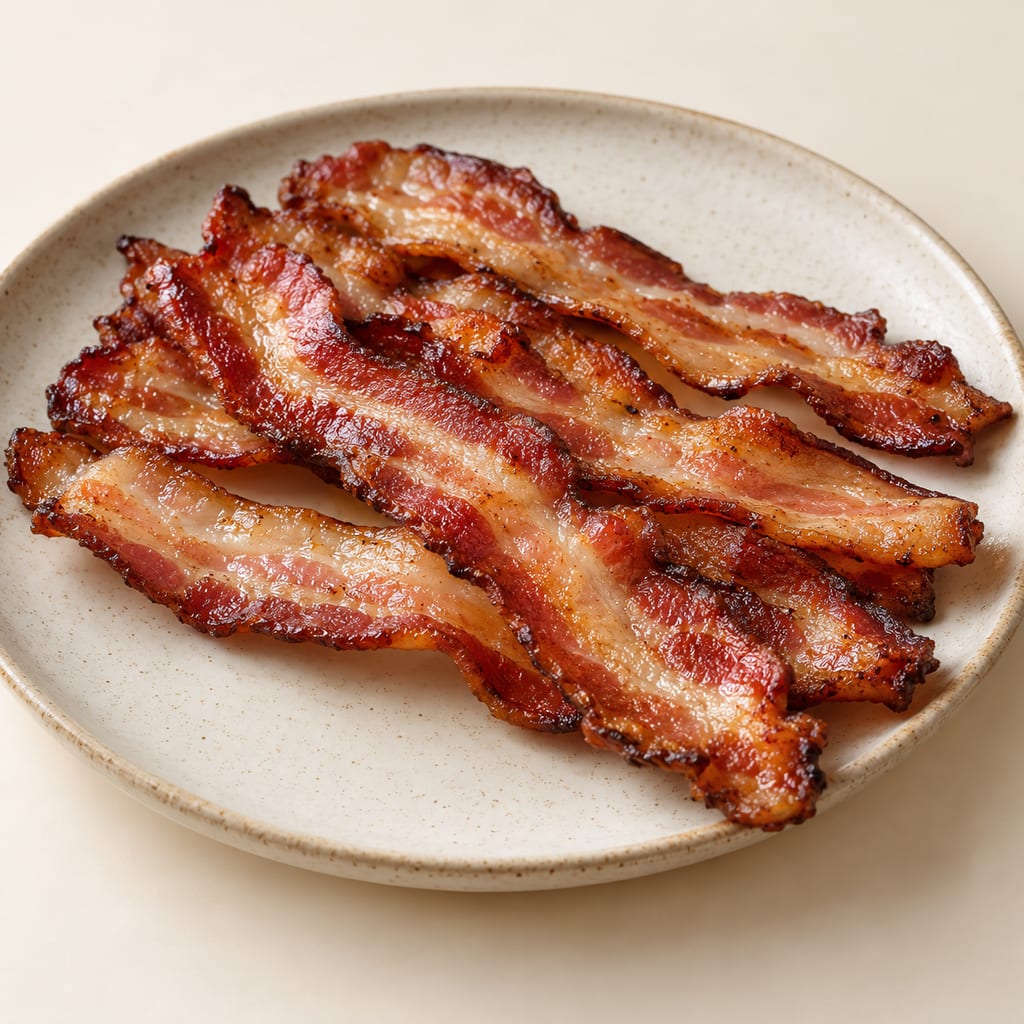
A refrigerated pork-belly brine combines beer and maple syrup with salt, garlic powder and measured Cure #1.
No community contributions have been published for this entry yet.
Sign in to contribute. Published comments and photos are free to read.
Südtiroler Speck Consortium; recipe credited to Herbert HintnerSource recipe
Original Südtiroler SpeckknödelFour-person yield, full ingredient list and method, 45-minute total time, 10-minute rest, 8–10-minute simmer; publisher’s “Leicht” label retained without numeric conversion.
Cited in: What it is; Ingredients; Ingredient functions; Equipment; Method; Why bread dumplings hold together; Regional variations; Serving and eating; Recognising a good result; Food safety
Südtiroler Speck ConsortiumIngredient context
So entsteht Südtiroler Speck g.g.A. – Tradition, Handwerk und BergluftProduct-specific context for the purchased ingredient. Inherited selected process page from W06 CP; not a household recipe or current official specification.
Cited in: Protected Speck Alto Adige
European Food Safety Authority (EFSA)Consumer food safety guidance
Food poisoningThe Listeria section identifies cold cuts, smoked fish and ready-to-eat meals as example categories; states that contamination may occur after cooking and that Listeria can grow at refrigerator temperatures; recommends consumer hygiene, separation, refrigeration below 5°C, prompt consumption and respecting use-by dates. This is general advice, not an assessment of any W06 product or recipe batch.
Cited in: Food safety
Südtiroler Speck ConsortiumProduct identity context
How Speck Alto Adige PGI is madeCited in: South Tyrol's food history; Protected Speck Alto Adige; What Speck adds chemically
Südtiroler Speck ConsortiumProduct identity context
Product identity and qualityCited in: Protected Speck Alto Adige; Ingredient functions; What Speck adds chemically
Austrian Federal MinistryHistory
Knödel traditionsCited in: South Tyrol's food history; Why bread dumplings hold together; Regional variations; Serving and eating