Biltong
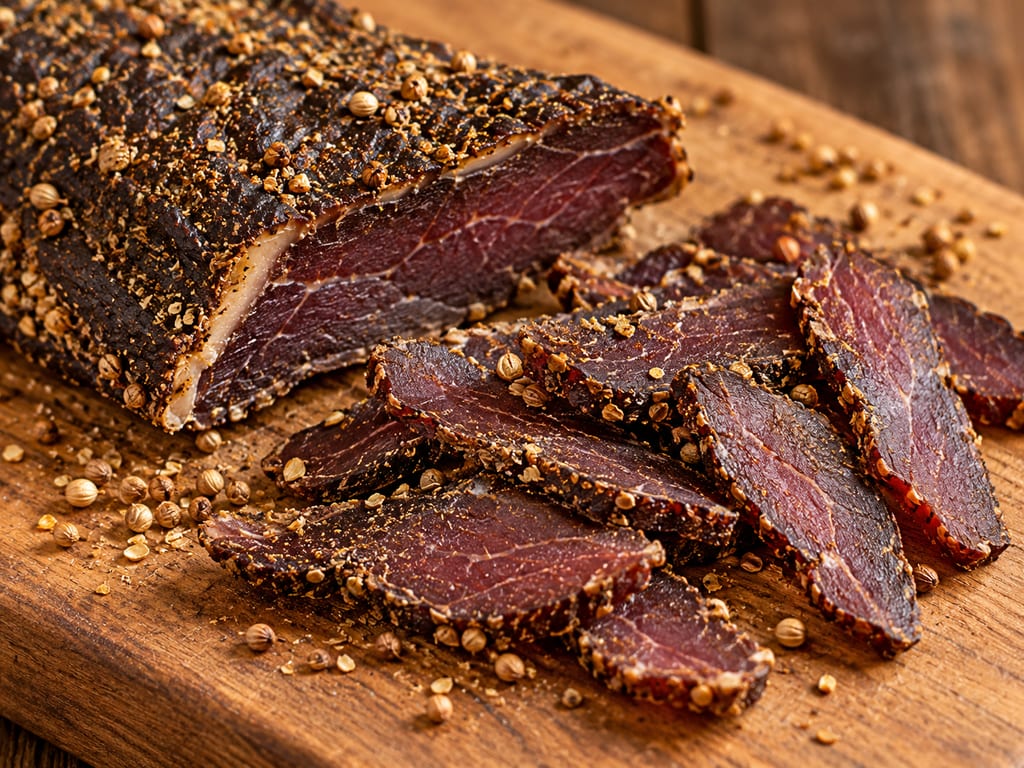
Strips of whole-muscle beef or game seasoned with salt, vinegar, roasted coriander and pepper and air-dried without cooking, sold anywhere from soft and moist to hard and very salty.
 FermenteaWhere food goes to change
Equipment · Churns, agitators and drums
Vacuum marinator
A vacuum tumbler is a powered rotating drum that massages meat under reduced pressure, distributing marinade or brine before later processing.
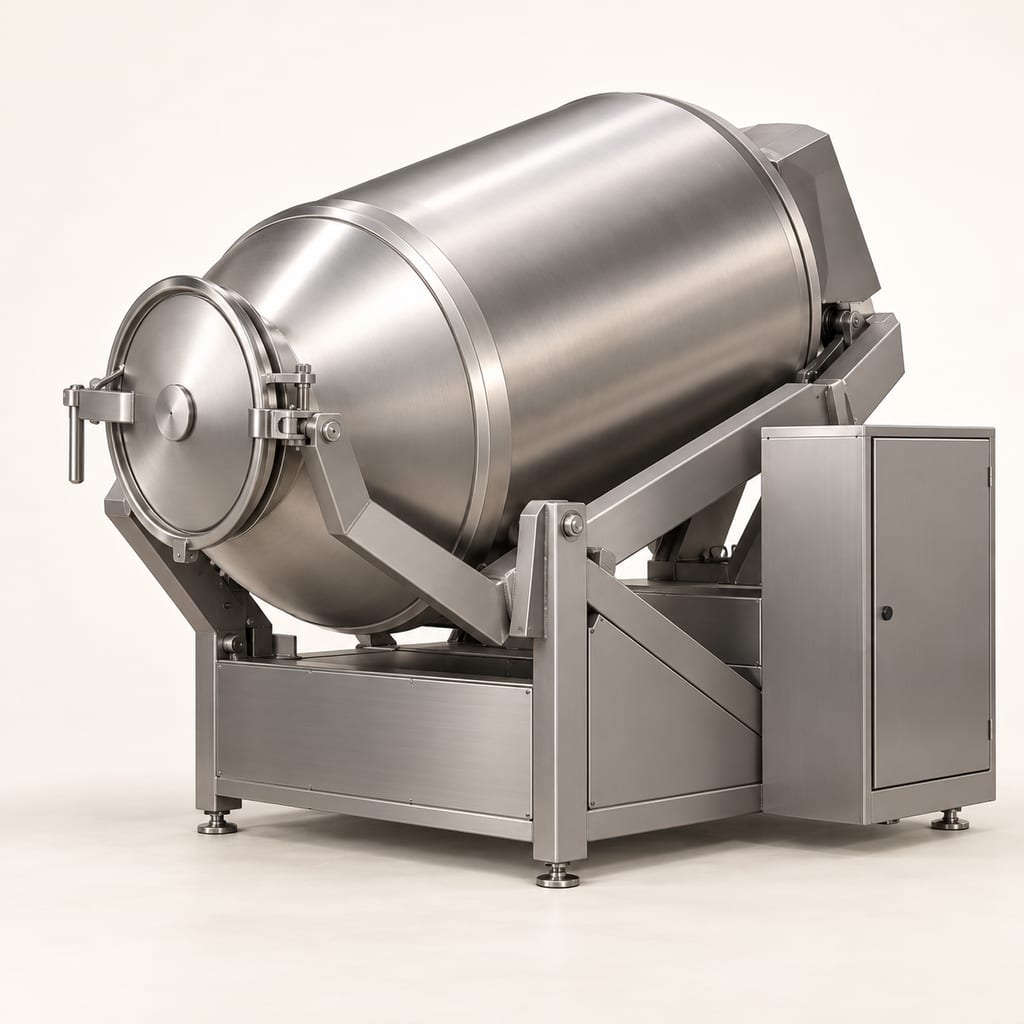
A vacuum tumbler is a powered, rotating vessel used to work brine or marinade into meat. The enclosed drum turns the batch while internal fins lift pieces and let them fall. The vacuum is part of the processing environment; the machine combines mechanical movement with reduced pressure rather than simply leaving meat in a stationary tray.
That distinction matters in the biltong research that brought this equipment into focus. Biltong is a South African-style dried beef product, while the vacuum-tumbling study discussed here was conducted by food scientists at Oklahoma State University in the United States. The equipment in that research is a modern processing aid, not evidence that the tumbler is a traditional South African vessel.
The dated record used for this entry begins with a 2021 university presentation. It demonstrates a research application, not the first commercial or historical appearance of the machine. Current manufacturer literature shows a continuing industrial product category, but does not give a reliable invention date.
In a batch tumbler, the drum repeatedly moves the meat against itself and the drum's internal fins. VEMAG Australia describes this action as lifting pieces and letting them drop, mechanically loosening the muscle structure and spreading brine or marinade. It notes that tumbling is used after injection in some products and can also be used on its own to marinate meat.
A vacuum tumbler runs the rotating vessel under reduced pressure. Manufacturer descriptions say vacuum draws air out of the meat and can support uptake while reducing foaming. The motion, pressure and rest periods are machine settings, not ingredients or a recipe: published programs can vary drum speed, direction, total working time, pause time and whether the vacuum is continuous or pulsed.
Menozzi describes its own internal fins as spoon-shaped and angled. In that model range, the manufacturer attributes even distribution to the combined action of those fins and continuous or pulsed vacuum. That is a product-specific account of the design, not a rule that every model uses the same fin geometry or achieves identical uptake.
A 2021 Oklahoma State University presentation depicts beef being vacuum-tumbled with black pepper, coriander, vinegar and salt before the pieces are hung to dry. Its process graphic specifies a 30-minute tumble at 15 inches of mercury, followed by drying. These values describe that experimental protocol; they should not be lifted out as a standalone home method.
In the later challenge trials, reductions exceeded five log after six to eight days for the tested pathogens and full process. The outcome belongs to the studied meat, formulation, equipment and controlled drying conditions together; it does not show that vacuum alone makes meat safe.
The authors' experiment also helps explain why a tumbler can be relevant to process development: marination is one stage among several, and its conditions can affect what happens during later drying. For a batch record, the equipment and tumbling method and time should be recorded alongside the meat geometry, marinade, drying conditions and other process details. This equipment entry is not a validated biltong recipe.
This page links to the separately catalogued vacuum curing tumbler because the machines share the basic method of turning meat in a closed drum under vacuum. The curing-tumbler entry treats the broader industrial machine used to work brine mechanically; this page concentrates on the role vacuum tumbling played in a South African-style biltong research process.
The relationship is about equipment method, not a claim that the two names always identify different machine designs. A given manufacturer may sell one machine for several meat-processing applications. Likewise, a biltong study's use of a vacuum tumbler does not make that study’s chamber geometry, vacuum settings or batch size universal specifications for the equipment class.
The commercial range is much larger than a countertop marinator. Menozzi lists its Tumbler 700 with a 1,200-litre drum and a maximum 700-kilogram load, while the Tumbler 3500 is listed at 5,800 litres and a maximum 3,500-kilogram load. The model names and load figures belong to that manufacturer's range; they are examples, not standard sizes.
The product literature describes a vacuum system, tank, rotating drum and internal fins; other listed features include a tilting mechanism, a front-opening lid on some models and optional cooling or heating jackets. The manufacturer also lists different pump capacities across models. Those components make clear why installation, utilities, control features and batch size must be checked against the exact unit rather than inferred from the words “vacuum tumbler.”
The Oklahoma State study separately describes stainless-steel tumbling vessels. Menozzi offers an AISI 316 internal finish for its machines. Material claims should therefore stay attached to the documented research vessel or the particular manufacturer option, not be generalized to every machine sold under this category.
A food-contact drum must be accessible for cleaning and inspection. Menozzi says its drum interior can be reached from outside for washing and microbiological sanitation; its design tilts to help residual liquid drain. The same manufacturer describes a two-hand controlled panel and a finger-protection feature for the powered lid on its listed equipment. These are model features, not a substitute for the machine manual, site risk assessment or a validated sanitation procedure.
The machine's action is mechanical marination or massaging. It does not replace refrigeration where required, curing calculations, pathogen validation, drying control or product-specific safety assessment. Even a research result showing a large microbial reduction remains tied to the studied combination of ingredients, tumbling and drying; changing any of those conditions changes the question being answered.
For equipment selection, compare load and drum volume, batch versus continuous operation, whether the meat is injected first, the gentleness of the motion, cooling needs, control of rest and vacuum phases, cleaning access and available utilities. The sources here describe examples and functions; they do not provide a buyer's specification or a universal operating sequence.
The earliest dated example included here is an Oklahoma State University research presentation from 2021 showing beef vacuum-tumbled for a biltong study. This is a dated use of the equipment, not evidence of when vacuum tumblers were invented. Menozzi's current product literature documents an ongoing commercial machine range.
The machine distributes a marinade or brine; it is not, by itself, a pathogen-control process or a guarantee that a finished meat product is safe.
Source →The biltong results cited here apply to the researchers’ complete formulation and controlled drying process, not to a tumbler alone or an arbitrary home process.
Source →The source lists the maker's Albinea address; this does not establish a national origin for the equipment class.
The presentation documents a research experiment, not regional adoption or domestic practice.
Strips of whole-muscle beef or game seasoned with salt, vinegar, roasted coriander and pepper and air-dried without cooking, sold anywhere from soft and moist to hard and very salty.
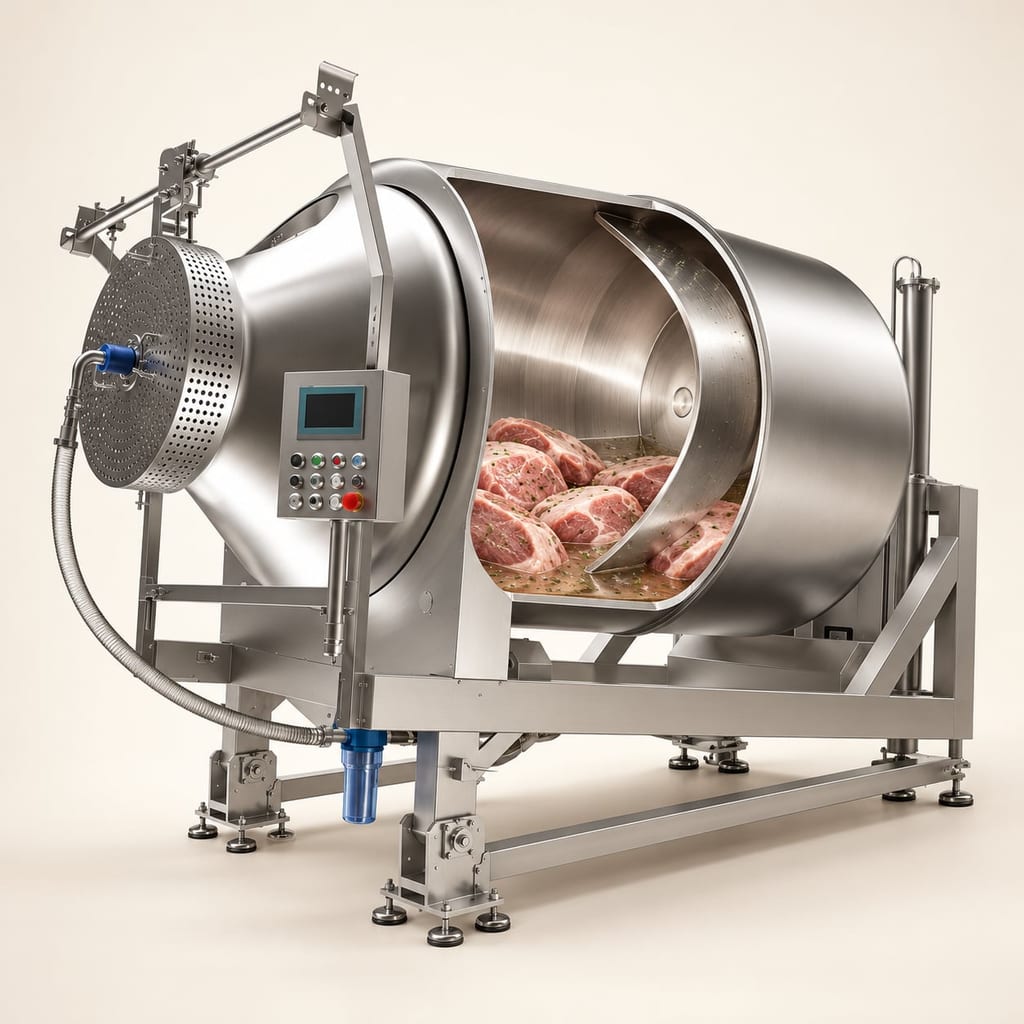
An industrial vacuum curing tumbler rotates meat in a sealed drum to distribute salt and brine through mechanical massage, sometimes with cooling or temperature control.
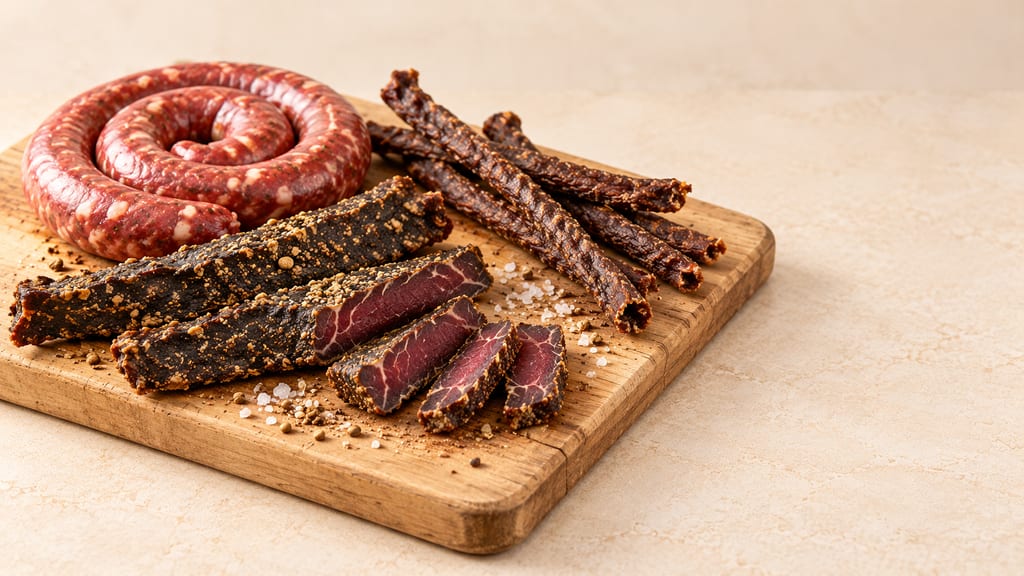
Boerewors, biltong and droëwors share a table but follow different paths from meat to meal. Their histories lead from the braai and butcher's counter to drying lines, household pots and the science of keeping food.
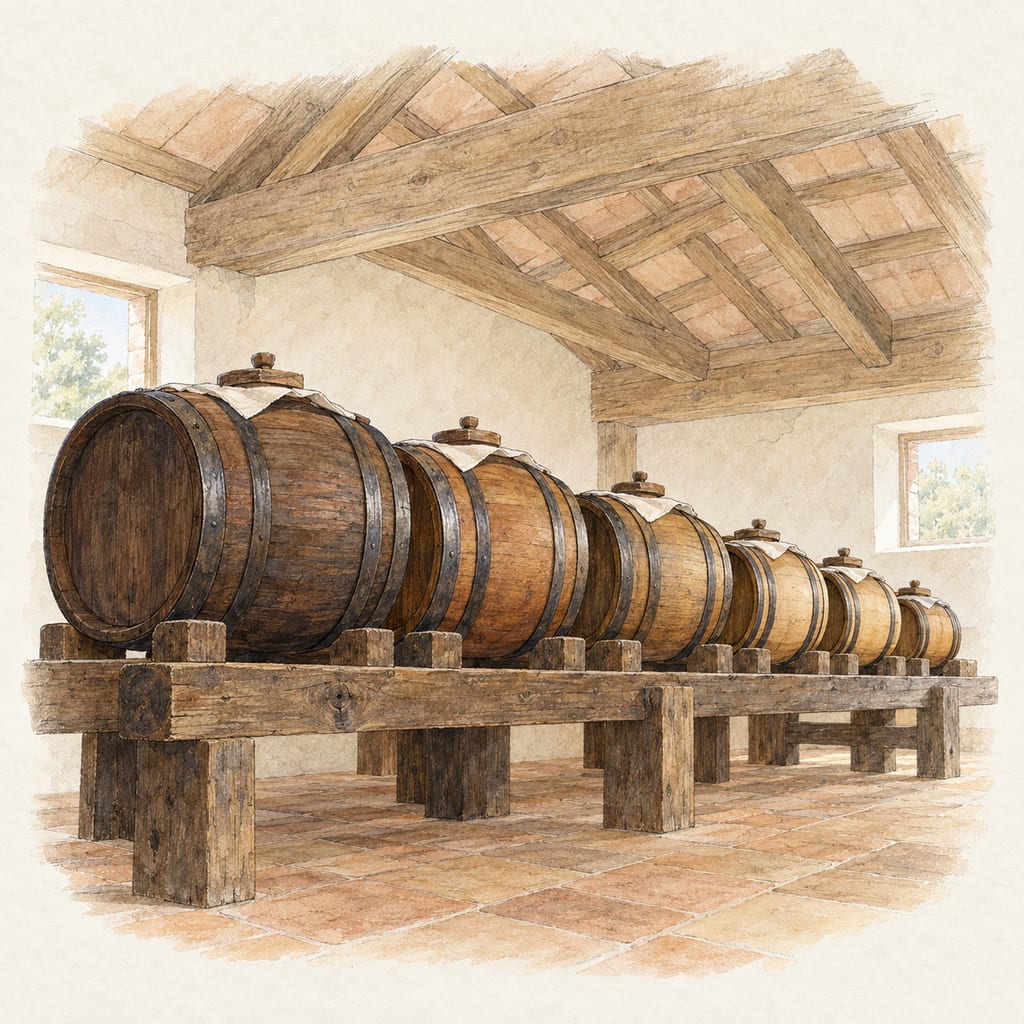
A balsamic batteria is a graduated set of wooden casks for traditional vinegar in Modena and Reggio Emilia. Transfers, evaporation, seasonal conditions and wood contact make the battery work as one system.

Soft, spreadable Calabrian pork sausage made with a great deal of red chilli and fatty pork, stuffed into natural casings, sometimes smoked and matured while staying soft.

A way to add independent temperature logging to an existing food dehydrator without changing its built-in controls or protections. It is a monitoring method, not a rewiring plan.

Pleurotus cystidiosus is the abalone mushroom, a cultivated oyster-type fungus with dark brown caps that grows more slowly and is more demanding than other Pleurotus species.

A dark, balanced vinegar from Emilia-Romagna made by combining cooked or concentrated grape must with wine vinegar, then acetifying and refining it in wood under a protected specification.

A living dairy inoculum that starts controlled cream fermentation, developing acidity and aroma before sour cream or cultured butter is finished.

A small electric incubator holds jars at a selected temperature for yogurt and other documented warm food preparations. Controls, capacity and vessel arrangement vary by model.

Adygean salt is a seasoned table salt associated with Adygea and the wider North Caucasian culinary tradition. Salt is blended with garlic and a variable selection of herbs and spices; the exact mix depends on the named style and maker.

The African Caesar-group mushroom, Amanita masasiensis, is a wild ectomycorrhizal species of central and southern African woodlands, eaten locally. The genus contains deadly poisonous species, so identification needs care.
No community contributions have been published for this entry yet.
Sign in to contribute. Published comments and photos are free to read.
Oklahoma State University, Food and Agricultural Products CenterDocumented use · Method
Use of Alternative Salts in Biltong Marinade to Reduce Sodium and Still Achieve USDA-FSIS >5-log Reduction of SalmonellaThe slides describe biltong as a South African-style dried meat product marinated with spices, vinegar and salt.
The study presentation depicts vacuum tumbling with marinade before hanging meat to dry and gives its experimental tumble conditions.
Cited in: A modern machine with a documented biltong use; The biltong research application; Scale and construction vary by model
Microorganisms (MDPI)Research · Safety
Effect of Biltong Dried Beef Processing on the Reduction of Listeria monocytogenes, E. coli O157:H7, and Staphylococcus aureus, and the Contribution of the Major Marinade ComponentsThe study reports its full biltong formulation, vacuum-tumbling and controlled drying conditions.
The reported reductions apply to the tested process and cannot be attributed to the tumbler alone.
Cited in: A modern machine with a documented biltong use; The biltong research application; How it relates to a vacuum curing tumbler; Cleaning, operation and limits
Menozzi Food TechnologyEquipment design · Manufacturer specification · Care
Vacuum TumblerThe maker describes internal fin form, vacuum modes, drum controls, model-specific capacities, cleaning access, tilting and safety features.
The maker lists its company address in Albinea, Italy and a current vacuum-tumbler range.
Cited in: A modern machine with a documented biltong use; How vacuum tumbling works; How it relates to a vacuum curing tumbler; Scale and construction vary by model; Cleaning, operation and limits
VEMAG AustraliaEquipment method · Category context
Meat Tumblers & MassagersThe distributor explains the mechanical action of tumbling, vacuum operation and typical meat-processing applications.
It distinguishes batch vacuum tumbling from continuous drum processing and gentler massaging.
Cited in: How vacuum tumbling works; How it relates to a vacuum curing tumbler; Cleaning, operation and limits