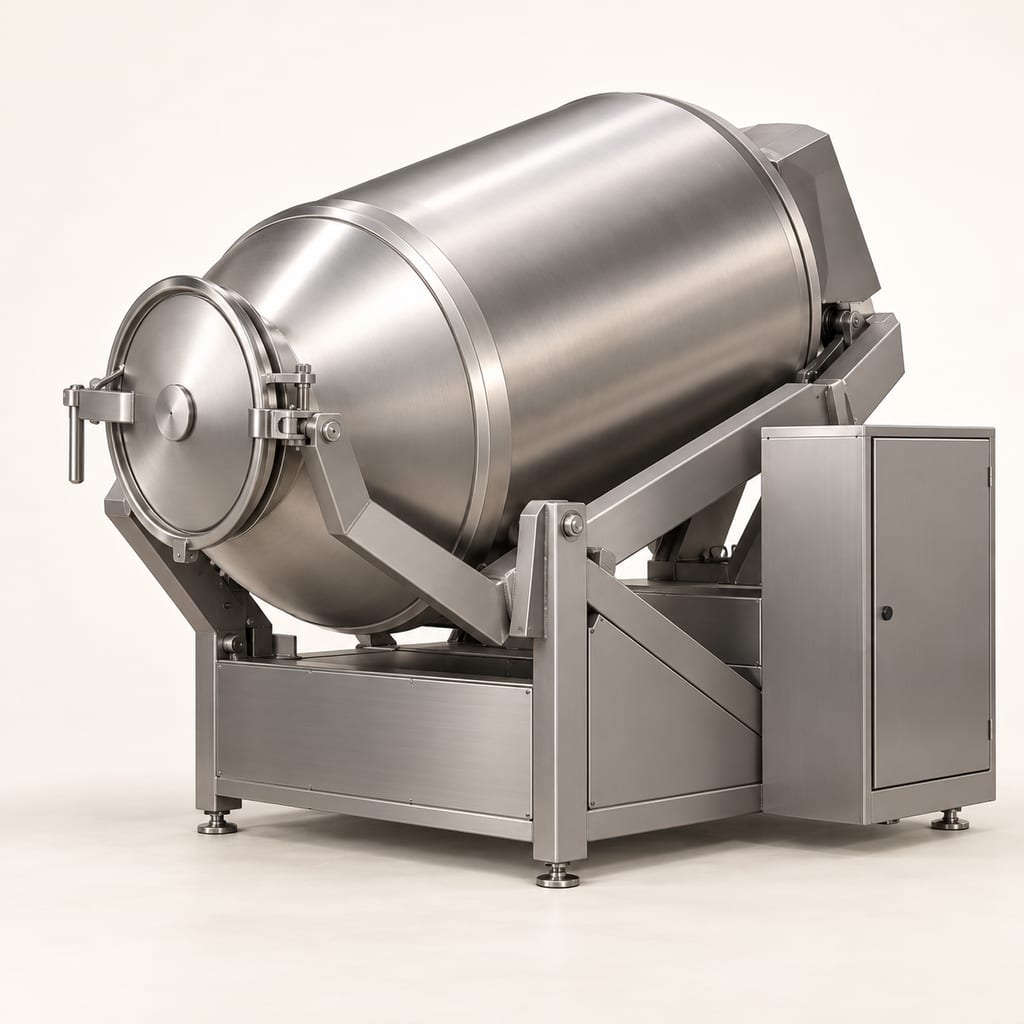
Vacuum tumbler
A vacuum tumbler is a powered rotating drum that massages meat under reduced pressure, distributing marinade or brine before later processing.
 FermenteaWhere food goes to change
Equipment · Churns, agitators and drums
An industrial vacuum curing tumbler rotates meat in a sealed drum to distribute salt and brine through mechanical massage, sometimes with cooling or temperature control.
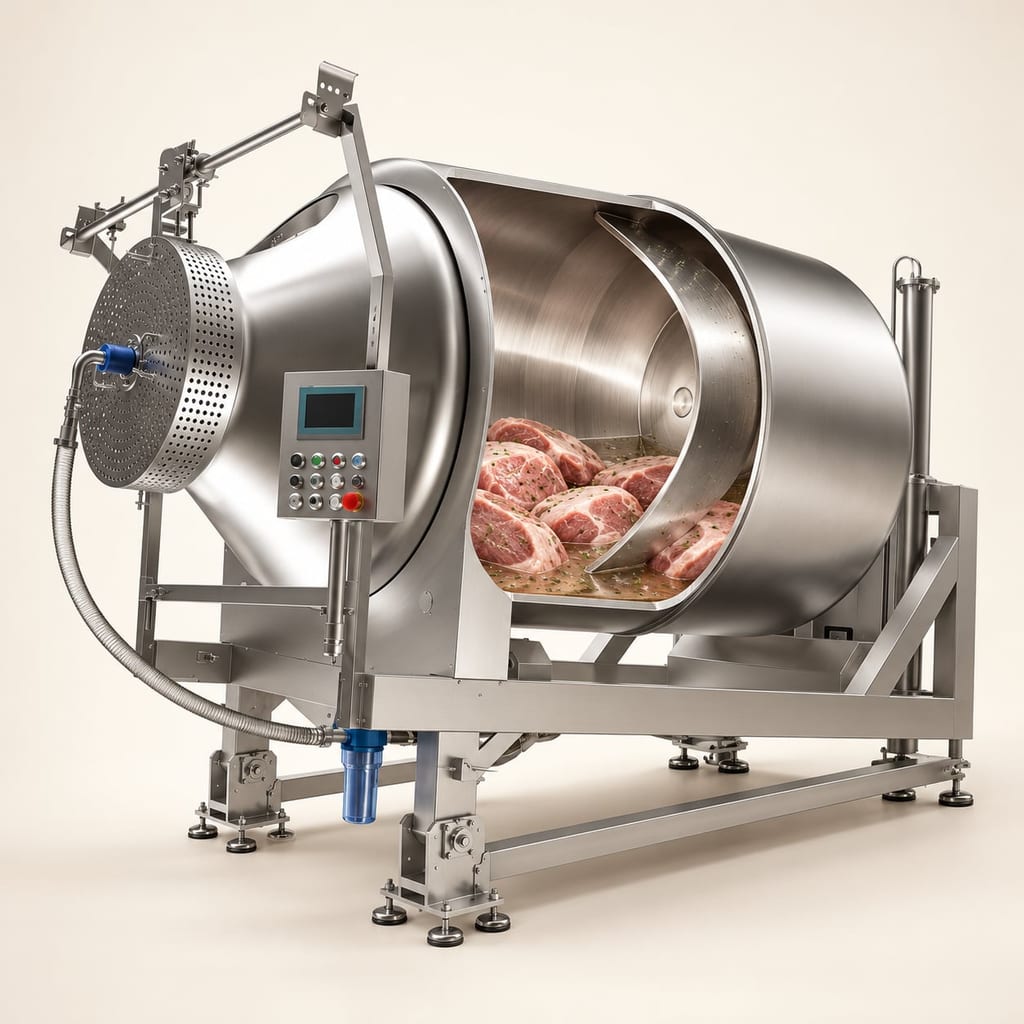
A vacuum curing tumbler is a powered meat-processing machine: a sealed drum turns and mechanically works cuts of meat while a vacuum system operates on the chamber. Inox Meccanica describes its BT-S as an automatic vacuum salting machine for cured products, including prosciutto crudo, speck, bresaola, pancetta, coppa and lonza. It classifies a separate BT-C line for cooked products, which shows why the application and model matter as much as the generic name.
The word “curing” here describes the machine’s use in salting and preparing cured meat. The tumbler itself is not a fermenter. The drum provides mechanical movement and the vacuum environment; it does not by itself specify a cure formulation, fermentation, drying or maturation schedule.
The available records document present-day commercial equipment, not the invention history of vacuum tumblers. The early date in this entry is the date of a currently available manufacturer page, not a claim about when the technology began.
Inside a batch tumbler, rotation repeatedly lifts and moves meat against the drum’s working surfaces. VEMAG Australia describes fins that raise pieces and let them fall back; this action spreads brine or marinade and mechanically loosens muscle structure. A cured-product design can use a shaped blade instead of identical fins. Inox’s BT-S page describes its internal blade as designed for a gentler massage suited to cured products.
The mechanical action is adjustable. Menozzi describes programs that vary rotational speed and direction, working and pause time, and continuous or pulsed vacuum. Its angled, spoon-shaped fins are a feature of that manufacturer’s range, not a universal shape. Inox describes a different approach in which the drum also tilts, and the BT-S blade is designed to modulate the working action across the batch.
This is why a tumbler is not simply a brine tank with a vacuum line. The moving chamber, blade or fins, vacuum cycle, loading and unloading arrangement determine how the meat is worked. A massaging cycle is the gentler end of the same mechanical family; a hard tumble may damage delicate products, so machine and program choice are product-specific.
Vacuum tumbling can follow brine injection or work as a stand-alone marinating step. VEMAG describes tumbling after injection for products such as bacon, ham and cooked deli meats, and also notes that tumblers can marinate without injection. Continuous tumblers are a different line arrangement: they operate in sequence after an injector and remove excess surface brine as the meat passes through. The BT-S is a batch machine with a closed chamber, not that continuous drum.
The internal motion distributes salt and other ingredients over the meat as it turns. Inox describes its BT-S as a salting machine for anatomical cuts and offers options such as cooling, temperature monitoring, integrated weighing, a smoking system and automatic handling. These options support particular production setups; they do not make every tumbler a smoker, cooler or weighing system.
The page Vacuum tumbler is a related, narrower application record focused on vacuum tumbling in a biltong research process. This entry describes the broader industrial category, especially machines designed for curing and salting. Their shared method is the reason for the equipment-to-equipment link between the pages.
These machines range from equipment for small industrial batches to large production lines. Inox lists BT-S models with maximum batch capacities from 500 kilograms to 4,500 kilograms, with dimensions that change by model. For example, the published layout for one smaller model gives a width of 1,830 millimetres, a length of 2,965 millimetres and a height of 2,330 millimetres. Those figures describe that model only; they are not dimensions for every vacuum curing tumbler.
Menozzi gives drum volumes for its own range: its Tumbler 700 has a 1,200-litre drum and the listed Tumbler 3500 has a 5,800-litre drum. These are different manufacturer models, so their loads and drum volumes should not be collapsed into a single class-wide rating. For an actual line, the manufacturer’s exact model data, product type and process plan are the relevant comparison.
Published machines use a vacuum pump, drive, chamber, controls and sometimes a tilting frame, cooling jacket, probe or load cells. The shell and contact construction are maker-specific. Inox says its tumblers are made entirely of stainless steel; that statement applies to its described product range rather than every machine under the category.
The manufacturers documented here are based in Italy: Inox Meccanica lists Solarolo di Goito in Mantova, while Menozzi lists Albinea in Reggio Emilia. VEMAG Australia lists Menozzi vacuum tumblers for customers in Australia and New Zealand. Those locations describe manufacturer and distributor examples; they do not make the machine type an Italian invention or establish that every model is sold everywhere.
Cleaning and service access vary by model. Menozzi describes a drum interior accessible from outside for inspection and sanitation, and a tilting arrangement that helps residual liquid drain. Inox describes features for its own machines, including a sealed hatch and additional access for cleaning hidden areas. A reader should use the instructions for the exact machine rather than assume these design features apply across the category.
The vacuum tumbler is one mechanical stage in an industrial process. Product formulation, injection, temperature management, curing time and any later cooking, fermentation or drying remain separate decisions. The equipment description does not supply a validated recipe or process schedule.
The records reviewed here are current industrial product pages for vacuum tumblers. They describe contemporary curing and salting machinery, but do not establish when the machine type was invented. Inox separates its BT-S model for cured products from its BT-C model for cooked products.
A tumbler is a mechanical salting, brining or marinating stage; its machine settings do not define a complete curing or safety process for every product.
Source →Load capacity, cooling, loading, discharge, control options and internal blade geometry are model-specific; the product pages do not provide one universal set of dimensions or operating conditions for the equipment class.
Source →Inox Meccanica lists its address in Solarolo di Goito, Mantova; this is a maker location, not the exclusive origin of vacuum tumblers.
Menozzi lists its address in Albinea; this is a second manufacturer example, not an origin claim for the machine class.
A vacuum tumbler is a powered rotating drum that massages meat under reduced pressure, distributing marinade or brine before later processing.
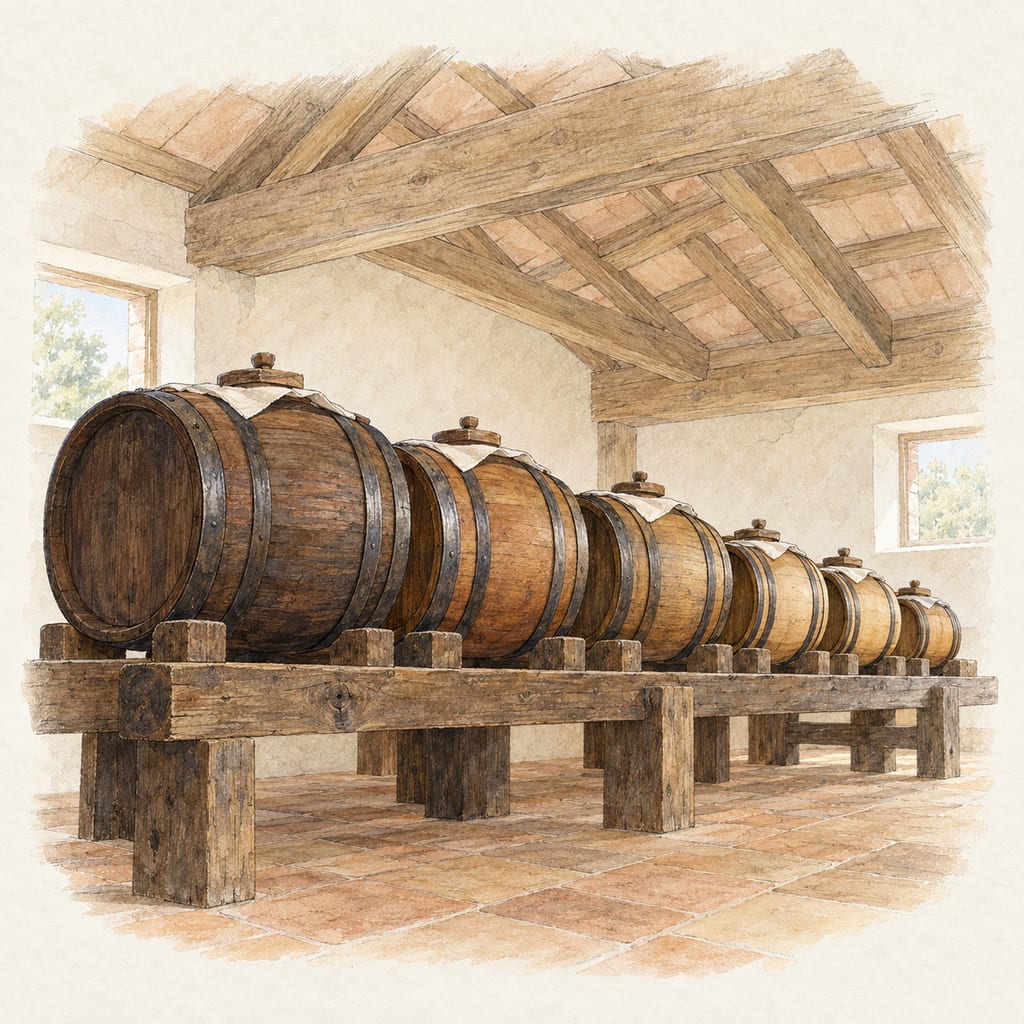
A balsamic batteria is a graduated set of wooden casks for traditional vinegar in Modena and Reggio Emilia. Transfers, evaporation, seasonal conditions and wood contact make the battery work as one system.
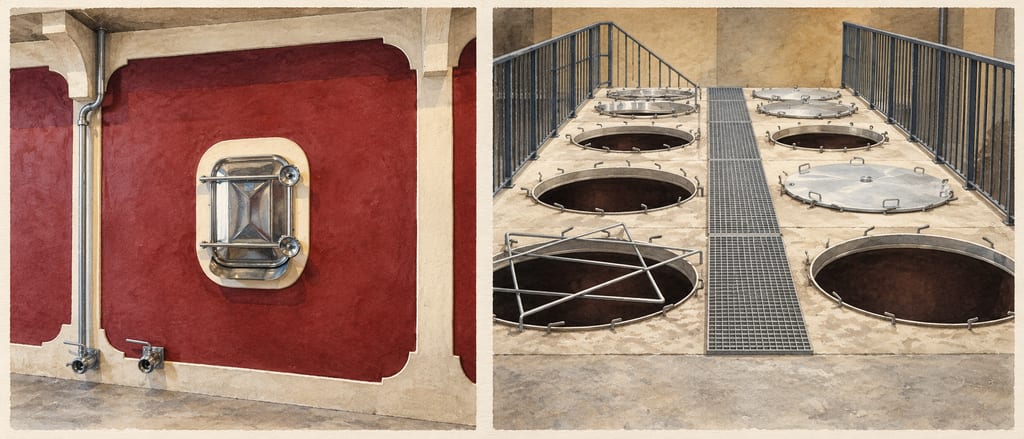
Concrete wine tanks are heavy, fixed vessels in rectangular, cylindrical and tapered forms. Their thermal response and wine contact depend on mix, wall construction and interior finish.
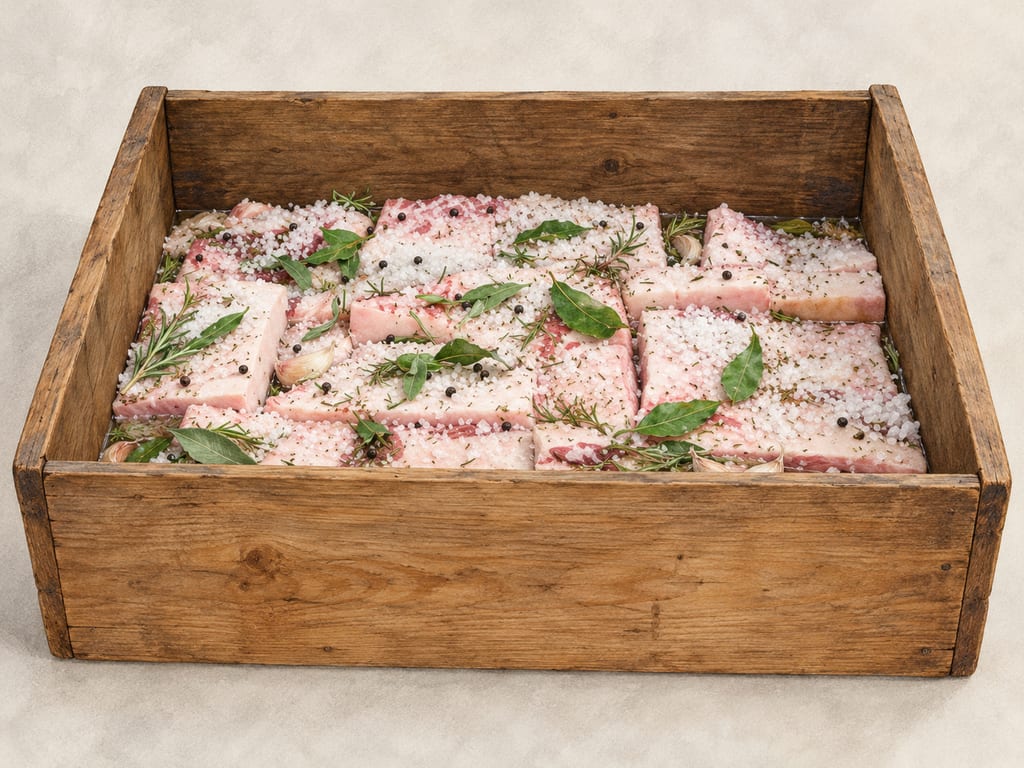
A wooden curing vessel used for Valle d’Aosta Lard d’Arnad: 1763 records already list four old doils in Arnad Castle, and the current DOP process uses native hardwood containers.
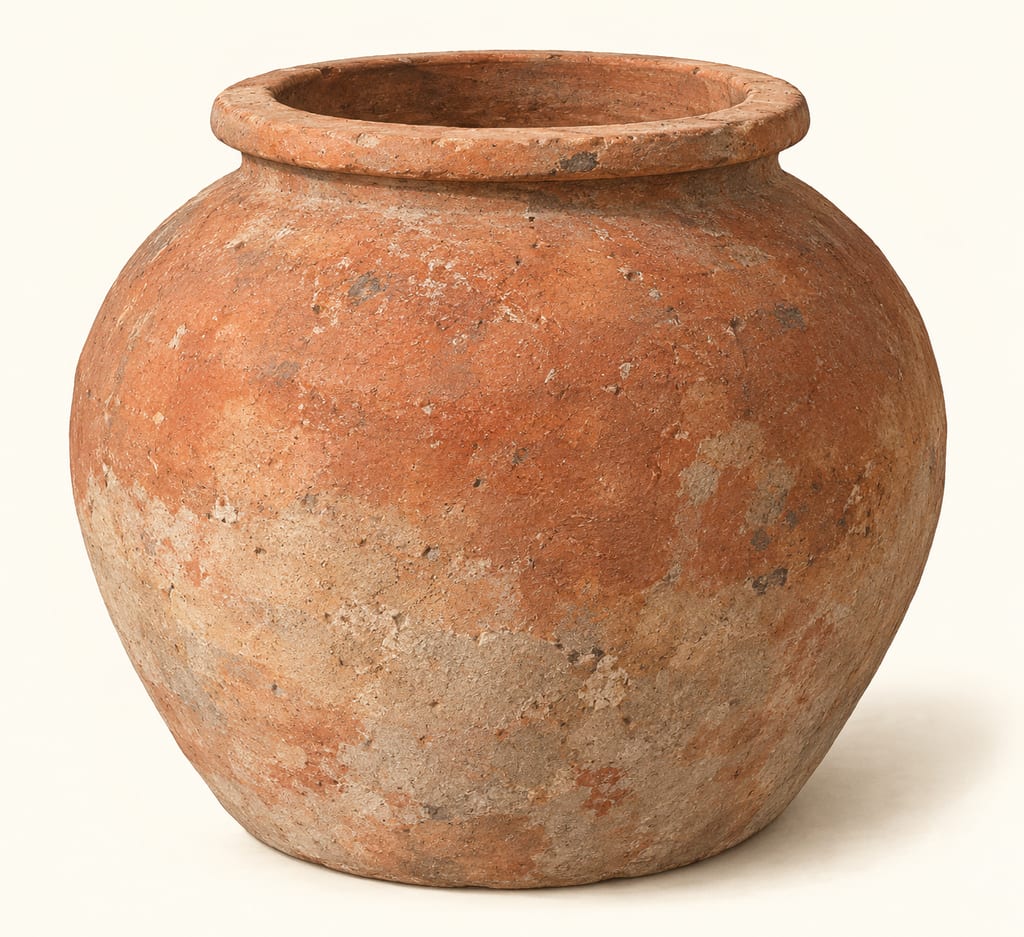
Six ceramic dolia at Pompeii’s Garum Shop held fish-processing remains. They are vessels, distinct from masonry fish-salting vats; the evidence does not establish whether these specimens were portable or fixed in place.
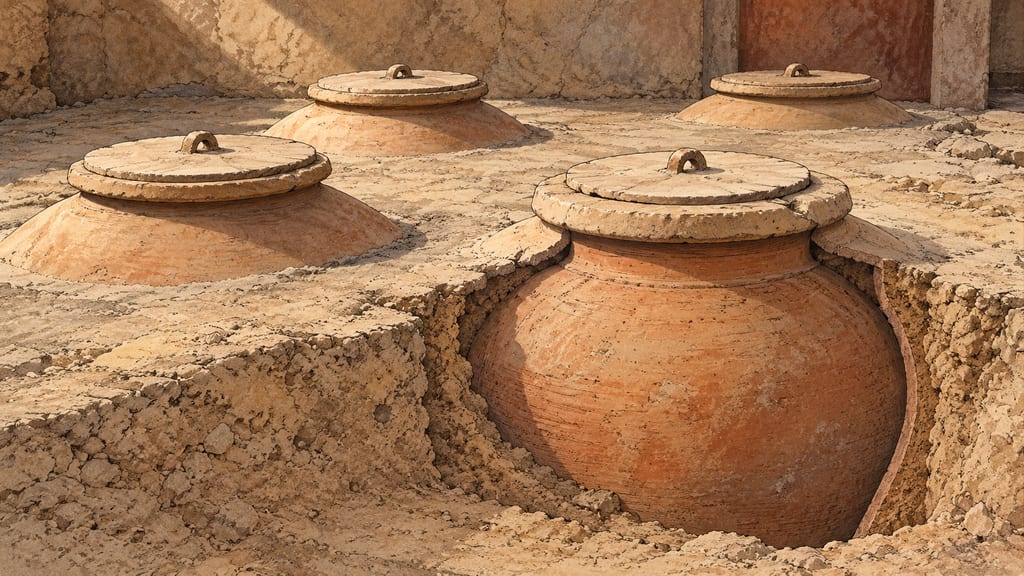
A Roman dolium was a very large ceramic storage and processing jar. In some wineries its heavy body was set partly into the ground; Pompeian evidence also documents dolia used for fish sauce.
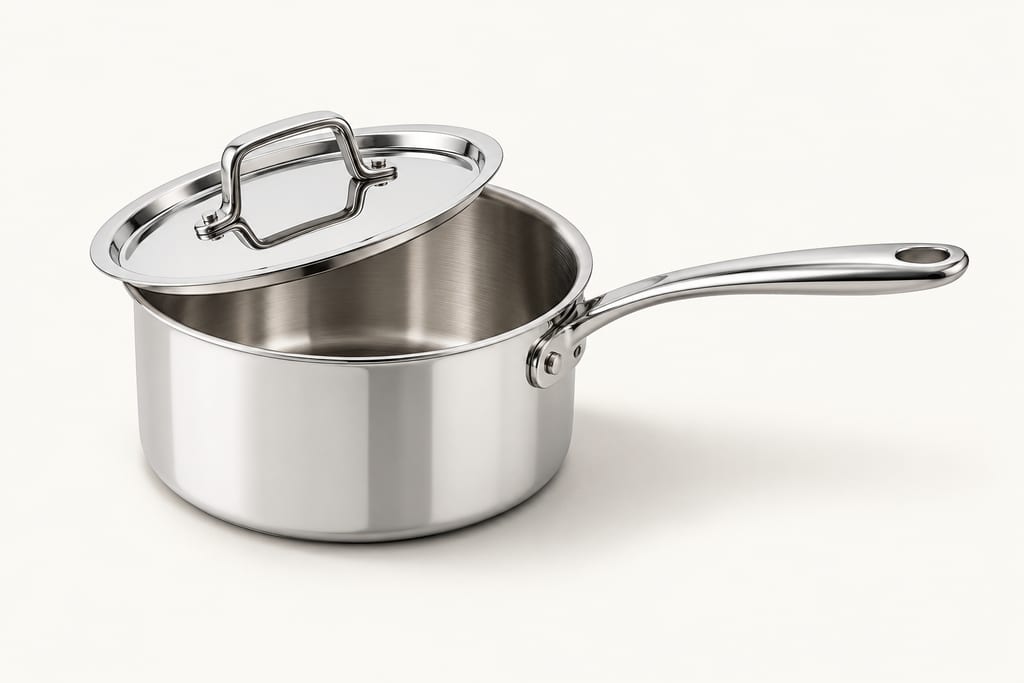
A modern, portable stovetop pan with a stainless-steel cooking surface for sauces and other small simmering jobs. Size, cladding, lid, compatibility and care vary by model.
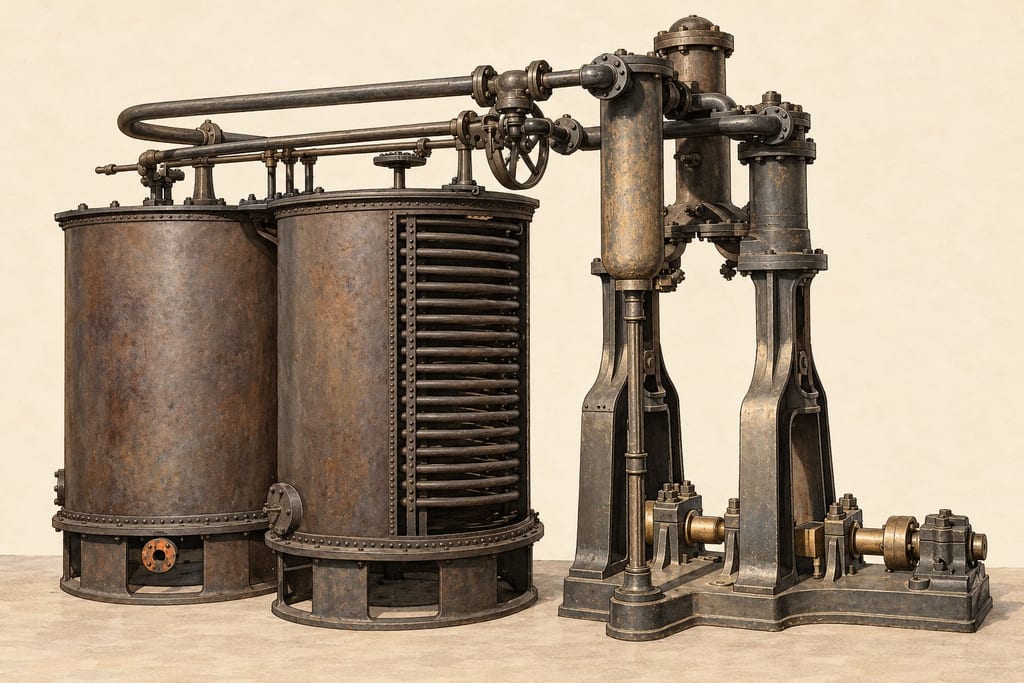
Linde’s 1876 ammonia-compression machine entered service at the Dreher brewery in Trieste in January 1877. Its cylinders and pipework mark the move from seasonal ice toward machine-made cold for brewing.
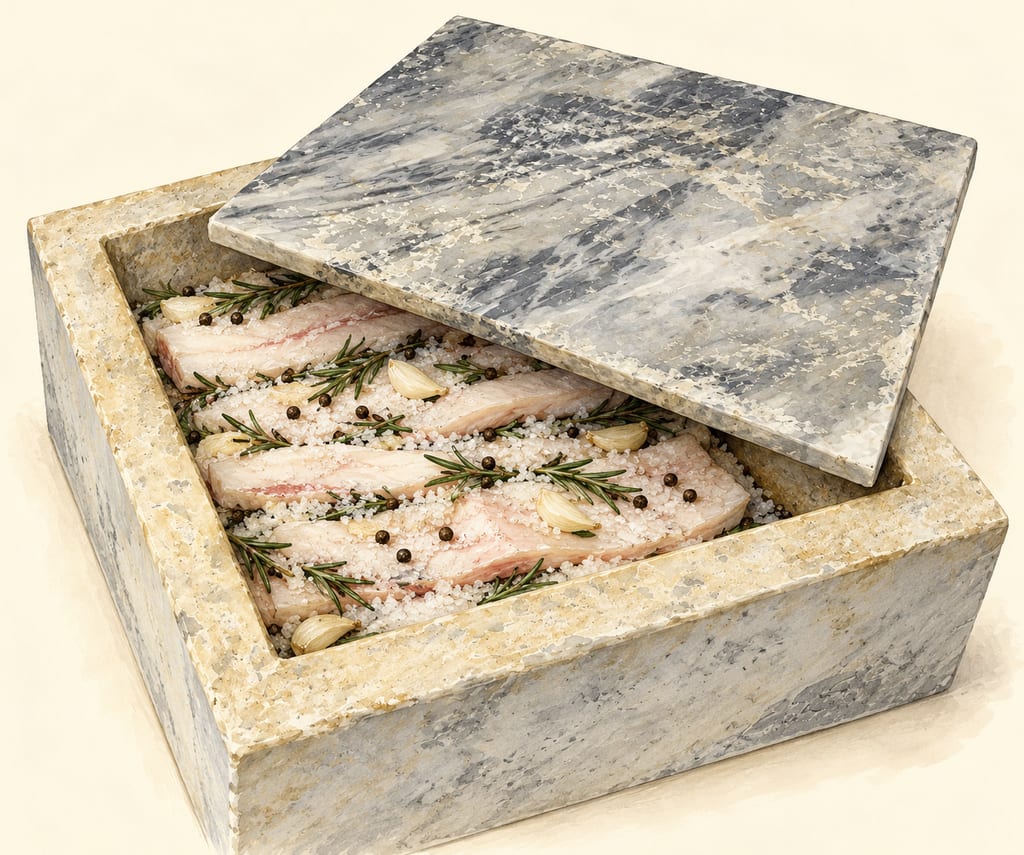
A conca is a thick-walled marble basin used in Colonnata, Tuscany, to salt-cure and mature lardo. Its local white marble and close-fitting stone lid form the documented vessel for Lardo di Colonnata IGP.

Soft, spreadable Calabrian pork sausage made with a great deal of red chilli and fatty pork, stuffed into natural casings, sometimes smoked and matured while staying soft.

A way to add independent temperature logging to an existing food dehydrator without changing its built-in controls or protections. It is a monitoring method, not a rewiring plan.

Pleurotus cystidiosus is the abalone mushroom, a cultivated oyster-type fungus with dark brown caps that grows more slowly and is more demanding than other Pleurotus species.

A dark, balanced vinegar from Emilia-Romagna made by combining cooked or concentrated grape must with wine vinegar, then acetifying and refining it in wood under a protected specification.

A living dairy inoculum that starts controlled cream fermentation, developing acidity and aroma before sour cream or cultured butter is finished.

A small electric incubator holds jars at a selected temperature for yogurt and other documented warm food preparations. Controls, capacity and vessel arrangement vary by model.

Adygean salt is a seasoned table salt associated with Adygea and the wider North Caucasian culinary tradition. Salt is blended with garlic and a variable selection of herbs and spices; the exact mix depends on the named style and maker.

The African Caesar-group mushroom, Amanita masasiensis, is a wild ectomycorrhizal species of central and southern African woodlands, eaten locally. The genus contains deadly poisonous species, so identification needs care.
No community contributions have been published for this entry yet.
Sign in to contribute. Published comments and photos are free to read.
Inox Meccanica S.p.A.Equipment design · Curing use · Capacity · Care · Safety
TUMBLER BT-S: Automatic vacuum salting machine for products to be curedThe BT-S is an automatic vacuum tumbler for cured products, with listed applications and model-specific load capacities and dimensions.
Optional features include cooling, temperature monitoring, smoking and weighing; its internal blade and hatch are described.
Inox says its tumbler machines are made entirely of stainless steel.
Cited in: A modern industrial curing machine; Drum motion and the working surface; Where it fits in a curing line; Scale and model-specific capacity; Geography, access and care
Inox Meccanica S.p.A.Equipment classification · Geography · Manufacturer context
Vacuum meat tumblersThe company distinguishes the BT-S for cured products from the BT-C for cooked products and lists a manufacturing address in Solarolo di Goito, Mantova, Italy.
Cited in: A modern industrial curing machine; Geography, access and care
Menozzi Food TechnologyEquipment design · Manufacturer specification · Care
Vacuum TumblerMenozzi describes fin shape, pulsed or continuous vacuum, program controls, drum cleaning access, tilt and machine-specific capacities.
The maker lists current model drum volumes, load capacities and its address in Albinea, Italy.
Cited in: Drum motion and the working surface; Scale and model-specific capacity; Geography, access and care
VEMAG AustraliaEquipment method · Process context
Meat Tumblers & MassagersThe distributor explains rotating-drum action, vacuum operation, batch vs continuous tumbling and the distinction between tumbling and gentler massaging.
Cited in: Drum motion and the working surface; Where it fits in a curing line; Geography, access and care