A large jar with more than one job
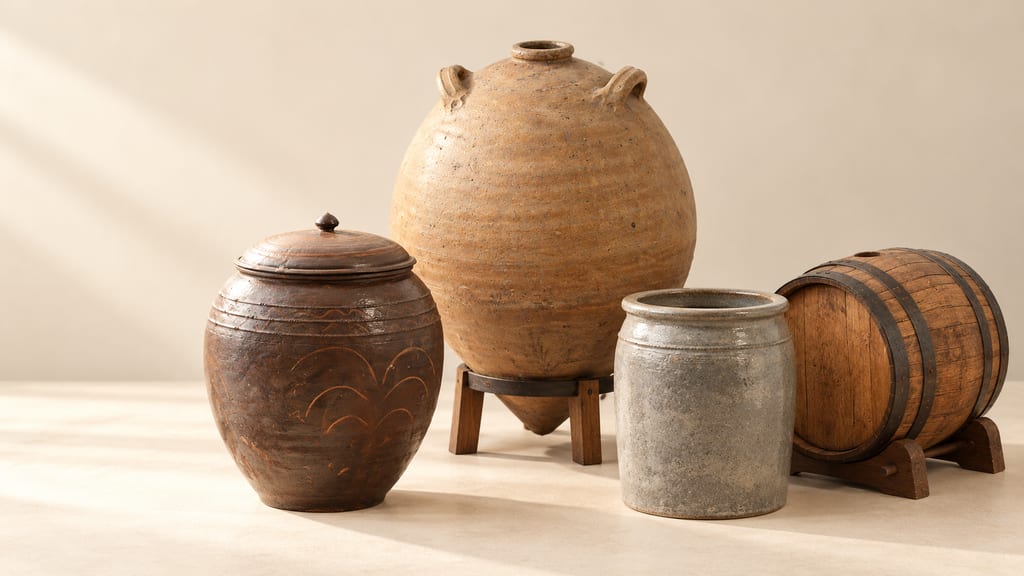
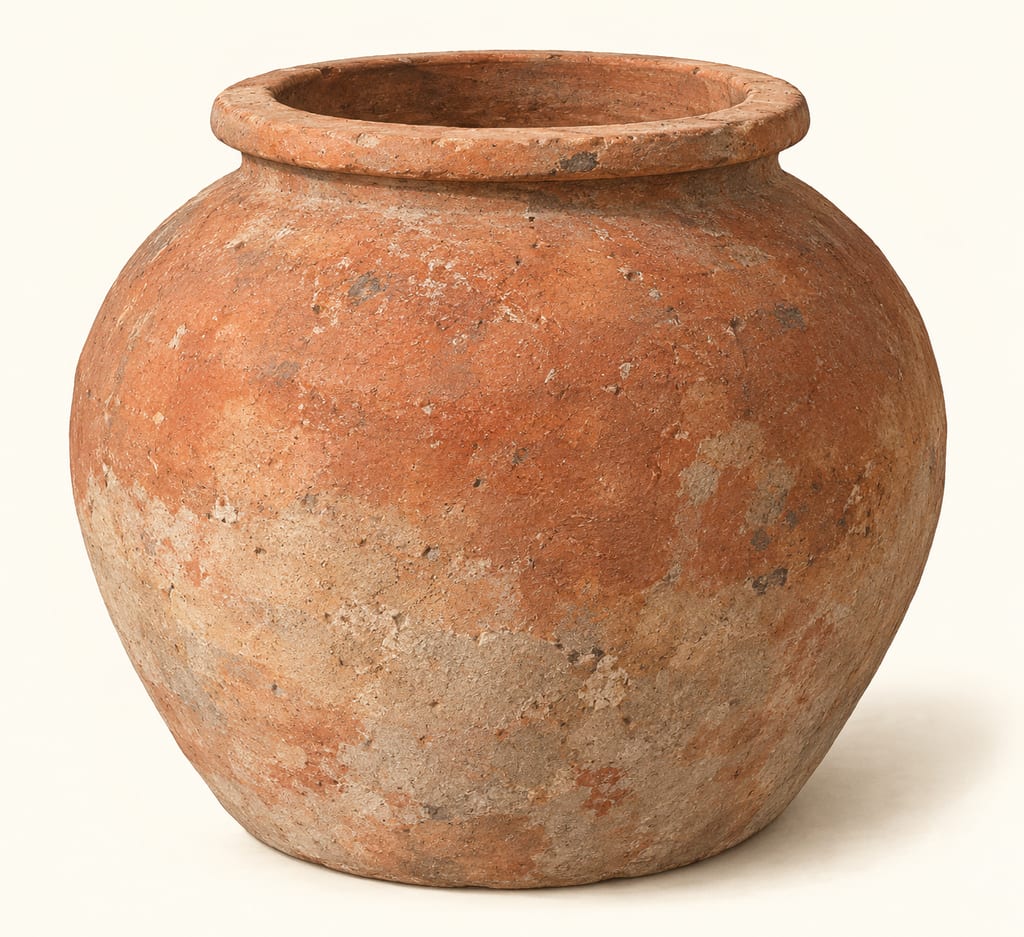
A dolium (plural dolia) was a very large Roman ceramic container used for bulk storage and, in some documented settings, processing. It is not the same as an amphora: the broad, heavy storage jar belongs to a cellar or work area, while the familiar handled amphora was shaped for carrying and shipment. The word alone does not establish what a particular jar held; its archaeological setting and residue matter.
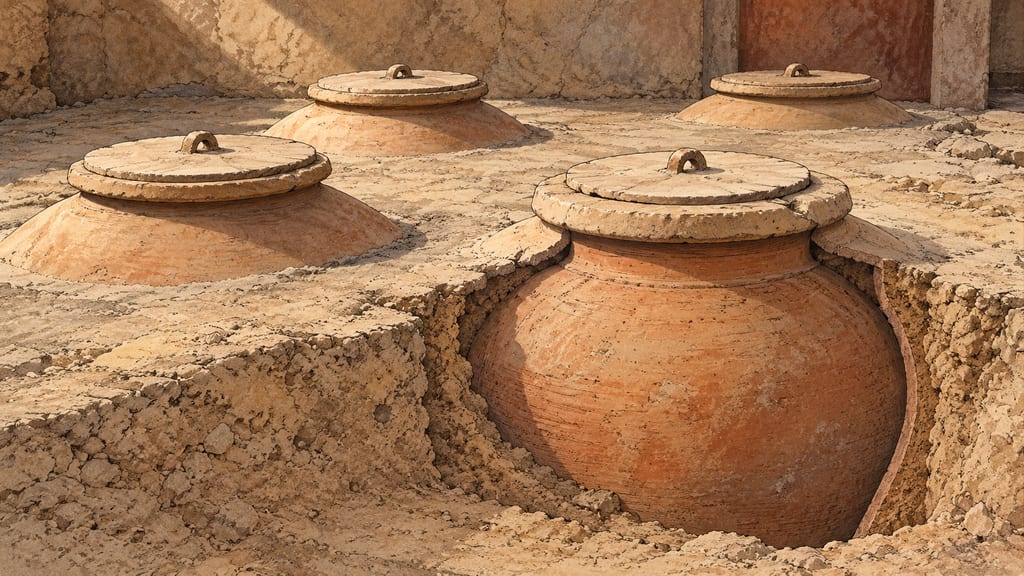
The Villa Regina complex at Boscoreale preserves a wine cellar with eighteen dolia. The archaeological park dates the villa's original form to the first century BCE and records its destruction in the eruption of AD 79. This is a specific installation, not a universal count or a capacity standard for Roman cellars.
Sources for this section
A vessel designed around its scale
The comparative study of Roman vinification treats dolia as engineered containers: clay composition, dimensions and shape were selected features, not incidental details. Its comparison with Georgian qvevri asks how vessel material and placement may have influenced wine. Those proposed flavour effects remain interpretations rather than direct evidence of a single taste produced by every dolium.
The dolium's mass and size made its placement part of how it was used. Where a cellar installed jars partly in the ground, the surrounding earth supported the vessel and buffered it from short-term changes in room air. That physical relationship should not be mistaken for refrigeration or a measured constant temperature. The sources do not establish a standard capacity, wall thickness or operating temperature for the type.
Sources for this section
Wine, fish sauce and archaeological context
Wine storage is documented at Villa Regina, but Roman dolia also appear in other food-processing contexts. Chemical study of six dolia from Pompeii's so-called Garum Shop examined fish remains and compared them with the garum preparation described by Gargilius Martialis. The vessels record different batches at the time of the Vesuvian eruption. This is evidence for those six jars; it does not show that every dolium was used for fish sauce or that wine and salted fish shared one vessel.
The Roman fish-sauce vats known as cetariae were built masonry installations, a separate kind of equipment. A ceramic dolium and a built cetaria should therefore remain distinct even when both appear in evidence about garum. Matching a vessel to the process depends on the site evidence, not a broad visual resemblance.
Sources for this section
What the surviving examples can tell us
Dolia survive as objects and as fixed parts of rooms, so archaeology can show how a large vessel related to a cellar floor and to nearby work areas. A photograph of a row of jar mouths in a floor shows the visible installation, not the complete buried bodies. Conversely, a removed jar can show its full silhouette but no longer shows how deeply it was set or how its contents were reached.
No modern maker, standard size or current acquisition route is established for the Roman examples discussed here. Their practical lesson is historical: vessels were selected and installed to meet particular storage or production needs, and their material, shape and placement deserve attention together.
Sources for this section
History
Villa Regina at Boscoreale preserves a wine cellar with eighteen dolia in a complex whose original form dates to the first century BCE and which was buried by the eruption of AD 79.
Equipment details
CapacityNo capacity is established for the dolia described here; sizes varied and the cited Villa Regina account gives a count, not a volume.
PowerNo power
How you get oneNot obtainable today The Roman vessels discussed here are archaeological remains and are not obtainable as equipment today.
CareNo contemporary cleaning or maintenance procedure is established by the cited archaeological sources.
Made of
- Fired clay — Vessel body
Very large ceramic jar; composition and shape varied by vessel and use.
Limits
A dolium is distinct from a transport amphora; its use must be established from context and residue rather than assumed from its shape.
Source →Evidence for fish-sauce production in dolia at Pompeii concerns particular vessels and does not make every Roman dolium a garum vat.
Source →Places
Boscoreale
Historical attestation · Locality evidenceVilla Regina preserves a wine cellar with eighteen dolia; this site context does not establish the vessel type's place of invention.
Pompeii
Historical attestation · Locality evidenceSix dolia from the Garum Shop were examined; this is a specific archaeological context, not a claim that all dolia made fish sauce.