A small cask with a separate follower
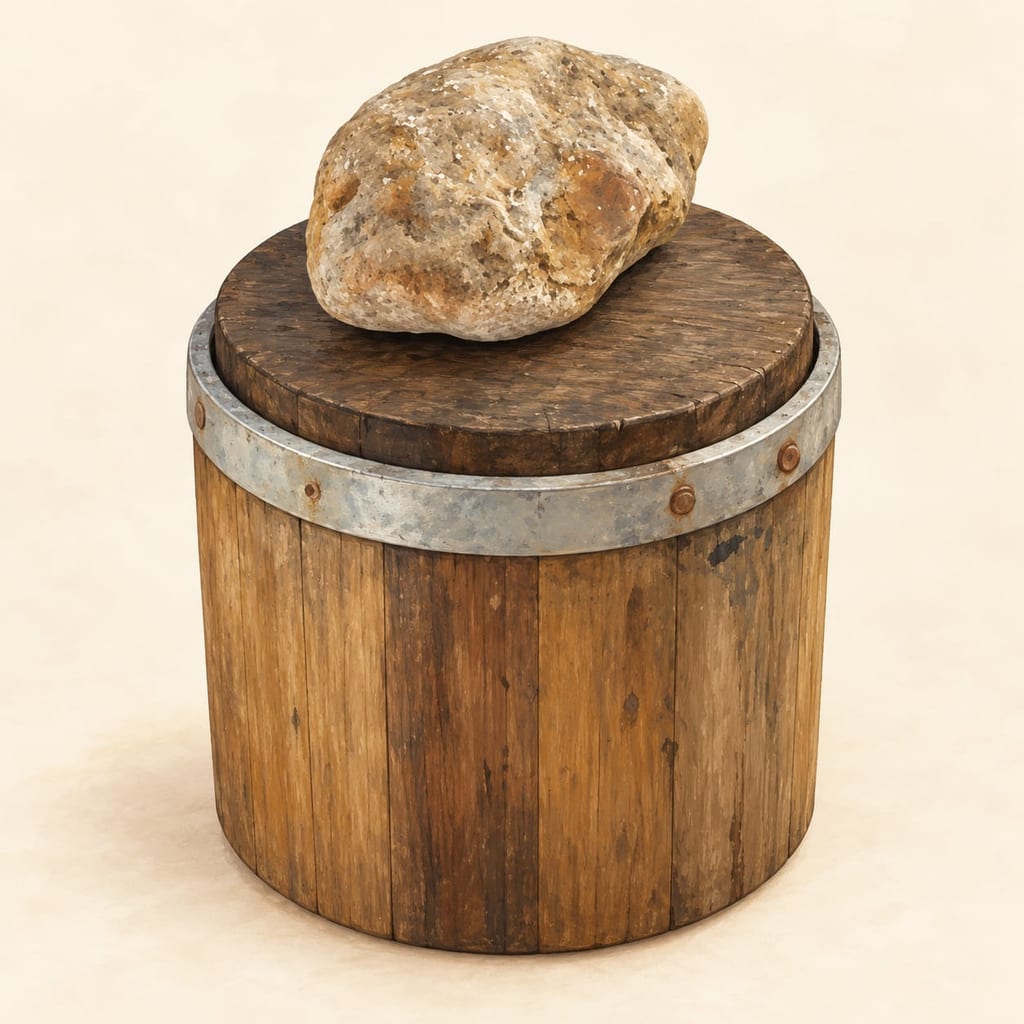
Terzigno names the small wooden cask used in the Colatura di Alici di Cetara DOP process. The 2024 production specification glosses the word as one-third of a barrel and distinguishes the vessel from its cover. A circular wooden disc called the tompagno sits over the alternating anchovy and salt layers; weights rest on that disc. The tompagno is therefore a separate follower, not another name for the cask.
The specification lists 20 kilograms as the fish-and-salt load for a terzigno. That figure describes contents, not volume: it cannot be converted into a litre capacity without additional evidence. The document does not give a standard height, diameter, stave thickness or universal wood species. The local association describes oak in its account of the example; the official specification itself says wood.
Sources for this section
How the documented form works
In this protected production context, the cask holds the salted anchovies while the weighted follower presses the contents during maturation. The 2024 specification says maturation lasts nine months in cool, ventilated rooms. It then describes a small opening made in the cask's bottom with a vriale so the liquid can be collected. This is more precise than calling the vessel a barrel with a side tap: the source locates the opening in the bottom and does not describe a fitted tap.
An association photograph shows one upright wooden cask with a visible rim hoop, round follower and stone weight. Those visible details help identify the traditional form, but a single photograph does not establish that every terzigno has identical hoops, dimensions or construction. The generated image on this page is an editorial reconstruction of those documented elements, not a photograph or replica of a named surviving vessel.
Sources for this section
Geography and limits of the record
Cetara, on the Amalfi Coast in Campania, is the place named by the protected product. The DOP specification defines a wider production area covering municipalities in the Province of Salerno. This records where the food is made, not where all casks are built. The sources establish current use of the terzigno in this regional tradition but do not date its first use, give a general cask-making recipe, or state where a reader could buy one.
The term is useful for this specific small cask, while barrel-and-cask is the broader equipment family. The tompagno, the stones, the fish and salt, and the bottom opening are associated components or contents rather than alternative names for the vessel. Avoid inferring a litre rating from the 20 kg product load or assuming that the photographed hoop and the association's oak example apply to every cask.
Sources for this section
History
The inspected official sources describe current protected production and a continuing local association, but do not date the first use of the terzigno form.
Equipment details
CapacityThe 2024 DOP specification lists a 20 kg product load for a terzigno. This is the load of fish and salt, not a stated vessel volume; no litre capacity is given.
SizeThe specification glosses terzigno as one-third of a barrel, but gives no general external dimensions.
PowerNo power This is a passive wooden vessel; the documented pressure comes from a separate wooden follower and weights.
How you get oneNot established The cited official sources describe production equipment but do not identify a general source or method for obtaining a terzigno.
CareThe 2024 specification describes maturation in cool, ventilated rooms. The sources do not give a general cleaning, repair or reuse protocol for the cask.
Made of
- Wood — Vessel body
The DOP specification identifies wooden terzigni. The local association describes oak for its example; that does not establish one species for all casks. - Metal — Rim hoop in the inspected example
A metal hoop is visible on the association's workshop photograph; the specification does not prescribe hoop material or state that every cask has one.
Limits
The specification gives 20 kg as the product load in a terzigno; it does not give litre capacity or universal dimensions.
Source →The same specification locates the extraction opening in the bottom and names the vriale as the tool used to make it. It does not describe a side tap.
Source →The protected product specification places production in municipalities of Salerno province; it does not establish where every terzigno is made.
Source →Places
Cetara
Traditional use · Locality evidenceCetara is named in the protected product and regional overview. The specification allows production across municipalities of Salerno province and does not identify the manufacture place of the cask.