Six vessels, not a built vat
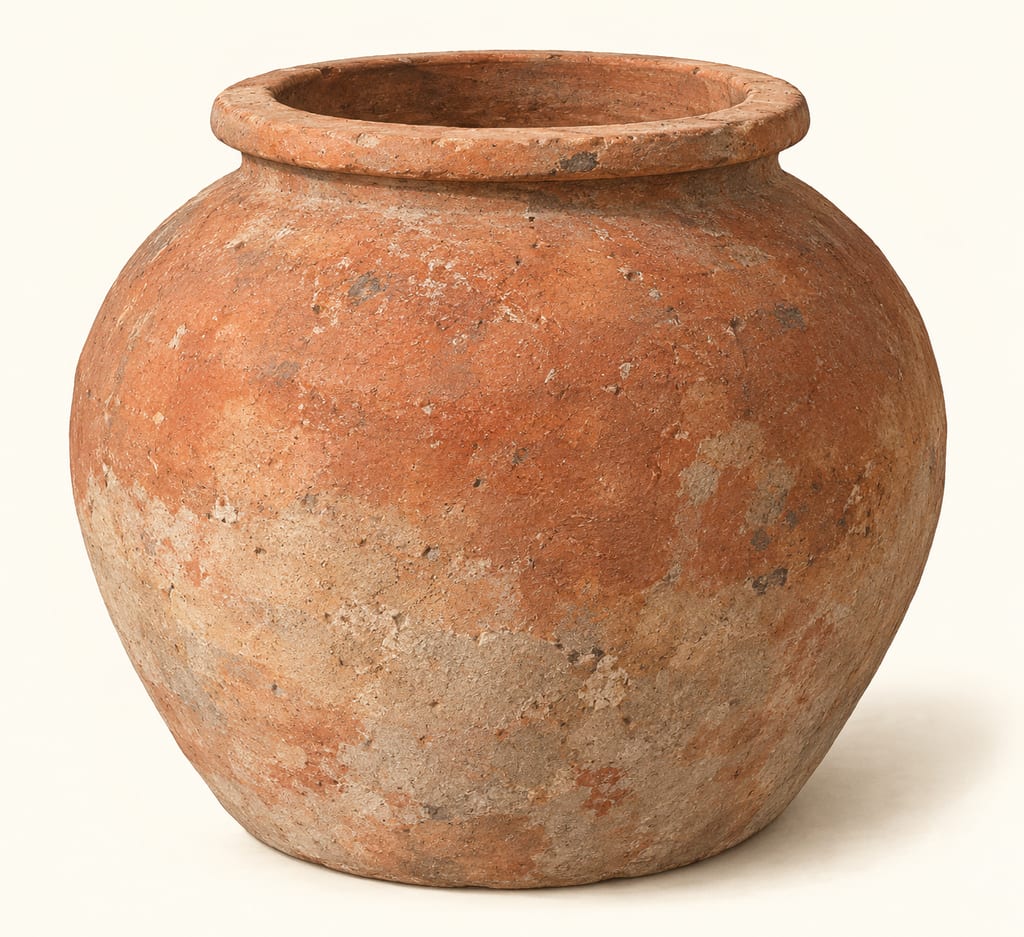
A 2018 study examined fish-processing remains from six ceramic vessels called dolia at Pompeii’s Garum Shop (I.12.8). Its figure caption distinguishes five sampled vessels, d1–d5, in the central part of the shop from d6 in the garden of Ambiente 9. Artisanal garum production used large storage jars (dolia) and other ceramic containers; industrial-scale fish processing also used separate fish-salting factories.
This record covers the jars. It does not describe a masonry tank, counter, or building, and the study does not say whether the six vessels were portable or fixed into the floor. The evidence therefore supports classifying them as vessel equipment without claiming how each specimen was installed. Roman fish-salting vats built from masonry belong to a different equipment record.
Sources for this section
What the residue study supports
The researchers compared remains from the six Pompeii dolia with a modern experimental garum based on a recipe attributed to Gargilius Martialis. They report that earlier zoological analysis found anchovy remains and pollen from culinary spices in the archaeological material. Their own analysis found differences in nitrogen and fat between the vessels; they suggest these could indicate different batches in progress when Vesuvius erupted in AD 79.
Those results support the use of ceramic jars in fish-sauce production at this site. They do not disclose a complete ancient recipe, and the authors present mineral explanations such as lime use or colouring as possible interpretations. This page does not turn those possibilities into established ingredients, a cleaning method, or a modern production instruction.
Sources for this section
Reading the site photographs
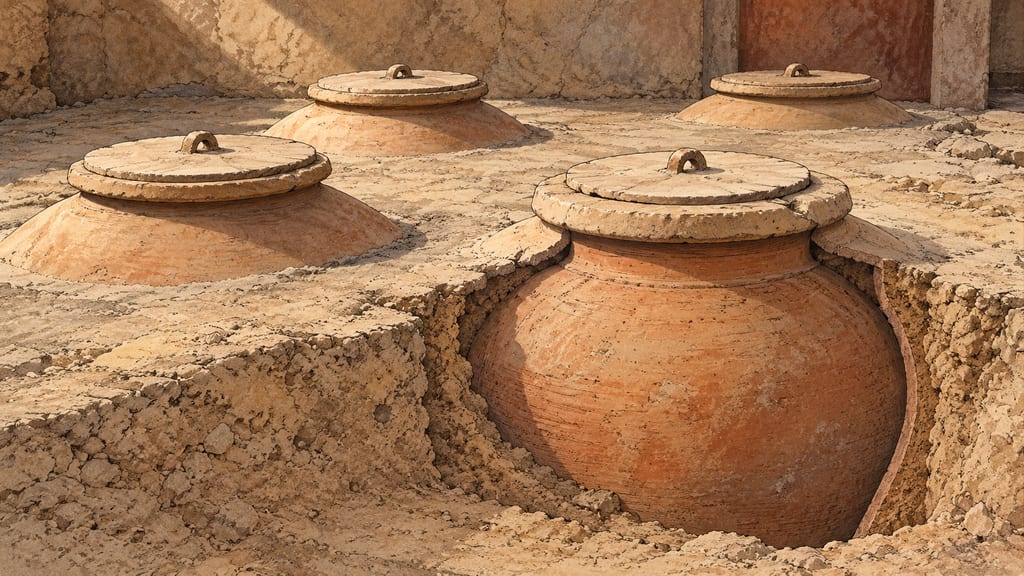
A linked PompeiiinPictures page shows dolia in the north-west corner of the complex’s peristyle garden. Its captions identify five vessels in that garden area, while the chemistry paper labels its sampled d1–d5 in the central shop area and d6 in the garden. The photographs help readers see dolia at the site but do not prove that the pictured garden group is the same six-vessel sample.
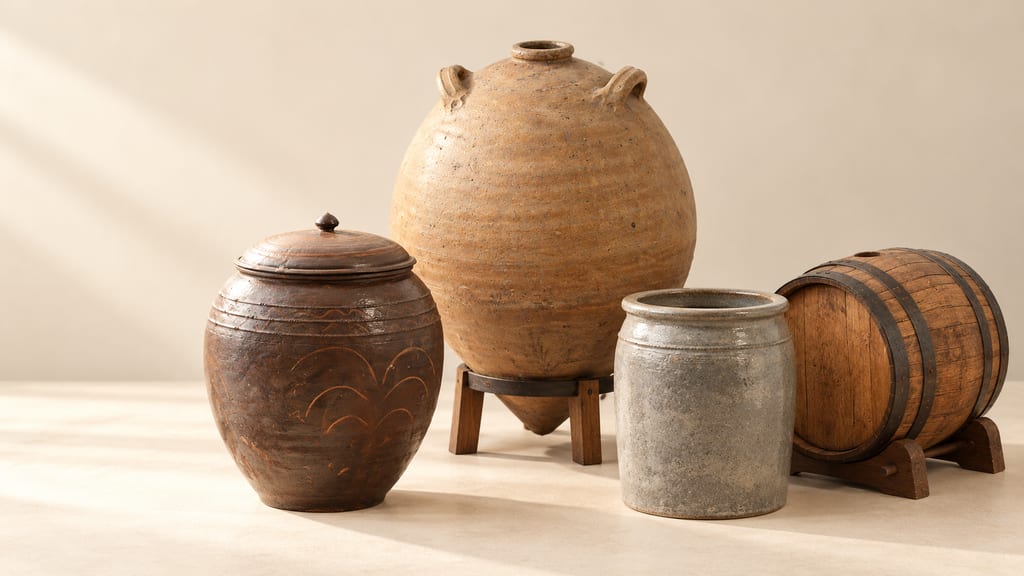
The sources call the vessels large ceramic storage jars but provide no measurements, capacities, clay composition or surface treatment for the six analyzed examples. Nor do they state whether those jars could be moved once filled. The image is contextual evidence for vessel form, not a blueprint or proof of a fixed installation.
Sources for this section
History
A 2018 study sampled fish remains from six dolia preserved in Pompeii's Garum Shop I.12.8. Its figure caption places d1–d5 in the central shop area and d6 in the garden of Ambiente 9. This dates the documented use of these specimens, not the origin of Roman dolia or every feature of their construction.
Equipment details
CapacityThe study gives no capacity figures for the six Pompeii vessels.
SizeThe study identifies large storage jars but gives no dimensions for these six specimens; no size is inferred from the photographs.
How you get oneNot established These are archaeological specimens at Pompeii; the sources do not support a present-day acquisition route for this item.
Made of
- Ceramic — vessel material
The research describes the six as dolia and ceramic vessels; it does not establish clay composition, surface coating or glaze.
Limits
The research identifies six dolia but gives no dimensions, capacities, clay recipe, coating, glaze or construction details for those specimens.
Source →The study reports possible batch differences from residue chemistry; it does not recover a complete ancient recipe or establish every ingredient or additive.
Source →Neither the paper nor the site-photo captions establish whether the studied jars were movable, set into the floor, or fixed to the building. This record is for ceramic vessels, not a masonry installation.
Source →Places
Pompeii
Historical attestation · Locality evidenceSix analyzed vessels were preserved at the Garum Shop (I.12.8) in Pompeii. This is a site-specific historical attestation, not a claim that Pompeii originated the dolium form.