The vessel in Arnad's lard tradition
A doil is a wooden vessel for curing the Valle d’Aoste Lard d’Arnad PDO. The old containers in the Aosta Valley tourism description are chestnut or robur oak. The current DOP production description names native oak, chestnut or larch and calls the vessel Doilsin. These are source-specific material statements: the regional history passage does not name larch, while the current production account does.
An inventory of Arnad Castle dated 1763 lists four doils in the kitchen and identifies them as old. The vessels therefore predate that inventory, but the record does not establish by how long, who made them, or when the form began. Documentary evidence for Lard d’Arnad processing goes back to 1570; that is early evidence for the product, not a dated first mention of the vessel.
Sources for this section
A wooden vessel for layered curing
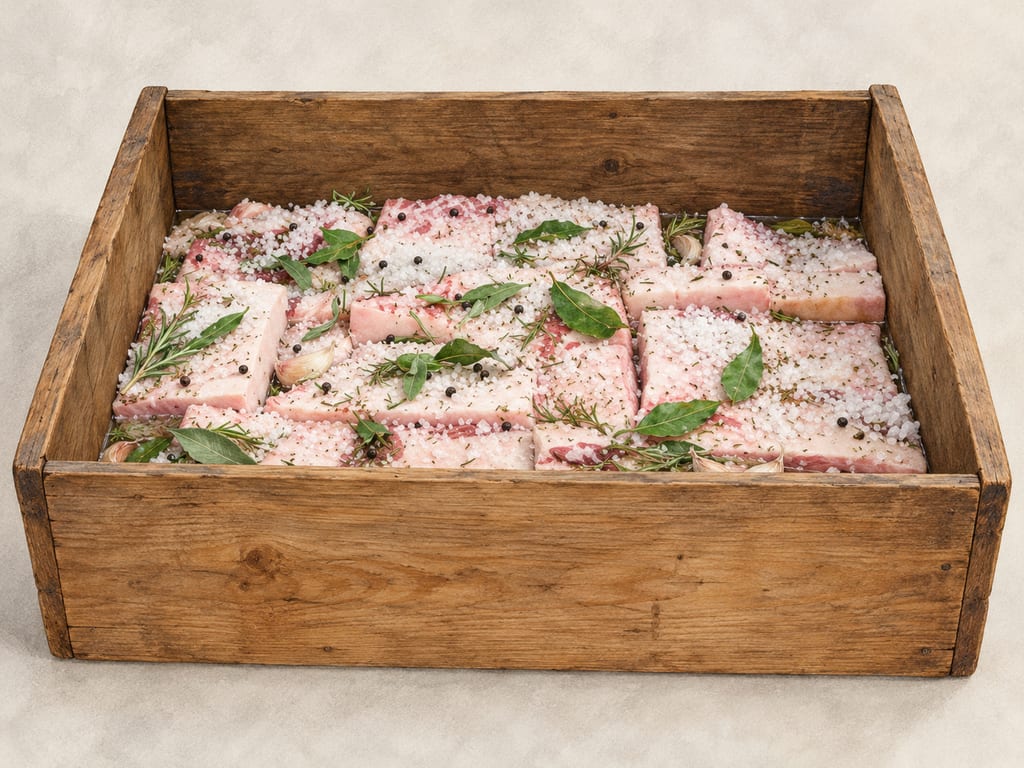
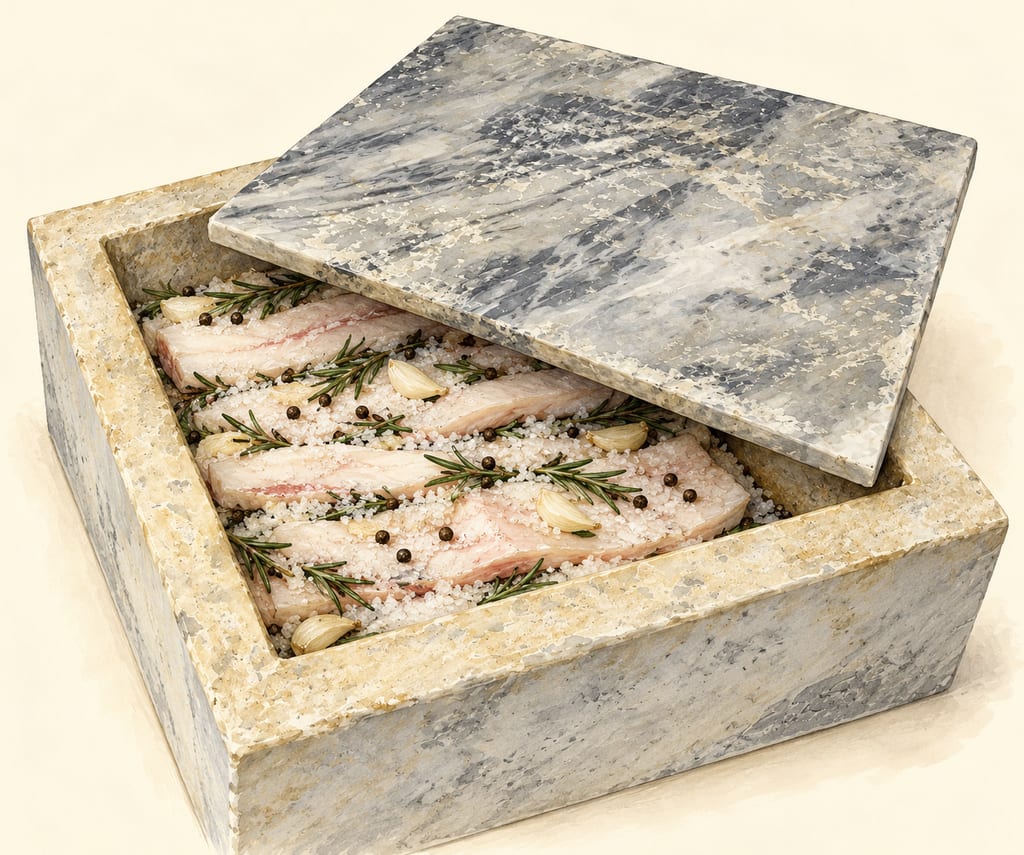
The doil holds rectangular pieces of pork back fat while they mature. The documented process layers the lardo with salt, rosemary, garlic, sage and bay leaves, sometimes with whole spices, then covers the contents with a mixture of water and crystallised salt. The product page also describes salt, water, spices, natural aromas and mountain herbs between the lardo layers. The doil is thus used as part of a layered, brined curing process, not only as a box for finished lard.
Current production descriptions give a minimum maturation of three months, with some batches held for twelve or fifteen months. These durations describe the lardo process, not a rated doil capacity or a rule that every vessel should be filled in a particular way. No measured data are provided for wood's effect on salt movement, oxygen exposure or flavour, so those effects should not be inferred from timber choice alone.
Sources for this section
Form, place and what the record does not establish
A recent photograph of Arnad curing shows lardo in a broad open wooden box with tall straight sides. It gives a useful view of one working example and grounds this page's illustration, but does not establish a standard shape for all doils or a particular historical construction. No dimensions, capacity, joinery, lid, seal, cleaning routine, repair method or commissioning route are specified.
The documented place is Arnad, in Italy's Aosta Valley. The 1763 castle inventory locates the vessels there, and the protected product is made in Arnad. Neither statement proves that every doil was manufactured there or establishes an exclusive local origin for the vessel. After maturation, lardo may be vacuum-packaged or put into glass containers; practical vessel-care and food-contact validation information is not specified.
Sources for this section
History
The official Aosta Valley tourism account reports that the first inventory of Arnad Castle, dated 1763, listed four doils in its kitchen. The official DOP Association says documentary evidence for Lard d'Arnad processing dates to 1570, while describing the doil preservation method as having ancestral origins and associating surviving specimens with the castle's old kitchens. The 1570 date supports early evidence for the product's processing, not a dated first appearance of this particular vessel.
Equipment details
PowerNo power The doil is a passive curing vessel; the cited accounts describe no powered function.
How you get oneNot established The sources identify wooden doils in current production but do not explain how a reader can obtain or commission one.
CareThe inspected sources give no vessel cleaning, seasoning, repair or storage instructions. They describe the lardo being removed for vacuum or glass packaging after maturation, not care of the wooden container.
Made of
- Wood — Vessel body
The DOP Association describes current doils as made from native oak, chestnut or larch. The Aosta Valley tourism account describes the historic containers as chestnut or oak; it does not name larch.
Limits
The accounts do not state a standard doil capacity, dimensions, timber joinery, closure, leakage performance, or vessel-care procedure. A recent process photograph shows one open, rectangular wooden box; that view does not establish a single historical standard form.
Source →The tourism account names chestnut and oak for the old containers; the current DOP Association's production description additionally names larch. These are source-specific statements, not a claim that every doil used all three woods.
Source →Places
Arnad
Documented preparation · Locality evidenceThe vessel is documented in the local Lard d'Arnad preparation and in Arnad Castle's 1763 kitchen inventory. This does not claim that doils were invented in Arnad or that all historical examples were made there.