← Equipment

Equipment · Tanks and vats

Marble conca

conca · conche · marble basin for Lardo di Colonnata

Loading ratings…

A conca is a thick-walled marble basin used in Colonnata, Tuscany, to salt-cure and mature lardo. Its local white marble and close-fitting stone lid form the documented vessel for Lardo di Colonnata IGP.

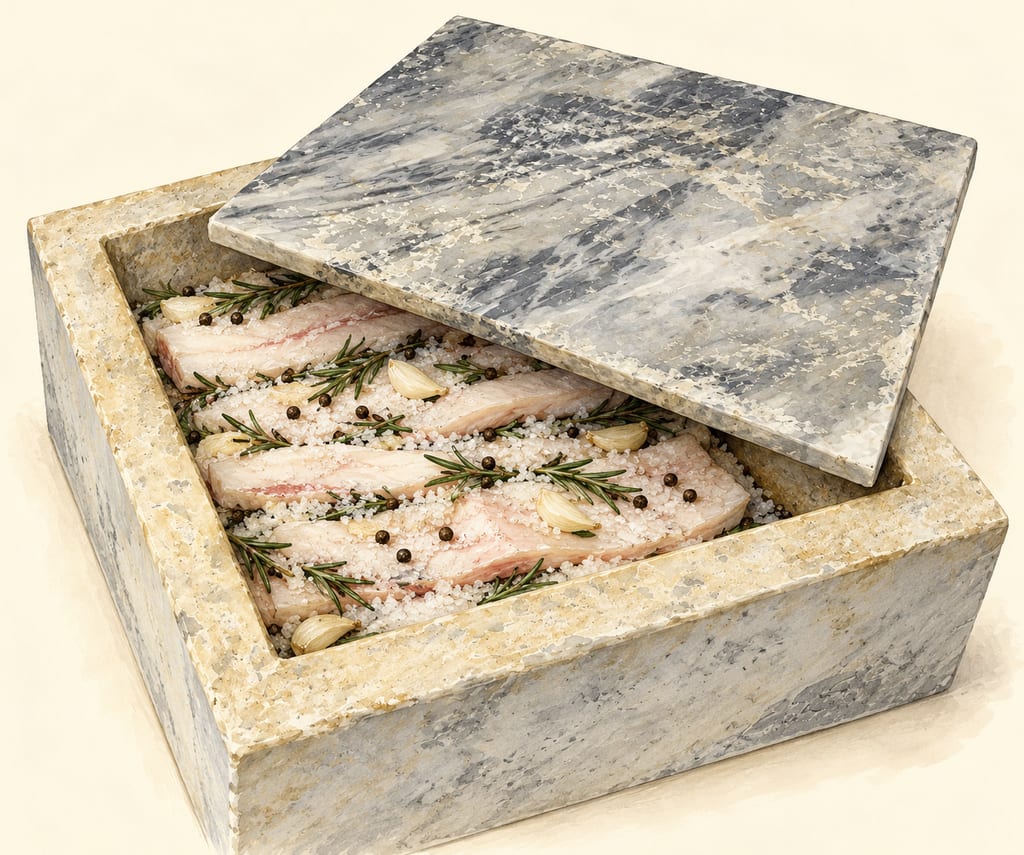
Hand-painted illustration of a thick-walled veined marble conca with its heavy lid partly covering layers of salted pork fat and herbs.

A basin made for Colonnata lardo

A conca (plural conche) is a thick-walled marble basin used to cure and mature the pork fat known as lardo di Colonnata. It is a made object set in a curing room, not an underground chamber or an ordinary open tub. The protected-product specification describes a trough-shaped basin of white marble from the Canaloni marble area at Colonnata, closed with a lid after it is filled.

The vessel belongs to one specific local food tradition in the Apuan Alps. Colonnata’s marble quarries and the lives of quarry workers are closely connected with the production and eating of lardo. The basin is not an alcoholic fermenter: the documented transformation is salt curing and maturation. The early history is not settled. Local heritage accounts mention competing Roman, Longobard and other origin stories, but dated conche surviving in the village provide firmer evidence from the seventeenth through nineteenth centuries.

Sources for this section

Stone, lid and the curing environment

The conca’s identity is tied to its material and place: the specification names white marble from the Canaloni basin at Colonnata, rather than marble in general. The municipality describes this stone as fine and compact in structure and resistant to the saline brine that develops during curing. That is a source-specific material claim, not proof that every marble vessel will perform the same way.

A Colonnata photograph shows a rectangular basin with substantial walls and a heavy marble slab lid resting partly across its opening. The sides and rim form a deep container for layered pieces of pork fat, salt and aromatics; the slab closes it when full. No standard capacity or measurements are given in the sources, and surviving examples need not share one size or construction. The image shows a dark interior but no lardo, so it documents the vessel’s form rather than a filled curing batch.

Sources for this section

How the conca is used

In the documented method, the basin is first rubbed inside with garlic. Fresh pork back fat, trimmed and salted within the specified period after slaughter, is arranged in layers with salt and aromatics such as pepper, rosemary and garlic. When the basin is full, it is covered and left to mature for at least six months in a room with little ventilation and no forced air conditioning. The process specification, rather than the vessel alone, defines those steps and the regional product.

As salt draws moisture from the fat, the layers form a brine around the pieces. The basin contains that liquid and keeps the salted fat and aromatic mixture in close contact during the long maturation. The local marble is identified in the specification as a material with properties considered important to the product; the available evidence does not quantify a separate chemical effect of stone on the fat.

After curing, lardo di Colonnata is often cut into very thin slices and eaten on toasted bread. The conca is therefore part of a preservation system shaped by a specific quarry landscape and local food culture. The sources do not prescribe empty-vessel cleaning or repairs, so this entry does not turn the garlic rub used before loading into a general sanitation procedure.

Sources for this section

Equipment details

CapacityThe consulted sources give no basin capacity.
SizeThe consulted sources give no standard measurements; basins vary.
PowerNo power The stone basin is unpowered.
How you get oneNot established The inspected sources establish use and local marble but do not specify how a reader can commission or acquire a conca.
CareThe consulted process sources describe rubbing the interior with garlic before filling, but do not give a general cleaning, repair or storage procedure for an empty basin.

Made of

  • White marble from the Canaloni basin at Colonnata — Basin body
    The IGP specification identifies this local marble as the conca material; the municipal source describes its fine, compact structure and resistance to saline brine.
  • Marble — Lid
    The process specification says the filled basin is closed with a lid; the inspected Colonnata reference photograph shows a thick marble slab lid.

Places

Colonnata, Carrara, Tuscany

Documented use · Locality evidence

The local basin and curing method are documented for Colonnata; the pig fat can originate in several Italian regions, but this place row identifies the vessel's use, not the raw material's origin.

Related

Community

No community contributions have been published for this entry yet.

Share what you made

Sign in to contribute. Published comments and photos are free to read.

Sources