Garum (garos, liquamen)
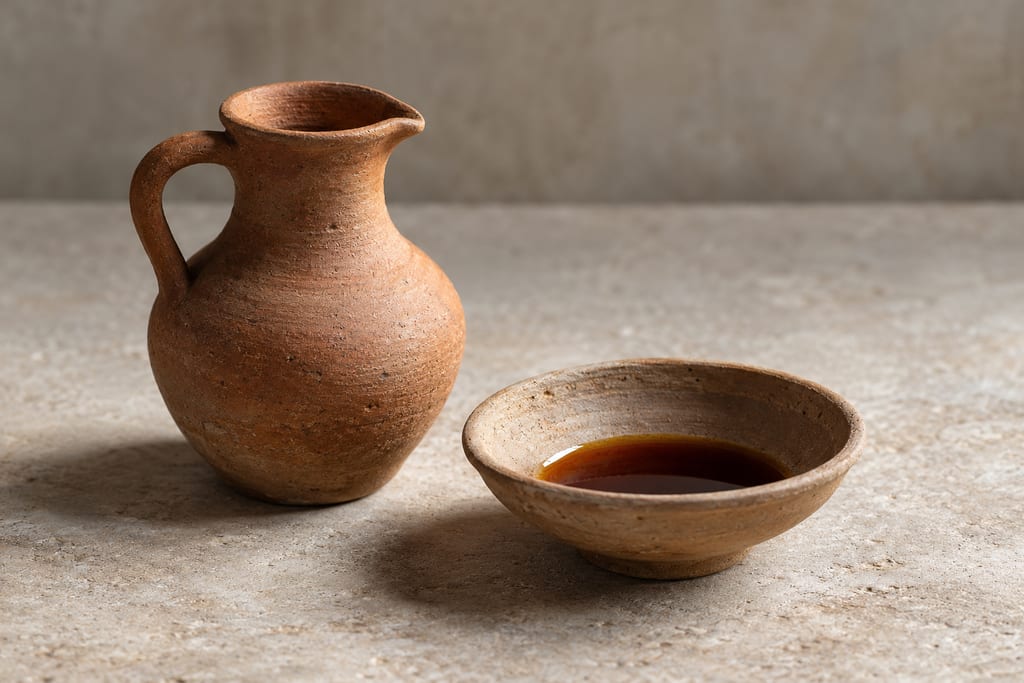
Garum, Greek garos and Latin liquamen, was the fish sauce of the ancient Mediterranean: fish and viscera salted and left in the sun, then drained off as a savoury liquid.
 FermenteaWhere food goes to change
Ταραμοσαλάτα (taramosalata) · Taramasalata · Tarama · Salată de icre
A meze of salted cured fish roe, most often cod, beaten with olive oil, lemon juice and a starchy base of bread or potato, from Greece and the eastern Mediterranean.
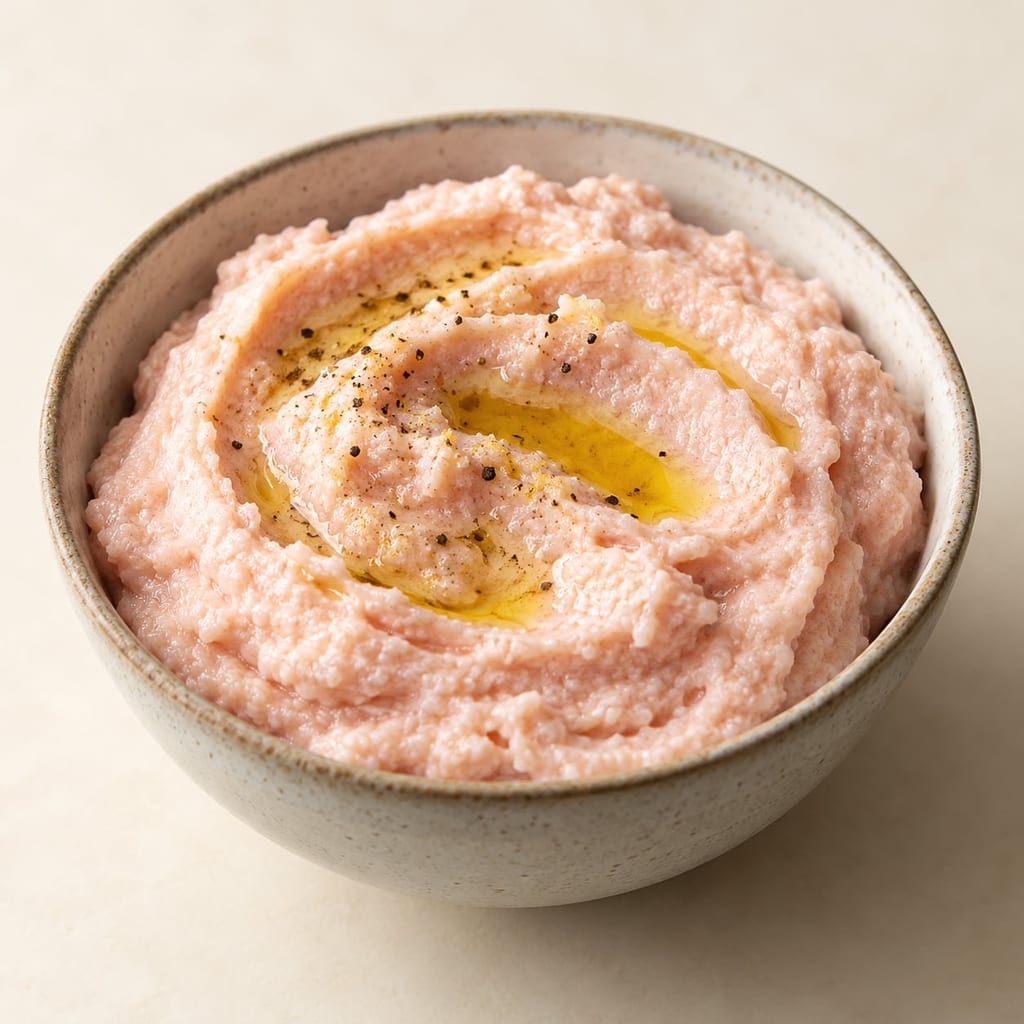
Taramosalata, also written taramasalata, is a meze built on tarama, the salted and cured roe of fish. The roe is usually cod, although carp and grey mullet are also used, and the word itself comes from Turkish, where tarama means soft roe. In Greece the roe is beaten with olive oil, lemon juice and a starchy base of bread or potato, and the result is a pale spread that is served cold with bread.
The colour tells the reader something about the product. Traditional taramosalata is creamy beige, and the pink spreads sold commercially are usually dyed. Its texture depends on method: a pestle and mortar leaves a slightly grainy spread, while commercial versions are smooth.
Istanbul tavern culture recorded tarama among its meze by the late nineteenth century. The writer Murat Doğan counts it among the classic tavern dishes that he treats as a Byzantine contribution to Istanbul cuisine, while the food writer Gil Marks argues from etymology for a Turkish origin. The two accounts are not reconciled in the sources read, and this page keeps both.
Fish roe changed in the Balkans. Gray mullet, cod and shad were the older roe; carp came to dominate after Sephardic Jewish merchants popularised carp in the Balkans in the sixteenth century. Carp roe gives the pinkish-orange colour that the modern dish is still associated with, although artificial colouring now produces much of that colour.
The starchy base is what makes the spread hold. Bread or potato is soaked or mashed and then beaten into the roe, while the oil and lemon juice are added slowly. Almonds can replace the bread or potato. Garlic, spring onion or peppers are common additions, and vinegar can replace lemon juice.
Taramosalata is usually served as a meze, often with ouzo, and it is served on Clean Monday, the first day of Great Lent, with onion and lemon. Smoked cod roe is more available than cured roe in some places and is often used. Bottarga, the dried roe of grey mullet, is much more expensive than cod roe.
Salată de icre, the roe salad of Romania, North Macedonia, Bulgaria and Israel, is a related spread. It is made with pike or carp roe and usually sunflower or vegetable oil rather than olive oil, often with a bread thickener and chopped onion. Its traditional production in Romania is standardised and registered as an EU Traditional Speciality Guaranteed product. Smörgåskaviar, the Scandinavian spread, is nearly identical in method, with tomato paste in some versions.
The sources read do not give a shelf life or a safe holding time for the finished spread. Cured roe is a raw animal product, and its storage is a separate research question from the mixed dip.
Tarama, the salted roe, comes from Turkish. The dip is recorded in Istanbul tavern culture by the late nineteenth century. Writers differ on whether its origin is Byzantine or Turkish; carp roe came into use in the Balkans after Sephardic merchants popularised carp in the sixteenth century.
Served as a meze, often with ouzo, and on Clean Monday; the source gives no locality.
Recorded as tarama among the meze of Istanbul meyhanes by the late 19th century.
Garum, Greek garos and Latin liquamen, was the fish sauce of the ancient Mediterranean: fish and viscera salted and left in the sun, then drained off as a savoury liquid.
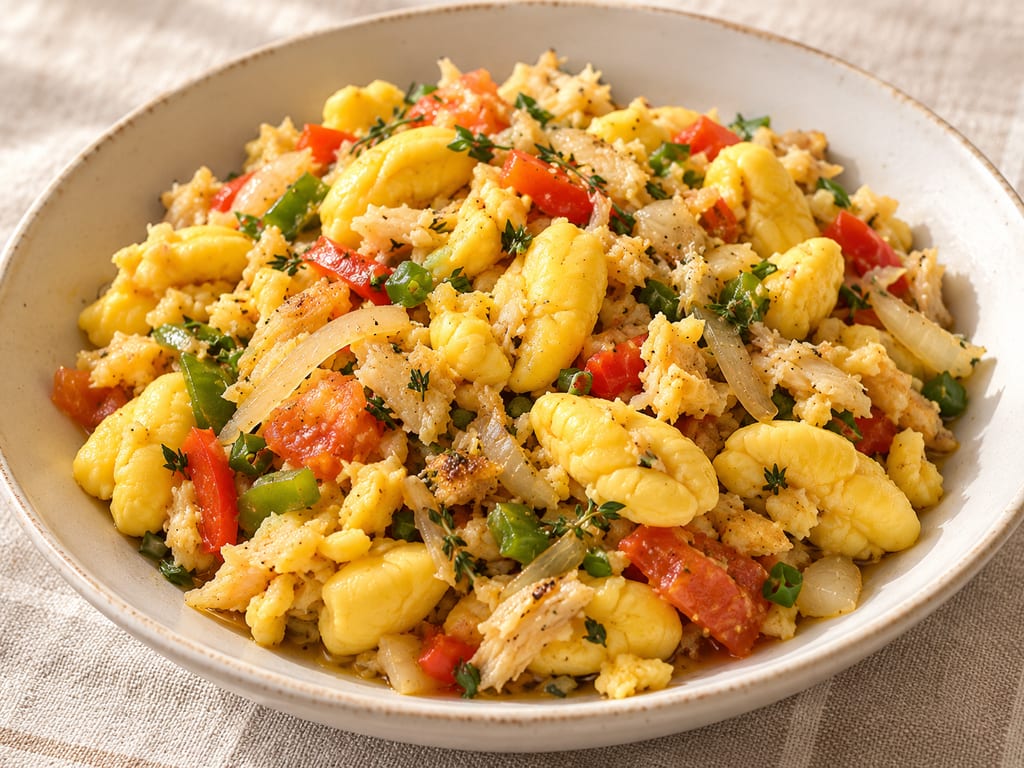
Jamaica's best-known dish: salt-cured cod desalted and flaked, then folded through ackee arils with onion, tomato, sweet pepper, thyme and Scotch bonnet.
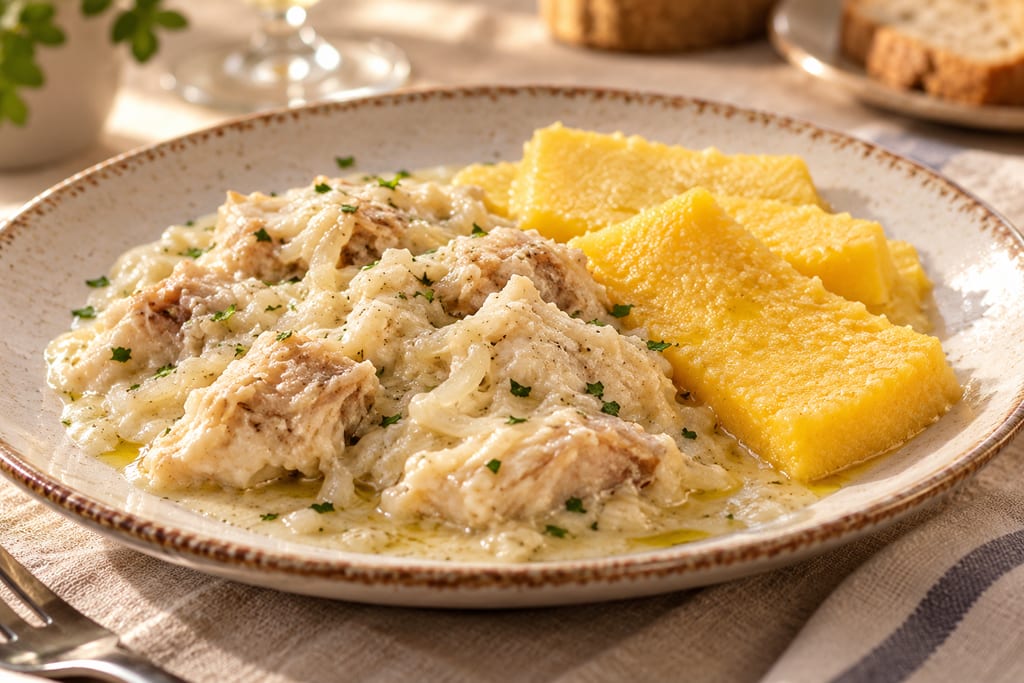
Stockfish from Vicenza, left barely bubbling for hours with onion, preserved anchovy, olive oil, milk and a little cheese until it is tender under a dense pale sauce, and eaten with polenta.
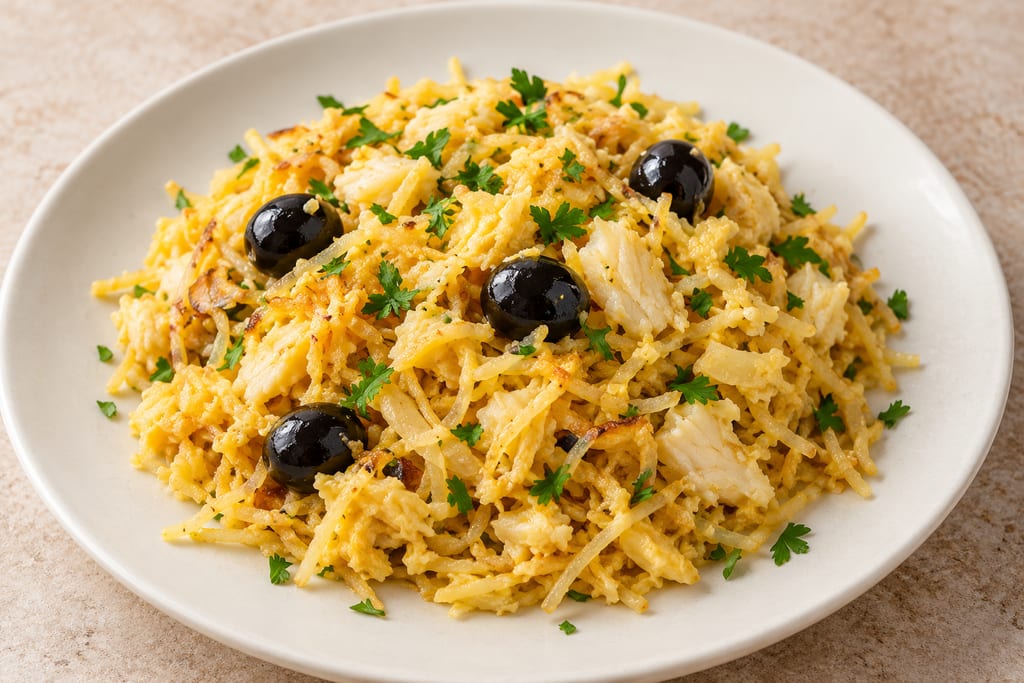
Lisbon's salt cod dish: shredded desalted cod and fine fried potato matchsticks folded through softened onion and bound with beaten egg, finished with parsley and black olives.
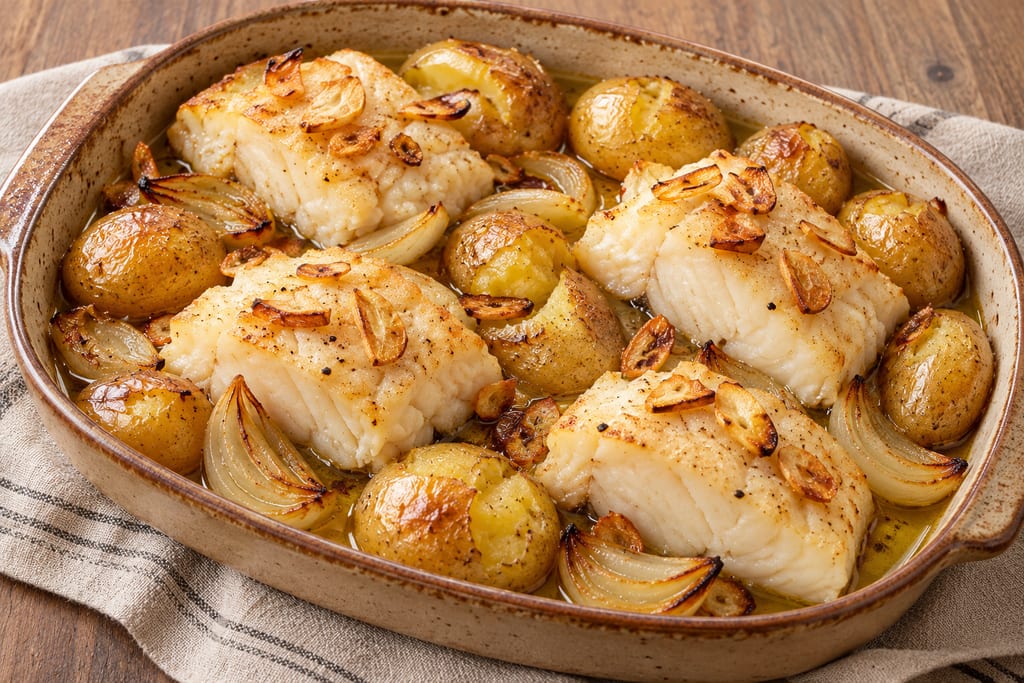
Thick pieces of desalted salt cod roasted in olive oil with garlic and onion, served with small potatoes cooked and then crushed until their skins split.
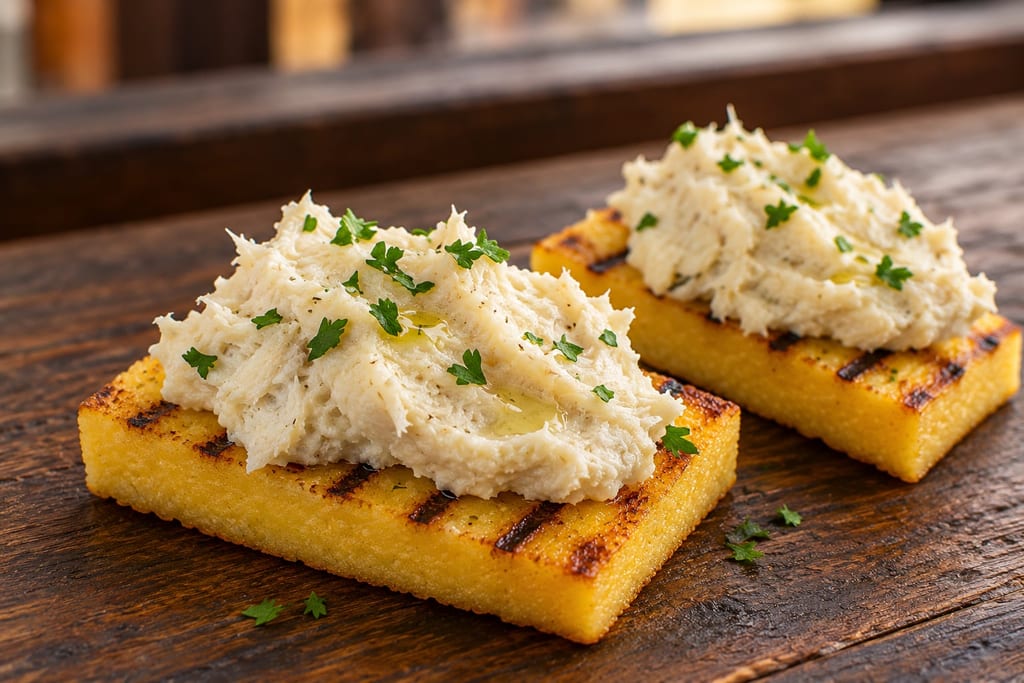
A Venetian cicchetto of cooked unsalted stockfish beaten with oil until it turns into a pale, aerated cream, spooned onto grilled polenta in the city's wine bars.
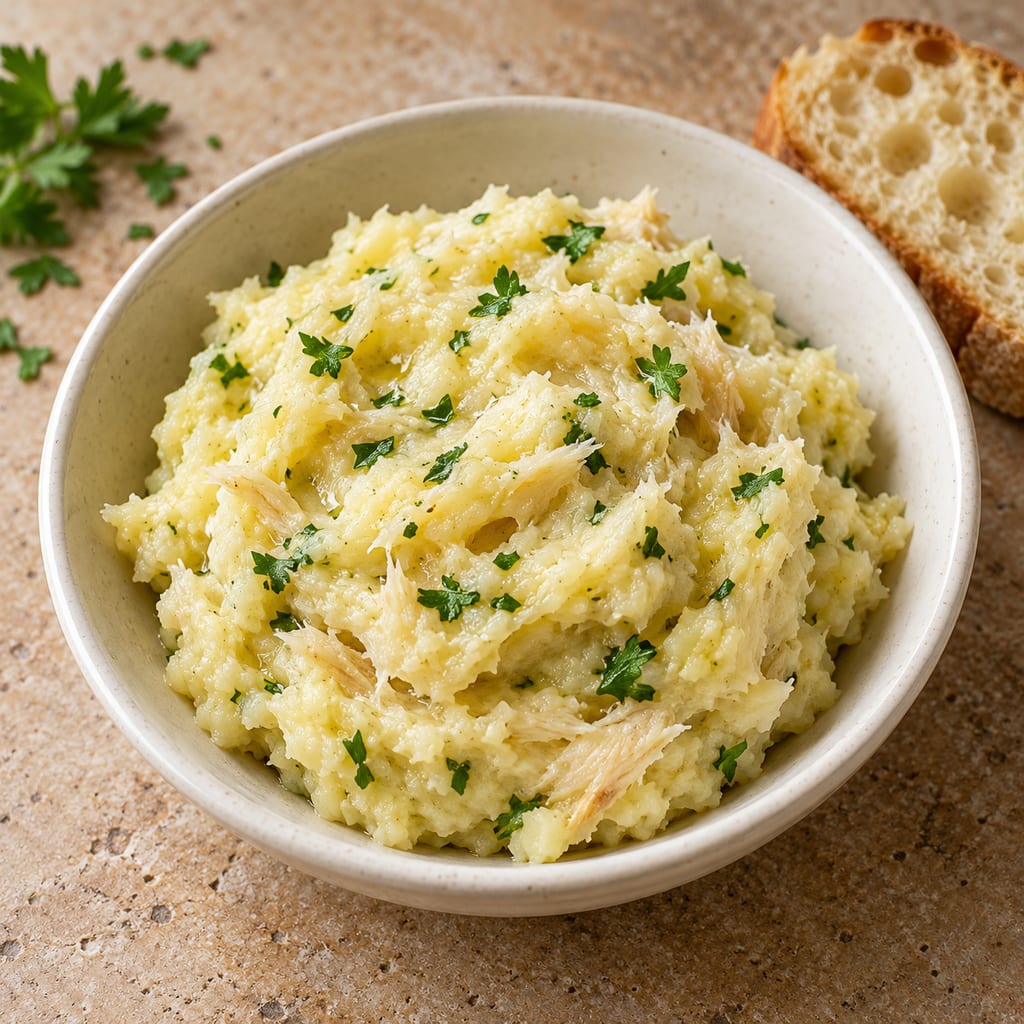
An Istrian festive spread of cooked stockfish beaten with olive oil and garlic until pale and cohesive, here bulked out with hand-mashed floury potato.
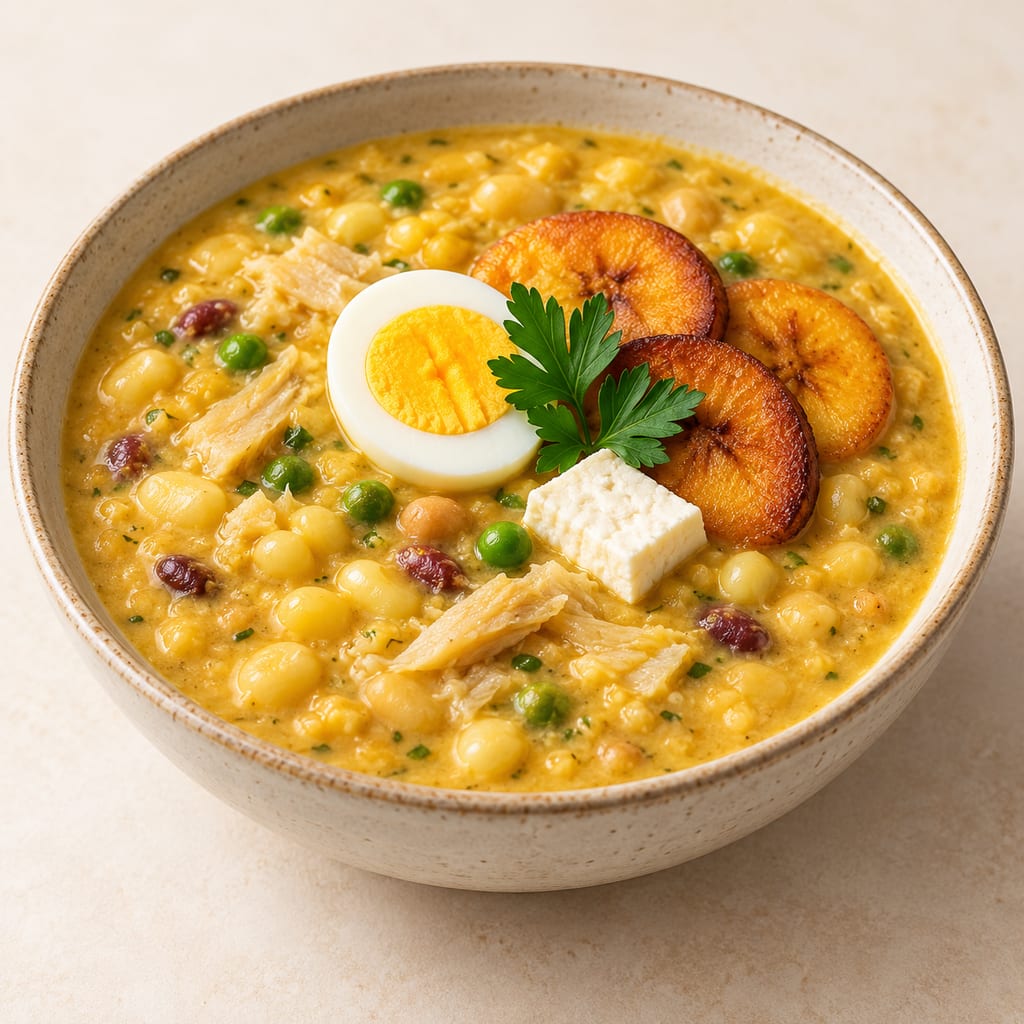
Ecuadorian Holy Week soup of tender grains and pulses, squash, milk and salted fish, thickened with peanut paste and served with contrasting garnishes.
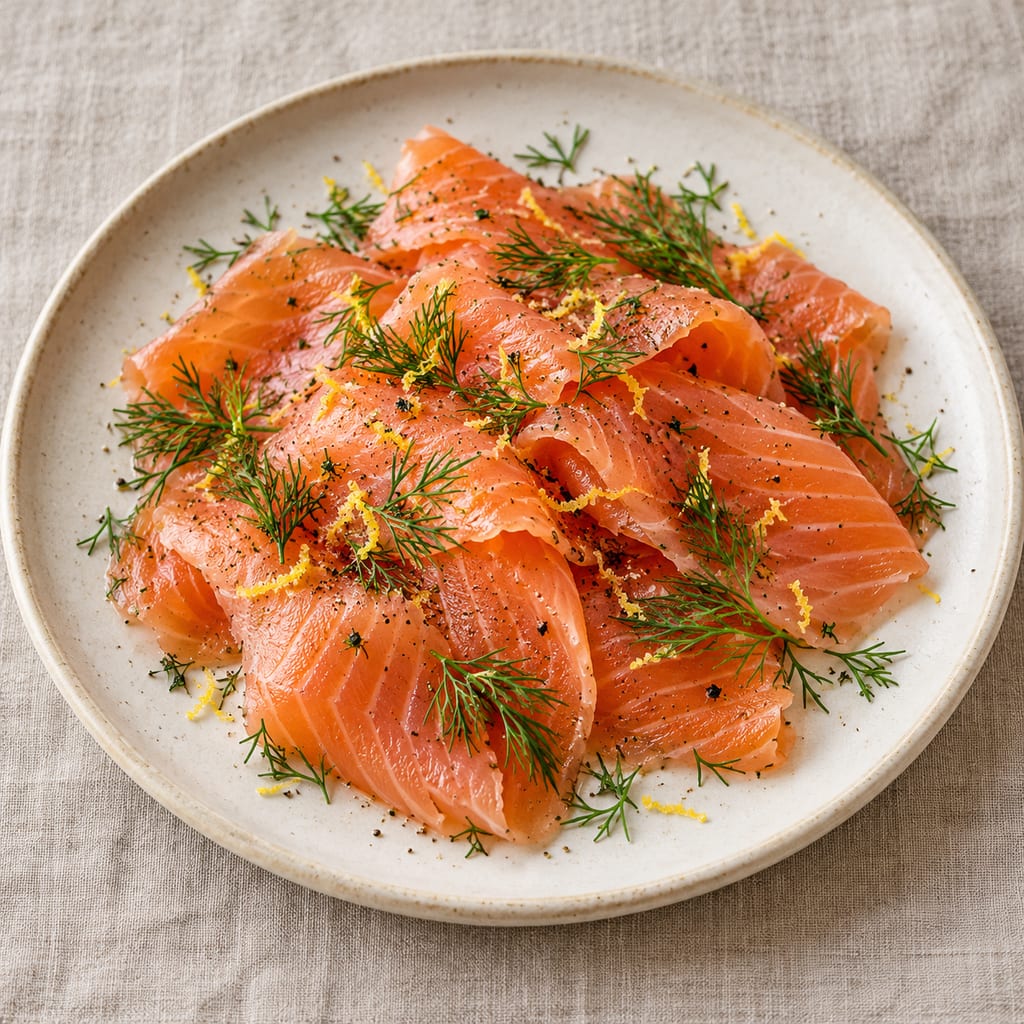
Salmon is cured with salt, sugar, pepper, dill and lemon zest under refrigeration.

A Cap-Pelé boucanière is an Acadian herring-smoking building. The documented Willie Niles example is a one-storey wood-frame structure with a ridge smoke vent and interior bays for hanging fish-bearing cannes.

Achcharu is a family of Sri Lankan vinegar pickles made with mixed vegetables or seasonal fruit and a piquant spice dressing. This version is a quick, refrigerated, non-fermented mixed-vegetable pickle.

The acocote is a long, hollowed and dried gourd used to draw aguamiel from a mature maguey. It is a harvesting tool: the sap is transferred to a separate vessel before it ferments into pulque.

Adrak murabba preserves young ginger in sugar syrup, a sweet South Asian preparation recorded in Indian cookery and food-processing sources.

Parkia biglobosa seeds are fermented into regional West African seasonings, including nététou, iru, dawadawa and soumbala. The yellow fruit pulp is a separate food, and names and methods vary by place.

Japanese reddish-brown vinegar from sake lees matured about three years, turned to vinegar by acetic bacteria; the vinegar of Handa and Edomae sushi rice.

A refined common-wheat flour blended for a broad range of baking; its protein and behavior vary with wheat, milling and market.

The almond mushroom, Agaricus subrufescens, was cultivated in eastern North America in the 1800s, lost its market, and returned as a cultivated mushroom from Brazil, where it is grown under several names.
No community contributions have been published for this entry yet.
Sign in to contribute. Published comments and photos are free to read.
WikipediaHistory · Method · Variations · Etymology
TaramasalataMeze made from salted cured roe of cod, carp or grey mullet, olive oil, lemon juice and bread, potato or almonds; pestle and mortar gives a grainy texture; colour from beige to pink, pink usually dyed; served with ouzo and on Clean Monday; word from Greek taramas, borrowed from Turkish tarama (soft roe); Istanbul meyhane record in the late 19th century; carp roe after Sephardic merchants in the 16th century; variants with garlic, spring onions, peppers or vinegar; salată de icre in Romania and neighbouring countries
Cited in: A spread named for its roe; Where it came from; Making it and eating it; Related spreads
Wikimedia CommonsImage
File:Taramosalata01.jpgImage of taramosalata on a plate; licence to confirm on the origin page