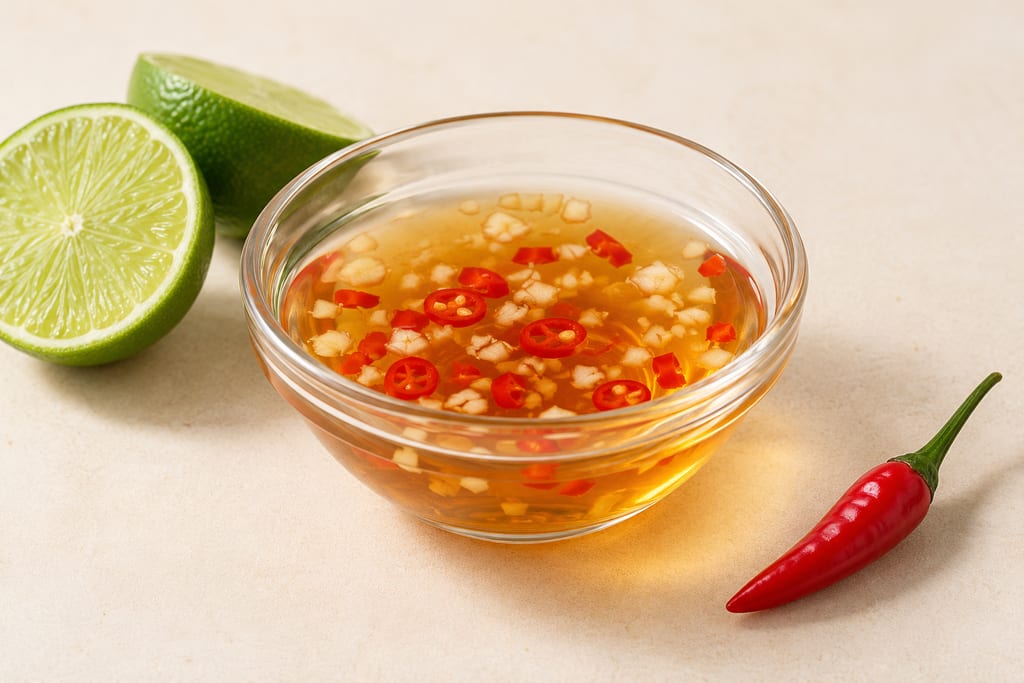
Fish-sauce-based nuoc cham
Nuoc cham is a Vietnamese fish-sauce dipping sauce. This untested development ratio starts with water, lime and sugar, then adds fish sauce, garlic and chilli.
 FermenteaWhere food goes to change
Modern method
Tương ớt · Vietnamese hot chile sauce
This cooked Vietnamese chilli sauce uses fresh chillies, garlic and tomato for a pourable, sweet-spicy condiment; heat varies with the chillies and how many seeds are removed.
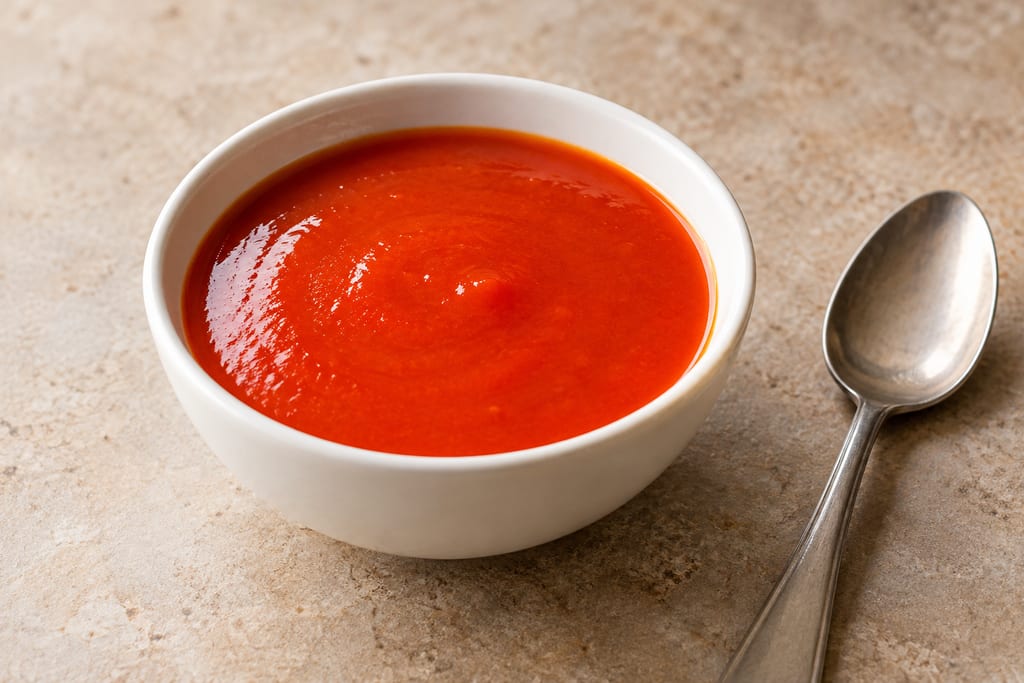
Tương ớt means chilli sauce, but it does not identify one fixed formula across Vietnam. This record follows one cooked recipe published by Andrea Nguyen, while keeping other Vietnamese regional sauces distinct. The name alone does not show whether a sauce is smooth or coarse, cooked or fermented, mild or very hot.
The inspected sources do not establish a first maker, birthplace or date for tương ớt as a broad category. Nguyen's 2018 article draws on a recipe in The Pho Cookbook (2017) and says she developed her version after studying Cholimex sauce. She recalls encountering Cholimex in Saigon in 2007. Those dates belong to her recipe and recollection; they do not date the condiment's origin.
Nguyen identifies her cooked chilli sauce as Vietnamese and describes using it with phở. That supports a country-level association for this documented recipe, not a precise birthplace. The available evidence also points to named local forms rather than one national recipe.
VnExpress describes chí chương in Hải Phòng and reports disagreement over whether people use that name for chilli sauce generally or for a distinct local preparation. It gives a possible connection between the name and Hải Phòng's Chinese-origin community, but this account is not a settled origin history. The described chí chương may include chilli, tomato, garlic and salt and can be fermented; it is not silently substituted for Nguyen's cooked recipe.
A separate VnExpress report documents Mường Khương tương ớt in Lào Cai. Its ingredient profile includes ớt thóc, garlic, herbs and spices, salt, corn alcohol and water, and the account describes an extended maturation. This regional sauce is a distinct example, not a basis for adding those ingredients or stages to the present formula.
Nguyen describes her cooked sauce as moderately spicy and sweet. In her formula, tomato gives the sauce body and balances the chilli's heat with a light fruitiness. She recommends fleshy, firm, medium-hot chillies; red chillies are riper and fruitier than green ones. The resulting taste belongs to this recipe, not to every sauce called tương ớt.
Heat varies with the chilli variety and with how much of the seed-bearing inner flesh is kept. Nguyen removes seeds from half the pieces for moderate heat and sets them aside in case the chillies prove mild. VnExpress describes Hải Phòng chí chương as hotter and more pungent than ordinary chilli sauce, while its account of Mường Khương tương ớt describes strong heat alongside a complex aroma and mild sourness. These comparisons show regional and maker variation; they do not provide a shared heat scale.
Nguyen's published version uses fresh chillies, garlic and tomato with salt, sugar, vinegar and water. The mixture is simmered, pureed and strained. Its method is a modern cooked preparation and has no additional fermentation stage. Other preparations bearing similar names may ferment or use different ingredients and equipment, so their methods should not be merged with this one.
Nguyen's published recipe yields ¾ cup and describes a pourable sauce with a pleasantly sweet-spicy flavour. The article's overview says the preparation takes 20 minutes, while its method separately includes about one hour uncovered for cooling and concentration, so this record does not assign a total or active preparation time. The article recommends refrigeration for up to three months. That is its storage statement; this draft does not independently validate a shelf life or establish a preservation process.
The earliest history of tương ớt is not established by the inspected sources. Andrea Nguyen's 2018 article presents a version based on her 2017 cookbook and says she developed it after studying commercial Cholimex sauce; her recollection of encountering the brand in Saigon in 2007 dates that encounter, not the condiment's origin. Vietnamese reporting documents other locally distinct chilli sauces, including Hải Phòng chí chương and Mường Khương tương ớt.
Yield 0.75 cup · Scaling: source batch only
This is one modern cooked formula, not a method for every sauce called tương ớt. The published source gives a refrigerated holding recommendation that has not been independently validated here.
Nguyen identifies her cooked chilli sauce as Vietnamese and discusses its use with phở. This country-level association does not establish a precise birthplace.
Nuoc cham is a Vietnamese fish-sauce dipping sauce. This untested development ratio starts with water, lime and sugar, then adds fish sauce, garlic and chilli.
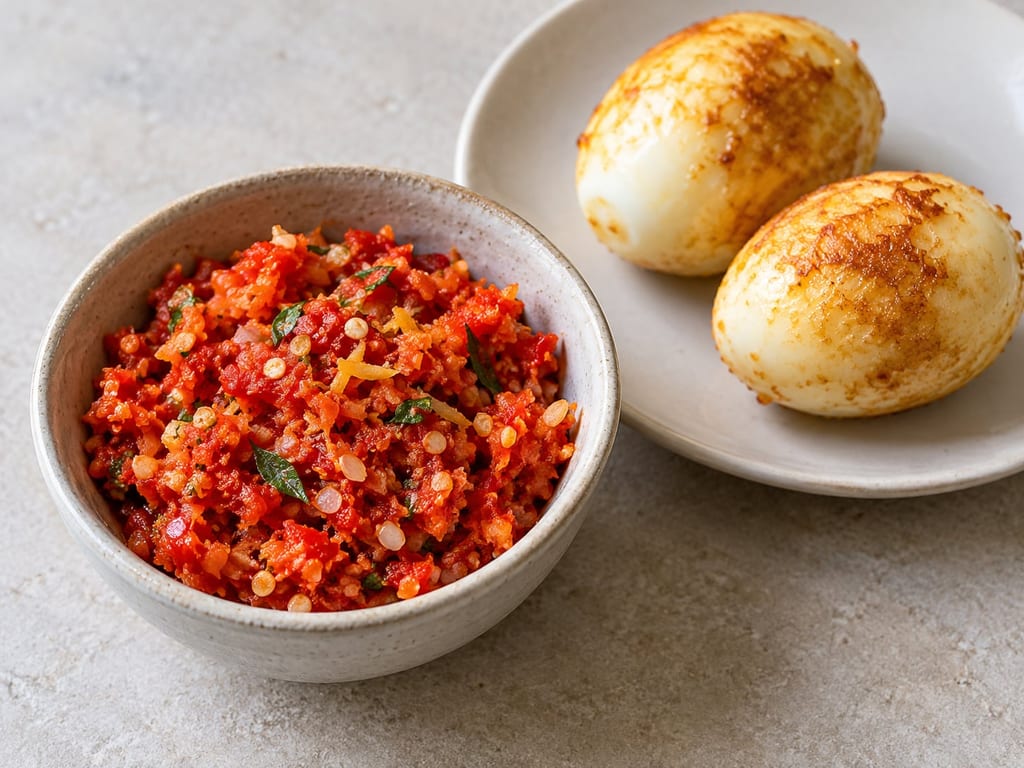
Ai-manas is described as a very hot chilli paste served with Timorese meals. One published version blends fresh chillies, shallots, garlic, Thai basil, ginger, lemon and salt, and serves it with eggs. Sources do not establish a standard formula, precise birthplace or earliest date.
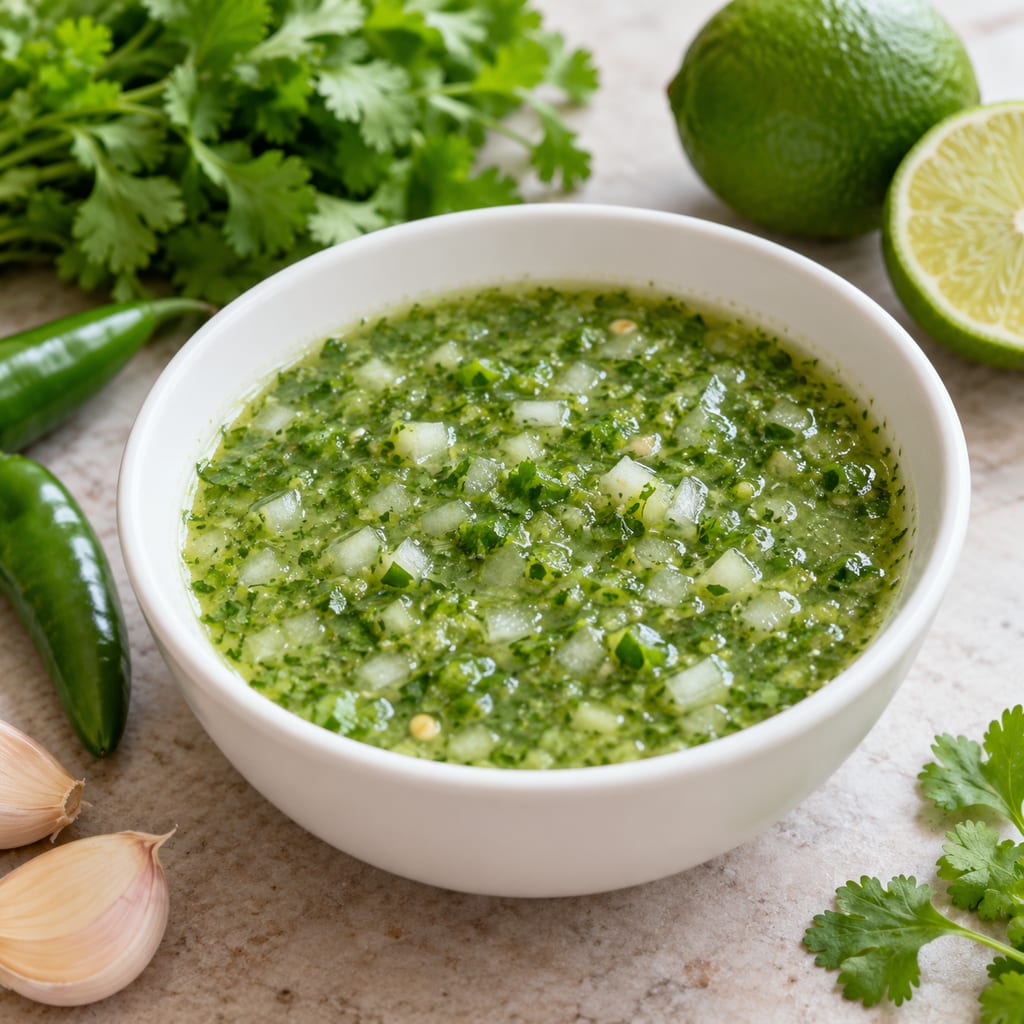
A fresh, uncooked Ecuadorian table sauce of hot pepper, cilantro, garlic and lime, served with most everyday dishes.
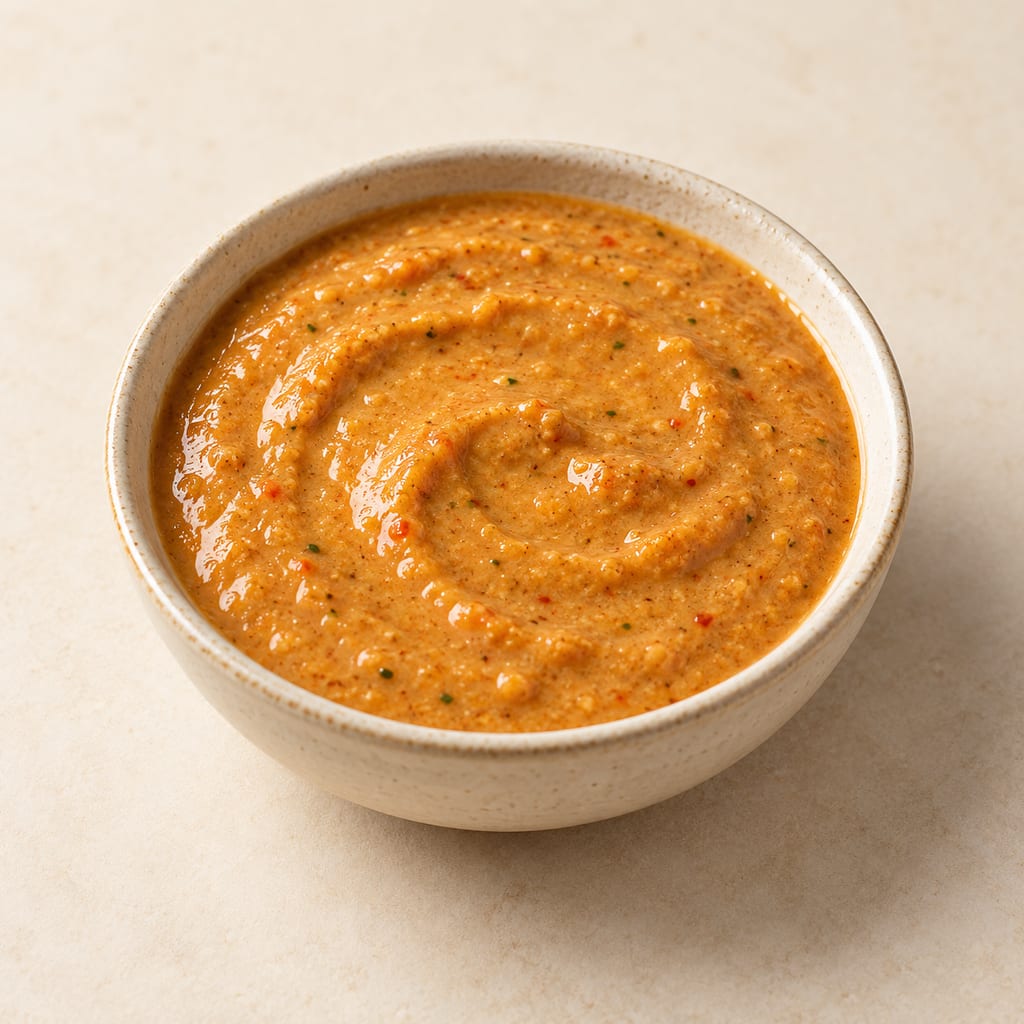
A spicy peanut hot sauce from the Popayán and Cauca region of Colombia, traditionally served with pipián empanadas and tamales.
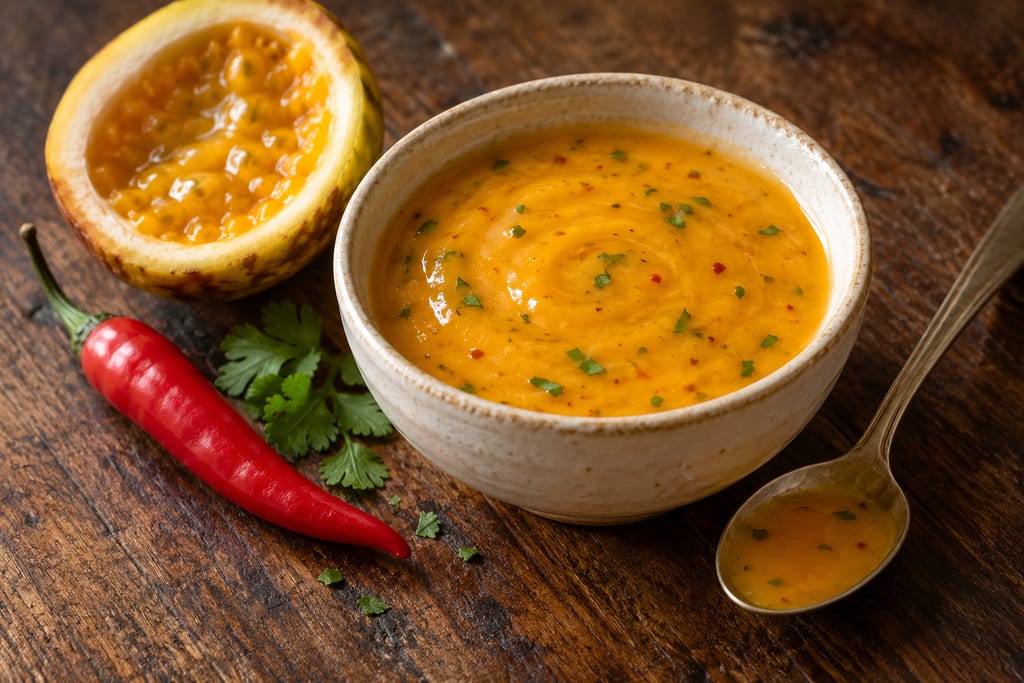
A contemporary Ecuadorian hot sauce that pairs passion fruit juice with boiled chile peppers, oil and lime.
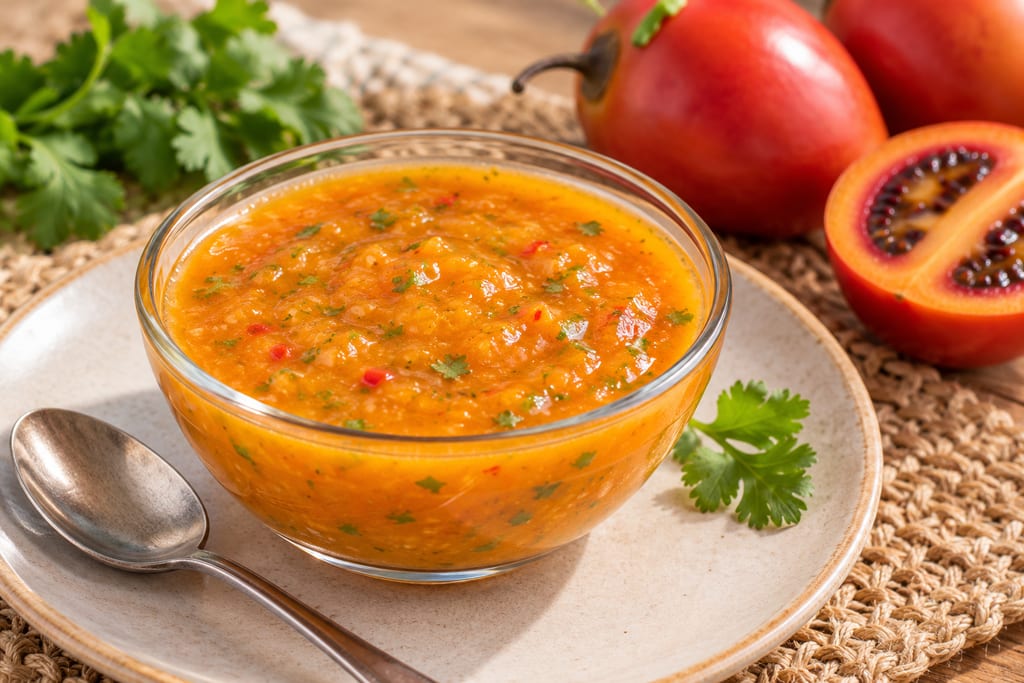
An Ecuadorian hot sauce built on tamarillo, a tart fruit that gives a sharper, fleshier base than ordinary tomato salsa.
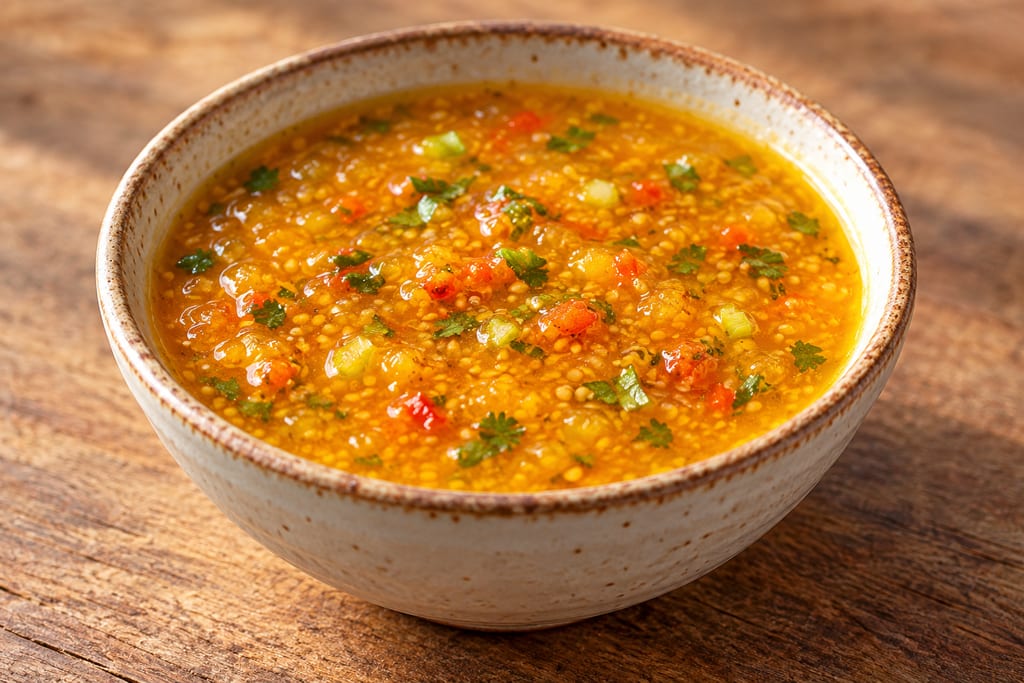
A sweet, tart and spicy Colombian sauce of uchuva, the yellow physalis fruit, with hot pepper, scallion, cilantro and lime.
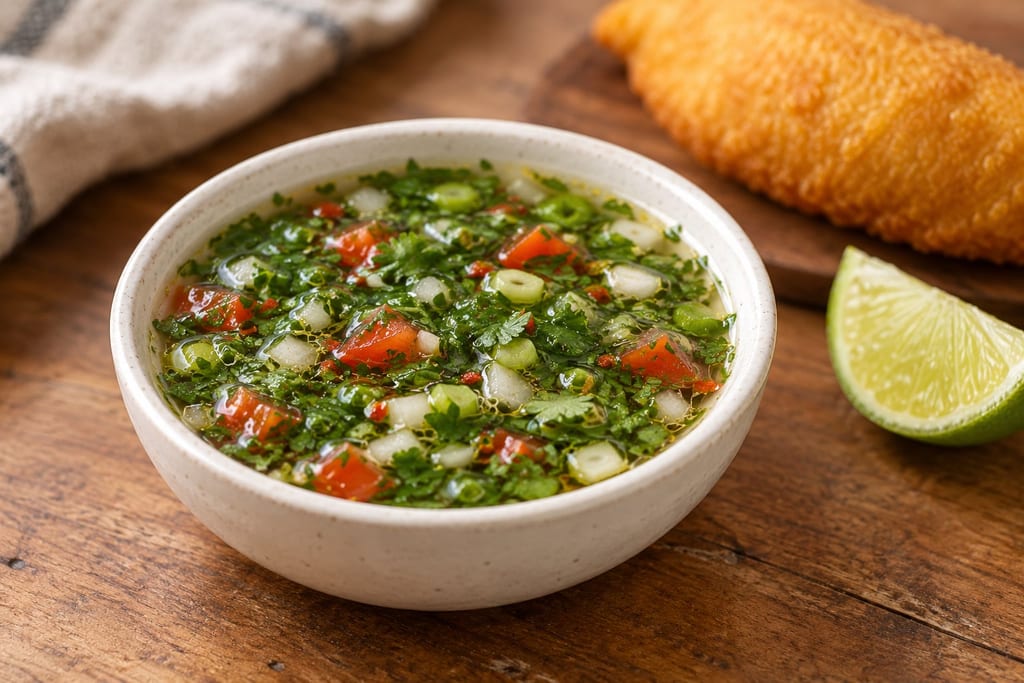
A fresh Colombian table condiment of chopped herbs, scallion and tomato in a vinegar and chile base, served beside fried and filled dishes.
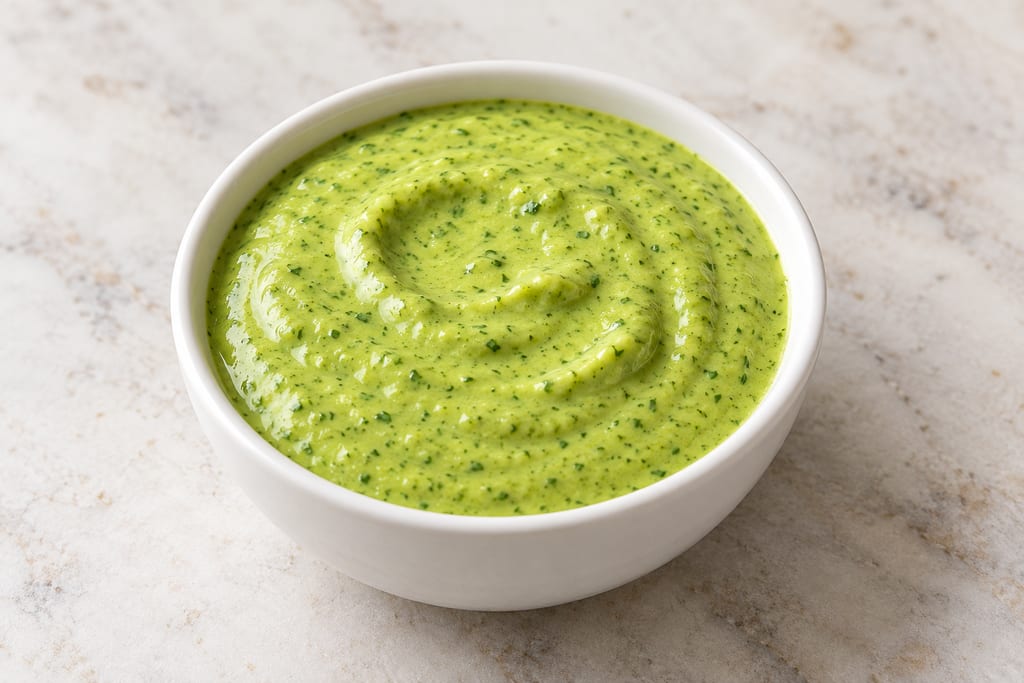
Ají verde is a Peruvian green sauce of coriander, chilli, onion and garlic in a mayonnaise or cheese base. It is best known through Peruvian restaurant cooking abroad.
No community contributions have been published for this entry yet.
Sign in to contribute. Published comments and photos are free to read.
Viet World Kitchen; recipe from The Pho CookbookProcess · Geography · History · Use
Vietnamese Hot Chile Sauce Recipe (Tuong Ot)Nguyen presents a Vietnamese chilli sauce recipe from The Pho Cookbook (2017), published on the site in 2018, and says she developed it after studying Cholimex sauce.
The formula uses garlic, Roma tomato, fresh chillies, salt, sugar, distilled vinegar and water; the source gives a yield of ¾ cup and a simmer, puree and straining method.
The source describes a moderately spicy-sweet sauce, says tomato balances chilli heat, and identifies chilli seeds and attached fleshy parts as a source of heat.
The source reports seeing Cholimex sauce in Saigon in 2007; this is not an origin date for tương ớt.
Cited in: A name shared by different sauces; A country association, with regional forms kept separate; Sweetness, fruit and heat; The documented cooked formula
VnExpressHistory · Geography · Variation · Use
Chí chương - gia vị lạ mà quen của Hải PhòngThe report describes Hải Phòng's chí chương and notes that people differ on whether it should be distinguished from generic tương ớt.
It gives one reported explanation connecting the name chí chương to the Chinese-origin community in Hải Phòng, while presenting this as one possible account.
It describes chilli, tomato, garlic and salt in versions that are fermented, with a thicker, stronger, hotter and more aromatic result than ordinary chilli sauce, and use with local noodles and bánh mì cay.
Cited in: A country association, with regional forms kept separate; Sweetness, fruit and heat
VnExpressHistory · Geography · Variation · Taste
10 gia vị tạo nên hương cay nồng của tương ớt Lào CaiThe report describes Mường Khương chilli sauce in Lào Cai as a regional specialty made with ớt thóc, garlic, dill, coriander, dổi, cinnamon, cardamom, salt, corn alcohol and water.
The reported sauce is aged in a vessel, and the report describes it as pungent, aromatic, mildly sour and strongly hot; these details apply to the Mường Khương form, not every tương ớt.
Cited in: A country association, with regional forms kept separate; Sweetness, fruit and heat