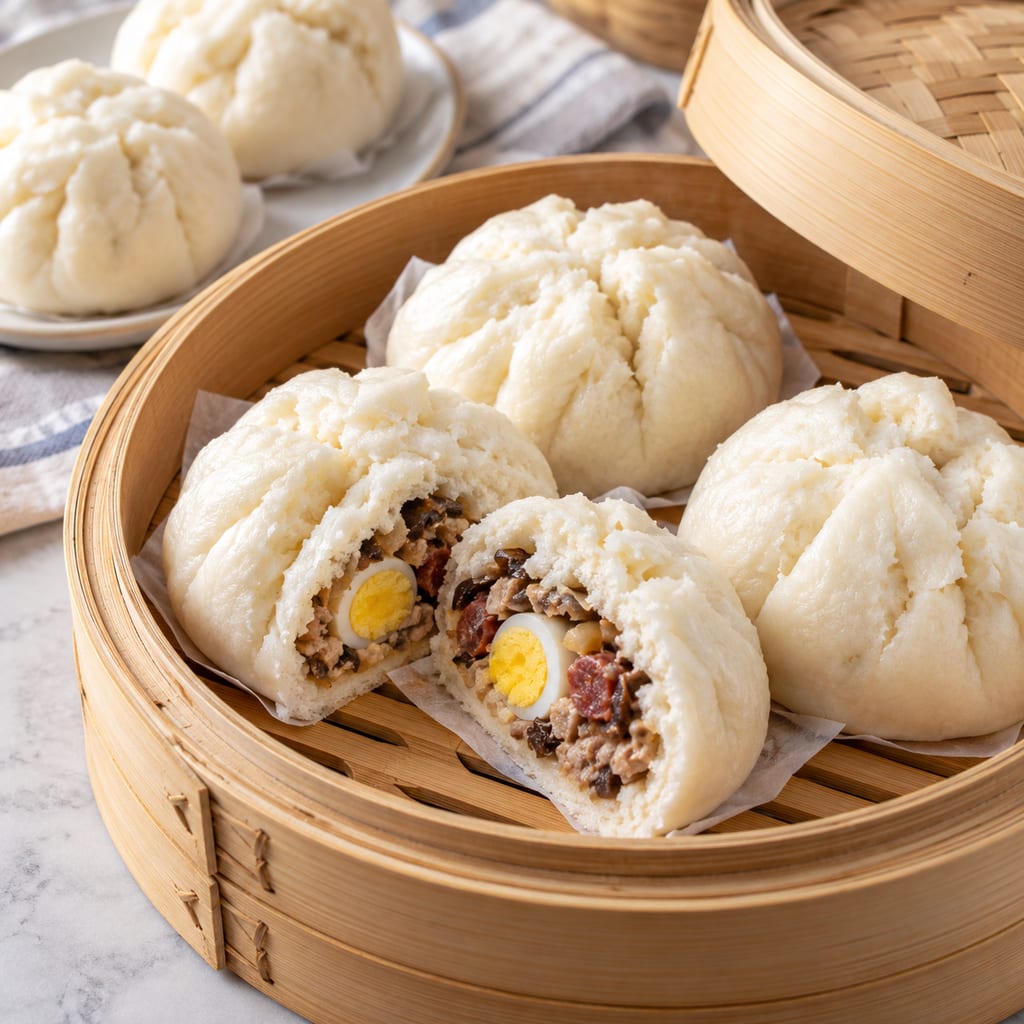
Bánh bao
Vietnamese steamed wheat buns wrapped around seasoned pork, mushrooms, Chinese sausage and hard-boiled quail eggs. This from-scratch version uses yeast and self-rising flour.
 FermenteaWhere food goes to change
bánh mì không · Bánh mì · ổ bánh mì
Six light baguettes with a thin crust and airy crumb, made from a Vietnamese home formula with bread flour, yeast, egg and butter.
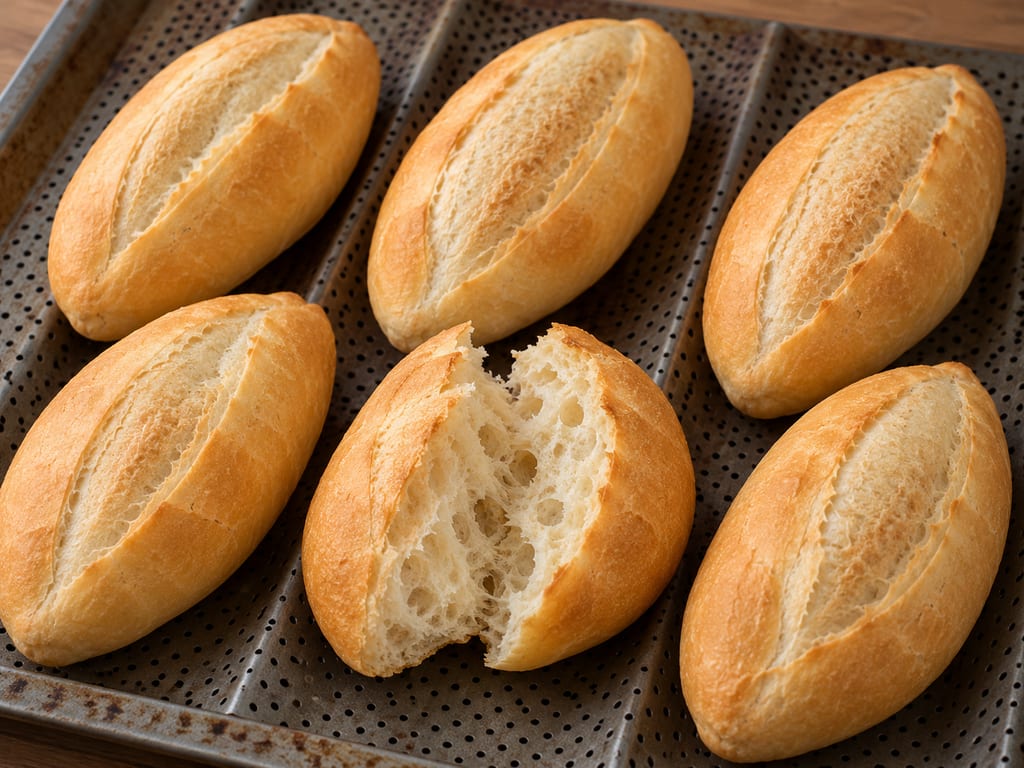
Bánh mì names both the Vietnamese sandwich and the bread it is served on. Vicky Pham separates the loaf, which she calls ổ bánh mì or bánh mì không, from the sandwich. Her household loaf is a small yeasted wheat baguette enriched with egg and salted butter. The recipe makes six short loaves of about 140 g and bakes them with added oven moisture. It calls for bread flour; the author says all-purpose flour can stand in, with a less airy crumb.
A 2022 Vietnam Writers Association article by the linguist Phạm Văn Tình dates the work Văn tế nghĩa sĩ Cần Giuộc to 1861 and quotes its phrase "gặm bánh mì" ("eat bread"). This is a later reference to bread in a historical text. It was not checked against an 1861 manuscript, and it does not establish when the modern baguette-style loaf appeared or where it began.
The formula has two proofs, a scored loaf and steam added during the bake, in a 480 °F oven. The two proofs, the scoring and the steam additions are quality cues. The page gives no storage duration and no internal bake temperature, and crust colour does not show that the loaf is cooked through.
The loaf is cut and filled as a sandwich in Vietnam. The author's household use also mentions condensed milk, eggs and stew as companions to the bread.
Vicky Pham distinguishes the Vietnamese baguette bread from the sandwich made with it, and gives ổ bánh mì and bánh mì không for the bread. Her home formula produces six wheat rolls with a thin, crisp crust and light interior. The atlas notes that Cambodian num pang and Lao baguette sandwiches are related regional foods with their own names and fillings; they are not aliases for this recipe. The recipe source does not establish one historical birthplace or date.
Yield 6 medium baguettes · Scaling: source batch only
Raw flour may carry harmful bacteria; do not taste uncooked dough and bake the loaves before eating.
Hazard sourceThe dough contains a raw egg before baking; avoid tasting it and clean hands and tools after contact.
Hazard sourceDo not taste raw dough; wash hands, bowls, tools and work surfaces after handling flour and egg.
Control sourceBake the shaped loaves using the complete source method. Its 18-minute bake is recorded as recipe guidance, not as an independently validated safety limit.
Control sourceThe source gives no internal temperature or separate food-safety validation; do not treat the oven setting or crust colour as a measured safety limit.
Use heat protection for the hot water pot and baking tray.
Vicky Pham documents this as a Vietnamese bánh mì bread formula. No specific city or single birthplace is claimed.
Vietnamese steamed wheat buns wrapped around seasoned pork, mushrooms, Chinese sausage and hard-boiled quail eggs. This from-scratch version uses yeast and self-rising flour.
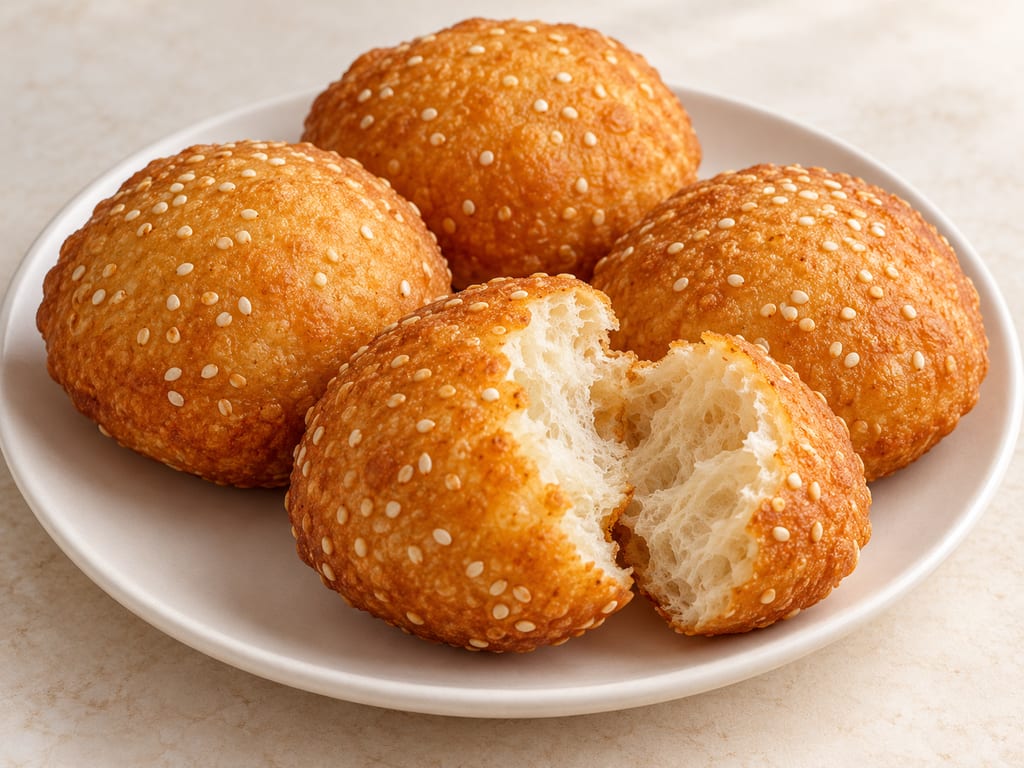
Bánh tiêu is a lightly sweet Vietnamese fried bread coated with sesame. A yeast-raised dough with baking powder is rolled into small rounds and fried until puffed and golden.
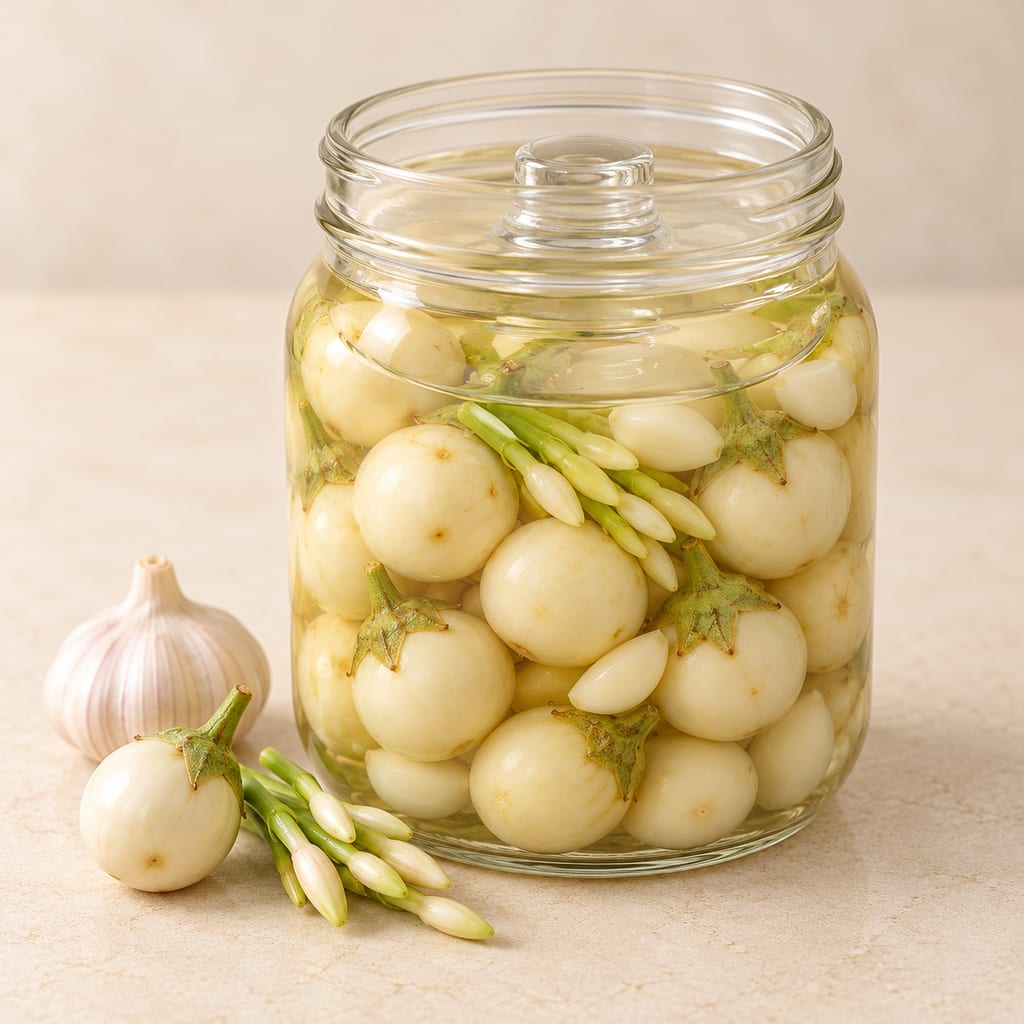
Vietnamese salted and fermented small eggplant, dried on the day of purchase, then held submerged in warm salty water with garlic and galingale flower for a week or longer.
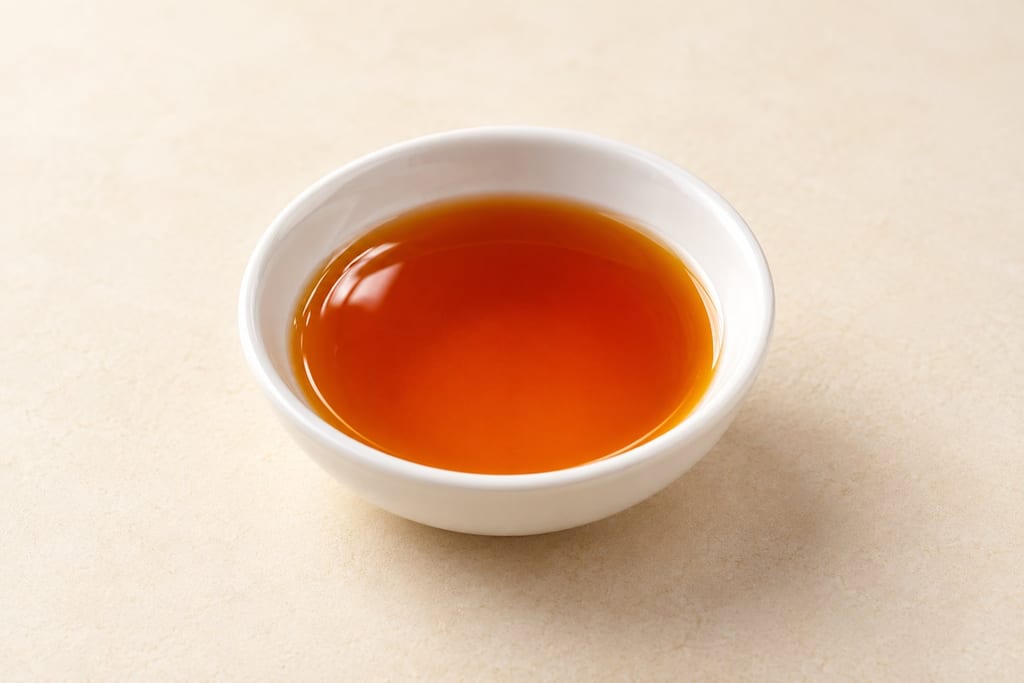
Fish sauce is a clear, salty seasoning made by maturing fish with salt and drawing off the liquid. The broad family includes distinct regional sauces rather than one interchangeable method.
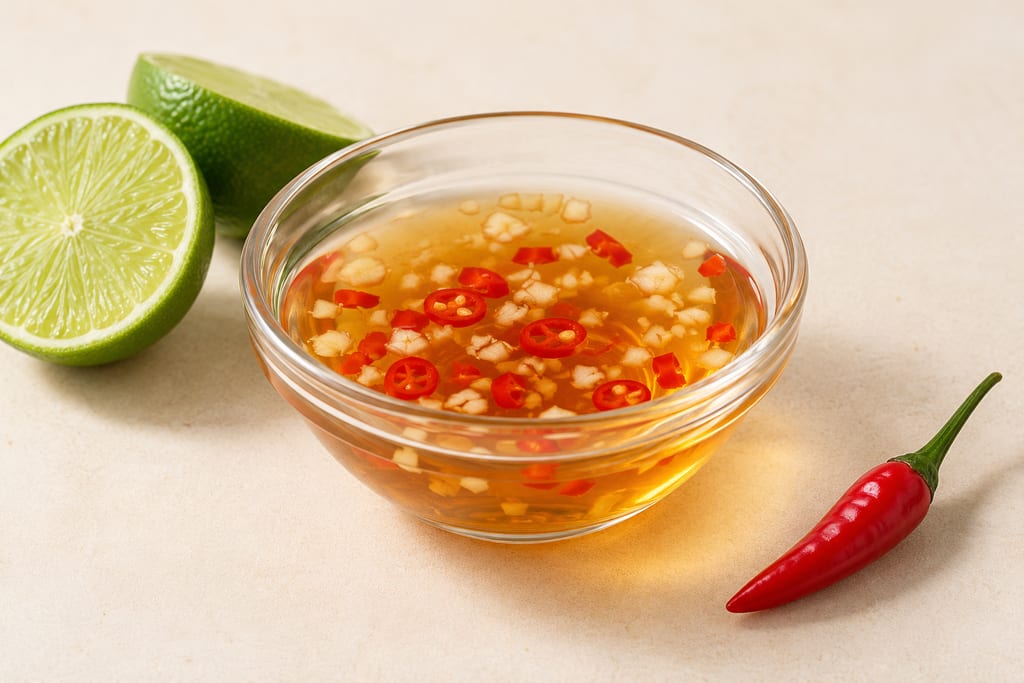
Nuoc cham is a Vietnamese fish-sauce dipping sauce. This untested development ratio starts with water, lime and sugar, then adds fish sauce, garlic and chilli.
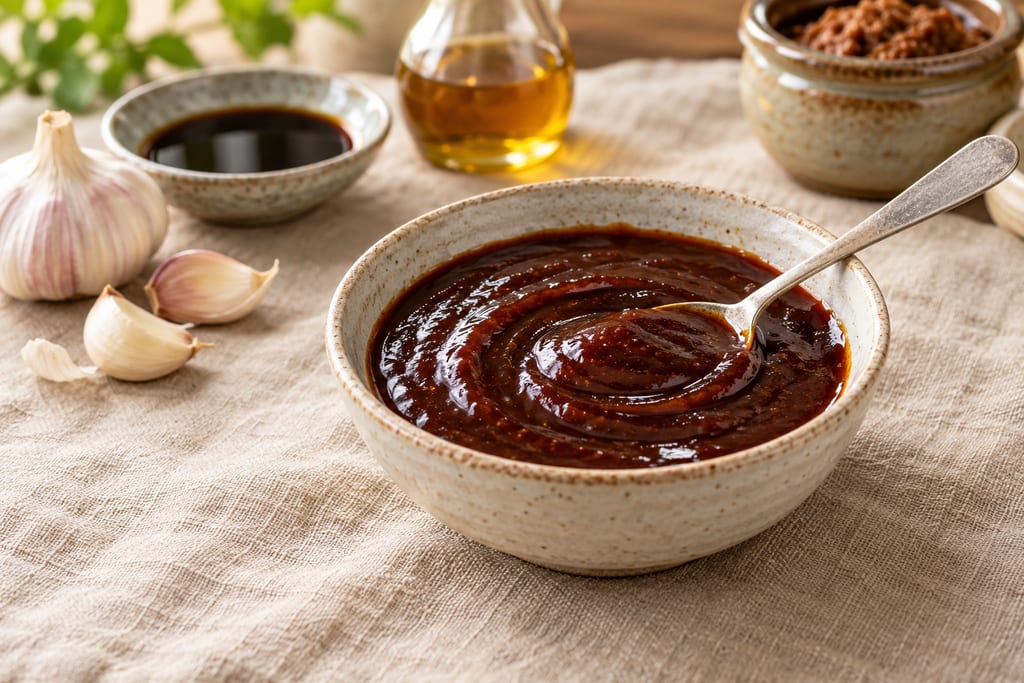
A thick, dark, sweet-salty Chinese condiment built on fermented soybean paste. This page gives one quick home version and records how commercial formulas differ.
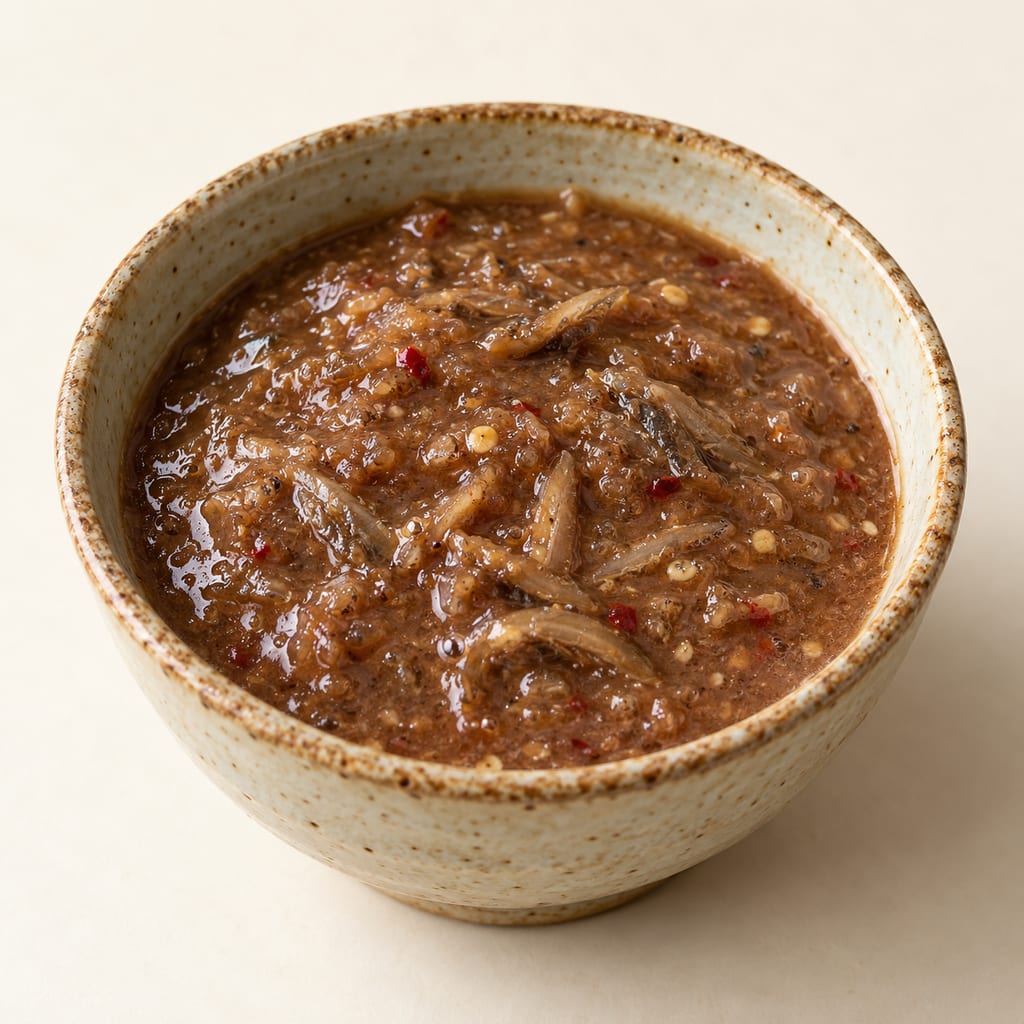
A documentary account of mắm nêm, a pungent Vietnamese fermented fish condiment and dip base. The cited cookbook describes a method, but omits essential process details; this page does not provide a home fermentation recipe.
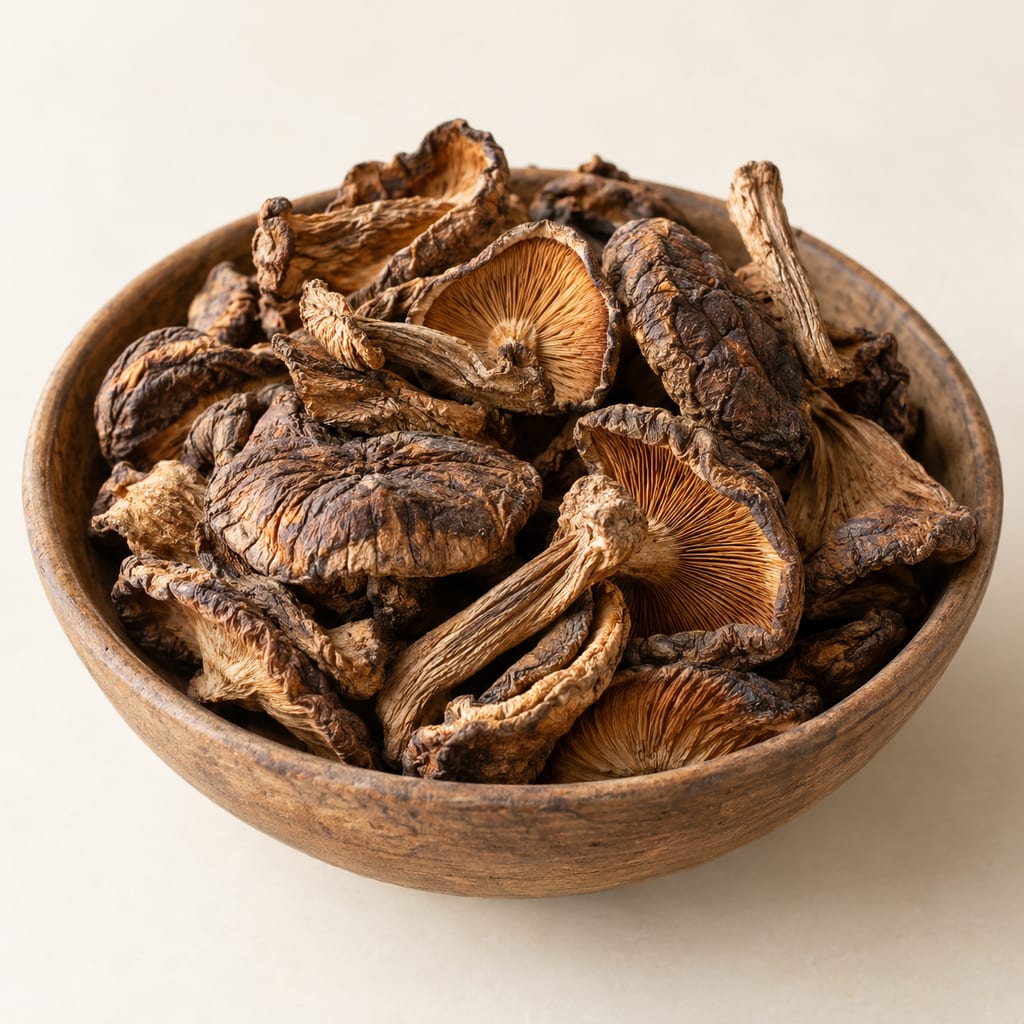
Hearth-dried mushrooms are dried on shelves above a cooking fire, so heat and smoke reach them. Tanzanian records describe the method; a Vietnamese study tested smoke-dried shiitake for fuel-dependent contaminants.
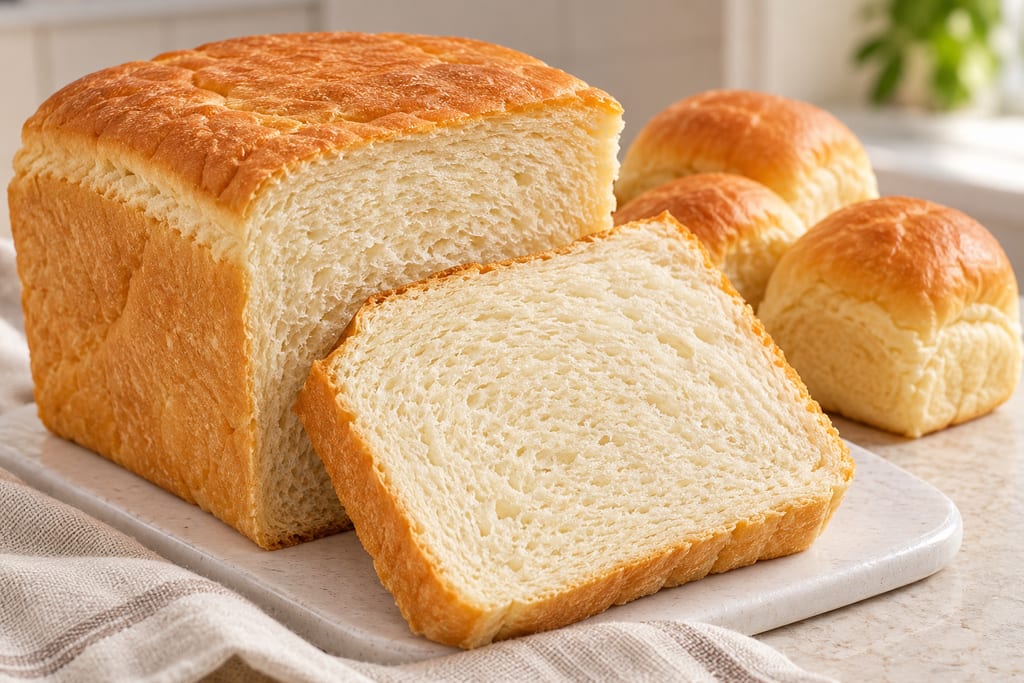
This softer home-style Agege bread uses a scalded flour paste, an enriched yeast dough and a 9×5-inch loaf pan, with rolls from the extra dough.
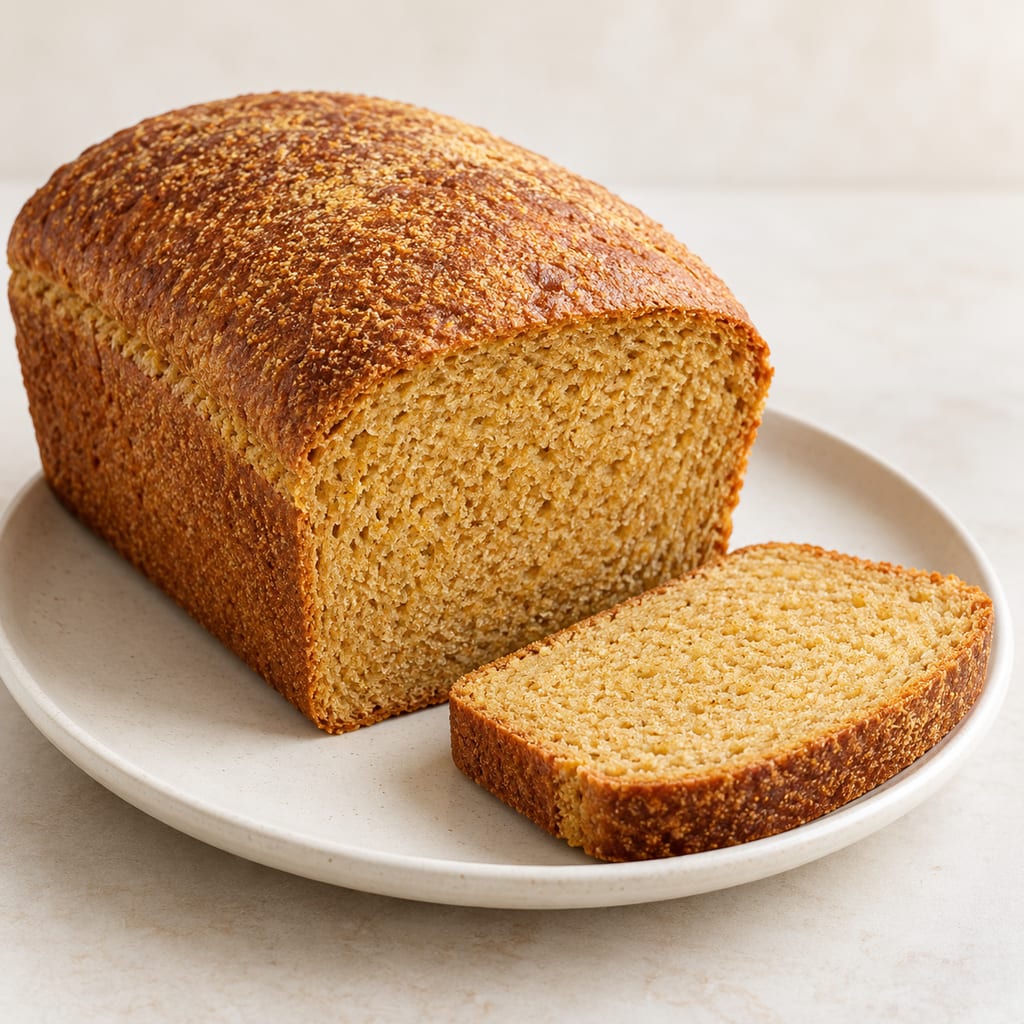
Anadama is a New England yeast loaf made with wheat flour, cornmeal and molasses. Scalded cornmeal enriches the dough, while molasses lends sweetness and a dark crust; it is especially good toasted or beside soup and baked beans.

A yeast-raised wheat ring shaped from a firm dough, briefly boiled and baked. This source-batch formula gives a gently malted crust and a chewy crumb.

Three long, crusty wheat loaves made with an overnight yeast poolish, shaped by hand and baked with steam for a crisp crust.
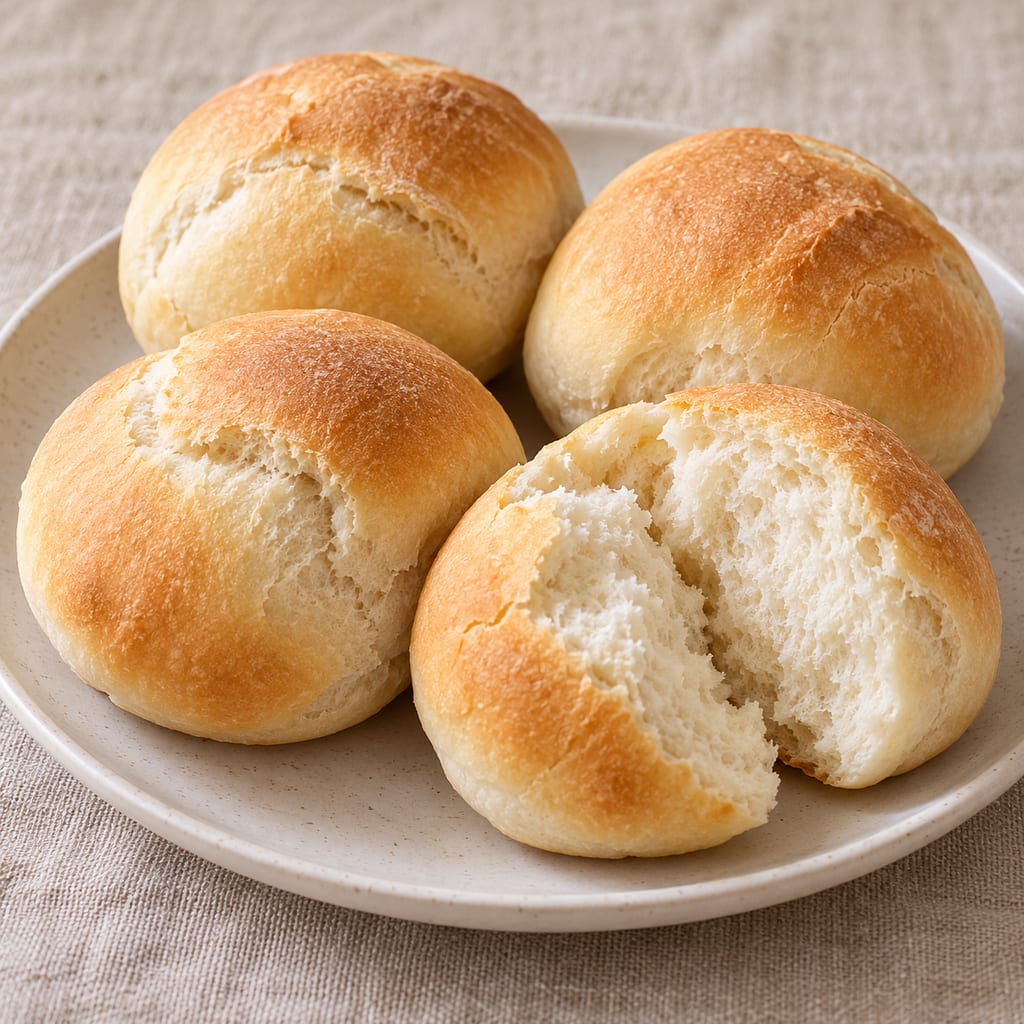
A lightly salted, yeast-raised Barbadian roll, baked in a dozen-roll home batch and often split for cutters.
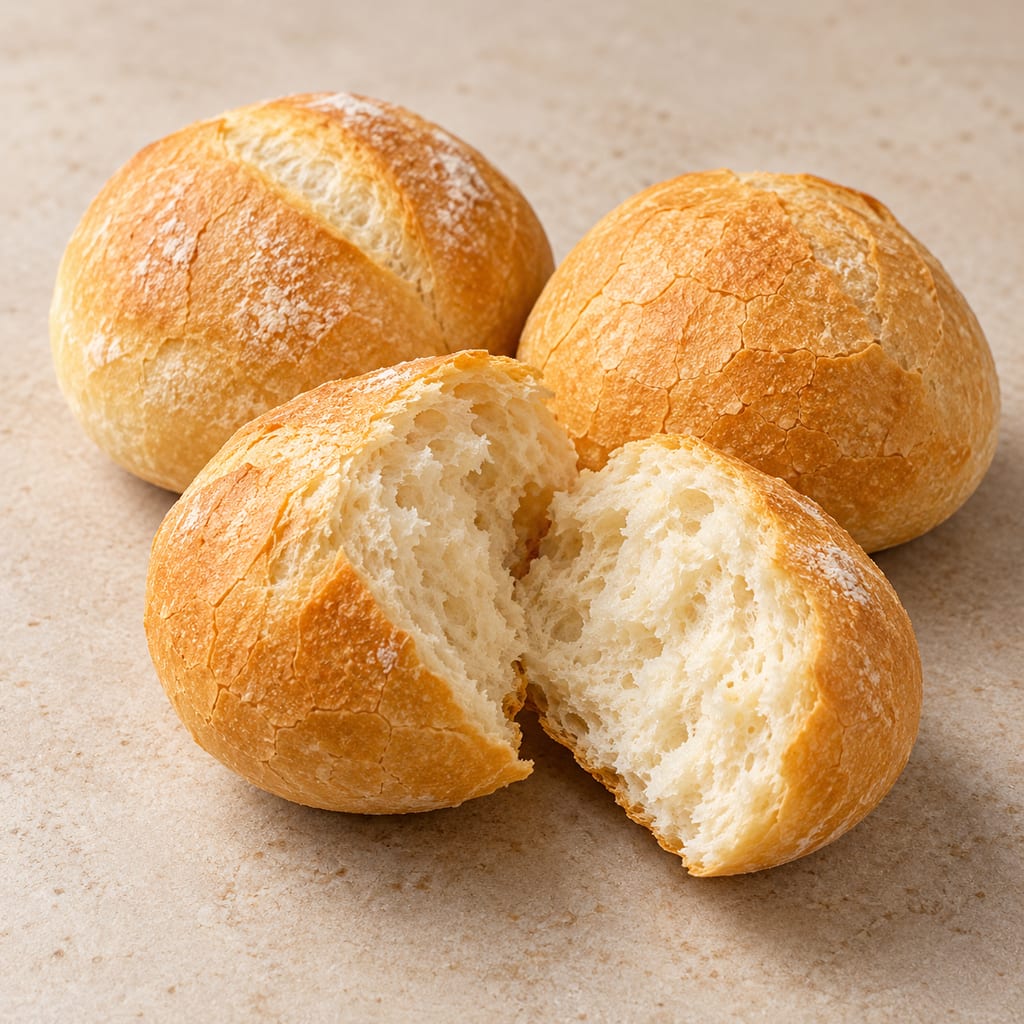
A crisp Belgian roll made from a supplier’s Croc-flour dough, mixed by hand or machine, proofed in rounds and baked with steam.
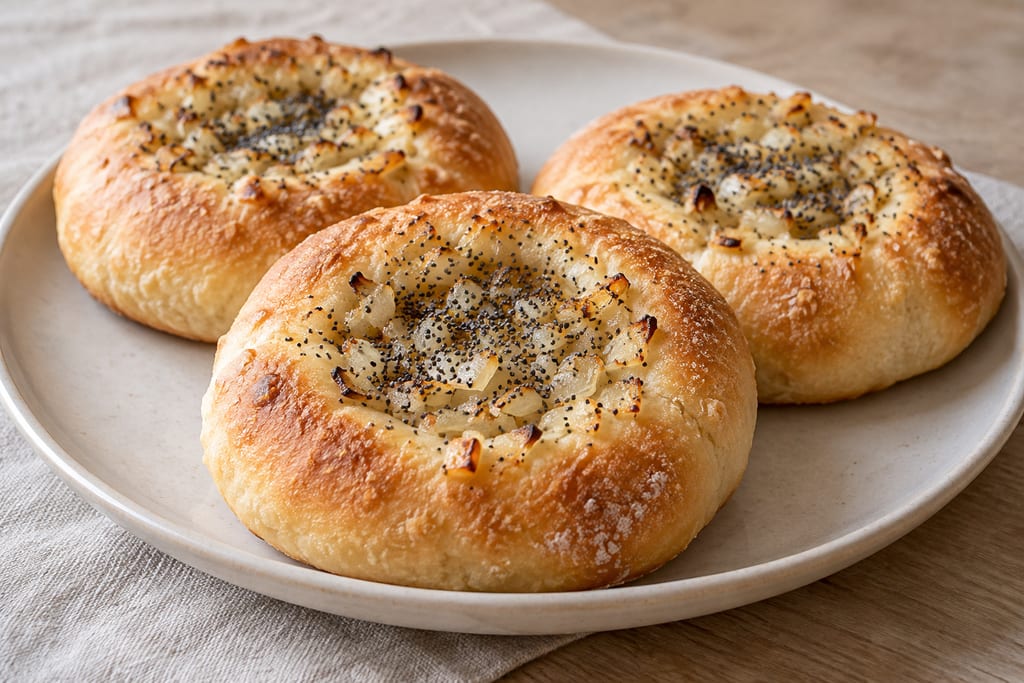
Bialys are soft, yeasted wheat rolls baked without boiling, each shaped with an onion-filled central depression instead of a hole.
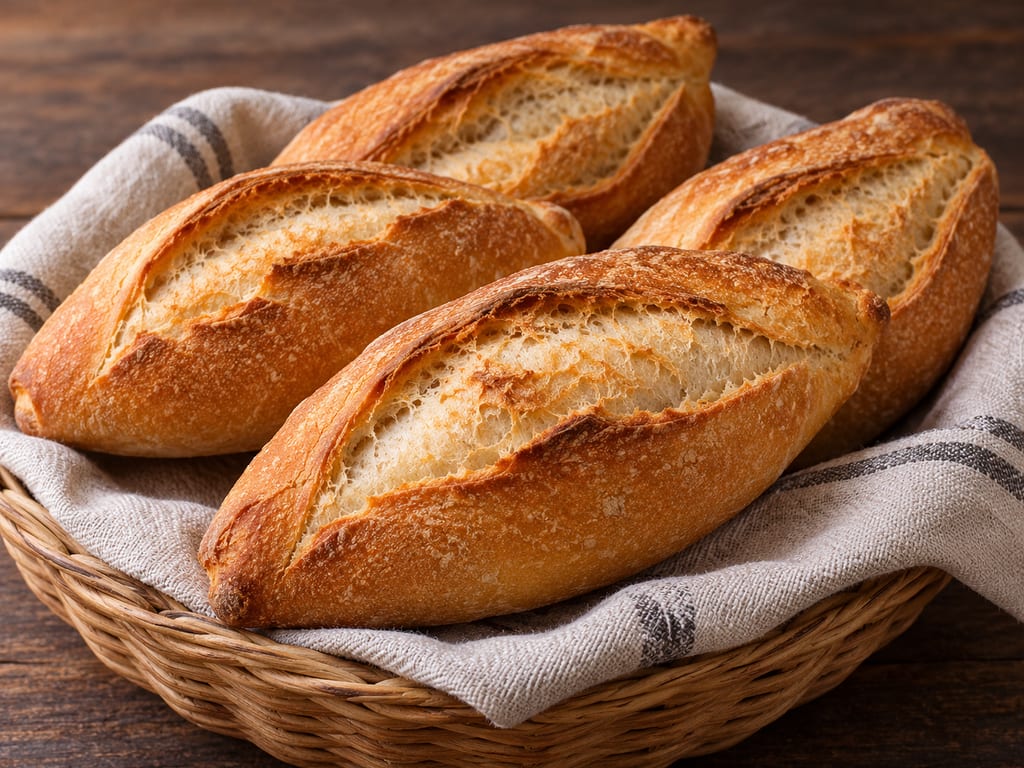
A measured, commercial-yeast home method for Guadalajara-style birote salado, with a six-hour preferment, shaped rolls and a two-temperature steam bake. This formula contains no egg.
No community contributions have been published for this entry yet.
Sign in to contribute. Published comments and photos are free to read.
Vicky PhamInspiration · Method · History · Safety
Vietnamese Bánh Mì BaguetteThe author describes bánh mì bread as a Vietnamese French-style baguette used for bánh mì sandwiches and names ổ bánh mì and bánh mì không for the bread.
The formula yields six medium baguettes from 500 g bread flour, 4 g salt, 270 g warm water, 7 g active or instant yeast, 10 g sugar, one egg and 25 g salted butter; oil is used for the bowl and hands.
The method activates yeast 10–15 minutes, mixes about 10 minutes, proofs 30–60 minutes and about one more hour, shapes and scores six rolls, and bakes at 480°F for 18 minutes with steam.
The page describes the bread and sandwich as Vietnamese but gives no dated first attestation or single birthplace.
Cited in: Bread and sandwich; Method and handling limits; Uses
U.S. Food and Drug AdministrationSafety
Handling Flour Safely: What You Need to KnowRaw flour may carry harmful bacteria; do not taste raw flour or dough, and clean after handling.
U.S. Food and Drug AdministrationSafety
What You Need to Know About Egg SafetyFresh eggs may contain Salmonella; cook egg-containing food thoroughly and wash hands and utensils after contact with raw eggs.
Vietnam Writers AssociationHistory
Văn tế nghĩa sĩ Cần Giuộc from a linguistic perspectiveWork dated to 1861 in the article
Quoted phrase "gặm bánh mì"
Cited in: A literary reference