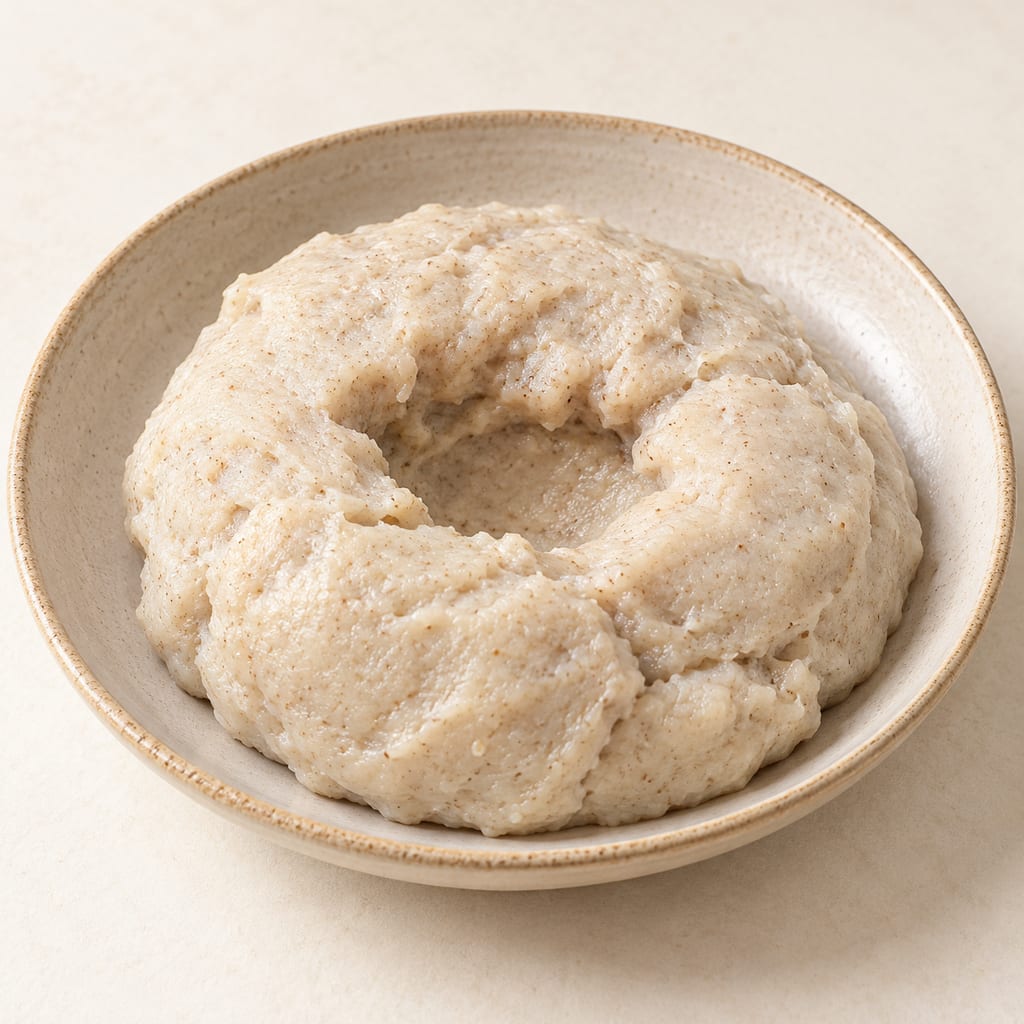
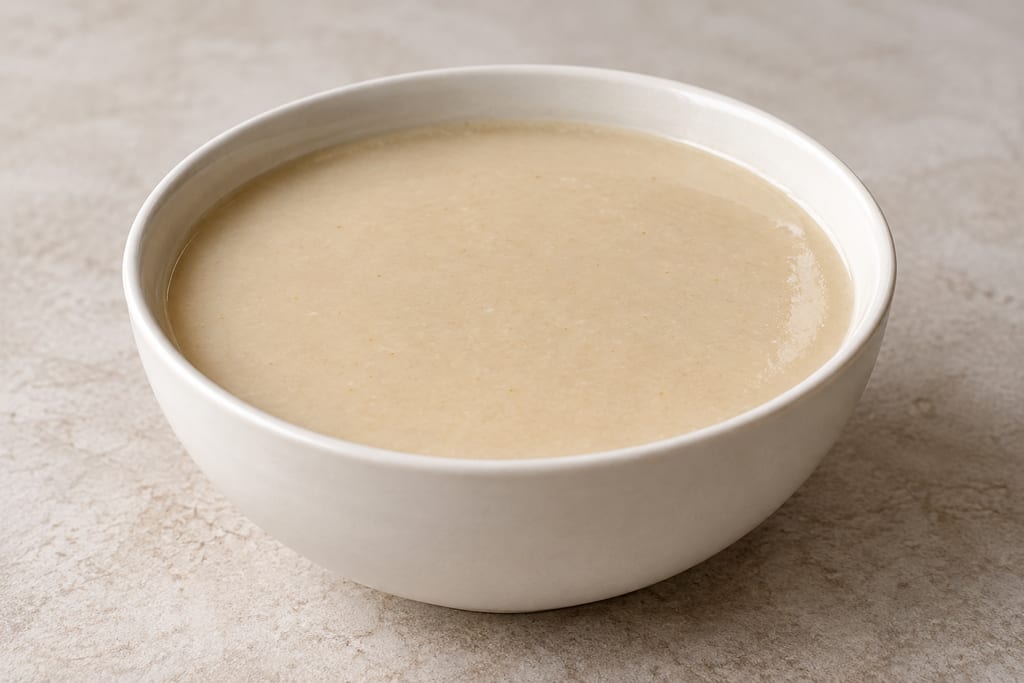
Mawè is a spontaneously fermented maize or other cereal dough from Benin and neighbouring West Africa, soured by lactic bacteria and yeasts and used as the base for cooked pastes, porridges, breads and drinks.
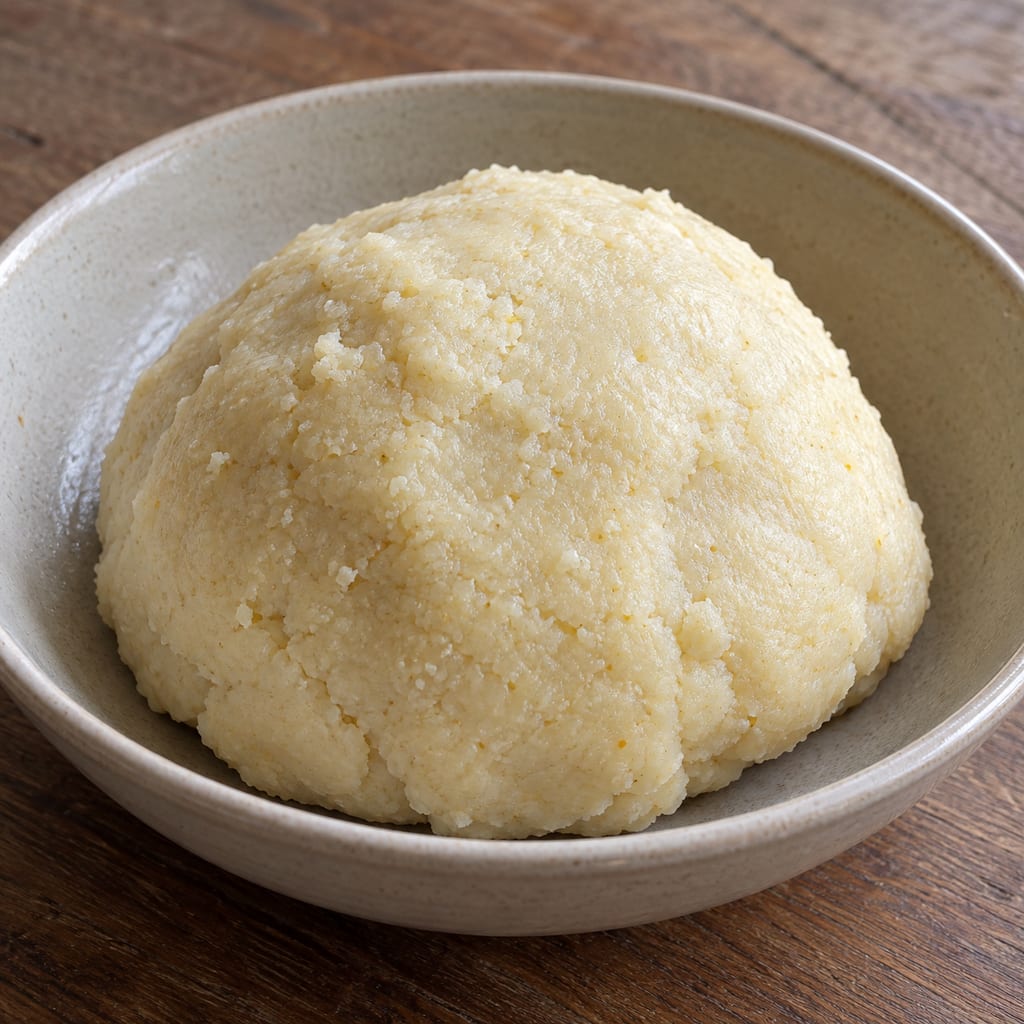
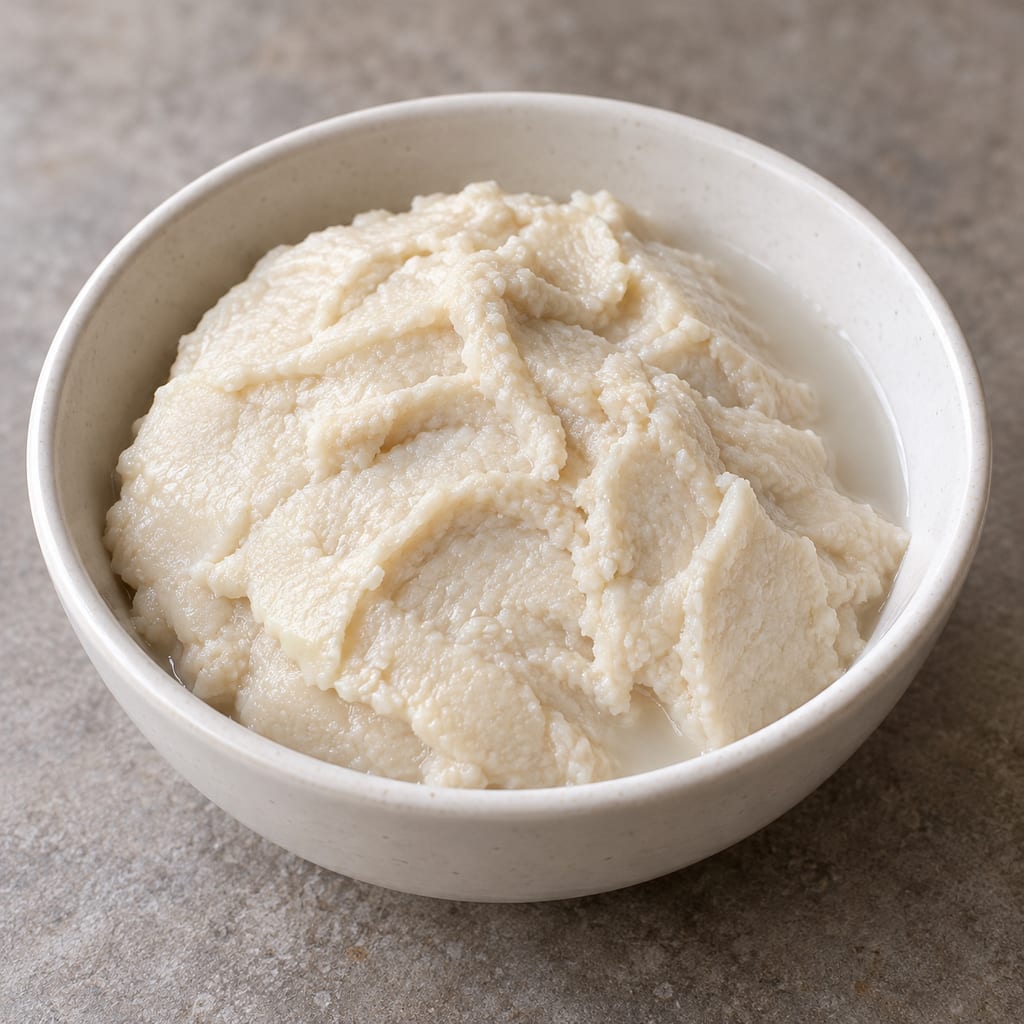
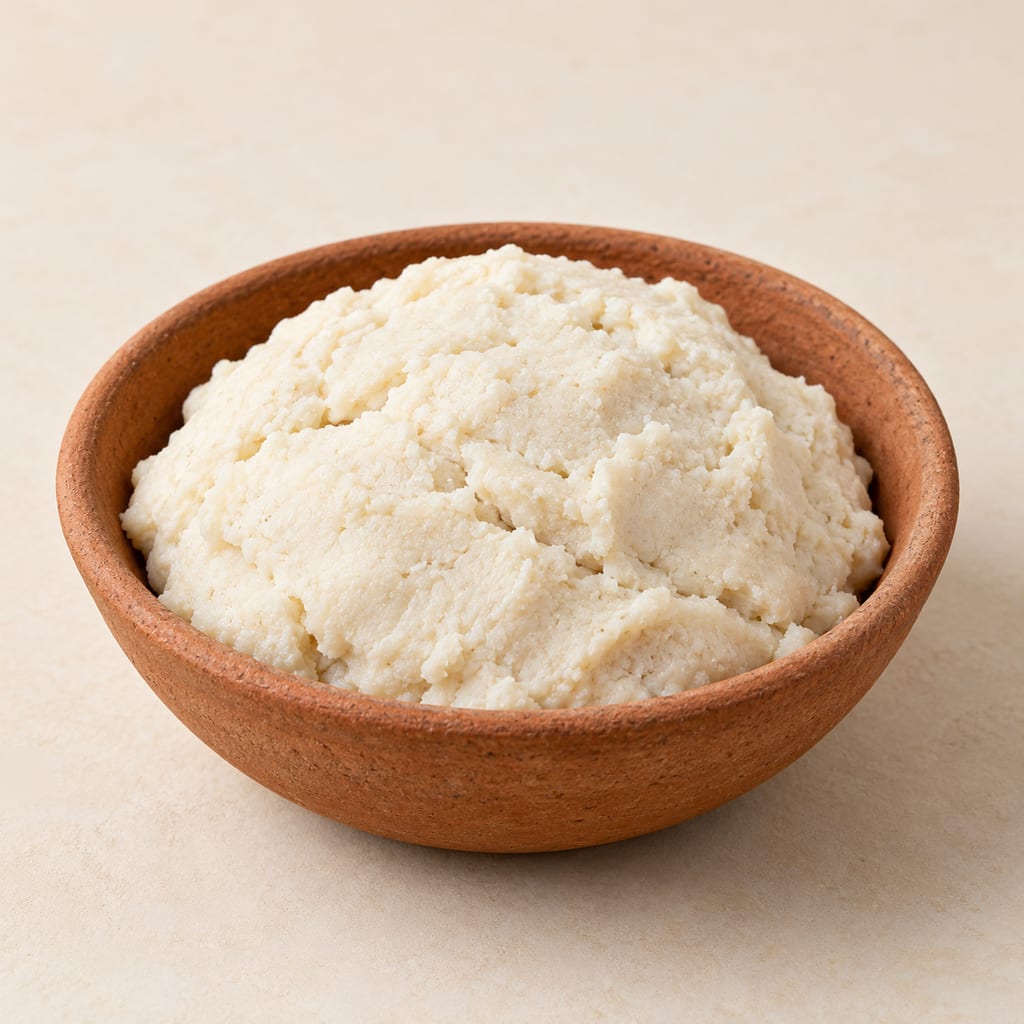
Mawè is a sour, fermented cereal dough made in Benin and neighbouring parts of West Africa, especially Togo. The best-documented kind is maize, Zea mays, though sorghum mawè is also established. The grain is cleaned, broken into smaller pieces, moistened, milled to a dough and left to ferment, and lactic acid bacteria and yeasts develop on their own in the wet mass. The dough is sour and is an ingredient for several cooked foods, not something eaten raw.
The name is written mawè, mawe or mawé. Do not confuse it with mahewu, the fermented maize drink of southern Africa, or with ogi, a West African product made by a different steeping and sieving process. Mawè is a fairly stiff wet dough, not a sour liquid or an alcoholic drink.
The usual grain is maize, most often partly dehulled before fermenting, and how far it is dehulled matters. A household process can keep more bran and germ, while commercial processing usually removes more to give a finer, whiter dough. Sorghum, Sorghum bicolor, is the other documented substrate, and a 2018 study also describes mawè made from millet and rice, though maize and sorghum are the best characterised.
The main fermentation is lactic acid production with yeast metabolism alongside. Researchers found Limosilactobacillus fermentum a leading bacterium and Pichia kudriavzevii a frequent leading yeast, with other organisms varying by cereal, place and stage. No culture has to be added. Once fermented, the dough is diluted, cooked or steamed into foods such as akassa, makumè, koko, aklui, akpan and ablo, so mawè works as a shared base for several dishes.
Mawè belongs to cereal processing around the Gulf of Benin and was a household food before researchers described its microbes and its trade. The original date is unknown. When maize reached West Africa or how old sorghum fermentation is does not date mawè, because the history of a grain and the history of a method are separate.
The first detailed scientific documentation found here is the research published in 1993 by D. Joseph Hounhouigan, M. J. R. Nout, C. M. Nago, J. H. Houben and F. M. Rombouts on the composition, physical properties and microorganisms of traditional household and commercial mawè in Benin. It showed the two production systems gave recognisably similar doughs. Another 1993 study identified the lactic acid bacteria that develop during fermentation.
In March 1994 Hounhouigan completed a Wageningen doctoral thesis, Fermentation of maize meal or mawè production in Benin: physical, chemical and microbiological aspects, which describes mawè as a naturally fermented, partly dehulled maize dough and compares domestic and commercial production. Commercial milling removed more hull and germ and gave a whiter dough that swelled and thickened better but kept less of some nutrients.
An FAO account of village maize processing in West Africa calls fermented doughs a speciality of the Gulf of Benin and names Cotonou as an important centre for processing and selling mawè, which commercial producers sold as an intermediate ingredient to households and food vendors. Later work added detail: in 2013 Greppi and colleagues studied yeasts in mawè and the Beninese beer tchoukoutou, and a 2018 study by Houngbédji and colleagues examined four mawè types at eight production sites in southern Benin, showing microbial succession and differences by cereal and production conditions. These show continuing importance and growing science, not an ancient or medieval origin, and no first written recipe, inventor or single community has been identified.
Mawè fermentation is an acidifying cereal fermentation by lactic acid bacteria with yeasts alongside. The grain is hydrated and ground, the dough is held, and microbes from the cereal and the processing environment use the accessible carbohydrates. The dominant bacteria make lactic acid and other products that lower the pH and give the sourness, while yeasts add metabolism and aroma, so lactic acid production is the most important part of a mixed fermentation.
The best-supported bacterial link is with Limosilactobacillus fermentum, formerly Lactobacillus fermentum. A 1993 study found lactobacilli made up 94 per cent of the lactic isolates examined, with L. fermentum and relatives especially prominent late in fermentation and Levilactobacillus brevis also recovered. Both are heterofermentative and can make acetic acid, ethanol or carbon dioxide as well as lactic acid, depending on conditions and sugars.
The 2018 study of four mawè types found L. fermentum the leading lactic bacterium throughout, Weissella confusa mainly early and Pediococcus acidilactici more in later stages, so the population changes as acid, nutrients and competition change. Its leading yeast was Pichia kudriavzevii, once called Candida krusei, with Kluyveromyces marxianus important and Saccharomyces cerevisiae showing up late in some fermentations. They contribute ethanol, carbon dioxide and flavour compounds, and isolation from a traditional food does not show a species is safe to cultivate or use as a starter.
Maize holds starch, proteins, lipids, minerals and its own enzymes; hydration and grinding open them up, and enzymes and microbes change carbohydrate availability while acid changes how the dough behaves. A 1993 study found fermentation raised mawè's swelling and thickening capacity, differently in household and commercial samples. The dough does not rise like wheat bread, as maize has no gluten network. In the 2018 study the average pH fell from about 5.4 to 4.1 over 36 hours, and a 1993 72-hour experiment reached lower values; they describe different processes and are not validated safety limits.
The traditional maize process starts with sound dried grain. The FAO describes winnowing, washing, crushing and sieving to separate coarse grits, hulls and fine endosperm. Winnowing removes loose foreign matter and washing takes off some surface dirt, and the amount of dehulling affects the dough's colour, nutrients and cooking. The maize is not malted and no baker's yeast is used.
In the household method the FAO documents, crushed and screened maize is partly dehulled, moistened or soaked for two to four hours, ground finer, then kneaded with water into dough that is covered and fermented naturally for one to three days. No universal maize-to-water ratio, temperature or starter dose is given. Commercial production adds more washing: after crushing and screening, coarse fractions are rubbed in water to remove hulls and germ, the endosperm grits are recombined with the fine fraction, moistened and milled, giving a paler, more refined dough with, in Hounhouigan's studies, less protein, fat, fibre and ash and better swelling and thickening.
The method here comes from a May 2010 collection of traditional recipes, observed at five processing units in Cotonou in 2009, starting from 1 kg of maize. The maize is sorted, washed to remove floating impurities, coarsely crushed and sieved on a wicker sieve, then on a finer sieve to split fine flour from grits (about 487 g flour and 446 g grits, with about 178 g of hull), and the grits are rubbed in water to release hull and germ, which are discarded. The usable fractions are recombined, 446 g of water is added and the material absorbs it for 3 to 23 hours, it is milled again, and 185 g of water is worked in to a dense, even dough. The dough stands to ferment spontaneously for about 13 to 27 hours, often around 24, and yields about 1,116 g.
Water softens the grain, serves the milling and supports microbes, and its quantity decides whether the mix is damp meal, kneadable dough or thin suspension. Acidification begins during hydration, before the main fermentation; in the 2018 study soaking lasted four to ten hours and fermentation usually 24 to 48. Microbes come from the grain, water, equipment and surroundings, and milling gear used again and again may seed the next batch. A producer who adds saved mature dough is backslopping, a separate method that should be documented with its own quantity and schedule. When fermentation ends, mawè is still uncooked, and what happens next depends on the dish.
Mawè varies with grain, dehulling, household practice and commercial processing. Maize mawè is the best documented from Benin. Household versions keep more of the outer grain, the commercial method removes more hull and germ, and these differences change colour, fat and fibre, particle size and cooking. Both methods were established when researchers studied the food in the early 1990s, so it is not a question of an authentic product and a modern imitation.
Sorghum mawè is also documented. The 2018 study examined commercial sorghum mawè with three maize types, commercial maize, household maize and undehulled maize, collected at eight sites in southern Benin, and found that cereal and production conditions shaped microbial diversity and strain distribution even where the same species appeared in several batches. Undehulled maize dough was used directly to make a cooked street food called come.
The literature also describes mawè in Togo and millet- and rice-based doughs, and each substrate should be recorded where a recipe exists, since starch, protein, fibre and resident microbes differ and a cereal cannot be swapped for maize without changing the fermentation. At household scale a family makes dough for a meal, and in Cotonou millers and vendors sell the fermented dough as a semi-finished product.
Saved mature dough is used in many African cereal fermentations, but the principal documented mawè methods are spontaneous. A producer who adds some is making a maintained variation, and research showing communities can stabilise under repeated transfer does not show that all producers do this or that such a culture stays safe.
Mawè is mainly a base. It is not served as raw dough: households and vendors add water and heat, shape or steam it into cooked cereal foods, its acidity adds to their taste, and its ground particles and starch decide their cooked texture. The FAO calls it a versatile intermediate because one fermented dough supplies several dishes.
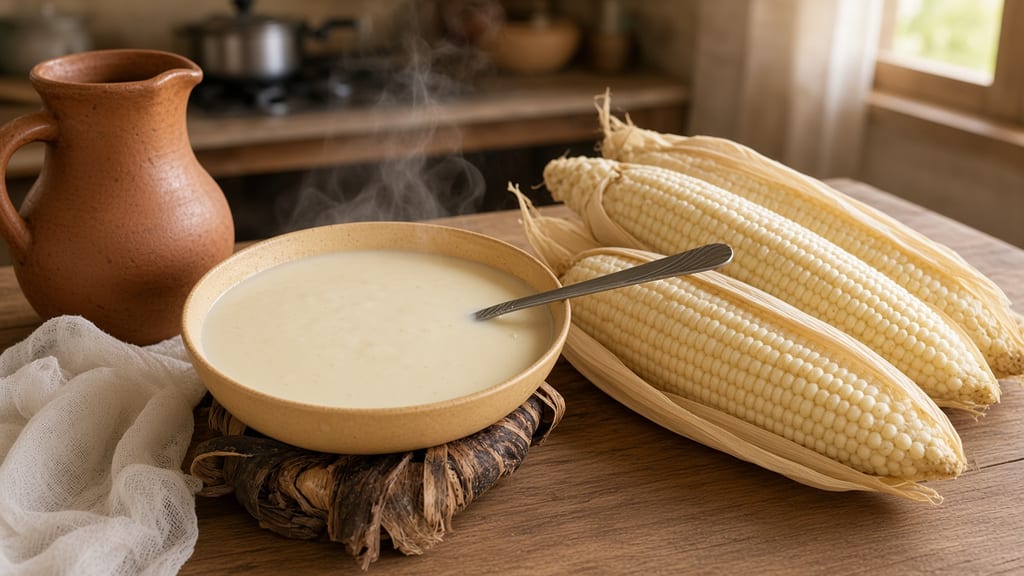
Akassa and makumè are thick pastes or gels made by diluting the dough and heating until the starch gelatinises, and akassa is a finished dish, not another name for raw mawè. Koko and aklui are porridges: koko is the diluted dough cooked to a gruel and aklui is made from granular cereal particles, boiled and eaten after cooking.
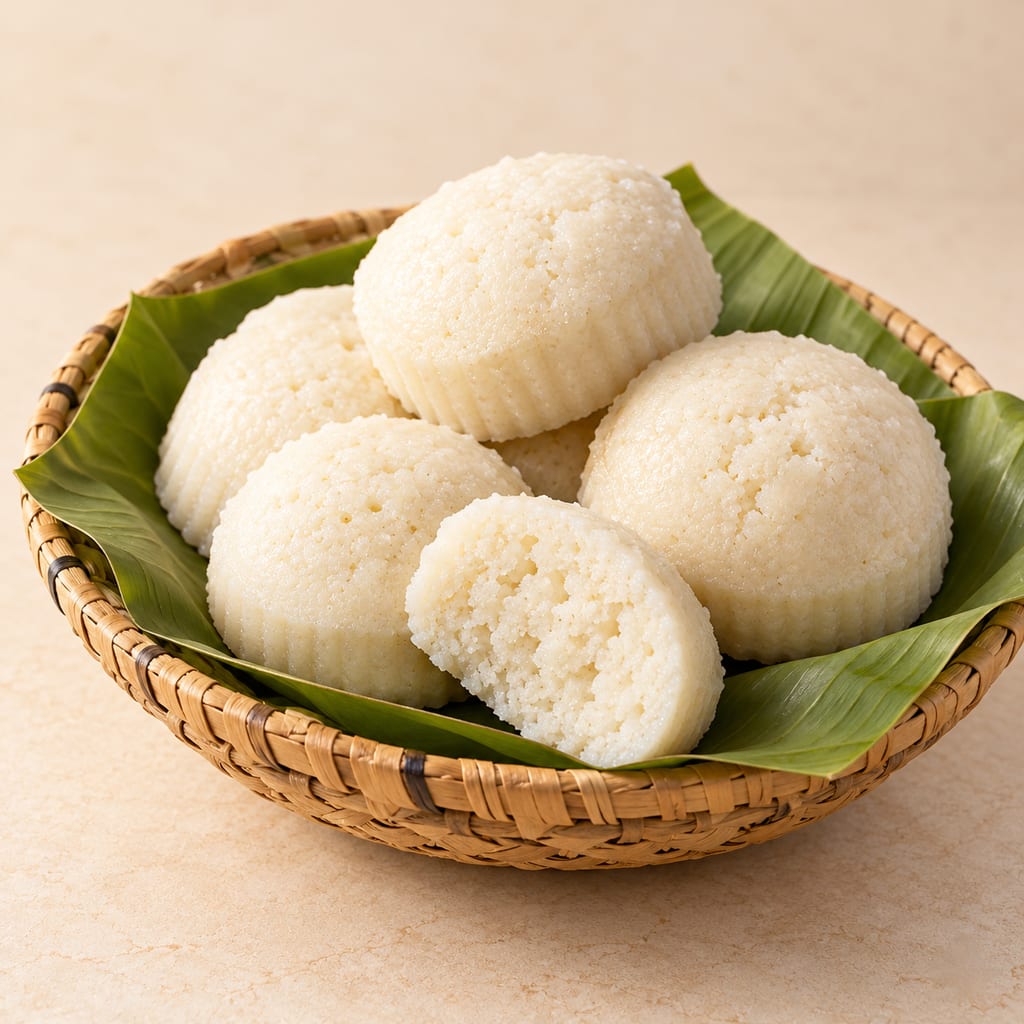
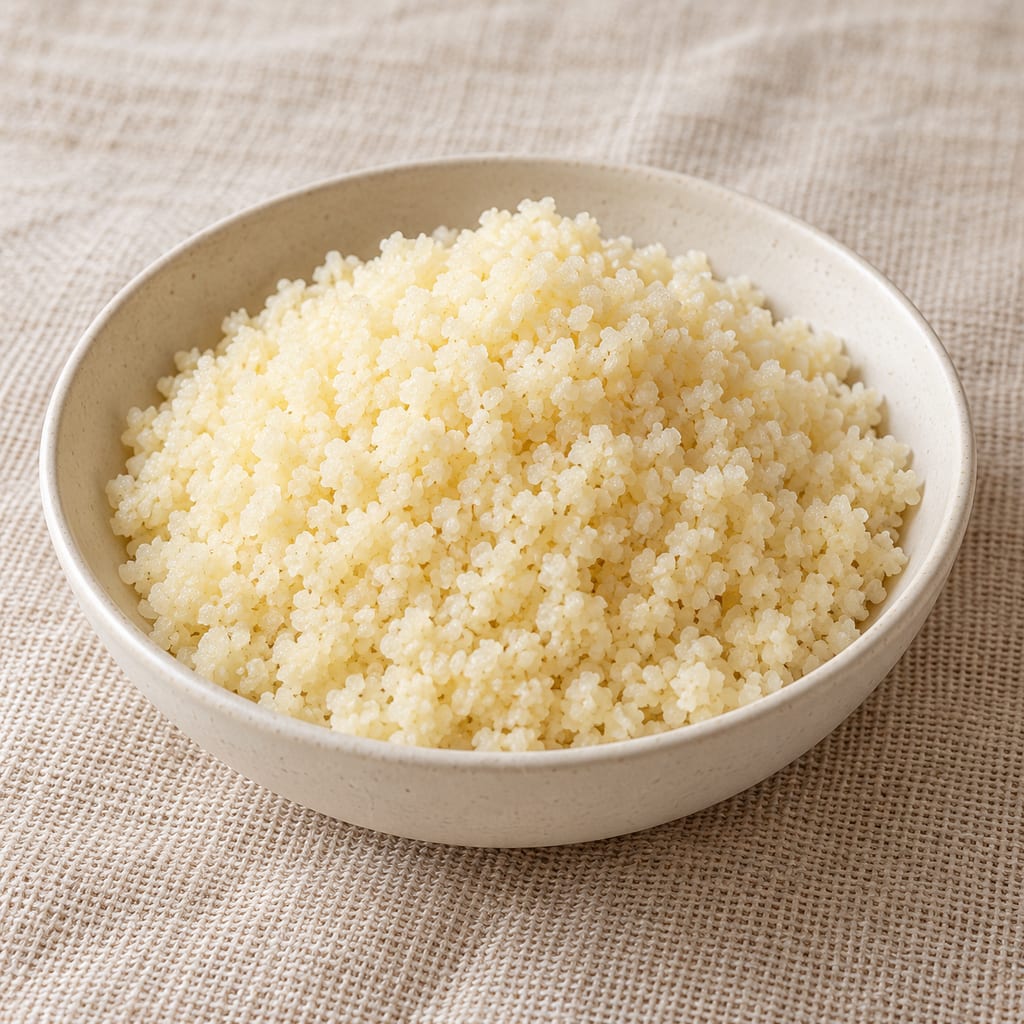
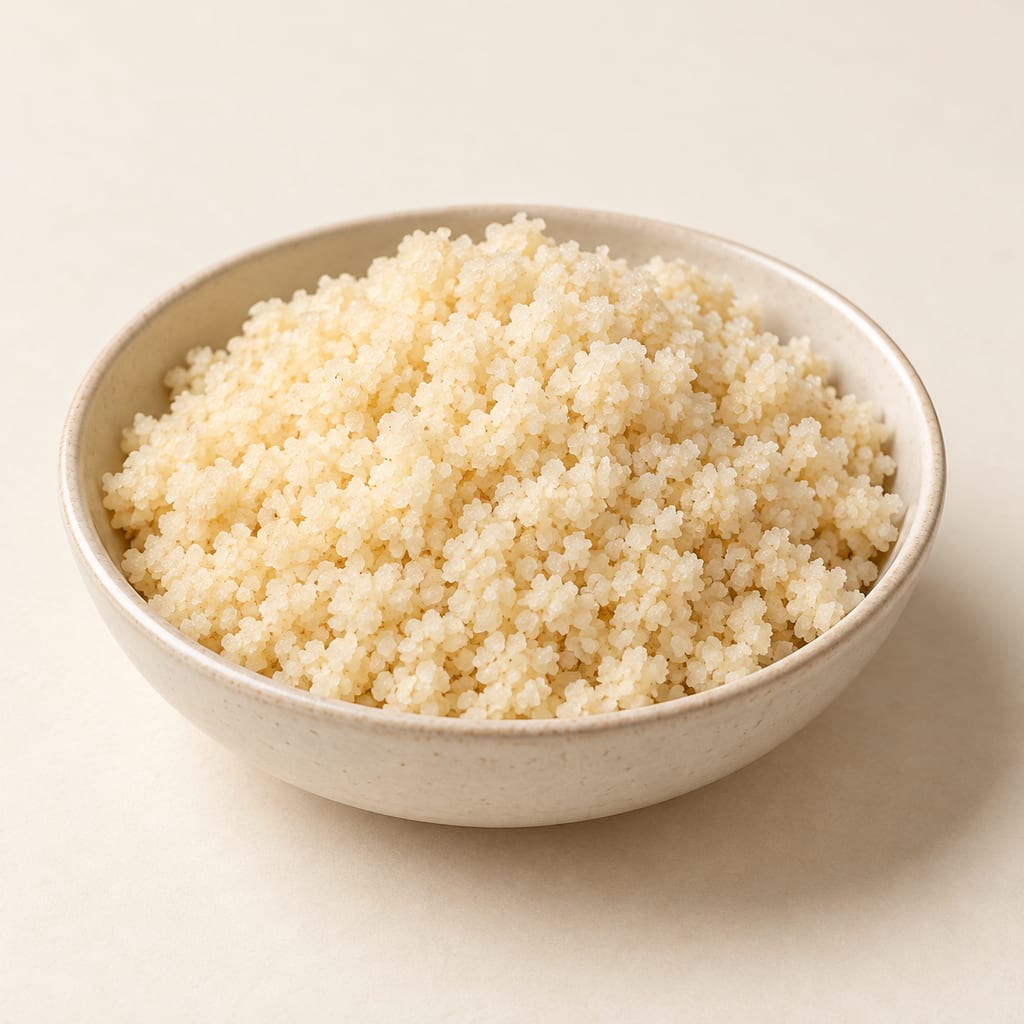
Akpan, per the FAO, is a pre-gelatinised, yoghurt-like product made from fermented maize, whose texture is not dairy yoghurt and not a sign of the same starter. At earlier stages of fermentation mawè can make ablo, a steamed cereal bread, fried foods such as massa and pâté, and yèkè-yèkè, a couscous-like preparation. Each dish has its own process, so one mawè recipe cannot set the texture or form of everything made from it.
Commercially prepared mawè is bought as a wet intermediate, which separates cleaning, milling and fermenting from the final cooking, and raises questions of packaging, transport and storage that the fermentation method does not answer. Acidity observations or commercial holding times do not give a safe shelf life. Mawè should link to finished-food records while keeping its identity as an uncooked fermented preparation.
The visible change is souring of the moist dough. A developing batch gets sourer as lactic acid bacteria use the carbohydrates, and the aroma, consistency and gas content change as yeasts grow. Unlike wheat sourdough it does not necessarily rise much, because maize has no gluten to trap gas, so doubling is not a sign of maturity; judge it by the cereal, milling and the dish it is for.
Measurements give context, not an endpoint. Hounhouigan's 1993 comparison found similar titratable acidity in household and commercial mawè, with a somewhat higher pH in the household samples, a 72-hour study recorded strong acidification, and the 2018 study saw average pH fall from about 5.4 to 4.1 in 36 hours. The Cotonou field observation here reports pH 5.8 and 49.5 per cent dry matter, much less acid than others, and no pH is a validated safe endpoint for every mawè.
Early contamination is a documented concern. Hounhouigan and colleagues found Enterobacteriaceae, including Enterobacter cloacae and Escherichia coli, in the early stages, falling below detection in their batches after 24 to 48 hours. That shows succession in those experiments and does not prove every spontaneous ferment becomes pathogen-free after the same time, and sourness, bubbles or a familiar smell cannot replace microbiological testing.
The grain itself may carry hazards that fermentation does not remove. A 2005 study by Fandohan and colleagues of aflatoxins and fumonisins in processing maize into Beninese foods, including mawè, found sorting, washing, crushing and dehulling reduced contamination, while fermentation and cooking had little effect. Mouldy or damaged grain should be rejected, not fermented in hope that acid will detoxify it.
Pichia kudriavzevii, the main yeast in recent work, is also the clinical Candida krusei, an opportunistic pathogen studied for antifungal resistance, so its presence in a traditional food is no reason to cultivate an uncharacterised strain, and bacteria isolated from mawè are not automatically fit as starters, which needs strain-level identification and safety assessment.
Poor fermentation can come from unsuitable grain, too little water, wrong grinding, variable temperature or a poor starting community. A very wet mix behaves like a suspension and a coarse one cooks differently from fine commercial mawè, and removing more bran and germ gives a whiter product with less nutrient retention. Repeated transfer of old dough can change the community and does not prove stability or safety. Do not eat raw mawè as a test, and discard dough that is mouldy or obviously contaminated. No safe room-temperature or refrigerated storage period or acceptance criterion is established for the traditional product.
Starting amount observed at five units in Cotonou in 2009; cultivar and colour are not given. The 178 g hull, 487 g fine flour and 446 g grits are intermediate outputs, not extra ingredients
Observed for the 1 kg process; actual consistency depends on grain absorption and milling
Method
Risks and precautions
Aflatoxins and fumonisins in maize
Maize can carry fungal toxins; sorting, washing, crushing and dehulling reduce them in Beninese processing, while fermentation and cooking do little, so contaminated grain is not safe after souring.
Hazard source
Enterobacteriaceae in early fermentation
A 1994 study found Enterobacteriaceae, including E. coli and Enterobacter cloacae, early in mawè fermentation; their fall in studied batches does not show every batch follows suit.
Hazard source
Uncharacterised spontaneous microbes
Fermentation depends on microbes from ingredients, equipment and surroundings, and species reported from research samples are not a safety-assessed starter.
Hazard source
Organisms unsuitable as cultivated starters
Some isolates, including Pichia kudriavzevii, have clinical associations with opportunistic infection, and isolation from food does not show strain-level suitability.
Hazard source
No validated acidification endpoint
The field recipe reports pH 5.8 while other studies report far more acid products, and neither pH nor a sour smell is a universal pathogen-control endpoint.
Hazard source
Contamination in milling, washing and handling
Repeated washing, sieving, shared mills, kneading and transfers can spread microbes if water and surfaces are not kept clean.
Hazard source
Eating the uncooked dough
Mawè is documented as an ingredient for cooked foods, and fermentation has not been shown to make the raw dough ready to eat.
Hazard source
Use sound, properly stored maize and reject mouldy, damaged or suspect kernels before milling.
Control source
Sort, wash and dehull as the method describes, knowing this reduces but does not remove mycotoxins.
Control source
Use potable water and clean milling, sieving, kneading and fermenting equipment.
Control source
Do not substitute a single isolated bacterium or yeast named in research for the spontaneous community.
Control source
Treat the reported times and acidity as field observations, not validated limits.
Control source
Cook the fermented dough in an appropriate finished recipe and do not serve it raw.
Control source
For commercial or research production, set microbiological, acidity, raw-material and storage controls suited to the actual process.
Control source
This is an ethnographically documented spontaneous fermentation, not a validated modern home protocol.
The 446 g and 185 g of water exclude the unquantified washing water.
The intermediate flour and grit weights are processing fractions, not extra recipe additions.
The summed fractions differ from the starting weight and are not corrected by inventing losses.
The 1,116 g yield is an observed output, not guaranteed.
The reported pH 5.8 is much higher than in other studies and must not be treated as a safe target.
Thirteen to 27 hours is not shown to eliminate pathogens.
Early fermentation may hold Enterobacteriaceae.
Sourness, bubbles or a familiar smell do not show safety.
Mouldy maize can carry mycotoxins that fermentation and cooking do not reliably destroy.
Do not cultivate Pichia kudriavzevii or other isolates without strain-level identification and safety assessment.
The method is spontaneous; adding mature mawè is a separate backslopped variation with no stated ratio or schedule.
No shelf life, refrigeration schedule, water-activity threshold or acceptance criterion exists.
Mawè contains no wheat, but shared milling equipment or later additions can bring in wheat or other allergens.
Cook the dough in a proper recipe; mawè is not ready to eat.
This is the maize mawè process in Traditional Recipes of Millet-, Sorghum- and Maize-Based Dishes and Related Sauces Frequently Consumed by Young Children in Burkina Faso and Benin (May 2010), observed at five traditional units in Cotonou in 2009. It records a spontaneous fermentation and is not a validated modern home protocol.
Start with 1 kg of sound dried maize. Sort out foreign matter and damaged kernels by hand or winnowing, and reject visibly mouldy maize instead of relying on fermentation to make it safe.
Wash the maize in potable water and remove floating impurities. The quantity of water and time are not given.
Crush the cleaned maize coarsely in a grain mill to break the kernels so the fractions can be separated.
Sieve the crushed maize through a large wicker sieve to separate hull material.
Use a finer sieve, and sometimes a third, to separate fine flour from grits and keep the usable fractions apart; the observed outputs were about 487 g flour and 446 g grits.
Wash the grits vigorously, rubbing them to release hull and germ, and take off floating impurities with a sieve, repeating if needed. Discard the separated material and washing water.
Recombine the usable fractions before or after the water-absorption stage; the order varied between units.
Add 446 g of water for moistening and let the material absorb it, observed at 3 to 23 hours.
Mill the moistened maize a second time into a finer wet meal, in the same mill.
Work in 185 g of water gradually and knead to a dense, even dough.
Put the dough in a suitable container and let it ferment spontaneously. No commercial yeast, laboratory culture or retained mawè is added.
Leave it to stand for about 13 to 27 hours (often about 24). No fermentation temperature is given.
The result is fermented maize dough, about 1,116 g from 1 kg of maize, with 49.5% dry matter and pH 5.8 in the observed product; these are observations and not targets or safety limits.
Use the dough as an ingredient in a cooked dish such as akassa, akpan, aklui or koko, whose extra ingredients and times belong to those recipes.
Do not eat raw mawè or treat the observed time as proof of pathogen control. No mother culture, backslopping quantity or storage life is established.
Ogi or akamu is a wet fermented cereal preparation documented in Nigeria and Benin. Grain or maize starch is steeped, milled or sieved, then fermented by process-specific routes; evidence supports no universal method or safety limit.
From sour breads and milk to savoury seeds, cassava staples and living beers, African fermentation follows the crop, the community and the work of transformation.
Soft, lightly tangy steamed cereal bread documented across Benin and Togo. This page gives one measured rice-flour research method; maize-based Ablo and mixed-grain versions remain distinct traditions.
Ghanaian sour cassava dough fermented with traditional inoculum and drained during fermentation. It is used as a base for cooked foods such as banku and akple; process variants and safety outcomes differ.
Lafun is a Nigerian fermented cassava flour described in historical accounts. This record documents reported processing stages, not a validated household method or a batch-specific cyanogen and moisture safety endpoint.
Lanhouin is a strongly flavoured fermented fish condiment documented in coastal West Africa, including southern Benin. This page records one published research reproduction as evidence, not as a validated home-preservation recipe.
A traditional Beninese inoculum made from fermented roselle, cotton or baobab seeds, rich in bacterial spores, added to cooked African locust beans to speed up fermentation and soften them into sonru.
Aceda is Sudan’s firm cereal porridge, commonly made from sorghum and shaped into a smooth mound. Some versions use fermented dough; fermentation is not universal.
Appam, or hoppers, are South Indian and Sri Lankan rice pancakes made from a fermented coconut-and-rice batter and cooked in a curved pan to a crisp lacy rim and a soft, spongy centre.
A hot, sour maize drink from Tabasco made from maize that is not lime-cooked. The ground grain sours for half a day, then makers strain it and boil it until thick.
Ivorian cassava semolina: grated cassava is fermented overnight with a traditional inoculum, pressed, sieved into granules, dried and steamed. Documented in a 2006 field study; no sole original process is established.
Attiéké is an Ivorian staple of grated cassava fermented with a traditional inoculum, then pressed, sieved, granulated, dried and steamed into fine couscous-like grains.
Crushed or milled barley cooked in water until the starch softens and the mixture thickens, the plainest way a northern household turned stored grain into a meal, here with apple and hazelnut.
A fermented pearl-millet gruel documented in Ouagadougou, Burkina Faso. Whole grain is soaked, wet-milled and sieved; the settled paste ferments again before it is cooked with its liquid.
Soft, spreadable Calabrian pork sausage made with a great deal of red chilli and fatty pork, stuffed into natural casings, sometimes smoked and matured while staying soft.
A way to add independent temperature logging to an existing food dehydrator without changing its built-in controls or protections. It is a monitoring method, not a rewiring plan.
Pleurotus cystidiosus is the abalone mushroom, a cultivated oyster-type fungus with dark brown caps that grows more slowly and is more demanding than other Pleurotus species.
A dark, balanced vinegar from Emilia-Romagna made by combining cooked or concentrated grape must with wine vinegar, then acetifying and refining it in wood under a protected specification.
A small electric incubator holds jars at a selected temperature for yogurt and other documented warm food preparations. Controls, capacity and vessel arrangement vary by model.
Adygean salt is a seasoned table salt associated with Adygea and the wider North Caucasian culinary tradition. Salt is blended with garlic and a variable selection of herbs and spices; the exact mix depends on the named style and maker.
The African Caesar-group mushroom, Amanita masasiensis, is a wild ectomycorrhizal species of central and southern African woodlands, eaten locally. The genus contains deadly poisonous species, so identification needs care.
Community
No community contributions have been published for this entry yet.
Share what you made
Sign in to contribute. Published comments and photos are free to read.