
Mushrooms
Slippery jack
Suillus luteus, the slippery jack, is a pine-associated bolete recorded as cooked, dried or pickled in Europe and in pine plantations on several continents.
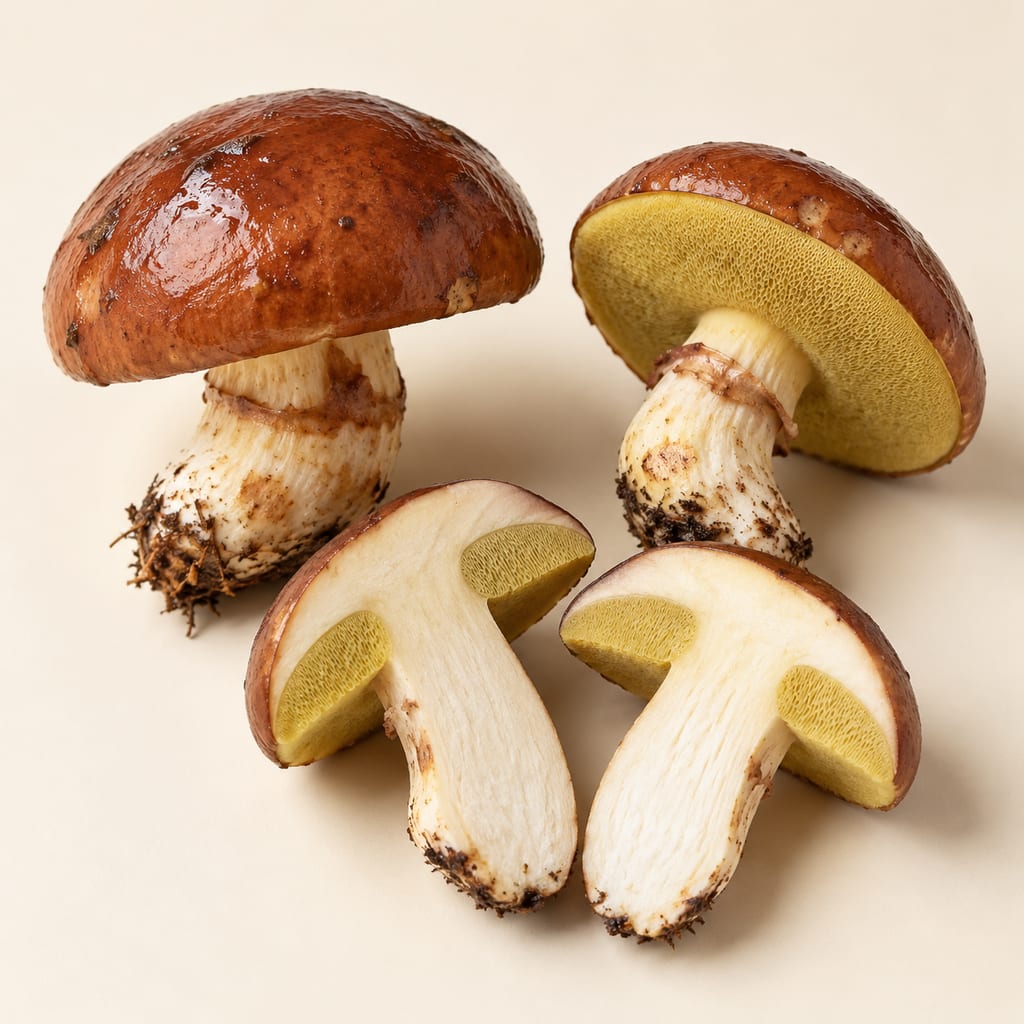
Overview
Suillus luteus is a bolete that forms mycorrhizal partnerships with pine trees. Its English name is slippery jack.
The catalogue records the species in Europe and in pine plantations on several continents, where pines have been planted.
Food use
The catalogue records the slippery jack as cooked, dried or pickled. The processing traditions for it vary by region, and the catalogue leaves those variations for checking rather than giving a single method.
Safety
The catalogue notes that some people develop digestive intolerance to this bolete. The Nordic guidance text cites a case in which contact with the cap mucilage of five Suillus species caused reddening, swelling and itching; two other species caused no allergic symptoms.
The page does not establish a safe amount or preparation. A mushroom must be confirmed by a competent expert before it is eaten, and preparation traditions should be checked against regional sources.
Places
Europe
Documented use · Region evidenceCatalogue record; also pine plantations on several continents.
Community
No community contributions have been published for this entry yet.
Share what you made
Sign in to contribute. Published comments and photos are free to read.
Sources
Safety · Contact allergy
Mushrooms traded as food, Vol II sec. 1: Nordic risk assessments and background on edible mushroomsAllergic contact dermatitis reports for five Suillus species (Bruhn and Soderberg 1991)
Cited in: Overview; Food use; Safety