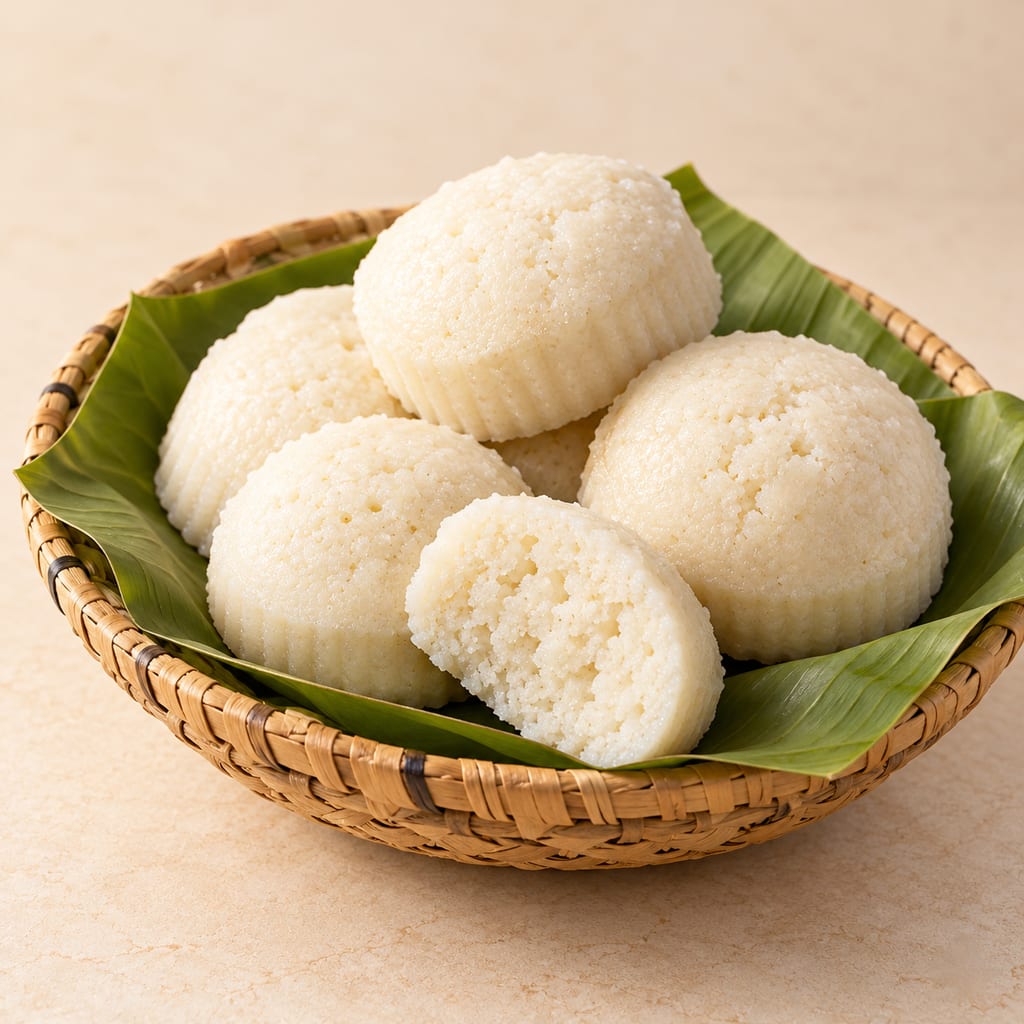
Ablo (rice-based steamed bread)
Soft, lightly tangy steamed cereal bread documented across Benin and Togo. This page gives one measured rice-flour research method; maize-based Ablo and mixed-grain versions remain distinct traditions.
 FermenteaWhere food goes to change
Modern method
Vitumbua · kitumbua · vitumba
Yeasted rice-and-coconut batter cooks in greased rounded wells into small domed cakes associated with the East African coast.
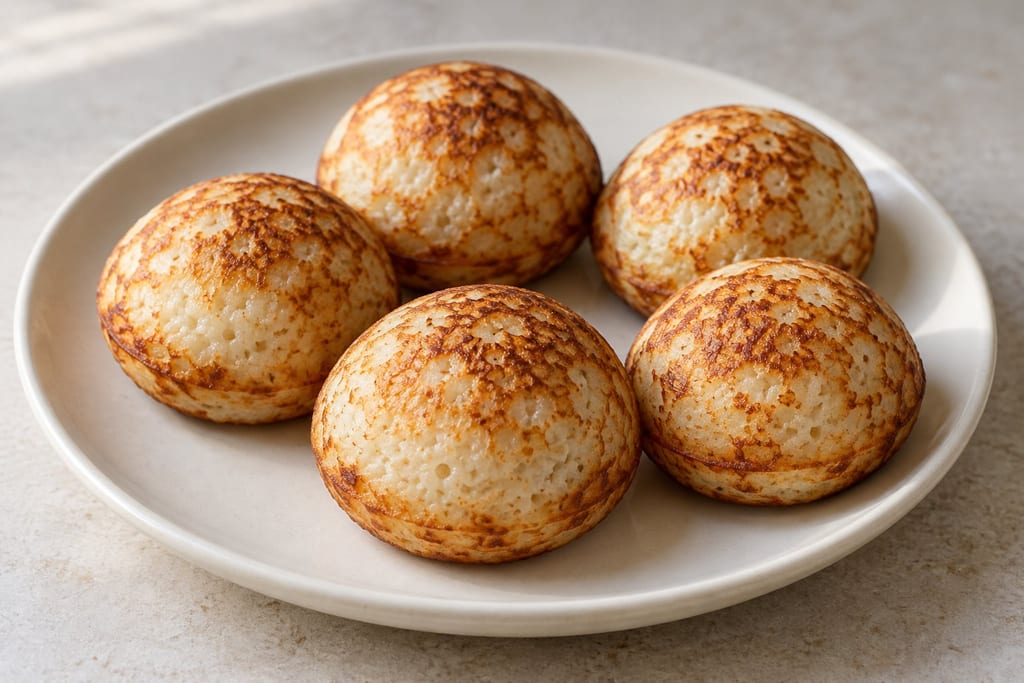
Vitumbua are small, rounded rice cakes with a gently crisp outside and a soft, tender centre. The cakes take their domed shape from individual round wells in a special pan. Their batter uses soaked rice and coconut milk rather than a kneaded wheat dough, so the finished texture is moist and fine-grained. Yeast raises the batter; cardamom is a familiar aroma, while sweetness varies by cook and recipe.
Recent accounts place vitumbua in the food life of Kenya’s coast and Tanzania, where people eat them at breakfast, with tea, and during Ramadan gatherings. One Eastleigh report also mentions weddings and everyday tea time. These descriptions support a Swahili coastal association, but they do not date the food’s beginning or identify one town as its birthplace. The name and shape are more useful here than a claim of a single origin.
Vitumbua share a broader family resemblance with other rice cakes, including West African masa and South Indian paniyaram. Similar pans and rounded shapes do not make the foods identical. Vitumbua’s East African coastal identity comes with its own use of rice, coconut and cardamom, and the recipes use different batters and rests. The atlas treats them separately from mkate wa sinia, a large rice-and-coconut bread baked as one round and sliced to serve.
In this version, whole rice softens in water before it goes into a blender. Soaking makes the grains easier to grind. Blend them until the batter is smooth, not gritty; if the blender is small, work in batches and pause to scrape down the sides. The source’s two cups of rice and one cup of coconut milk make a thick batter. Coconut milk contributes fat, flavour and moisture, while rice supplies the starch that gives the cakes their structure after cooking.
The teaspoon of yeast makes this a leavened batter rather than a quick mixture of rice flour and liquid. During the covered rest, yeast produces gas and the batter rises; bubbles or a larger volume show that its texture is changing. These are cues for when the source expects the batter to be cooked, not proof that the mixture is microbiologically safe. The batter has no wheat-gluten network to knead, and the cook should not treat it like bread dough.
Salt balances the sweet batter. The source gives a range of three-quarters to one cup of sugar and uses cardamom with nutmeg; coconut flakes and almond extract add further aroma and texture. These are features of this particular home formula. Other recipes use less sugar or omit some of the extra flavourings, so the amounts should not be blended into a supposed universal formula.
A vitumbua pan has separate rounded wells; æbleskiver and paniyaram pans are practical substitutes because they give the batter similar individual pockets. Oil each well lightly, heat the pan over medium heat, and fill each pocket about three-quarters full. Space above the batter lets the cakes puff without spilling over the rim.
Cook each side for about two to three minutes, turning the cakes with a skewer or chopstick. The first side firms and browns before the cake is turned; the second side finishes the centre. Work in batches and adjust the heat if the outside colours too quickly. A plain skillet can cook the same batter as small pancakes, but it will not create the traditional domed form. That is a change of shape and surface, not a different name for the rounded cakes.
Pan heat and a steady pace matter more than elaborate handling. If the pan is too cool, the batter may set slowly and spread; if it is too hot, the surface can brown before the middle cooks. The source gives a medium setting and a short cooking estimate, but no measured pan temperature. Use the time as a starting point and check that both sides are cooked through.
The overnight soak is the longest stage, and the original recipe does not say whether the bowl should sit in or out of the refrigerator. Rice can carry Bacillus cereus spores. Food-safety guidance for fermented rice batters warns that organisms can grow during soaking and fermentation, and advises cold soaking; if soaking at room temperature, that guidance limits the step to four hours. This recipe therefore uses a clean container, potable water and a refrigerated soak for the longer option.
After blending, cover the batter and let it rise only until it has doubled or bubbles appear, then cook it promptly. If plans change, refrigerate the batter rather than leaving it warm while waiting. The food-safety guidance used here addresses dosa and idli, not this yeast-led coconut batter, so it does not validate a Vitumbua fermentation time or temperature. The rise is a texture cue only. Do not extend the warm rest to make the cakes more sour or assume that visible bubbles establish safety.
Cook the cakes through and serve them warm. If cooked cakes are not served at once, follow current local food-safety advice for keeping hot food hot or cooling and refrigerating leftovers. Rice-associated toxins are not necessarily destroyed by reheating, so prompt handling matters. Keep the work bowl, blender, utensils and pan clean, and wash hands after handling the raw soaked rice and batter.
Vitumbua are eaten warm with tea or coffee and can be served plain or with fruit, honey or other accompaniments. Ginger tea and spiced tea provide a contrast to the sweet coconut batter; Eastleigh’s account also names tamarind as a tangy partner. They suit a snack plate as well as breakfast, and coastal accounts describe them at Ramadan iftar and weddings.
Make the cakes in the pan that matches the meal: a special vitumbua pan preserves the small domed shape, while a similar rounded-well pan makes the technique accessible in another kitchen. The recipe yields roughly a dozen to fifteen cakes. It is written for that source batch, and larger batches need extra pan time and attention rather than simply multiplying the ingredients and leaving a large bowl of batter waiting.
The recipe source calls vitumbua an East African breakfast and describes it as a variation on a wider sweet rice-and-coconut snack. It does not date the practice. Vitumbua and West African masa may share a broader rice-cake resemblance, but this recipe remains the East African rounded-well preparation.
Yield 12 cakes · Scaling: source batch only
Rice is a low-moisture grain that can carry Bacillus cereus spores; when rehydrated, it needs controlled soaking and the batter should not be left warm after its rise.
Hazard sourceThe recipe cooks batter in hot, oiled wells and uses a skewer or chopstick to turn the cakes.
Hazard sourceUse potable water and a clean container; soak rice under refrigeration. If soaking at room temperature, keep that stage to no more than 4 hours. The cited safety guidance is for fermented rice batters such as dosa and idli and is applied here as a conservative rice-soaking control.
Control sourceCover the batter during its rise, cook it promptly once risen, and refrigerate it if cooking is delayed. Do not leave risen batter standing warm.
Control sourceCook the cakes through; handle the hot pan carefully and turn cakes with a skewer or chopstick.
Control sourceThis is a yeast-leavened home adaptation, not a validated fermentation process. The source gives a rise endpoint but no time or temperature; do not extend the warm rest beyond the rise needed to cook.
The cited author describes vitumbua as an East African breakfast eaten across Swahili countries; the bread atlas places the family on the East African coast. This is a regional association, not a precise birthplace.
Soft, lightly tangy steamed cereal bread documented across Benin and Togo. This page gives one measured rice-flour research method; maize-based Ablo and mixed-grain versions remain distinct traditions.
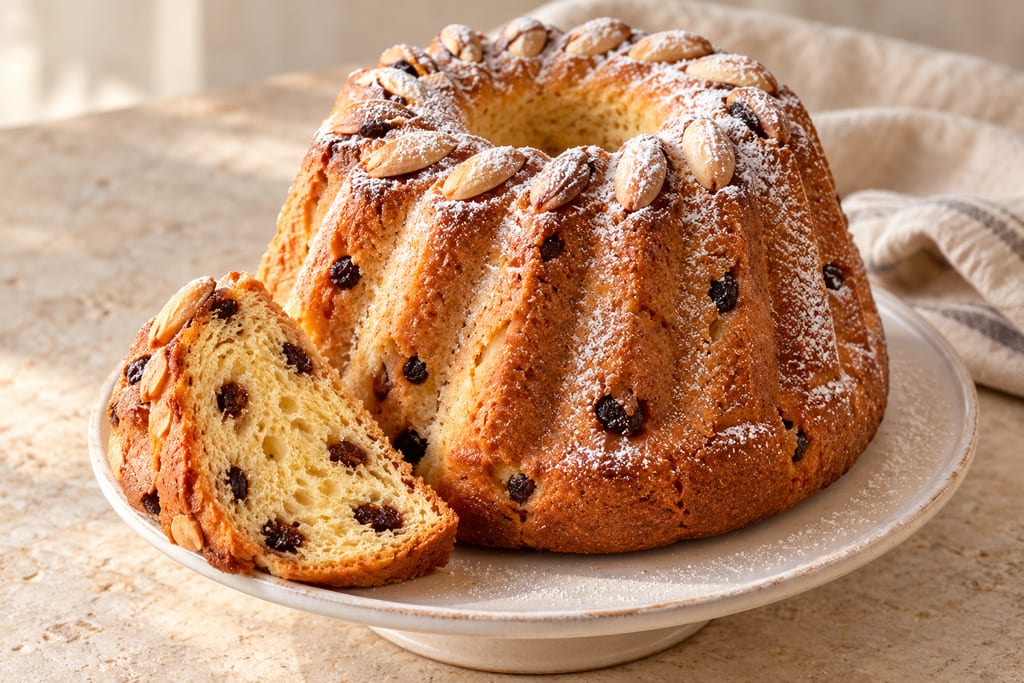
An enriched Alsatian yeast ring with raisins and almonds, kneaded with butter, proofed in a fluted mould and baked until browned.

Anpan is a soft wheat bun filled with sweet red-bean paste and finished with egg wash and black sesame. This dough rises with commercial instant yeast.
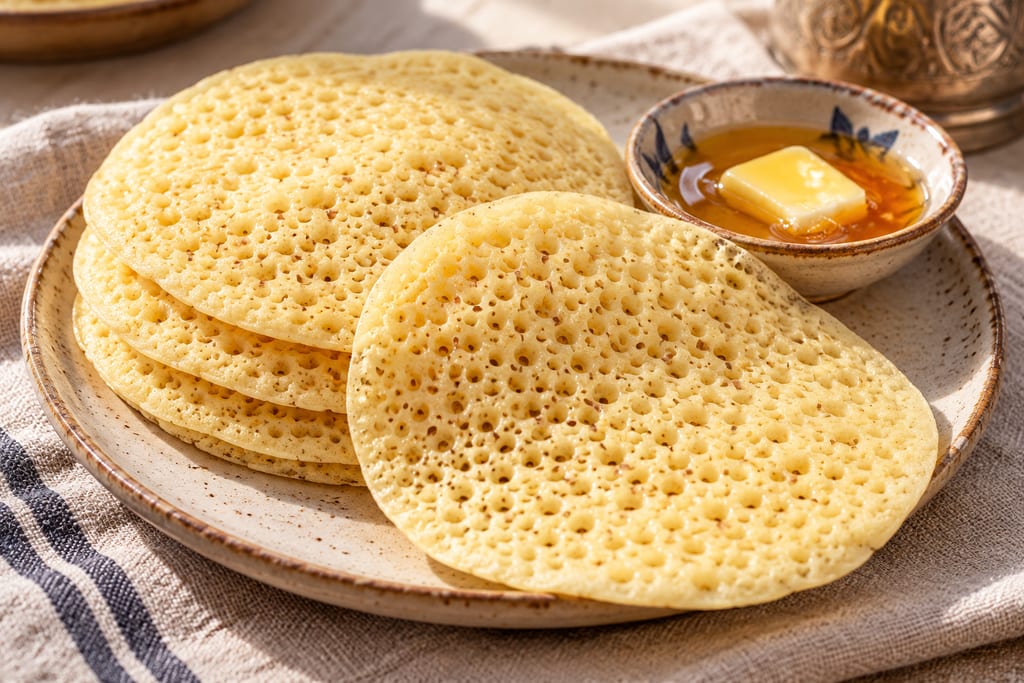
Moroccan semolina pancakes made from a thin yeast batter, rested until foamy and cooked on one side until the surface sets with a honeycomb of holes. This source-specific batch makes sixteen 5-inch pancakes.
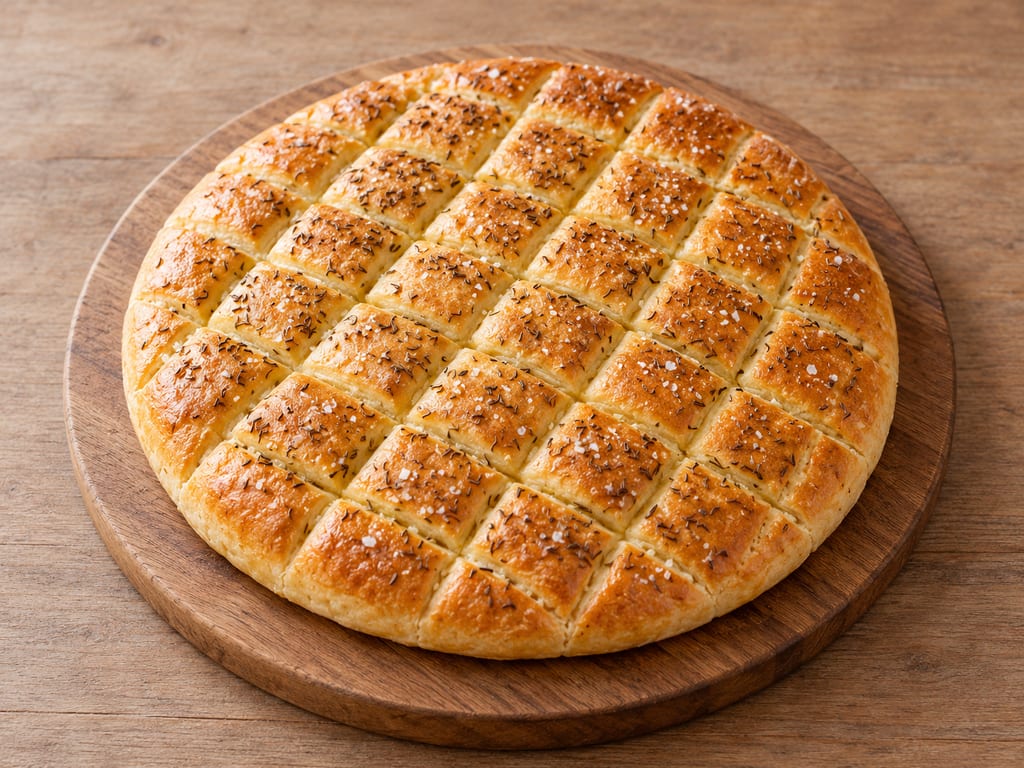
A round Slovenian flatbread scored in a grid and topped with caraway and coarse salt.
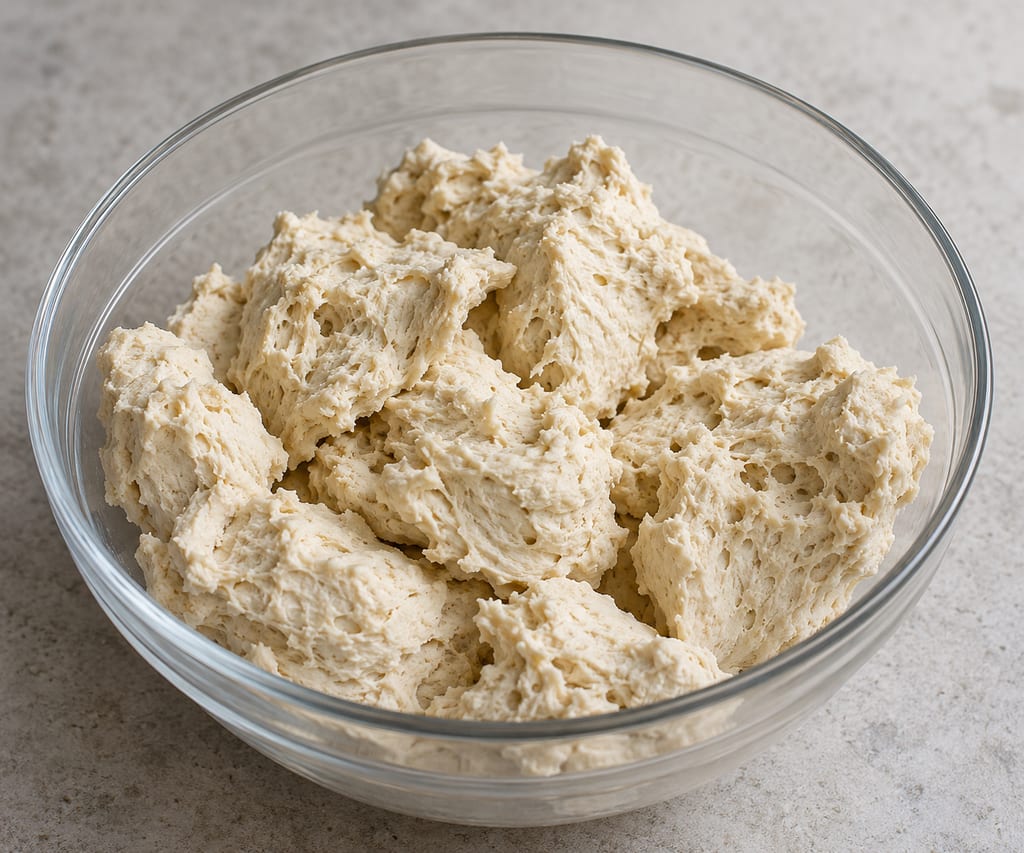
Biga is an Italian bread preferment of flour, water and a little yeast, usually a stiff unsalted mass of about 45 per cent water, fermented ahead and then mixed into the final dough.
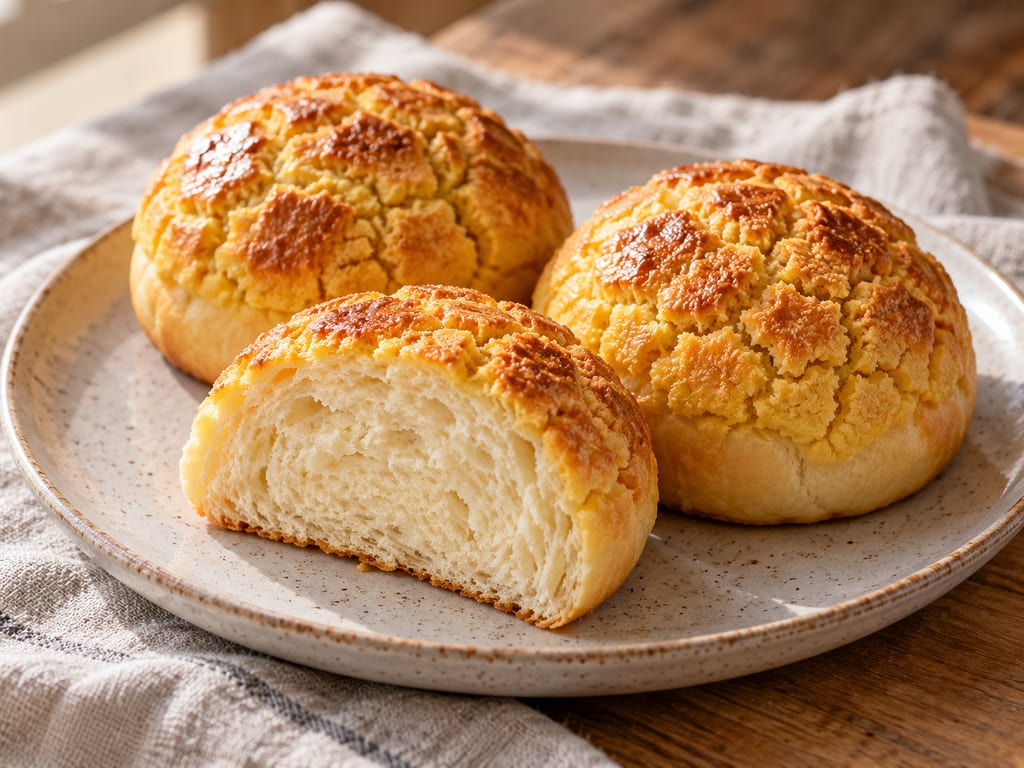
Hong Kong-style pineapple buns have soft yeast dough beneath a crisp, sweet pastry topping.
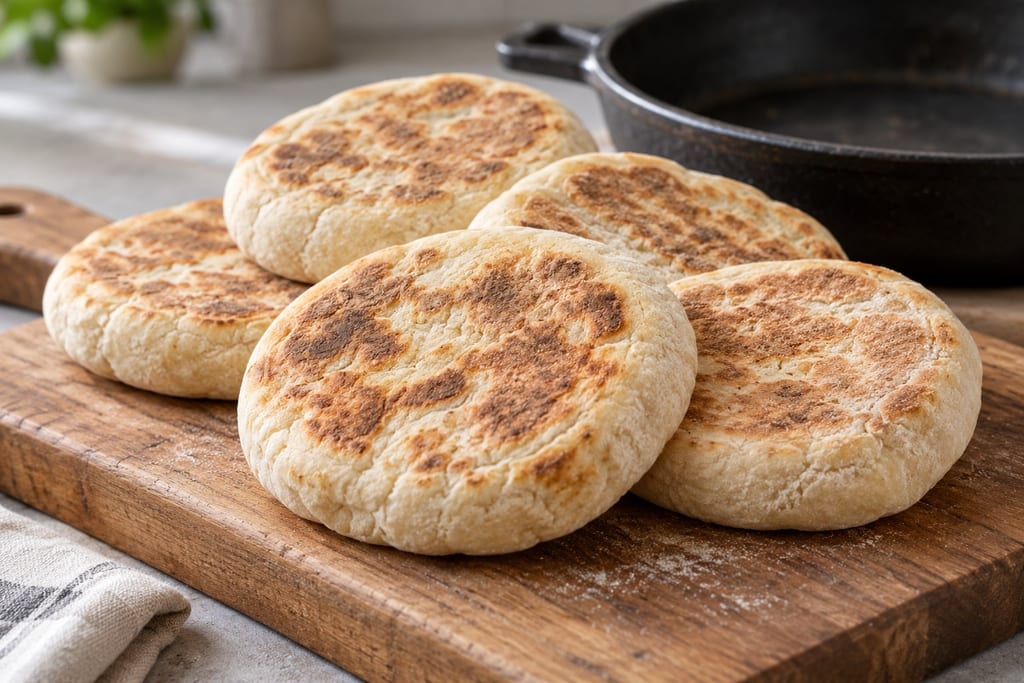
Sweet-potato wheat breads with fresh yeast, browned in a pan and finished in the oven. This is the bread component of Teleculinária's scrambled-egg dish.
No community contributions have been published for this entry yet.
Sign in to contribute. Published comments and photos are free to read.
Immaculate BitesMethod · History
Vitumbua (Coconut Rice Pancakes)Measured two-cup rice formula with coconut milk, yeast, sugar, salt, cardamom/nutmeg and optional flavorings.
Soak rice at least 4 hours or preferably overnight, blend smooth, cover and rise until doubled or bubbles appear, then cook in greased wells for 2–3 minutes per side.
Author describes vitumbua as an East African breakfast food and notes variation in rice and spices.
Cited in: A small cake from the Swahili coast; Rice, coconut and the rise of the batter; The rounded-well pan; Breakfast, tea and celebration
British Columbia Centre for Disease ControlSafety
Potential Issues with Dosa and Idli Food PreparationGuidance says fermented rice-batter ingredients should be soaked under refrigeration at 4°C or below; if soaked at room temperature, complete within 4 hours.
It warns that pathogens may proliferate during soaking and fermentation and recommends sanitation and refrigeration if batter is not promptly cooked. These controls are cited as relevant guidance, not as validation of Vitumbua's distinct yeast process.
Cited in: Soaking and resting with care
Food Standards Australia New ZealandSafety
Bacillus cereus in foodBacillus cereus forms spores and toxins that cooking does not destroy; rice is a higher-risk starchy food, and clean handling, thorough cooking and prompt hot service or refrigeration reduce risk.
Cited in: Soaking and resting with care
The Eastleigh VoiceHistory · Method
Vitumbua: How to make the popular Swahili snack and what to pair it withReports vitumbua in Kenya's Coastal region and Tanzania, for Ramadan, weddings and everyday tea time.
Describes rice, coconut milk, sugar and cardamom cooked in round-mould pans; gives a separate recipe using a shorter 40-minute to 1.5-hour rest. This variant is context only and is not combined with the Immaculate Bites formula.
Cited in: A small cake from the Swahili coast; Rice, coconut and the rise of the batter; The rounded-well pan; Breakfast, tea and celebration