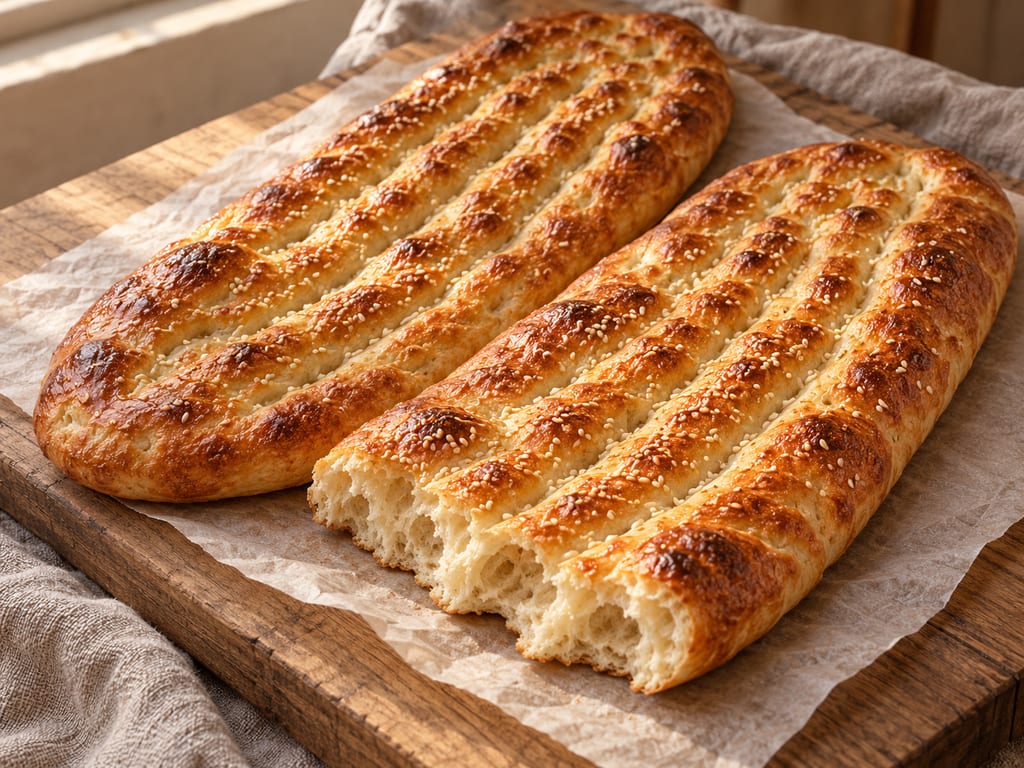
Noon barbari
A yeast-raised Iranian flatbread with a crisp roomal-glazed crust, long grooves and a soft interior.
 FermenteaWhere food goes to change
Modern adaptation
nan-e taftoon
Persian yeast-raised flatbreads, rolled thin, seeded and cooked in a dry skillet.
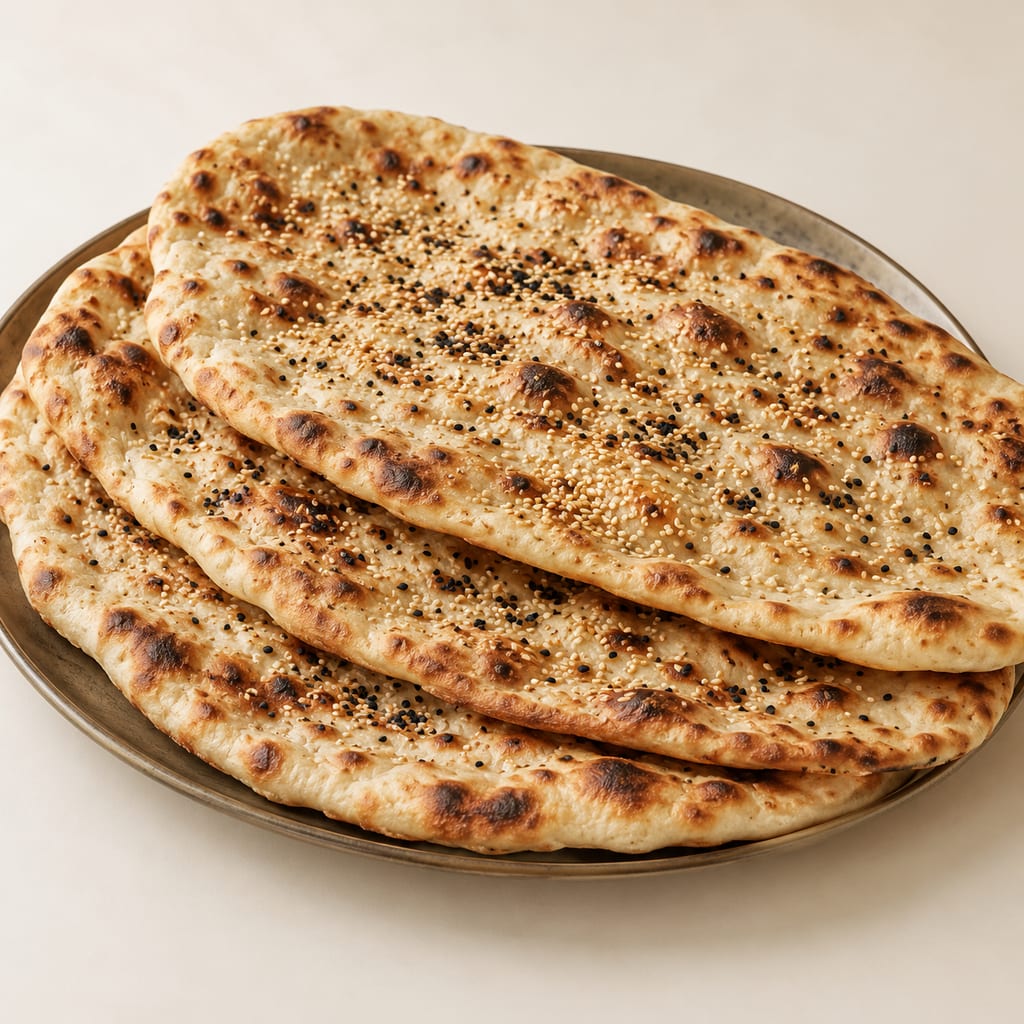
Taftoon is a Persian thin bread eaten with meals or at breakfast. This yeast-raised home version uses a dry skillet. A research review describes Iranian taftoon with a perforated surface and notes traditional oven forms; the small skillet breads here are a domestic adaptation.
Encyclopaedia Iranica places taftun alongside lavash, sangak and barbari among the principal breads of urban Iranian bakeries. It distinguishes the similar taftun and lavash partly through flour and thickness, rather than treating every thin round as the same bread.
Its bakery description includes rolling dough, carrying it on a padded cushion and pressing it against a tanur wall. That equipment and heat exposure differ from Zeina Mourtada's dry skillet. The seven ingredient lines and two-sided pan procedure below remain her particular home version.
Iranica describes taftun made with white and whole-wheat flours, while this source uses wheat flour without specifying that blend. Its account supplies bakery context, not a reason to alter the measured dough. The comparison also does not establish that the seeded skillet bread reproduces every perforated bakery form.
The documented Iranian and Afghan associations remain country-level. No precise birthplace or dated first attestation has been established here, and the shared name is not evidence that every regional preparation uses identical leavening or toppings.
Taftoon is documented as a Persian flatbread; the first attestation is not established.
Yield 6 flatbreads · Scaling: source batch only
Contains wheat; sesame is an allergen if used.
Do not taste raw dough; raw flour can contain harmful germs. Wash hands and surfaces after handling it.
Use care with the hot skillet.
The source describes taftoon as a Persian bread popular in Iran; no precise birthplace is established.
The source also describes it as popular in Afghanistan.
A yeast-raised Iranian flatbread with a crisp roomal-glazed crust, long grooves and a soft interior.
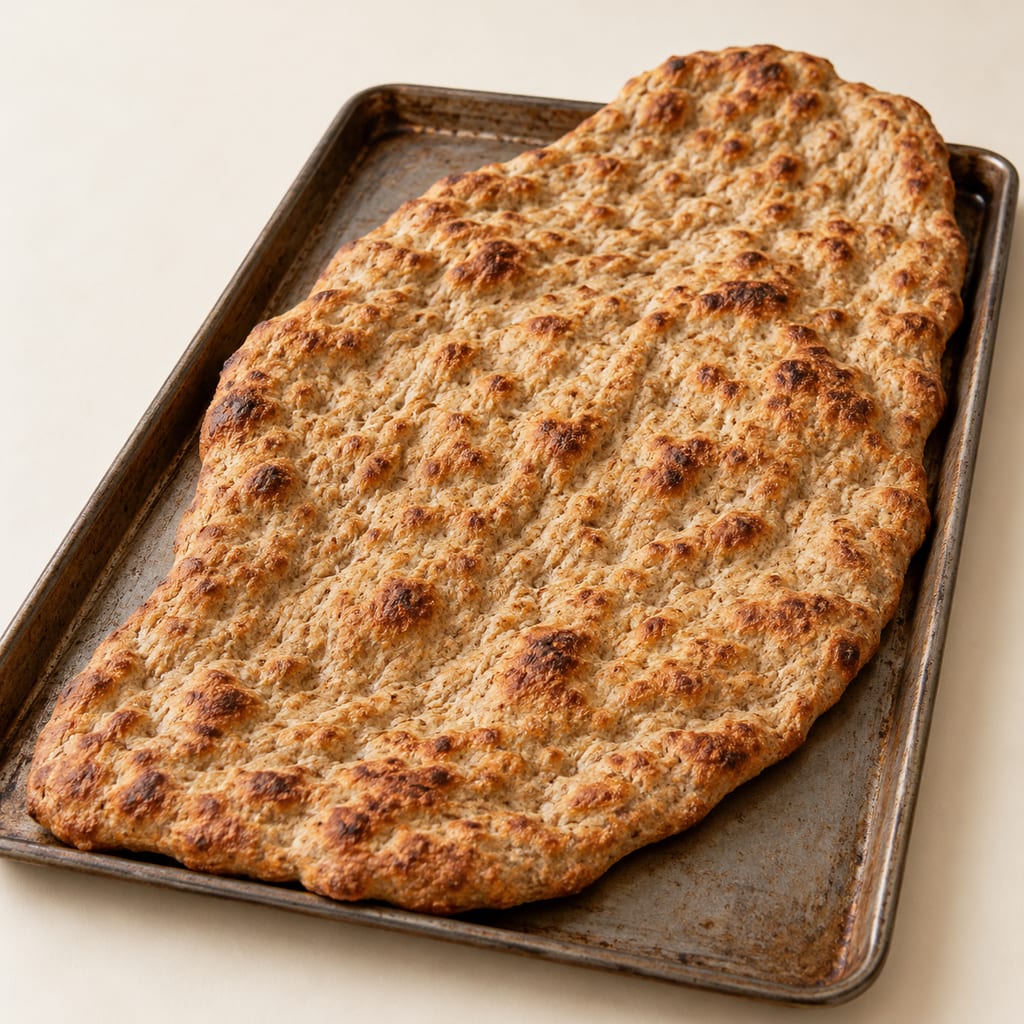
An Iranian whole-wheat sourdough flatbread adapted for a home oven and ordinary baking sheet. This method keeps the broad, dimpled hand-stretched shape but omits the traditional hot-pebble hearth and its imprint.
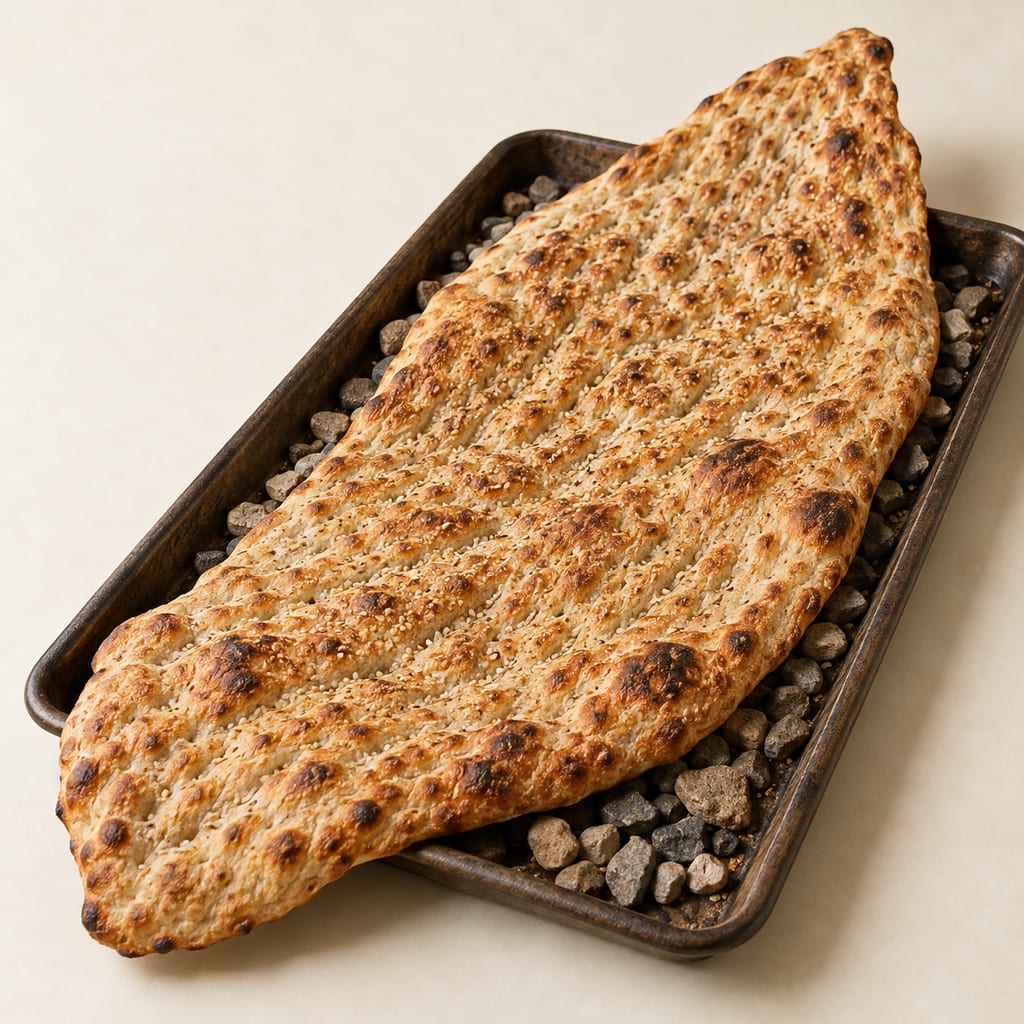
A long, irregular Persian bread baked on a tray of gravel-like stones in a hot oven. This home method uses dried yeast and a mix of wholemeal and bread flour, with an overnight rest.

Khiyār shūr is an Iranian cucumber pickle made in several ways; one household account in salt water is set out here, while vinegar recipes and acidified laboratory brines are kept separate.
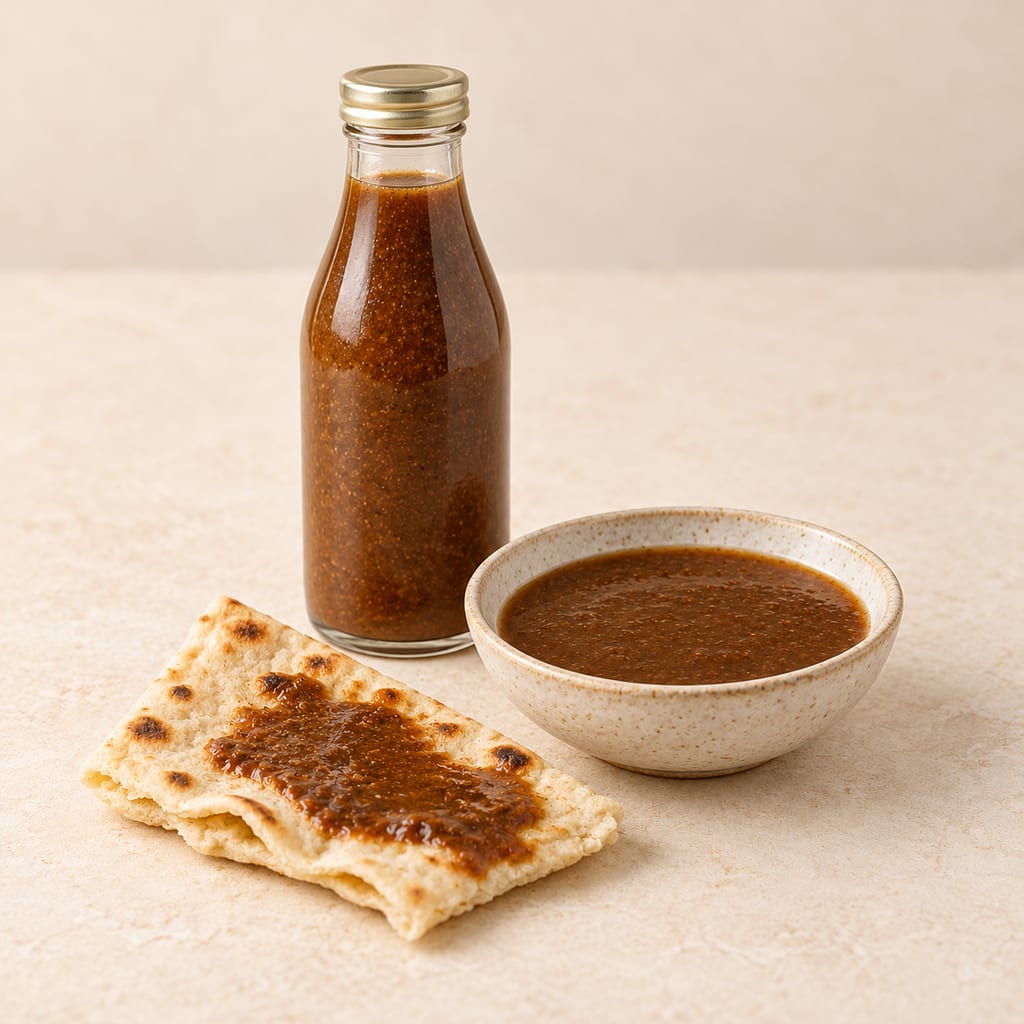
Mahyawa, also written mahyaveh, is a traditional fish sauce from southern Iran, made by salting small sardines or anchovies in water, maturing them in jars and seasoning the filtered liquid with mustard and spices.
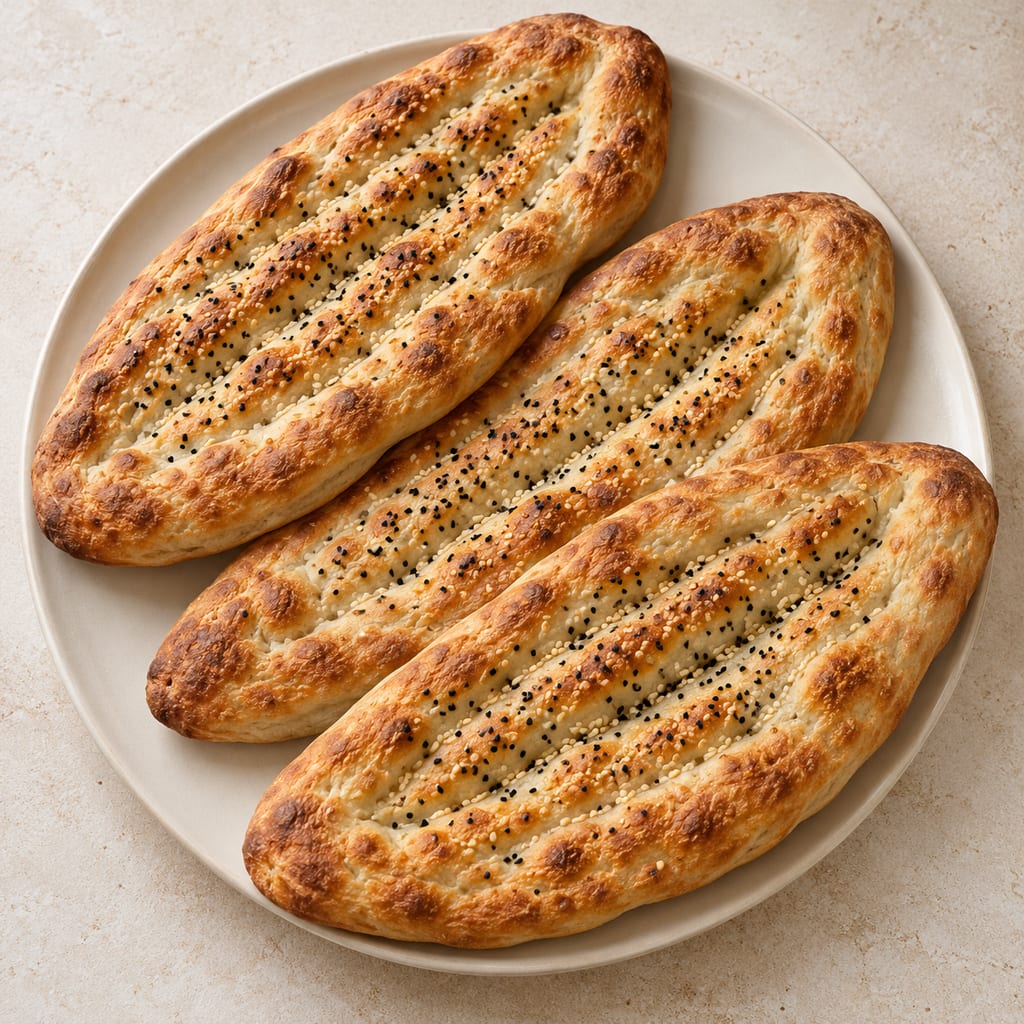
A long oval Afghan wheat bread, leavened with yeast, grooved along its length and baked until crisp outside and chewy within.
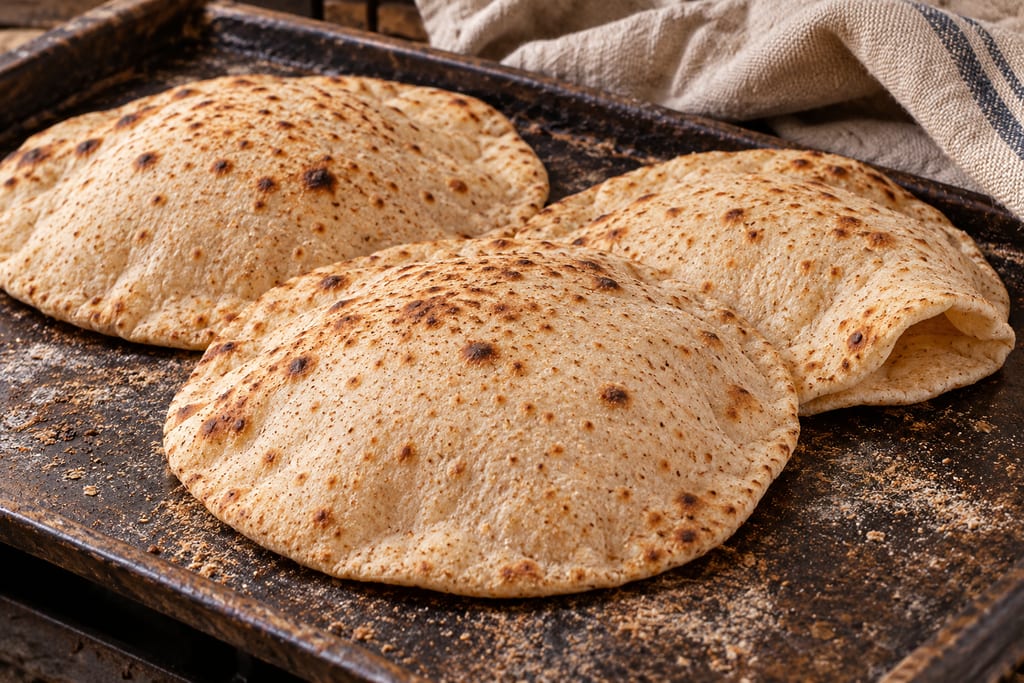
This home adaptation of Egyptian aish baladi uses a refrigerated yeast biga, whole-wheat dough, bran dusting and a very hot baking surface to make 16 pocketed rounds.
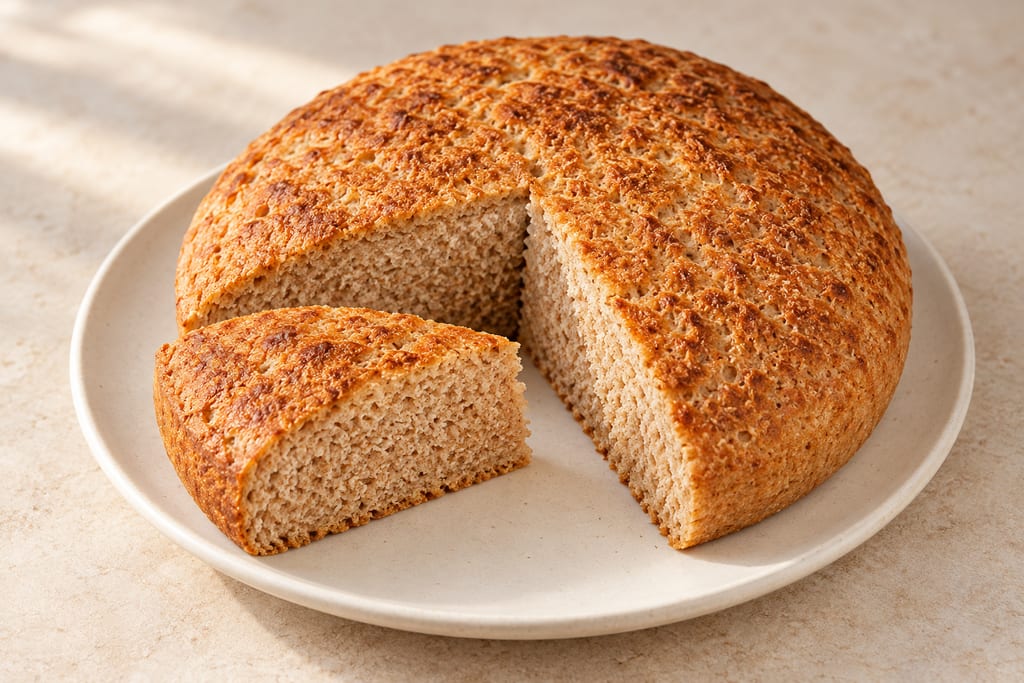
This oven-baked Amdo balep uses yeast, whole-wheat and white flour, a long covered rise and a two-sided bake in a heavy oven-safe pot.
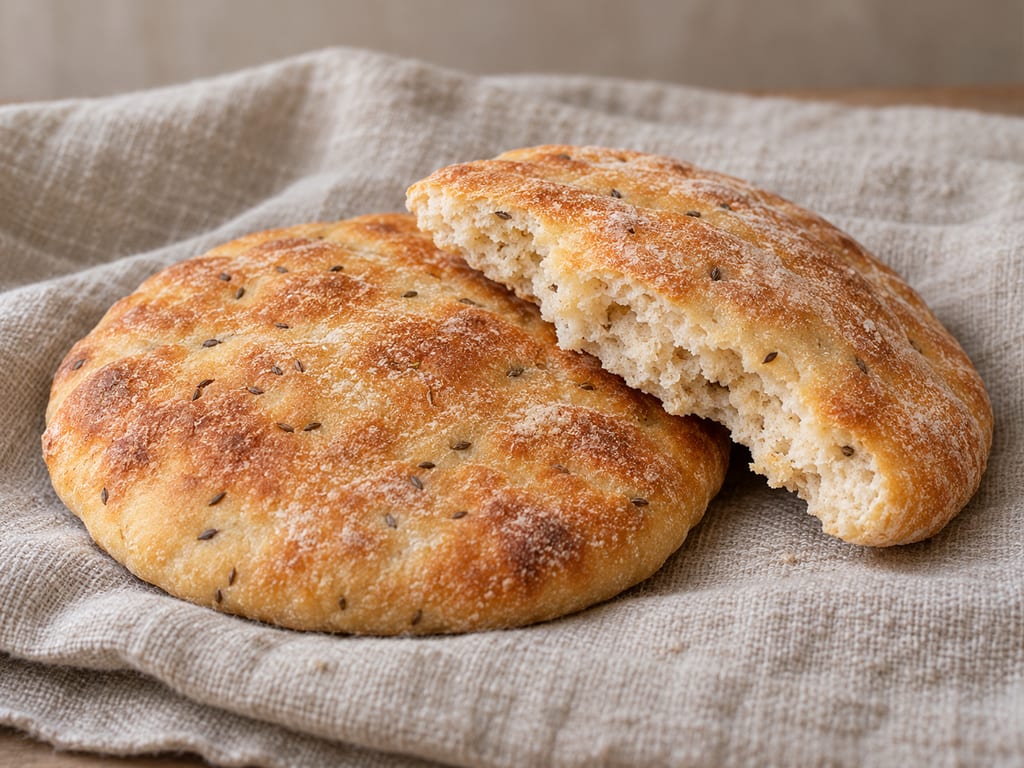
A measured, yeast-raised Ayacucho chapla home method shared by Thermomix Peru presenter Roxanna Salaverry. It makes thin, anise-scented rounds baked at 240°C; the historic qunchu-leavened form is documented separately.
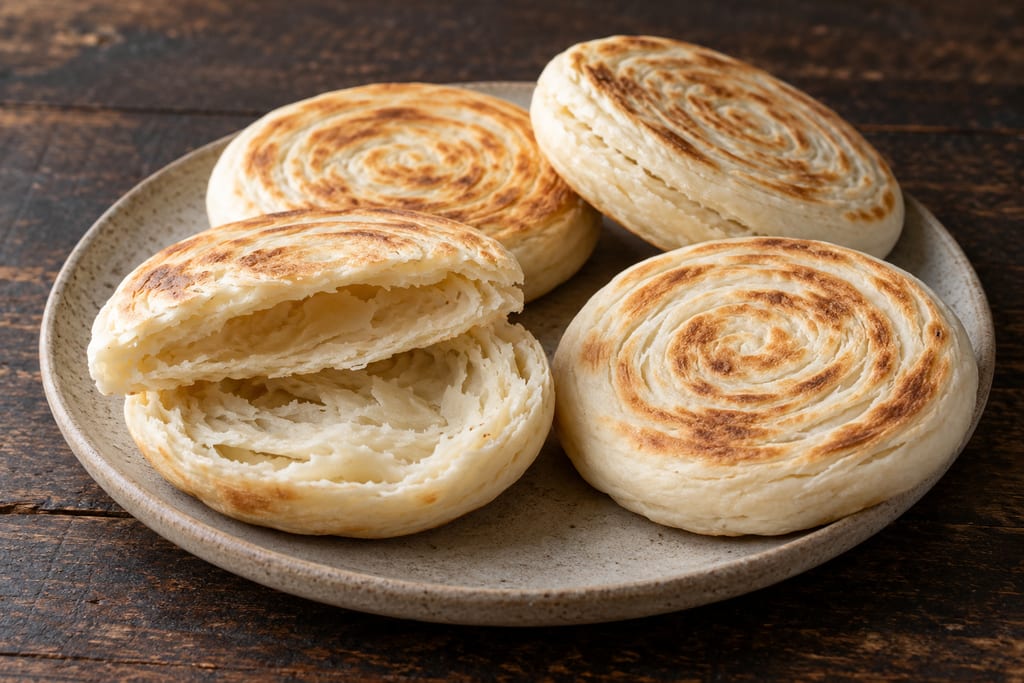
This Shaanxi-associated yeast flatbread uses a simple water dough, coiled shaping and a skillet bake. It is the bread used in roujiamo, not the filled meat dish.
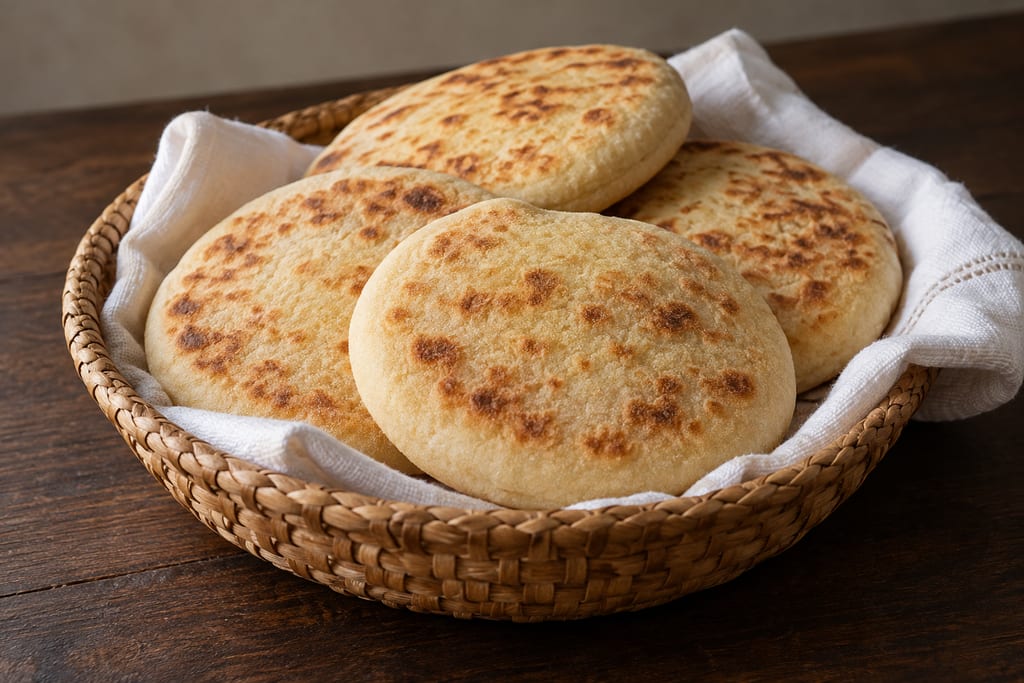
A Moroccan yeast-raised semolina pocket bread cooked on a dry pan or griddle; this measured batch makes about twenty 4-inch rounds.
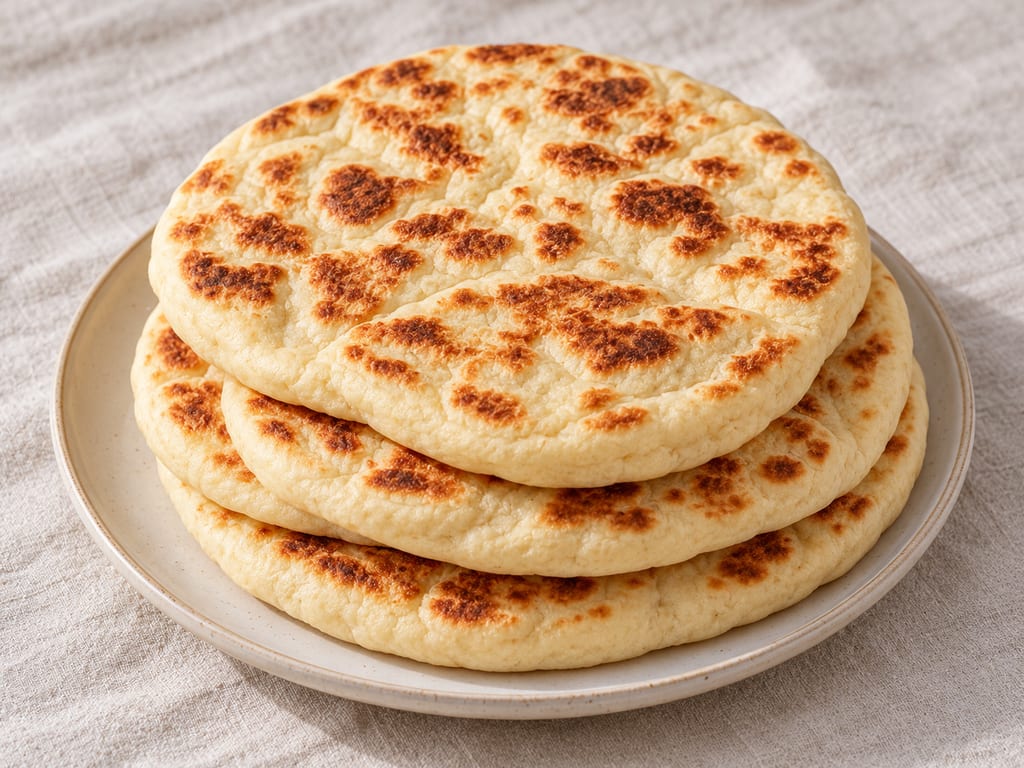
This Turkish bazlama uses yeast, plain yogurt and olive oil for a soft dough cooked in a skillet. Shape it into twelve small or six larger rounds, flip as bubbles appear, and wrap the breads to keep them soft.
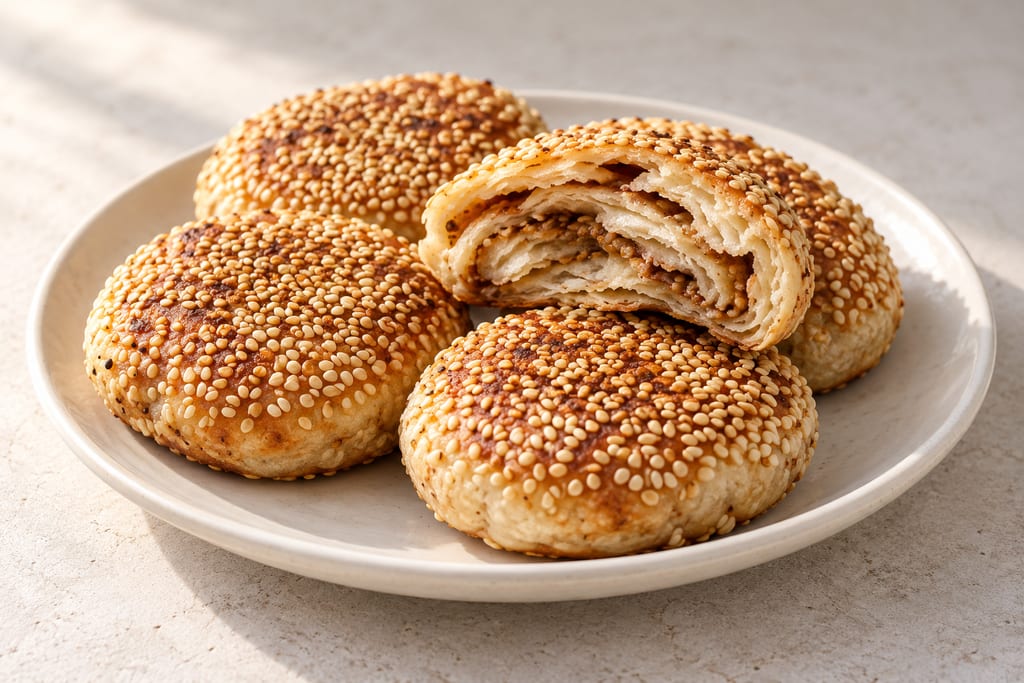
A Beijing-style yeast dough is layered with seasoned sesame paste, sealed into small buns, briefly pan-fried, seeded, and baked.
No community contributions have been published for this entry yet.
Sign in to contribute. Published comments and photos are free to read.
Zeinas KitchenInspiration · Method · Geography
Taftoon – Persiskt tunnbrödPersian flatbread, Iran and Afghanistan associations, six or seven-piece yeast skillet formula.
Cited in: A Persian flatbread; Within the urban bakery range; Names and methods need their sources
Journal of Ethnic FoodsContext
Characteristics of different ethnic and traditional bread from the perspective of Islamic traditional medicineIranian taftoon form and dimpled surface; techniques vary.
Cited in: A Persian flatbread
Encyclopaedia IranicaContext
BreadPlaces taftun among four main urban bakery breads and describes flour/thickness distinctions from lavash and tanur wall-baking with a cushion.
Cited in: Within the urban bakery range; Names and methods need their sources
Wikimedia Commons / theedinburghblogImage reference
Taftan nan 01.jpgFile-level CC BY 2.0, not PD/CC0; excluded.
Wikimedia Commons / Nick TaylorImage reference
Taftoon bakery in Massouleh, Iran.jpg22 April 2008 bakery photograph, individually checked CC BY 2.0; excluded from PD/CC0 references.