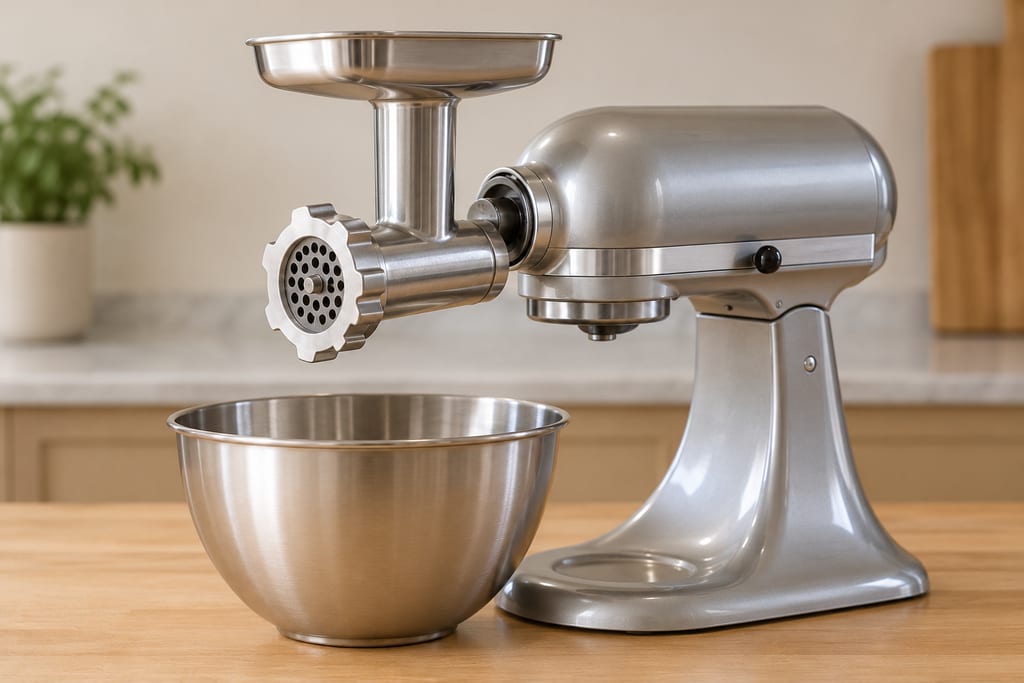
KitchenAid stand mixer and food grinder
A KitchenAid stand mixer can work as a shared powered base for ordinary mixing and a separately fitted food grinder. The hub-driven grinder is a removable attachment, not a grinder built into the mixer.
 FermenteaWhere food goes to change
Equipment · Mixers and agitators
A stand mixer is a powered mixing machine built around a stationary base, a supported bowl and a driven beater or other tool. It can stir, beat, whip and knead; particular models may also accept separate accessories for other jobs.
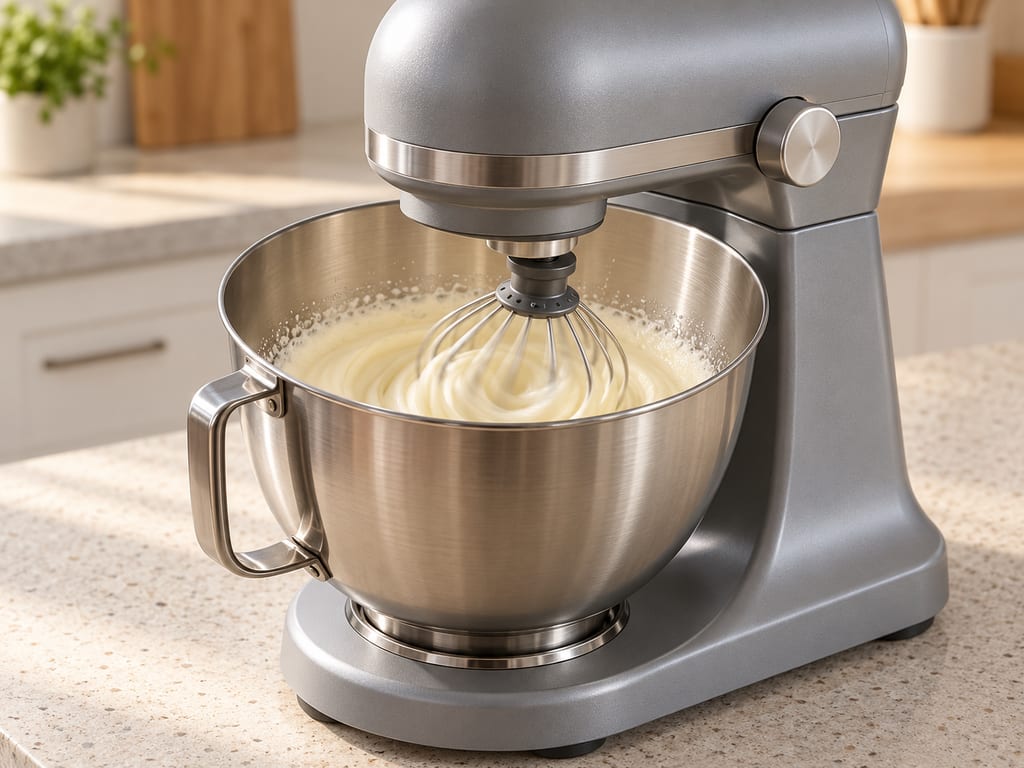
A stand mixer keeps its motor and mixing tool above a bowl supported on a base or frame. That fixed arrangement distinguishes it from a hand mixer, whose user holds the motor and beaters over a separate vessel. The stand holds the tool in the batch and frees the cook's hands for weighing, feeding ingredients or watching the mixture. The usual work is mechanical: stirring, beating, whipping and kneading. The machine does not ferment a dough or culture cream; those are separate biological processes whose conditions come from the recipe.
The modern household machine grew out of bakery equipment. Hobart's commercial mixers were designed for large batches of dough and batter; a 1915 patent by Thomas F. Rataiczak and Herbert L. Johnston describes a powered beater and bowl-support arrangement. The Smithsonian's historical account traces the commercial H model to 1914, the household-market C-10 to 1918 and the H-5 to 1922. KitchenAid's own brand timeline dates the H-5 and its household mixer story to 1919. Since the accounts differ, 1919 should not be presented as an uncontested first year for the entire stand-mixer type.
The appliance became a familiar household tool through distinct brands and designs rather than a single model line. Smithsonian records KitchenAid mixers in American home kitchens, including Julia Child's Cambridge kitchen, which was moved and reassembled at the National Museum of American History in 2001. KitchenAid's later Model K became a recognizable design within that one brand. Neither its shape nor its attachments define every stand mixer.
A motor turns a removable tool while the bowl stays held in place. In one widely documented arrangement, planetary action makes the beater spin on its own axis while it travels around the bowl. The tool therefore covers more of the mixture than a fixed spinning point would. The 1915 Hobart patent describes gearing that drives a beater shaft and carrier in related but different motions; current KitchenAid models preserve a planetary action. Other brands and models can differ, so this mechanism is a useful example, not a universal definition.
The shape of the working tool changes the job. A paddle or flat beater combines heavier mixtures; a wire whisk is used to whip cream and eggs; a dough hook folds and stretches dough in the bowl. On KitchenAid models, speeds range from slow stirring to fast whipping, and the maker assigns separate speeds to these tasks. This is guidance for that manufacturer's models, not a speed chart that transfers to every machine. A fitted bowl, tool and drive must work together according to the model manual.
For bread, the stand mixer can combine ingredients and mechanically knead with a hook. KitchenAid describes the hook as turning and folding dough and advises checking the model's flour capacity and speed instructions. Too much dough or too long a knead can make the dough climb the hook or strain the mixer; those limits vary by model and recipe. The yeast still needs its own time and conditions to ferment the dough after mixing. A mixer cannot replace proofing.
A whisk can also agitate cream. KitchenAid's butter method starts with whipping cream in the mixer bowl and continues until butter separates from the liquid buttermilk; the maker then drains and washes the butter. This example shows that a motorized mixer can do the mechanical churning once performed by hand. It does not culture cream: where a butter method begins with cultured cream, fermentation happens before churning and the culture, time and temperature come from that particular preparation.
Other uses share the same mechanical base but need different tools. A flat beater suits a cake batter, a whisk aerates a lighter mixture, and a hook kneads dough; a food grinder or pasta roller is a separate attachment on models with a compatible powered hub. The KitchenAid grinder is a separate catalogue item because it is not built into the stand mixer. A buyer should not assume a hub or attachment exists on every brand or is compatible across generations.
Stand mixers are not one size or support design. KitchenAid describes tilt-head models whose motor head lifts away from the bowl, and bowl-lift versions whose bowl rises on side arms while the head stays fixed. Each arrangement changes how the user reaches the bowl and installs tools. The manufacturer lists different bowl volumes and model-specific accessory compatibility; these numbers should be read against the exact product code rather than taken as a capacity for the whole category.
Historical commercial and household examples underline the range. Smithsonian describes Hobart's bakery H model with an 80-quart bowl, the C-10 at 10 quarts and the home H-5 at 5 quarts. Those figures belong to named machines from an early product family, not a recommended modern home batch. The museum catalogue's Julia Child mixer is a later specific object whose recorded materials include enameled steel, a stainless bowl and a rubber cord. Modern mixers likewise vary in body, bowl and tool materials.
Choose by the tasks and batch size in recipes you actually make, then check the owner's manual for maximum ingredient amounts, tool fit and speed. Bowl volume is not the same as the maximum workable amount of stiff dough. A hook, whisk and paddle are common in the KitchenAid examples cited here, but included tools, power hubs, accessories and guarantees vary with maker and model. A mixer sold with an optional grinder does not mean the grinder is a standard part of every set.
The machine's job ends at mechanical preparation. It does not control dough fermentation, make cream culture, or establish a safe storage or cooking process. Follow the recipe for rest, proofing, heating and preservation; follow the appliance manual for operation and cleaning. For hub-mounted accessories, KitchenAid directs users to turn the mixer off and unplug it before installation and to check compatibility. The linked grinder entry gives the attachment's assembly and care rather than duplicating those instructions here.
The historical account here is tied to one early American manufacturer and a documented household product line. It does not claim that all stand mixers began in Ohio or that the KitchenAid dates settle the history of every competing mixer. Current UK and Australian KitchenAid pages demonstrate more than one national market, while their model instructions remain local product documentation rather than a map of worldwide household use. Modern stand mixers are produced for multiple markets; no single manufacturing origin is assigned to the type.
The category covers the mixer itself: a powered machine that holds a bowl and drives a mixing tool. A detachable grinder, pasta roller or other hub device remains separate equipment, linked to the mixer when useful. That boundary lets a reader follow the motorized base and the specialized attachment as related but distinct objects.
The early twentieth-century Hobart mixing machine was developed for bakery work and adapted into household products. The exact date attached to KitchenAid's first household model differs between its brand history and a Smithsonian historical account; the record preserves that discrepancy rather than assigning one uncontested launch year.
Switch the mixer off and unplug it before fitting an accessory hub attachment, as the KitchenAid instructions direct.
Follow the maker's manual for the particular model's bowl capacity, speed limits and accessory compatibility.
Sources place Hobart's early commercial mixing-machine work in Ohio; one documented line, not the birthplace of every stand mixer.
UK-market pages document configurations and tasks; not UK manufacture or exclusive use.
Brand market context only; not the place where stand mixers originated or are manufactured.
A KitchenAid stand mixer can work as a shared powered base for ordinary mixing and a separately fitted food grinder. The hub-driven grinder is a removable attachment, not a grinder built into the mixer.
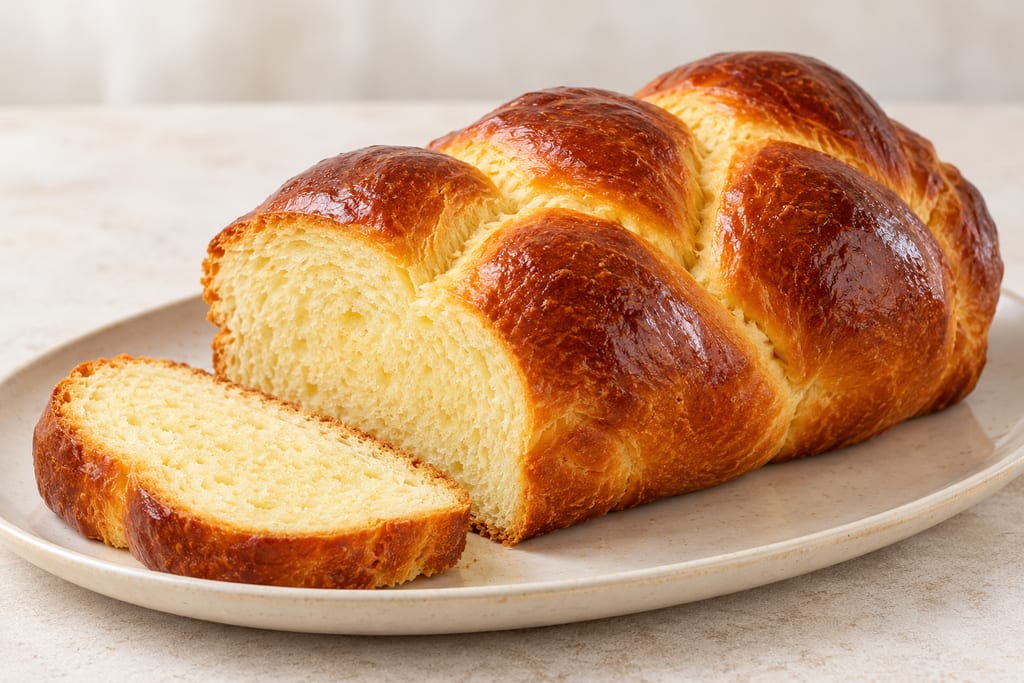
An egg-and-butter-rich yeast dough shaped as one round loaf, two loaves or twelve small brioches, with baking paths that vary by shape.
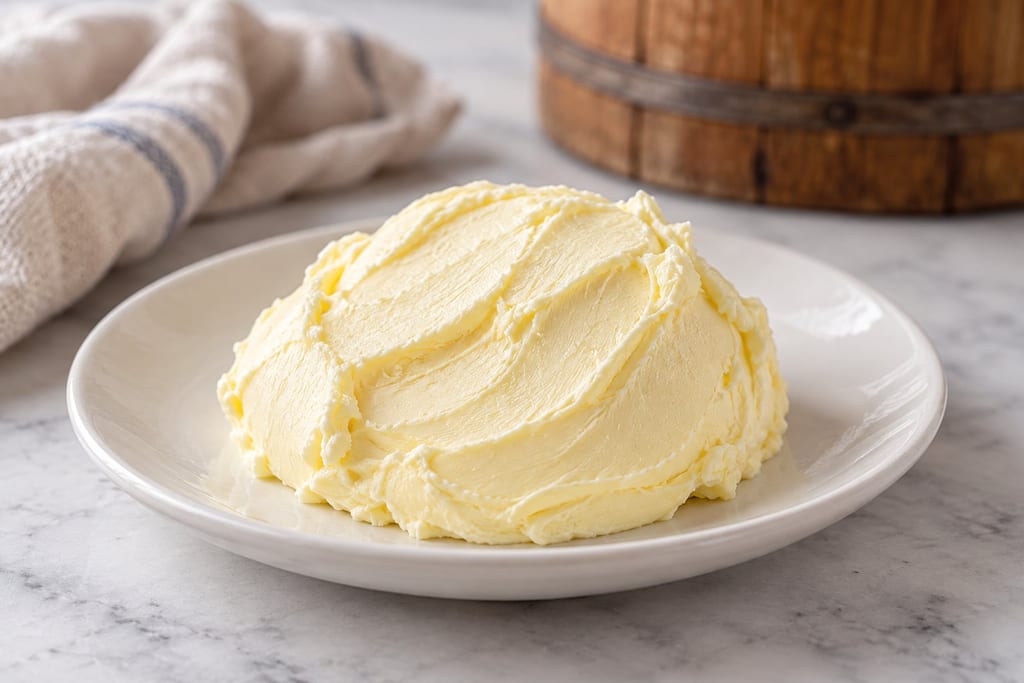
Sweet-cream butter is made by churning unsoured cream until its butterfat globules join, then draining, washing, salting and packing the butter.
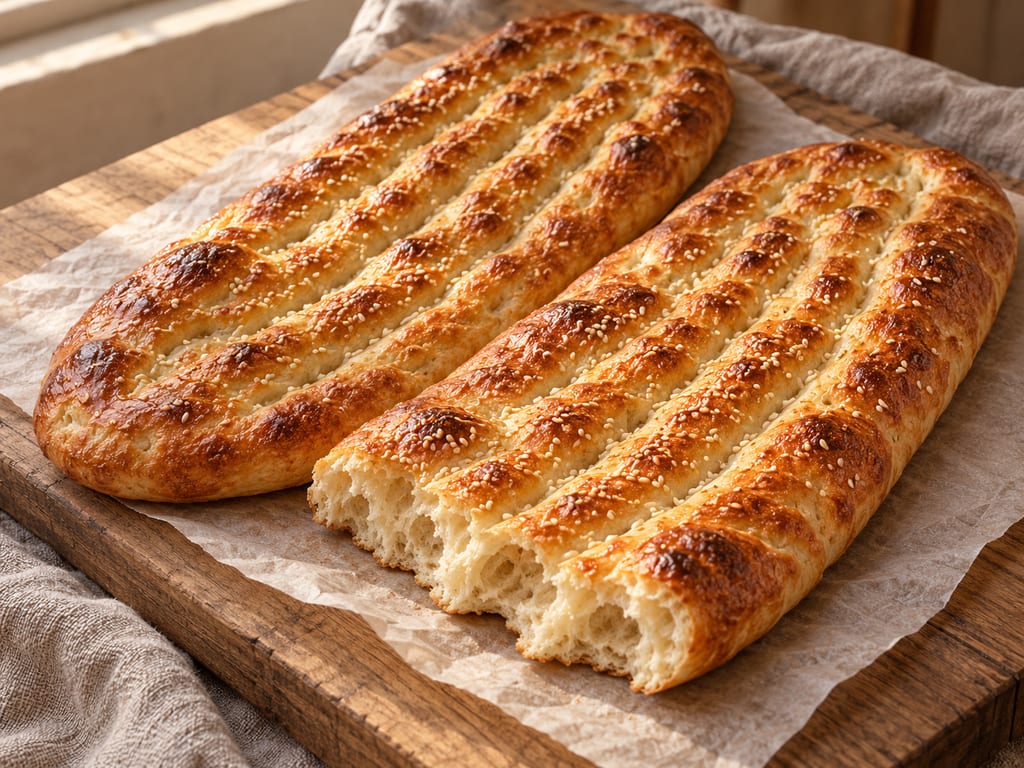
A yeast-raised Iranian flatbread with a crisp roomal-glazed crust, long grooves and a soft interior.
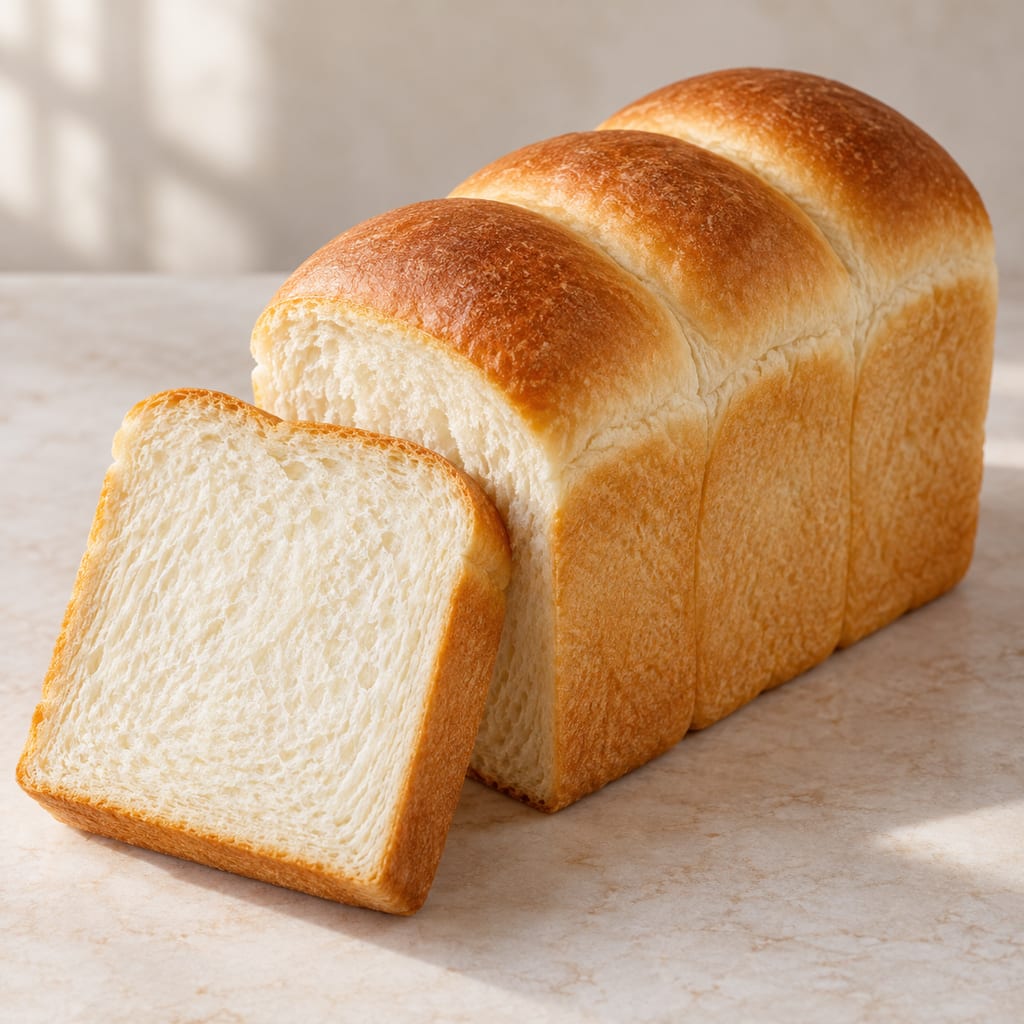
Shokupan is a soft, mildly sweet Japanese wheat loaf served as toast or in sandwiches. This formula makes a square or rounded one-loaf pan bread with a fine, milky crumb.
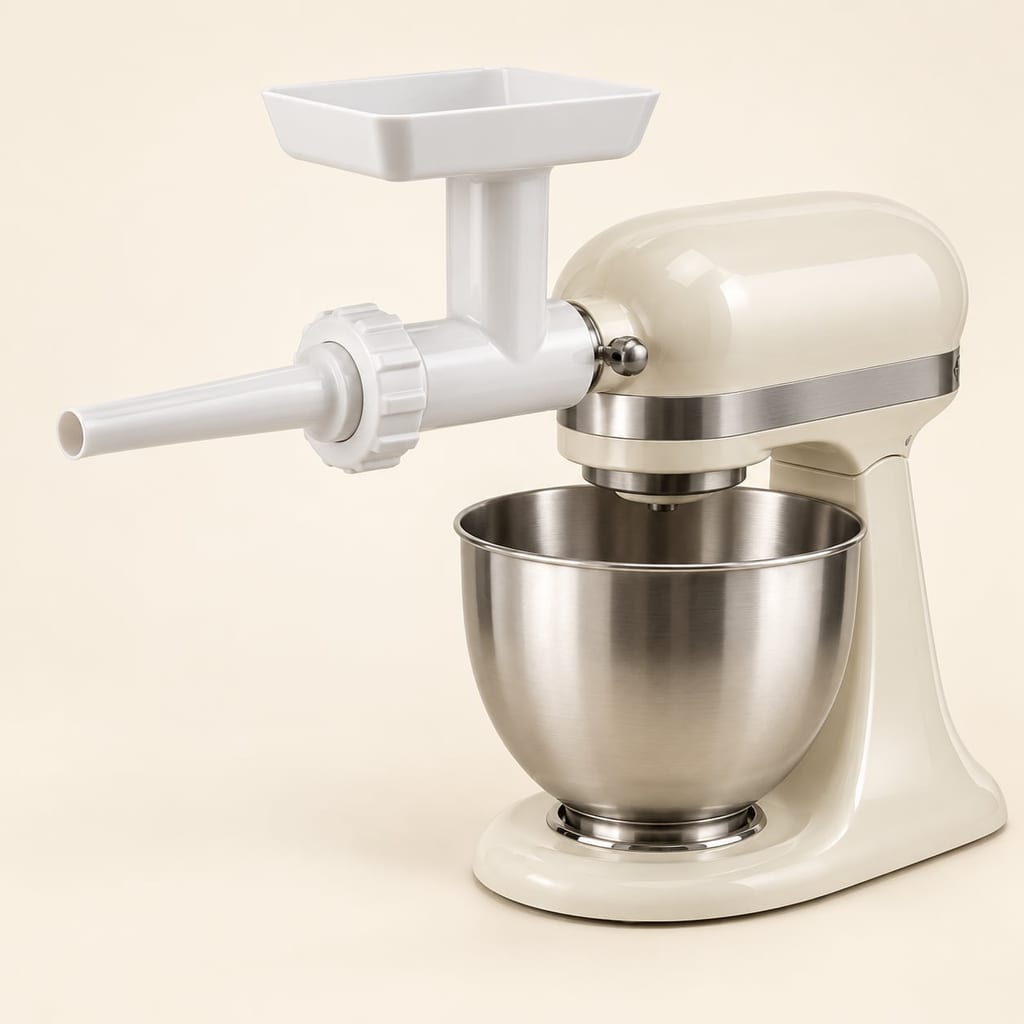
A stand-mixer attachment that grinds meat through a plate and can be reconfigured with a separate stuffer plate and tube to fill sausage casing.
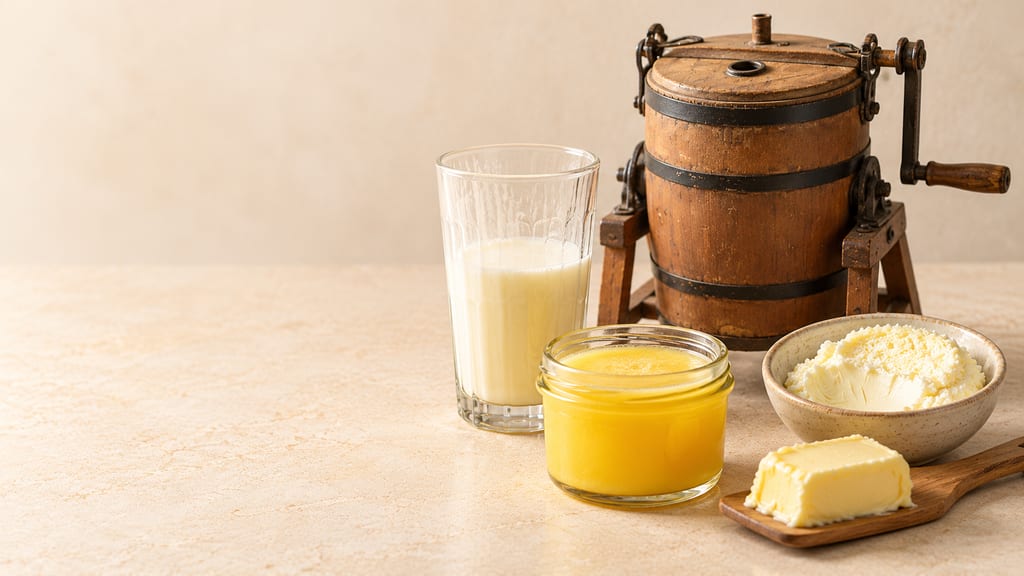
Cream can be scalded into clotted cream, soured by bacteria, churned into butter and buttermilk, or boiled down to ghee. Each is a different change, and each asks something different of the equipment.
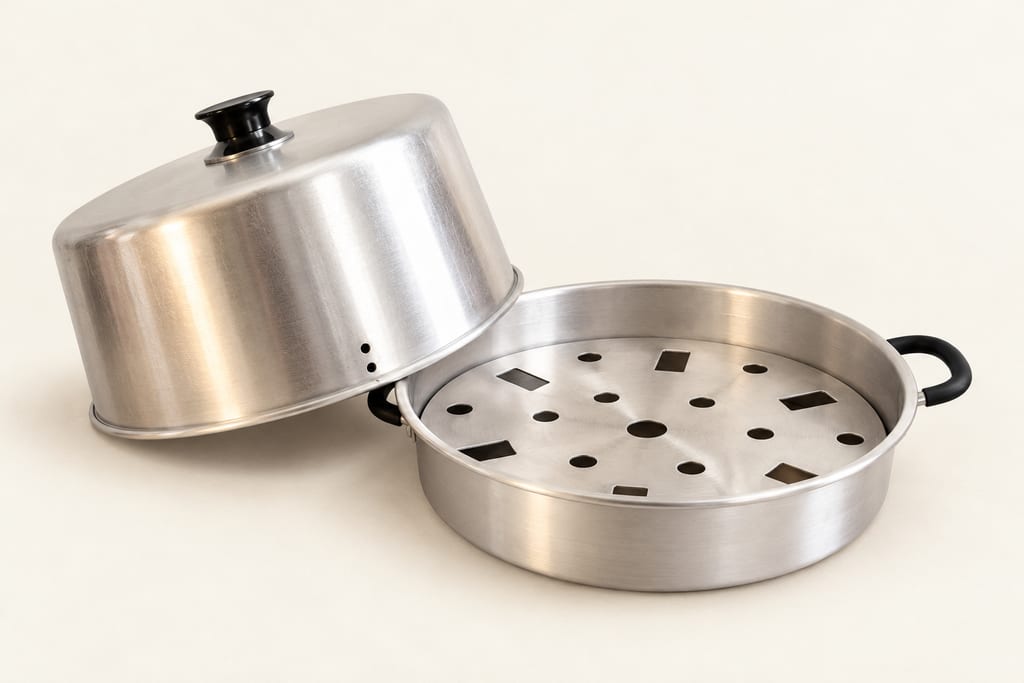
A shallow rack base and tall vented cover process jars in atmospheric steam. NCHFP limits the method to tested high-acid or acidified recipes requiring no more than 45 minutes, including altitude adjustment; this is not pressure canning.

A covered iron vessel used in Maine bean-hole cooking, set into a preheated stone-lined pit and buried for a slow cook.
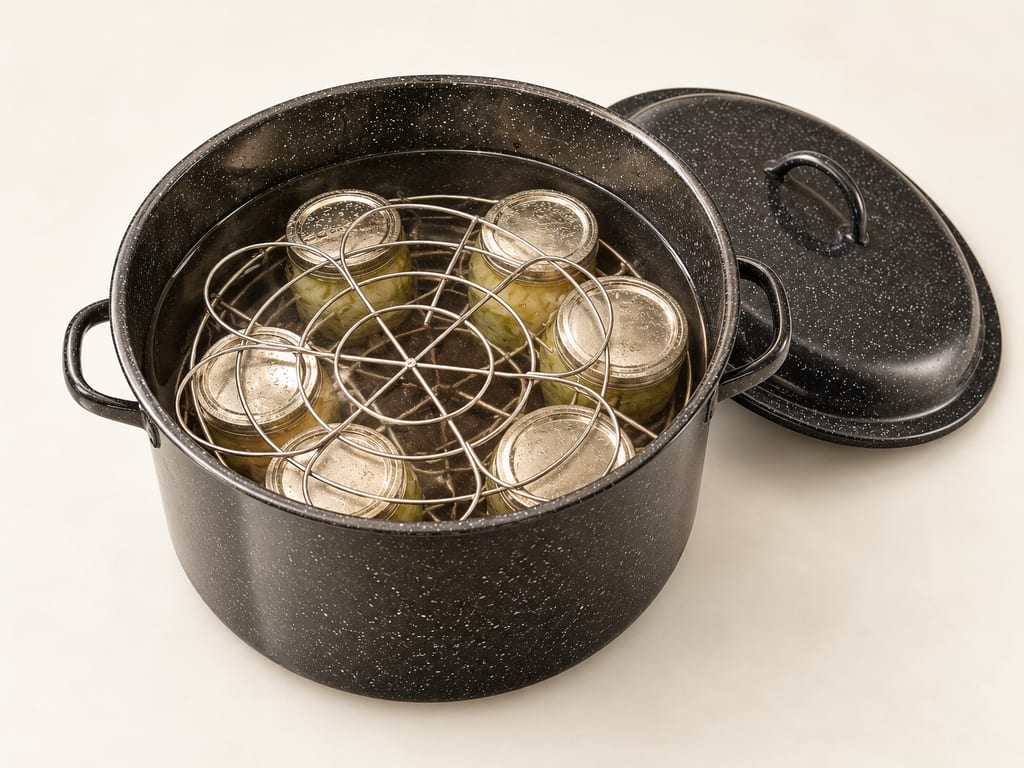
A deep, lidded pot with a removable rack processes jars beneath boiling water. It is intended for foods with tested boiling-water processes; low-acid foods require pressure canning.
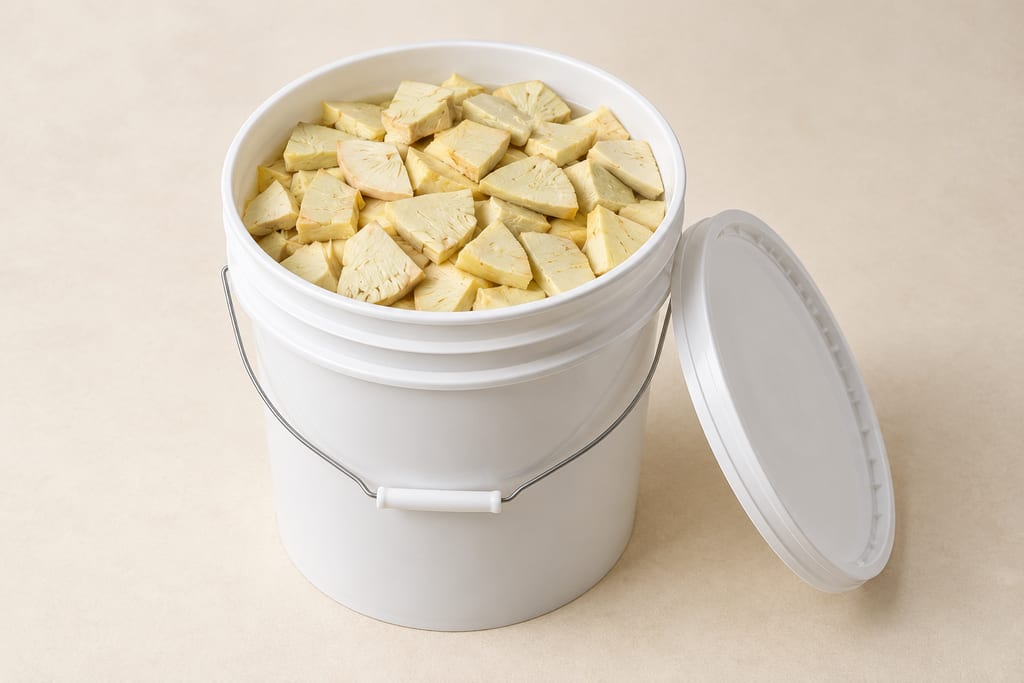
A contemporary household enclosure for preparing mā, fermented breadfruit, documented in Hawai‘i using food-safe buckets, coolers or large sealable bags in place of a pit.
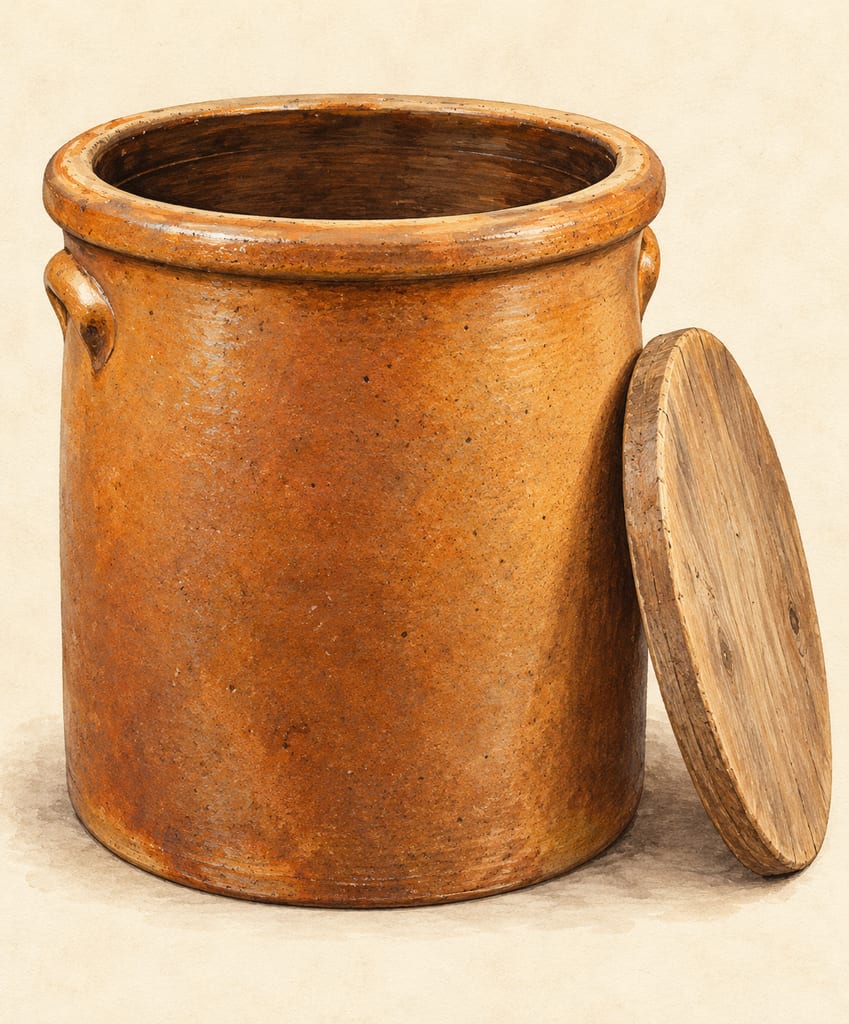
Containers for salt-curing fish and meat range from broad-mouthed stoneware crocks to tubs, cut-down barrels and chests. Their material, depth, cover and ability to retain or drain liquid shape how the food sits in salt or brine.
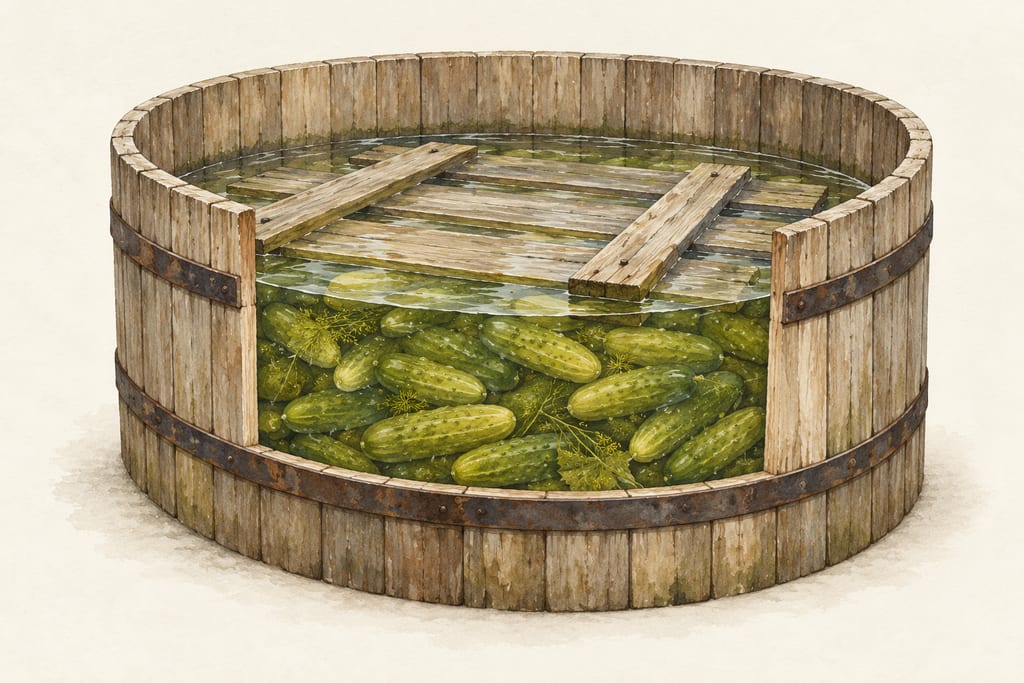
A bulk brining vat holds cucumbers and other vegetables under cover brine for fermentation and storage. North Carolina sources document a mid-century wooden tank yard and later outdoor fiberglass systems.
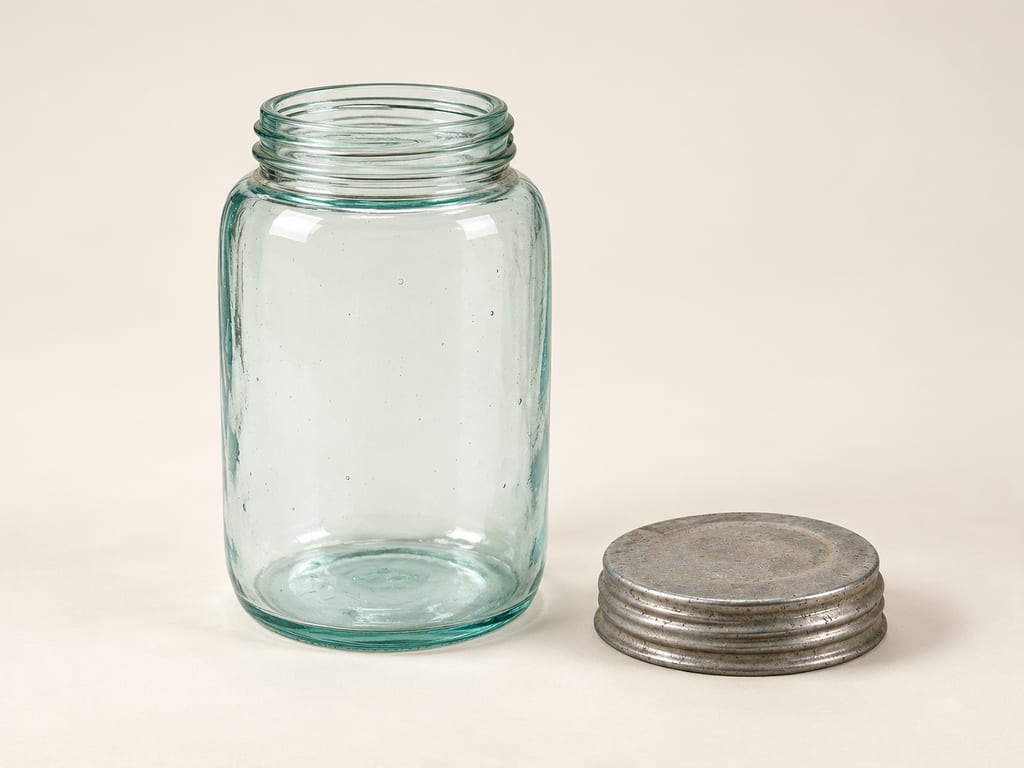
Threaded, heat-processing jars hold food and a fitted lid during a tested canning process; jar size and process belong to the specific recipe.
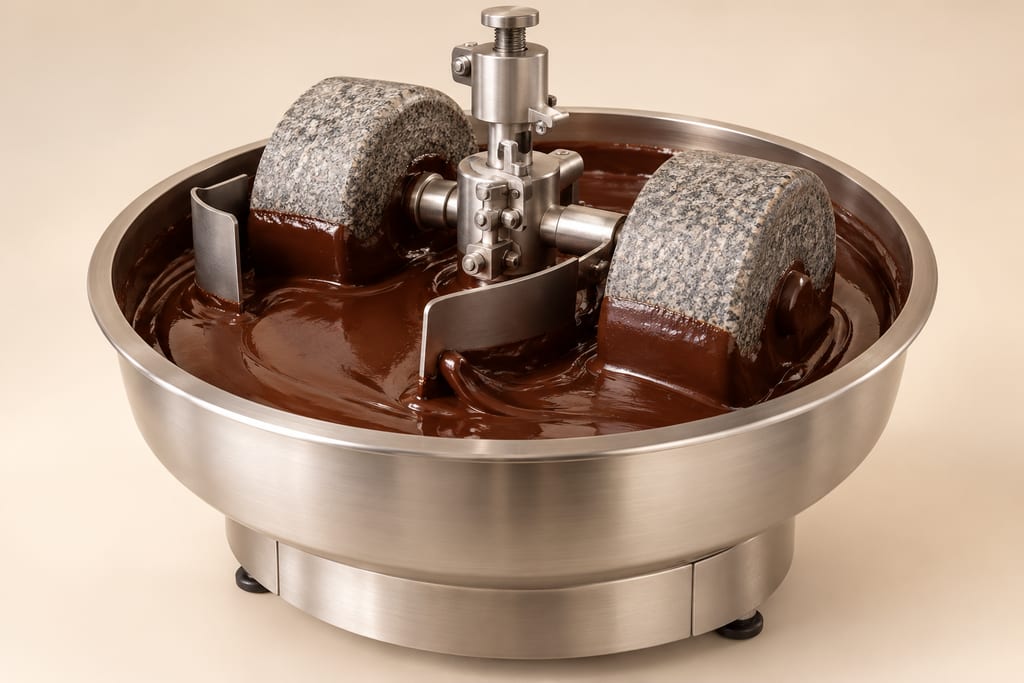
A chocolate refiner or melanger uses powered rotation and stone rollers to refine cocoa mass. Some models also process nut and seed pastes; design, material and operating limits vary.

Soft, spreadable Calabrian pork sausage made with a great deal of red chilli and fatty pork, stuffed into natural casings, sometimes smoked and matured while staying soft.

A way to add independent temperature logging to an existing food dehydrator without changing its built-in controls or protections. It is a monitoring method, not a rewiring plan.

Pleurotus cystidiosus is the abalone mushroom, a cultivated oyster-type fungus with dark brown caps that grows more slowly and is more demanding than other Pleurotus species.

A dark, balanced vinegar from Emilia-Romagna made by combining cooked or concentrated grape must with wine vinegar, then acetifying and refining it in wood under a protected specification.

A living dairy inoculum that starts controlled cream fermentation, developing acidity and aroma before sour cream or cultured butter is finished.

A small electric incubator holds jars at a selected temperature for yogurt and other documented warm food preparations. Controls, capacity and vessel arrangement vary by model.

Adygean salt is a seasoned table salt associated with Adygea and the wider North Caucasian culinary tradition. Salt is blended with garlic and a variable selection of herbs and spices; the exact mix depends on the named style and maker.

The African Caesar-group mushroom, Amanita masasiensis, is a wild ectomycorrhizal species of central and southern African woodlands, eaten locally. The genus contains deadly poisonous species, so identification needs care.
No community contributions have been published for this entry yet.
Sign in to contribute. Published comments and photos are free to read.
Smithsonian MagazineHistory · Commercial and household development · Historical variation
For 100 Years, KitchenAid Has Been the Stand-Up Brand of Stand MixersThe account dates Hobart's commercial H mixer to 1914, the KitchenAid C-10 market introduction to 1918 and the H-5 household model to 1922; it notes KitchenAid's 1919 account differs.
The 1918 machine is linked to a patent by Thomas F. Rataiczak and Herbert L. Johnston; the article distinguishes commercial and household models.
It records Julia Child's mixer in a Cambridge, Massachusetts kitchen and its later reassembly at the National Museum of American History.
Cited in: A machine that holds the work for you; Different supports, bowls and sizes; Places and the limits of the record
KitchenAid UKHistory · Brand attestation
Brand HistoryKitchenAid's own timeline places the H5 household mixer and brand story in 1919; this conflicts with the Smithsonian account's C-10 and H-5 chronology.
The page records a 1937 Model K and later design developments.
Cited in: A machine that holds the work for you; Places and the limits of the record
Google Patents / United States Patent OfficeMechanism · Historical primary source
Mixing-machine, U.S. Patent 1,264,128Filed in 1915 and published in 1918, the patent describes an electric-powered mixer with a driven beater, rotating carrier, gearing and a supported bowl that can be raised or lowered.
The patent describes one early design; it does not specify every later stand mixer.
Cited in: A machine that holds the work for you; How the bowl and tool meet
Smithsonian National Museum of American HistoryMuseum object · Materials · Dimensions · Documented use
KitchenAid® Heavy Duty Stand MixerThe Julia Child exhibit object is identified as a KitchenAid stand mixer used in Cambridge, Massachusetts.
The record lists overall dimensions of 43 × 31 × 27 cm and materials including enameled steel, stainless steel and rubber.
Cited in: A machine that holds the work for you; Different supports, bowls and sizes
KitchenAid UKForm · Model variation · Capacity
Which stand mixer is right for me?The maker describes tilt-head and bowl-lift configurations and model-specific bowl capacities.
KitchenAid says its stand mixers use planetary action and describes included bowl, dough hook, wire whisk and paddle tools for its own range.
Cited in: How the bowl and tool meet; Different supports, bowls and sizes; Choosing and looking after one
KitchenAid UKOperation · Mixing tasks
What speed shall I use for the stand mixer?The maker's speed table distinguishes slow stirring, mixing, beating, creaming and whipping tasks for its mixer models.
Cited in: How the bowl and tool meet
KitchenAid UKOperation · Dough
Dough HooksThe manufacturer explains that the dough hook turns and folds dough in the bowl and gives model-specific speed guidance for yeast dough.
Cited in: How the bowl and tool meet; Mixing, whipping and kneading are not fermentation
KitchenAid UKLimits · Model specific use
Can I get some tips for making bread in a mixer?The maker tells users to check the owner's manual for maximum flour capacity and warns that kneading time and motor strain depend on model and dough.
Cited in: Mixing, whipping and kneading are not fermentation; Choosing and looking after one
KitchenAid UKUse · Churning
ButterThe recipe churns whipping cream in a mixer bowl with whisk, drains the separated butter and buttermilk, then washes the butter in cold water.
Cited in: Mixing, whipping and kneading are not fermentation
KitchenAid UKAttachments · Compatibility · Safety
How do you add attachments to the mixer?The maker describes its accessory hub as powered, lists compatibility exceptions, and says to switch off and unplug before mounting an attachment.
Cited in: Mixing, whipping and kneading are not fermentation; Choosing and looking after one; Places and the limits of the record
KitchenAid AustraliaCurrent market context
KitchenAid traditionThe manufacturer's Australia site documents current household stand-mixer products in the Australian market and describes the KitchenAid brand as present in Australia, America and the United Kingdom.
Cited in: Places and the limits of the record
Wikimedia CommonsVisual reference · Documented form
KitchenAid Stand Mixer.jpgThe page identifies a 2006 photograph by Colin Henein of a KitchenAid stand mixer; it is licensed CC BY-SA 3.0 and depicts a branded product.