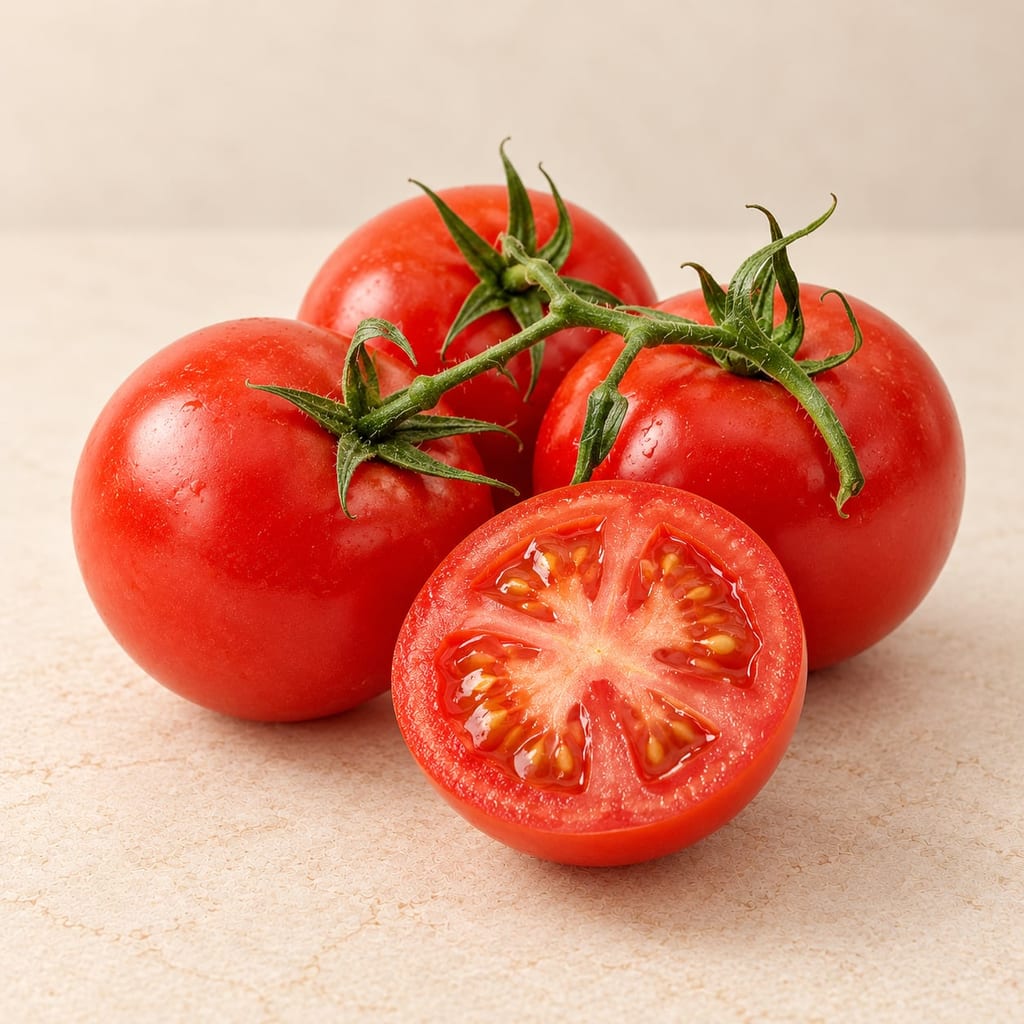
Tomatoes
Tomatoes are the fruit of Solanum lycopersicum, wild in the Andes and domesticated in Mesoamerica. They are eaten ripe or green, fresh, cooked, canned and fermented.
 FermenteaWhere food goes to change
Modern method
Lacto-Fermented Cherry Tomatoes
Cherry tomatoes sit beneath a salted grated-tomato layer for a five-to-seven-day room-temperature fermentation.
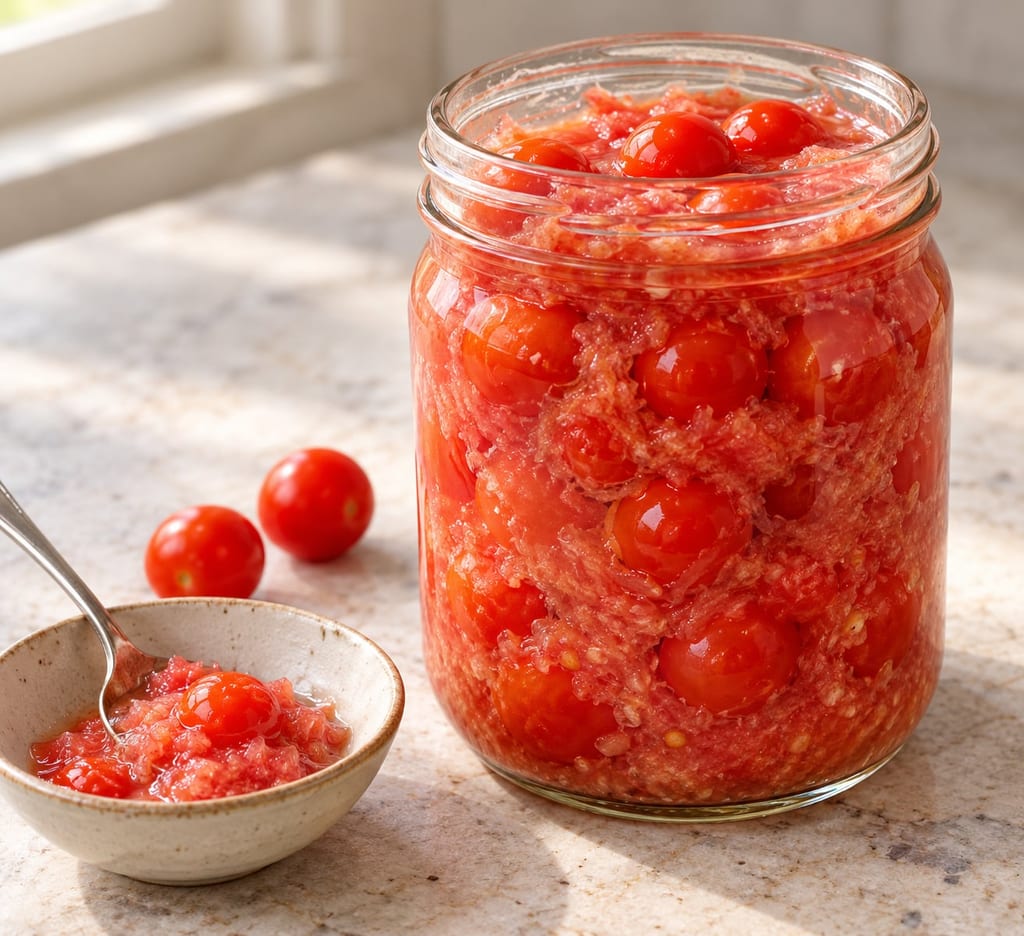
Lacto-fermented cherry tomatoes are small, ripe tomatoes preserved in a salty tomato-based medium that develops acidity during fermentation. The result is quite different from conventional canned tomatoes, vinegar-pickled tomatoes or tomatoes dried in the sun.
The small fruits remain substantially whole. Their skins hold the increasingly juicy flesh together, while fermentation gives the tomatoes an acidic, savoury character. Some become slightly effervescent because of carbon dioxide generated during microbial activity.
The method used here is especially interesting because it does not begin with a conventional water-and-salt brine. Instead, larger ripe tomatoes are coarsely grated and mixed with salt. This produces a thick liquid containing tomato pulp, juice and soluble nutrients. Whole cherry tomatoes are packed into that mixture and allowed to ferment.
The preparation was published on 29 May 2025 as a recipe by Ukrainian-born chef and food writer Olia Hercules. It is a contemporary preservation method, not a recipe with a demonstrated ancient geographical origin.
The underlying technology—salt-assisted vegetable fermentation—is much older than the published recipe, but the specific combination of grated tomatoes surrounding whole cherry tomatoes should not be assigned to a particular historical cuisine without evidence.
Coarsely grated ripe tomatoes — 2 cups, from approximately 3 medium tomatoes — Fermentation medium and flavour
Kosher salt — 2 tablespoons plus 2 teaspoons — Salt cure and microbial selection
Whole cherry tomatoes — 1 lb, approximately 454 g — Principal preserved food
The source specifies a 1-quart glass jar, corresponding to approximately 946 ml of vessel capacity. It describes the finished batch as making one quart, although the precise drained weight of the fermented cherry tomatoes is not established.
Active preparation is approximately 15 minutes.
No water, sugar, vinegar, garlic or herbs are added in this version. Those ingredients may appear in other fermented tomato recipes, but they are not part of this formulation.
The whole cherry tomatoes should be ripe, sound and free from visible mould or damaged, leaking portions.
Their relatively small size matters. A cherry tomato has a much shorter distance between its skin and the centre of its flesh than a large slicing tomato. Dissolved salt, water and soluble compounds therefore have a shorter distance to travel, although the intact skin can still restrict diffusion.
The larger tomatoes used for grating can be very ripe. Their purpose is different: they provide the surrounding pulp and juice rather than retaining an intact texture.
Both ingredients normally belong to Solanum lycopersicum. Botanical classifications distinguish varieties and cultivar groups, but the original recipe does not identify specific cultivars.
Red cherry tomatoes are the obvious starting point, although tomatoes naturally vary in acidity, sugar, skin thickness and aroma.
A yellow or orange tomato may behave differently because its pigment composition and acid-sugar balance differ. Such substitutions should not be presented as a scientifically validated equivalent without evaluation.
Wash the jar and its lid thoroughly.
The published method also gives an oven treatment of 250°F / approximately 121°C for 20 minutes for suitable jars and lids.
This is the publication's equipment-preparation instruction; it is not a universal sterilisation procedure for every lid material. Some closures contain plastic or rubber components that should not be heated in an oven.
Use food-grade equipment suitable for contact with acidic food.
Coarsely grate approximately three medium ripe tomatoes to obtain 2 cups of pulp and juice.
Retain the liquid.
The point is not to make a completely smooth purée. Coarse grating produces a mixture of juice and soft tissue that can surround the smaller tomatoes.
Avoid introducing soil, packaging debris or damaged vegetable material.
Place the grated tomatoes in a large clean bowl.
Add 2 tablespoons plus 2 teaspoons kosher salt.
Stir thoroughly to distribute the salt.
Because the quantity is expressed by volume rather than mass, the actual weight varies with the salt's crystal size and packing density. No exact final salt percentage is established by this measurement.
Do not silently replace the given quantity with a generic 2% brine.
Transfer approximately half the salted grated tomato mixture into the jar.
Add the whole cherry tomatoes.
The aim is to surround the intact tomatoes with salted pulp rather than leave large dry spaces between them.
Add as much of the remaining salted mixture as the jar can accommodate.
Press gently with a clean spoon.
The tomatoes should remain submerged in the salted tomato medium.
Do not crush them deliberately. Their intact shape is part of the desired finished texture.
Fit the lid loosely, or cover the opening with several layers of cheesecloth secured by a rubber band.
The vessel must be protected from contamination while allowing fermentation gas to escape.
Keep away from direct sunlight.
Leave at room temperature for 5–7 days.
The recipe does not provide a numeric room-temperature range.
During this period, the tomato pulp may become bubbly and the whole tomatoes may appear swollen or unusually plump.
The culinary endpoint is described as tomatoes that are plump and nearly bursting, with active bubbling in the liquid.
Those observations are not adequate standalone food-safety criteria. Suitable acidity monitoring and hygienic handling are still necessary.
Transfer the jar to the refrigerator once fermentation has progressed appropriately.
The published recipe claims refrigerated storage for up to one year. That is a publisher's storage statement, not a demonstrated laboratory shelf-life specification for every batch prepared at home.
For a database intended to provide dependable preservation advice, a validated shelf life remains unestablished.
In many vegetable ferments, vegetables are submerged in water containing dissolved salt.
This recipe instead uses the juice and pulp of the same fruit as its fermentation medium.
The distinction has several consequences.
Tomato juice contains soluble sugars, organic acids, amino acids, minerals and other compounds originating in the fruit.
These substances provide an environment in which microorganisms can act.
The grated material also fills spaces between the whole cherry tomatoes more effectively than large chunks.
As fermentation proceeds, the surrounding medium becomes part of the product rather than a disposable covering liquid.
A spoonful of the fermented pulp can be useful in its own right as a sour tomato seasoning.
The pulp is also opaque, unlike a clear salt brine. Cloudiness therefore cannot be interpreted in the same way as cloudiness in a transparent vegetable ferment.
An apparently cloudy tomato mixture is expected from the moment it is prepared, even before significant microbial activity has occurred.
Tomatoes naturally carry microorganisms on their surfaces.
These may include lactic-acid bacteria, yeasts and numerous organisms that do not necessarily participate beneficially in fermentation.
Salt changes the conditions in which they compete.
Some lactic-acid bacteria can metabolise available sugars into lactic acid. Others produce additional metabolites, including acetic acid, carbon dioxide and ethanol.
The exact community depends on the tomatoes, preparation environment, salt, temperature and fermentation history.
It would be incorrect to claim that every jar contains the same species of Lactobacillus.
Microbial taxonomy has also changed: several organisms formerly placed in the large genus Lactobacillus now belong to genera such as Lactiplantibacillus and Limosilactobacillus.
For this preparation, no recipe-specific microbial survey is supplied.
Its classification as lacto-fermented describes the intended fermentation process, not a verified identification of the organisms in each batch.
Fresh tomatoes already contain organic acids, principally citric and malic acids.
Their starting pH depends on variety, maturity and growing conditions.
Fermentation may introduce additional acids.
Consequently, the sourness of the final product reflects both the original tomato chemistry and the products of microbial metabolism.
A tomato that tastes acidic before fermentation is not proof that it has undergone a successful fermentation.
Likewise, the addition of salt and a specified number of days does not establish a final pH.
Acidity should be measured with appropriate equipment if it is being used as part of a food-safety assessment.
A whole tomato contains numerous fluid-filled cells surrounded by cell walls and an outer skin.
Water movement, microbial activity and gas production can change the apparent firmness of the fruit.
Some dissolved compounds move between the tomato and the surrounding liquid.
Changes in cellular structure affect texture.
Carbon dioxide may accumulate temporarily within cavities or around the fruit.
These effects can produce the lively, almost bursting quality associated with fermented cherry tomatoes.
However, unusually swollen fruit should not be interpreted automatically as successful fermentation.
Gas production can result from several kinds of microbial metabolism, including undesirable processes.
The overall condition of the batch matters.
Cherry tomatoes often contain a relatively high concentration of soluble sugars compared with larger culinary tomatoes.
The perceived sweetness also depends on acidity.
A ripe cherry tomato may taste distinctly sweet because its balance of glucose, fructose and organic acids differs from that of a less ripe fruit.
Fermentation can reduce available sugars and introduce additional acidity.
The result may taste less purely sweet and more savoury.
The skin retains some texture while the flesh becomes softer.
The surrounding grated tomatoes can develop a rounded acidity that complements the concentrated flavour of the whole fruit.
The recipe does not provide chemical analyses of sugar consumption, so no exact percentage loss should be claimed.
Tomatoes originated in the Americas and spread globally following early modern exchanges.
They became important in numerous European, Middle Eastern and Asian cuisines.
Tomato preservation includes drying, salting, cooking, bottling, fermentation and acidification.
These methods should not be treated as interchangeable.
Sun-dried tomatoes depend primarily on moisture removal.
Canned tomatoes depend on controlled heat treatment and acidity appropriate to the canning process.
Vinegar-pickled tomatoes depend on an added acid.
The present fermented recipe relies on salt and microbial change.
Olia Hercules's recipe represents a modern expression of preserving seasonal abundance rather than a documented reconstruction of an ancient tomato fermentation.
It may be especially attractive when ripe tomatoes are plentiful and some are too soft for conventional slicing.
These tomatoes can be used much like a sharp, savoury pickle.
They are suitable in salads, where their acidity contrasts with leaves, soft cheese and olive oil.
They can accompany sandwiches, especially those containing rich fillings.
Their flavour can enliven grilled vegetables.
They can also be added to bowls of cooked grains or legumes.
The surrounding fermented tomato pulp may be spooned into a dressing or sauce.
One modern serving suggestion is to use the tomatoes as an ingredient or garnish in savoury cocktails, including martini-style drinks.
When adding them to a hot dish, remember that heating changes both their delicate structure and the viability of microorganisms.
There is no culinary requirement to serve every fermented vegetable cold.
The distinctive flavour may remain useful after heating, even though the texture becomes softer.
Bubbles appear in the surrounding pulp. This is compatible with fermentation, but not a microbiological safety test.
Cherry tomatoes become softer. Some softening is expected. Complete collapse into slime is undesirable.
The skins split. Pressure and tissue changes can cause splitting. This is not automatically spoilage, but it changes texture.
A layer forms at the surface. Do not assume an unidentified film is harmless.
Visible mould appears. Reject the batch.
The mixture smells rotten or putrid. Reject it.
Little visible activity occurs. Temperature, salt and microbial populations vary. Do not extend fermentation indefinitely without assessing the process.
The pulp is extremely salty. The original salt is measured by volume. Do not attempt to rescue an improperly prepared ferment through arbitrary dilution during fermentation.
Tomatoes are an acidic fruit but vary in their natural acidity.
A fresh tomato's acidity must not be assumed to compensate for uncontrolled fermentation.
The jar must be clean and the whole tomatoes kept beneath the salted medium.
The fermentation vessel must accommodate gas.
A pH of 4.60 or below is an important general food-preservation threshold, but it is not a complete validation of this particular recipe.
The source does not provide a measured final pH, water activity or microbiological endpoint.
The claim of one-year refrigerated storage should not be reproduced as a verified safe household shelf life.
This is a refrigerated fermented preparation, not shelf-stable canned tomatoes.
The inspected recipe source documents this preparation; no traditional origin is asserted.
Yield 1 quart · Scaling: source batch only
Contaminated equipment or uncontrolled fermentation can compromise a batch; this recipe has not been professionally validated.
Hazard sourceUse clean food-grade equipment and follow the cited method. General guidance is not recipe-specific validation; taste or appearance alone is not proof of safety.
Control sourceThe source claims up to one year refrigerated; this is the magazine recipe’s storage statement, not independent process validation.
Unknown documented preparation location. Saveur presents a contemporary recipe without claiming a traditional or regional origin.
Tomatoes are the fruit of Solanum lycopersicum, wild in the Andes and domesticated in Mesoamerica. They are eaten ripe or green, fresh, cooked, canned and fermented.
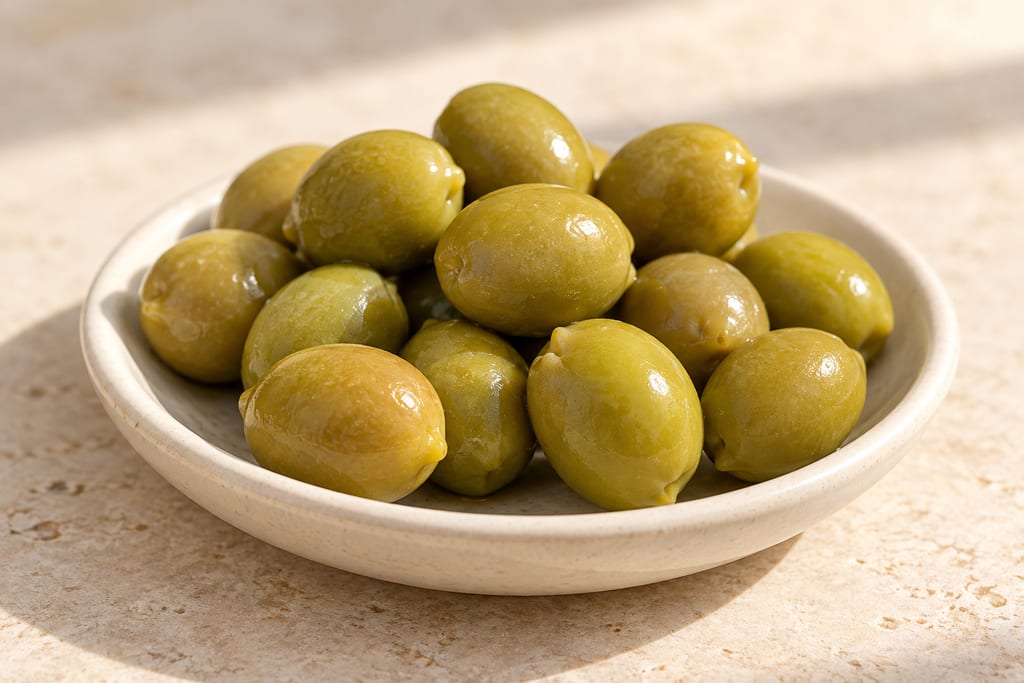
A Portuguese table-olive product from the Negrinha cultivar in northeastern Portugal, sold in three commercial styles, two of them brined fermentations and one oxidised to black.
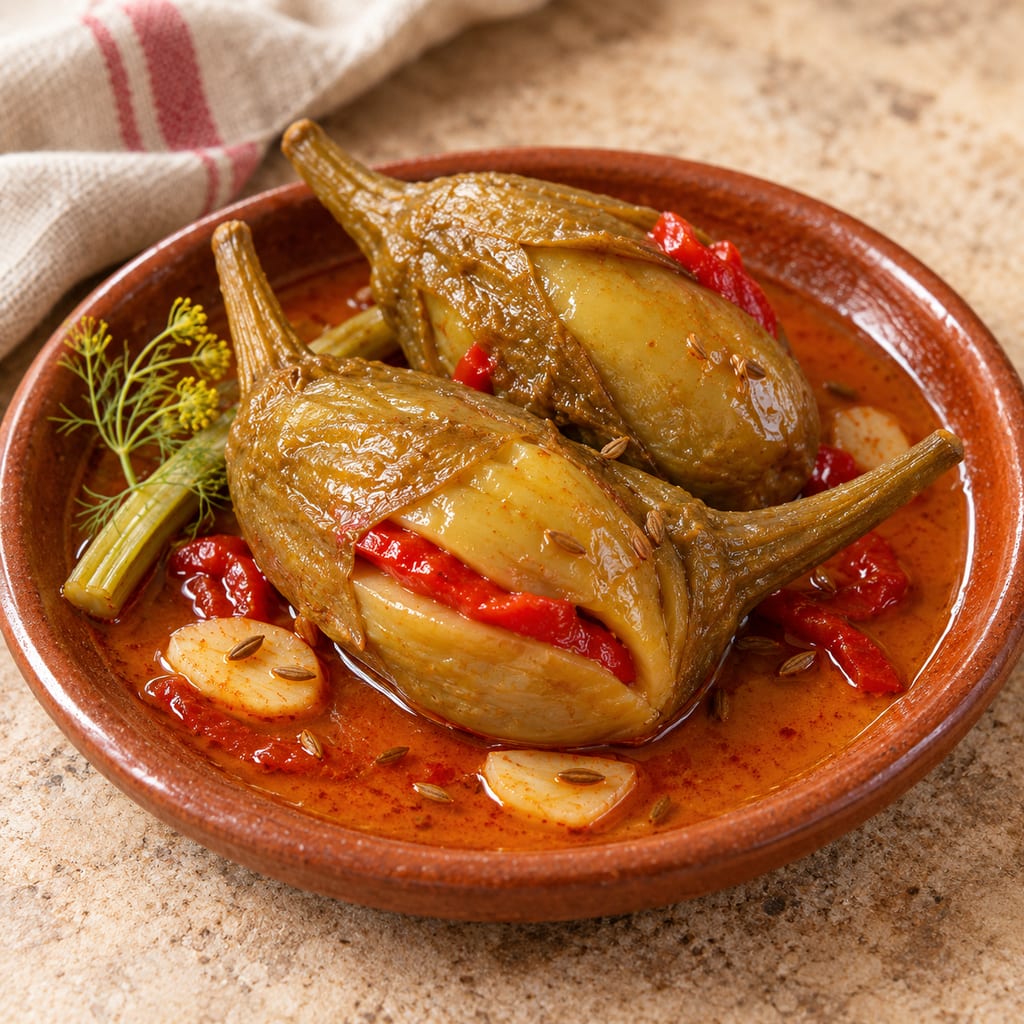
A protected aubergine preserve from Ciudad Real in Spain: tender fruit of the local Dealmagro variety, cooked briefly and then fermented in a vinegared, paprika-seasoned dressing.
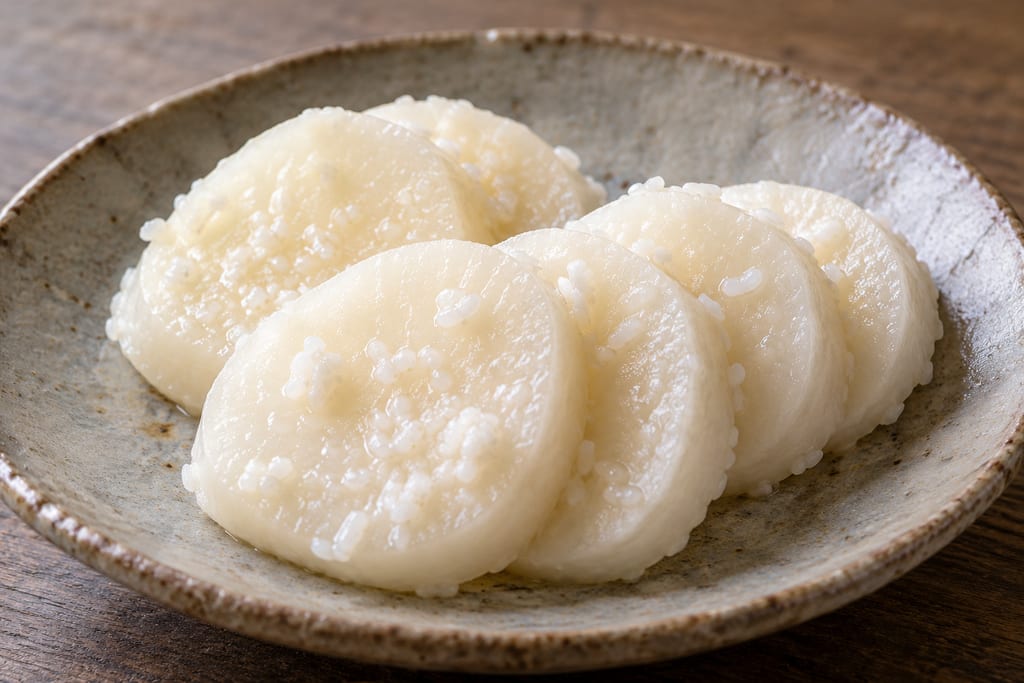
A sweet, crisp Japanese daikon pickle from Tokyo's Nihonbashi district, made by salting fresh radish and dressing it in rice koji, sugar or koji amazake without the heavy drying used for takuan.
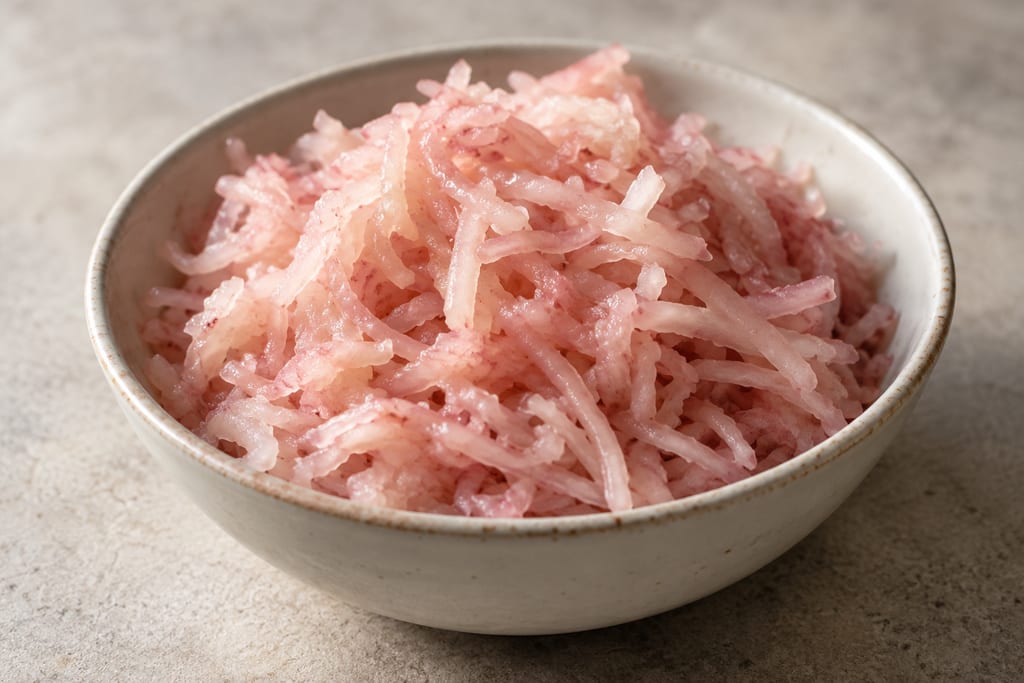
Source-specific Brovada DOP producer method for Friuli Venezia Giulia turnips and red-grape marc. This records a regulated producer process; it is not a validated home-scale recipe.
An industrial fermentation patio places factory-made fiberglass-reinforced polyester olive tanks below floor level, with drainage and transfer infrastructure arranged around the buried vessels.
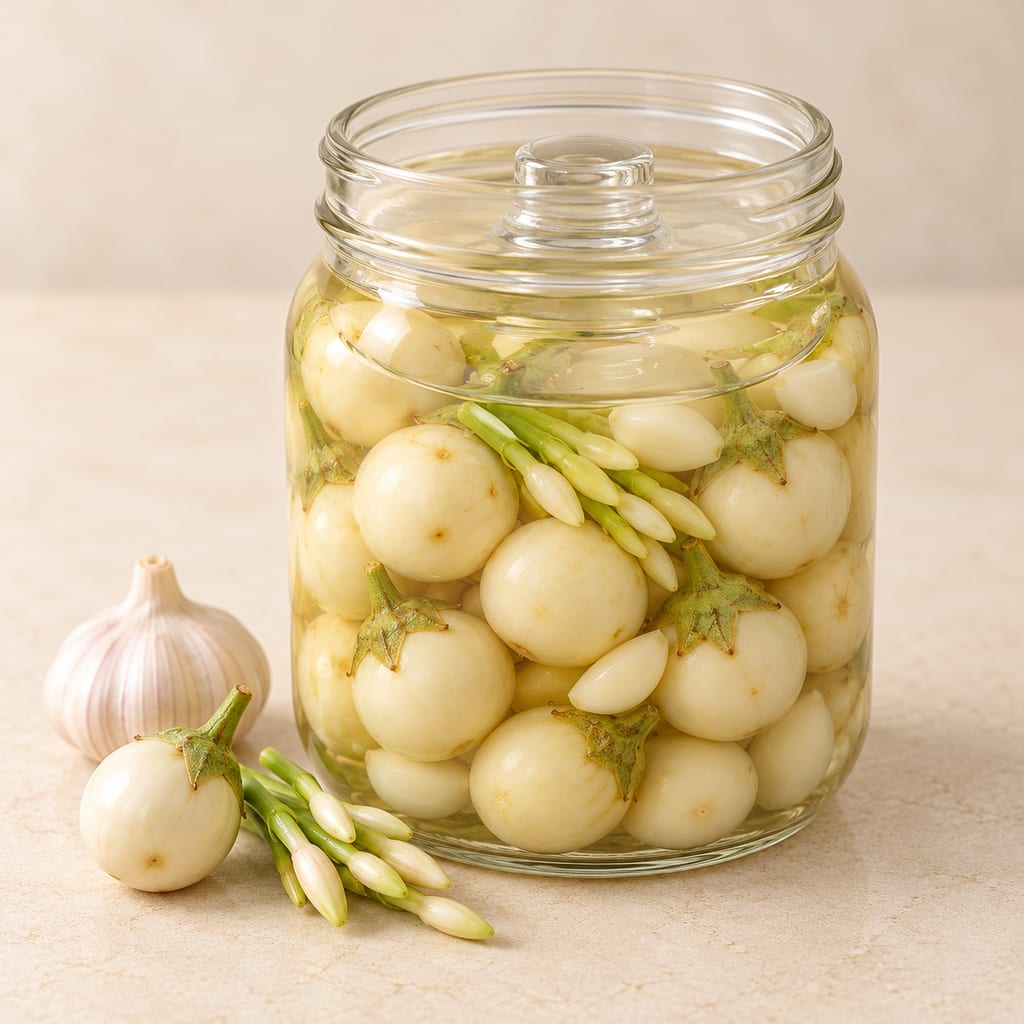
Vietnamese salted and fermented small eggplant, dried on the day of purchase, then held submerged in warm salty water with garlic and galingale flower for a week or longer.
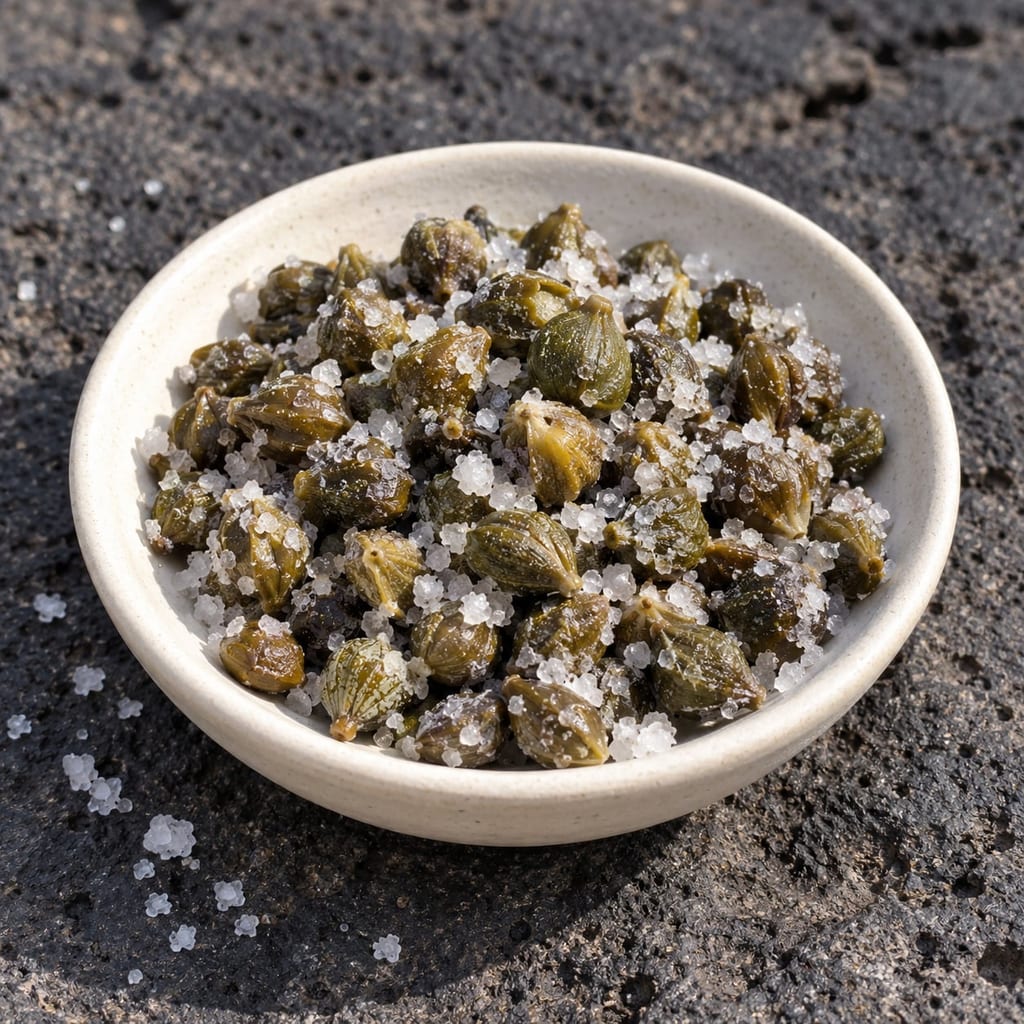
A protected Sicilian product: unopened caper buds from the island of Pantelleria, dry-salted with sea salt in a two-stage process that encourages lactic fermentation.
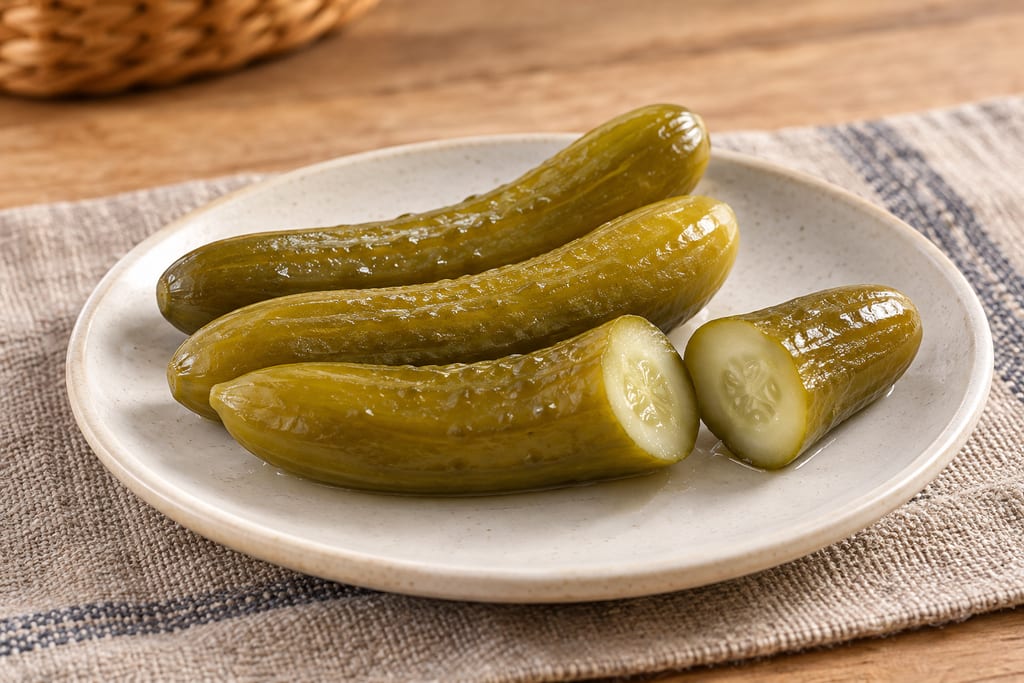
Çubuk turşusu is a registered pickle from Çubuk district in Ankara. Its cucumber variant is sold as Salatalık Turşusu, and a commercial specification sets its brine and room-temperature period.
No community contributions have been published for this entry yet.
Sign in to contribute. Published comments and photos are free to read.
Saveur; Olia HerculesInspiration
Lacto-Fermented Cherry TomatoesQuart yield, tomato and salt amounts, layered method and 5–7 day schedule.
Cited in: What are lacto-fermented cherry tomatoes?; Ingredients; Choosing suitable tomatoes; Stage 1 — Prepare the vessel; Stage 2 — Grate the larger tomatoes; Stage 3 — Salt the pulp; Stage 4 — Begin packing; Stage 5 — Cover with tomato pulp; Stage 6 — Cover and ferment; Stage 7 — Assess and refrigerate; Why this method uses grated tomatoes rather than water; The microbiology of tomato fermentation; Organic acids and tomato acidity; Why cherry tomatoes become plump; The relationship between flavour and ripeness; Historical and regional context; Serving fermented cherry tomatoes; Quality assessment and troubleshooting; Safety and storage
University of Minnesota ExtensionSafety
Preserving food at home: FermentationGeneral fermentation guidance; it does not validate this particular recipe.
Cited in: The microbiology of tomato fermentation; Organic acids and tomato acidity; Quality assessment and troubleshooting; Safety and storage
Penn State ExtensionSafety · Science
Let's Preserve: FermentationSalt and acid in vegetable fermentation and the organisms involved
General home-fermentation handling guidance; it does not cover this recipe
Cited in: The microbiology of tomato fermentation; Organic acids and tomato acidity; Safety and storage