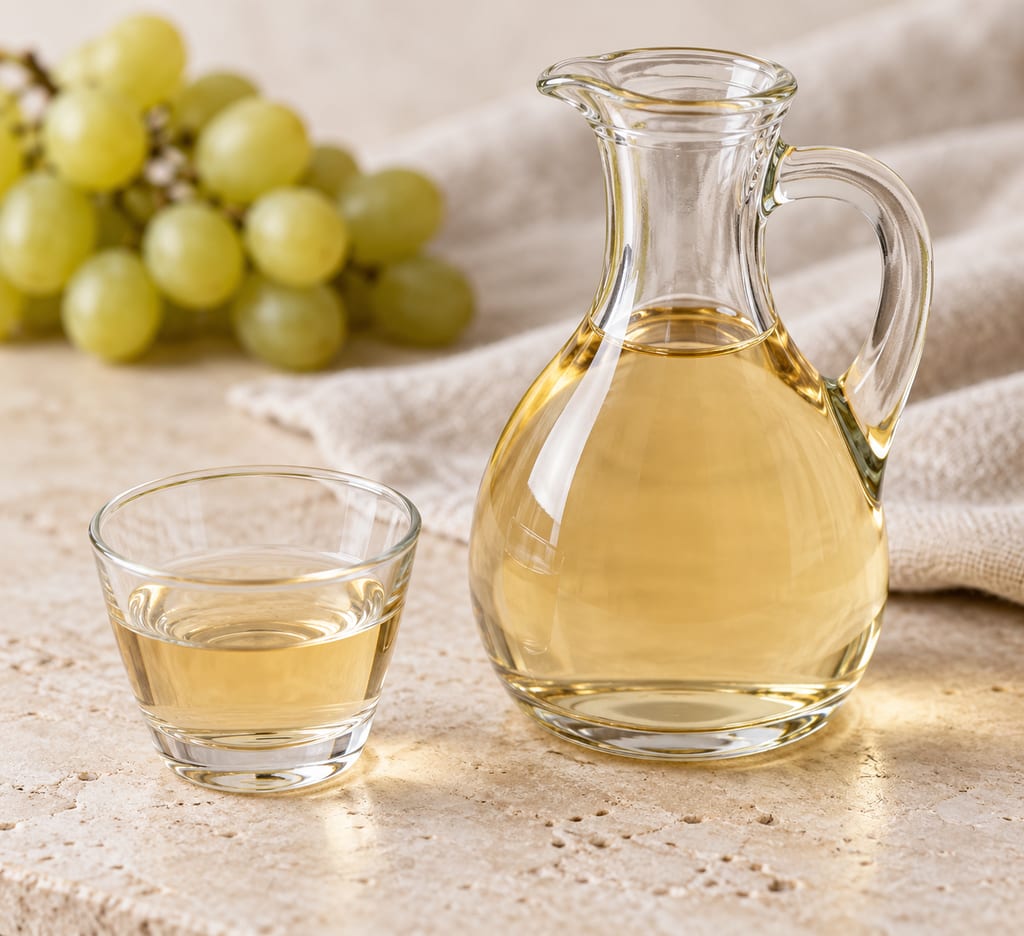
White-wine vinegar
White-wine vinegar is made when acetic acid bacteria oxidise the alcohol in finished white grape wine, yielding a pale, wine-derived souring condiment for dressings, sauces and cooking.
 FermenteaWhere food goes to change
whipped ricotta
A soft fresh curd made by heating whole milk with acid; distinct from ricotta made by reheating the whey left after a cultured cheese.
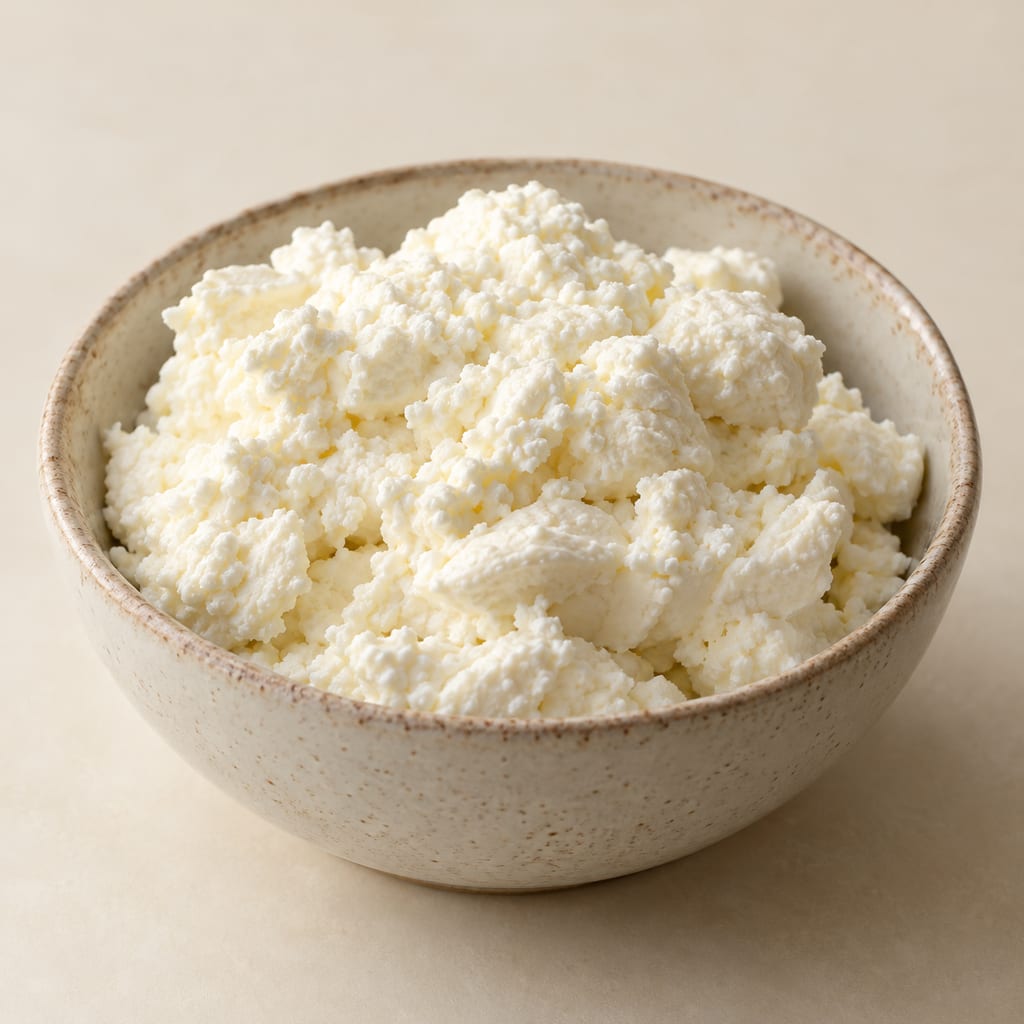
Whole-milk ricotta-style fresh curd is a soft, fresh curd made by heating whole milk with an acid. It is a different product from ricotta made from the whey left after a cultured cheese. O'Connor's 1993 ILCA manual describes Italian ricotta as made from skimmed milk and whey with vinegar or citric acid, and Jim Wallace's ricotta recipe treats whey ricotta and whole-milk ricotta as separate products. This page keeps to the whole-milk curd.
The historical dating of the whole-milk version was not researched in the sources, so no date or place of origin is given here.
The documented route comes from Emily Farris and Jeff Akin's Sous Vide Whipped Ricotta on Anova's recipe platform. Milk and white wine vinegar are sealed in a large zipper-lock bag by the water-immersion method and held in a circulator bath set to 172 °F (78 °C) for one hour. The bag is then removed, the curds are skimmed from the top into a cheesecloth-lined strainer, and the liquid is discarded.
The curd drains for at least 10 minutes and is then processed with olive oil and salt in a food processor for about 20 seconds, until smooth and fluffy. The source's notes say the bag hides the curd while it forms. An open pot lets the cook see the flakes, but the bath temperature then has to be measured and held by the cook.
The Anova recipe says to serve the curd immediately or refrigerate it for up to one week. Wallace's ricotta page (HE-B9) gives a separate stovetop route and advises consuming within 10 days. This page does not write up the stovetop steps, and the two storage limits belong to their own sources.
Using a slow cooker in place of the circulator is a proposal only and is untested. Its water temperature would need to be measured and held at the set point, and no source shows it doing so.
Yield by weight: not stated.
O'Connor's 1993 ILCA manual describes Italian ricotta as made from skimmed milk and whey with vinegar or citric acid; Wallace treats whey ricotta and whole-milk ricotta as separate products.
Yield 4 servings · Scaling: source batch only
Refrigerate; observe the stated limit
Control sourceA bath setpoint is not the food temperature.
No source in this record establishes a place.
White-wine vinegar is made when acetic acid bacteria oxidise the alcohol in finished white grape wine, yielding a pale, wine-derived souring condiment for dressings, sauces and cooking.
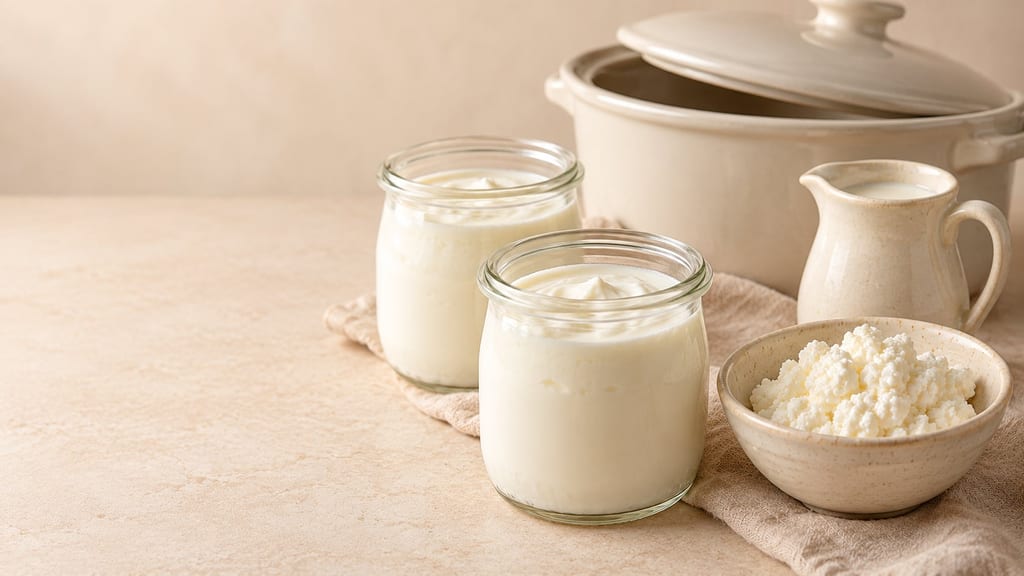
A slow cooker can heat milk for mozzarella, paneer, ricotta, mascarpone, quark and yogurt, but its heavy crock keeps heating after it is switched off. This is what each fresh cheese needs from it.
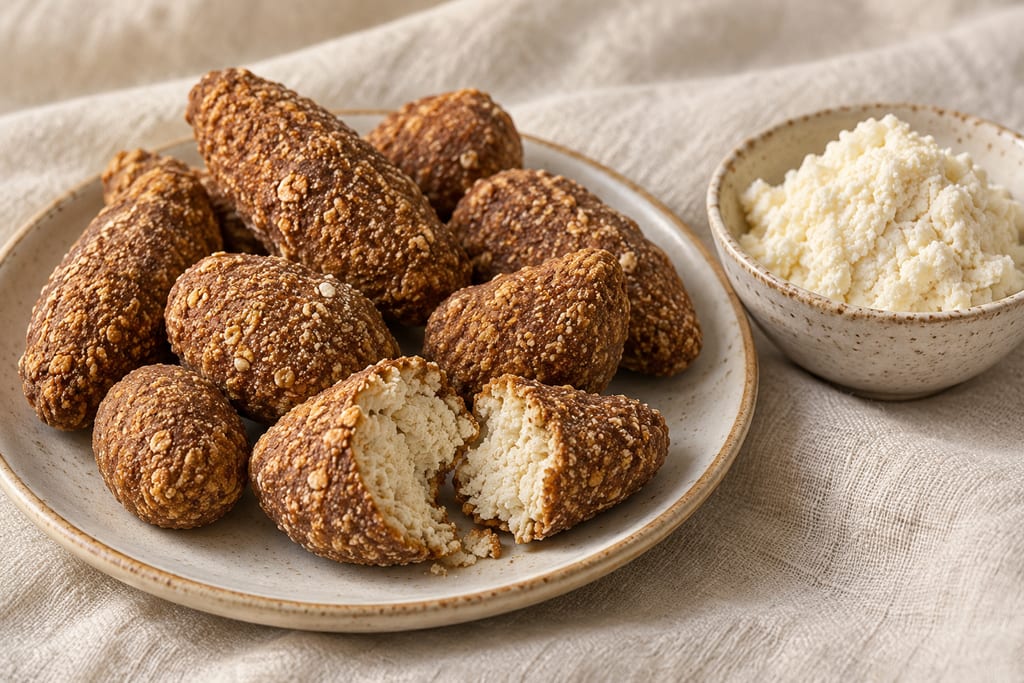
A two-stage Altai dairy preparation: sour chegen is heated into soft aarchi, then portions are drained, pressed and traditionally smoked into firm kurut.
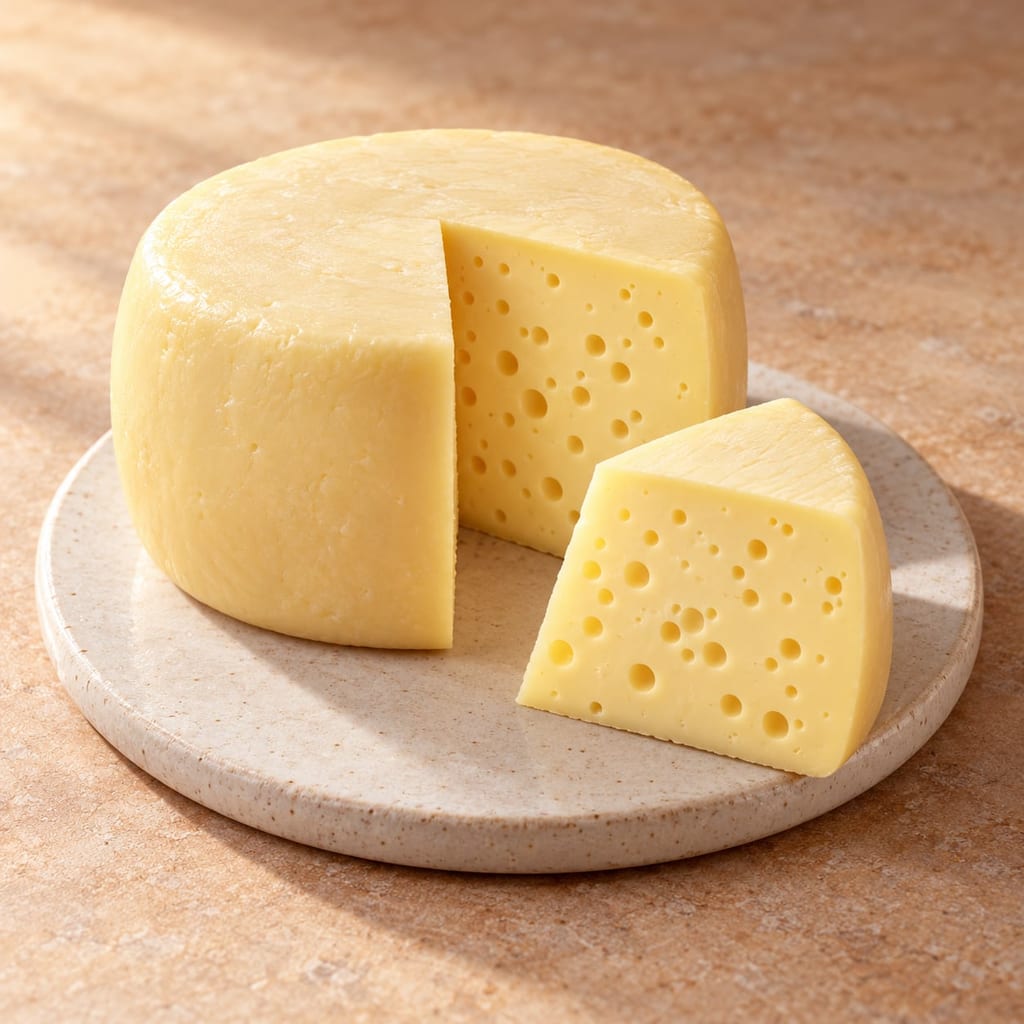
A washed-curd cheese with propionic bacteria, warmed by hot water in two steps and then held in a warm room for weeks so the bacteria can form its holes.
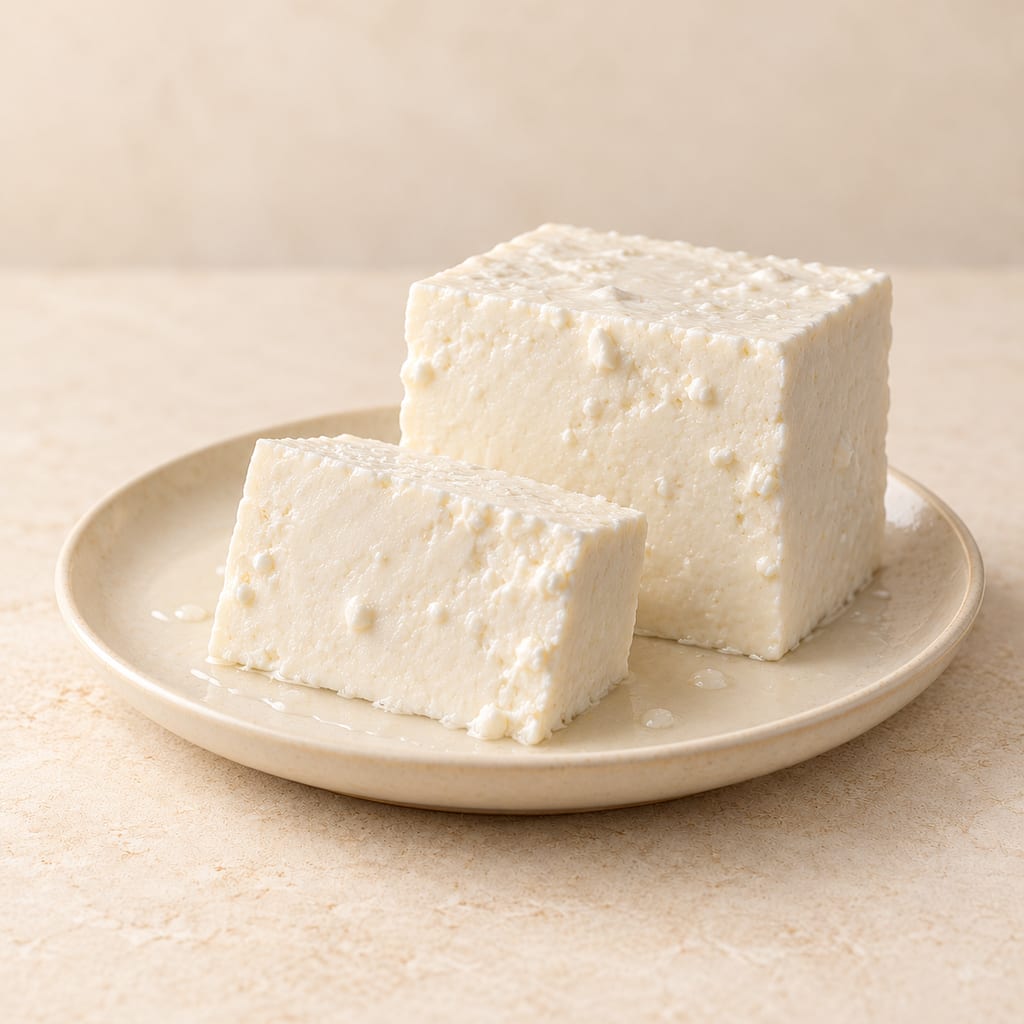
Beyaz peynir is a Turkish white cheese matured in brine. Sheep milk, alone or mixed with other milks, gives a close-textured cheese cut into blocks and packed in cans.
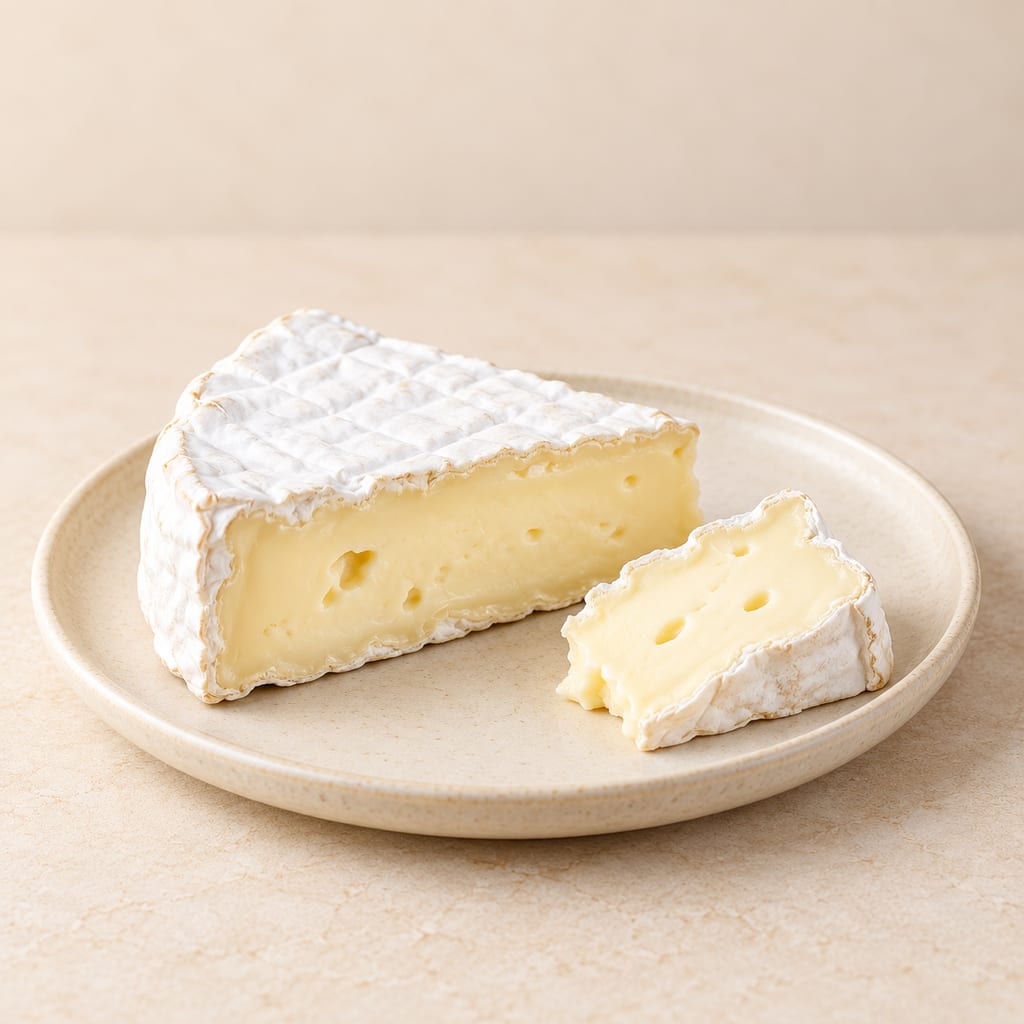
A cream-enriched Brie with a white bloomy rind and a softening center, made from pasteurized milk with lactic and surface cultures.
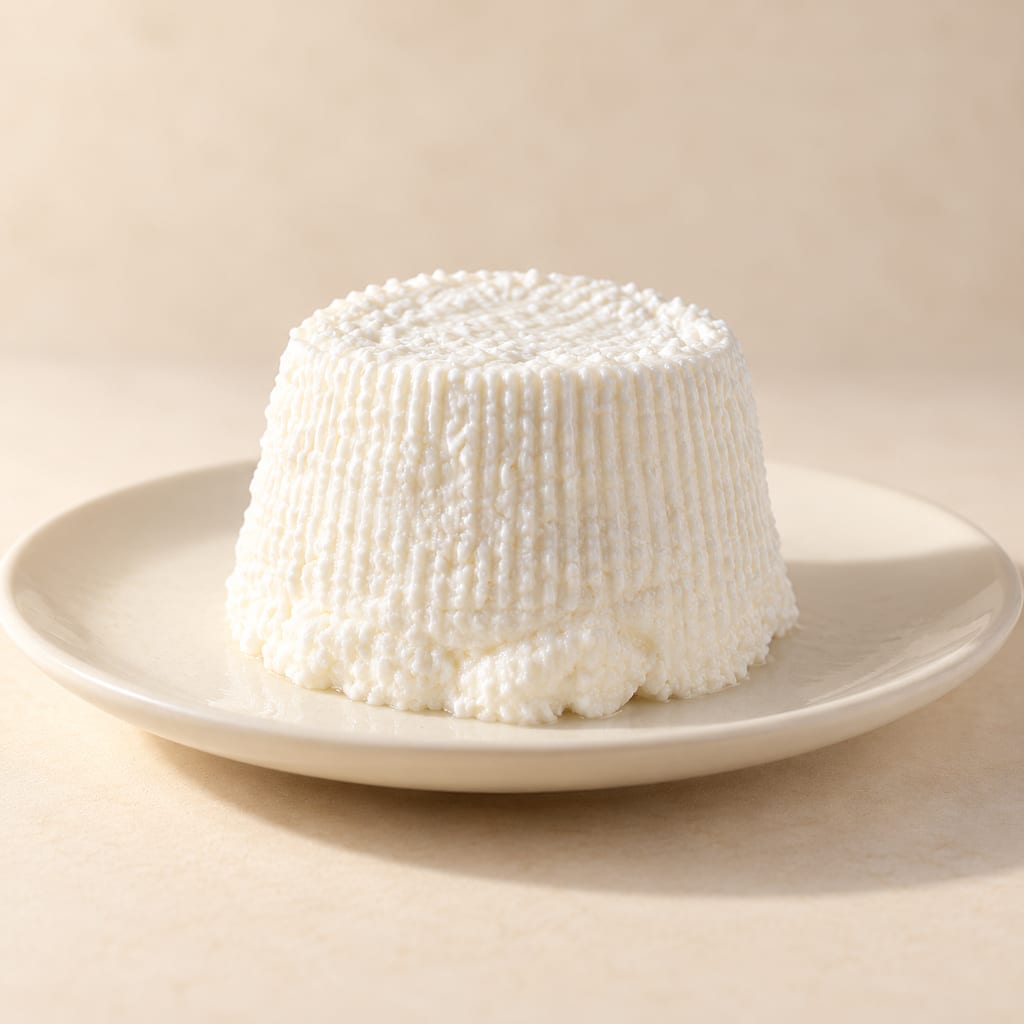
Corsican Brocciu is a whey cheese made by heating sheep's or goat's whey with whole milk and salt, then gently draining the flocculated curds. It is eaten fresh or salted and ripened as Brocciu passu.
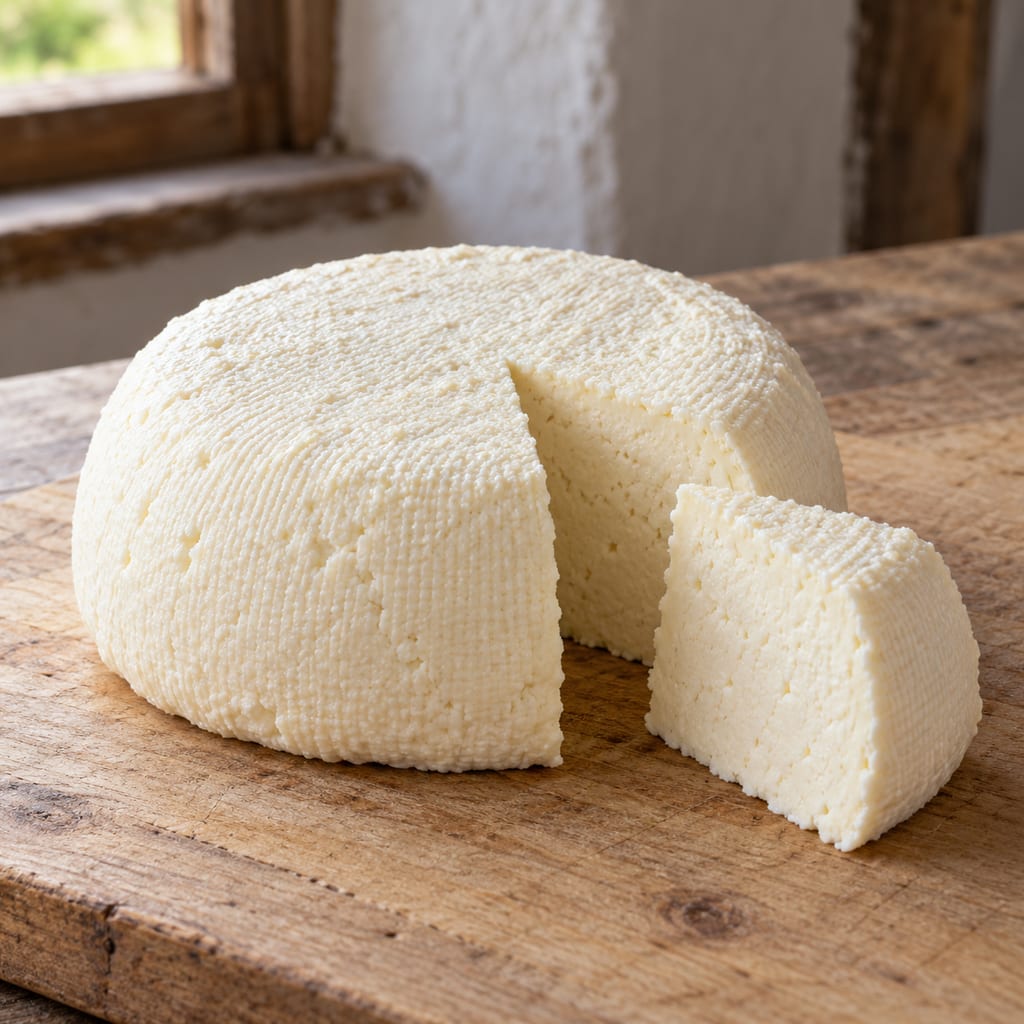
Budz is a traditional Hutsul rennet-set cheese made from sheep, cow or goat milk in the Ukrainian Carpathians, forming a fresh curd that can be eaten, smoked or processed into salted bryndza.
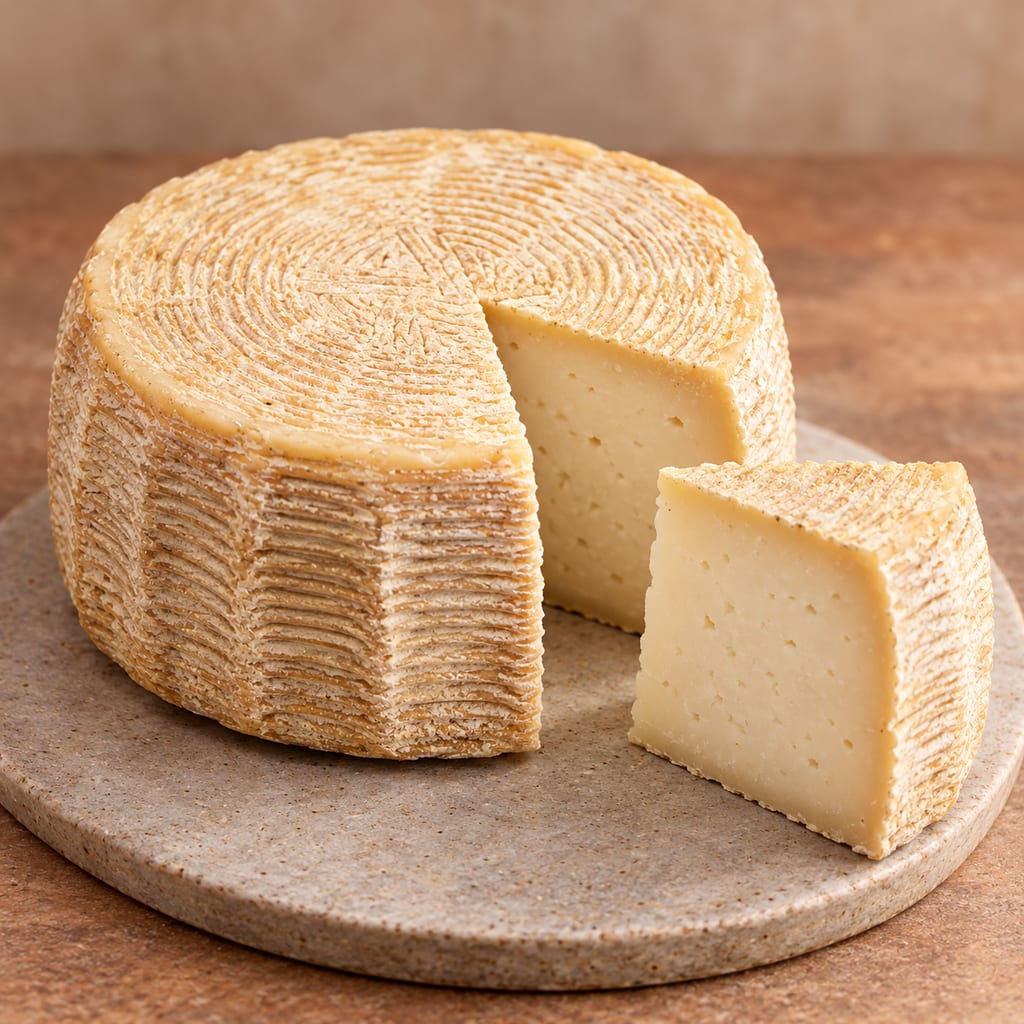
A scalded cheese moulded in baskets and re-cooked in its forms in hot whey, made alongside a ricotta from the same milk, then acidified, brined and aged for months.
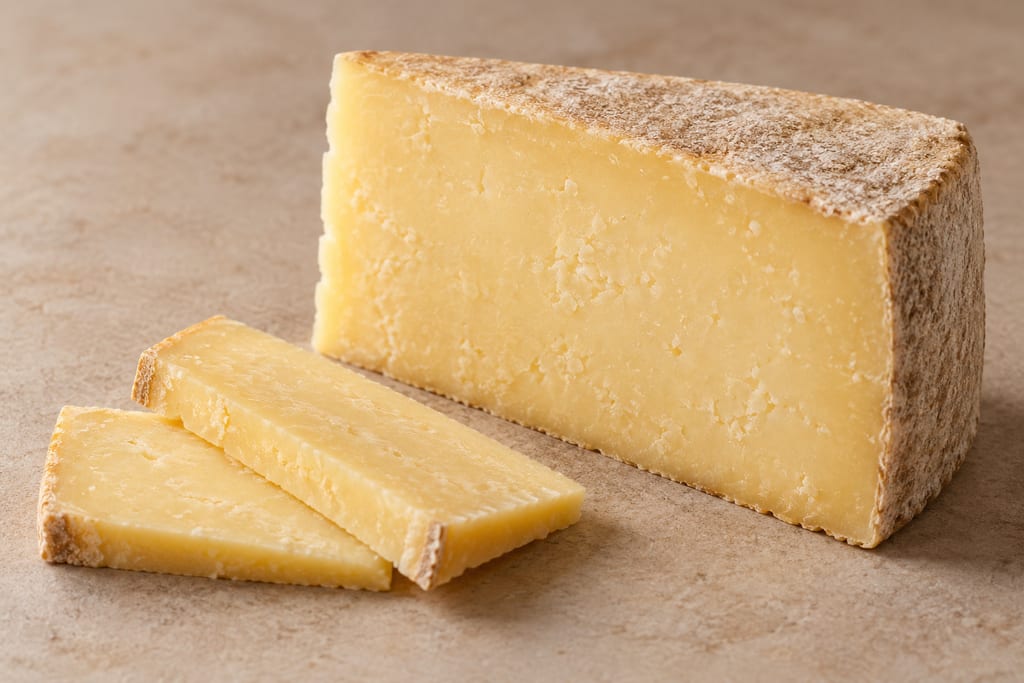
A pressed cheese whose curd is cooked slowly, then cheddared: kept warm in slabs that are turned and stacked for hours before milling, salting and pressing.
No community contributions have been published for this entry yet.
Sign in to contribute. Published comments and photos are free to read.
Anova CulinaryMethod · Storage
Sous Vide Whipped Ricottaall quantities, temperature, time and storage
Cited in: The sous-vide route; Keeping the curd; Slow-cooker bath (proposal only); What the sources leave open
New England Cheesemaking Supply CompanyMethod
Ricotta Cheese Making Recipestovetop whole-milk route
whey ricotta distinction
10-day consumption
Cited in: A soft curd from whole milk and acid; Keeping the curd; What the sources leave open
ILCAHistory
Traditional cheesemaking manualricotta from skimmed milk and whey with vinegar or citric acid
Cited in: A soft curd from whole milk and acid; What the sources leave open