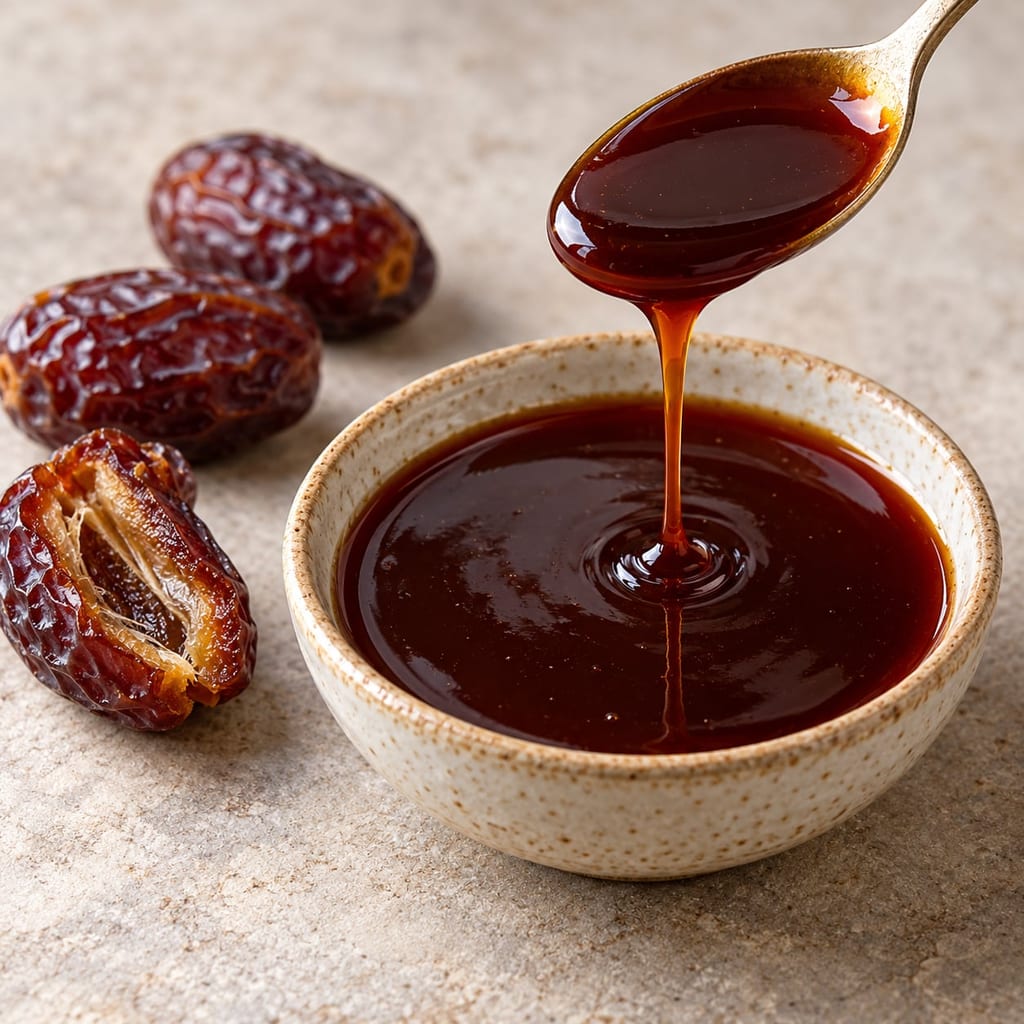
Date syrup and date pulp (dibs, silan family)
A thick, dark, very sweet syrup made from dates, known as dibs, rub, silan or date molasses. It sweetens tahini and desserts and glazes or sauces savoury dishes across the Middle East and North Africa.
 FermenteaWhere food goes to change
Traditional method
Pilpelchuma · Pilpelshuma · Filfel chuma
A chilli and garlic paste from the Libyan Jewish community, built on steamed dried peppers, garlic and cumin, now a common condiment in Israel.
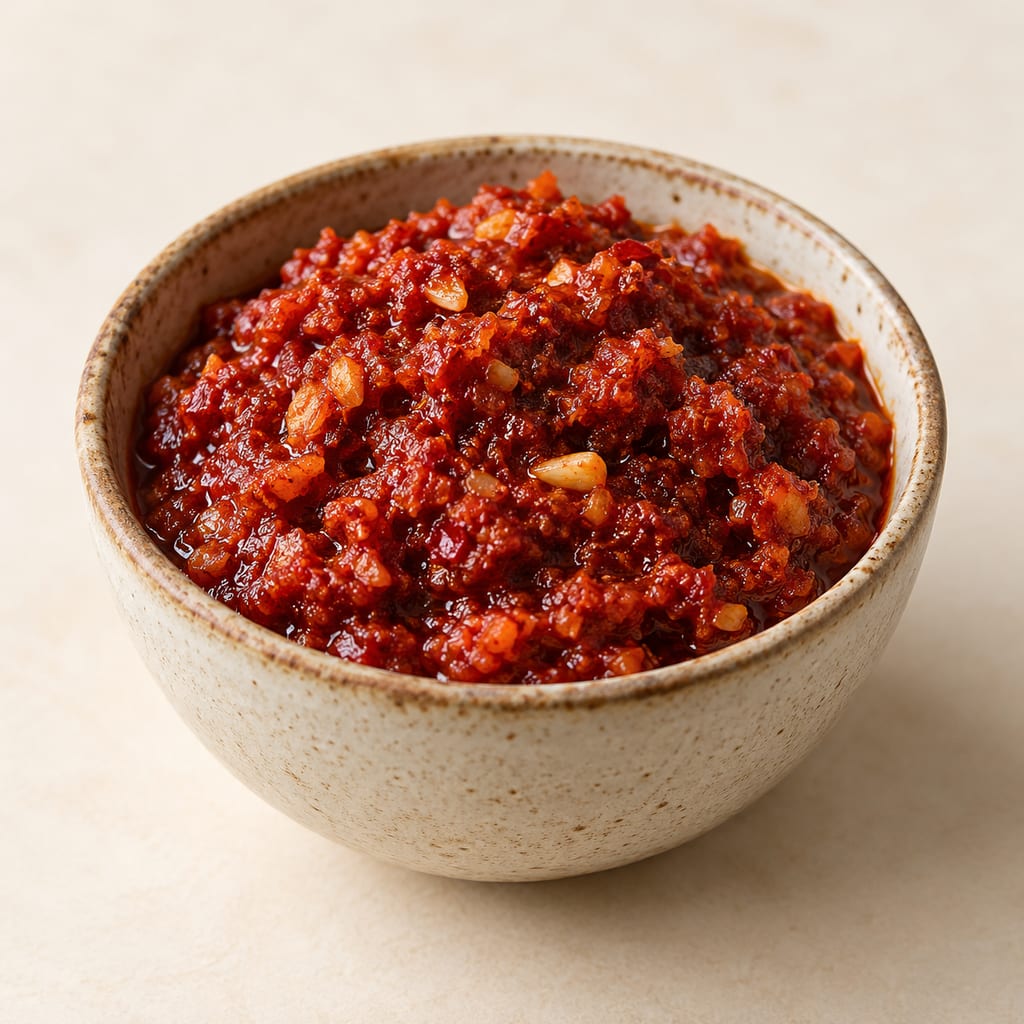
Pilpelchuma is a concentrated chilli and garlic paste. Its name means pepper garlic in Hebrew, and it is the everyday hot condiment of Libyan Jewish cooking. Its base is dried sweet and hot peppers, which are steamed so they soften before they are worked with garlic.
The texture is thick, close to tomato paste, which is what lets it sit on a plate or in a bowl as a condiment rather than a sauce to pour. Garlic is the second main ingredient. Recipes vary widely in how much they use, and one source calls for as many as twenty cloves.
Recipe sources associate pilpelchuma with Libyan Jewish cooking and also document its use in Israel, but they do not date when this particular condiment became common there. Historical research describes a large migration from Libya to Israel between 1949 and 1952 amid postwar violence and insecurity. After renewed violence in 1967, most of the Jews who remained relocated to Italy; some later went to Israel or elsewhere. These separate movements provide context for the diaspora, but do not establish a single forced migration of the condiment directly to Israel.
In Israel it is sold in tubes or jars, and it is also commonly made at home. In recent years it has spread to Western kitchens, for example in potato salad. The sources do not give a date for these later uses.
The sources do not agree on how close pilpelchuma is to harissa. The available material does not establish the relationship, so this page does not state one. The earliest dated record of the paste and the family recipes from Libya are not established here and need a Libyan Jewish culinary source.
Pilpelchuma (also spelled filfel chuma) is described by recipe sources as a chilli-garlic paste associated with Libyan Jewish cooking; the word combines terms for pepper and garlic. The sources reviewed here do not date the paste's first making or the specific point when it entered Israeli cooking. The community's broader migration history is distinct: about 31,000 of roughly 36,000 Libyan Jews emigrated to Israel between 1949 and 1952 amid postwar violence, insecurity and uncertainty around independence. After renewed violence in 1967, most of the Jews who remained relocated to Italy; some later went to Israel or elsewhere. The condiment's transmission should not be collapsed into one forced mid-century migration directly to Israel.
Scaling: source batch only
Wikipedia gives Libya as the place of origin and calls the paste the main condiment of Libyan Jewish cuisine; no dated source is given.
Pilpelchuma is used in Israel in recipe sources; the date when this specific condiment entered Israeli cooking is not established. The wider community migration occurred in different waves, including emigration to Israel in 1949–1952 and the 1967 exodus, when most remaining Jews relocated first to Italy.
A thick, dark, very sweet syrup made from dates, known as dibs, rub, silan or date molasses. It sweetens tahini and desserts and glazes or sauces savoury dishes across the Middle East and North Africa.
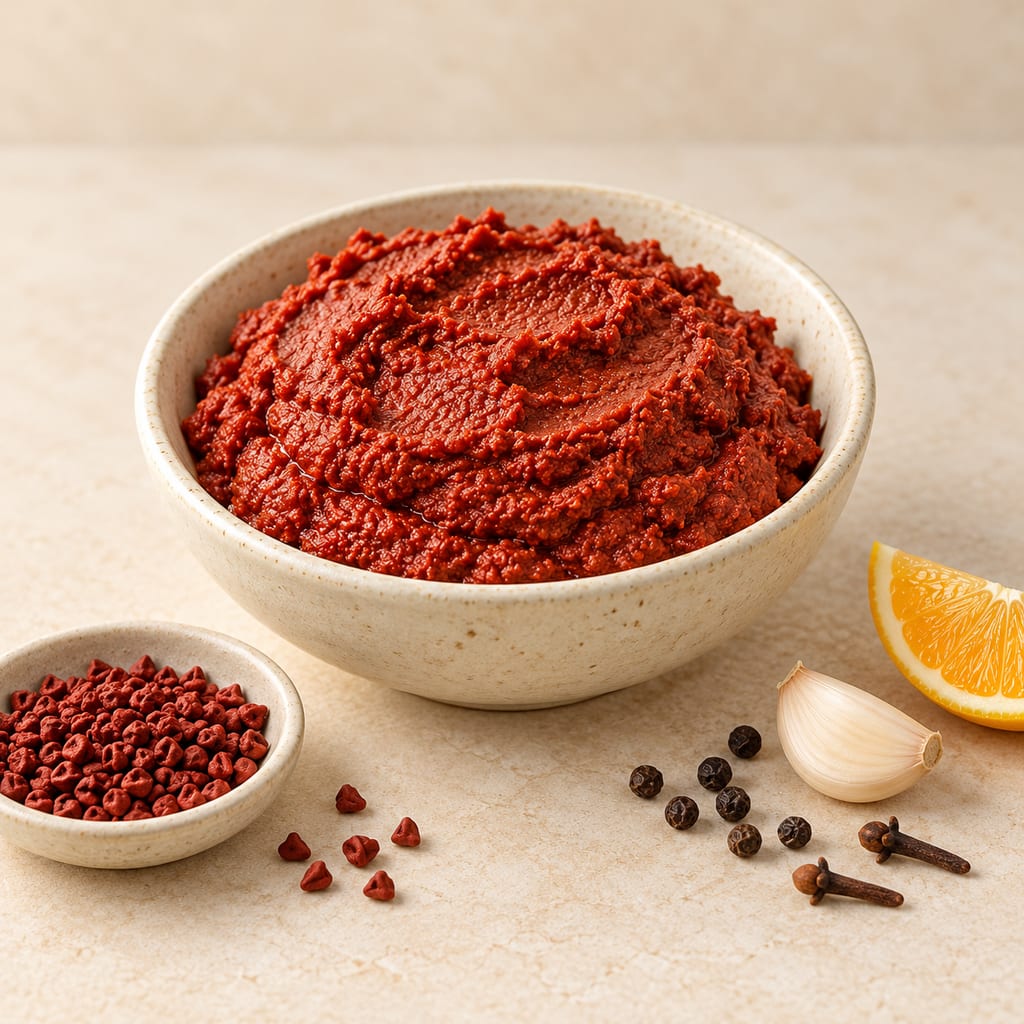
A Yucatecan recado rojo is a brick-red seasoning paste built on annatto seed, garlic and sour orange. This measured home version shows one route into a much wider family of market and household recados.
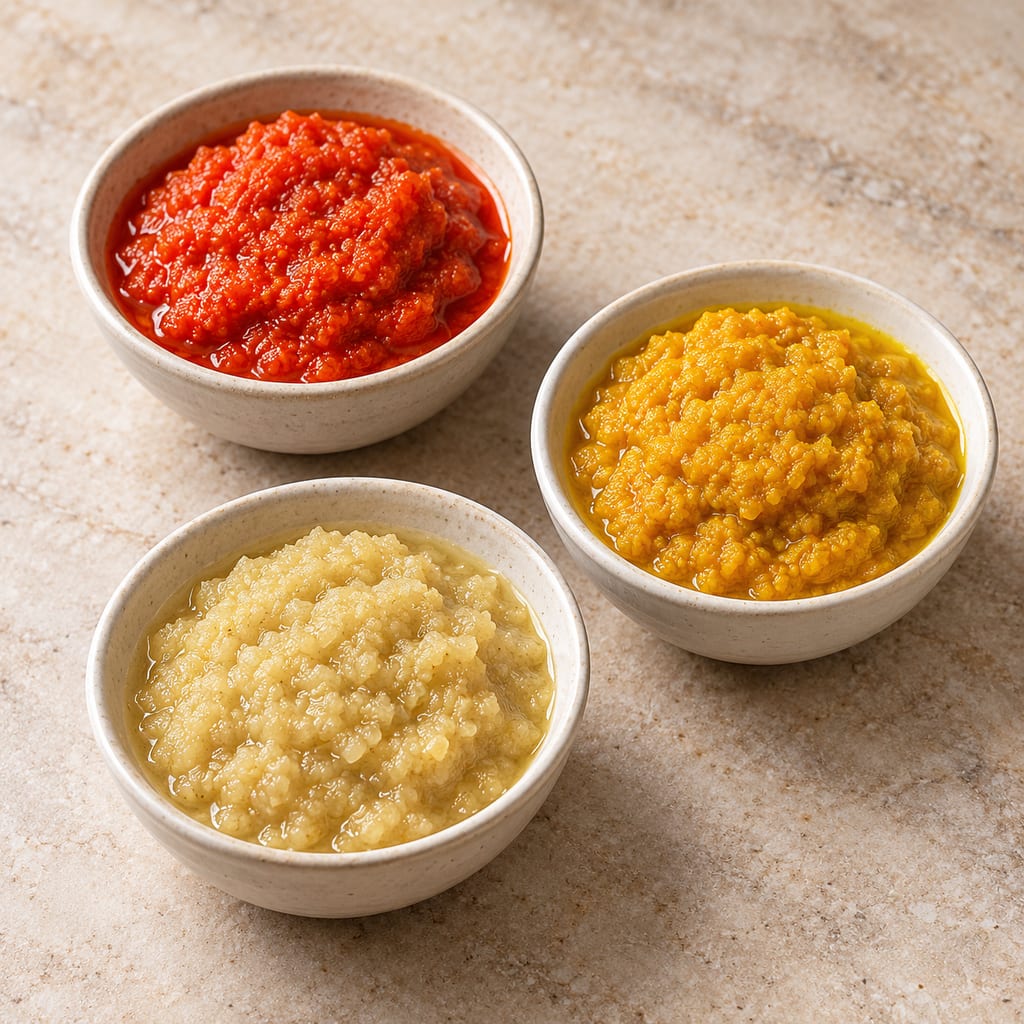
Bumbu dasar are the ground spice bases of Indonesian cooking: a white paste of shallot, garlic and salt, with chile added for red and turmeric for yellow, cooked into dishes.
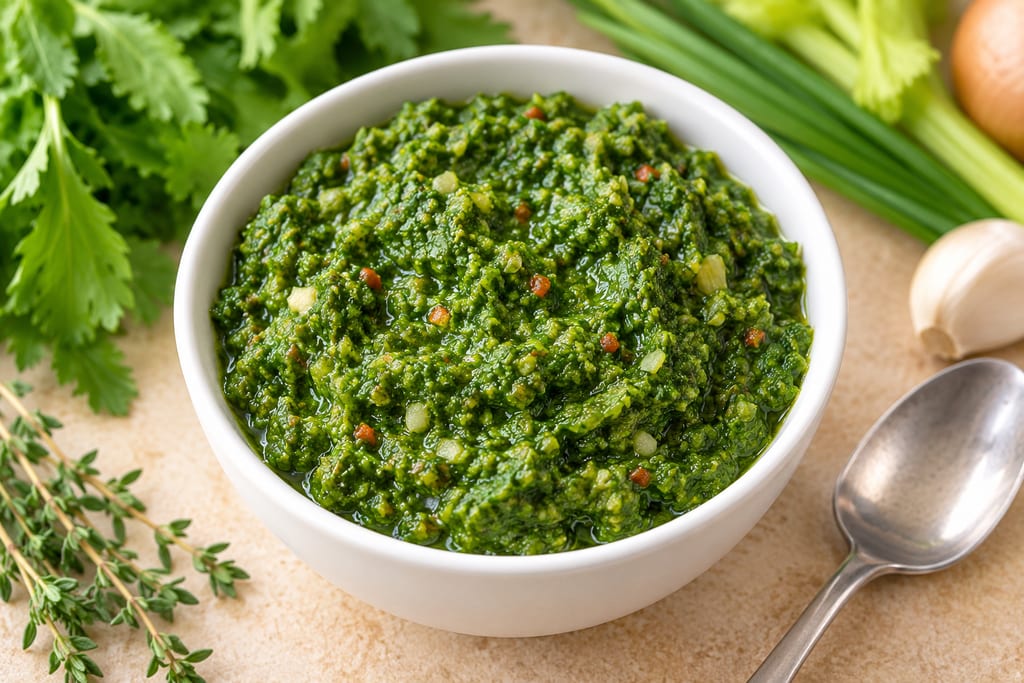
A fresh herb and aromatic paste of chadon beni (culantro), thyme, chives, celery, onion, garlic and peppers, blended with vinegar and water and used as the base for Trinidadian cooking.
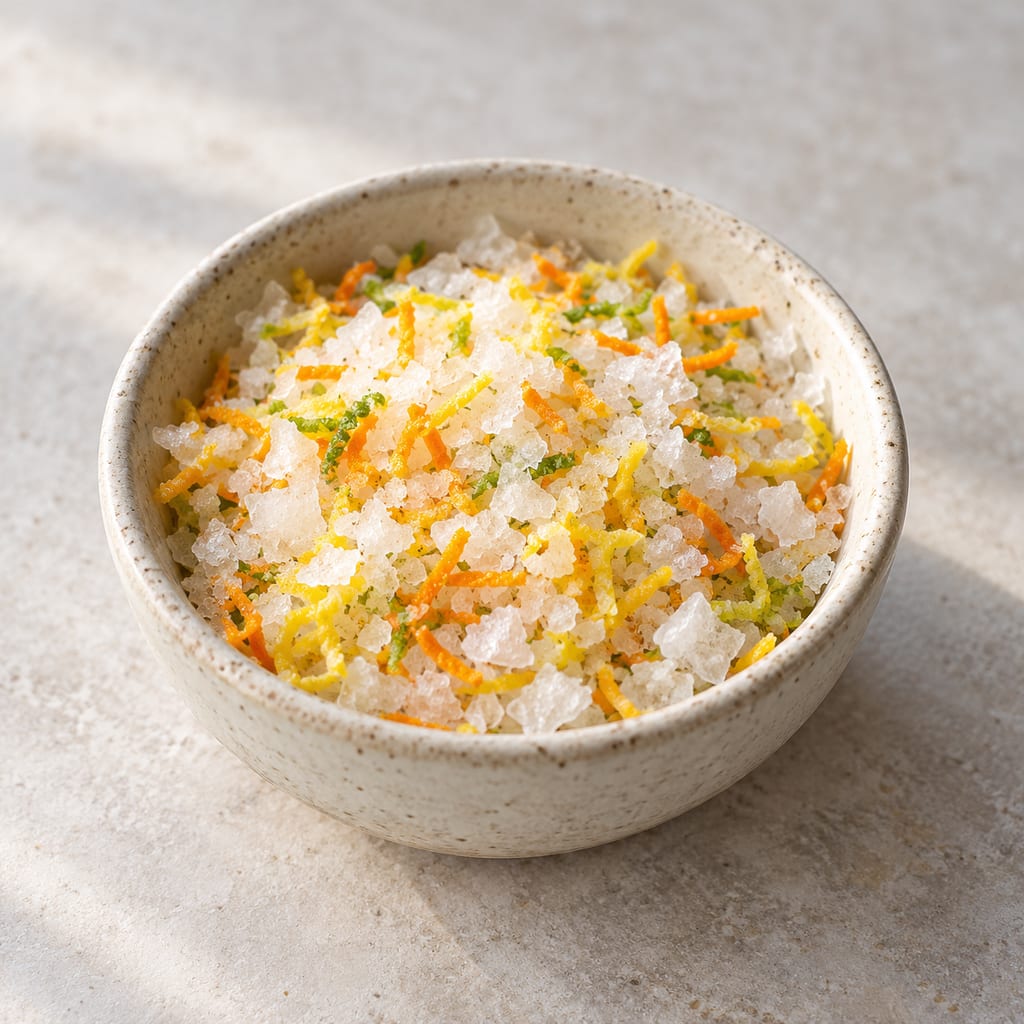
Citrus zest is rubbed into coarse or flake salt and dried on a tray. This peel-based seasoning preserves the chosen citrus aroma without adding juice.
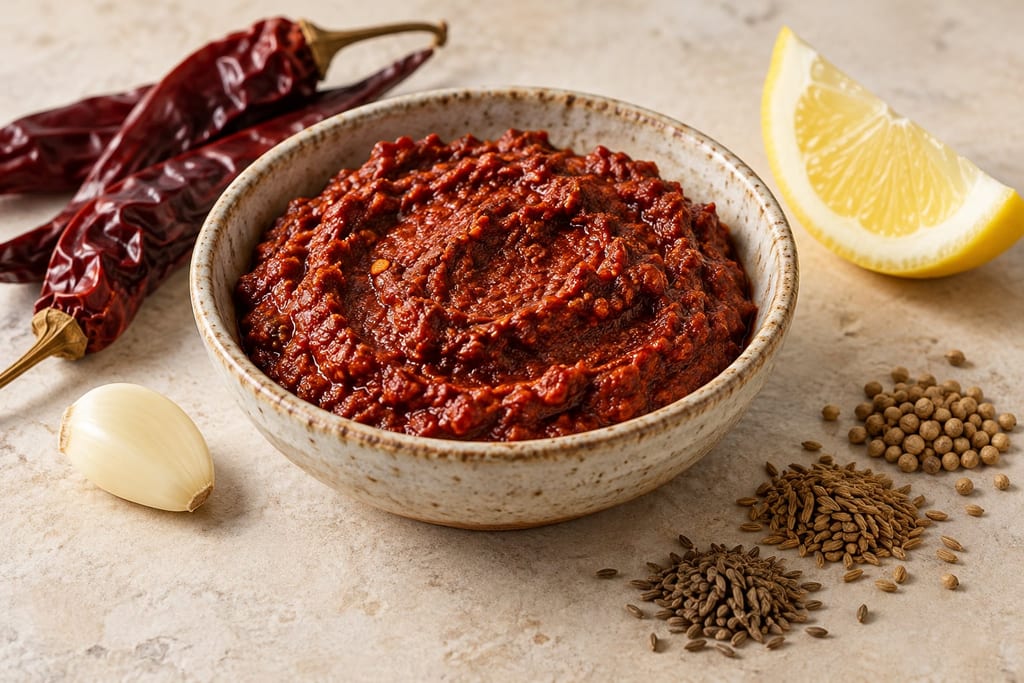
A fresh chilli paste made from rehydrated dried red peppers, garlic, olive oil, lemon and warm spices; this small-batch formula adapts the harissa family rather than reproducing a tested Tunisian method.
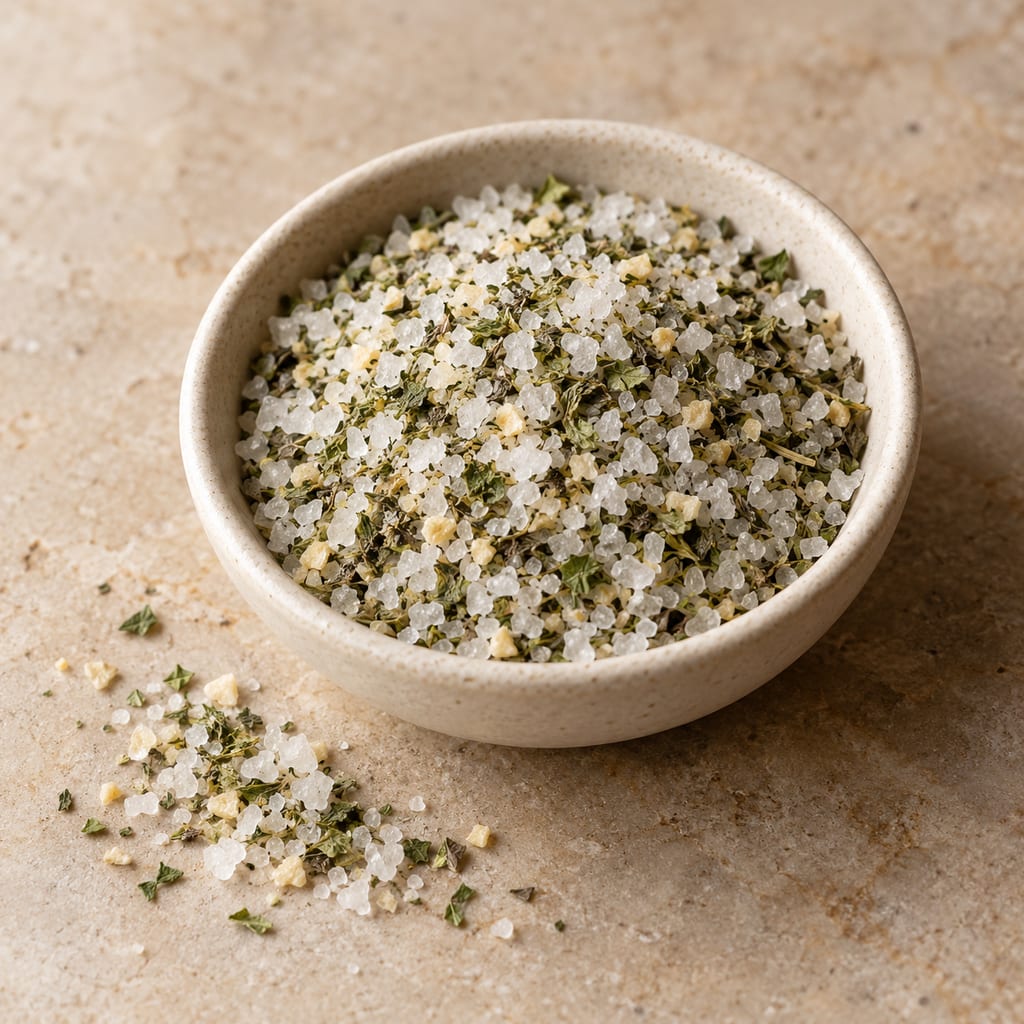
Fresh garlic and pungent herbs are chopped with kosher salt, then dried in the warmth of a switched-off oven. The blend keeps the selected herbs together in one seasoning.
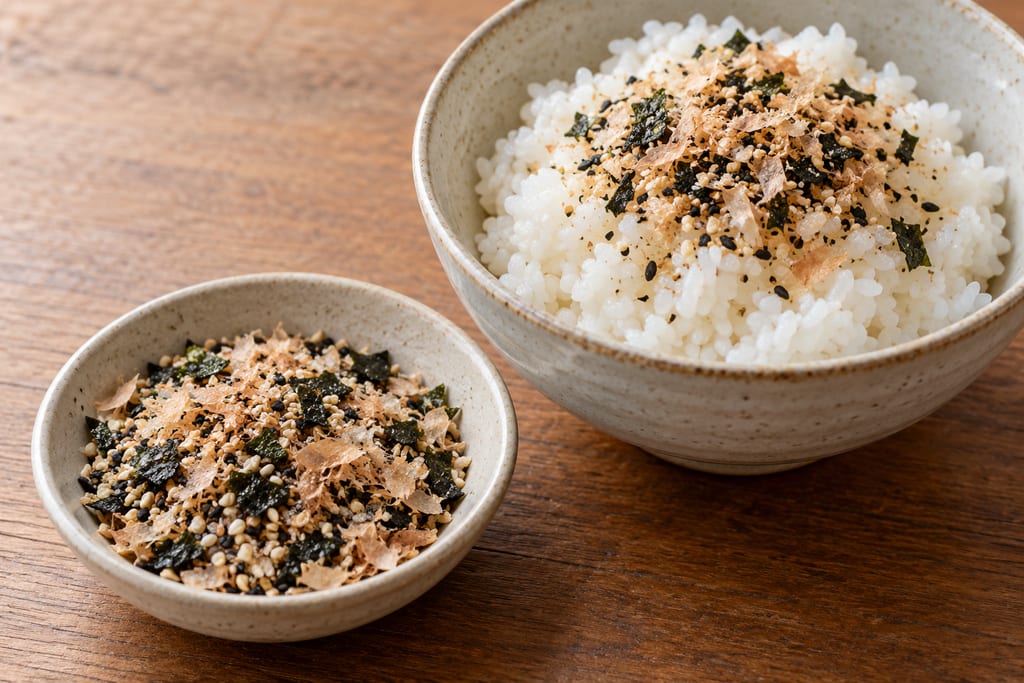
A dry Japanese rice seasoning of sesame, bonito, nori, sugar and salt. This documented home blend is one specific formula within a varied category with several early product histories.
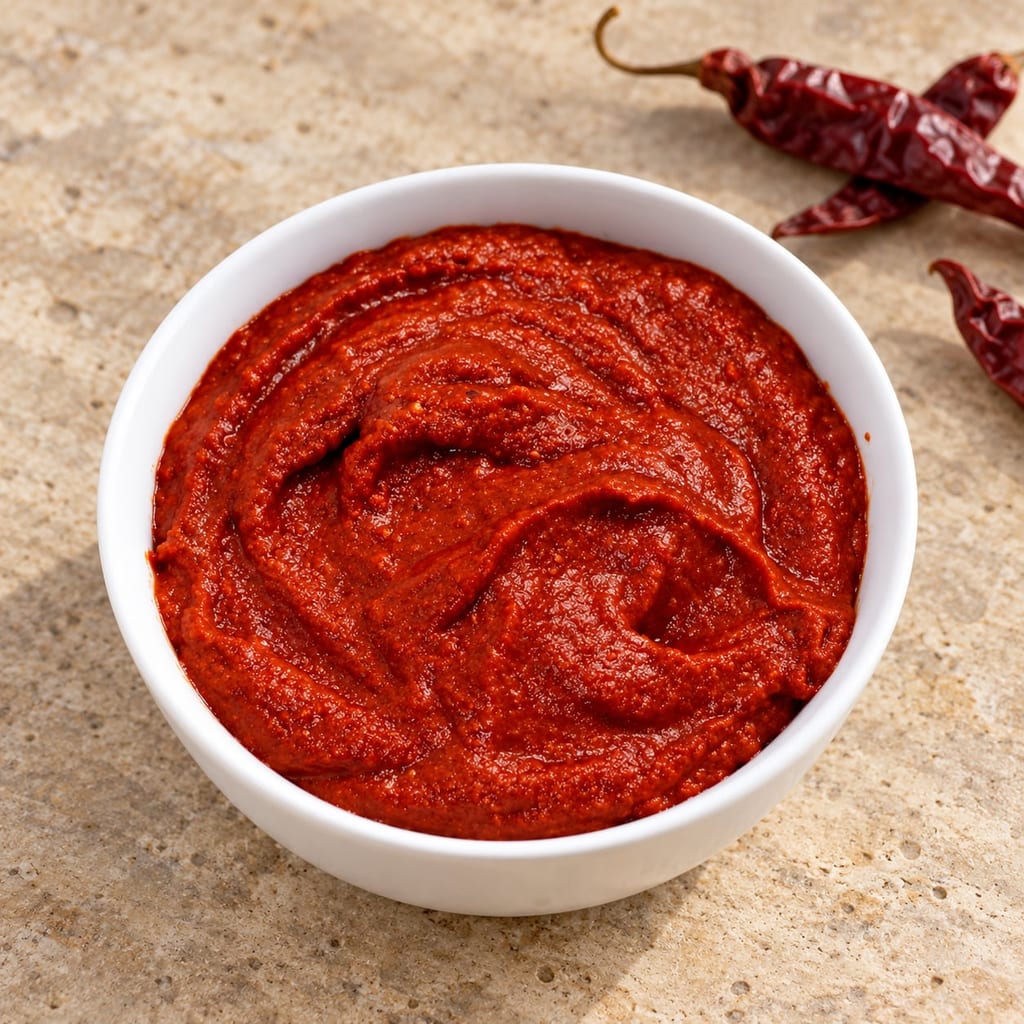
Recheado is a red Goan spice paste of Kashmiri chillies, garlic and spices ground in vinegar, best known as the stuffing for fried fish such as mackerel.
No community contributions have been published for this entry yet.
Sign in to contribute. Published comments and photos are free to read.
WikipediaHistory · Method · Uses
PilpelchumaDried sweet and hot peppers, steamed, with garlic
Olive oil, cumin, caraway, lemon juice and kosher salt
Libyan Jewish origin and entry into Israel in the mid-20th century
Uses in Israeli cuisine
Cited in: What the paste is; Open questions
LinsFoodMethod
Pilpelchuma, a Libyan Jewish Red Chilli Paste Recipe and VideoThe source describes rehydrating dried chiles and blending them with garlic, cumin, caraway, lemon and oil; it documents no fermentation step.
Cited in: Migration and the Israeli table
H-E-BMethod · Uses
Pilpelchuma RecipeThe recipe softens dried chiles, blends them with garlic and spices, and refrigerates the finished paste; no fermentation step is described.
LinsFoodMethod · History
Pilpelchuma, a Libyan Jewish Red Chilli Paste Recipe and VideoRecipe writer identifies the paste as a Libyan Jewish red-chile paste from Tripoli and describes its ingredients and preparation.
Cited in: Migration and the Israeli table
NDISHMethod · History · Uses
ピルペルチュマ (Pilpelchuma)Recipe and text associate pilpelchuma with Libyan Jews and note its later use in Israel; the source does not date when the condiment entered Israeli cooking.
Cited in: Migration and the Israeli table
CDEC Foundation / TRAMEHistory
Jews of LibyaAbout 31,000 of 36,000 Libyan Jews emigrated to Israel between 1949 and 1952 amid violence, insecurity and uncertainty; after renewed violence in 1967 most remaining Jews relocated to Italy, while some went elsewhere.
Cited in: Migration and the Israeli table
World Jewish CongressHistory
The Jewish Legacy of LibyaDistinguishes the postwar migration to Israel from the 1967 evacuation, when most remaining Jews were transported to Italy and some later settled in Israel or elsewhere.
Cited in: Migration and the Israeli table