
African fermented foods, drinks and preservation
From sour breads and milk to savoury seeds, cassava staples and living beers, African fermentation follows the crop, the community and the work of transformation.
 FermenteaWhere food goes to change
Preserved lemons
Lemon wedges are salt-cured under their own juice until the rind softens. Fermentation may begin, but the precise microbial process and safe storage limits for this formula are not established.
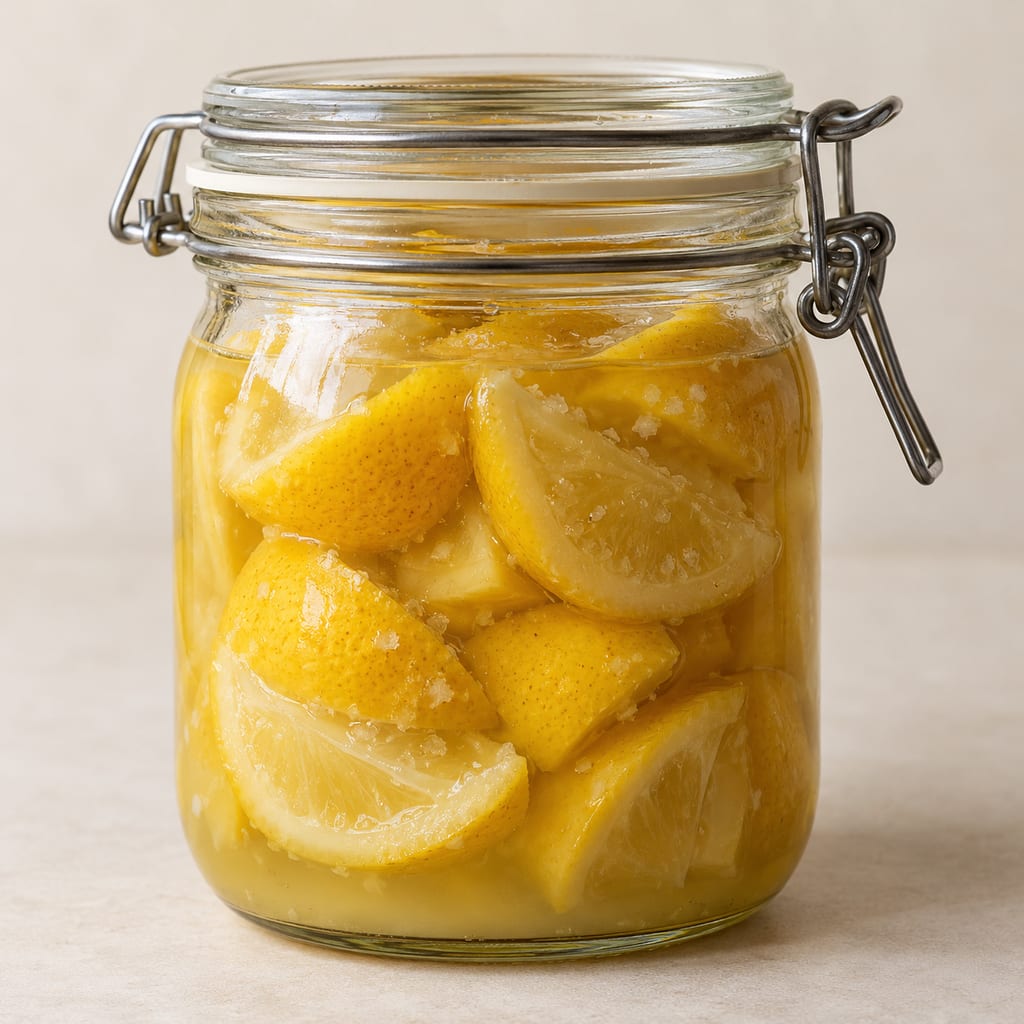
Preserved lemons are whole or cut lemons packed with salt and left under their own juice until the rind softens. The peel becomes mellow and fragrant; the pulp remains salty and sharply sour. In North African cooking, the rind is commonly minced into stews, tagines and dressings.
The James Beard Foundation describes preserved lemons as a North African seasoning used especially in Moroccan and Tunisian food. Its published formula is a modern recipe version; the regional association is not a claim that this exact formula began in one place.
The Foundation's published version measures 8 to 10 lemons, 1/3 cup kosher salt and about 1/2 cup juice from four lemons. It cuts the remaining fruit into six wedges, coats them with the salt, packs them with their released juice into a sterilized pint jar and adds reserved juice to cover.
The recipe directs a tight cover and about three weeks at room temperature, turning the jar upside down each day, until the lemons soften and begin to ferment. This section records the published directions; it does not establish a controlled fermentation process or validated preservation endpoint.
Salt draws moisture from the cut fruit, while the added lemon juice covers the wedges. The rind softens as salt and acid act on it over time. The James Beard Foundation's text says fermentation may begin, but neither it nor the ingredient list identifies a controlled microbial culture, measured acidity, or other endpoint.
A soft rind or visible change in the jar is not a safety test. This description keeps the source's fermentation wording distinct from a validated fermentation or preservation process.
UC Agriculture and Natural Resources' January 2025 Master Food Preserver handout gives a different traditional salt-preserved-lemon formula, adapted from the 2020 Ball Complete Book of Home Food Preservation. It uses ten lemons, 1/2 cup pickling salt, and optional bay leaves, cinnamon sticks and peppercorns. Its method calls for two weeks in a dark, cool cupboard with daily shaking, followed by refrigeration.
These are the UC ANR/Ball recipe's own amounts and directions. They do not validate the James Beard Foundation recipe's salt ratio, room-temperature duration, or storage, and the two methods should not be mixed.
The James Beard Foundation recipe gives no safe storage time after its three-week room-temperature cure. Do not treat a tight lid, juice cover, softening, or the start of fermentation as proof that this exact batch is safe to keep at room temperature. This page does not recommend room-temperature storage after curing and does not assign the formula a shelf life.
The UC ANR/Ball-derived method directs refrigeration after its own two-week cure. That recommendation belongs to that separate recipe. For home preservation, use a current recognized tested recipe as written rather than transferring amounts or storage directions between versions.
Mould or leakage is a reason not to use the jar, but the absence of visible spoilage cannot establish safety.
The James Beard Foundation describes preserved lemons as a North African condiment associated with Morocco and Tunisia; this particular formula is a modern published version.
Scaling: source batch only
The James Beard Foundation recipe gives a room-temperature cure and a softening/fermentation endpoint but no measured temperature, validated process, or safe shelf life for this exact formula.
Hazard sourceThis James Beard Foundation formula has no documented validated process or safe shelf life.
Do not infer safety from softening, the start of fermentation, a tight cover, or keeping the lemons under juice.
After curing, do not store this exact formula at room temperature; safe storage time is not established.
The UC ANR/Ball-derived recipe described below is a separate formula. Its directions do not validate the James Beard Foundation recipe.
Source associates the condiment with North African, Moroccan and Tunisian food, not one birthplace.
From sour breads and milk to savoury seeds, cassava staples and living beers, African fermentation follows the crop, the community and the work of transformation.
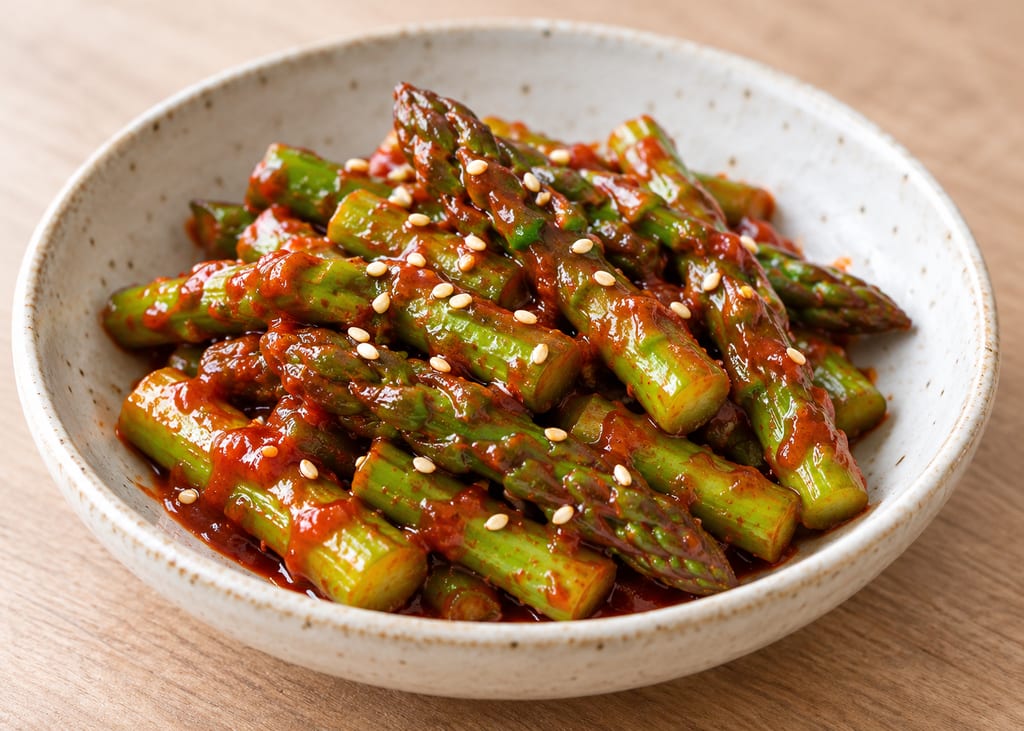
A Korean banchan of blanched asparagus dressed with a sweet-sour cho-gochujang sauce; Hyosun's version cools the spears in ice water before tossing.
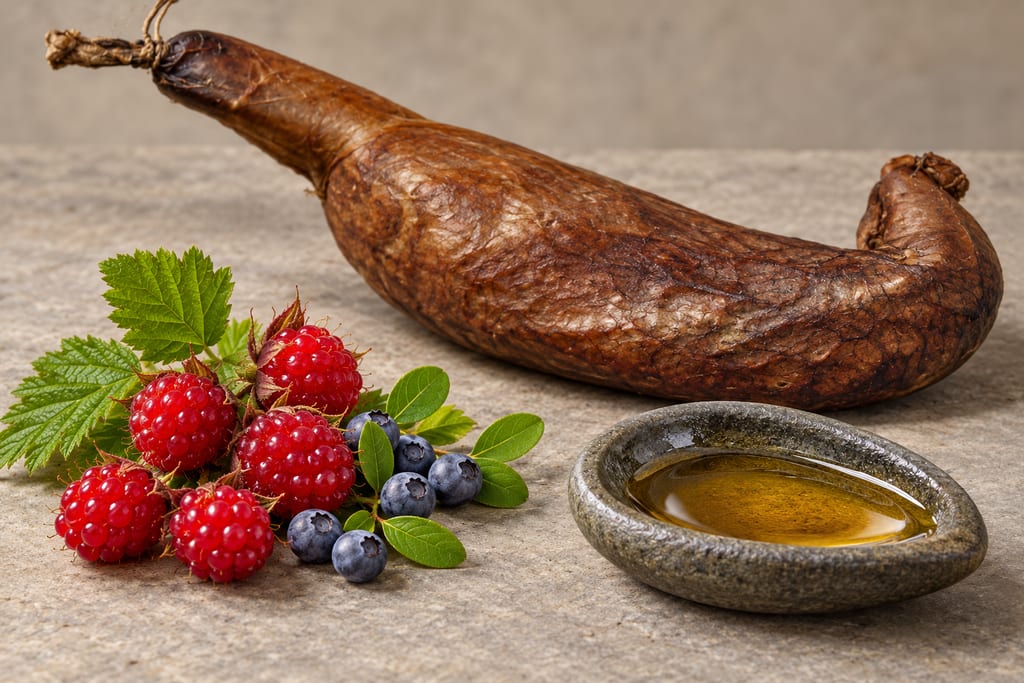
Berries, greens and fish eggs were kept in seal oil by Indigenous Alaskan communities. The oil seals the food from air, and the result depends on preparation and the surrounding conditions.
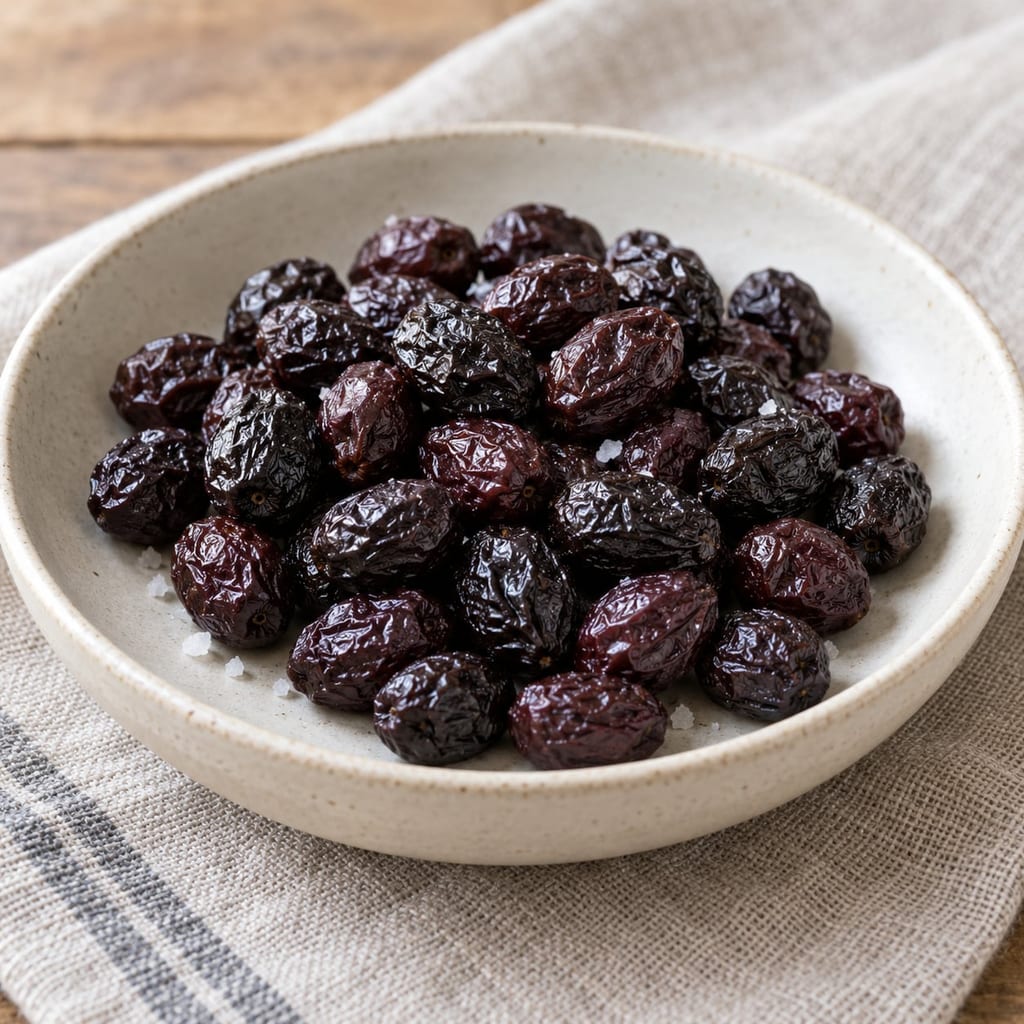
Fully ripe dark olives are mixed with salt and turned weekly as salt draws out moisture. Distinct from existing brine-fermented and lye-treated olives.
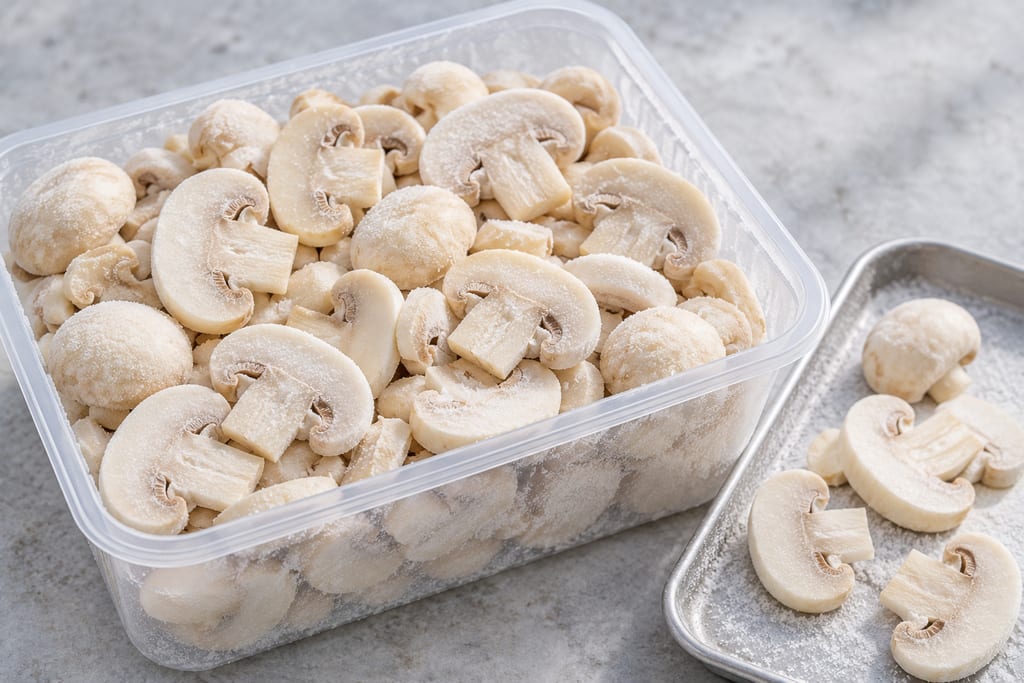
Steam-blanched frozen mushrooms are whole, button, quartered or sliced mushrooms given a short steam treatment, cooled promptly, packed with headspace and kept frozen.
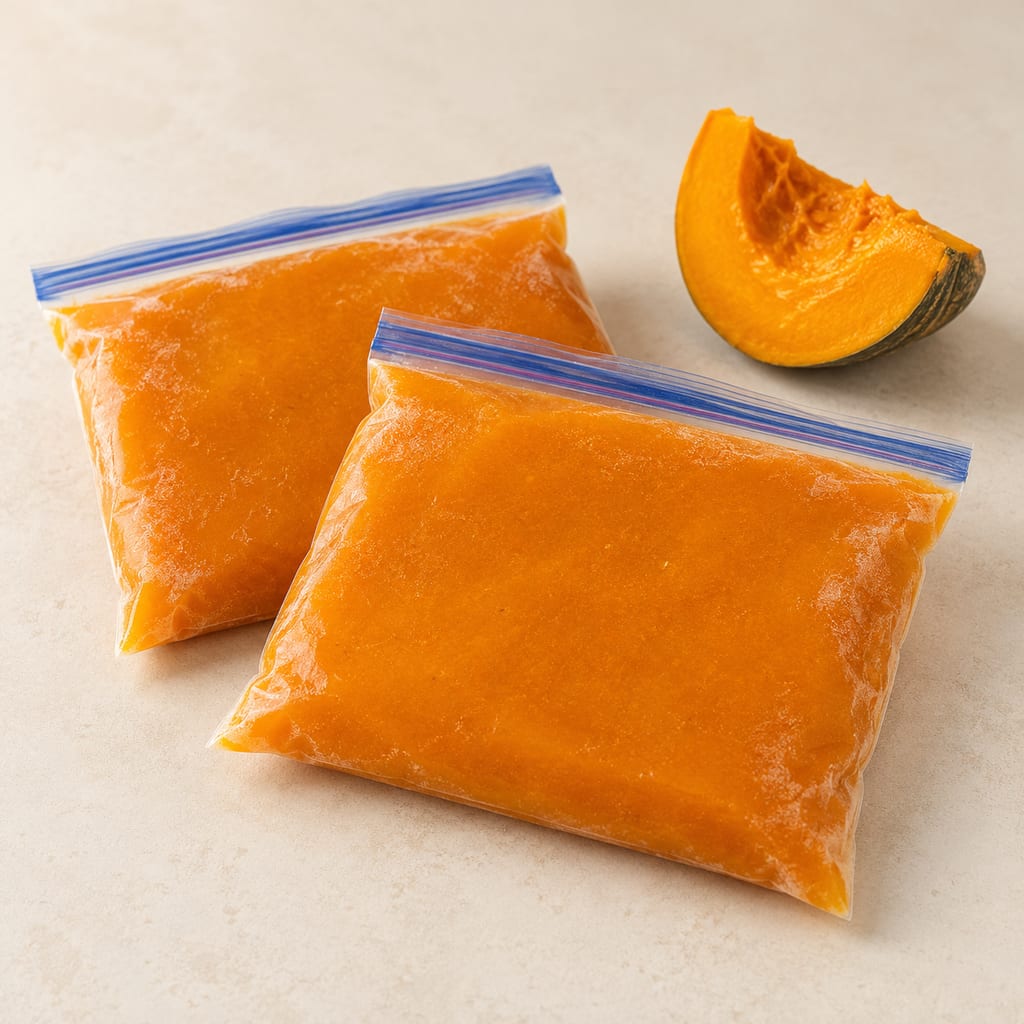
Cooked pumpkin mashed, cooled and frozen in portions: a plain base for pies, soups and baking without canning a dense purée.
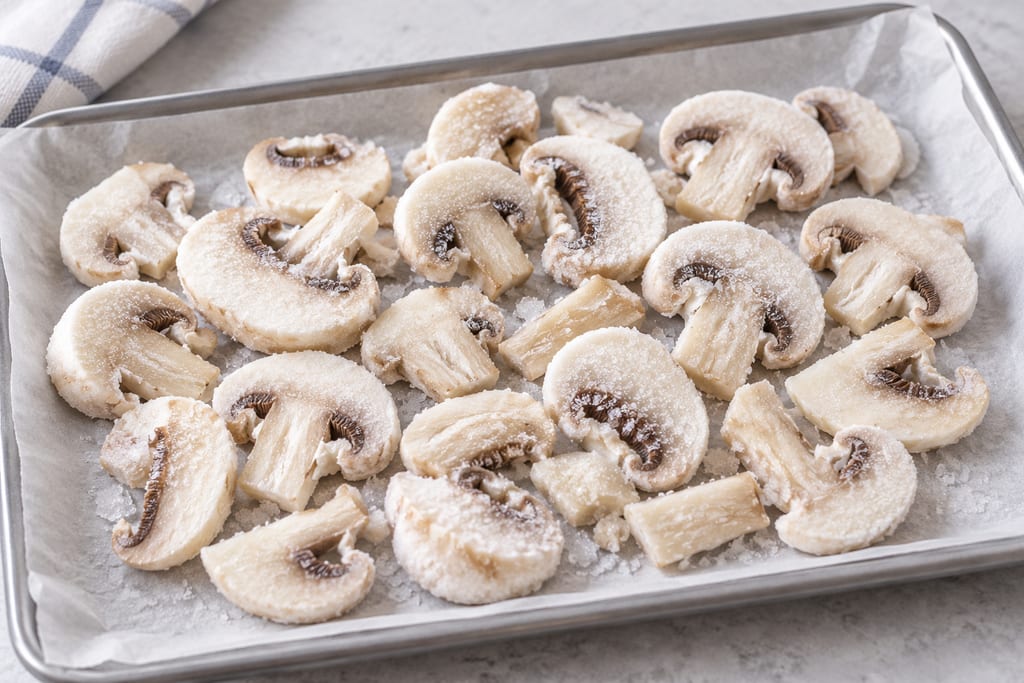
Frozen raw mushrooms are cleaned mushrooms frozen without a preheating step, the variant a Japanese forest-volunteer manual describes beside its cooked version.
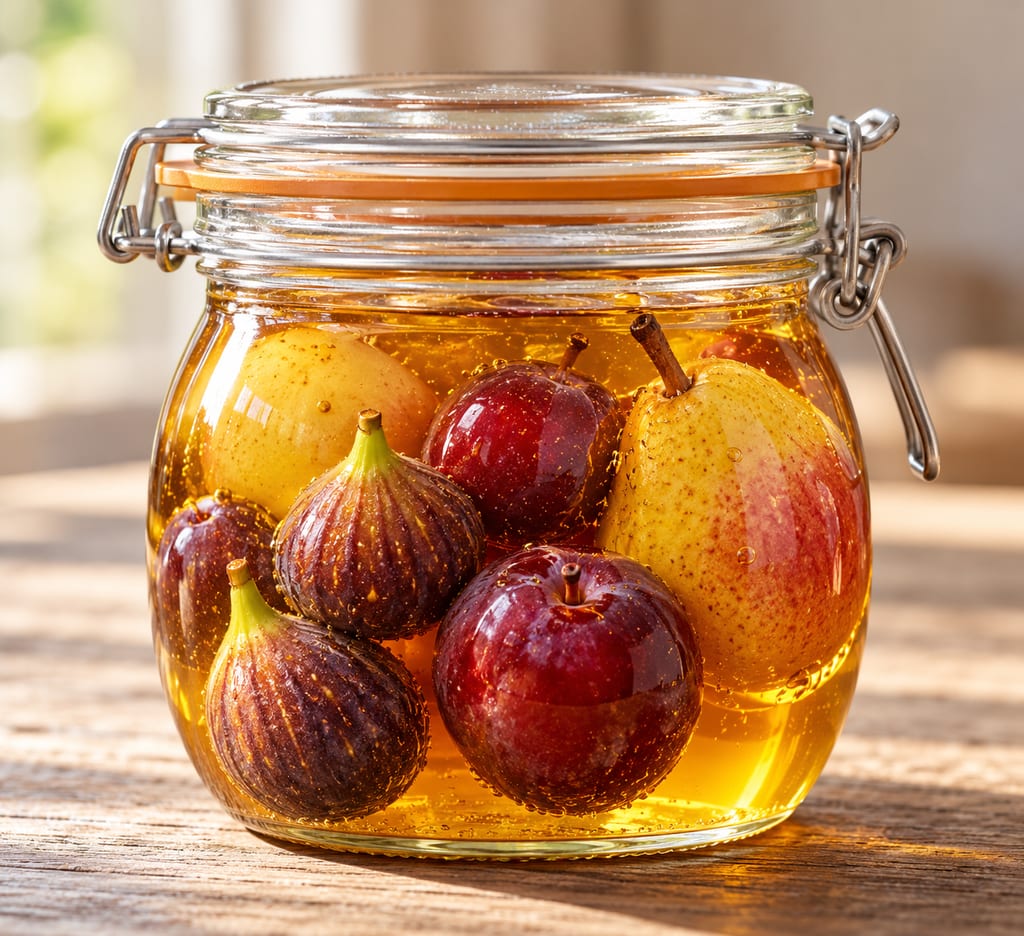
Fruit and some other foods were placed in honey in ancient Mediterranean kitchens. The honey's concentrated sugar does the preserving, and wet ingredients weaken it.
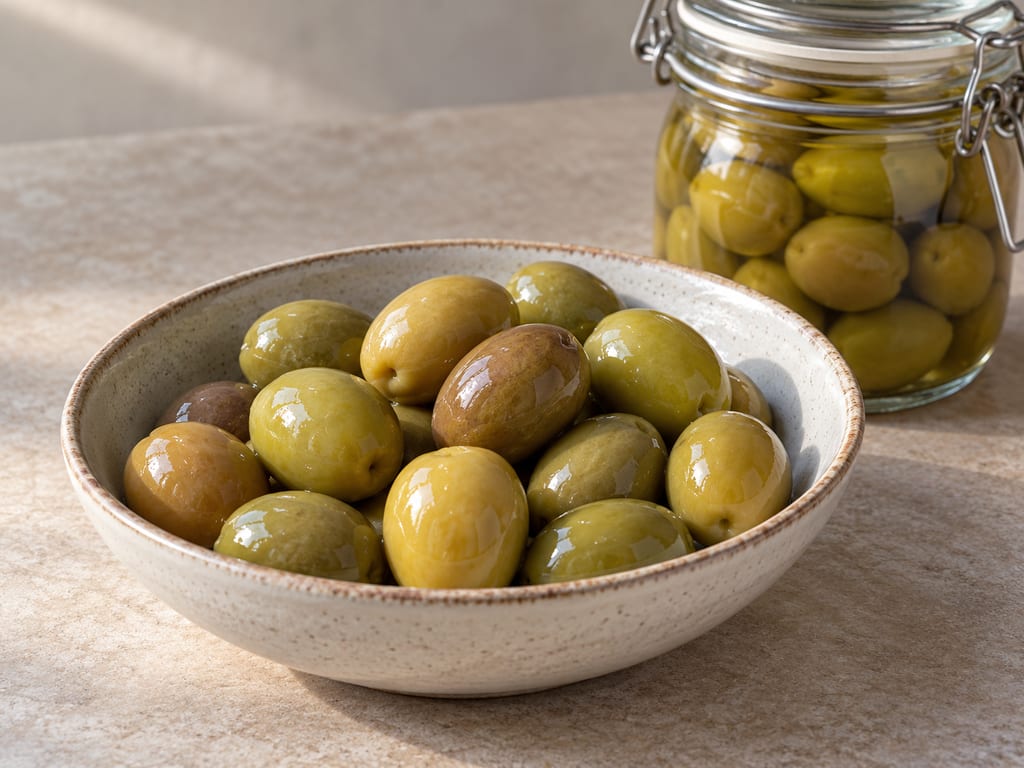
Green olives debittered in a sodium hydroxide solution, then rinsed repeatedly and held in brine, by the University of California's published home-pickling method.
No community contributions have been published for this entry yet.
Sign in to contribute. Published comments and photos are free to read.
James Beard FoundationHistory · Method
Preserved LemonsThe Foundation describes these salted and cured lemons as a North African seasoning associated with Morocco and Tunisia.
The formula lists 8 to 10 lemons, 1/3 cup kosher salt and about 1/2 cup juice; it directs a room-temperature hold of about three weeks with daily inversion until softened and beginning to ferment.
Cited in: What preserved lemons are; The James Beard Foundation formula; Salt, juice and change; Storage and limits
UC Agriculture and Natural Resources, UCCE Master Food Preserver ProgramSafety · Method
Preserving Citrus without CanningIts separate traditional salt-preserved-lemon recipe is adapted from the Ball Complete Book of Home Food Preservation (2020 edition).
That recipe uses 10 lemons, 1/2 cup pickling salt and optional spices; it directs a two-week dark, cool-cupboard hold, daily shaking, then refrigeration.
These directions belong to the separate UC ANR/Ball formula and do not validate the James Beard Foundation formula.
Cited in: A separate UC ANR and Ball recipe; Storage and limits