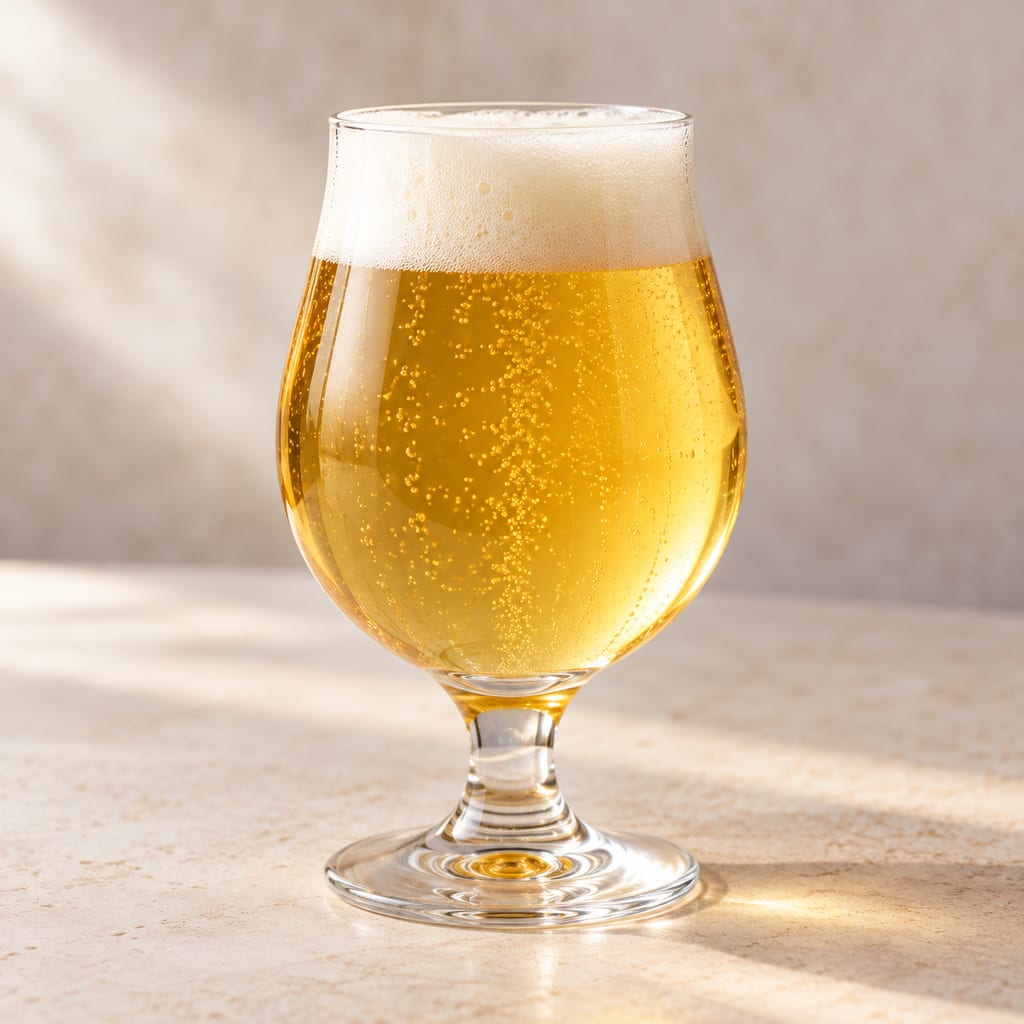
Monk’s Ration Trappist-style single
A pale Belgian-style ale with Pilsner and aromatic malts, cane sugar and Saaz hops, fermented under loose foil before an airlock is fitted.
 FermenteaWhere food goes to change
Processing aids
Gelatin is animal collagen partly broken down to dissolve in hot water and set as a gel on cooling, used for jellies and sweets and to fine beer and wine.
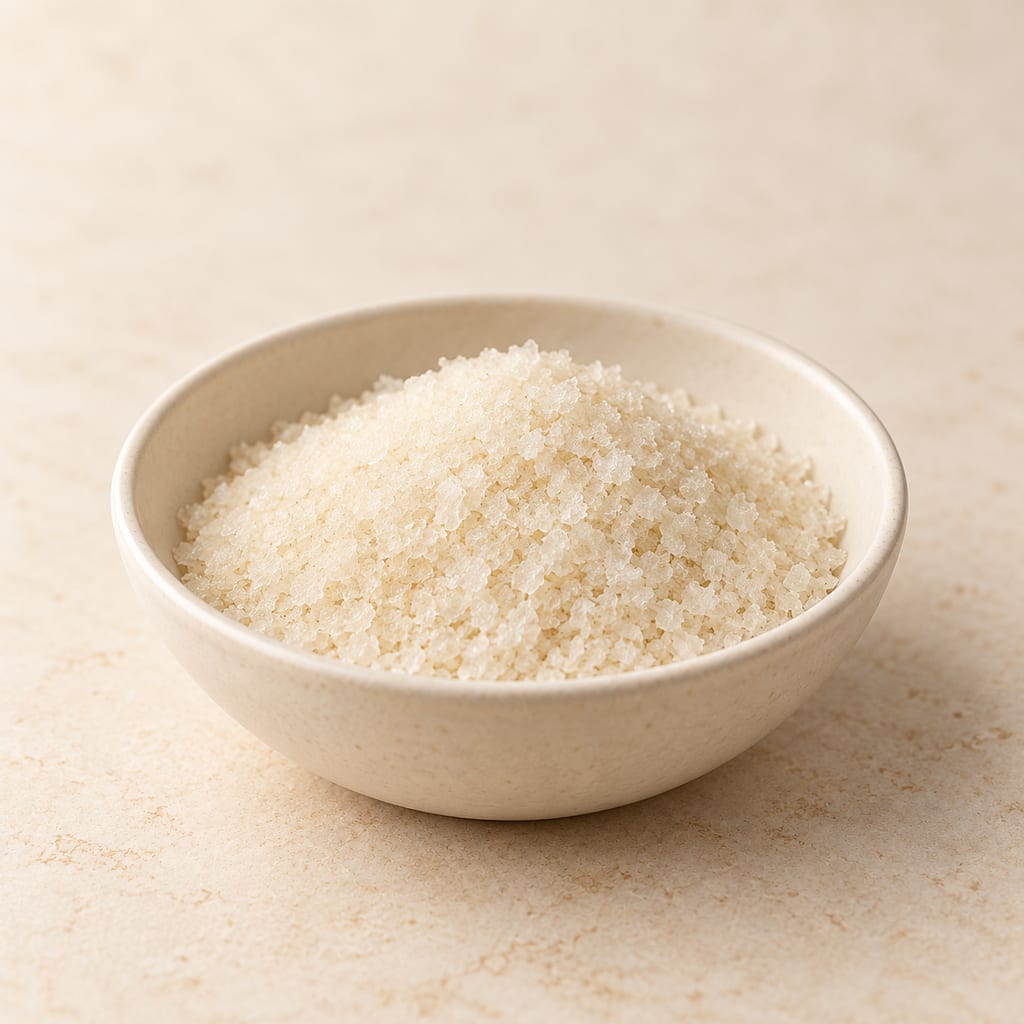
Gelatin is the protein of animal connective tissue, collagen, partly broken down so that it dissolves in hot water and sets to a gel when it cools. The Food Chemicals Codex defines it as the product of acid, alkaline or enzymatic hydrolysis of the collagen of skin, bones and connective tissue, including that of fish and poultry. Collagen is a triple helix of three protein chains, rich in the amino acids proline and hydroxyproline. Heat and chemical treatment unwind it, and what is left is a mixture of polypeptide chains of many sizes, which is gelatin. There is no plant source. The vegetable gelatins of the shop are seaweed extracts and bear no chemical relationship to it.
It is sold as granules, as sheets called leaves, and as instant powders made to dissolve more readily, and it is colourless and almost without taste. Collagen peptides, the powders sold as supplements, are a different preparation. A gelatin may come from pork skin, from cattle bones and hides, from poultry or from fish, and the name alone does not say which.
Gelatin began as glue. People boiled hides and bones into a sticky broth from the days of the cave dwellers through the Egyptians, and the first English patent for a gelatine adhesive was granted in 1754. The broth that set when it cooled was eaten as well: glittering calves'-foot jelly was served at the banquets of Henry VIII, and jelly became a dish of the banquets of the wealthy, made by boiling calves' feet and bones or by dissolving isinglass, the dried swim bladder of fish such as the sturgeon.
A pressure vessel changed the work. In 1682 the French mathematician Denis Papin invented the digester, a closed pot in which bones could be boiled at a higher temperature, and described a jelly-like mixture obtained from them. The earliest commercial production of gelatin appears to have been in Holland around 1685, in England about 1700, and in the United States, in Massachusetts, in 1808. The Napoleonic Wars from 1803 to 1815 brought gelatin its first boom as a cheap source of protein during the British naval blockade. In 1833 a pharmacy student, F. A. B. Mothes, devised a way to make gelatin capsules, and small factories made industrial production possible in 1875. From 1880 gelatin was the coating of ready-made photographic plates.
Gelatin reached the home kitchen as a convenience. In 1845 the New York manufacturer Peter Cooper patented a portable gelatine: refined isinglass or another pure gelatine, with sugar, lemon and flavouring, was clarified and concentrated, then packed in jars or molds. At the table, hot water dissolved the concentrate and cooling set it again as a jelly. The patent warns that violent, prolonged heat injures the strength of gelatine, which is why the preparation was concentrated gently, and it claims that the product would keep for any length of time. It was a step on the way from a jelly that took a day of work to a dessert made in minutes.
The raw materials are cattle bones, cattle hides and pork skins, with poultry and fish as alternatives. They are cleaned of fat and mineral and pretreated before the collagen is extracted into hot water. Two routes give the two types. Type A is made with acid. Pork skins, dehaired by scalding in a hot dilute caustic soda solution, are soaked in cold dilute mineral acid, usually hydrochloric or sulphuric, for several hours until they swell, then washed. Type B is made with alkali: bone is first treated with dilute hydrochloric acid to remove the mineral, leaving a sponge-like material called ossein, and ossein and cattle hide are then limed for 5 to 20 weeks, usually 8 to 12, in lime and water at ambient temperature before being washed and extracted.
The extracted liquid is filtered, concentrated, cooled to a gel, formed into strands, dried and ground to granules or cast in sheets. The two types differ in electric charge. A Type A gelatin has an isoelectric range of pH 7 to 9, and a Type B gelatin a narrower range, pH 4.7 to 5.4. The letters name the pretreatment and are not a measure of quality. Hot-water extraction is repeated, and the first, second and later extractions give gelatins of different colour and strength.
Dry gelatin granules first swell in cold water, which is called blooming, and then dissolve when warmed. When the solution cools, parts of the chains wind back into collagen-like triple helices below the temperature at which the coil turns to helix. These helices act as junction zones and tie the chains into a network that holds the water. The change from liquid to solid comes from organising a small amount of protein through a large amount of water, and warming breaks the junctions and melts the gel again. This thermoreversible gel, which melts in the mouth, is what gelatin is valued for. Gelatin is relatively unaffected by ionic strength and stays stable over a broad pH range.
A solution stronger than about 0.5 per cent, cooled to about 35 to 40 °C, first thickens and then forms a gel. The strength depends on the concentration, the intrinsic strength of the gelatin, the pH, the temperature and any additives, and because the cross-bonds form slowly, the gel goes on firming with time, which is why a jelly is firmer after a night in the cold. The chains in a gelatin range in molecular mass from about 15,000 to 400,000.
Prolonged heating of a gelatin solution weakens it, as Cooper's patent had warned. Higher molecular weight gives a stronger gel, and the strength of a gelatin depends on its source and its processing.
Gel strength is graded in Bloom. A 6.67 per cent solution is chilled at 10 °C for 17 hours, and the Bloom number is the force in grams needed to press a standard plunger 4 mm into the surface. Commercial gelatins run from 50 to 300 Bloom. The grade fixes how much is needed: a dessert gelatin of 275 Bloom needs about 1.3 per cent in the finished jelly, while a 175 Bloom gelatin needs 2.0 per cent for the same set. Dairy products use 0.2 to 1.0 per cent, aspics and jellied meat products 1 to 5 per cent, gummy sweets 7 to 9 per cent and marshmallow about 2.5 per cent of a 250 Bloom gelatin. Because Bloom is measured in a set procedure, it does not convert directly between a dessert and a beverage, where the aim is clarification and not a jelly.
Gelatin has long been used to clarify wine, beer and fruit juices. The beer problem is haze. Non-biological haze begins when proline-rich proteins from barley meet haze-active polyphenols from barley and hops, notably proanthocyanidins, which have two or more binding sites and can bridge between protein molecules. The first complexes are soluble and form when the beer is chilled, a chill haze that redissolves when the beer warms. Later covalent bonds make the haze permanent, and particles grow to the size of 1 to 10 μm, where they scatter light and settle as a sediment. The usual cure is to add a colloidal stabilisation agent, polyvinylpolypyrrolidone or gelatin, before filtration, to remove the haze-active polyphenols.
In wine the same family of proteinaceous fining agents removes colloids and reduces colour and tannins by adsorbing and precipitating polymeric phenols; gelatin is one of the traditional agents with casein, isinglass and albumin. Gelatin is amphoteric: in acid solution it carries a positive charge and in alkaline solution a negative one, and how much tannin it binds depends on the pH relative to its isoelectric point. The dose is small: 40 to 80 parts per million of a gelatin of 100 to 200 Bloom, added as a dilute solution of 1 to 3 per cent at the top of the tank and left to settle before the drink is filtered. Fining is selective only in part, and agents can also take out polyphenols that contribute to flavour. A fining agent is a processing aid; it is not an ingredient the drinker expects to find, but animal gelatine and fish gelatine are on the list of allergenic fining agents, and in the European Union a wine treated with one must carry the label if it can be detected in the finished wine.
Home brewers use gelatin as one of several clarifiers, each with its own moment in the process. In a Trappist-style single published for the American Homebrewers Association's 2026 Big Brew, Whirlfloc goes into the kettle near the end of the boil, bentonite goes into primary fermentation, and a quarter teaspoon of gelatin is added two days before bottling a 2.5-US-gallon batch. The yeast does the fermenting; gelatin is a late fining addition.
The kitchen and the food industry use gelatin for jellies, aspics, creams, cake fillings, glazes and sweets. In meat it gels aspics, head cheese, souse, chicken rolls, glazed and canned hams, absorbing meat juices and giving form to products that would otherwise fall apart. Because it melts at mouth temperature, it gives gummy sweets and marshmallows their chew and melt. Leaves, granules and instant powders deliver the same protein in different forms, and the product instructions govern how each is dissolved.
Gelatin does more in food than gel. It is a whipping agent in marshmallows, nougats, mousses and whipped cream, a protective colloid in ice cream and icings, a binder in meat rolls and cheeses, a film former for glazes on meats and fruits, a thickener in soups, gravies and syrups, a stabiliser in cream cheese and yogurt, an emulsifier in cream soups and sauces, and a carrier that microencapsulates flavours, colours, oils and vitamins. It is the adhesive that bonds nonpareils and coconut to sweets and seasonings to meat. Pharmacy has used it for dosage forms since the early nineteenth century, and photography relied on it for the emulsion of its plates.
Nutritionally, gelatin is an incomplete protein: it lacks tryptophan and is low in the sulphur-containing amino acids, but collagen is readily digestible, and dried hydrolysed gelatin contains more than 92 per cent protein. It is made from animal tissue and is not a vegetarian ingredient. Fish gelatin has attracted interest because of religious restrictions on mammalian products and as a use for fish-processing waste.
Look for the animal source and the Bloom grade on the packet, where they are given, since neither is told by the word gelatin. Fish and mammalian gelatins behave differently, and no single ranking of strength holds across all fish preparations. Dry gelatin is stable in airtight storage. A prepared solution is a different matter: dissolved gelatin supports the growth of microorganisms and loses its power if overheated or contaminated, so it should be used promptly or kept cold under the producer's instructions.
Animal origin (pork, beef, fish or poultry); fish gelatin is an allergenic fining agent in wine
Earliest commercial gelatin production appears to have been in Holland around 1685, followed by England about 1700.
Peter Cooper's patent for portable gelatine; not the origin of gelatin.
A published homebrew formula uses gelatin as a late fining addition; the gelatin source is unspecified.
A pale Belgian-style ale with Pilsner and aromatic malts, cane sugar and Saaz hops, fermented under loose foil before an airlock is fitted.

A gelling polysaccharide extracted from red seaweeds, sold as kanten strips or powder; it sets firm at a low concentration and stays solid until about 85 °C.
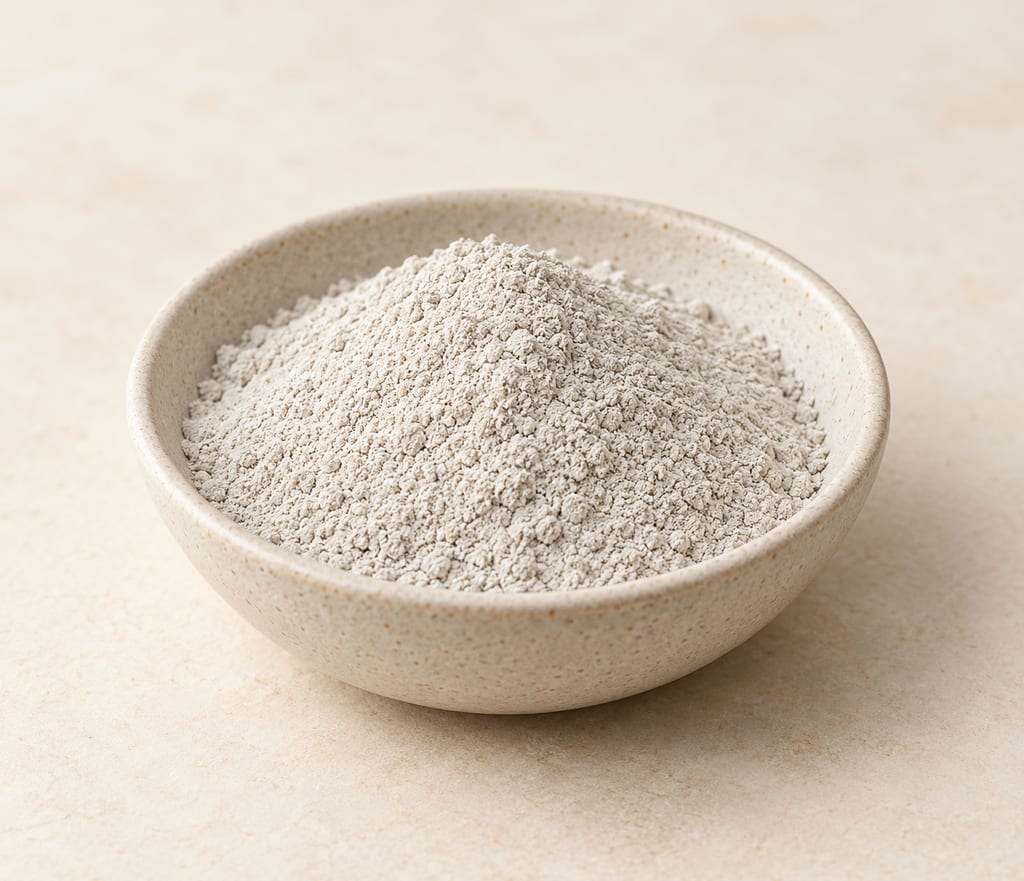
A swelling mineral clay used as a processing aid in a named beer recipe's primary fermentation; it helps remove suspended haze-active material as sediment.
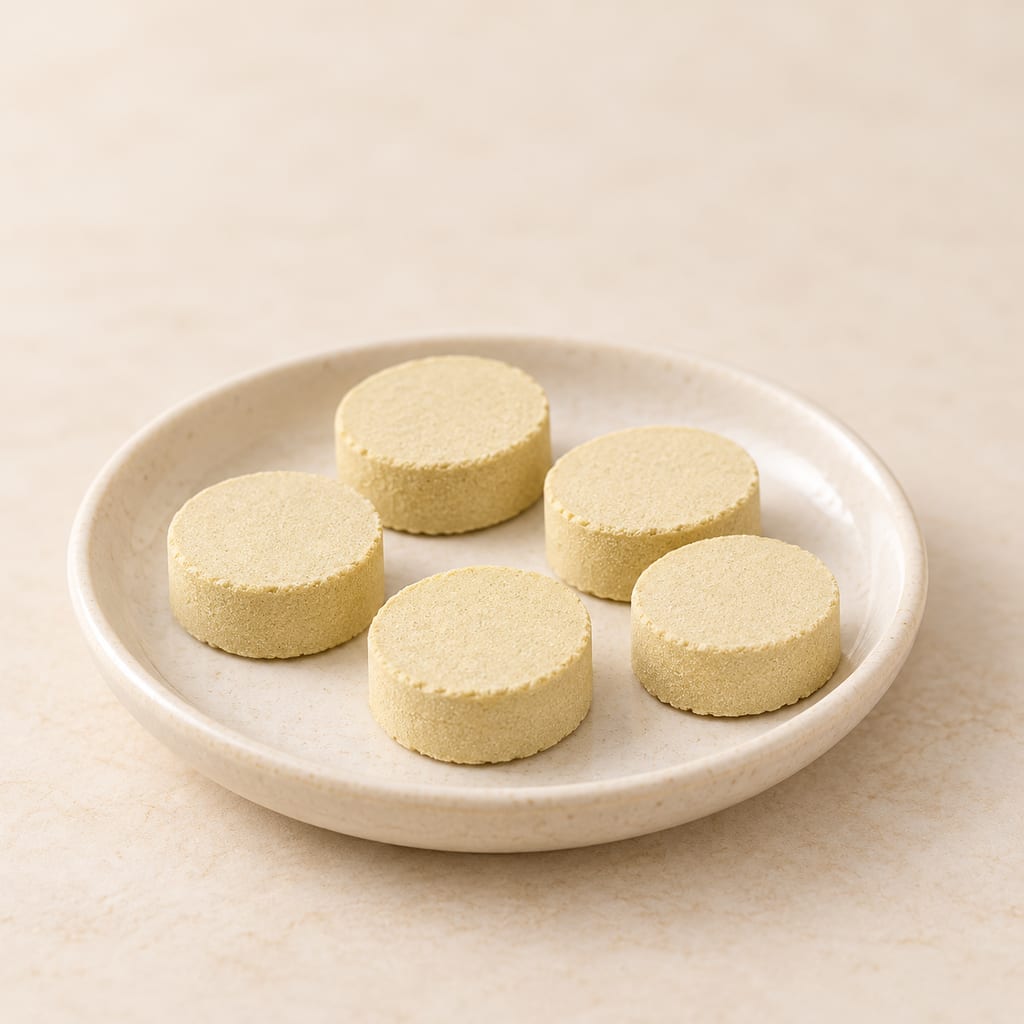
Whirlfloc is a tablet of processed Eucheuma red seaweed, rich in carrageenan, that brewers add to the boiling kettle so that wort proteins clump and settle out as cold break.
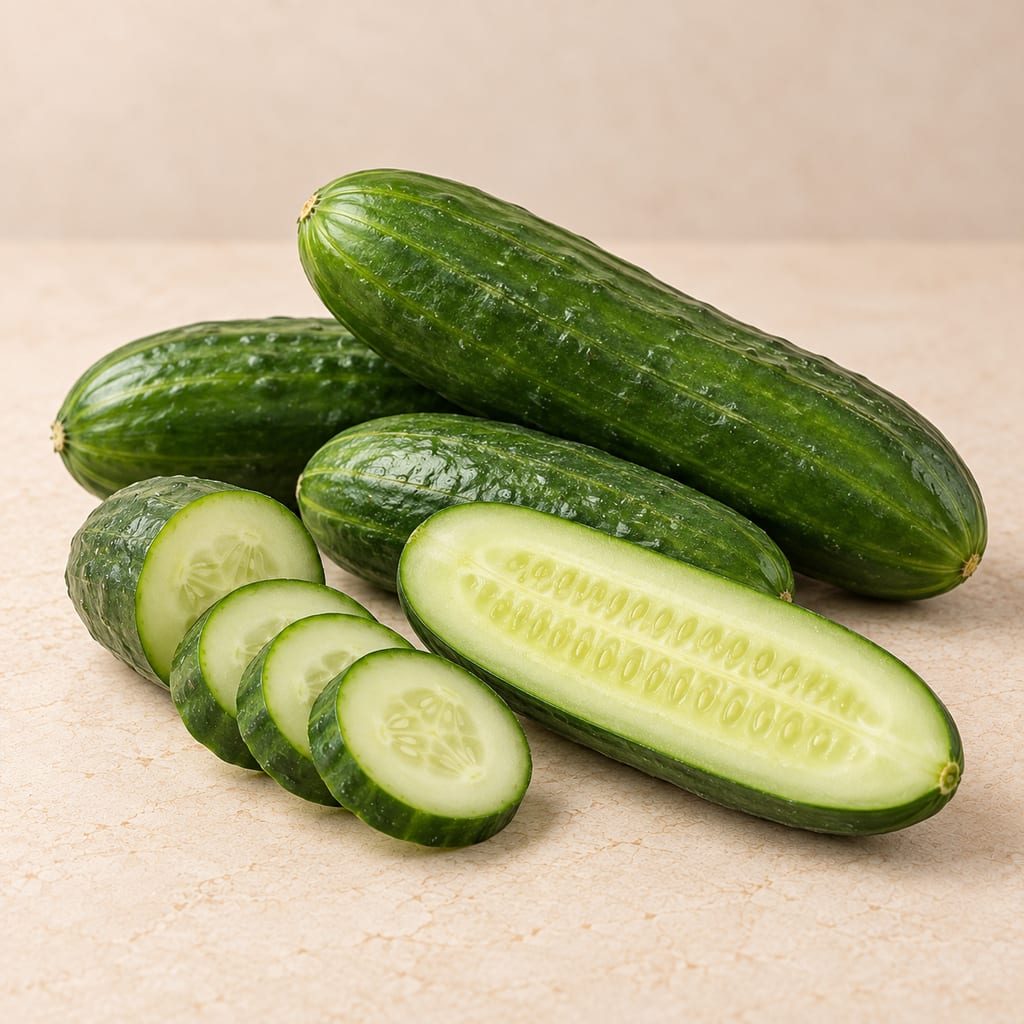
Cucumber is the watery fruit of Cucumis sativus, domesticated in India, and the classic raw material of brine pickles from New York dills to Nepali khalpi and Korean oi-sobagi.

A Dominican table and seasoning condiment of sour orange juice, mixed with lime and salt and bottled raw; garlic, oregano or a hot pepper may be added for meat or a spicier bottle.

Cicerbita alpina is an alpine perennial whose tender shoots and leaves have been eaten raw or cooked. Sámi milk preparations and modern Carnian dishes are distinct uses, with serious identification and preservation limits.

Japanese skipjack tuna cooked, then repeatedly smoked and dried over a wood fire by the hand-fired tebiyama method into a hard block for shaving into dashi: the first stage of katsuobushi.

A Swedish-style spirit vinegar made by fermenting neutral alcohol with live vinegar bacteria, with a separate guide to commercial ättika strengths.

A yeast-raised wheat ring shaped from a firm dough, briefly boiled and baked. This source-batch formula gives a gently malted crust and a chewy crumb.

A warm dip of garlic, anchovy and olive oil, often enriched with butter, that Piedmont serves over a flame with raw and cooked vegetables and bread.

Bechamel is a white sauce of milk thickened with a butter and flour roux, one of the French mother sauces, and the base from which Mornay and other cheese and cream sauces are made.
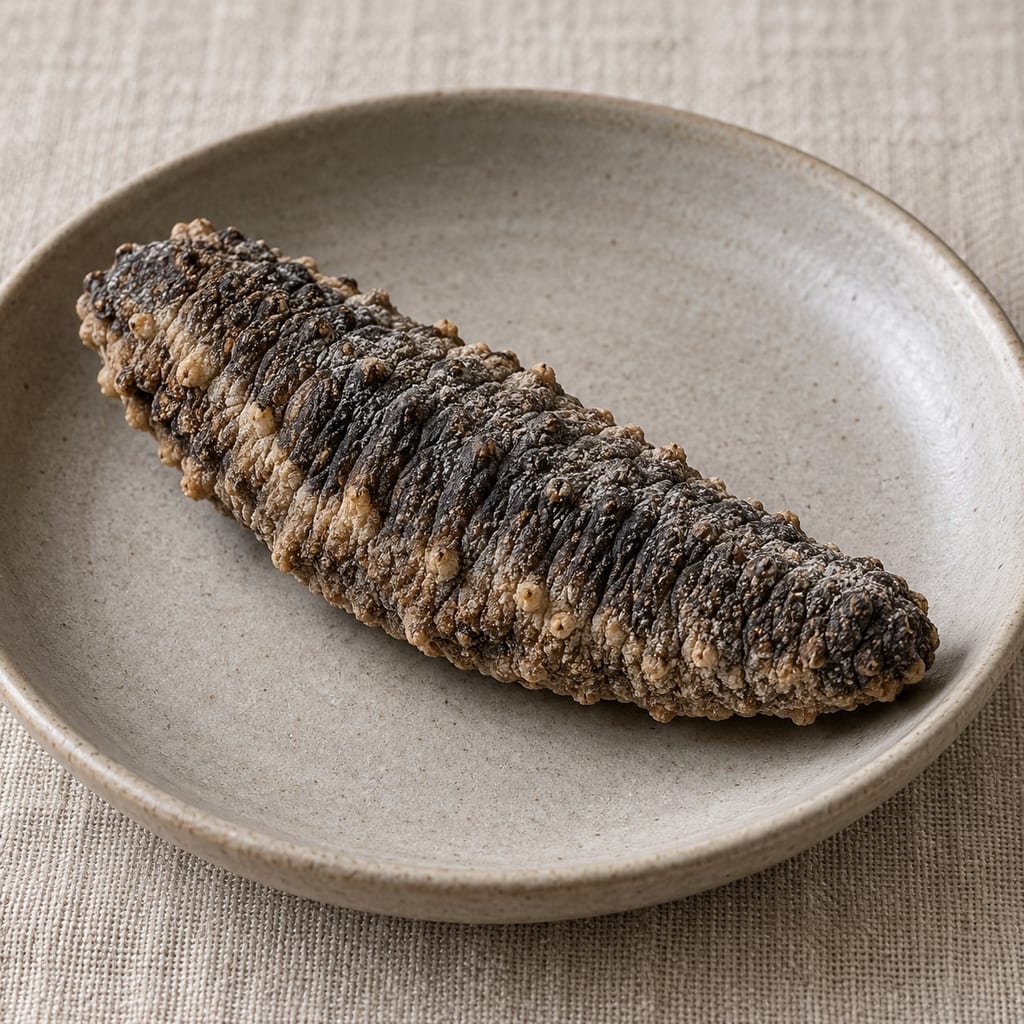
Sea cucumber cleaned, boiled and dried, sometimes with smoke, into a long-keeping trade product; Makassan processing in Arnhem Land is documented from at least the eighteenth century.
No community contributions have been published for this entry yet.
Sign in to contribute. Published comments and photos are free to read.
Gelatin Manufacturers Institute of AmericaIdentity · Method · Science · Use
Gelatin HandbookGelatin is partially hydrolysed collagen from the skin, white connective tissue and bones of animals; Type A from acid-treated and Type B from alkali-treated material; Type A isoelectric range pH 7 to 9, Type B 4.7 to 5.4; there are no plant sources and no chemical relationship with so-called vegetable gelatin from seaweed; earliest commercial production in Holland about 1685, England about 1700, United States (Massachusetts) 1808.
Raw materials are cattle bones, cattle hides and pork skins, with poultry and fish alternatives; bone is treated with dilute hydrochloric acid to make ossein; Type B liming takes 5 to 20 weeks, usually 8 to 12; pork skin for Type A is soaked in cold dilute mineral acid for several hours; then hot-water extraction.
Bloom: a 6.67 per cent solution set at 10 C for 17 hours, force in grams to press a 0.5 inch plunger 4 mm into the gel; commercial gelatins 50 to 300 Bloom; thermoreversible, melt-in-the-mouth, stable over a broad pH range; use levels in dairy 0.2 to 1.0 per cent, desserts at 275 Bloom about 1.3 per cent and at 175 Bloom 2.0 per cent, gummies 7 to 9 per cent, aspics and meat products 1 to 5 per cent.
Fining of wine, beer and juice needs 40 to 80 parts per million of a 100 to 200 Bloom gelatin, added as a dilute 1 to 3 per cent solution at the top of the tank and left to settle before filtration; hydrolysed gelatin contains over 92 per cent protein; gelatin lacks tryptophan and is deficient in sulphur amino acids; collagen is highly digestible.
Cited in: Collagen made soluble; From glue pot to jelly; How gelatin is made; Why a jelly sets; Bloom and how much to use; Clearing a drink; In the kitchen and the factory; Choosing and keeping gelatin
United States Patent OfficeHistory
Improvement in the preparation of portable gelatine (US Patent 4,084)An 1845 patent for a portable jelly: refined isinglass or other pure gelatine, with sugar, lemon and flavouring, clarified and concentrated, packed in jars or molds, restored with hot water; violent prolonged heat injures the strength of gelatine; the preparation is said to keep for any length of time.
Cited in: Cooper's portable jelly
Gelatine Manufacturers of EuropeMethod
Manufacturing of gelatineSelection of connective tissue, pretreatment, extraction, purification, concentration, drying and granulation.
Cited in: How gelatin is made
Gelatine Manufacturers of EuropeHistory
History of gelatineGelatine-like mixtures used as glue by cave dwellers through the ancient Egyptians; first English patent for a gelatine adhesive in 1754; glittering calves-foot jelly at banquets of Henry VIII; Papin invented the digester in 1682; boom as a protein source during the Napoleonic Wars (1803 to 1815); capsules in 1833; small factories made industrial-scale production possible in 1875; photographic plates coated with gelatine from 1880.
Cited in: From glue pot to jelly; In the kitchen and the factory
Gelatine Manufacturers of EuropeUse
Questions and answers about the gelatine industryLeaf, granular and instant forms; jellies, aspics, creams and confectionery; collagen peptides are a distinct preparation.
Cited in: Collagen made soluble; In the kitchen and the factory; Choosing and keeping gelatin
Gels (via PubMed Central)Science
Rheological Properties of Fish and Mammalian Gelatin Hydrogels as Bases for Potential Practical FormulationsGelatin is a mixture of polypeptides from heat-denatured collagen; gelation depends on partial renaturation into collagen-like triple helices below the coil-helix transition, which act as junction zones; higher molecular weight gives a stronger gel; mammals (pork and bovine skin and bone) are the prevalent sources, and fish gelatin attracts interest for religious restrictions and use of fish-processing waste.
Cited in: Collagen made soluble; Why a jelly sets; Choosing and keeping gelatin
Foods (via PubMed Central)Science
Phenolic-Degrading Enzymes: Effect on Haze Active Phenols and Chill Haze in India Pale Ale BeerNon-biological beer haze comes from interactions between haze-active proline-rich proteins from barley and haze-active polyphenols such as proanthocyanidins; chill haze forms from non-covalent complexes that redissolve on warming and can become permanent haze when covalent bonds form; the conventional treatment adds a colloidal stabilisation agent such as PVPP or gelatin before filtration to remove haze-active polyphenols; fining agents can remove non-haze polyphenols that help flavour.
Cited in: Clearing a drink
Molecules (via PubMed Central)Science · Allergen
Allergenic proteins in enology: a review on technological applications and safety aspectsProteinaceous fining agents remove insoluble and colloidal particles and reduce colour and tannins by adsorbing and precipitating polymeric phenolics; animal gelatine and fish gelatine or isinglass are among the allergenic fining agents; EU rules require labelling of wines treated with allergenic fining agents if they can be detected in the final product.
Cited in: Clearing a drink
Molecules (via PubMed Central)Science
Evaluation of Plant-Based Byproducts as Green Fining Agents for Precision WinemakingTraditional fining agents such as casein, isinglass, albumin and gelatin remove tannins and brown polymeric phenols; tannin binding to gelatin depends on the isoelectric point of the protein; plant proteins are alternatives for vegetarians and vegans.
Cited in: Clearing a drink
American Homebrewers AssociationUse
2026 Official Big Brew Recipes: Monk's Ration Trappist-Style SingleThe formula adds a quarter teaspoon of gelatin two days before bottling a 2.5 US gallon batch, after Whirlfloc near the end of the boil and bentonite in primary fermentation.
Cited in: In the brewhouse
Dutch Valley Foods / Bulk Foods Inc.Image
Unflavored Gelatin (Pork) 10 lbProduct page for unflavoured pork gelatin granules, the origin of the linked reference photograph.