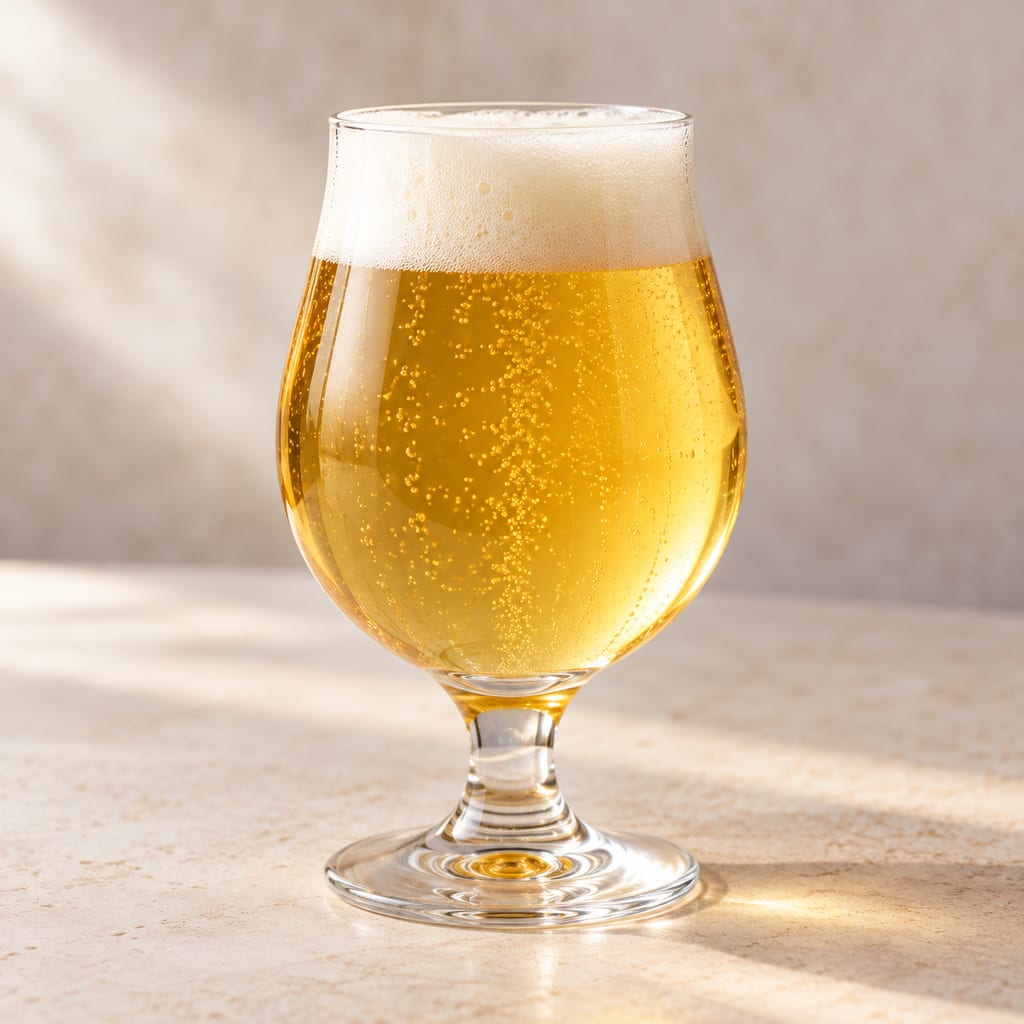
Monk’s Ration Trappist-style single
A pale Belgian-style ale with Pilsner and aromatic malts, cane sugar and Saaz hops, fermented under loose foil before an airlock is fitted.
 FermenteaWhere food goes to change
Processing aids
A swelling mineral clay used as a processing aid in a named beer recipe's primary fermentation; it helps remove suspended haze-active material as sediment.
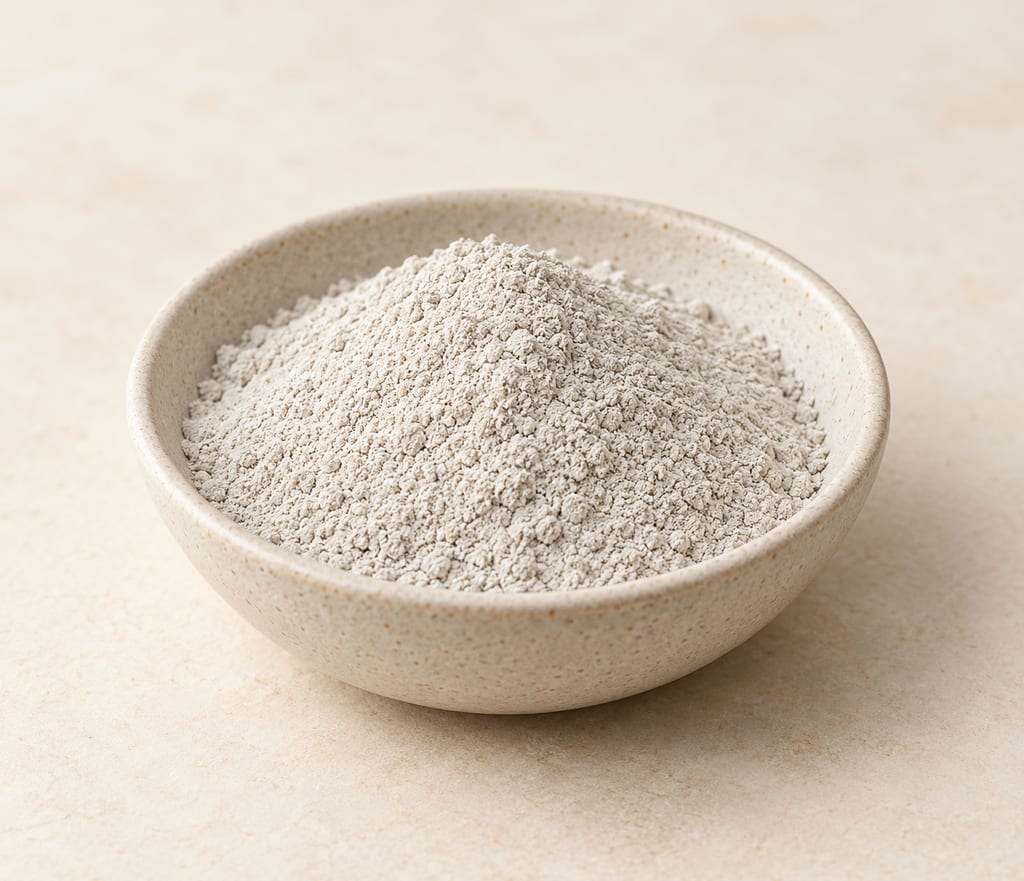
Bentonite looks like an unpromising brewing ingredient: a pale, fine mineral powder rather than a grain, hop, sugar or yeast. It enters a liquid so that some of it, and the material it gathers, can later settle out. The International Organisation of Vine and Wine calls it a processing aid for treatment of wine; its codex describes hydrous aluminium-silicate clays of the montmorillonite group. This page uses that physical identity while following a particular beer recipe, so the wine guidance explains the material rather than silently becoming instructions for beer. Bentonite's place on an ingredient list is functional. It is not there to make the beer taste of clay.
The American Homebrewers Association's 2026 Big Brew sheet puts a teaspoon of bentonite in the primary fermentation of Monk's Ration, a Trappist-style single by Phil LaFleur. The batch volume is 2.5 U.S. gallons, about 9.5 litres. The brewer mashes and boils malt and hops, cools the wort, oxygenates it, adds bentonite, then pitches Lallemand Abbaye yeast. That order distinguishes the powder from kettle finings, which meet boiling wort, and from gelatin, which the same recipe adds two days before bottling. Bentonite is working during the young beer's fermentation and subsequent settling period, not serving as a last-minute garnish.
It is easy to miss why a clay belongs in a beer recipe if the recipe is read as a list of edible flavours. A clear golden single relies on malt for fermentable extract and structure, hops for bitterness and aroma, yeast for fermentation character, and water for the liquid itself. Bentonite's contribution is to help control suspended or haze-active material so the beer can become visually steadier. It cannot supply fermentable sugar, replace yeast, or correct a faulty mash. Its use is an intervention in texture and appearance, which is why classing it as a processing aid is more truthful than filing it with grain, spices or flavorings.
The mineral is made of very small layered particles. In water, bentonite can swell and disperse, exposing a large surface that interacts with proteins and other suspended matter. OIV's bentonite monograph distinguishes natural sodium and calcium types by their exchangeable cations and includes separate tests for swelling and protein adsorption. That is why two packets bearing the same common name may not hydrate or settle in quite the same way. The material's performance depends on the clay and the beverage around it; a spoon measure in one recipe should not be generalized into a universal dose.
For wine, the Australian Wine Research Institute explains the visible result plainly: grape proteins can produce haze, and bentonite binds proteins and settles out. This is different from straining a drink through a sieve. Fine protein molecules are initially in solution; the clay offers a surface to which some can attach, and the resulting sediment can be left behind when the clearer liquid is moved. One can picture a vessel with a cloudy upper layer gradually clearing above a compact or fluffy deposit. The process requires time and separation. If the deposit is stirred back into the beer just before packaging, the intervention has not accomplished its intended physical removal.
The effect is selective rather than magical. In a controlled study of unstabilized apple juice, bentonite was effective at removing haze-active protein but had little effect on haze-active polyphenol at the conditions tested. The authors contrasted other adsorbents and noted that beverages with different protein-to-polyphenol ratios need not respond alike. The study is not a direct trial of Monk's Ration; it explains why a material called a fining agent should be judged against the actual haze problem. A beer can be hazy for reasons beyond the particular proteins a clay captures. Clearer is also not automatically tastier, especially when foam-active proteins or aroma can be lost along with unwanted haze.
Monk's Ration is a small, pale, Belgian-style beer rather than a wine or cider. Its Big Brew sheet gives original gravity 1.054, final gravity 1.012, about 40 IBU and 5.6 percent alcohol by volume for the 9.5-litre batch. Those figures describe the published recipe, not a measured outcome for every homebrew. The bentonite line is one teaspoon “in primary.” After chilling to 65°F (18°C), the instructions say to oxygenate for sixty seconds, add the bentonite and pitch yeast. The recipe then begins an open fermentation under loosely placed foil and later changes the cover. Keeping the additive in this sequence matters more than borrowing a wine-cellar schedule and applying it to a different ferment.
The same recipe names half a Whirlfloc tablet at five minutes remaining in the boil, then gelatin two days before bottling. Those are three distinct interventions at three points in the brewing path. Whirlfloc is placed in hot wort; bentonite enters the cooled primary; gelatin appears near packaging. Their coexistence does not prove each one makes an independently measurable change in this specific beer, because the sheet does not report a controlled comparison. It does show the brewer's intended progression: address material in the kettle, during fermentation and after the beer has aged. Reading only “clarifier” on the packet would lose that timing.
The recipe is credited to Phil LaFleur of Loveland, Colorado, and the AHA says his Trappist single won a gold medal in the 2023 National Homebrew Competition final round. That is a documented modern context for this teaspoon of bentonite, not an origin story for the clay or for Trappist brewing. The 2026 event date on the sheet likewise dates this publication. It is useful to know whose formula is being followed, because a brewer might otherwise replace the one-teaspoon figure with a wine-fining rate or assume all pale Belgian ales call for bentonite. This page keeps the precise recipe use attached to its maker and batch size.
Dry bentonite does not become an evenly dispersed suspension merely because it touches liquid. It can form lumps whose outsides wet while dry material remains inside. AWRI's cellar guidance, written for wine, describes making a five-percent suspension by stirring the weighed clay into water heated to about 60°C and leaving it overnight, then mixing again before addition. It advises using the same bentonite batch and preparation method in small tests and the actual cellar. These are wine-fining practices, not unprinted steps in the AHA beer sheet; the practical point is that hydration and distribution influence the available clay surface.
For the named beer, the published instruction is simply to add a teaspoon after cooling and oxygenation, before pitching yeast. It does not specify a slurry, an overnight soak, a water quantity or a bentonite brand. A brewer choosing a commercial product should therefore read that product's preparation directions, and should not quietly claim the AHA requires the AWRI method. The same caution applies to a teaspoon measure: bentonites of different particle size and packing density will have different masses in one spoon. The official beer recipe chose a kitchen measure, whereas AWRI's comparative wine trials use weighed additions. These represent different levels of precision in different settings.
When bentonite is dispersed, time must be allowed for the suspended material to aggregate and descend. The primary fermenter is a plausible place for that to happen because the beer remains there while yeast works and then ages. The AHA sheet says the beer spends an additional twenty-three days bulk aging in primary after the cover change. It does not isolate bentonite's exact settling time or prescribe a separate racking day. A useful observation for a brewer is the boundary between clearer beer above and sediment below. Transfers and bottling are the moments when care is needed not to drag the settled material back into the glass.
Fining consumes some of the beverage along with the sediment. A bulky deposit takes up vessel space, and siphoning above it leaves liquid behind. AWRI notes that calcium bentonites can make more compact wine lees and reduce wine loss, while sodium and calcium products differ in hydration and handling. Those are wine observations; the exact loss in a small beer fermenter is not quantified by the linked recipe. The brewer can still see the principle: more clay is not automatically better, because the settled mass must be separated and any extra mass can make that transfer less efficient.
There is also a choice about beer character. A controlled beer study reported that bentonite removed both haze-active and foam-active proteins from the beer it tested. Silica gel in that experiment behaved differently, more strongly sparing foam-active protein. This is not proof that one teaspoon will ruin Monk's Ration's head, but it explains why aggressive bentonite dosing could trade foam for clarity. In wine, AWRI discusses possible aroma and color effects of fining as well as protein stability. The practical question is what needs correcting in the particular beverage, not whether the mineral has a reputation for making liquids clear.
Protein haze is only one sort of cloudiness. Yeast still in suspension, cold haze involving polyphenols, starch carryover or particles from fruit all pose different problems. A fining agent that targets protein will not necessarily settle all of them, and a visually hazy beer can be intentional in some styles. Monk's Ration is a named pale single with bentonite in its own formula; a brewer can follow it without declaring every beer in need of the same aid. Keeping the recipe, the beverage and the desired appearance together makes bentonite a considered tool rather than a default addition.
Bentonite is a mined and processed mineral material, not a plant variety. The OIV monograph's chemical description and tests are meant to identify material suitable for oenological uses: exchangeable ions, swelling, protein adsorption and limits on unwanted substances matter more than a romantic place name. Its labeling section asks for the natural sodium, calcium or activated-calcium type and batch information. A product sold for pottery, drilling or animal litter is not thereby the same thing as a preparation intended for beverages. The physical clay family may overlap, while grading, processing and specifications differ.
The OIV code expressly classifies treatment with bentonite in wine as a processing aid and states objectives of preventing protein and copper hazes. The AHA beer recipe demonstrates a separate, dated food use in a primary fermenter. The two sources support a modern cross-beverage account of the material, but they do not date the first use of bentonite in beer, nor do they justify tracing Monk's Ration to a particular deposit. The historical period for the ingredient's earliest culinary use remains unknown in this record. The clearly dated facts are the 2023 competition account and the 2026 published beer formula.
Its identity in the glass is best understood by absence. The desired beverage is the beer drawn from above the deposit, not a drink with suspended clay as a flavor component. The powder is temporarily present to alter what remains in suspension. That simple distinction makes sense of its classification, the cautious attention to hydration and dosing, and the transfer step that follows. A teaspoon in primary is a small line on the recipe, but it describes a whole physical sequence: disperse, contact, settle, and leave the settled fraction behind.
American Homebrewers Association's named 2026 beer recipe documents bentonite use; this is not a clay deposit or first-use claim.
A pale Belgian-style ale with Pilsner and aromatic malts, cane sugar and Saaz hops, fermented under loose foil before an airlock is fitted.
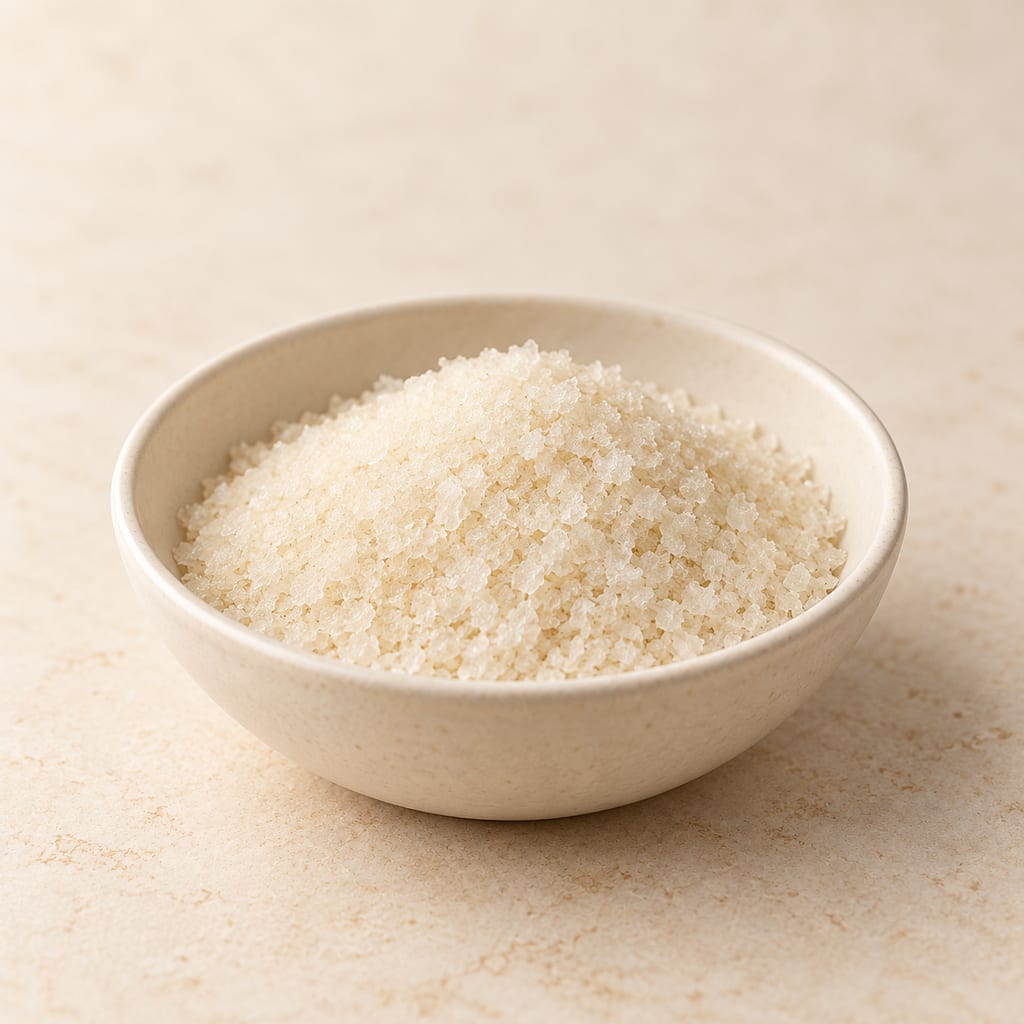
Gelatin is animal collagen partly broken down to dissolve in hot water and set as a gel on cooling, used for jellies and sweets and to fine beer and wine.
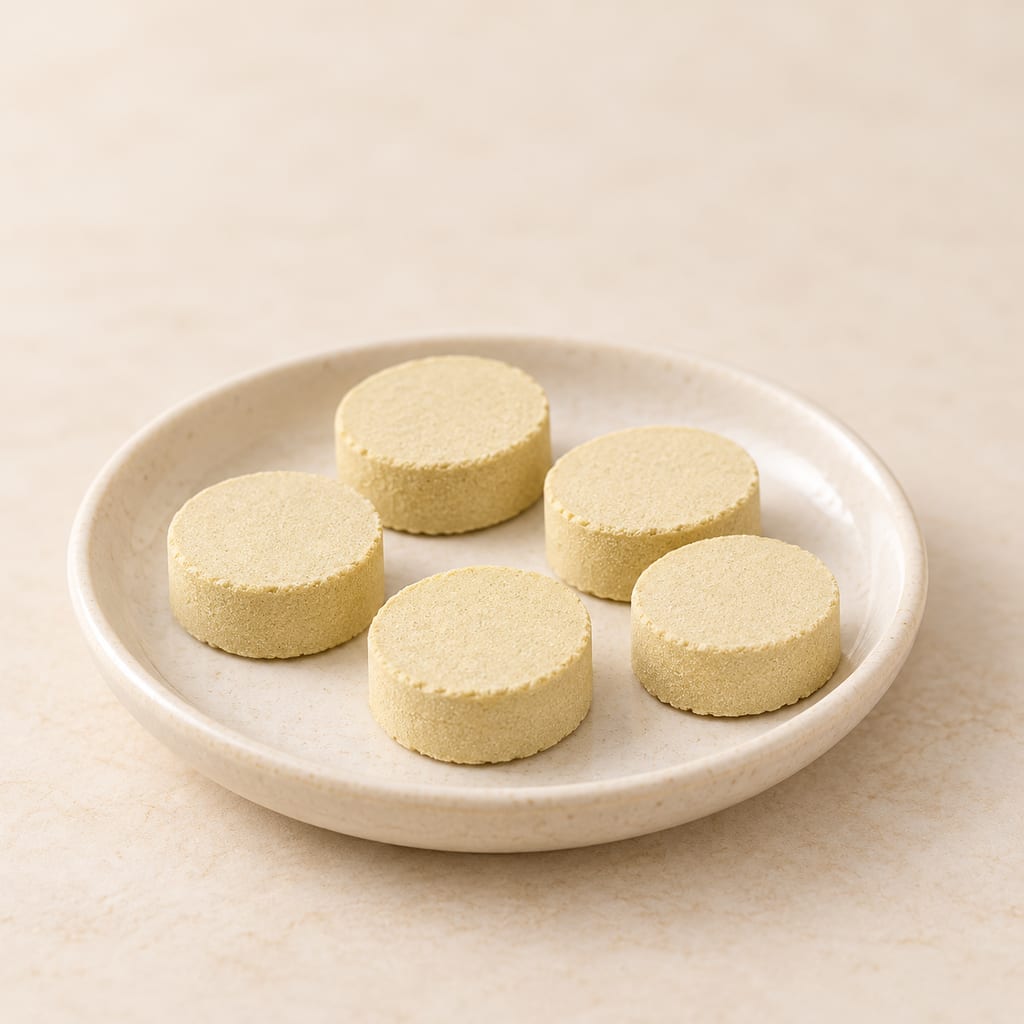
Whirlfloc is a tablet of processed Eucheuma red seaweed, rich in carrageenan, that brewers add to the boiling kettle so that wort proteins clump and settle out as cold break.
Cheese, tofu, agar, nixtamal and cured ham all begin with a liquid or soft food made to set, sour or keep. Rennet is one branch of that history, beside plant enzymes, acids, minerals, alkalis, gels, finings and curing salts.

A refined common-wheat flour blended for a broad range of baking; its protein and behavior vary with wheat, milling and market.

Toasted almonds are whole sweet almond kernels dry-roasted until golden to brown. Heat replaces their marzipan note with a roasted, nutty one; they thicken and flavour romesco.
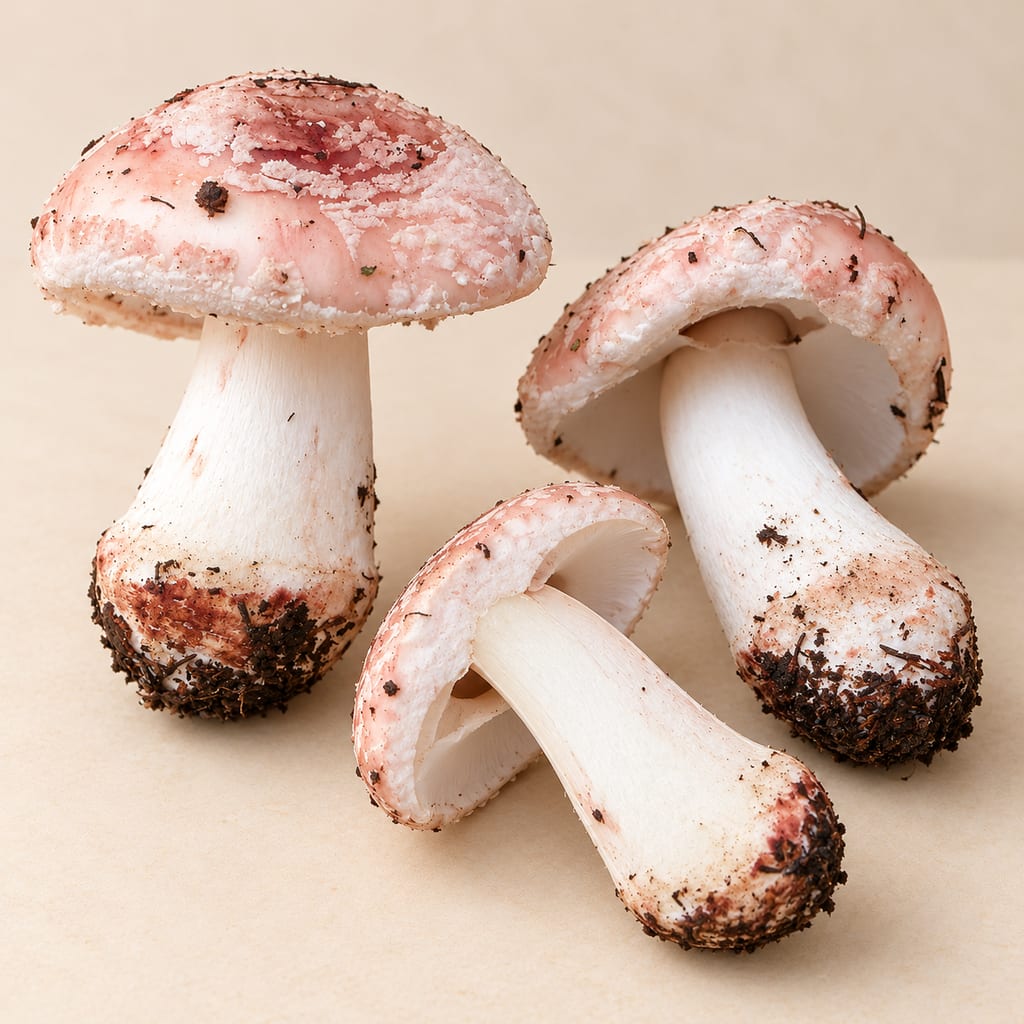
Amanita novinupta is a western North American blusher, a forest mushroom recorded as food in Mexico, and one that must be cooked because its raw flesh is toxic.
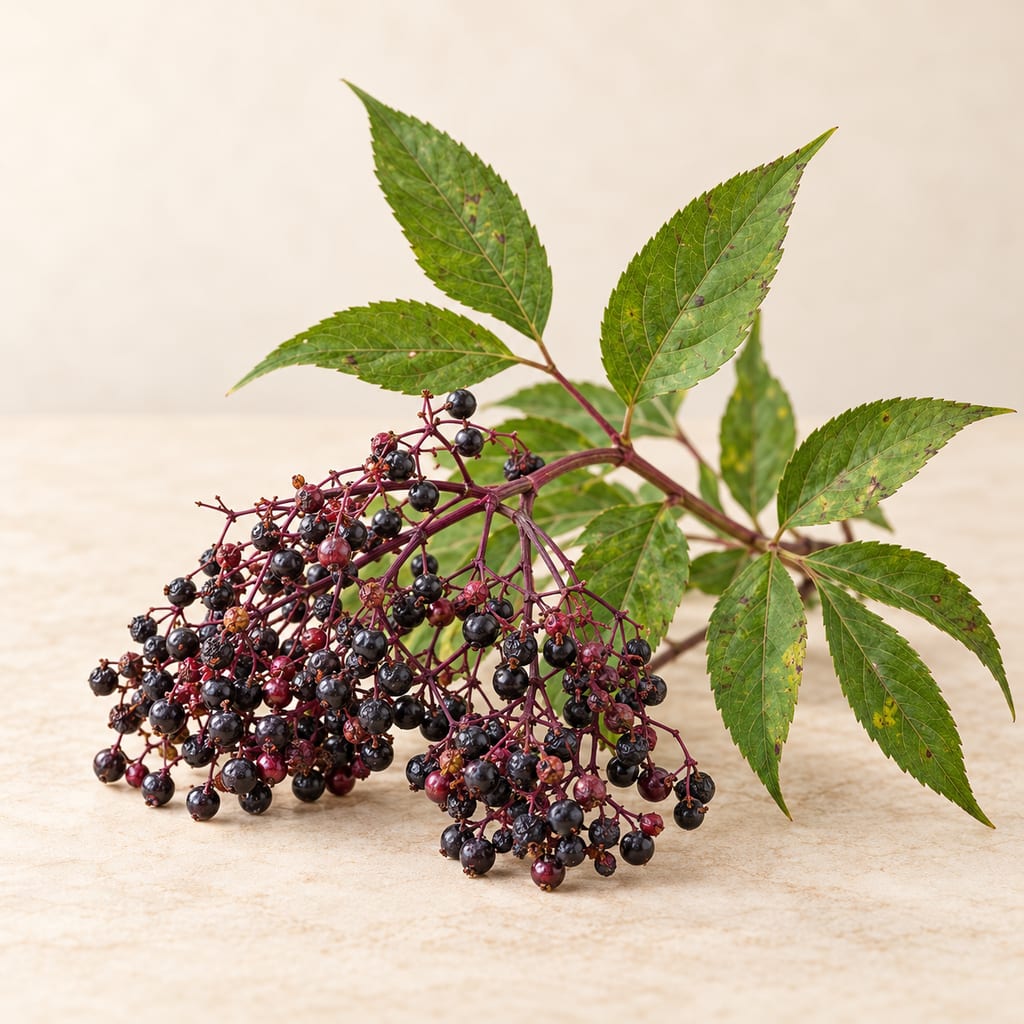
Sambucus canadensis is the accepted name used here for American elderberry. Missouri production guidance and named-cultivar studies give useful regional growing information, while food and analytical sources leave process questions open.
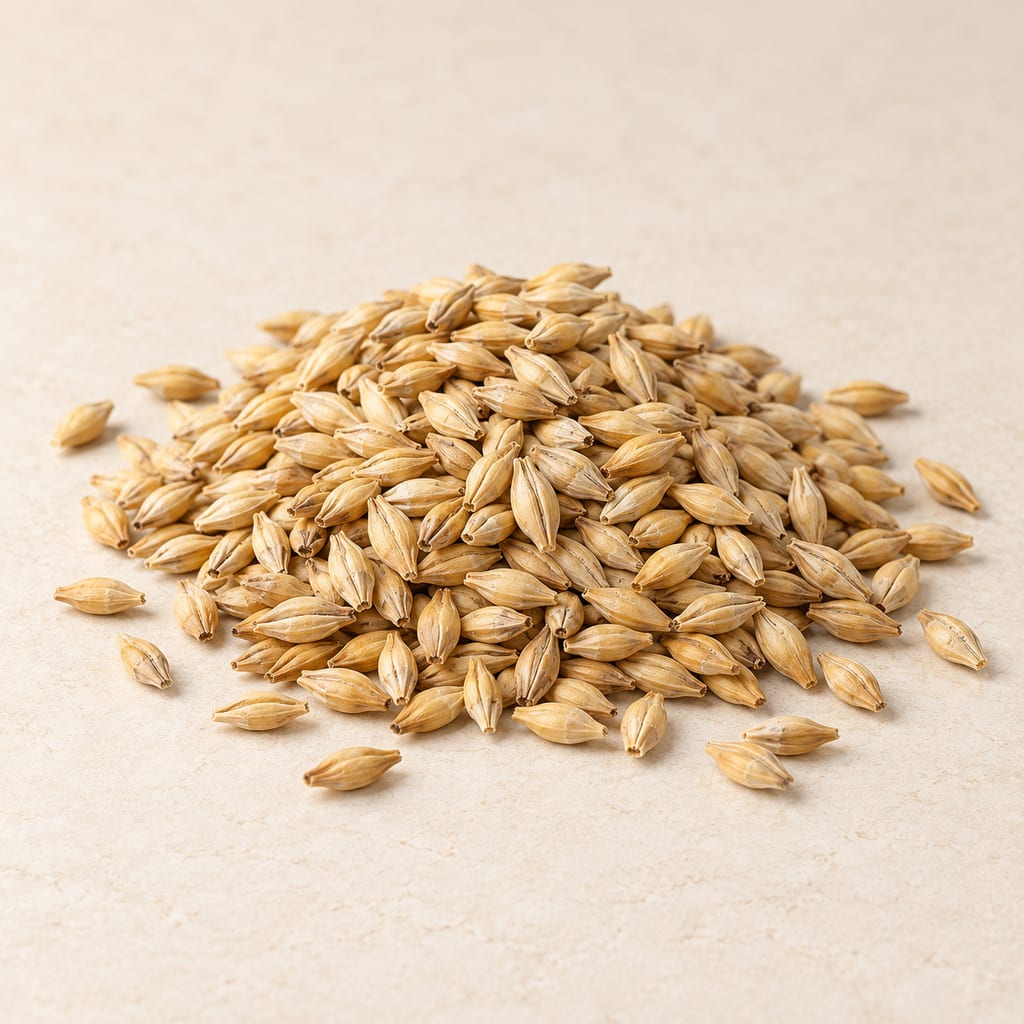
A lightly kilned brewing base made from two-row barley. It supplies starch and enzymes for the mash, with the maltster’s product and lot analysis defining its brewing properties.

Ripe avocado flesh is the soft, buttery, fat-rich pulp of Persea americana, eaten raw. It is low in acid, so it is a fresh ingredient that needs care in chilled dishes.
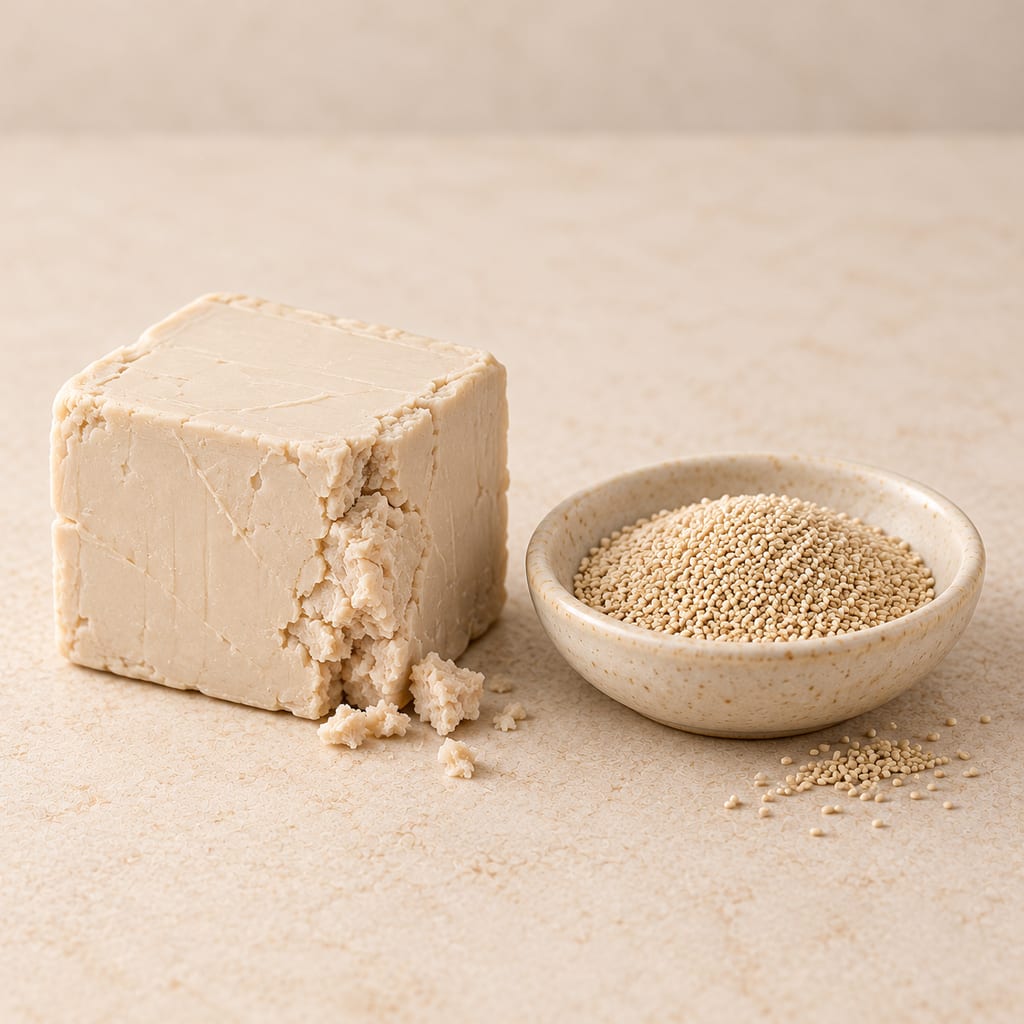
Baker's yeast is a cultivated living leavener, commonly sold fresh or dried. In dough, selected Saccharomyces cerevisiae cells make gas that can raise bread.
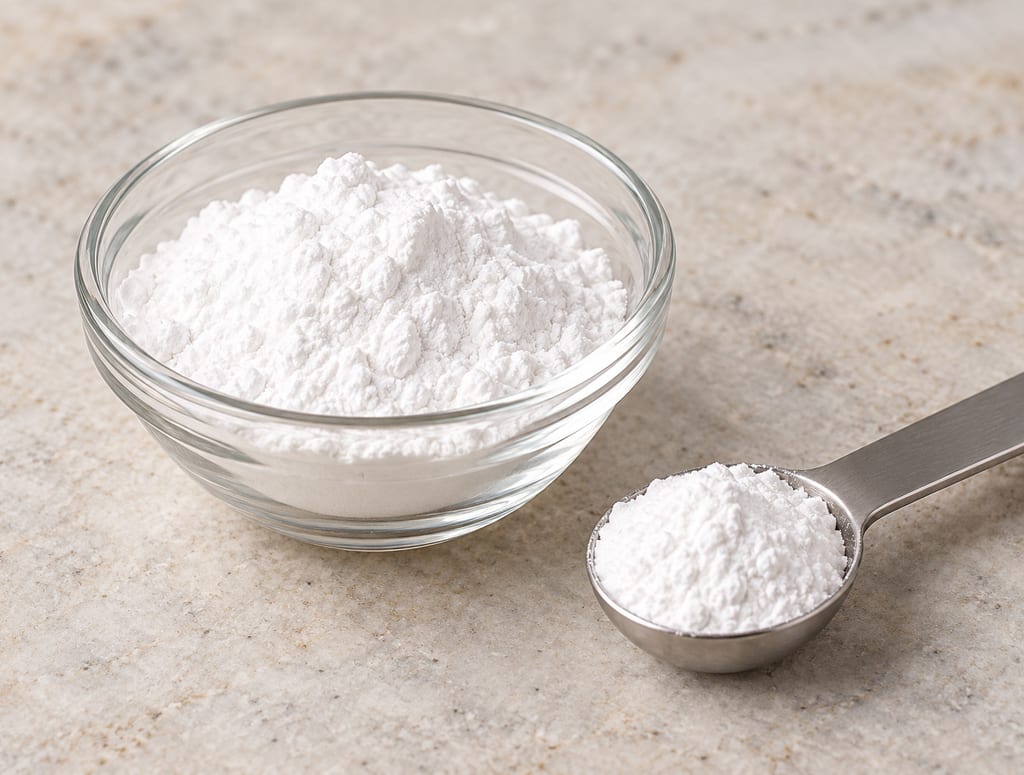
Baking powder is a dry chemical leavener that combines bicarbonate with acid-reacting ingredients and a carrier. Moisture and heat release carbon dioxide for quick breads, batters and griddle cakes.
No community contributions have been published for this entry yet.
Sign in to contribute. Published comments and photos are free to read.
American Homebrewers Association, 2026 Official Big Brew Recipes (2026)Primary named beer recipe · Documented preparation
2026 Official Big Brew Recipes: Monk's Ration Trappist-Style SinglePhil LaFleur's 2026 Big Brew sheet: 9.5 L batch, 1 tsp bentonite in primary after cooling and oxygenation, gelatin two days before bottling; 2023 competition context
Cited in: The clay in the fermenter; The named beer and its sequence; Hydration is part of using it well; Mineral identity and an honest history
International Organisation of Vine and WineOfficial material specification · Physical identity
Bentoniteshydrous aluminium silicate montmorillonite group; sodium/calcium types, swelling and protein adsorption tests; wine use
Cited in: The clay in the fermenter; Swelling, charge and sediment; Hydration is part of using it well; Mineral identity and an honest history
International Organisation of Vine and WineOfficial wine processing classification
Treatment with bentonitesbentonite classified as processing aid for wine protein and copper haze prevention; no direct beer authorization inferred
Cited in: The clay in the fermenter; Mineral identity and an honest history
Australian Wine Research InstituteOfficial technical guidance for wine
Fining Agentswine bentonite hydration, fining timing, types and lees differences; explicitly kept distinct from named beer instructions
Cited in: Swelling, charge and sediment; The named beer and its sequence; Hydration is part of using it well; A useful fining, with tradeoffs
Australian Wine Research InstituteOfficial wine protein haze explanation
Protein stability fact sheetgrape proteins can cause white and rosé wine haze; bentonite binds and settles proteins; March 2020 update
Cited in: A useful fining, with tradeoffs
Journal of Agricultural and Food Chemistry 45(11):4275–4280 (1997); DOI 10.1021/jf970430hPrimary apple juice mechanism study
Mechanisms of Adsorbent Action in Beverage Stabilizationin tested apple juice bentonite removed haze-active protein much more effectively than haze-active polyphenol; not a beer dose inference
Cited in: Swelling, charge and sediment
Journal of the American Society of Brewing Chemists 55(2):73–78 (1997); DOI 10.1094/ASBCJ-55-0073Primary beer fining study
Mechanisms of Beer Colloidal Stabilizationtested bentonite removed haze-active and foam-active beer protein; no numerical prediction for Monk's Ration
Cited in: A useful fining, with tradeoffs