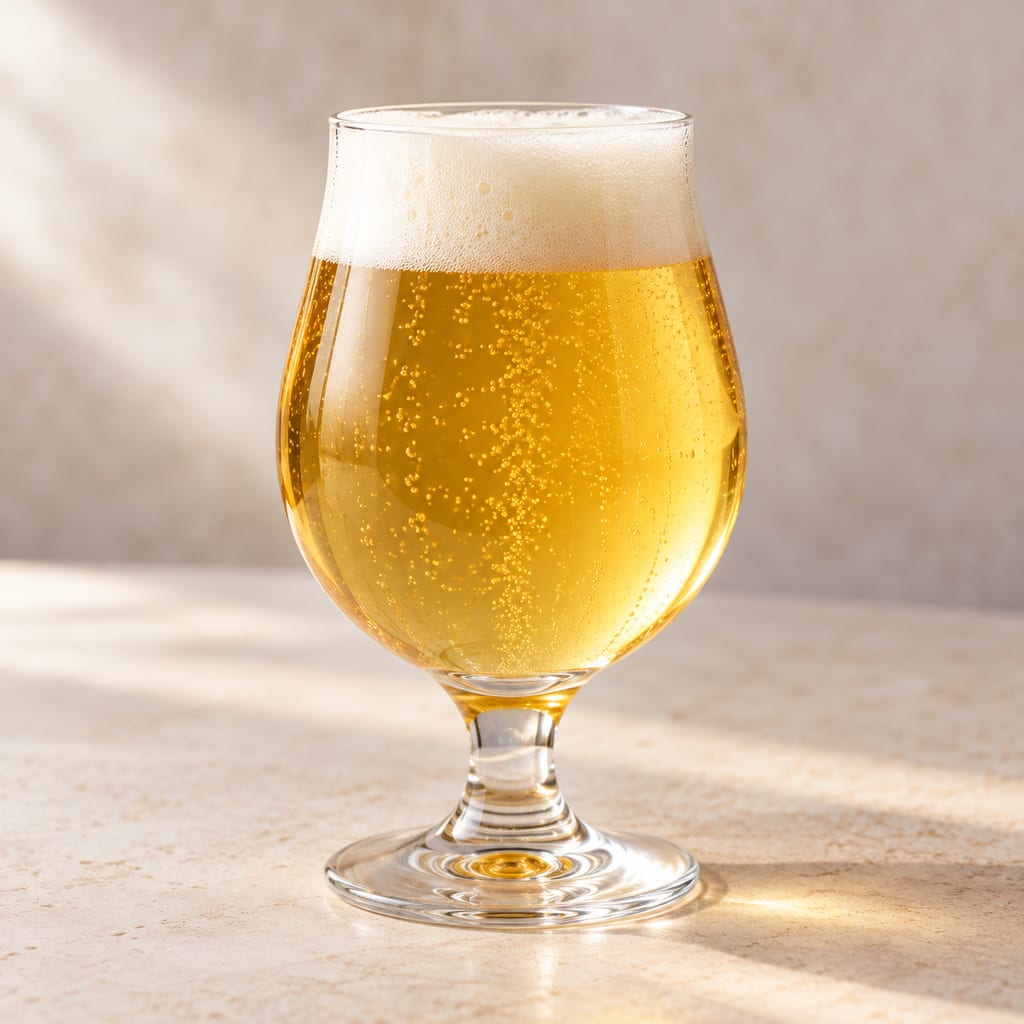
Monk’s Ration Trappist-style single
A pale Belgian-style ale with Pilsner and aromatic malts, cane sugar and Saaz hops, fermented under loose foil before an airlock is fitted.
 FermenteaWhere food goes to change
Processing aids
Whirlfloc is a tablet of processed Eucheuma red seaweed, rich in carrageenan, that brewers add to the boiling kettle so that wort proteins clump and settle out as cold break.
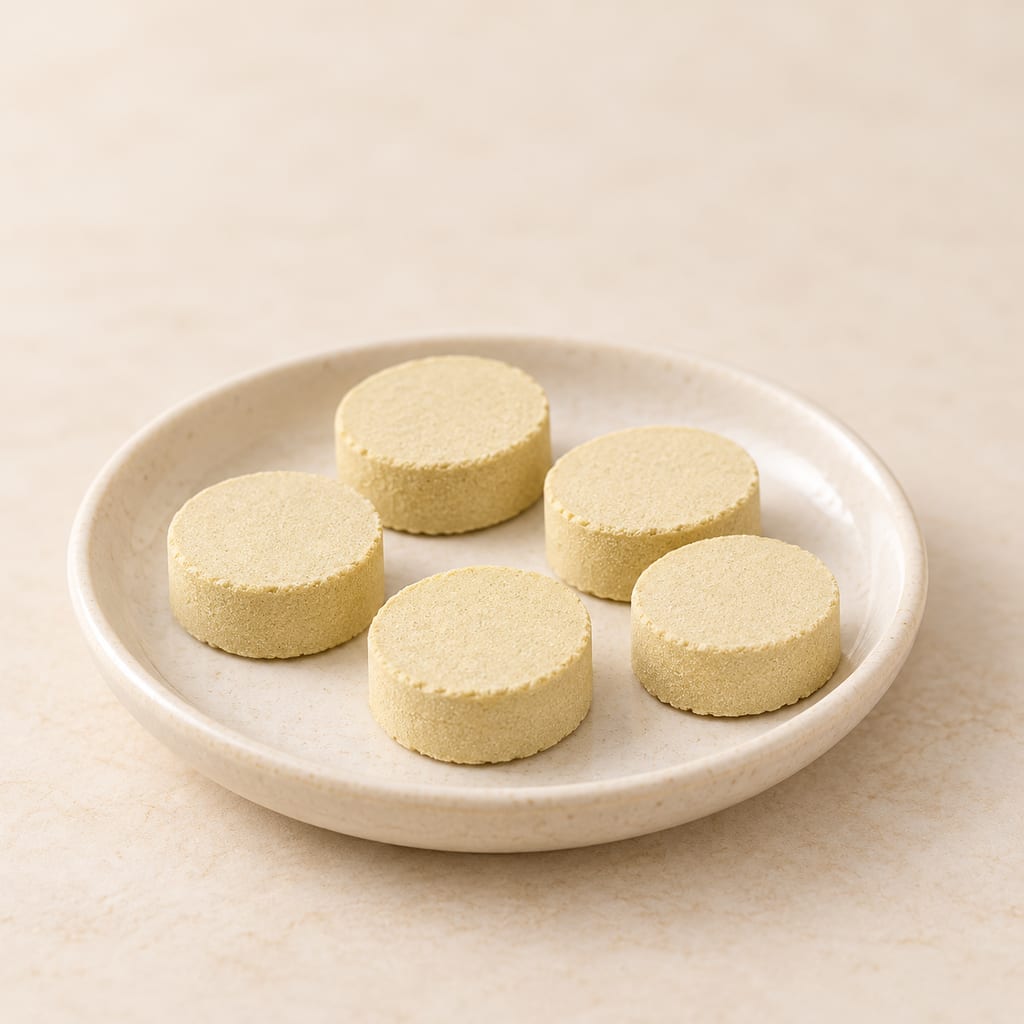
Whirlfloc is a kettle fining: a small tablet dropped into boiling wort near the end of the boil to help the cloudy material in it clump together and settle out. It is a processing aid, not a flavouring or a yeast, and nothing of it is meant to end up in the glass. Its makers describe the tablet as an extract of red seaweed formulated to coagulate unstable proteins in brewery wort, supplied as a self-dispersing tablet for ease of use.
The name belongs to a particular preparation, not a plant. The producer’s specification for Whirlfloc T lists processed Eucheuma seaweed (the food additive E 407a) together with sodium carbonate, adipic acid, sodium hydrogen carbonate, talc and silicon dioxide; an older data sheet also lists stearic acid. The tablet is yellow to white. The seaweed supplies the active carrageenan, and the other components make the tablet disperse when it meets hot wort. Retail descriptions are looser: one retailer’s listing speaks of Irish moss and purified kappa carrageenan, and a distributor describes a semi-refined material from Eucheuma cottonii. The producer’s own specification is the reliable statement of what is in the tablet.
Whirlfloc is easily confused with Irish moss, the dried seaweed brewers once used for the same job, and with the other finings in a brewery, such as bentonite and gelatin, which act at other stages and by other means. The tablet is a convenience form of a seaweed fining, more refined than raw moss and less refined than pure carrageenan.
Brewers have long used red seaweed to clear their wort. A brewing technical manual traces kettle finings to red marine seaweeds, usually of the genus Chondrus (Irish moss, Chondrus crispus), and says that until the 1960s the main material in use was Irish moss itself, which a limited number of breweries still use. In the 1960s the seaweed source was refined, and these first prepared finings showed a significant performance advantage over raw moss.
Pellets rather than powders followed, to ease dispersion in boiling wort. Finings of that type contain about half their weight as a dispersant, usually sodium bicarbonate, plus an acid such as citric acid to make them effervesce on contact with the wort. The manual notes that pellets or tablets remain a convenient method of addition for the microbrewer, which explains why homebrewers meet Whirlfloc as a tablet. In the 1980s came pure refined carrageenans, which are completely soluble and highly active, and later granular finings made from semi-refined seaweed of the genus Eucheuma, washed in alkali and cheaper to make. Their clarifying performance, the manual says, does not equal purified carrageenan but comes very close and is adequate in all but the most exacting situations.
Whirlfloc T was an established commercial tablet by 2007, when its producer printed the data sheet for it. The brand’s launch date and inventor are not recorded in the sources, so none is stated here.
Wort carries proteins and polyphenols from malt and hops, and as it is boiled and cooled they come out of solution in two waves. During the boil, heat denatures proteins and they coagulate into hot break. Large flocs form when the wort is boiled vigorously, at a minimum of 102 degrees Celsius at atmospheric pressure and for at least an hour, with a high wort pH and enough protein; they are easily removed in the whirlpool. Weak boiling gives fine flocs that stay suspended and carry on into later stages.
On cooling, the remaining proteins combine with polyphenols from the hops and precipitate as cold break. Cold break forms in significant quantity only below about 20 to 30 degrees Celsius and increases dramatically as the wort gets colder. It consists of very fine particles that settle slowly and tend to survive into the finished beer. Boiling and cooling together remove about 17 to 35 percent of the protein content of wort, depending on the malt and hops. A kettle fining is aimed at the second wave: it helps cold break particles form larger aggregates that can be left behind.
Carrageenans are long, water-attracting polysaccharide chains extracted from red seaweeds, carrying sulfate groups that give them a strong negative charge. They are distinct from the other seaweed colloids, agar and alginate. Several seaweeds supply carrageenan, among them Irish moss and the Eucheuma species, and their carrageenans differ in structure and behaviour. Kappa carrageenan forms strong gels with potassium salts, iota carrageenan forms more elastic gels with calcium salts, and lambda carrageenan thickens without gelling. The active component of kettle finings, the brewing manual says, is kappa carrageenan.
How the seaweed is processed decides what ends up in the tablet. In refined carrageenan production the material is extracted into water, separated from the insoluble seaweed residue and recovered as a solid by precipitation or a gel process. Semi-refining works the other way: alkaline treatment and washing remove soluble material and leave the carrageenan inside the remaining plant tissue, which is then dried and milled. Processed Eucheuma seaweed of this kind is what the Whirlfloc specification lists. Food-grade material of this type is distinct from crude seaweed meal made for other purposes.
The accepted explanation is electrostatic: negatively charged carrageenan molecules interact with positively charged proteins in the wort, and the resulting complexes, together with other particles, clump into flocs that settle more readily than fine suspended material. The picture is not simple. Lower wort pH makes proteins more positively charged and should help, but in practice fining activity is inhibited as pH falls, which suggests that more than plain charge attraction is involved. The manual describes two routes, one in which carrageenan reacts separately with soluble proteins and with particles, and one in which the carrageenan-protein complex flocculates the particles.
Kappa carrageenan does not dissolve below 60 degrees Celsius, and that is the only reason to add the fining to hot wort. It must go in early enough to dissolve and late enough that heat does not denature it. Kettle finings have no significant effect on hot wort clarity; their effect shows as bright cold wort. For tablets the manual recommends adding them to the kettle five minutes before the wort is cast out, and the tablet will disperse by itself. Several factors alter performance: dose, timing, hot wort clarity, wort pH, malt variety and modification, wort gravity, polyphenol and salt levels, and mashing temperature. Because of that list, the only way to find the best dose is a jar test with a range of rates.
More fining is not simply better. As the dose rises, more particles are removed and the wort gets clearer, but the volume of sediment grows too, so the optimum is the rate that gives the best clarity with the least sediment. Hot wort clarity matters as well: if the wort is poor to start with, the cold wort will be poor. A long whirlpool stand of several hours has been shown to weaken the fining, though a typical stand of 45 minutes does no harm. Other forms of kettle fining ask for different timing, with refined granules going in five minutes and semi-refined granules ten minutes before the wort is cast out, and powders needing to be slurried in cold water first, which is why a tablet suits the small brewer who wants a single, self-dispersing addition.
The producer’s data sheet says plainly that a fining trial should be performed to find the optimum dose. Its optimisation procedure crushes about four tablets, dissolves 1.5 grams of the crushed tablet in a litre of warm water (40 to 80 degrees Celsius), doses glass bottles of wort drawn near the end of the boil with a range of volumes including an untreated control, and lets them stand for 30 minutes. One millilitre of solution per 300 millilitres of wort corresponds to 5 milligrams per litre. The brewer then watches clarity and sediment compactness through the range, cools the samples and observes again. The tablet does not fully dissolve, but the method extracts enough of the active material into solution.
The optimum is the dose that gives a clear wort with a compact cold break. Typical treatment rates are 25 to 50 milligrams per litre, and in a wort with low pH, below 5.0, rates of up to 120 milligrams per litre have been found necessary. For use the tablets are added directly to the kettle, ideally 10 minutes before the end of the boil. The sheet suggests recording the cooled-wort clarity on every brew so that effects of changes in raw materials, such as a new malt, are noticed.
A published homebrew recipe may differ from the data sheet. The Monk’s Ration Trappist-style single in the 2026 Big Brew collection uses half a Whirlfloc tablet for the final five minutes of the boil, the timing the brewing manual gives for tablets. Its other finings are separate and act at other stages: bentonite in primary fermentation and gelatin before bottling.
The tablet is sold in homebrew shops in small packs and to breweries in 25 kilogram boxes. In its unopened original packaging the producer gives a shelf life of 24 months from manufacture, with storage in cool, dry conditions between 5 and 20 degrees Celsius; product kept longer should be retested before use.
The safety data sheet classifies the tablet mixture as causing serious eye damage and calls for eye or face protection. Avoid raising dust when crushing or handling the tablets, and keep them out of the eyes. These are precautions for the concentrated product, not statements about beer made with it.
The producer’s specification reports microbiological limits for the product and a typical composition per 100 grams of 377 kilocalories, 40 grams of carbohydrate, 1 gram each of fat and protein, 5 grams of moisture and 53 grams of ash, which shows how much of the tablet is mineral dispersant. The seaweed in it is a vegetarian material, and the specification records the tablet as suitable for vegetarians and certified halal and kosher.
The producer’s allergen table for Whirlfloc T lists none of the major allergens as present: not gluten-containing cereals, milk, egg, fish, crustaceans, molluscs, soy, peanuts, tree nuts, sesame, celery, mustard, lupin or sulphites above 10 ppm. A footnote mentions isinglass, a fining agent from fish that is exempt from declaration in the European Union; Whirlfloc is a seaweed product and contains none. This describes the ingredient as supplied, in a processing step that is not eaten as such.
Irish moss belongs to the North Atlantic coasts, while the semi-refined finings of recent decades are made from seaweed of the genus Eucheuma, harvested and washed in alkali. The sources do not say where the seaweed in Whirlfloc is grown. The address on the producer’s data sheet is that of the company in Cork, Ireland, which is the contact for the document and not the origin of the seaweed.
The recipe does not identify a packet, seaweed harvest origin or manufacturing site. A producer contact address is not product provenance.
A pale Belgian-style ale with Pilsner and aromatic malts, cane sugar and Saaz hops, fermented under loose foil before an airlock is fitted.
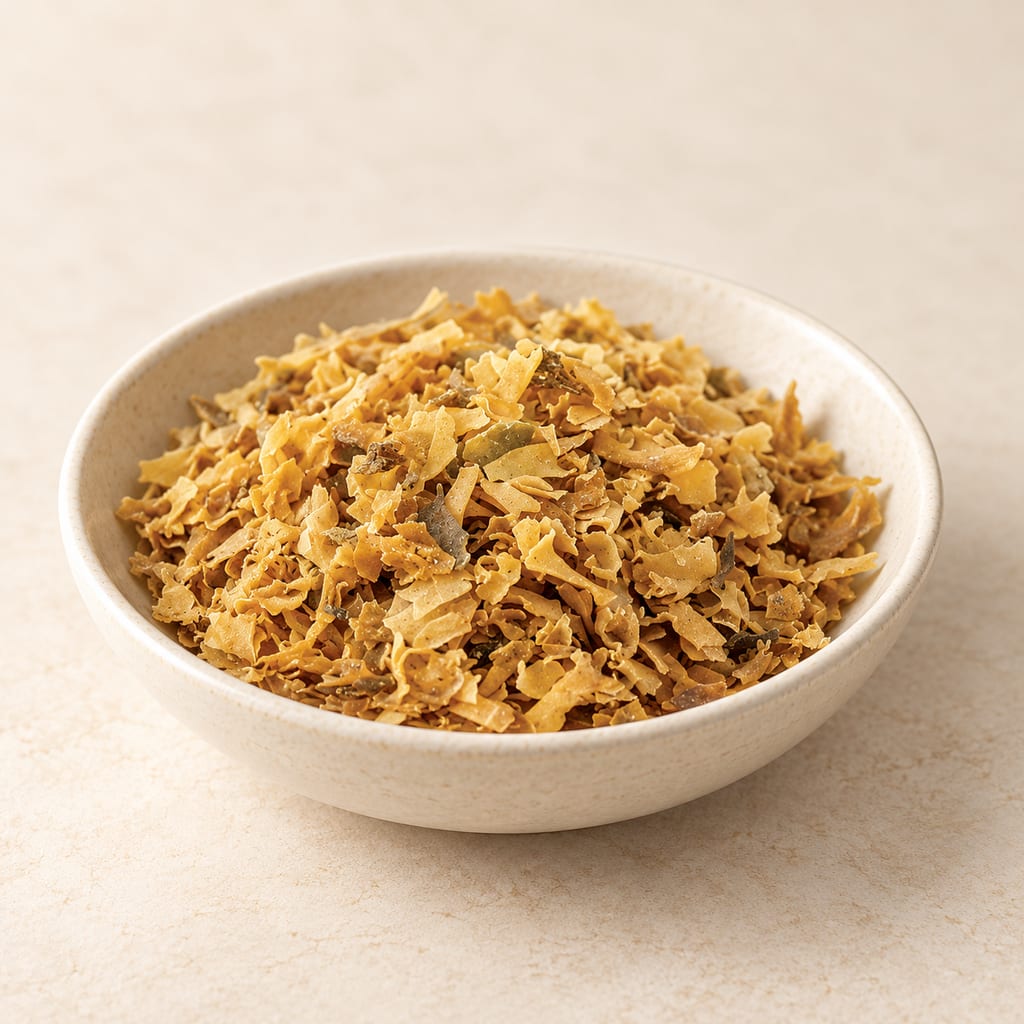
Red seaweed sold as dried material or a concentrated fining, connecting carrageen desserts and coastal trade with the separation of protein material in brewing wort.
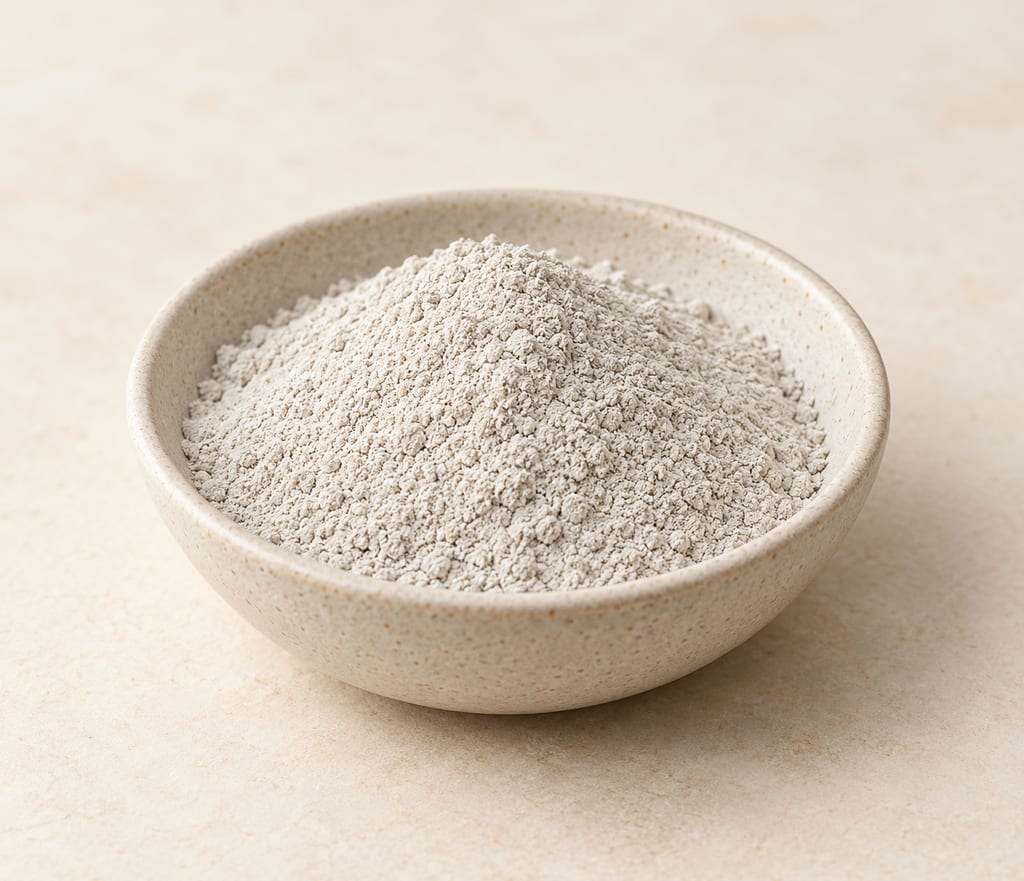
A swelling mineral clay used as a processing aid in a named beer recipe's primary fermentation; it helps remove suspended haze-active material as sediment.
Gelatin is animal collagen partly broken down to dissolve in hot water and set as a gel on cooling, used for jellies and sweets and to fine beer and wine.

Soft, spreadable Calabrian pork sausage made with a great deal of red chilli and fatty pork, stuffed into natural casings, sometimes smoked and matured while staying soft.

A way to add independent temperature logging to an existing food dehydrator without changing its built-in controls or protections. It is a monitoring method, not a rewiring plan.

Pleurotus cystidiosus is the abalone mushroom, a cultivated oyster-type fungus with dark brown caps that grows more slowly and is more demanding than other Pleurotus species.

A dark, balanced vinegar from Emilia-Romagna made by combining cooked or concentrated grape must with wine vinegar, then acetifying and refining it in wood under a protected specification.

A living dairy inoculum that starts controlled cream fermentation, developing acidity and aroma before sour cream or cultured butter is finished.

A small electric incubator holds jars at a selected temperature for yogurt and other documented warm food preparations. Controls, capacity and vessel arrangement vary by model.

Adygean salt is a seasoned table salt associated with Adygea and the wider North Caucasian culinary tradition. Salt is blended with garlic and a variable selection of herbs and spices; the exact mix depends on the named style and maker.

The African Caesar-group mushroom, Amanita masasiensis, is a wild ectomycorrhizal species of central and southern African woodlands, eaten locally. The genus contains deadly poisonous species, so identification needs care.
No community contributions have been published for this entry yet.
Sign in to contribute. Published comments and photos are free to read.
Kerry Bio-ScienceIngredient identity · Method · Handling
Whirlfloc T Product Data Sheet, July 2006 update, printed 18 April 2007Whirlfloc T data sheet (printed 18 April 2007): extract of red seaweed formulated to coagulate unstable proteins in wort; self-dispersing yellow/white tablet; components include carrageenan E407a, adipic acid, sodium bicarbonate, sodium carbonate, talc, silica and stearic acid; a fining trial is recommended; unopened shelf life 24 months from manufacture in cool, dry conditions (5 to 20 C).
Cited in: What Whirlfloc is; Seaweed in the kettle: a short history; Dose, timing and the producer’s instructions; Buying, storing and handling; Where it comes from
Kerry Food Ingredients (Cork) Limited; hosted by RahrBSGIngredient identity · Method · Handling
Whirlfloc T (25Kg Box), Product Specification 20267876 / legacy5B00573Product specification (revision 26 October 2022): ingredients processed Eucheuma seaweed E 407a, sodium carbonate, adipic acid, sodium hydrogen carbonate, talc, silicon dioxide; typical dose 25 to 50 mg/l, up to 120 mg/l at wort pH below 5.0, added to the kettle ideally 10 minutes before the end of the boil; shelf life 730 days; allergen table shows none present; vegetarian, halal and kosher; typical nutrition per 100 g.
Cited in: What Whirlfloc is; Dose, timing and the producer’s instructions; Buying, storing and handling; Allergens and dietary context
RahrBSG CanadaIngredient identity · Method · Handling
Whirlfloc T – 25 kgDistributor description of Whirlfloc T as a semi-refined Eucheuma cottonii product added directly as a tablet.
Kerry Bio-ScienceIngredient identity · Method · Handling
Whirlfloc T Application Information Optimisation Procedure, printed 18 April 2007Optimisation procedure: 1.5 g of crushed tablet per litre of warm water, doses from 0 to 20 ml per 300 ml wort (1 ml per 300 ml equals 5 mg/l), 30-minute stand, clarity and sediment observed hot and cold; routine check of cooled-wort clarity.
Cited in: How the fining works in the kettle; Dose, timing and the producer’s instructions
Kerry Ingredients & Flavours LtdIngredient identity · Method · Handling
Whirlfloc T (25Kg BOX), Safety Data Sheet version 2.0, 20 January 2023Safety data sheet (version 2.0, 20 January 2023): tablet mixture classified as causing serious eye damage; eye and face protection; avoid dust.
Cited in: Buying, storing and handling
FAO Fisheries Technical Paper 288, edited by Dennis J. McHughIngredient identity · Method · Handling
Production, Properties and Uses of Carrageenan — Norman Stanley, in Production and Utilization of Products from Commercial Seaweeds, 1987Carrageenan is a sulfated, negatively charged polysaccharide from several red seaweeds; general extraction and recovery.
Cited in: Carrageenan, the active ingredient; Where it comes from
FAO Fisheries Technical Paper 441Ingredient identity · Method · Handling
A Guide to the Seaweed Industry, chapter 7: Carrageenan — Dennis J. McHugh, 2003Refined and semi-refined carrageenan manufacture; kappa, iota and lambda carrageenans have different functions; food-grade processed seaweed distinguished from crude material.
Cited in: Carrageenan, the active ingredient; Where it comes from
Industry technical manual hosted by RahrBSGIngredient identity · Method · Handling
Wort & Beer Clarification Manual — Ian L. Ward, version M2Wort and beer clarification manual: hot break and cold break chemistry (17 to 35 percent protein removal; cold break below 20 to 30 C); history of kettle finings from Irish moss to the 1960s refinements, pellets with about 50 percent bicarbonate dispersant, 1980s refined carrageenans and semi-refined Eucheuma granules; kappa carrageenan mechanism; does not dissolve below 60 C; tablets added 5 minutes before cast; jar tests for dose.
Cited in: Seaweed in the kettle: a short history; Why wort goes cloudy: hot break and cold break; Carrageenan, the active ingredient; How the fining works in the kettle
MoreBeerIngredient identity · Method · Handling
Whirlfloc TabletsRetail listing of Whirlfloc tablets describing Irish moss and purified kappa carrageenan; used to show how retail descriptions differ from the producer specification.
Cited in: What Whirlfloc is
American Homebrewers AssociationIngredient identity · Method · Handling
2026 Official Big Brew Recipes: Monk’s Ration Trappist-Style SingleMonk’s Ration Trappist-style single: half a Whirlfloc tablet for the final five minutes of the boil; bentonite in primary fermentation and gelatin before bottling.
Cited in: Dose, timing and the producer’s instructions