
Agar / kanten
A gelling polysaccharide extracted from red seaweeds, sold as kanten strips or powder; it sets firm at a low concentration and stays solid until about 85 °C.
 FermenteaWhere food goes to change
Mushrooms
A European mountain mushroom associated with old conifer and mixed forests. It is valued as an early spring edible, but its vulnerable status and local collection rules matter.
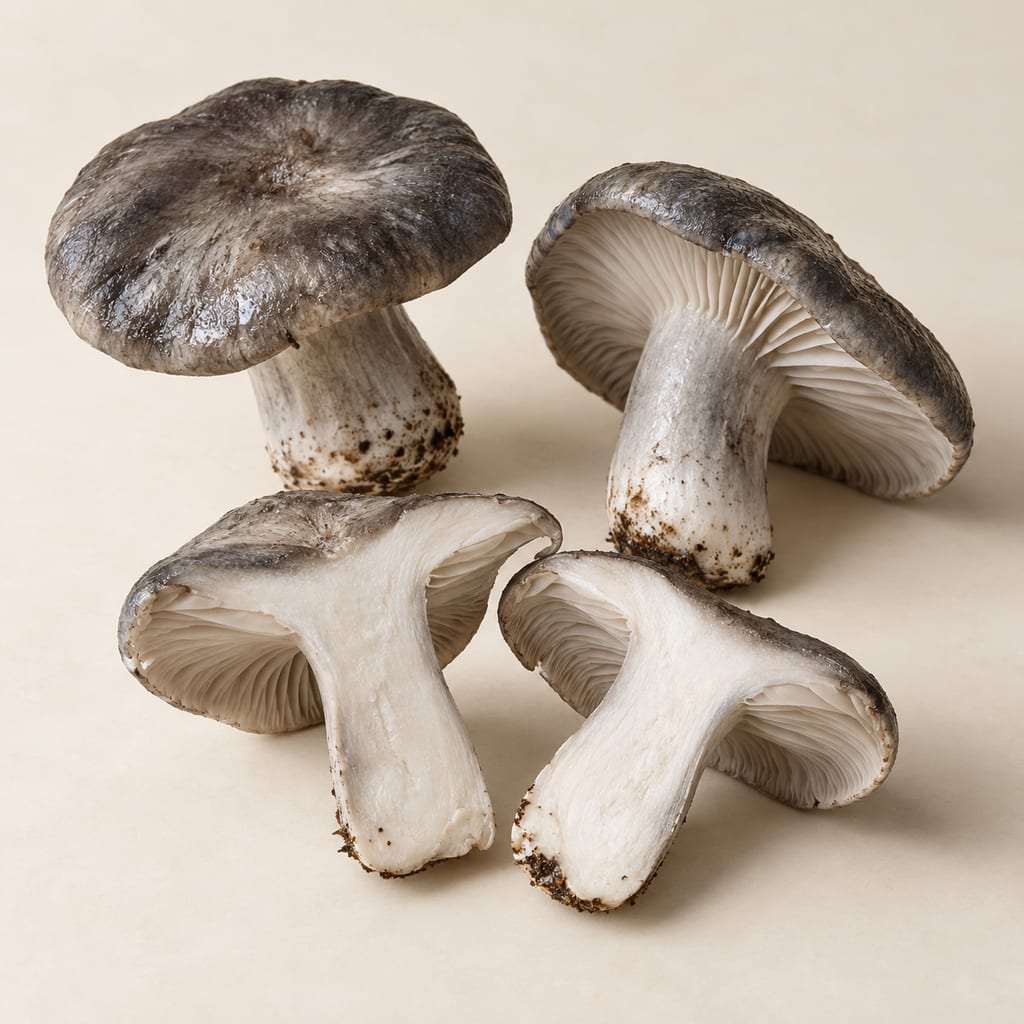
Hygrophorus marzuolus (Fr.) Bres. is a mushroom in the family Hygrophoraceae. Index Fungorum lists the current name, first combined in Hygrophorus in 1893 from Agaricus marzuolus Fries (1821). That old scientific-name date is useful nomenclatural history, but it does not tell us when people first began eating the fungus. In different European languages it is called the March mushroom, marzuelo, March slime-cap, or similarly seasonal names. Each common name belongs to a language and region; none should be treated as a universal label or an identification test.
The name makes sense because this is a notably early fruiter in mountain forests, often appearing around late winter or the start of spring. Yet the calendar name is only a rough clue. Snow cover, elevation, aspect, local weather and forest conditions all shift the timing. One source for Sierra de Albarracín describes March through May and says it fruits later there than in other parts of Spain; a Spanish society account gives a wider late-winter-to-mid-spring period and a February-to-April peak. Neither observation should be copied into a fixed date range for every mountain.
Taxonomy also has a boundary. The 2025 IUCN assessment treats the European population as the assessed species and notes that the same name has been applied to North American collections, which are assumed to represent a separate taxon because their ecology differs. It calls for DNA-based comparison. A page about the European March mushroom should not quietly turn North American records into confirmed range evidence or assume every historic use of the name refers to the same species.
The March mushroom is ectomycorrhizal: it lives in a partnership with the roots of trees, exchanging resources below ground. The IUCN assessment names firs (Abies), pines (Pinus) and beeches (Fagus) among its main associates and describes it as restricted to old forests. Regional accounts also describe it in conifer and mixed woods. This association explains why a fruiting body found in one forest depends on more than rainfall alone: suitable host trees, soil, forest continuity and local climate all matter.
Fruit bodies may emerge through leaf litter or close to melting snow, and can be partly concealed. The IUCN assessment reports early spring fruiting, sometimes under snow, at elevations up to about 2,000 metres. That is an ecological observation, not advice to search or collect. A photograph of a cap partly hidden in litter cannot show the full habitat, the connected mycelium or all traits needed to confirm the species.
The old-forest connection gives conservation context to its food history. The species was assessed as Vulnerable because suitable habitat area and quality have declined and are expected to keep declining. The assessment points to forestry intensification and nitrogen deposition as threats, with over-collection possibly important at some local sites. This is not a blanket statement that any single meal threatens a population; it is a reason to avoid presenting the mushroom as an unrestricted resource. Protecting the mature woodland and host trees is central to retaining the fungus.
The broad European pattern is early spring, often associated with snowmelt. The IUCN account describes an unusual late-spring fruiting period in its justification and later explains that fruit bodies can appear early in spring, sometimes under snow. This wording reflects the way fruiting shifts across elevations and regions rather than a single universal week. At higher altitude, snow and cold can delay emergence; lower or warmer sites may fruit earlier.
The specific Sierra de Albarracín account gives March, April and May, and explicitly says the local season is later than in other Spanish areas. The Barakaldo society’s description places occurrence from midwinter to mid-spring, with greatest presence in February, March and April. The two accounts are not contradictory calendars: they describe different landscapes and local conditions. Madrid public-health listings classify the species for commercial marketing but are not a phenology source.
Recent iNaturalist observations illustrate the same variation in recorded dates: a France observation is dated 3 March; Romania 14 March; Croatia 15 March; Slovenia and the French Pyrenees 12 April; and Bosnia and Herzegovina 30 April. These are valuable specimen-level records with photographs, but citizen-science observations are not a standardized survey. They do not measure abundance, harvest pressure or the beginning and end of the season for a whole region. They should be presented as dated occurrences, not as proof that every locality fruits during the same months.
The IUCN assessment describes a predominantly European distribution around the Pyrenees, Alps and Carpathians, with isolated records in bordering regions. It is a mountain and temperate-forest mushroom rather than a species whose known range should be generalized to all Europe. Local society and park accounts document knowledge in Spanish mountain districts such as Sierra de Albarracín, while photographs in this file show separate observations from France, Romania, Croatia, Slovenia and Bosnia and Herzegovina. A range record says the fungus was reported at a place; it does not say people gather or eat it there.
Food-use evidence has its own geography. The IUCN assessment calls the species an appreciated edible mushroom and summarizes former market sales in Austria, France, Germany, Italy and Switzerland. It says that sale is now prohibited in those countries. The account does not provide one shared recipe or imply that each locality had the same trade. In Spain, the Community of Madrid’s public-health guidance lists H. marzuolus as edible and marketable fresh. That regional marketing classification is a different kind of evidence and a different legal context from the IUCN summary of former Alpine and central European market trade.
The Sierra de Albarracín mushroom park likewise describes the species as edible. The supplied research catalogue characterizes it as an early-season cooked mushroom, but the sources reviewed here do not provide a well-documented, species-specific recipe. The most accurate culinary summary is therefore restrained: it is valued as an edible, seasonal mushroom in European mountain regions, with historical market use and present regional regulatory differences. The evidence does not support a single pan-European culinary tradition.
The phrase European mountain food should not flatten local differences. The range assessment emphasizes the Pyrenees, Alps and Carpathians, while the food-use evidence in this review is strongest for historical central European markets and local Spanish recognition. A dated citizen-science image from Bosnia, Croatia or Romania extends the observation record, but it does not independently establish culinary use, local vernacular or conservation status in that country. Each location therefore carries only the claim its source supports.
Edibility and collection rights are separate questions. The IUCN assessment says the species is legally protected in Croatia, Germany, Serbia and Slovakia, and that local protection or picking restrictions apply in some regions of Italy. It also notes that it is red-listed in multiple European countries, including Austria, Czechia, Germany, Hungary, North Macedonia, Serbia, Slovakia and Switzerland. These statuses do not automatically establish the rule at every site or date; protected-area and forestry rules can be more specific.
The same assessment reports former market sales in Austria, France, Germany, Italy and Switzerland and says such sales are now prohibited there. Spain’s legal framework must be read separately. The Community of Madrid public-health list classifies H. marzuolus as marketable fresh, while Spain’s national Real Decreto 30/2009 sets sanitary conditions for selling mushrooms as food. A commercial classification does not grant access to a forest, establish personal collection limits or cancel local conservation measures.
Before any collection, a person would need to check the current rule for the exact country, region, landowner and protected area. This page cannot provide a single legal answer for all locations. The research-backed action is to keep the distinction visible: an organism may be edible, a commercial sale may be allowed in one jurisdiction, and collection may still be restricted at a particular site. Because the species depends on mature forest habitat and is globally assessed as Vulnerable in Europe, leaving local populations undisturbed is the careful choice where rules or identification are uncertain.
The marketing sources also require careful reading. The Madrid page is a regional public-health list of mushrooms considered marketable fresh; the national decree sets sanitary rules for food marketing. Neither source is a field collection permit. By contrast, the IUCN summary of market history and national legal protections concerns conservation and sale across specific European jurisdictions. A mushroom can be recognized for food marketing in one administrative context while its collection or sale is prohibited or restricted elsewhere. Those statements are not interchangeable and do not create a Europe-wide rule.
The sources support describing H. marzuolus as edible and locally valued, but provide little practical culinary detail. The Sierra de Albarracín account recommends washing the fruit bodies; the sources do not provide a tested recipe, safe cooking time, storage life, preservation method or a universal quality test. The page should not fill those gaps with advice borrowed from another mushroom or general regional cooking practice.
This is not an identification or foraging guide. Common names such as March mushroom and marzuelo refer to a season and local language, not a guaranteed species determination. The official Madrid marketing list separates H. marzuolus from similar Hygrophorus species, some of which it classifies differently. That regulatory distinction underlines why visual resemblance or a market label is not enough for a reader to judge a wild specimen. The IUCN also notes that the European and North American uses of this taxon name may refer to different fungi.
Do not use this page or its photographs to determine whether a mushroom is safe to eat. A qualified local expert must examine the whole specimen and know the local species; a photograph cannot establish all identification details. Consumption reports and legal sale categories describe documented practice and rules, not an invitation for untrained foraging. If the identity or collection permission is uncertain, do not collect or consume it.
The record brings together several types of evidence: a nomenclatural database, a European conservation assessment, regional mushroom references, an official marketing list and dated observation photographs. They answer different questions. Index Fungorum anchors the scientific name; IUCN summarizes European status and range; the Sierra de Albarracín and Barakaldo sources give local season and food context; Madrid guidance identifies a commercial classification; and observation pages document photographed records.
No source reviewed establishes an earliest date that people ate H. marzuolus. The 1821 name history is not a first-use date. Historical market sale is recorded for several European countries, but that does not tell us which households gathered the species, what dishes they prepared or how trade varied from year to year. The food-use history therefore remains undated before those documented market records.
Future research could improve local population estimates, quantify fruiting across elevations, document collection practices without encouraging overharvest and clarify the boundary between European and North American names with molecular comparison. Until then, the appropriate account is specific: a valued early-season edible of European mountain forests, associated with old tree stands, with uneven local legal protection and a vulnerable conservation assessment. Its seasonal name describes an ecological tendency, not a guaranteed harvest.
Conservation labels are also not a measure of edibility. Vulnerable is a status for the European population and its threats, especially habitat decline; it does not mean every site is equally rare, and the possibility of local over-collection is described as site-specific rather than a proven sole cause. Conversely, an edible listing does not imply that wild populations can sustain unlimited picking. The page therefore pairs its food record with the forest and legal context instead of treating those facts as separate from the mushroom’s use.
This is a broad distribution summary, not a food-use map or permission to collect.
The regional mushroom park describes the species as edible in local pinewoods; exact legal harvest permissions still depend on the forest and current rules.
This is a historical market-use record summarized by the 2025 IUCN assessment, not a claim about current legality outside those jurisdictions.
The regional public-health list classifies it as marketable fresh. That listing does not grant collection access or override site-specific restrictions.
A gelling polysaccharide extracted from red seaweeds, sold as kanten strips or powder; it sets firm at a low concentration and stays solid until about 85 °C.

Toasted almonds are whole sweet almond kernels dry-roasted until golden to brown. Heat replaces their marzipan note with a roasted, nutty one; they thicken and flavour romesco.
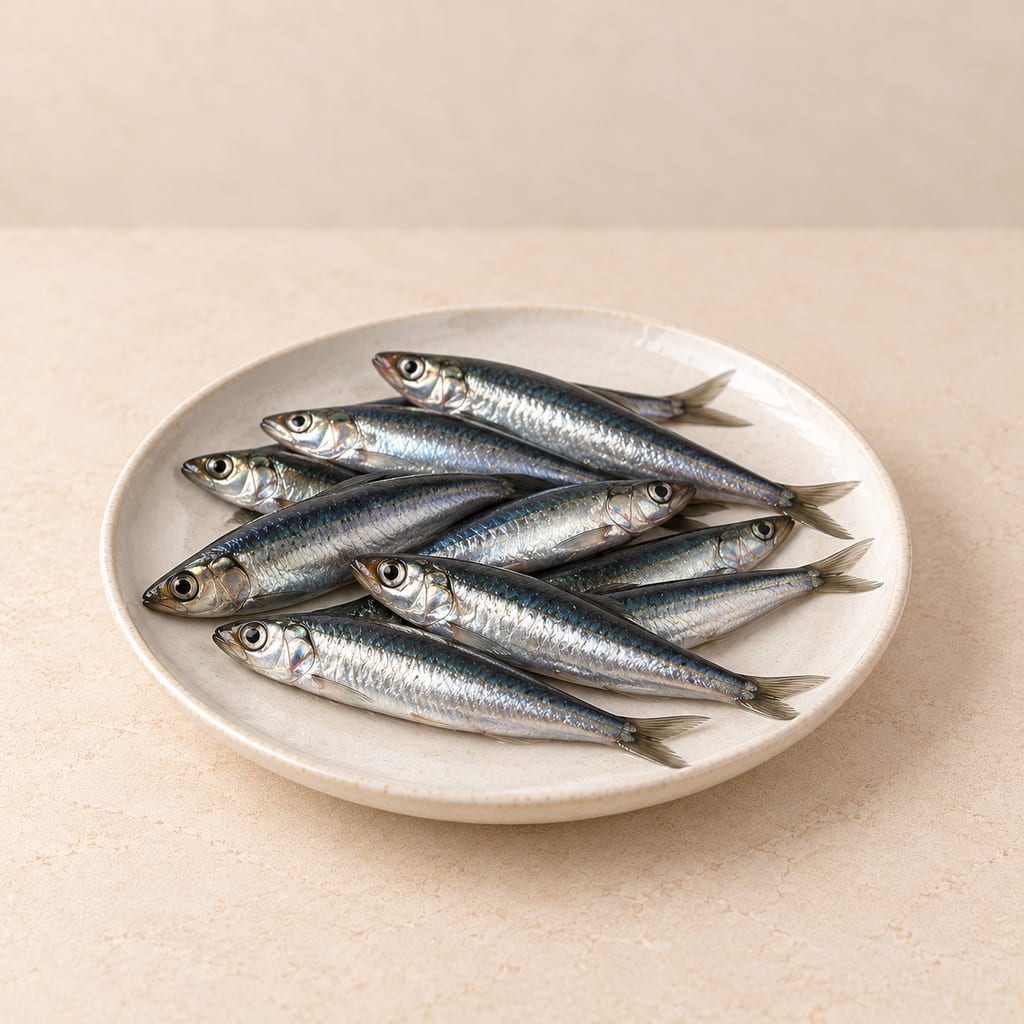
Anchovies are small schooling sea fish of the family Engraulidae, eaten fresh or dried and above all salted: as fillets in oil, whole salted fish or fish sauce.
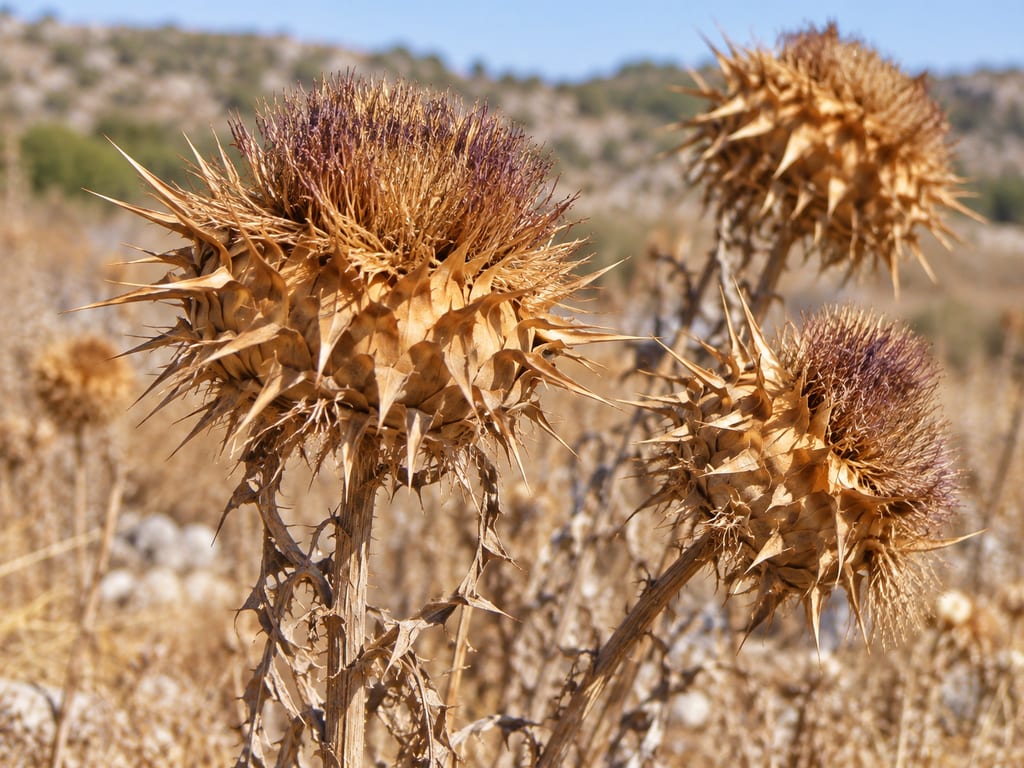
Dried flower heads of cardoon (Cynara cardunculus) supply plant proteases used to coagulate milk in several documented regional cheeses. Plant, extraction, milk and dose matter; evidence does not establish a universal home method.
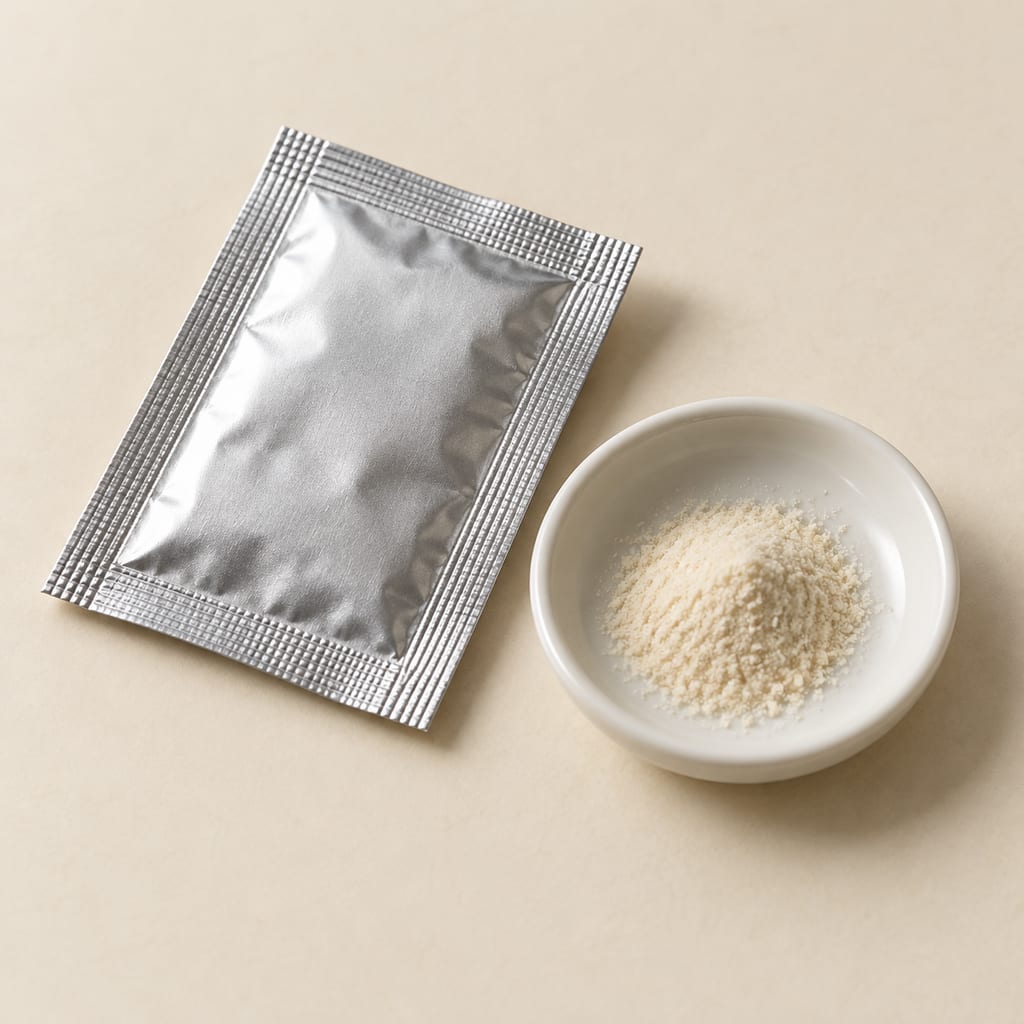
A defined vegetable lactic acid bacteria culture is a chosen strain or blend added to a vegetable ferment. Its effect depends on the strain, the vegetable, the salt level and the process.
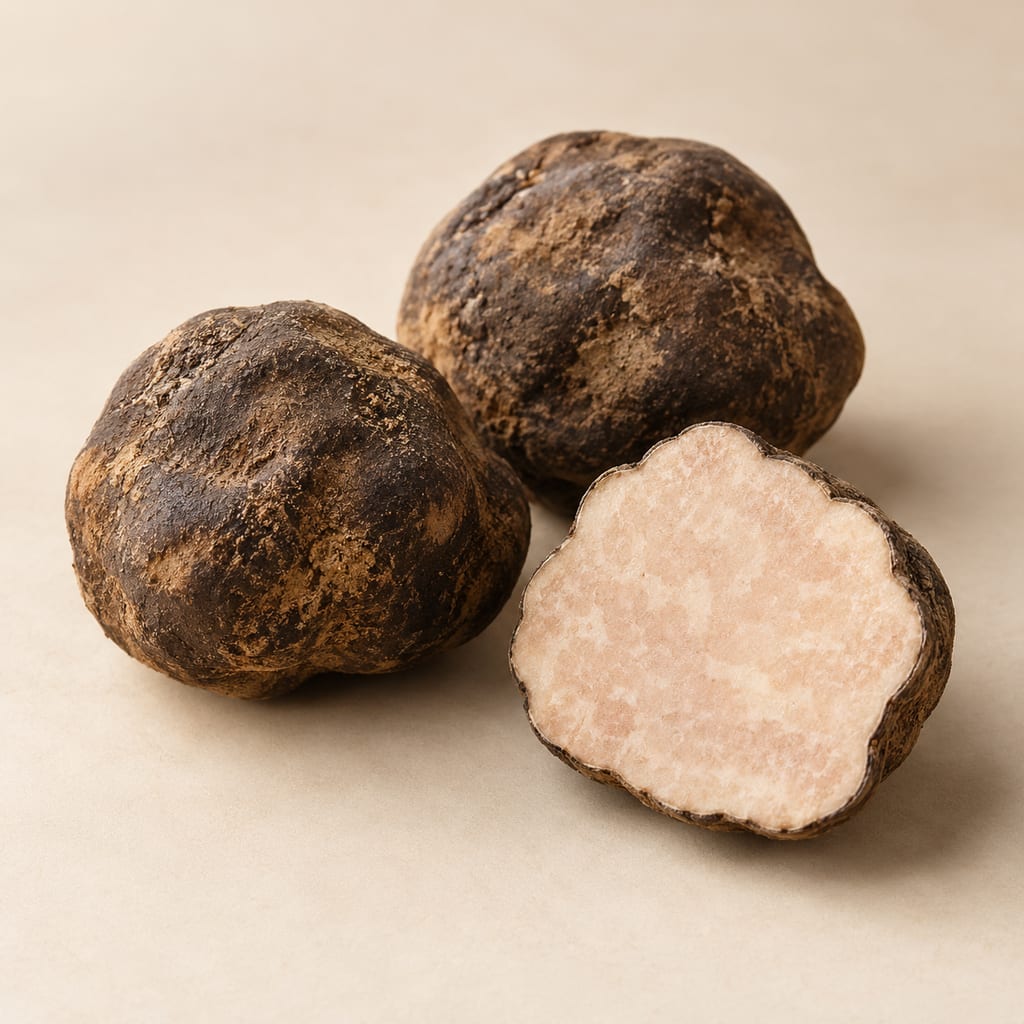
Desert truffle, Terfezia claveryi, is an underground fungus of dry Spanish and Moroccan ground that is gathered and sold seasonally, under names such as terfass, in local markets.
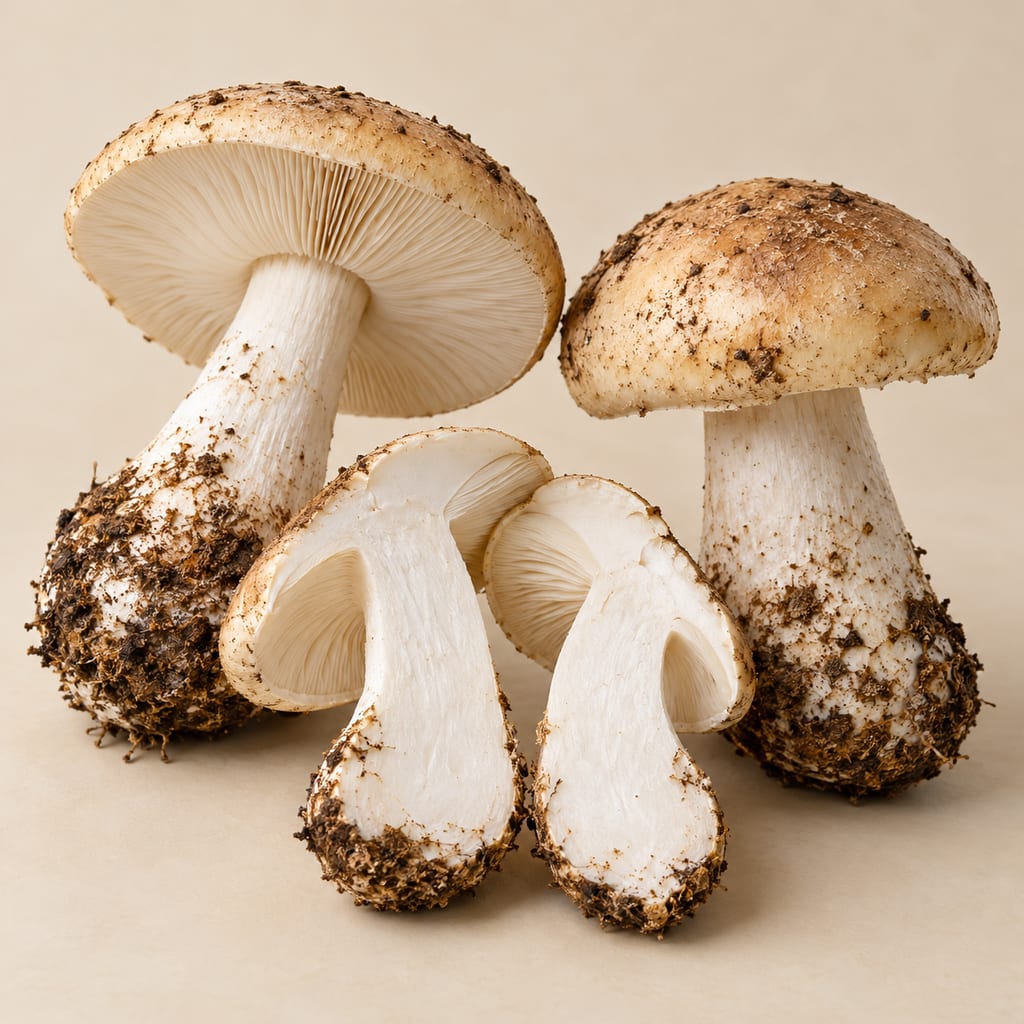
The Spanish name for a wild Amanita of the Iberian Peninsula. Spain’s 2009 mushroom decree lists it among wild species that may be sold fresh; it is a high-consequence identification.
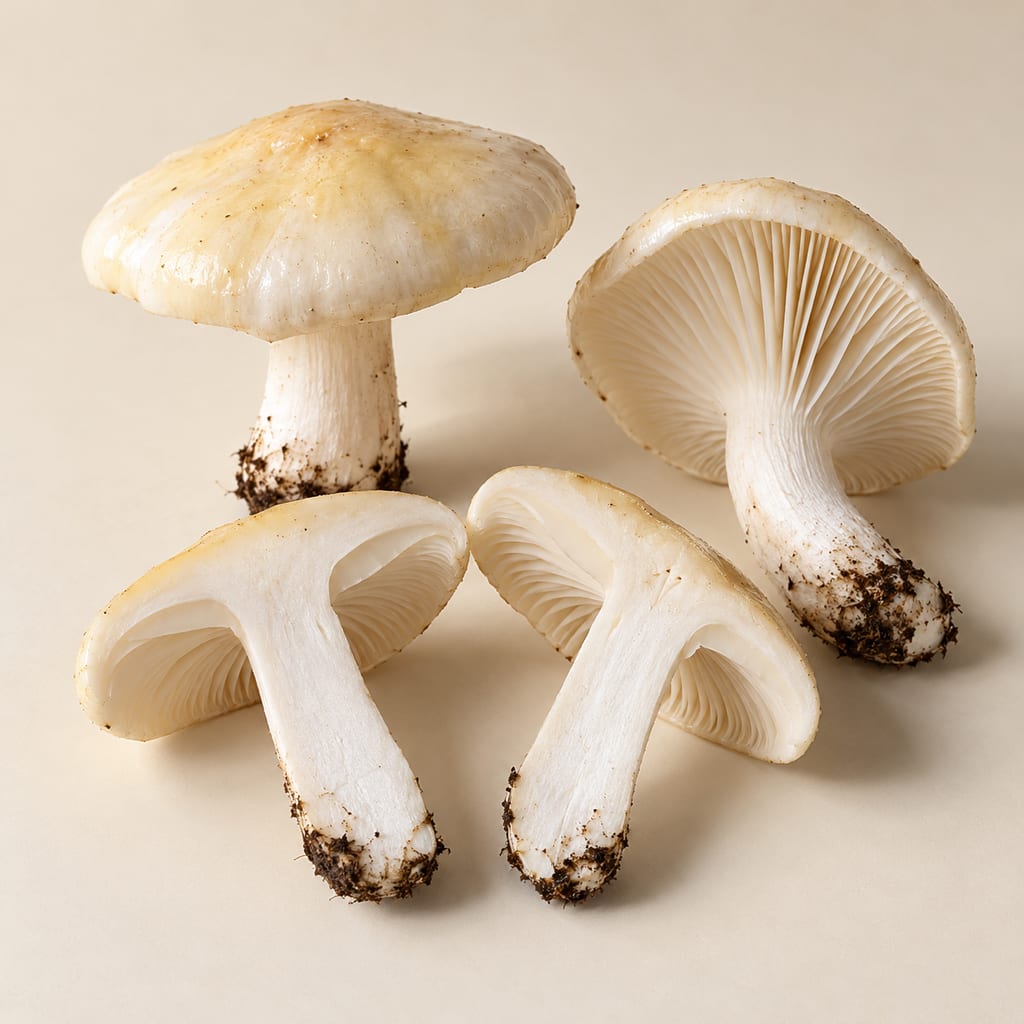
Hygrophorus gliocyclus is a slimy, cream-yellow wild woodwax of conifer woods. Spain lists it among wild mushrooms that may be sold fresh, and the sources read record little else about its food use.
No community contributions have been published for this entry yet.
Sign in to contribute. Published comments and photos are free to read.
Index FungorumTaxonomy
Hygrophorus marzuolus — Index Fungorum name recordIndex Fungorum lists Hygrophorus marzuolus (Fr.) Bres. as current name, published in 1893, based on Agaricus marzuolus Fr. (1821).
The record places the species in Hygrophoraceae, order Agaricales.
Cited in: The March mushroom of European mountain forests; What the record can and cannot say
Global Fungal Red List Initiative / The IUCN Red List of Threatened Species 2025Taxonomy · Distribution · Ecology · Season · Conservation · Food use · Trade
Hygrophorus marzuolus — IUCN Red List assessmentThe assessment classifies the European taxon as Vulnerable and associates it with old forests and ectomycorrhizal relationships chiefly with Abies, Pinus and Fagus.
It occurs mainly in temperate Europe around the Pyrenees, Alps and Carpathians; isolated records lie in bordering regions.
It fruits early in spring, sometimes under snow, in natural or near-natural forest, to elevations around 2,000 m.
It is an appreciated edible mushroom; it was formerly marketed in Austria, France, Germany, Italy and Switzerland, with current sale described as prohibited in those countries.
The assessment reports legal protection in Croatia, Germany, Serbia and Slovakia, and local protection or picking restrictions in certain Italian regions.
The European assessment treats North American records under the same name as likely different taxa and requests molecular comparison.
Cited in: The March mushroom of European mountain forests; A tree-linked fungus in old forests; Season: after winter, but not by the calendar alone; Where it occurs, and where food use is documented; Collection, marketing and local restrictions; Food handling and identification limits; What the record can and cannot say
Parque Micológico Comunidad de AlbarracínLocal name · Habitat · Season · Culinary use
Marzuelo — Parque Micológico Comunidad de AlbarracínThe local mushroom park describes the March mushroom in Sierra de Albarracín pinewoods and humus-rich acidic soils.
It gives a local fruiting window of March to May and notes that its appearance there is later than in other Spanish areas.
It calls the species edible and says fruit bodies should be washed; it does not provide a recipe.
Cited in: The March mushroom of European mountain forests; A tree-linked fungus in old forests; Season: after winter, but not by the calendar alone; Where it occurs, and where food use is documented; Food handling and identification limits; What the record can and cannot say
Sociedad Micológica BarakaldoTaxonomy · Habitat · Season · Culinary use
Hygrophorus marzuolus — Sociedad Micológica BarakaldoThe society describes it as a valued edible mushroom with a fruiting period from midwinter to mid-spring, with highest presence in February, March and April, in coniferous and broad-leaved forests.
It records local common names in Spanish, Catalan, Basque and Galician; those names are regional, not universal.
Its account reports potential confusion with other Hygrophorus species; it is not a field-safety guide.
Cited in: The March mushroom of European mountain forests; A tree-linked fungus in old forests; Season: after winter, but not by the calendar alone; Where it occurs, and where food use is documented; Food handling and identification limits; What the record can and cannot say
Comunidad de Madrid, public health guidanceCommercial regulation · Food use
Comercialización de setasThe Madrid regional commercial-mushroom list classifies Hygrophorus marzuolus as edible and marketable fresh, citing the applicable list entries.
This is a marketing classification, not permission to collect in every location or a national harvest licence.
Cited in: Where it occurs, and where food use is documented; Collection, marketing and local restrictions; Food handling and identification limits; What the record can and cannot say
Boletín Oficial del Estado, SpainCommercial regulation
Real Decreto 30/2009, sanitary conditions for commercializing mushrooms for food useSpain’s national decree sets sanitary conditions for the marketing of mushrooms for food use; local collection rules and site permissions are separate questions.
Cited in: Collection, marketing and local restrictions; Food handling and identification limits; What the record can and cannot say
iNaturalistImage reference · Dated observation
Observation 343060742: Hygrophorus marzuolusResearch-grade observation recorded in Sălaj, Romania on 2026-03-14; image license CC BY.
Cited in: Season: after winter, but not by the calendar alone; Where it occurs, and where food use is documented
iNaturalistImage reference · Dated observation
Observation 341102624: Hygrophorus marzuolusResearch-grade observation recorded in the Monts d'Ardèche Regional Natural Park, France on 2026-03-03; image license CC BY.
Cited in: Season: after winter, but not by the calendar alone; Where it occurs, and where food use is documented
iNaturalistImage reference · Dated observation
Observation 286089771: Hygrophorus marzuolusResearch-grade observation recorded near Velika Buna, Croatia on 2025-03-15; image license CC BY.
Cited in: Season: after winter, but not by the calendar alone; Where it occurs, and where food use is documented
iNaturalistImage reference · Dated observation
Observation 276958631: Hygrophorus marzuolusResearch-grade observation recorded near Glamoč, Bosnia and Herzegovina on 2025-04-30; image license CC0.
Cited in: Season: after winter, but not by the calendar alone; Where it occurs, and where food use is documented
iNaturalistImage reference · Dated observation
Observation 270015849: Hygrophorus marzuolusResearch-grade observation recorded in Ravne, Slovenia on 2025-04-12; image license CC BY.
Cited in: Season: after winter, but not by the calendar alone; Where it occurs, and where food use is documented
iNaturalistImage reference · Dated observation
Observation 270015394: Hygrophorus marzuolusResearch-grade observation recorded in Hautes-Pyrénées, France on 2025-04-12; image license CC BY.
Cited in: Season: after winter, but not by the calendar alone; Where it occurs, and where food use is documented