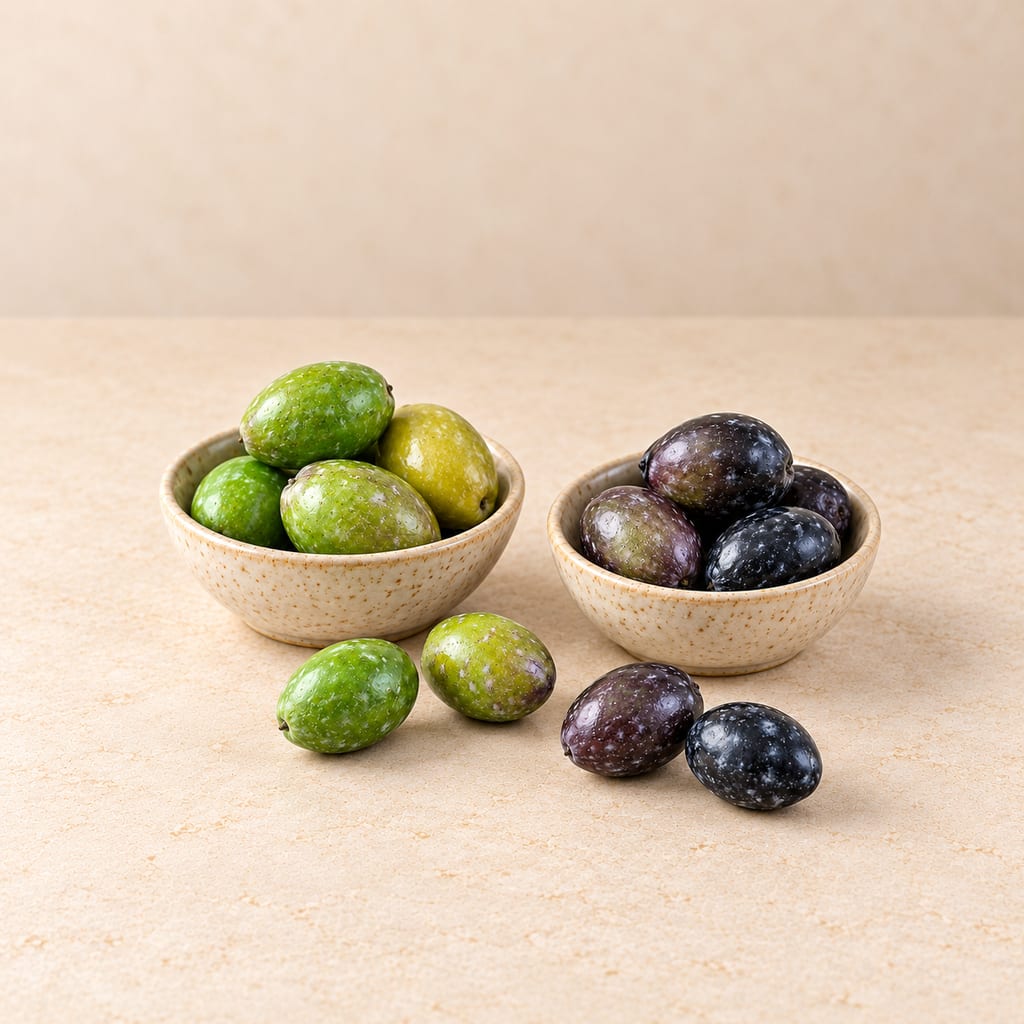
Olives
Olives are the bitter fruit of Olea europaea, made edible by lye, brine or salt, and the raw material of the table olives that are cured and fermented around the Mediterranean.
 FermenteaWhere food goes to change
Traditional method
Sicilian-style olives
Green-ripe olives are fermented in seasoned, vinegar-adjusted brine; UC ANR gives size-dependent salt concentrations and multi-month handling.
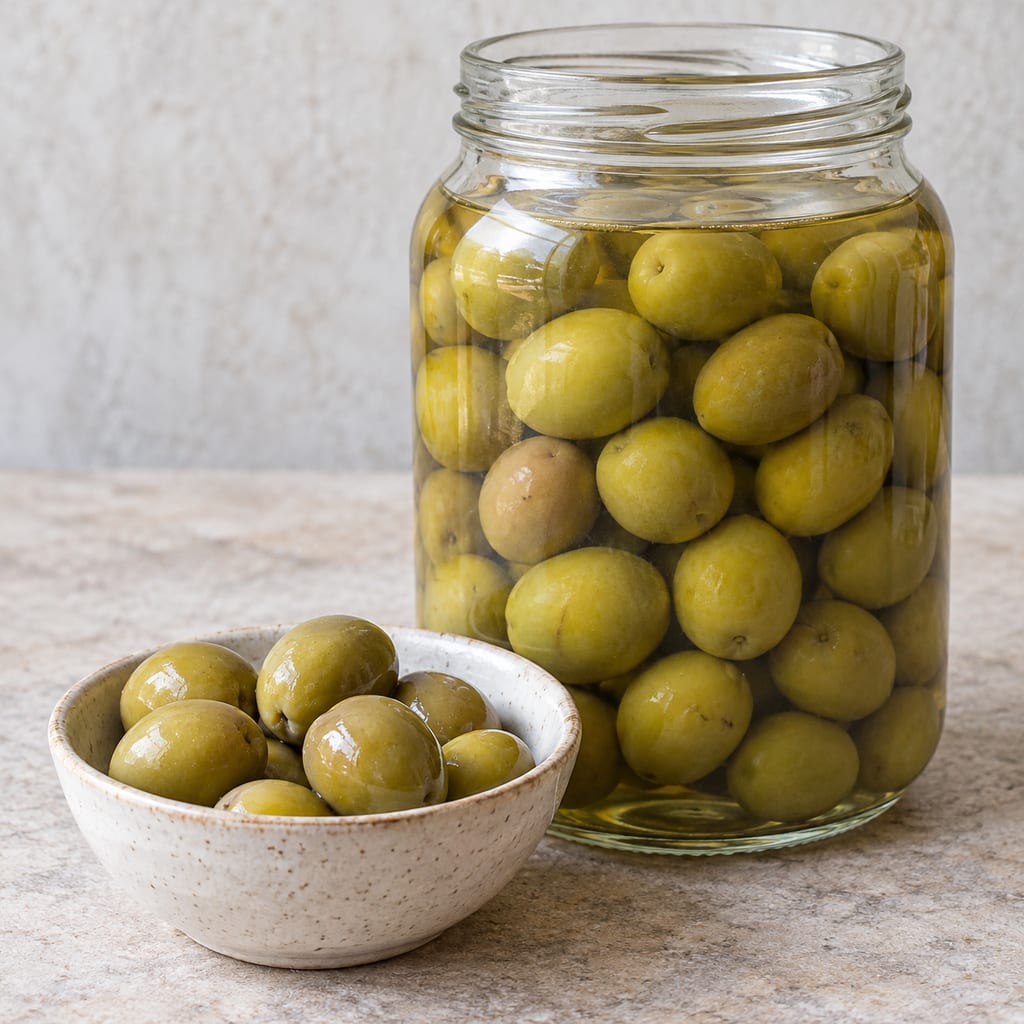
UC ANR documents a Sicilian-style green olive brine method. The record follows the published style description and does not claim a specific Sicilian household or historical date.
Scaling: source batch only
The source warns not to change brine concentrations and says to discard olives that become moldy, soft or bad smelling; do not taste questionable fruit.
Hazard sourceUse the correct source-stated salt formula for olive size; keep fruit covered with brine and check for leaks, pressure and spoilage. Do not taste olives that are moldy, soft or bad smelling.
Control sourceUC ANR explicitly says not to alter its brine concentrations. Discard moldy, soft or bad-smelling olives without tasting.
This method adds vinegar to its brine; it is classified as mixed fermentation, not a vinegar-only quick pickle.
Sicilian-style olive method; geographic origin not established by this source. UC ANR labels the recipe Sicilian-style but does not state that this particular method was documented in Sicily; no mapped country or coordinates are asserted.
Olives are the bitter fruit of Olea europaea, made edible by lye, brine or salt, and the raw material of the table olives that are cured and fermented around the Mediterranean.
Salt seasons a meal, shapes fermentation and preserves food. Its history follows the people who mine, harvest, trade and transform it, and the choices hidden inside an ordinary packet.
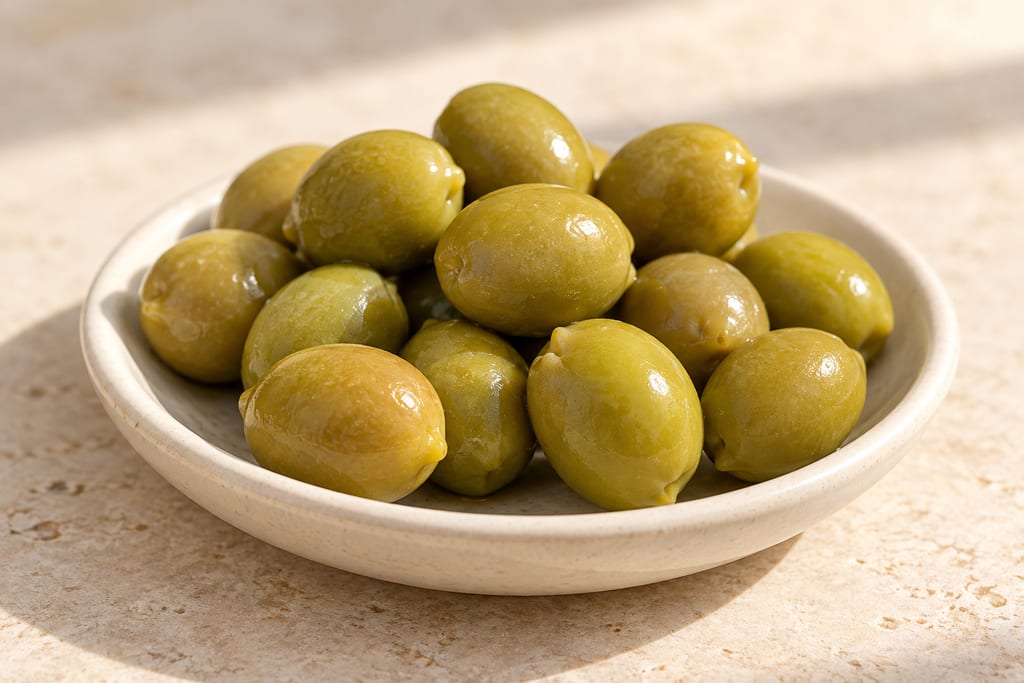
A Portuguese table-olive product from the Negrinha cultivar in northeastern Portugal, sold in three commercial styles, two of them brined fermentations and one oxidised to black.
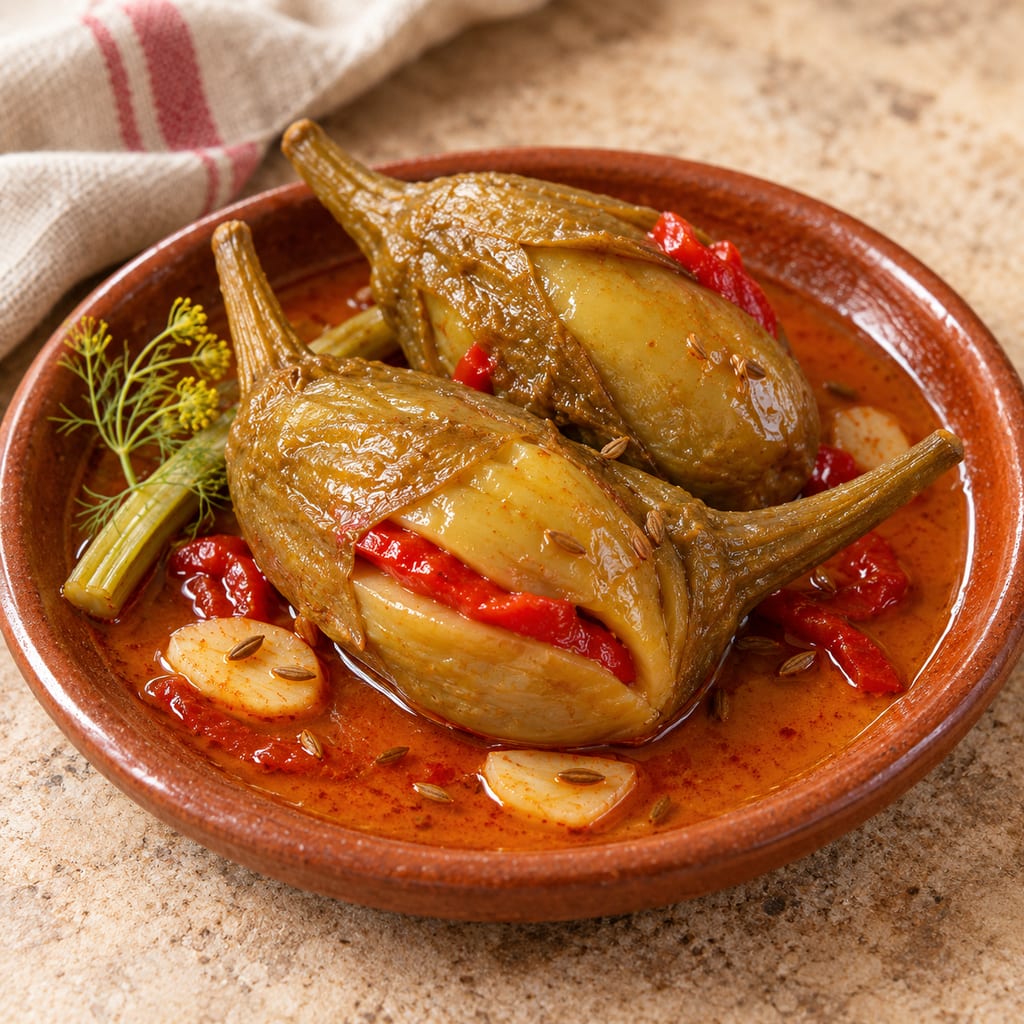
A protected aubergine preserve from Ciudad Real in Spain: tender fruit of the local Dealmagro variety, cooked briefly and then fermented in a vinegared, paprika-seasoned dressing.
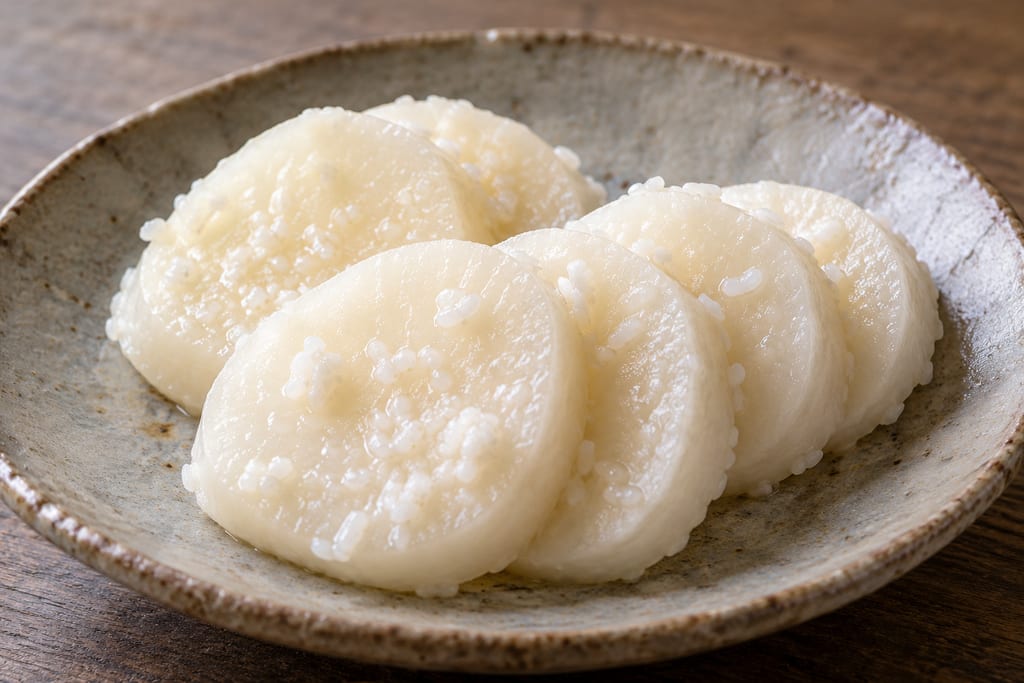
A sweet, crisp Japanese daikon pickle from Tokyo's Nihonbashi district, made by salting fresh radish and dressing it in rice koji, sugar or koji amazake without the heavy drying used for takuan.
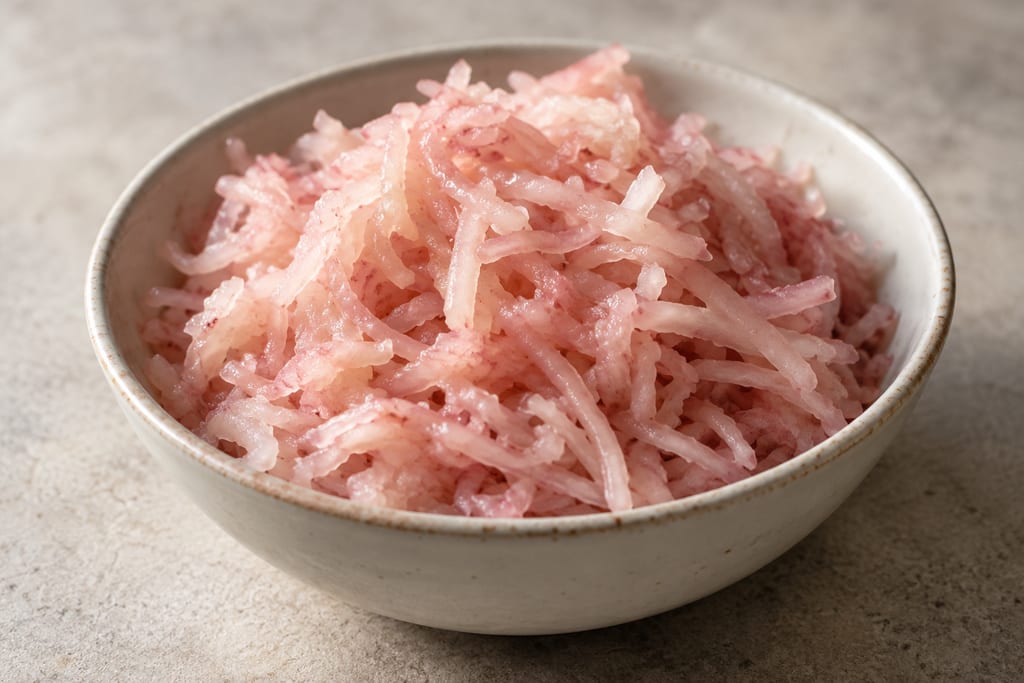
Source-specific Brovada DOP producer method for Friuli Venezia Giulia turnips and red-grape marc. This records a regulated producer process; it is not a validated home-scale recipe.
An industrial fermentation patio places factory-made fiberglass-reinforced polyester olive tanks below floor level, with drainage and transfer infrastructure arranged around the buried vessels.
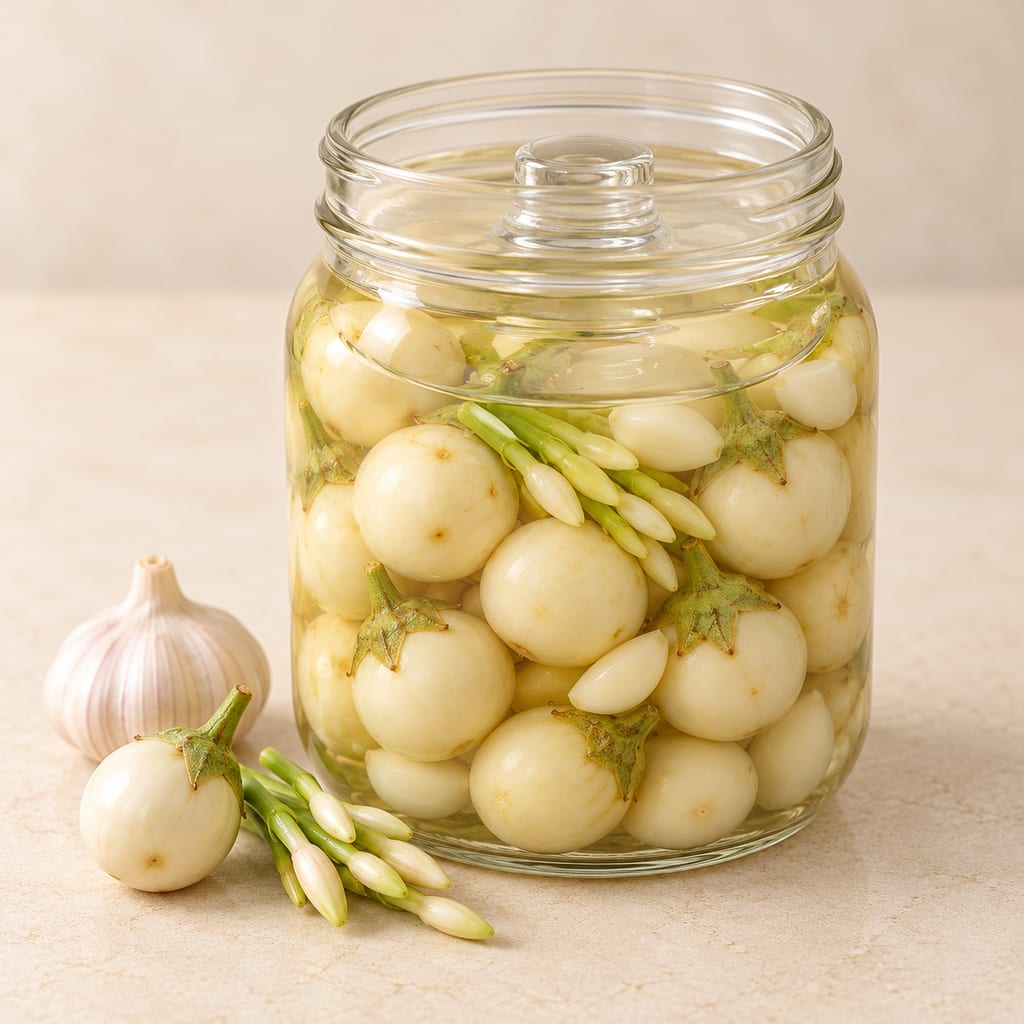
Vietnamese salted and fermented small eggplant, dried on the day of purchase, then held submerged in warm salty water with garlic and galingale flower for a week or longer.
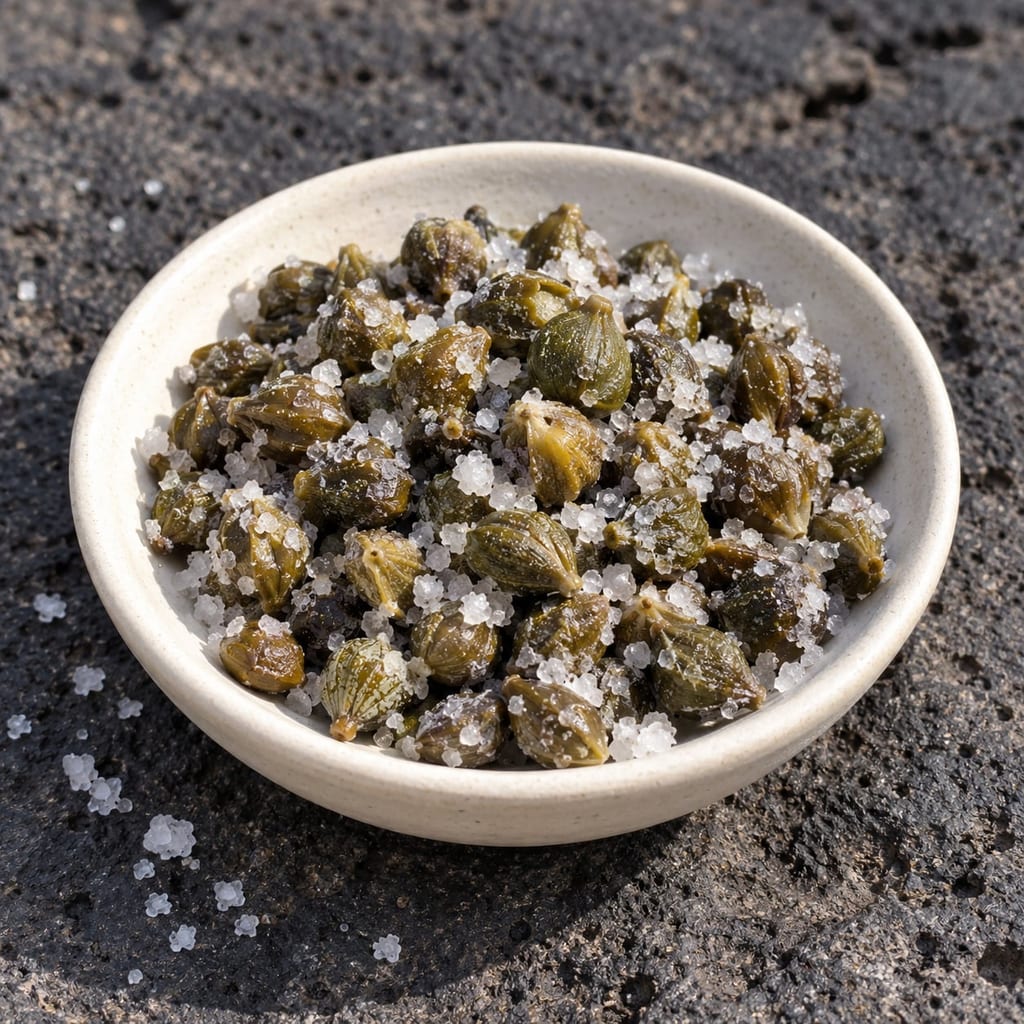
A protected Sicilian product: unopened caper buds from the island of Pantelleria, dry-salted with sea salt in a two-stage process that encourages lactic fermentation.
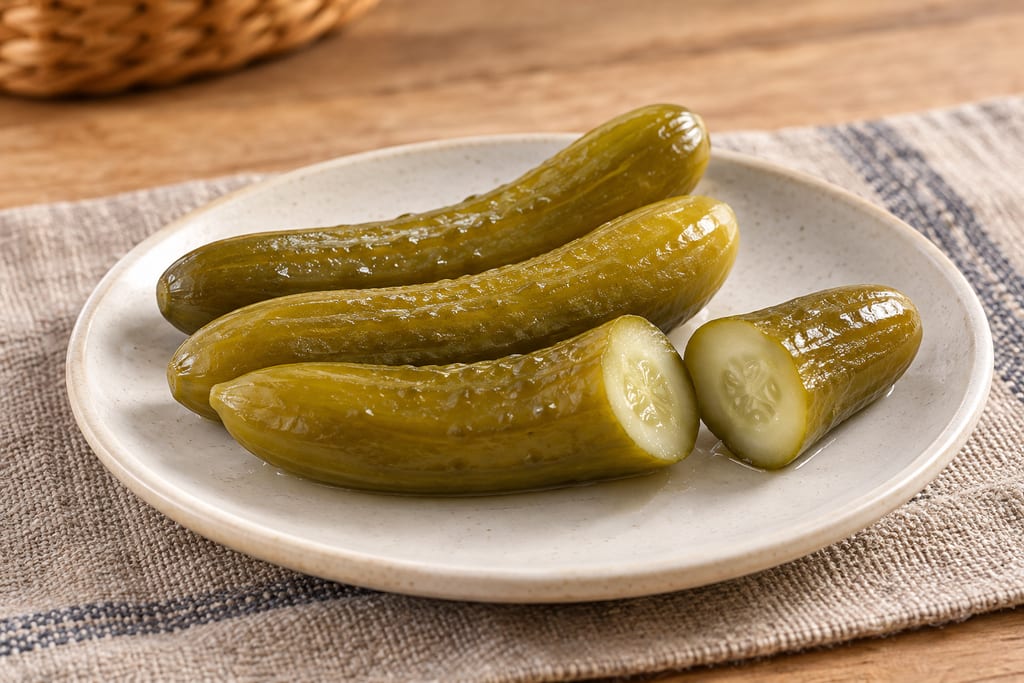
Çubuk turşusu is a registered pickle from Çubuk district in Ankara. Its cucumber variant is sold as Salatalık Turşusu, and a commercial specification sets its brine and room-temperature period.
No community contributions have been published for this entry yet.
Sign in to contribute. Published comments and photos are free to read.
University of California Agriculture and Natural Resources; revised by UC Davis food-safety scientistsInspiration · Geography · Safety
Olives: Safe Methods for Home Pickling, Sicilian-style olivesExact size-dependent brine concentrations, 5% vinegar addition, temperature, staged fermentation/storage, spoilage caution and traditional-style label.