
Home equipment crafts
What an appliance cannot reproduce
A machine can supply heat, cold, airflow, pressure or a vacuum. Many traditional foods also depend on sunlight, frost and running water, months of microbial work, or a tested kill step, and these are the places where an appliance stops.
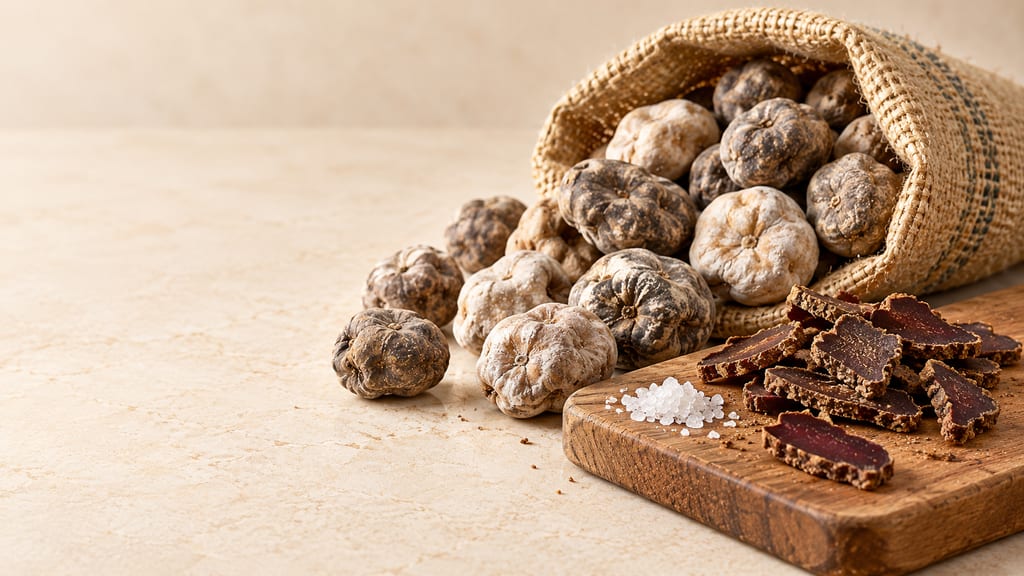
Freeze-dried chuño potatoes and sun-dried biltong: foods shaped by mountain frost, sun and wind that a kitchen appliance does not reproduce.
A function is not a process
The rest of this series treats appliances as bundles of functions: a slow cooker is gentle heat with thermal mass, a dehydrator is warm moving air, a freezer is ice formation. That way of thinking is useful because it shows when a machine can take over a job. It also shows where it cannot. Many traditional processes do several things at once, and an appliance that copies one of them leaves the others out.
Sun-drying removes water and also exposes food to ultraviolet light. Andean frost freezes potatoes, and the days and weeks that follow add trampling, sun and, for white chuño, soaking in water. A Pacific breadfruit pit is a place with particular leaves, soil and time. A ripening cheese or a fermented sausage is a sequence of microbial and enzymatic changes that takes weeks. A home canning process is a measured amount of heat reaching the slowest-heating point of a jar. In each case the boundary has a mechanism: light-driven starch chemistry, leaching, cell rupture and enzymes, an anaerobic ecology, heat penetration, the growth of Clostridium botulinum without air, a toxin that heat does not destroy, or microbes that survive drying.
This article goes through those mechanisms one by one, and for each it says what the appliance still does well. The point is not that equipment is unsuitable; it is that a recipe built around a machine has to supply, or honestly leave out, whatever else the traditional process was doing.
Sour cassava starch needs the sun
Sour cassava starch, polvilho azedo in Brazil and known in Spanish as almidón agrio, is the clearest case of a drying method that changes the food. Andrea Díaz, Cecilia Dini and María Alejandra García, writing in 2024, describe it as starch cake left to ferment spontaneously straight after extraction, then sun-dried, with oxidation reactions during the sun-drying that are essential to the starch's enhanced baking expansion. Qi and colleagues, in 2020, call naturally fermented, sun-dried tapioca starch the traditional material of polvilho azedo and a main ingredient of gluten-free foods in Brazil. In Colombia, Leonardo Alonso-Gomez and colleagues followed the fermentation in tanks for steeping times of 15 to 90 days and found that the bacteria multiplying in them governed how the acidified starch behaved when heated.
The fermentation and the light do different jobs. Qi's group measured how far starches puffed on baking. Native tapioca starch expanded by 3.37 mL/g; fermented and oven-dried starch by 3.71 mL/g; fermented and sun-dried starch by 6.97 mL/g. Potato starch treated the same way expanded less in every case. Fermentation, they report, attacked the amorphous regions of the granules and cut glycosidic bonds; sunlight then depolymerised the tapioca starch, and changes in its free-radical signal were, they concluded, essential to the high expansion.
Earlier work by A. C. Bertolini, C. Mestres, P. Colonna and colleagues explains the light's part. In a 2001 study they found compounds in cassava starch excited at 360 and 290 nm that were photodegraded when the starch was exposed to sunlight or to 360 nm ultraviolet light; the irradiation depolymerised the starch by a mechanism at least partly involving free radicals, and the lactic acid from fermentation was photodegraded too. They attributed polvilho azedo's baking expansion to photochemical starch degradation linked to its heterolactic fermentation, after sun-drying. A companion paper traced the puffing itself to water vaporising in the dough while the starch paste was fluid near its melting point.
A dehydrator or an oven does part of this job well. It dries the starch cake reliably, in any weather and without dust or rain, and gives a usable fermented starch. It does not give the starch a baker means by polvilho azedo: the oven-dried starch in Qi's trial puffed barely more than unfermented starch. Bertolini's group produced the photodegradation with ultraviolet light in a laboratory, but no published home method replaces the sun. A recipe calling for sour starch either uses sun-dried starch or says plainly that it is a different ingredient. The practical conclusion is not to install an improvised ultraviolet lamp; it is to keep the light stage, or study it deliberately, rather than assume all forms of drying are equivalent.
Chuño and tunta: frost, feet, water and sun
In the high Andes, potatoes are turned into chuño, a dried potato made for storage, by a sequence that a freezer can copy only in part. The post-harvest compendium on potatoes that Magno Meyhuay of the Instituto de Desarrollo Agroindustrial wrote for FAO in 2001 describes black chuño step by step. Bitter varieties are used, with a glycoalkaloid content too high to eat them fresh. The work is done in June and July, when frost is hardest, on beds of ichu grass at 3,600 to 4,000 metres. Potatoes sorted by size, so they freeze evenly, lie in one layer for two to four nights. The morning sun thaws them and water runs out of the broken cells; they lose 25 to 30 percent of their weight. They are then pressed by foot, quickly, to expel more water and speed drying, because delay lets a fermentation oxidise the flesh and lower its quality. Piled for two or three days, they develop chuño's characteristic flavour, and they finish drying in the sun to 10 percent moisture or less. Yield is 26 percent of the fresh weight.
Fernando Valdivieso and colleagues, in a 2026 study of chuño starch, add the climate and the second product. Night temperatures in June and July range from about −1 to −16 °C and days can pass 20 °C. White chuño, or tunta, is protected from the sun and soaked or washed in rivers, lakes or dug pits, for 20 to 30 days in some regions. That soaking, they write, partly leaches glycoalkaloids out of bitter potato species such as Solanum juzepczukii and Solanum curtilobum. A 2012 study by Stef de Haan and colleagues measured what the water does to minerals in white chuño: potassium fell 122- to 330-fold and calcium rose by up to about 715 percent, which they attribute to leaching into the water and absorption from it. The practice is old: M. E. Biwer and M. A. Melton reported starch-granule evidence for chuño at Quilcapampa La Antigua, a Peruvian site of the Middle Horizon, AD 600–1000.
The detoxification is why the appliance matters. FAO's 1990 handbook on roots and tubers in human nutrition says potato glycoalkaloids, solanine and chaconine, can reach 80 mg per 100 g in bitter varieties, taste bitter from about 20 mg per 100 g, and are not destroyed by normal cooking, since solanine decomposes only around 243 °C. Heat does not remove them. In the traditional process, the bitter compounds leave with water, over weeks.
A freezer reproduces the first physical step. Freezing and thawing ruptures potato cells so water runs out, and a domestic freezer would do that to ordinary table potatoes for anyone curious about the texture, though no one has published such a trial. It does not reproduce the weeks of soaking, the trampling, the sun or the regional varieties, and Valdivieso's group states that chuño's natural freeze-thaw cycles are not equivalent to industrial freeze-drying under vacuum. A freezer or freeze dryer is no route to making bitter potatoes safe to eat.
Cassava and breadfruit: enzymes, water and a pit
Cassava's danger has a precise chemistry. FAO's roots and tubers handbook explains that all parts of the plant contain linamarin, a cyanogenic glycoside. It is stable, and boiling does not change it; it releases hydrogen cyanide only when it meets linamarase, an enzyme freed when the root's cells are broken. Hydrogen cyanide dissolves readily in water and evaporates quickly above 28 °C. Good processing therefore does three things in order: breaks the cells so enzyme meets glycoside, gives the reaction time, usually through soaking or fermentation, and removes the cyanide with the water and by drying. The handbook says short sun-drying of fresh pieces is inefficient, because the enzyme is destroyed before the cyanide is released; that soaking for 18 to 24 hours can halve cyanide where four hours does not; and that squeezing is a fundamental step. A table it reproduces from Meuser and Smolnik shows how much the route matters: cassava pulp with 900 ppm of total cyanide kept 439 ppm after freeze-drying, against 13 ppm for material air-dried at 40 °C. On the handbook's own account, the likely reason is that fast freezing and drying stop the enzyme before it has done its work.
The International Institute of Tropical Agriculture's 2012 guide to gari, the toasted cassava granule of West Africa, puts that chemistry into practice: the roots are grated into a mash, which starts the removal of cyanide, and de-watering and fermenting the bagged mash for one or more days completes it. Mills, presses and extractors at home covers how graters and presses take over that labour. No machine replaces the fermentation's time. A freeze dryer used in place of soaking and fermenting would keep much of the poison, and no shortened home detoxification method has been published: the detoxifying stages and the roasting cannot be omitted or replaced by drying alone. Process research by Andrés Escobar and colleagues, comparing laboratory and conventional gari making, found that rasping and roasting were critical for the granule's physical properties, while fermentation and pressing were critical for its biochemistry, including a lactic acid content of 0.93 to 1.88 g per 100 g of dry matter after pressing.
Pacific breadfruit paste shows a different limit: a process recorded without the measurements an appliance would need. Pamela Lancaster and D. G. Coursey's 1984 FAO bulletin on traditional post-harvest technology describes fermented breadfruit paste called masi in Samoa, ma in the Marquesas, mahi in Tahiti, maratan in Ponape (Pohnpei) and namandi in Vanuatu. Peeled fruit goes into a hole lined with Heliconia leaves folded over to make a fairly airtight pocket, covered with more leaves, soil and rocks. After 34 days the dough-like paste is kneaded, shaped, wrapped in leaves and baked, and it can stay in the pit for over a year. Success, the bulletin says, depends on the type of leaves, the care taken in building the pit and local conditions. On Namu atoll, fallen fruit is soaked in sacks in salt water for a day and left on palm fronds for two or three days to ferment before going into leaf-lined pits.
No pit temperature, oxygen level or microbiology has been recorded. A weighted jar in a temperature-controlled cabinet can hold a temperature, but there is nothing recorded to match it to, and the leaves, soil and sealing that the makers themselves name as decisive are absent. Such a jar is a research analogue of the pit, not a home version of masi: the pit's leaves, oxygen conditions and ecology matter, and converting it to a jar is not established merely by matching a temperature.
Mature cheese and fermented sausage: time under control
A refrigerator on a controller can hold a cheese at the right temperature. It cannot make the cheese mature faster than its cultures and enzymes allow. Charles O'Connor's 1993 cheesemaking manual for the International Livestock Centre for Africa notes that some cheeses need starters, cultures chosen for functions such as flavour development, and that some coagulants are unsuitable for them: plant extracts from papaya, pineapple or the fig tree break down protein so actively that long-ripened cheese turns bitter. For his Cheddar he gives a ripening period of four weeks to two years, depending on how fast acid was produced and on storage temperature, and notes that storing at 15 °C slows ripening. New England Cheesemaking Supply's ageing guide makes the same point about refrigerators: a standard one runs 10 to 15 degrees colder than a cheese cave and slows ageing, and a converted one is set to 11–13 °C. The article Fermentation cabinets describes how to build that space. The cabinet sets the pace within the recipe's limits; the weeks and the microbes are still required.
Fermented sausage adds safety to time. The BC Centre for Disease Control's guidance on fermented sausage, written for inspectors and processors by Douglas Walker and colleagues in 2024, says bacterial growth is both desired and required in these products, to lower the pH. It lists the controls: a commercial lactic acid starter culture, with natural fermentation and backslopping not recommended; a pH drop fast enough to meet degree-hour limits on Staphylococcus aureus whenever fermentation runs above 15.6 °C; nitrite or nitrate at no less than 100 and no more than 200 ppm, which the maker must be able to calculate; at least 2.5 percent salt, generally 2.5 to 3.5 percent; controls for Trichinella in pork, noting that Trichinella in wildlife may resist freezing; and finished pH and water activity that meet the limits for a shelf-stable product. Its outbreak table includes illnesses traced to home-fermented meat.
A cabinet that can heat, cool and hold humidity is the right tool for the fermentation and drying stages, and the guidance assumes some such control. But none of its critical controls is a cabinet setting, and a "cheese cave setting" is not enough for meat: recipe validation has to cover the meat process and its endpoints. They are a culture, a calculation, a measured pH against time, a weighed cure and a final water activity, and a recipe that does not specify them is not made safe by a good chamber.
Drying meat is not cooking it
Jerky shows the same split in miniature. The National Center for Home Food Preservation's method dries strips at 60 °C, but it treats drying and pathogen reduction as separate tasks: the inside of the meat must reach 71 °C, either by boiling the strips in their marinade for five minutes before drying or by heating dried strips in a 135 °C oven for ten minutes. A dehydrator's dial does neither. The US Department of Agriculture's Food Safety and Inspection Service gives the same rule in its jerky guidance: heat meat to 71 °C, or poultry to 74 °C, before dehydrating. The rule belongs to jerky and is not a general requirement for every traditional cured meat. Drying and freeze-drying at home sets the method out in full.
Biltong, a South African-style dried beef, is made with low heat and no cooking step, and its safety rests on a different, measured route. In a 2020 study, C. E. Karolenko and colleagues inoculated beef with five serovars of Salmonella, marinated it with salt and vinegar and dried it at 22.2–25 °C and 55 percent relative humidity. After six to eight days water activity was generally below 0.85, weight loss reached 60 percent, and nearly every process gave the 5-log reduction of Salmonella that US federal inspectors require from a dried beef process. They describe this as the first published biltong process to reach that reduction. Its safety came from a tested formulation, drying conditions and laboratory counts, not from how dry the meat looked; a home drying box that matches the temperature has not matched the validation. Nor do the box's readings settle the question. The Food and Drug Administration defines water activity as the equilibrium relative humidity of a food sample in a closed space, divided by 100; a cabinet's humidity reading measures a moving drying air stream, not the meat. Weight loss is useful for comparing batches but is not a universal substitute for water activity, because foods bind water differently.
A multicooker is not a pressure canner
Some electric pressure multicookers carry canning buttons, and at least one maker says its cooker reaches canning pressure. The National Center for Home Food Preservation does not support using its canning processes in them, and its 2019 explanation is about heat, not pressure. A canning time is worked out by measuring temperatures inside jars throughout a process in a particular canner; no USDA work of that kind has been done with jars in an electric pressure cooker. Pressure alone does not prove the food is hot, because air mixed with the steam gives a lower temperature at the same pressure. Power surges or drops could let the temperature sag without the user knowing. And the process times for low-acid foods count the heat delivered while the canner comes up to pressure and while it cools naturally afterwards, so a small cooker that heats and cools faster could under-process the food. The centre's processes were developed for stovetop canners holding at least four upright quart jars; it excepts a dedicated electric canner, the Ball automatic home canner, for acid foods only, because that machine had its own process development.
The same logic applies to recipes. The centre's apple butter is processed for 5 minutes in half-pints or pints at low elevation; its reduced-sugar apple butter, a different formulation, needs 15 minutes in the same jars. Instant Pot's apple butter tells readers to "can safely" and gives no process. A multicooker is good at the cooking: it softens fruit, beans or bones quickly. A canning process belongs to a tested recipe in a canner it was tested in; otherwise the product is refrigerated or frozen.
No air: vacuum packs and infused oils
Removing air is not a preservation process, because the bacterium of most concern grows without it. The UK Food Standards Agency's guidance on vacuum and modified-atmosphere packed chilled foods, revised in December 2020 for businesses, explains that vacuum packing removes air and that non-proteolytic Clostridium botulinum can grow and make toxin without oxygen at 3 °C and above. It sets a maximum shelf life of 10 days for such foods kept at 3–8 °C unless a controlling factor is in place: a heat treatment of 90 °C for 10 minutes at the slowest-heating point, a pH of 5 or below throughout, at least 3.5 percent salt in the water phase, a water activity of 0.97 or below, or a combination shown to work. It adds that outbreaks have followed vacuum-packed foods such as smoked fish, that air in a pack cannot be relied on because foods contain oxygen-free pockets, and that Listeria monocytogenes also grows in vacuum packs at refrigeration temperatures. This is commercial guidance; its 10-day framework is not a household guarantee. New Zealand's Ministry for Primary Industries makes the consumer version of the point: reduced oxygen can encourage organisms such as Clostridium botulinum, so a vacuum-packed wet product still needs its own validated processing and storage.
A vacuum sealer still does real work. Oregon State University's equipment library describes it as ideal for freezing, and useful for some dried and freeze-dried foods. The seal keeps air and moisture away from food that is already preserved by cold or dryness; it does not replace either.
Infused oils sit on the same mechanism. Oregon State University Extension's guidance on herbs and vegetables in oil makes the general rule: an infused oil is not made shelf-stable merely by warm extraction. A Pacific Northwest Extension publication by Barbara Abo and colleagues at the University of Idaho explains that garlic and herbs can carry Clostridium botulinum spores and that oil gives them a low-acid, oxygen-free environment; several botulism cases have followed home-prepared garlic and herb oils. Unacidified home oils must be refrigerated for no more than 2 to 4 days or frozen. Their tested alternative soaks chopped garlic or fresh basil, oregano or rosemary in 3 percent citric acid for 24 hours before infusing, and was developed only for those four; lemon juice and vinegar were not tested and cannot be substituted. Carla Schwan's 2024 University of Georgia circular adds that heating oil to 82 °C before adding unacidified garlic or herbs does not change the rule: refrigerate and discard after 4 days. iSi's rapid-infusion attachment lists oil among the liquids it flavours in minutes. Speed of extraction does not alter any of this; a rapidly infused garlic oil is an infused garlic oil.
Homemade vinegar: sour is not a specification
Fermenting fruit into vinegar is a home craft in its own right. Using that vinegar to preserve something is another matter. The National Center for Home Food Preservation's pickling guidance requires recipes with tested proportions, says a minimum, uniform level of acid throughout the product is what prevents the growth of botulinum bacteria, recommends white distilled or cider vinegar of 5 percent acidity, and says not to use a vinegar of unknown acidity. Oregon State's guide to flavoured vinegars advises commercially produced vinegars as the base and says a flavoured vinegar should not be used for pickling unless it has 5 percent acidity. Percent acidity is a measure of how much acid the vinegar holds; a sour taste, or a low pH reading alone, does not show that a homemade vinegar matches a specified percentage of acetic acid. Giving vinegar more oxygen can speed acetification, but it does not guarantee the same aroma or a known, safe acidity for canning. Homemade vinegar is a flavouring unless its acidity has been measured to the recipe's specification.
Fish: histamine, salt and heat
Fish brings a hazard that heat cannot undo. Food Standards Scotland's guidance for fish smokers explains that some fish contain much free histidine, which a bacterial enzyme, histidine decarboxylase, converts to histamine when fish is mishandled and poorly chilled. Histamine and histidine are not destroyed by cooking or other heat treatment, which makes scombroid poisoning a matter of how the raw fish was kept, not how the product was finished. The same guidance notes that raw and fermented fish are reported as particularly at risk from Clostridium botulinum, and that jars, cans and vacuum packs need specific consideration.
That frames modern warm-vessel fish sauces. Nordic Food Lab in Copenhagen documented garum trials in 2011: Lars, writing in its "Home Made" post, describes a thermal box heated by electric underfloor heating on a PID controller, holding the 30 to 40 °C that much of its fermentation work needed, with garum trials inside. In another 2011 post, Ben Reade describes herring and mackerel sauces in incubator tanks, inoculated with protein-breaking microorganisms to speed a process that usually takes a long time. A controlled warm box is a sound way to run such experiments. It warms the fish's enzymes and the microbes alike, and nothing it does reverses histamine formed before the fish was salted. A dependable home recipe would need its salt, substrate, enzymes, histamine control and full process stated; none was found.
Hot-smoked fish is better documented. The University of Alaska Fairbanks Cooperative Extension's guide Smoking Fish at Home, revised in 2021, gives a detailed home procedure and sets out the equipment's limits: an electric smoker used with a separate food probe, with an oven able to complete a specified cooking stage when appropriate, and lightly smoked fish treated as refrigerated or frozen food. The Pacific Northwest Extension publication Smoking Fish at Home Safely, revised in 2009 by Barbara Rasco with Carolyn Raab and Sandra McCurdy, names three factors in every recipe: salt, smoke and heat. The fish is brined, as a rule of thumb in 1 part salt to 7 parts water by volume for about an hour, aiming at the at least 3.5 percent water-phase salt that the FDA recommends for commercial products; dried until a tacky pellicle forms; smoked at around 32 °C for up to two hours; and then heated until the thickest piece reaches at least 66 °C, preferably 71 °C, held for at least 30 minutes, measured with a probe through the smoker wall. Smoke itself is not an effective preservative, and liquid smoke and nitrite are not safety measures. Small metal smokers often cannot reach the needed temperature, so the fish finishes in a home oven within two hours. It is stored at 3 °C or below, or frozen, and vacuum-packed fish must be frozen or refrigerated. Food Standards Scotland notes that no single temperature is agreed for controlling Listeria in hot smoking, and that heat, smoke phenols and salt act together.
An electric smoker with a thermostat and a separate food probe is well suited to this: it can hold the low smoking stage and, if it reaches 93–107 °C inside, the cooking stage. What it cannot do is salt the fish evenly, chill it before smoking or undo poor handling.
Freeze-drying keeps the microbes too
A freeze dryer removes water by freezing food and turning the ice to vapour under vacuum, and Utah State University Extension's 2026 fact sheet by Victoria Carlile, Morgan Wayment and Jose Brandao is plain about what that does not do. Freeze-drying does not kill bacteria; it preserves them, and they can revive when the food is rehydrated. Properly dried food reaches a water activity of about 0.3 or below, where microbes cannot grow but can survive dormant, so meats and eggs must be cooked before drying or after rehydration. The sheet gives storage of 10 to 15 years, sometimes 25, for properly packaged food, but advises against eating home-freeze-dried products beyond 5 to 10 years; a machine's default cycle is not by itself evidence for a long shelf-life claim. Utah State's earlier buyer's guide to home freeze dryers makes the same point about microbial survival and immediate moisture-resistant packaging. FAO's cassava table makes the chemical version of the point: freeze-dried pulp kept about half its cyanide. A freeze dryer makes useful modern ingredients from foods that are already safe to eat; Drying and freeze-drying at home describes them.
What is still unknown
Some of the evidence here rests on single laboratory studies: the baking-expansion figures for sour starch, the mineral changes in white chuño and the biltong validation. No one has published a home method that reproduces the light stage of sour cassava starch, a measured temperature or microbiology for a Pacific breadfruit pit, or a validated warm-vessel garum.
Food-safety guidance also differs between countries. The rules quoted here come from US extension services, the UK Food Standards Agency, Food Standards Scotland and the BC Centre for Disease Control; a reader elsewhere should check their own authority's guidance on vacuum packing, smoked fish and cured meat.
Related
Discussed in this article
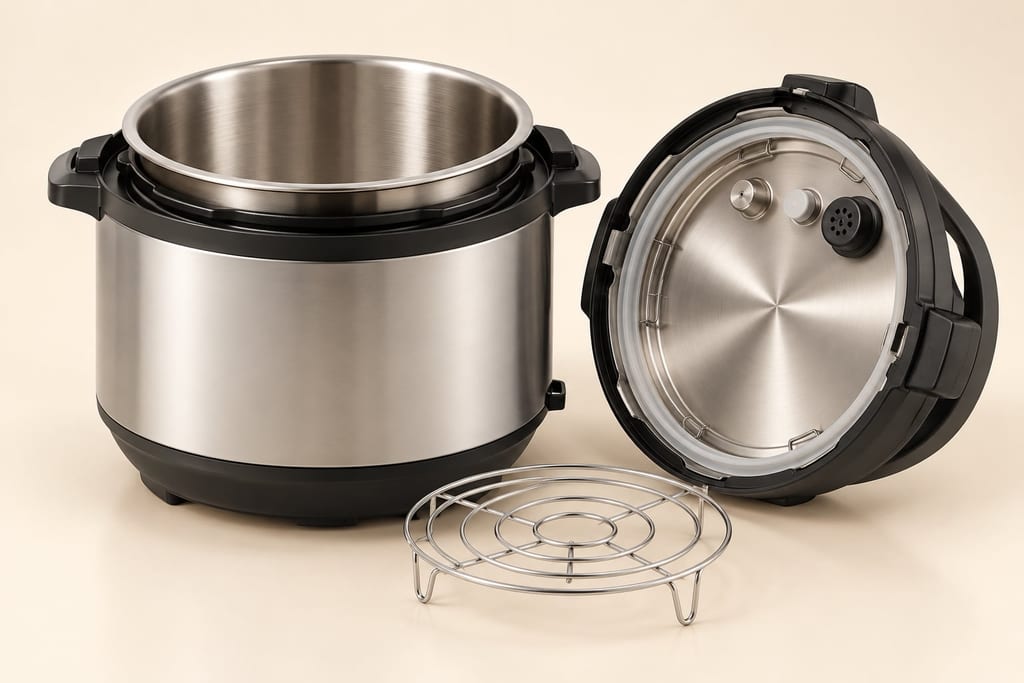
Electric pressure multicooker
A countertop electric cooker combines pressure cooking with model-specific functions such as sautéing, slow cooking, rice cooking and low-temperature programs. Settings do not transfer to pressure canning.
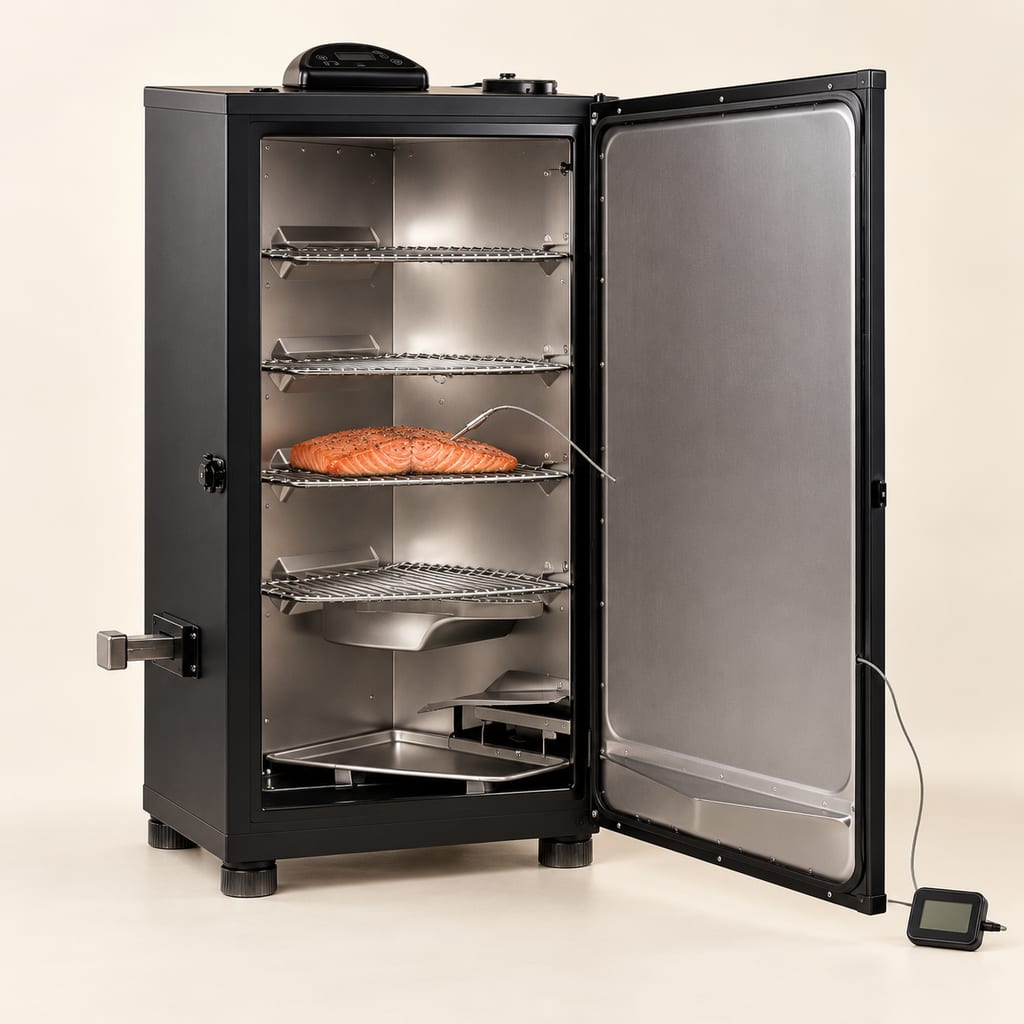
Electric smoker
An electric smoker heats an enclosed cabinet while wood chips make smoke. A thermostat controls chamber heat; a separate thermometer checks the fish. Models vary, and smoking does not make lightly salted fish shelf-stable.

Garum (garos, liquamen)
Garum, Greek garos and Latin liquamen, was the fish sauce of the ancient Mediterranean: fish and viscera salted and left in the sun, then drained off as a savoury liquid.
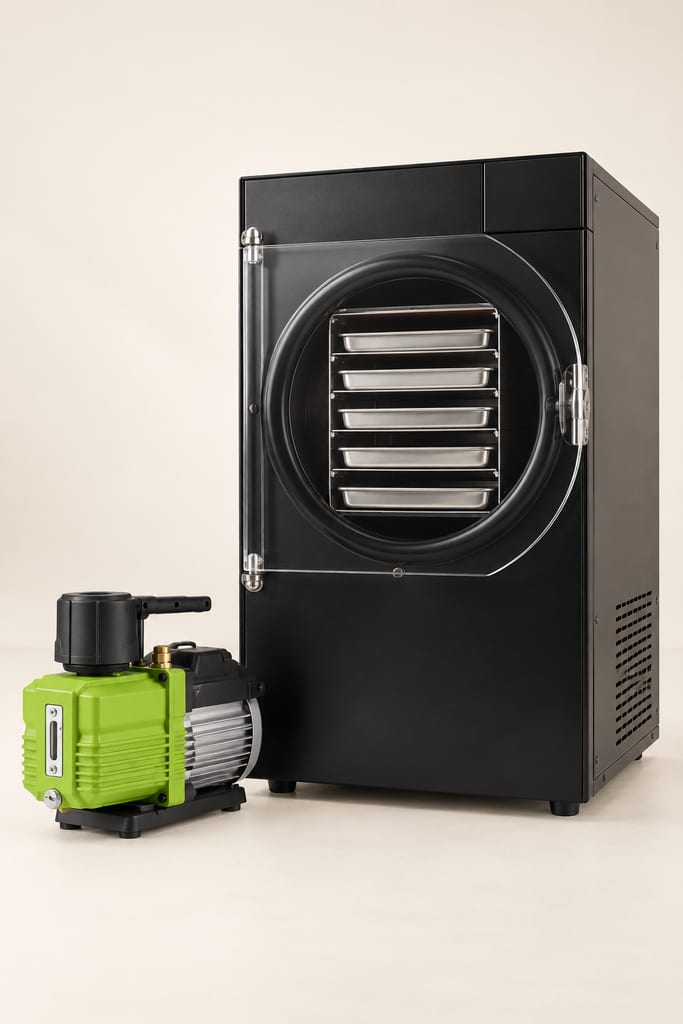
Home freeze dryer
A home freeze dryer freezes food and then removes ice under vacuum by sublimation, followed by drying to reduce residual moisture. It is a contemporary electric preservation appliance, not a freezer alone or a microbial kill step.

Jerky
A documentary account of dried meat strips and their historical uses. It does not provide an operational home method for making shelf-stable jerky at home.

Vacuum sealer
A vacuum sealer removes air from a food package and closes it with a heat seal. Stand-alone machines commonly use external suction at the bag edge or evacuate a chamber containing the whole pouch.
Community
No community contributions have been published for this entry yet.
Share what you made
Sign in to contribute. Published comments and photos are free to read.
Sources
International Journal of Biological Macromolecules 145:965–973 (2020); DOI 10.1016/j.ijbiomac.2019.09.187; PMID 31614157
Combinatorial effect of fermentation and drying on the relationship between the structure and expansion properties of tapioca starch and potato starchCited in: A function is not a process; Sour cassava starch needs the sun; What is still unknown
FAO (AGSI) INPhO post-harvest compendium; Instituto de Desarrollo Agroindustrial (INDDA); last reviewed 17 May 2001
POTATO: Post-harvest Operations (Post-harvest Compendium)Cited in: A function is not a process; Chuño and tunta: frost, feet, water and sun
National Center for Home Food Preservation, University of Georgia, 1 February 2019
Canning in Electric Multi-CookersCited in: A function is not a process; A multicooker is not a pressure canner
UK Food Standards Agency, published and last reviewed December 2020 (revision 4; first published July 2008)
The safety and shelf-life of vacuum and modified atmosphere packed chilled foods with respect to non-proteolytic Clostridium botulinumCited in: A function is not a process; No air: vacuum packs and infused oils; What is still unknown
Starch - Stärke (2016); DOI 10.1002/star.201600059
Physicochemical transformation of cassava starch during fermentation for production of sour starch in ColombiaCited in: Sour cassava starch needs the sun
Journal of Agricultural and Food Chemistry 49:675–682 (2001); DOI 10.1021/jf0010174; PMID 11262011
Photodegradation of cassava and corn starchesCited in: Sour cassava starch needs the sun
Journal of the Science of Food and Agriculture 81:429–435 (2001); DOI 10.1002/1097-0010(200103)81:4<429::AID-JSFA833>3.0.CO;2-2
Relationship between thermomechanical properties and baking expansion of sour cassava starch (Polvilho azedo)Cited in: Sour cassava starch needs the sun
Starch - Stärke (2024); DOI 10.1002/star.202300221
Evaluating the Impact of Inulin Addition before Solar Drying on the Characteristics of Sour Cassava Starch as a Food IngredientCited in: Sour cassava starch needs the sun
Foods (2026); DOI 10.3390/foods15122180; PMC13298175
Structural and Functional Effects of Traditional Chuño Processing on Potato Starch (Solanum spp.)Cited in: Chuño and tunta: frost, feet, water and sun
Journal of the Science of Food and Agriculture 92(10):2098–2105 (2012); DOI 10.1002/jsfa.5589
Effect of production environment, genotype and process on the mineral content of native bitter potato cultivars converted into white chuñoCited in: Chuño and tunta: frost, feet, water and sun; What is still unknown
Journal of Archaeological Science: Reports 45:103604 (2022); DOI 10.1016/j.jasrep.2022.103604
Starch granule evidence for the presence of chuño at the Middle Horizon (A.D. 600–1000) site of Quilcapampa La Antigua, PeruCited in: Chuño and tunta: frost, feet, water and sun
FAO, Rome, 1990
Roots, tubers, plantains and bananas in human nutrition, Chapter 7: Toxic substances and antinutritional factorsCited in: Chuño and tunta: frost, feet, water and sun; Cassava and breadfruit: enzymes, water and a pit; Freeze-drying keeps the microbes too
International Institute of Tropical Agriculture (IITA), Ibadan, 2012 (CGSpace copy)
Producing Gari from Cassava: An illustrated guide for smallholder cassava processorsCited in: Cassava and breadfruit: enzymes, water and a pit
International Journal of Food Science & Technology 56(3):1311–1321 (2021); DOI 10.1111/ijfs.14857
Identification of critical versus robust processing unit operations determining the physical and biochemical properties of cassava-based semolina (gari)Cited in: Cassava and breadfruit: enzymes, water and a pit
FAO Agricultural Services Bulletin No. 59, Rome, 1984
Traditional post-harvest technology of perishable tropical staples, Chapter 5, section F: BreadfruitCited in: Cassava and breadfruit: enzymes, water and a pit; What is still unknown
International Livestock Centre for Africa (ILCA), Addis Ababa, 1993
Traditional cheesemaking manualCited in: Mature cheese and fermented sausage: time under control
New England Cheesemaking Supply
Aging Cheese FAQCited in: Mature cheese and fermented sausage: time under control
BC Centre for Disease Control, Environmental Health Services, November 2024 (cover dated June 2026)
Safety of Fermented Foods, Section 3.13 Fermented sausageCited in: Mature cheese and fermented sausage: time under control; What is still unknown
U.S. Food and Drug Administration, inspection technical guide (content current as of 27 August 2014)
Water Activity (aw) in FoodsCited in: Mature cheese and fermented sausage: time under control; Drying meat is not cooking it
National Center for Home Food Preservation, University of Georgia (from So Easy to Preserve, 6th ed., 2014)
JerkyCited in: Drying meat is not cooking it
USDA Food Safety and Inspection Service
Jerky and Food SafetyCited in: Drying meat is not cooking it
Microorganisms 8(5):791 (2020); DOI 10.3390/microorganisms8050791
Processing of Biltong (Dried Beef) to Achieve USDA-FSIS 5-log Reduction of Salmonella without a Heat Lethality StepCited in: Drying meat is not cooking it; What is still unknown
National Center for Home Food Preservation, University of Georgia (adapted from USDA Complete Guide to Home Canning, 2015)
Apple ButterCited in: A multicooker is not a pressure canner
National Center for Home Food Preservation, University of Georgia (released October 2009)
Apple Butter, Reduced SugarCited in: A multicooker is not a pressure canner
New Zealand Ministry for Primary Industries
Modified atmosphere and vacuum packaging of foodCited in: No air: vacuum packs and infused oils
Oregon State University Extension Service, Home Food Safety and Preservation Program
Vacuum sealer (Library of Things)Cited in: No air: vacuum packs and infused oils
Oregon State University Extension Service
Herbs and vegetables in oil (OSU catalogue: Making Garlic- and Herb-Infused Oils at Home, PNW 664)Cited in: No air: vacuum packs and infused oils
Pacific Northwest Extension (University of Idaho, Oregon State University, Washington State University), October 2014
Making Garlic- and Herb-Infused Oils at Home (PNW 664)Cited in: No air: vacuum packs and infused oils
University of Georgia Cooperative Extension, 17 December 2024
How to Safely Make Infused Oils: Best Practices for Food Safety (Circular 1334)Cited in: No air: vacuum packs and infused oils
iSi GmbH (iSi Culinary shop)
Rapid Infusion (product number 2722)Cited in: No air: vacuum packs and infused oils
National Center for Home Food Preservation, University of Georgia (reviewed February 2018)
General Information on PicklingCited in: Homemade vinegar: sour is not a specification
Oregon State University Extension Service
Flavored Vinegars (SP 50-736)Cited in: Homemade vinegar: sour is not a specification
Food and Agriculture Organization of the United Nations
Fermented fruits and vegetables: a global perspective, 5.7 Principles of acetic acid fermentationCited in: Homemade vinegar: sour is not a specification
Food Standards Scotland
Chemical hazards in fish (Safe smoked fish tool resources)Cited in: Fish: histamine, salt and heat
Food Standards Scotland
Microbiological hazards in fish (Safe smoked fish tool resources)Cited in: Fish: histamine, salt and heat
Food Standards Scotland
Hot smoking content (Safe smoked fish tool resources)Cited in: Fish: histamine, salt and heat
University of Alaska Fairbanks Cooperative Extension Service
Smoking Fish at Home (revised 2021)Cited in: Fish: histamine, salt and heat
Pacific Northwest Extension (Washington State University, Oregon State University, University of Idaho); published July 1983, revised November 2009
Smoking Fish at Home—Safely (PNW 238)Cited in: Fish: histamine, salt and heat
Nordic Food Lab, December 2011
Home MadeCited in: Fish: histamine, salt and heat; What is still unknown
Utah State University Extension (peer-reviewed fact sheet), January 2026
Can I Freeze-Dry That? A Practical Guide to Safe and Effective Freeze-DryingCited in: Freeze-drying keeps the microbes too
Utah State University Extension
Buying a Home Freeze-Dryer: What to Know Before You GoCited in: Freeze-drying keeps the microbes too
Gaps
- No pit temperature, oxygen level or microbiology has been recorded for Pacific breadfruit pits.
- No validated warm-vessel garum recipe exists.
- The 165 °F figure for poultry jerky rests on a single source.
- Guidance on vacuum packing, smoked fish and cured meat differs between countries.
Updated 2026-10-27