A home appliance that does more than freeze
A home freeze dryer is a manufactured electric food-processing appliance. It first freezes prepared food, then removes ice under vacuum so that the ice passes directly to water vapor rather than melting into liquid. That phase change is sublimation. The process continues with secondary drying, which removes additional residual moisture. A household freezer only stores food frozen; a warm-air dehydrator removes water from unfrozen food by a different route. The home freeze dryer therefore combines cold and vacuum-drying stages rather than acting as either appliance alone.
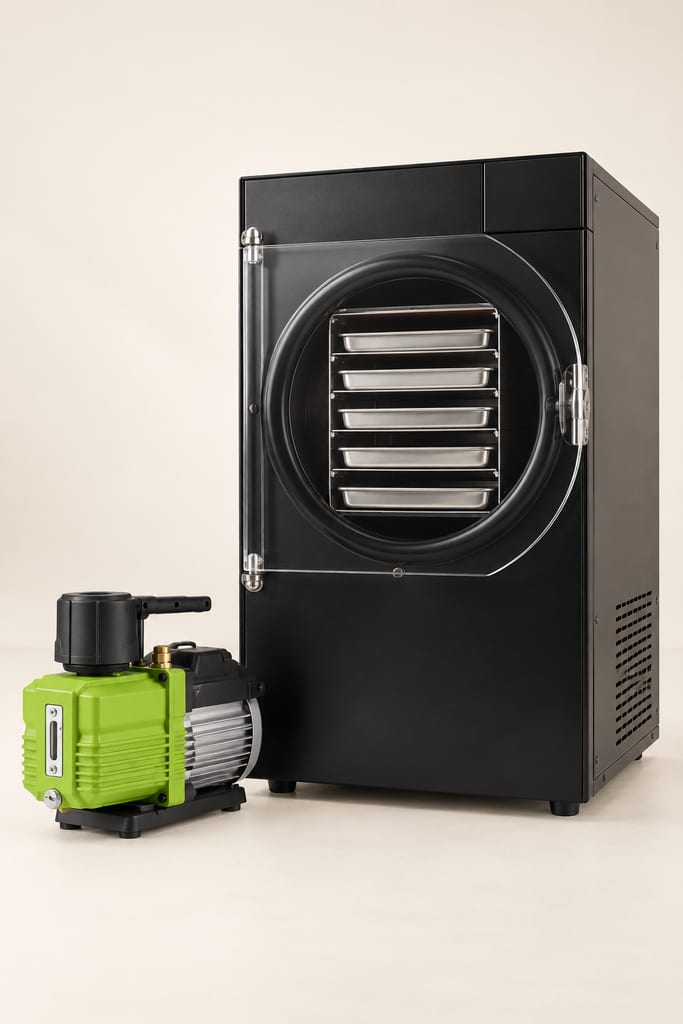
The physical form varies by manufacturer and model. The inspected Harvest Right product photo shows a cabinet with a front door and visible tray chamber plus a separate vacuum pump. Its current product page lists a particular model with four stainless-steel trays and a stated fresh-food batch range, but those numbers are one model's specifications, not a category standard. Other sizes, finishes, pump options, power requirements and footprints differ. Confirm the local model's specifications and service instructions before purchase.
Sources for this section
What the cycle can and cannot establish
Utah State University Extension describes the central sequence as freezing, primary drying by sublimation and secondary drying by desorption. The appliance draws down chamber pressure and removes water vapor while the frozen food is warmed under controlled conditions. The porous, dry result can be rehydrated for some uses, and home equipment is used for foods such as fruit, cooked sauces, meal components and dairy preparations. The result is not interchangeable with sun-dried or air-dried food: the texture, structure and workflow are different.
The equipment is not a sterilizer. USU Extension warns that freeze-drying does not kill bacteria; microorganisms can remain viable while dormant and become active again after rehydration. Safe handling before loading remains essential, and raw meat, seafood, eggs and other foods normally cooked before eating still need cooking. Drying and packaging also matter: the endpoint must leave suitably little residual moisture, and the food must be protected promptly from moisture. Neither an automatic cycle nor a sealed pouch by itself proves a safe shelf life. USU notes that early home machines entered the market in 2013; that dates the modern home-appliance branch, not the much older scientific method of lyophilization.
Sources for this section
Geography and a careful use boundary
Home-scale machines are a contemporary market category. Utah State University Extension's buying guide addresses US household ownership, while Harvest Right's current US storefront lists international orders and an identified authorized European seller advertises home units. Those pages support present-day sales in at least these markets; they do not establish that the appliance is universally available or that freeze-drying originated in either place. No traditional regional food practice is assigned to this machine.
The linked draft recipe for freeze-dried yogurt, finished sauces and fruit powders treats the machine as a modern ingredient-preservation tool. That relation describes the equipment role only: the particular food still needs its own safe preparation, drying endpoint, packaging, and storage evidence. Freeze-drying should not be conflated with historic air-drying traditions, or used to imply a validated shelf life for every batch.
Sources for this section
History
Utah State University Extension reports that the company manufacturing the first home freeze-dryer began sales in 2013. This dates an early commercial home-appliance lineage, not the invention of lyophilization.
Equipment details
CapacityNo category-wide capacity applies. Harvest Right's cited product page gives one model-specific example: 6–10 lb of fresh food per batch, with four stainless trays.
SizeCabinet dimensions vary. One cited model is 17.4 × 21.5 × 26.8 inches; check current local product details before purchase.
PowerElectric Current household models are electrically powered; voltage is model- and market-specific. Check the manufacturer's local specification.
How you get oneBought, manufactured A present-day electric appliance sold in several model sizes; compare the exact chamber capacity, power requirement, pump arrangement, footprint and service instructions for the chosen model.
CareFollow the exact model's instructions for tray loading, cleaning, defrosting, vacuum-pump service, ventilation, electrical connection, and finished-food packaging. The equipment alone cannot establish safe residual moisture or shelf life.
Made of
- Food chamber, door and trays — hold food during freezing and vacuum drying
A current Harvest Right product page lists stainless trays; the inspected black model photograph shows a front circular door, tray stack and separate pump. Layout and materials vary by model. - Vacuum pump — removes chamber air and water vapor during drying
A separate pump is visible in the manufacturer image; pump type and maintenance requirements vary by unit.
Limits
Freeze-drying is not a microbial kill step; safe handling before processing and appropriate cooking after rehydration remain necessary.
Source →Home freeze-dried food does not automatically have a validated long shelf life. Adequate drying and moisture-resistant packaging are separate from running the machine.
Source →This contemporary appliance produces a different result from traditional sun- or air-drying and should not be presented as historical equipment.
Source →Places
United States
Documented use · Country evidenceUSU Extension addresses home freeze-dryer ownership for household users; this records a documented US market context, not a place of invention.
Europe
Documented use · Region evidenceAn authorized European representative lists home units for sale; this supports a distribution channel, not universal adoption or European manufacture.