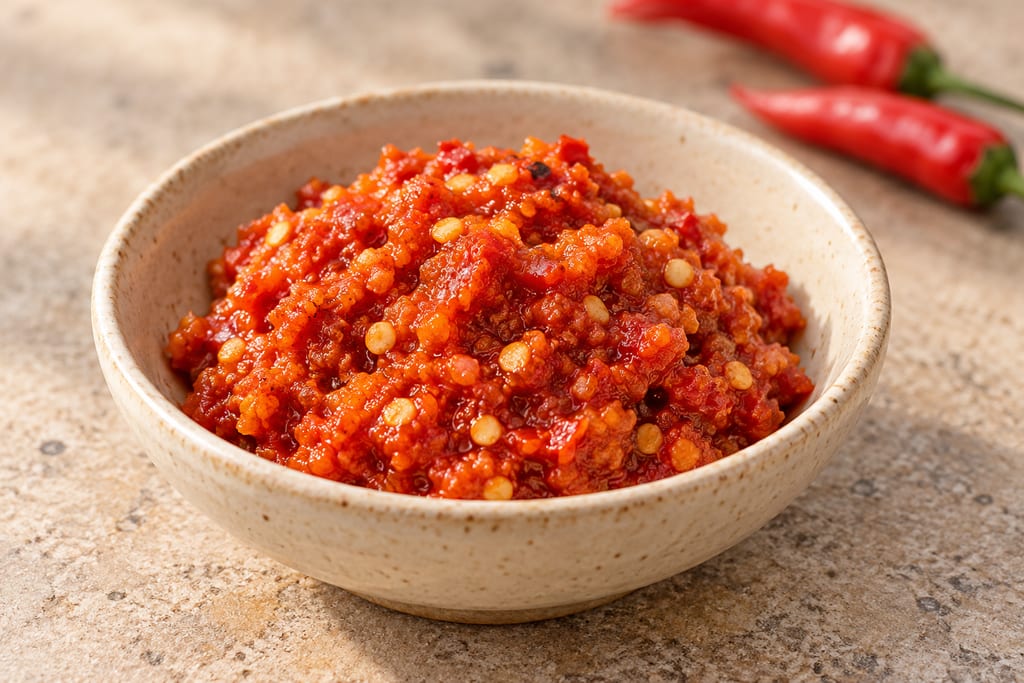
Dinanche
Dinanche, or donne' dinanche, is a Chamorro hot pepper paste of crushed chillies that Guam cooks use on its own or stir into fina'denne'. Its versions range from pepper alone to ones with eggplant, miso or coconut milk.
 FermenteaWhere food goes to change
Finadene · Fina'dene' · Fina'denni' · Fina denne
Fina'denne' is the all-purpose Chamorro dipping sauce of Guam, made in soy, citrus, vinegar or fish-brine versions with hot peppers. It is spooned over meat and rice or served in a small dish.
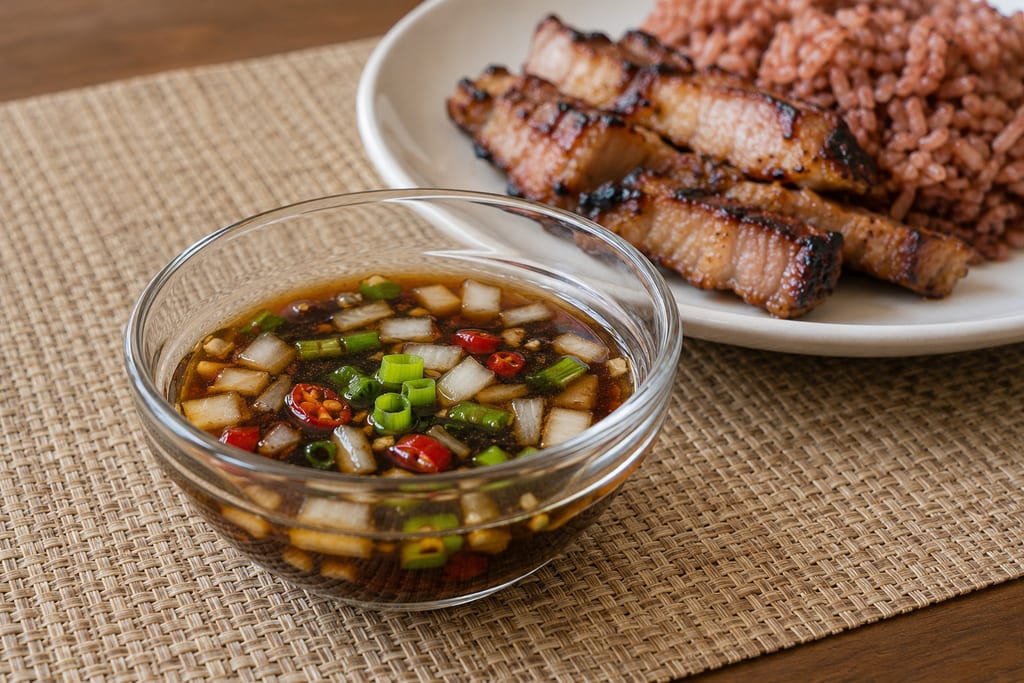
Fina'denne' is a spicy, all-purpose Chamorro condiment, a staple of the Guam table. It is spooned over meat or rice, or served in a small dish for dipping. Its name is said to mean something made with chilli pepper, and the same sauce is written as finadene, fina'dene and fina'denni' in other sources. The spelling varies, and the sauce does not.
Guampedia describes it as used in Guam households, restaurants and at fiesta tables, and places it in the middle of the table among the meat dishes. At a roast pig or a steamboat station it sits close to that station. The sauce is part of how a Chamorro meal is laid out, not an extra.
The most common version is the black sauce, made with soy sauce and vinegar, onion and peppers. It goes with meat and chicken. A white version is made with lemon or vinegar and salt, with onion, red peppers and cherry tomatoes, and it goes with fish and with tinala' katne, dried beef. Wikipedia describes lemon-based fina'denne' as typically used with fish and more delicate dishes.
A fish-brine version, chigu'an fina'denne', is made with salt and fish brine and is similar to fish sauces found in Southeast Asia and the Philippines. Guampedia names it as a variation, but the sources do not describe how it is made, cured or kept, so this page does not give a method for it.
The variety of the family is wide. Wikipedia lists a salt and pepper version as the earliest form, a tuba vinegar version, a binakle version made with tuba and a lemon-only version with no soy sauce. Some of these are cited and some are not, and the page records them as a family of condiments rather than one recipe.
Before the Japanese introduced soy sauce, Chamorros made fina'denne' from tuba vinegar, which is fermented coconut sap, with salt, lemon, water and fresh pepper. Filipino immigrants introduced the tapping of coconut trees for sap during the Spanish period, and the tuba came with them. Guampedia adds that before soy and tuba, a simple mix of salt and red peppers was used, and that fresh red peppers were introduced by the Spanish.
Wikipedia puts the oldest form earlier, before Spanish colonisation in the late seventeenth century, when it was only salt and pepper. That dating is uncited, so the page records it as a claim and does not treat it as established. The soy-sauce version is the one most readers now picture, and its arrival is credited to Japanese settlers, though no date is given for the introduction.
The Guampedia recipe, from a Guam cook, uses two-thirds of a cup of soy sauce, half a cup of vinegar, a quarter of a white onion diced, and four donne' peppers, with dinanche optional. The cook mixes everything in a glass bowl and serves. Crushing the peppers makes the sauce hotter, and they can be cut or left whole. Ingredients can be adjusted to taste.
Vinegar is a flexible part of the formula. The sources name white, cider or coconut vinegar, or lime, as alternatives, and the older tuba version used a coconut-sap vinegar. The salted pepper paste dinanche can replace fresh peppers,
The soy version is spooned over red meat, pork and chicken. The lemon version is used with fish and with more delicate dishes. Wikipedia describes both uses and notes that the sauce is either drizzled over meat or rice or served in a small saucer. The table placement described by Guampedia makes it a shared condiment, to be taken as needed.
The sauce is also a daily flavour in Chamorro homes, and early twentieth-century anthropologists noted its frequent use. That observation is the earliest dated account in the sources, and it describes habit rather than a recipe.
The sources give no storage time for fina'denne'. A raw sauce of onion and fresh pepper should be kept chilled and used within a short time, and it should not be judged safe by smell or taste. The fish-brine version needs a process that the sources do not give.
Open questions include the date of the soy-sauce version, the date of the earliest salt-and-pepper form, and the proportions of the lemon version, which the sources do not measure. The page records what is documented and leaves those points open.
Fina'denne' is a long-standing Chamorro condiment. Guampedia records that early twentieth-century anthropologists noted its frequent use, that Filipino immigrants introduced tuba tapping in the Spanish period, and that Japanese settlers introduced soy sauce. The Spanish introduced fresh red peppers.
Scaling: source batch only
A raw, moist condiment kept warm or for long periods can spoil. The sources give no tested storage time.
Hazard sourceThe fish-brine version is made from salted fish brine. The sources do not describe how it is prepared, cured or stored, and no safety process is given for it.
Hazard sourceKeep leftover sauce chilled, and do not leave it at room temperature for long
Control sourceDo not make the fish-brine version from these pages; no safe preparation is given
Control sourceThe Guampedia recipe gives no storage guidance. The only note on storage is that serving it in plastic may make the flavour stick to the container.
Smell and taste are not reliable checks of stored sauce.
A CHamoru condiment in Guam households, restaurants and fiesta tables; the same family is recorded across the Mariana Islands.
Dinanche, or donne' dinanche, is a Chamorro hot pepper paste of crushed chillies that Guam cooks use on its own or stir into fina'denne'. Its versions range from pepper alone to ones with eggplant, miso or coconut milk.
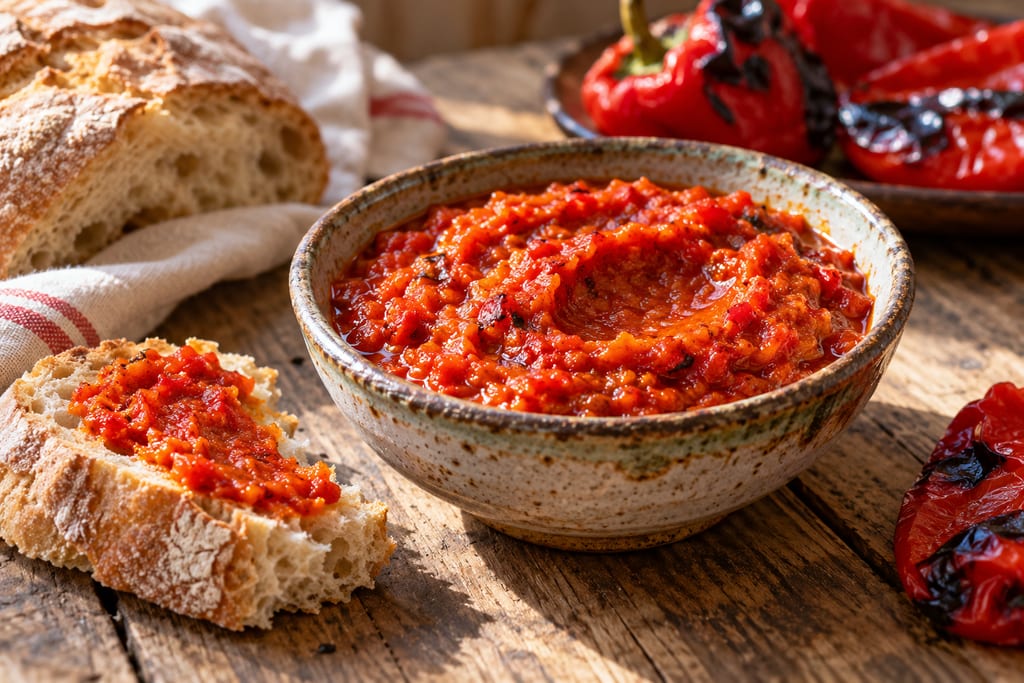
Ajvar is a cooked Balkan pepper preserve built around roasted red peppers, peeled, drained, ground and slowly fried with oil and seasoning. Leskovac’s protected version is a pepper specialty; regional versions vary.
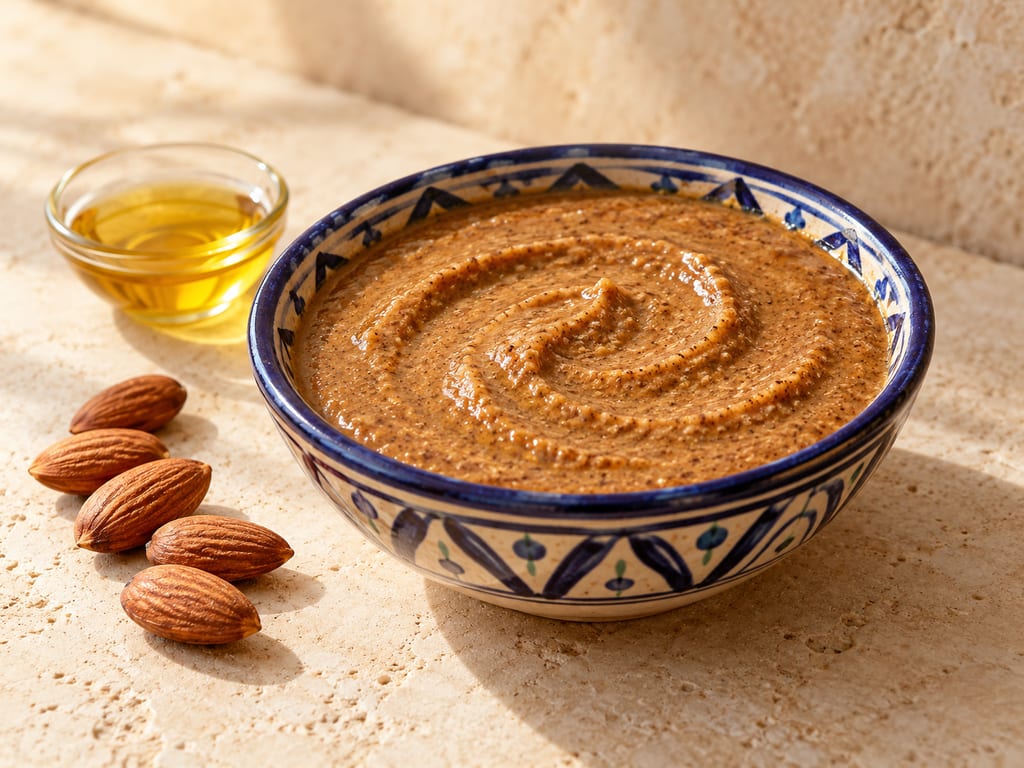
Amlou is a nutty, lightly sweet Moroccan spread of roasted almonds, culinary argan oil and honey. The almonds are ground first, then loosened with oil and sweetened; the balance can range from a thick spread to a dip.
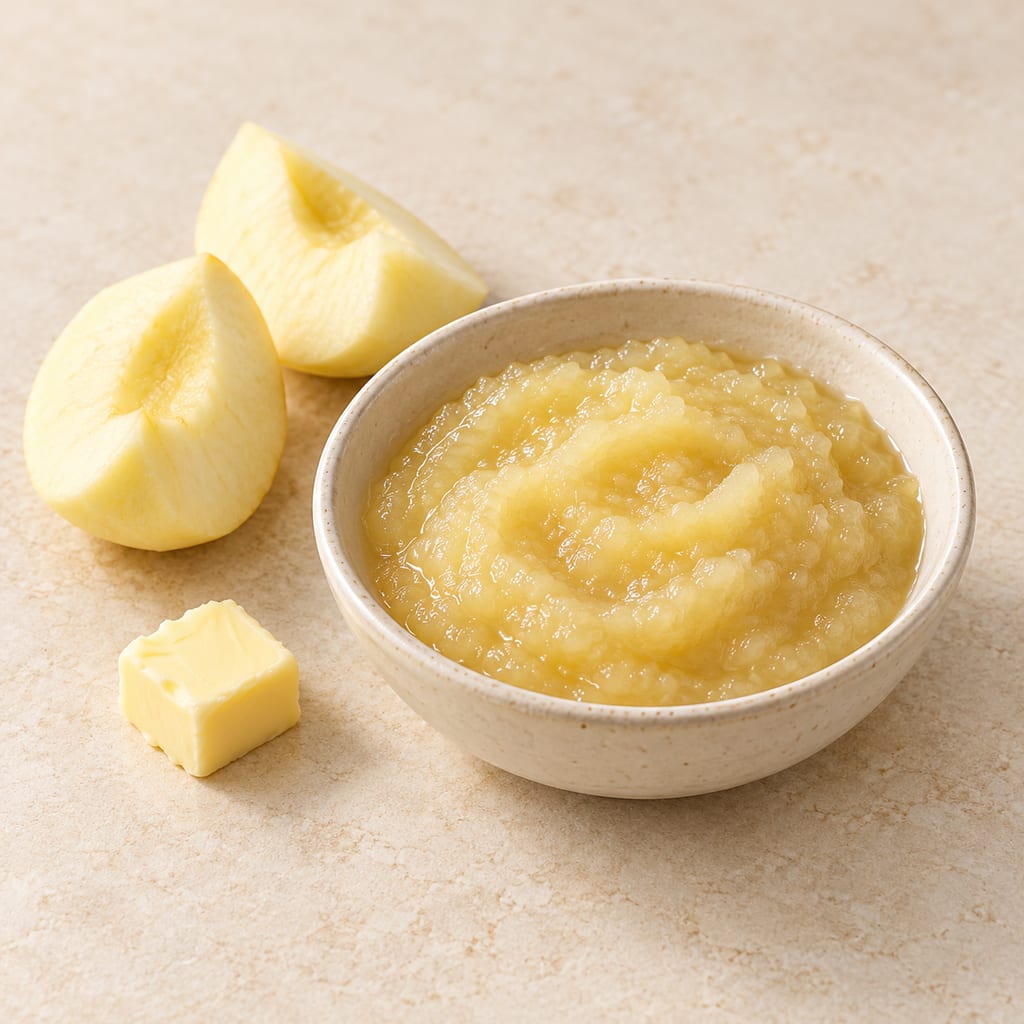
Apple sauce for goose and pork is a plain English accompaniment: cooked apples pulped with water, then sweetened with sugar and finished with a little butter.

A warm dip of garlic, anchovy and olive oil, often enriched with butter, that Piedmont serves over a flame with raw and cooked vegetables and bread.
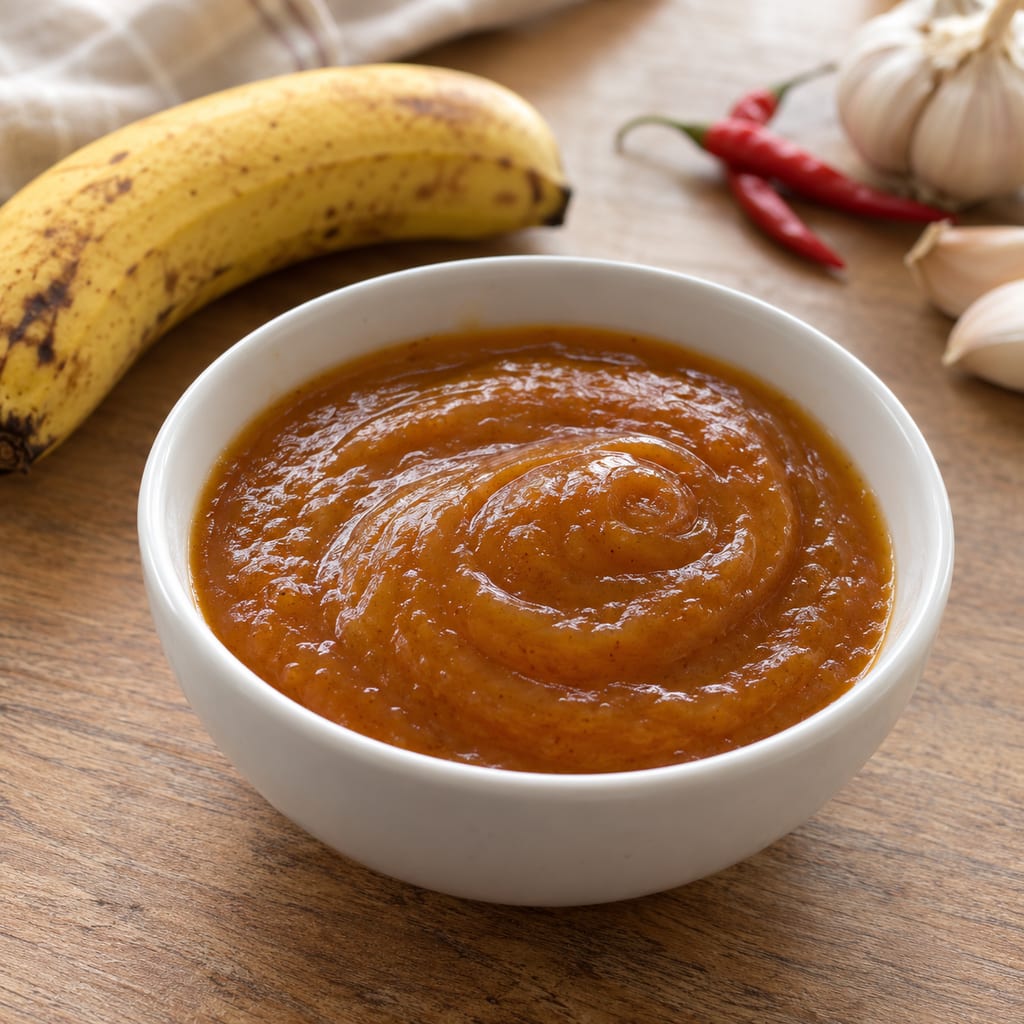
A sweet-hot table sauce of ripe banana simmered with vinegar, sugar, onion, garlic and fresh chilli, in the manner of Philippine banana ketchup. An untested development batch of about 500 g.
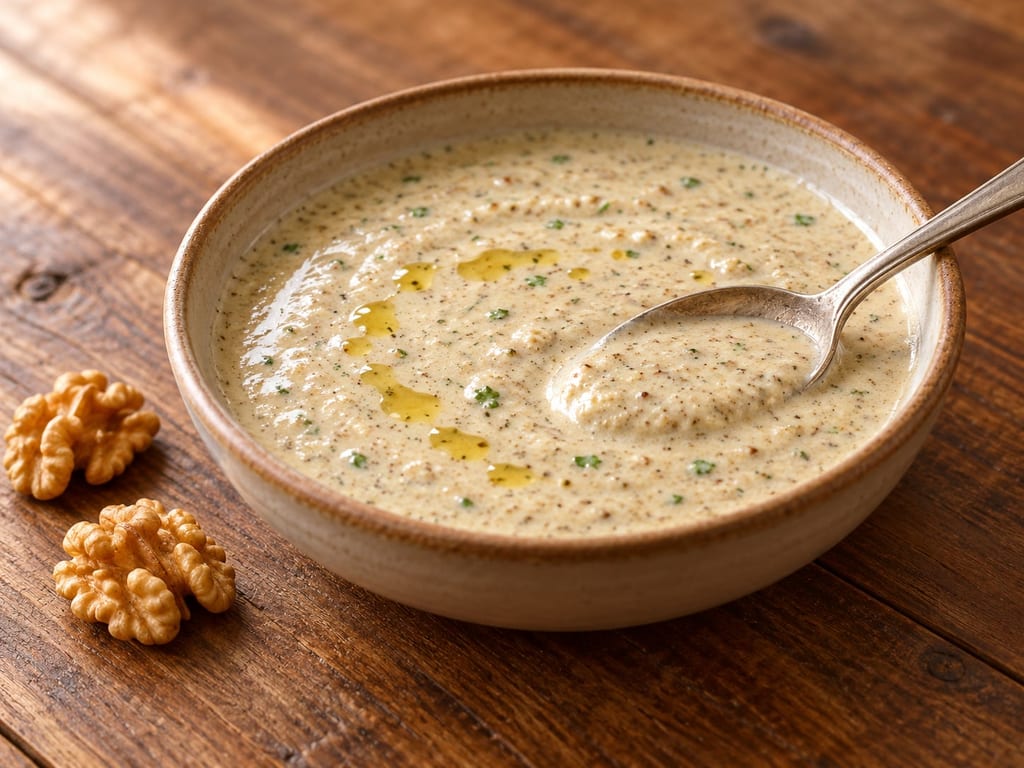
A Georgian walnut sauce of ground walnuts, garlic, vinegar and spices, thinned with water or broth. It is served with poultry, vegetables and bread, and is the sauce of the dish satsivi.
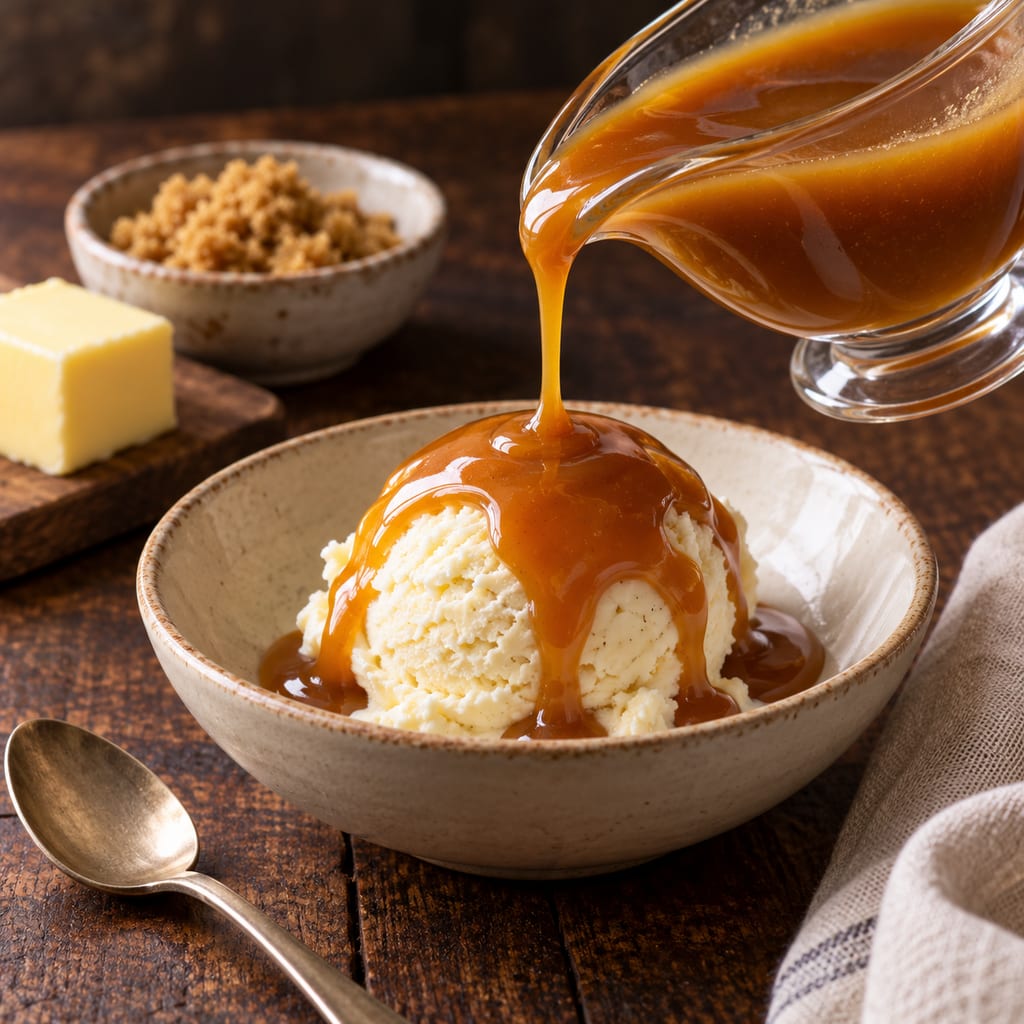
A pourable dessert sauce of brown sugar, butter and cream, with a little corn syrup and salt. It is the sauce form of the butterscotch confection and is made without water, unlike caramel.
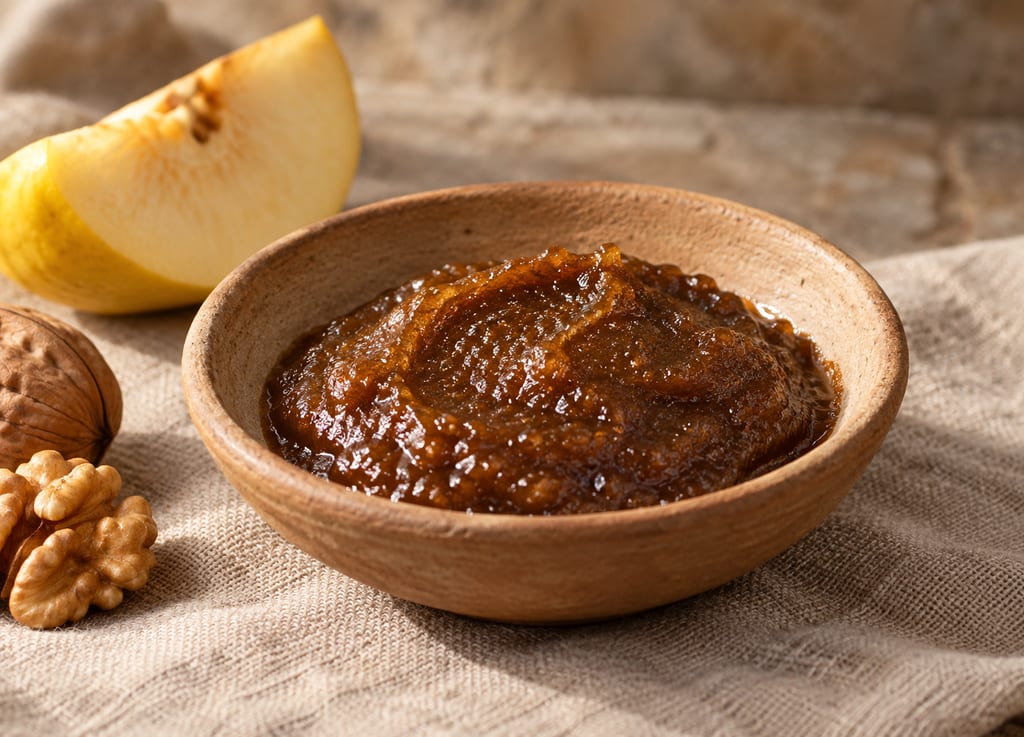
Byzantine murrī is a cooked imitation of murrī from the medieval Arabic repertoire, made from scorched honey, toasted bread, walnuts, quince, carob and spices rather than from a long grain fermentation.

A gelling polysaccharide extracted from red seaweeds, sold as kanten strips or powder; it sets firm at a low concentration and stays solid until about 85 °C.

A Dominican table and seasoning condiment of sour orange juice, mixed with lime and salt and bottled raw; garlic, oregano or a hot pepper may be added for meat or a spicier bottle.

Cicerbita alpina is an alpine perennial whose tender shoots and leaves have been eaten raw or cooked. Sámi milk preparations and modern Carnian dishes are distinct uses, with serious identification and preservation limits.

Japanese skipjack tuna cooked, then repeatedly smoked and dried over a wood fire by the hand-fired tebiyama method into a hard block for shaving into dashi: the first stage of katsuobushi.

A Swedish-style spirit vinegar made by fermenting neutral alcohol with live vinegar bacteria, with a separate guide to commercial ättika strengths.

A yeast-raised wheat ring shaped from a firm dough, briefly boiled and baked. This source-batch formula gives a gently malted crust and a chewy crumb.

Bechamel is a white sauce of milk thickened with a butter and flour roux, one of the French mother sauces, and the base from which Mornay and other cheese and cream sauces are made.
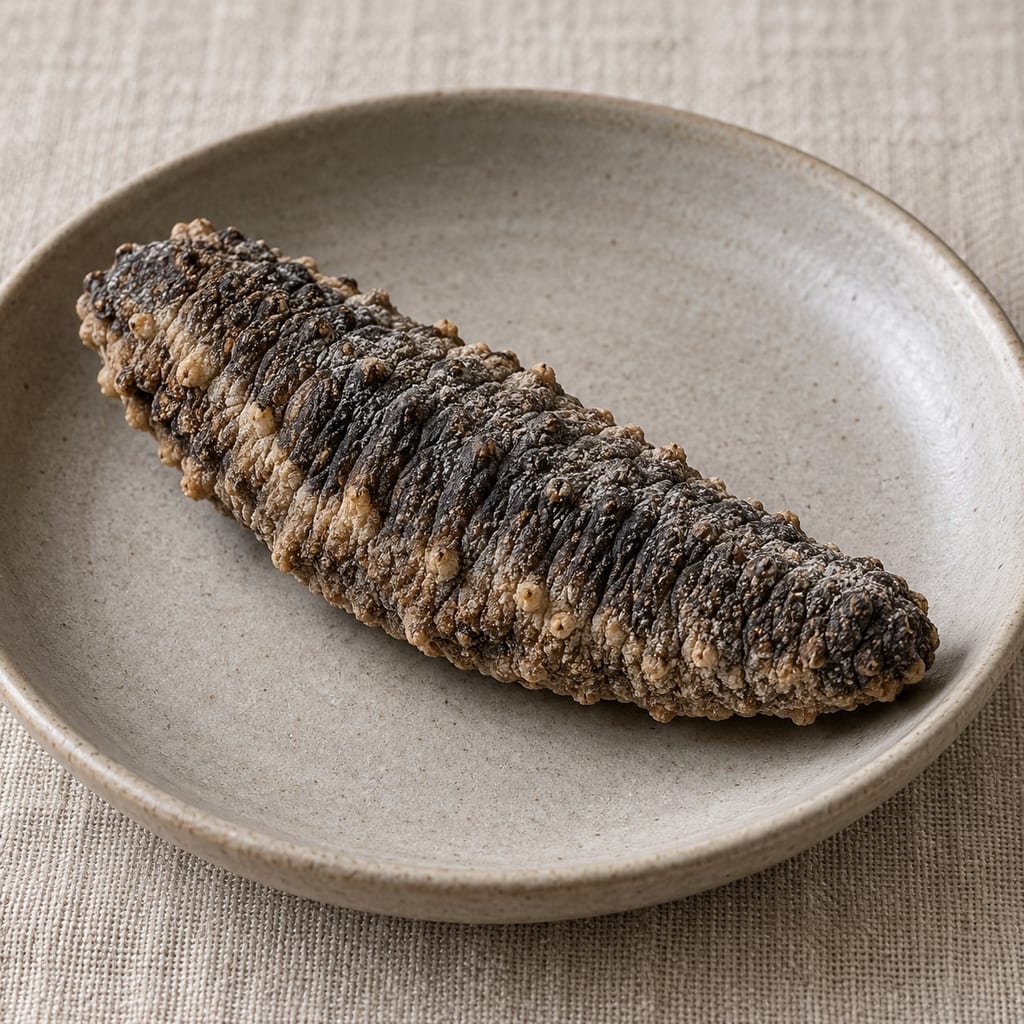
Sea cucumber cleaned, boiled and dried, sometimes with smoke, into a long-keeping trade product; Makassan processing in Arnhem Land is documented from at least the eighteenth century.
No community contributions have been published for this entry yet.
Sign in to contribute. Published comments and photos are free to read.
GuampediaMethod · History
Fina'denne': Dipping SauceSoy sauce, vinegar, onion and peppers recipe
Tuba vinegar, salt, lemon, water and pepper before soy sauce
Filipino tuba tapping; Japanese soy sauce; early twentieth-century anthropologists
Binakle, chigu'an and citrus white versions; placement at the table
Cited in: The sauce on a Guam table; Soy, vinegar and fish; How the sauce changed; The recipe and its choices; Eating it; Storage and open questions
WikipediaBackground · History
Fina'denne'Alternate spellings
Lemon-based version typically with fish; soy version with red meat, pork and chicken
Earliest version salt and pepper (uncited)
Cited in: The sauce on a Guam table; Soy, vinegar and fish; How the sauce changed; Eating it; Storage and open questions
Annie's Chamorro KitchenMethod
Miso Donne' Dinanche (Miso Pepper Sauce)Vinegar substitutes: white, cider, coconut vinegar or lime
Cited in: The recipe and its choices