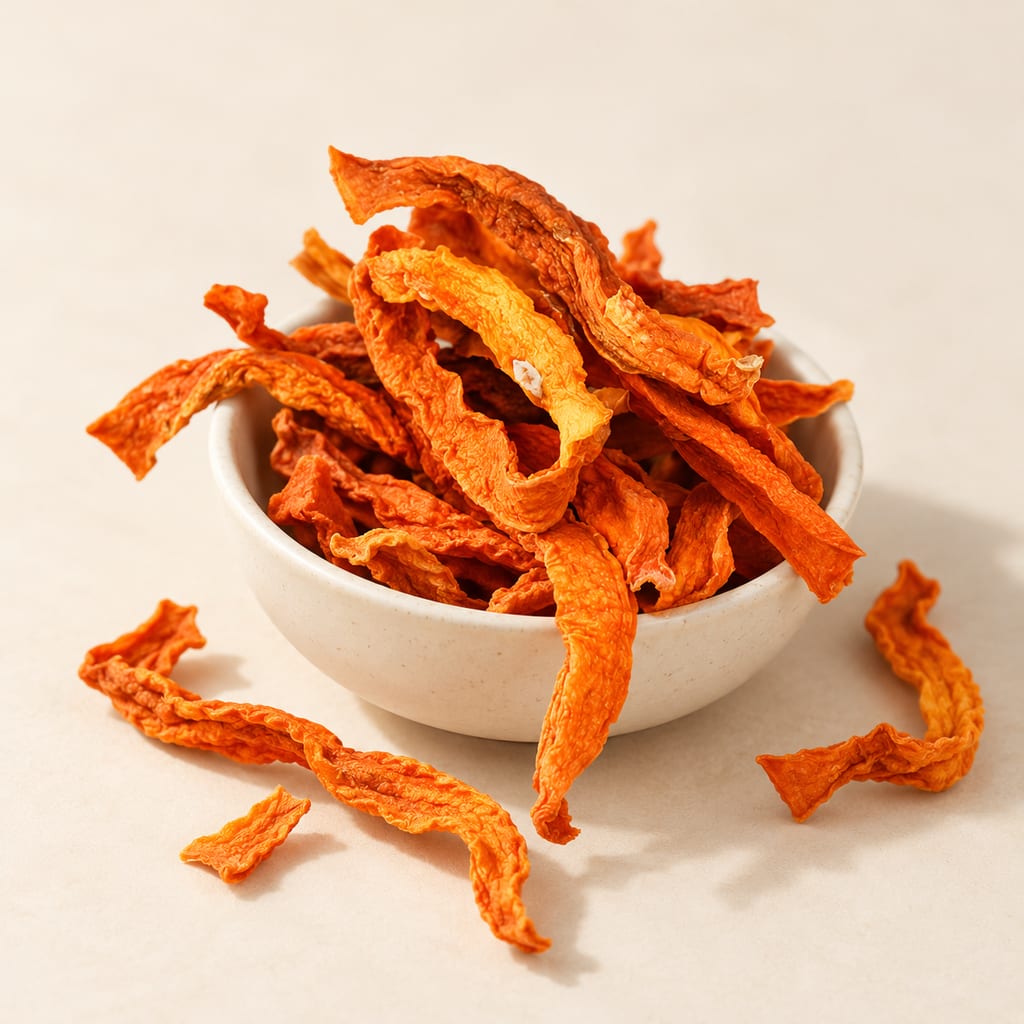
Dried pumpkin pieces and powder
Steam-blanched pumpkin dried until brittle, kept as pieces or ground into powder, with pumpkin-specific packaging and quality guidance.
 FermenteaWhere food goes to change
Equipment · Mills, mortars and crushers
Small blender or spice grinder · compact blade grinder · small electric spice grinder
A compact electric blade grinder cracks or powders dry spices in a small lidded bowl. It is a dedicated spice-grinding appliance; mini blenders may overlap in size and blade action, but their bowls and permitted uses vary by model.
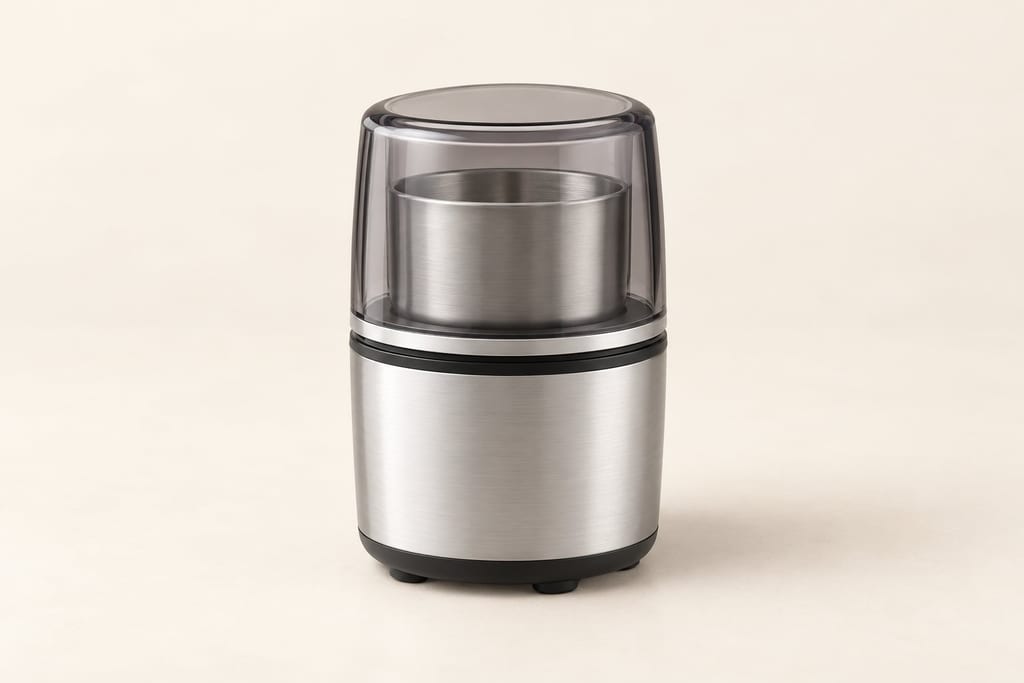
Current manufacturer catalogues in the United States and United Kingdom document compact electric appliances made for spices or spice-and-coffee grinding. Those listings show products in more than one national market, but they do not establish where the equipment type began or where every unit is manufactured. No traditional culture or first inventor is assigned to this generic record.
The archive names a small blender or spice grinder because mustard recipes use it to crack seeds and sometimes blend a paste. This record describes the general equipment class and points to recipes that use it. Model capacities, cleaning rules and attachments remain with the instructions for each product.
A small blade-style spice grinder is a compact powered machine with a bowl or chamber, a rotating blade and a lid. It cracks or grinds dry seeds and spices into pieces or powder. A mini blender or chopper may also process a small batch, but its bowl, blade position and permitted ingredients can differ. The word “grinder” alone does not tell you what a model can safely handle.
A mortar and pestle uses hand pressure and impact; a hand mill has a crank and grinding surfaces; a pepper mill dispenses a small amount through its own mechanism; and a burr coffee grinder uses opposing burrs to set a coffee grind. KRUPS says a factory-blade coffee grinder can also grind spices, while burr models are intended for coffee. The mechanism and maker's directions matter more than a general name.
The motor drives a blade through the contents. Short pulses crack whole seeds into coarse pieces; longer operation reduces them further. The Cuisinart SG-10 booklet gives model-specific examples of pulsing nutmeg or cinnamon before continuing and lists separate suggestions for peppercorns, cloves, fennel and seeds. Those times apply only to that model and its listed quantities.
The target texture affects how a spice behaves in food. Coarse mustard seed remains noticeable in a wholegrain-style condiment, while a finer grind distributes more evenly and can be sieved into a smoother paste. In the linked smooth mustard, the seeds are first cracked dry, then hydrated before the remaining liquid and blending steps. The appliance performs only the cracking step; hydration and blending are separate operations.
Grinding breaks plant tissue and can release aromatic compounds. A pilot-scale black pepper study compared ambient and cryogenic grinding and found differences in volatile-oil retention. It did not test a household appliance, so it cannot quantify heat or aroma loss in a small grinder. Use only the grind the recipe calls for rather than treating extra-fine powder as an automatic improvement.
Compact electric grinders commonly combine a motor base, a lidded chamber and a blade, but no one material or capacity defines the whole category. Cuisinart specifies stainless-steel bowls and blades for its SG-10 and SG21U. Other products differ. Check the product sheet before assuming a component is stainless steel, dishwasher-safe or intended for food contact.
There is no general bowl capacity for this type. Cuisinart and KRUPS give model limits for different ingredients; a coffee-bean capacity is not a spice capacity for another grinder. Dimensions, power, activation controls, safety interlocks and cooling limits also depend on the model. The appliances described here use electric motors; manual mills and pepper mills are outside this record.
Use a small spice grinder when a recipe calls for a modest amount of whole spice cracked to a chosen coarseness. In the linked mustard, dry seeds are coarsely ground before water is added. Another mustard method soaks seeds whole and blends part of the mixture to make a paste. The same appliance may do both jobs only if its manual permits dry seed grinding and the later wet operation; some spice-only grinders are dry-use appliances and must not process liquid.
For a powder, pulse and inspect the result through a clear lid if the model has one. Release the lid only after the blade has stopped. Do not exceed the manufacturer's loading limit, and do not apply coffee, nut or spice instructions to a different ingredient without checking the booklet.
Blades can cut even when the motor is off. Unplug before cleaning or removing parts, wait for the blade to stop, and keep fingers clear of the edge. Cuisinart says the removable parts of its SG-10 can go on the dishwasher's top rack, but its motor base must not be immersed. KRUPS says to keep the grinder, cord and plug dry. These are model-specific directions, not universal instructions.
Powder and spice oils cling to lids and chambers, affecting the next batch's aroma. Shared equipment can transfer food particles. For a serious allergy, do not assume a quick wipe removes every trace; use the advice of the person managing that allergy and consider a dedicated appliance. FDA cross-contact guidance addresses commercial equipment and does not validate a home cleaning method.
Grinding does not heat spices through a validated safety process. FDA describes pathogens in spices and possible cross-contamination through shared processing equipment. This supports treating grinding as preparation only; it does not mean a particular home grinder or spice is contaminated.
Current US and UK manufacturer catalogues document compact powered appliances made for spices, nuts, seeds or coffee. The inspected sources do not establish one inventor, first model or origin for this broad equipment type.
Keep fingers and loose objects away from the blade. Do not defeat a lid interlock; operate only with parts locked as the model manual specifies.
Unplug before cleaning, assembly or clearing a jam. Do not immerse an electric grinder, motor base, cord or plug.
Use dry spices only in a grinder whose manual allows dry ingredients. A mini blender may have different attachments and permitted uses.
Shared equipment can transfer food particles and allergens. A quick wipe or generic cleaning instruction does not prove a grinder is free of allergen residue.
Capacity, materials, duty cycle, compatible ingredients and cleaning rules are model-specific; this record gives no universal amount or run time.
Source →A burr coffee mill is not automatically suitable for spices: KRUPS distinguishes blade grinders that can grind spices from burr grinders intended for coffee.
Source →Grinding is a mechanical size-reduction step, not a pathogen-reduction process; FDA spice-risk findings describe contamination and cross-contamination in processing environments, not the status of a particular home grinder.
Source →Current manufacturer catalogues document sales in the United States and United Kingdom, not the equipment type's origin or a traditional cultural range.
Steam-blanched pumpkin dried until brittle, kept as pieces or ground into powder, with pumpkin-specific packaging and quality guidance.
No community contributions have been published for this entry yet.
Sign in to contribute. Published comments and photos are free to read.
CuisinartIdentity · Materials · Power · Capacity · Operation
Spice and Nut Grinder SG-10Cuisinart lists a powered appliance with stainless-steel blades, a removable bowl, lid interlock and model-specific dimensions and capacity.
Cited in: Origin and market reach; One task, several kinds of appliance; Materials, size and power vary
CuisinartOperation · Care · Safety · Materials
Spice and Nut Grinder SG-10 Instruction and Recipe BookletThe manufacturer specifies dry ingredients, model-specific spice capacities and grind suggestions, a lid interlock, unplugging before cleaning, blade precautions and a dry motor base.
Cited in: How grinding changes the spice; Materials, size and power vary; Choosing and using the right tool; Cleaning and safe handling
KRUPS USAIdentity · Operation · Materials · Power · Capacity
Fast Touch Electric Coffee and Spice Grinder F2034251KRUPS describes an electric blade grinder for coffee and, where a factory blade is fitted, spices, nuts, seeds and herbs; capacity and controls are model-specific.
Cited in: Origin and market reach; Materials, size and power vary
KRUPS USACare · Safety · Limits · Operation
F203 Electric Spice and Coffee Grinder: User Manual and Frequently Asked QuestionsKRUPS says blade grinders may grind spices, while burr grinders are for coffee; the maker says unplug before cleaning and keep the appliance, cord and plug dry.
Cited in: One task, several kinds of appliance; Choosing and using the right tool; Cleaning and safe handling
KRUPS UKReach · Market
Coffee Mill F2034238KRUPS lists a compact electric coffee mill in the UK market and describes it as usable for herbs and spices.
Cited in: Origin and market reach
Cuisinart UKReach · Materials · Operation · Care
Cuisinart Spice Grinder SG21UCuisinart UK lists a current spice grinder with stainless-steel bowls and blades and model-specific cleaning information.
Cited in: Origin and market reach; Materials, size and power vary
U.S. Food and Drug AdministrationSafety · Cross contact
Sec. 555.250 Major Food Allergen Labeling and Cross-contact: Draft Compliance Policy GuideFDA describes allergen cross-contact in food manufacturing and notes shared equipment and inadequate cleaning can transfer allergens; this does not validate a home-cleaning method.
Cited in: Cleaning and safe handling
U.S. Food and Drug AdministrationSafety · Cross contamination · Limits
Draft Risk Profile: Pathogens and Filth in SpicesFDA's risk profile discusses pathogens in spices and possible cross-contamination through shared spice-processing equipment; observations concern commercial processing, not any particular home grinder.
Cited in: Cleaning and safe handling
Journal of Food EngineeringMechanism · Quality
Cryogenic grinding of black pepperA pilot-scale black pepper study compared ambient and cryogenic grinding and found differences in volatile-oil retention; it did not test domestic grinders.
Cited in: How grinding changes the spice