What it is
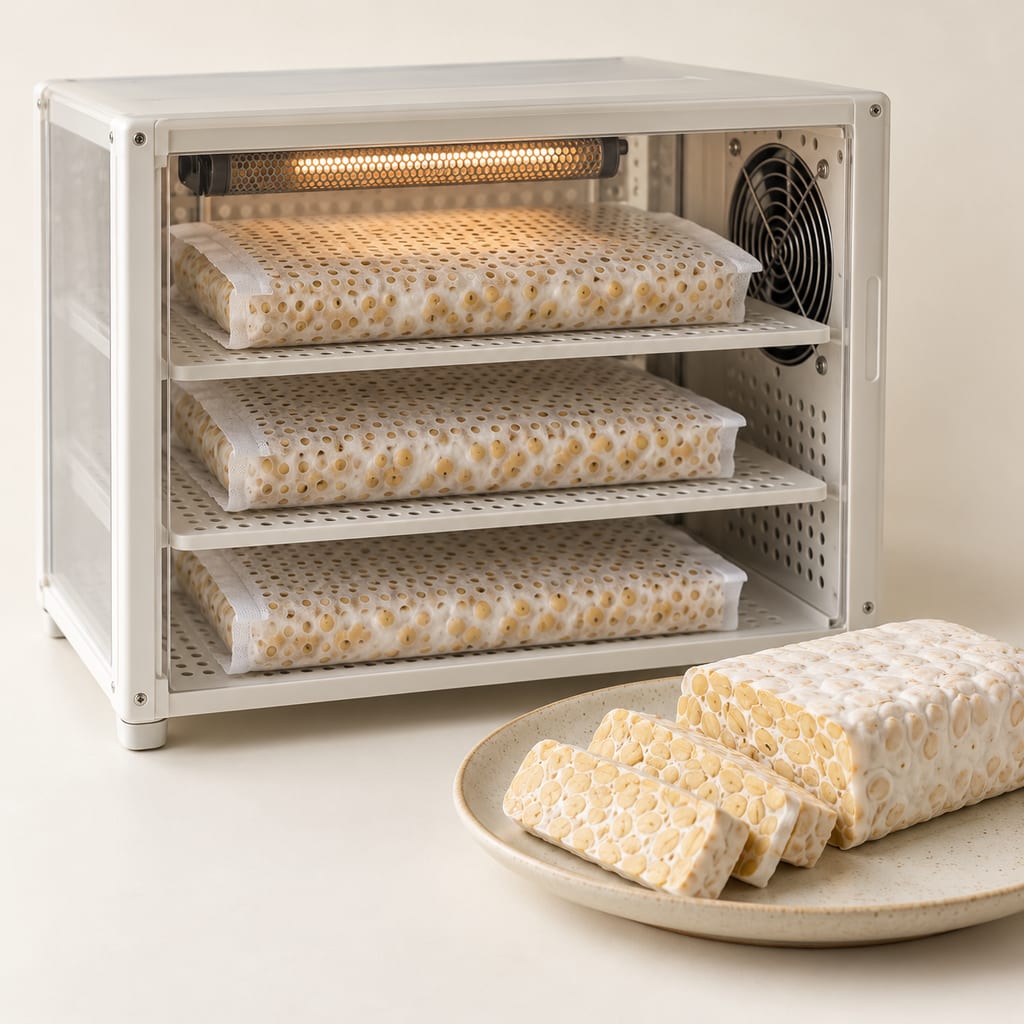
A tempeh incubator holds inoculated soybeans or other substrate in spaced, perforated pouches or trays, inside a ventilated, cleanable enclosure. The mould generates heat as it grows, so the incubator's main job is to let that heat escape while keeping the surface from drying or collecting water.
The brief recommends a gentle heat source and a path for heat to leave. Original low-cost practitioner builds show common layouts, but cardboard with a lamp needs a safer design.
Sources for this section
Temperature and heat
Reviews of tempe fermentation put a standard working temperature near 30 C. The mould's own heat can lift the centre of a thick cake above the surrounding air temperature. Faster fermentation has been reported at 37 to 38 C, and several sources warn that temperatures above about 40 C can kill the mould.
These temperature figures come from secondary citations of the Nout and Kiers review, and the page has not confirmed them against its full text.
Sources for this section
What the article should test
The brief asks for self-heating at different loads, a probe in the thickest cake, oxygen access, and no water collecting on the beans. Starter, soaking, cooking, cooling, post-fermentation cooking and cold storage are separate processes and are not covered by the incubator.
Sources for this section
Equipment details
PowerElectric A gentle heat source. Much of the heat comes from the mould itself, so the enclosure must let it escape.
How you get oneBuilt yourself Assembled from a ventilated, cleanable enclosure with spaced perforated pouches or trays.
Limits
Cardboard and lamp layouts from some practitioner builds need redesign for safety.
Source
Temperature figures for tempe come from secondary citations of the review; check the full text before use.
Source →Places
Documented for international use, with no single place of origin assigned.