
Cultures
Aspergillus oryzae
Aspergillus oryzae is the koji mould, a domesticated filamentous fungus grown on steamed grain or soybeans to make the enzyme-rich starter behind sake, soy sauce, miso and shochu.
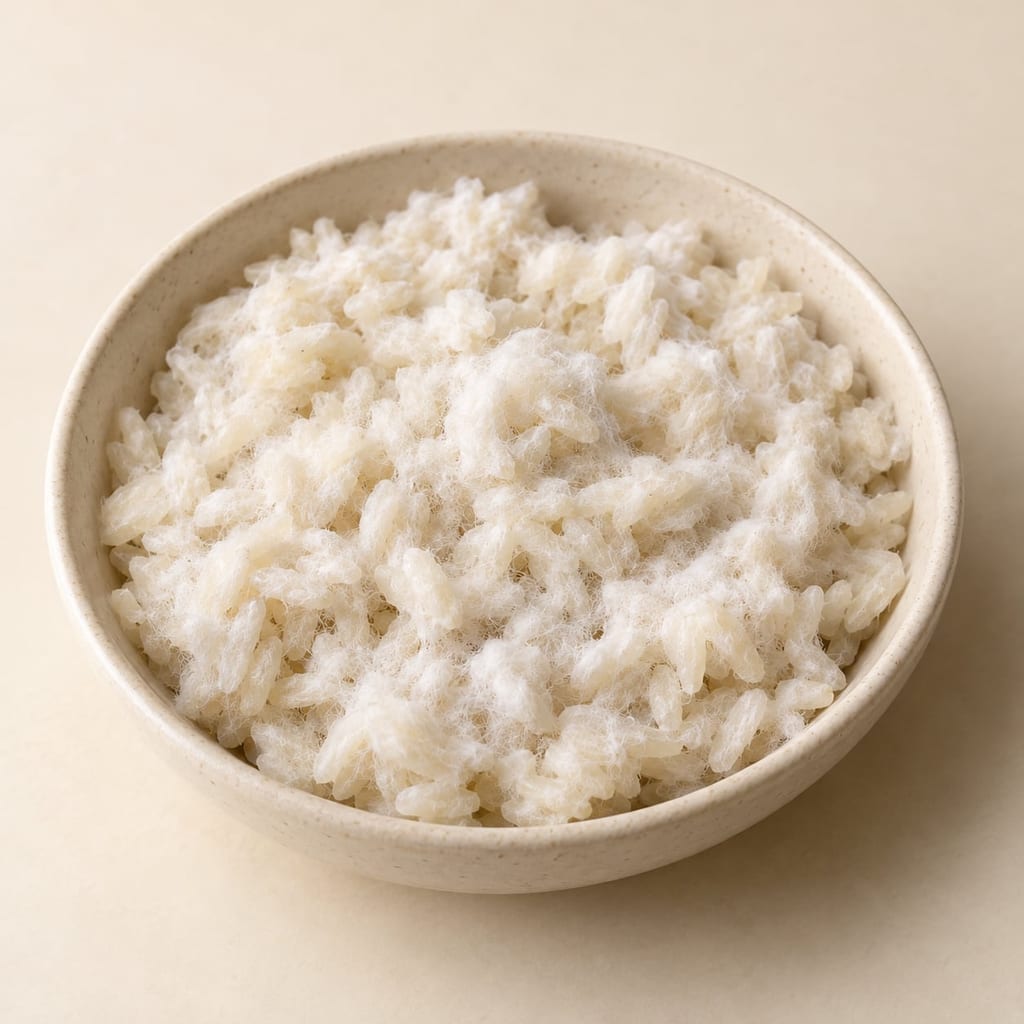
What the fungus is
Aspergillus oryzae is a filamentous mould that grows as a white to yellow-green mat on moist grain or soybeans. Its spores are usually yellow-green, and in the koji trade the name refers to a cultured preparation rather than to the species alone. The species reproduces asexually.
Taxonomists regard A. oryzae and A. sojae as domesticated forms of A. flavus. The two share about 99.5 per cent of their genome sequence, which is why a species name on a koji label does not establish which strain, or how safely it has been bred, a producer uses.
Sources for this section
Koji and what it does
Koji is made by growing the mould on steamed rice, barley or soybeans. The fungus secretes enzymes into the substrate, and those enzymes do the work that the finished food depends on. Amylases such as alpha-amylase and glucoamylase break starch into sugars. Proteases break soybean and grain protein into peptides and amino acids, and leucine aminopeptidase releases much of the glutamic acid that gives soy sauce its savoury depth. Lipases break down fats in soybeans during miso making.
Koji therefore works as an enzyme source rather than as a fermenter on its own. In sake, shoyu, miso and vinegar production, yeasts and lactic acid bacteria carry out the fermentation that follows, using the sugars and amino acids the mould has released.
Sources for this section
Genome and enzyme range
The genome carries a large set of proteinase genes, and the species produces a wide range of other enzymes, including feruloyl esterase, beta-galactosidase and xylanases. Feruloyl esterase contributes to the flavour of sake. The enzyme profile differs between strains and between growing conditions, so a koji is judged by what it does in the product, not by the name alone.
Sources for this section
Safety and mycotoxins
The species is not associated with aflatoxins, unlike its close relative A. flavus. The review reports that tested koji strains were negative for aflatoxins and that disabled genes in the aflatoxin cluster are a likely reason. Other Aspergillus species do produce mycotoxins, so producers check finished products against health-authority limits.
The FDA lists A. oryzae as GRAS, and the WHO considers it safe for food use. Invasive infection in healthy people has not been reported. Rare allergic reactions and infections have occurred mainly in people who were immunocompromised or prone to allergy and who inhaled large numbers of spores. Handling koji in a dusty or poorly ventilated room is therefore a real exposure consideration, and this page does not give a safe handling protocol beyond what the review reports.
Sources for this section
Notes
The sources do not give a dated first use of this species, and the strain-level history of commercial koji cultures is not established here. Culture collections list named strains for each product, and the species name alone does not identify which one a koji was made from.
Sources for this section
Places
East Asia
Documented preparation · Region evidenceKoji is documented across East Asian food fermentation; the source does not give a single place of origin for the species.
Community
No community contributions have been published for this entry yet.
Share what you made
Sign in to contribute. Published comments and photos are free to read.
Sources
Frontiers in MicrobiologyHistory · Science · Safety
The postbiotic potential of Aspergillus oryzae - a narrative reviewKoji is grown on rice or soybeans and secretes amylases, proteases and lipases
Koji tradition over 1,000 years; products include sake, shoyu, amazake, vinegars, shochu and miso
A. oryzae and A. sojae are regarded as domesticated forms of A. flavus; 99.5% genome-wide similarity
A. oryzae is not associated with aflatoxins; tested koji strains were negative; GRAS status from FDA
Rare infections occurred mainly in immunocompromised people exposed to high conidia inhalation
Cited in: What the fungus is; Koji and what it does; Genome and enzyme range; Safety and mycotoxins; Notes
Taylor and Francis OnlineIdentity · Method
Supplied koji mould source (Aspergillus oryzae)Supplied catalogue source for Aspergillus oryzae as a selected koji culture; not independently revalidated