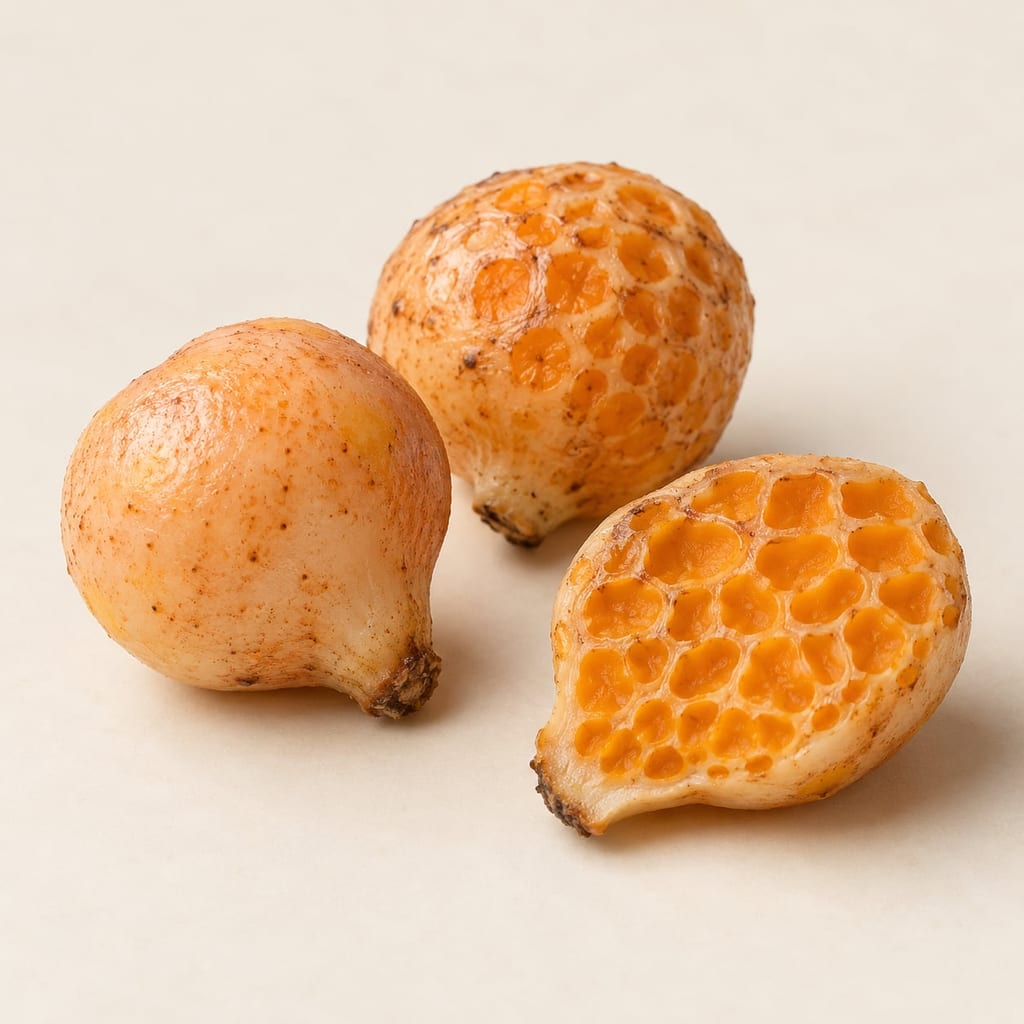
Myrtle orange
Cyttaria gunnii is a fungus that forms galls on southern beech in Tasmania and Victoria. Aboriginal Australians ate its fleshy fruiting bodies, and modern sources disagree on its safety.
 FermenteaWhere food goes to change
Mushrooms
Laetiporus portentosus is a wood-decaying bracket fungus recorded in a historical Tasmanian account as a possible emergency food. The identification in that account is probable, not confirmed, so the species is not a confirmed food.
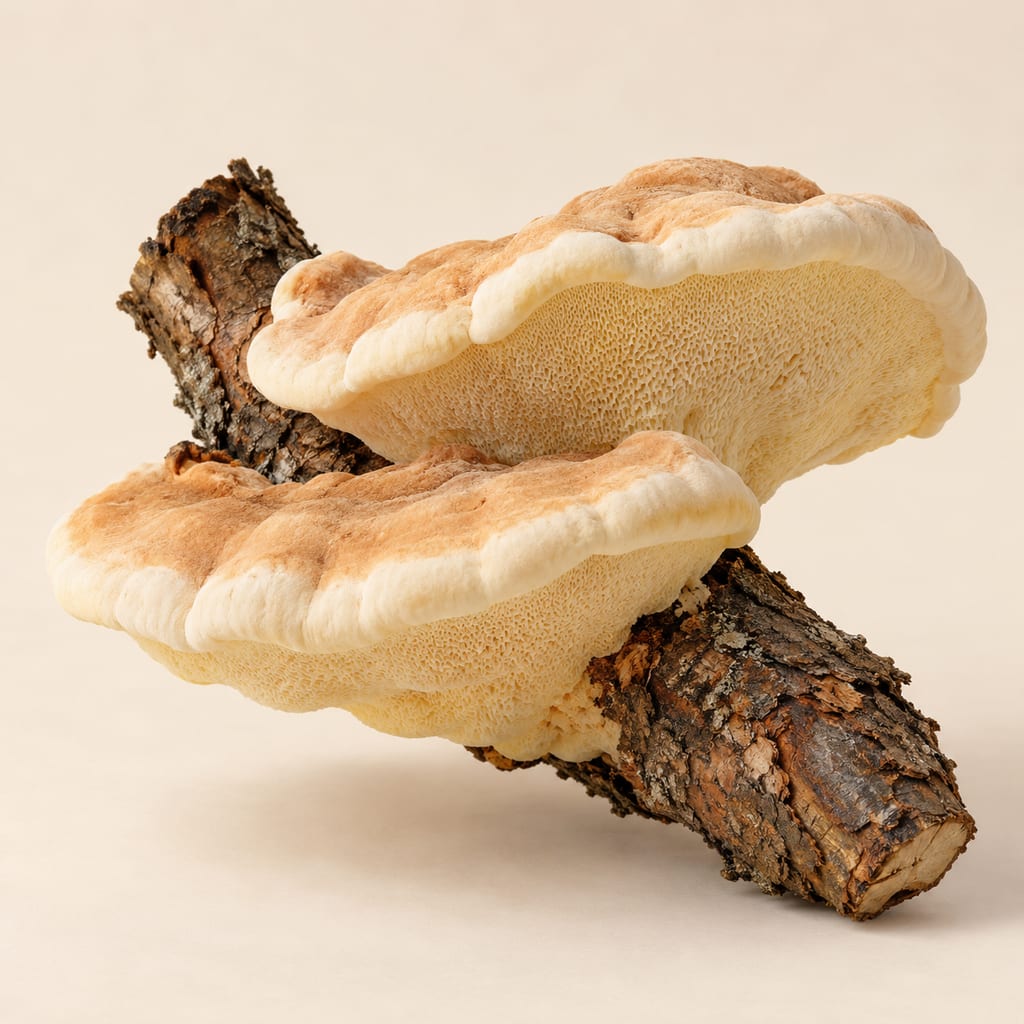
Laetiporus portentosus is a polypore, a bracket fungus that grows on wood. The catalogue classes it as wood-decaying and as a wild macrofungus. The Australian National Botanic Gardens fungi pages give its earlier name as Piptoporus portentosus, a placement that is now a former one.
Polypores of this kind are fungi that produce shelf-like fruiting bodies on dead or decaying wood. The sources checked for this page describe the species only at that level, and give no field description.
The Australian National Botanic Gardens pages state that a polypore which is probably this species was eaten by Aboriginal people in Tasmania, possibly as an emergency food. The pages draw their material from Arpad Kalotas's chapter in Fungi of Australia, Volume 1B.
The wording is hedged throughout. The source uses probably and possibly, and the record depends on a historical identification. The catalogue's own caution is that the source itself says the identification is probable, so the species should not be placed on a confidently edible list.
The same pages describe a bracket fungus that sounds like this one and was used as tinder, because it smouldered all day to carry fire. The page does not attribute that use to Laetiporus directly. The record covers Tasmania, South Australia and Western Australia, and the fungus is identified only by resemblance.
This tinder use is not a food use and is recorded here only to separate it from the food record.
No source checked for this page establishes that Laetiporus portentosus is safe to eat, gives a preparation method, or gives an edibility status.
Catalogue inclusion is not an edibility verdict. Nothing on this page is an identification guide for this or any bracket fungus, and no one should treat the historical record as a basis for eating it.
The source says the identification is probable and the emergency-food role is only a possibility. The catalogue records it as a historical food-use report needing modern verification.
Cyttaria gunnii is a fungus that forms galls on southern beech in Tasmania and Victoria. Aboriginal Australians ate its fleshy fruiting bodies, and modern sources disagree on its safety.
No community contributions have been published for this entry yet.
Sign in to contribute. Published comments and photos are free to read.
Australian National Botanic GardensHistory · Safety
Aboriginal use of fungiProbably this species eaten by Aboriginal people in Tasmania, possibly as an emergency food
Former name Piptoporus portentosus
Tinder use recorded for a similar fungus, not attributed to Laetiporus
Material drawn from Kalotas, Fungi of Australia Volume 1B