Overview
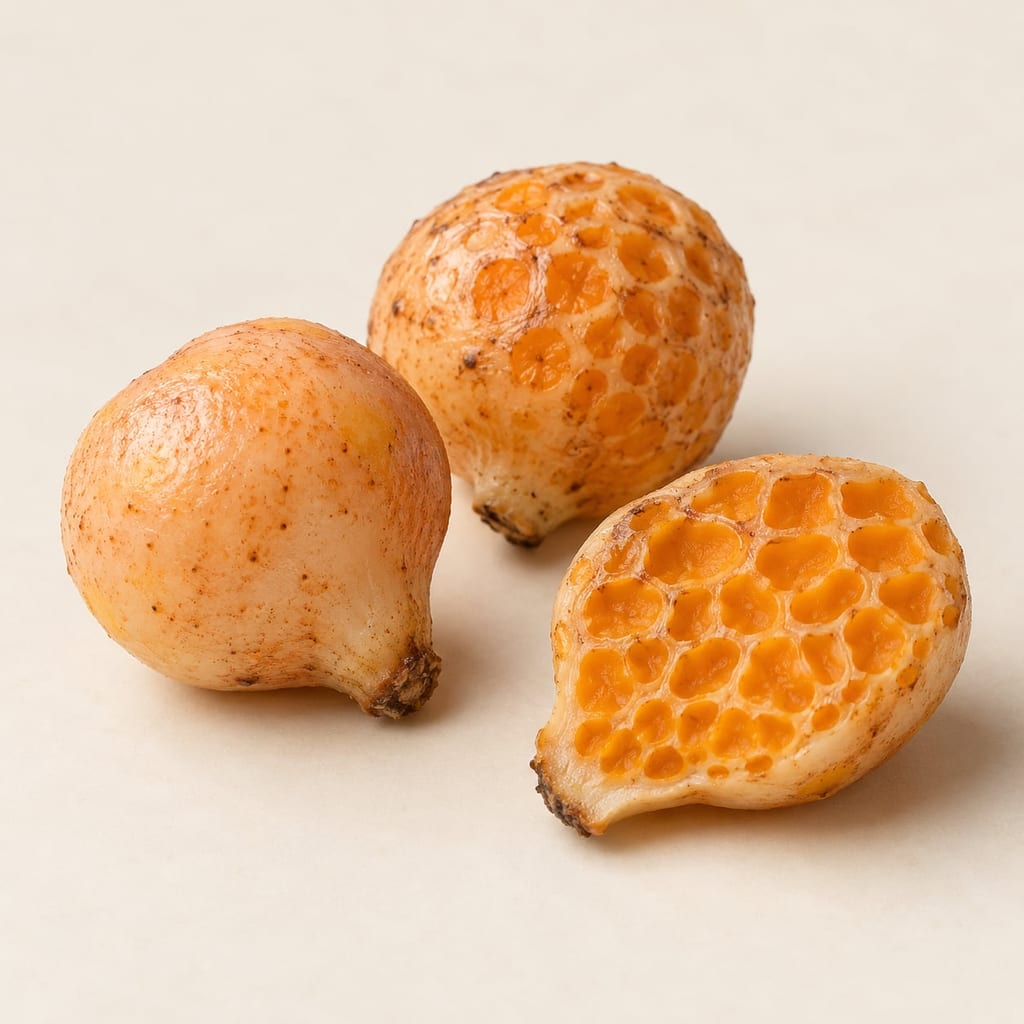
Cyttaria gunnii is an obligate parasite of southern beech (Nothofagus), forming yellow to orange fruiting structures that look like golf balls. In Australia it grows on Nothofagus in Tasmania and southern Victoria.
Sources for this section
Traditional food use
The Australian National Botanic Gardens records Aboriginal use of the fleshy fruiting bodies as food. Sources describe the jelly-like fruit as pleasant-tasting, and the liquid inside is the part most often described as eaten. Tasmanian First Nations bush-food accounts include it. An 1833 European account is cited in secondary sources; it was not checked against a primary text for this page.
Sources for this section
Taxonomy and regional caution
A molecular study found that the Australian and New Zealand populations are two distinct species, and the Australian ones occur only on Nothofagus cunninghamii. Australian food use should not be assigned to New Zealand Cyttaria species. The catalogue marks the record as historical and in need of modern verification.
Sources for this section
Safety
The sources disagree on safety. One Wikipedia-derived source treats the species as edible; a New Zealand source calls it technically edible but rarely gathered; and a Tasmanian foraging article calls it poisonous while describing the fruit as delicious. Some foragers advise against eating it without expert confirmation of identity. This page does not give an edibility verdict.
Sources for this section
Places
Tasmania
Historical attestation · Region evidenceAboriginal food use recorded in Tasmania; Victoria is also named as part of its range.