Oat flour
Oat flour is milled oats, from fine whole-groat powder to flour with some bran removed; its low gluten-forming capacity changes how it behaves in dough.
 FermenteaWhere food goes to change
Cultures
A shaped grain starter (daqu) from Chinese baijiu production, classed as low-temperature because its bricks reach the lowest peak temperatures of the three daqu types; used mainly for light-flavor baijiu.
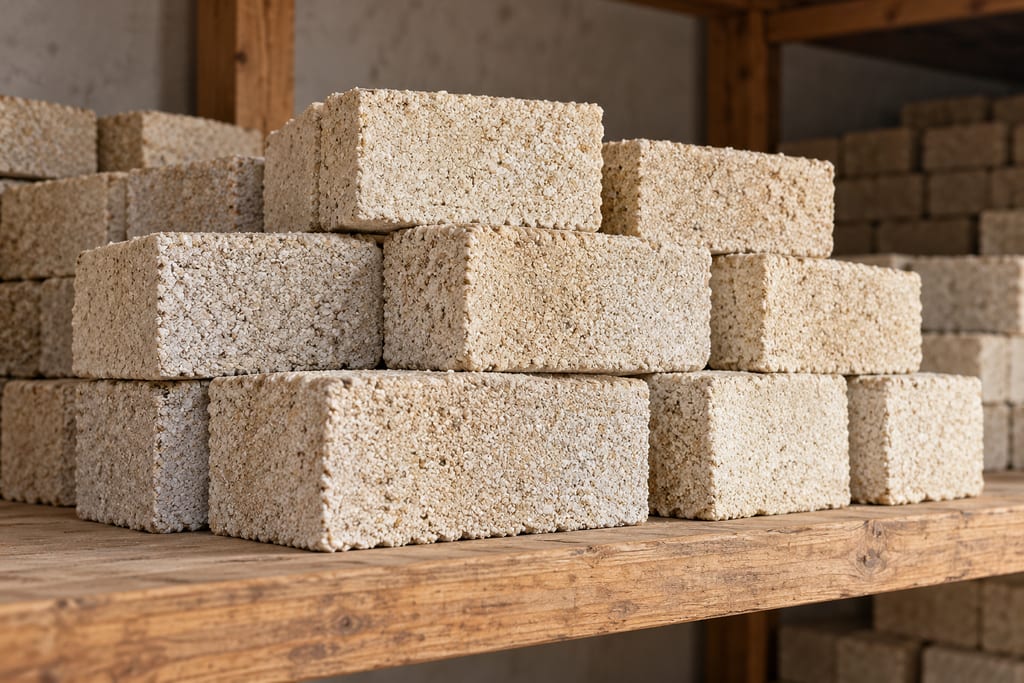
Daqu is a shaped grain starter used in Chinese baijiu production. It is a dry brick of cereal with a mixed microbial community and enzymes. Low-temperature daqu is the category name for daqu whose bricks reach the lowest peak temperatures among the three types studied: low, medium and high. The term describes a production outcome and the process that selected the community. It does not mean a starter kept at room temperature, and it is not a single species or pure culture.
Published studies classify daqu by the maximum temperature reached inside the fermenting bricks. Peak ranges are reported differently by different authors: one medium-temperature study's introduction gives 45 to 50 °C for low-temperature daqu, and later papers use 40 to 50 °C. These are classification bands, not interchangeable control plans.
The sources locate low-temperature daqu in several specific settings. One Shanxi study sampled four composite light-flavor daqu products. A research summary from Hubei describes a study of low-temperature products from the Shihua distillery. A 2026 study sampled the low-temperature category from a Shanxi producer. The Fenjiu heritage page describes that producer's Daqu craft and its named Qingcha, Houhuo and Hongxin types.
These sources are examples, not an exclusive birthplace or a uniform national process. Seasonal practice is unclear: the April Shanxi sampling and the October 2023 Frontiers collection are sample dates, not evidence of a production season.
The Fenjiu heritage page says its Daqu uses barley and peas. The grain is crushed, mixed with water, pressed by hand into blocks and placed in a qu room, where naturally acquired environmental microorganisms colonize the bricks. The page describes block arrangement, turning and temperature and humidity management by experienced makers. Hu and colleagues also describe barley and peas as the primary materials for light-flavor daqu. Neither source gives a universal ratio or formula.
Because the bricks are made by open, spontaneous solid-state fermentation, the cereal substrate and the room produce a mixed community. The Shanxi study found different microbial profiles among its four composite products. A 2026 comparison found that fungal communities differed among its low-, medium- and high-temperature samples, and that Saccharomycopsis fibuligera was prominent among its cultured low-temperature isolates. Sequencing and culturing did not produce identical profiles, so the finding supports the statement that Saccharomycopsis can be prominent in some samples, not that it always dominates.
Sources associate low-temperature daqu with light-flavor baijiu. Daqu acts as a saccharifying and fermenting agent and contributes enzymes, aroma precursors and other flavor-related components. The later grain fermentation, distillation and finished spirit are separate stages and products.
A Hubei summary reports three low-temperature types, Hongxin, Houhuo and Qingcha, with different flavor-related findings for each. A separate Shanxi paper sampled a mixture of those types rather than isolating each type throughout its analysis. Do not treat either study as a universal statement about every brick bearing one of those names.
The sources do not give a home method, a propagation plan, a validated batch curve, a sanitation procedure or a stock-storage rule for low-temperature daqu. The 2026 study's mature samples were stored at the producer's site for three months before collection, but that is not a universal maturation or storage duration. Sample-handling temperatures used in the laboratory, including 4 °C transport and −80 °C storage, apply to research samples and are not starter-storage advice.
Smell, taste, visible mould, temperature readings and a single analytical result do not establish that a brick is safe to use. A product-specific hazard review and current producer storage guidance remain open.
The origin of the low-temperature class is not dated by the sources reviewed. Current producer naming and the correspondence between Hongxin, Houhuo and Qingcha across producers need confirmation from local makers. A complete source batch with temperatures, moisture, time and endpoints is not in the reviewed material. Medium-temperature and high-temperature daqu are related categories and are not interchangeable with this one.
Barley, Peas
Daqu is a starter of Chinese liquor production; the supplied row gives China as the region.
Sampled light-flavor and low-temperature products from Shanxi producers and cities; these are study samples, not an exclusive origin.
A research summary describes a study of low-temperature products from the Shihua distillery.
No community contributions have been published for this entry yet.
Sign in to contribute. Published comments and photos are free to read.
PubMed CentralScience · Method
Comparative study on physicochemical properties, microbial composition, and the volatile component of different light flavor DaquFour Shanxi composite light-flavor daqu products were sampled and their microbial profiles compared.
Barley and peas are the primary materials for light-flavor daqu in the study's description.
Cited in: What it is; Where it is made and studied; Ingredients and making; Role in baijiu
Frontiers in MicrobiologyScience
Integrative analysis of fungal communities in three types of Baijiu Daqu using third-generation sequencing and culturomicsFungal communities differed among low-, medium- and high-temperature samples.
Saccharomycopsis fibuligera was prominent among cultured low-temperature isolates; sequencing and culturing did not produce identical profiles.
Mature products were collected in October 2023 after production and storage at the producer's site.
Cited in: What it is; Where it is made and studied; Ingredients and making; Storage, handling and safety
Hubei University of Agriculture Science and Technology, School of Food ScienceScience
Research summary announcing study of low-temperature Daqu from Shihua distilleryThe study covers three low-temperature types: Hongxin, Houhuo and Qingcha, with different flavor-related findings for each.
Cited in: Where it is made and studied; Role in baijiu; Open questions
Fenjiu, cultural heritage pageMethod · History
Cultural heritage: Fenjiu Daqu craftDaqu is made from crushed barley and peas mixed with water, pressed by hand into blocks and placed in a qu room.
Makers use thermometers and hygrometers together with experienced manual adjustment of room windows and block arrangement.
Cited in: Where it is made and studied; Ingredients and making; Storage, handling and safety; Open questions
Frontiers in Microbiology; PubMed CentralScience
Quantitative metaproteomics reveals composition and metabolism characteristics of microbial communities in Chinese liquor fermentation startersDaqu contributes microorganisms and enzymes to the fermentation of Chinese liquor.
Cited in: Role in baijiu
Sina FinanceHistory
Making qu: an epic of how Chinese people turn grain into liquorSecondary account of the history of Chinese qu, citing an early textual reference and archaeological interpretation; it does not specifically attest the low-temperature class.