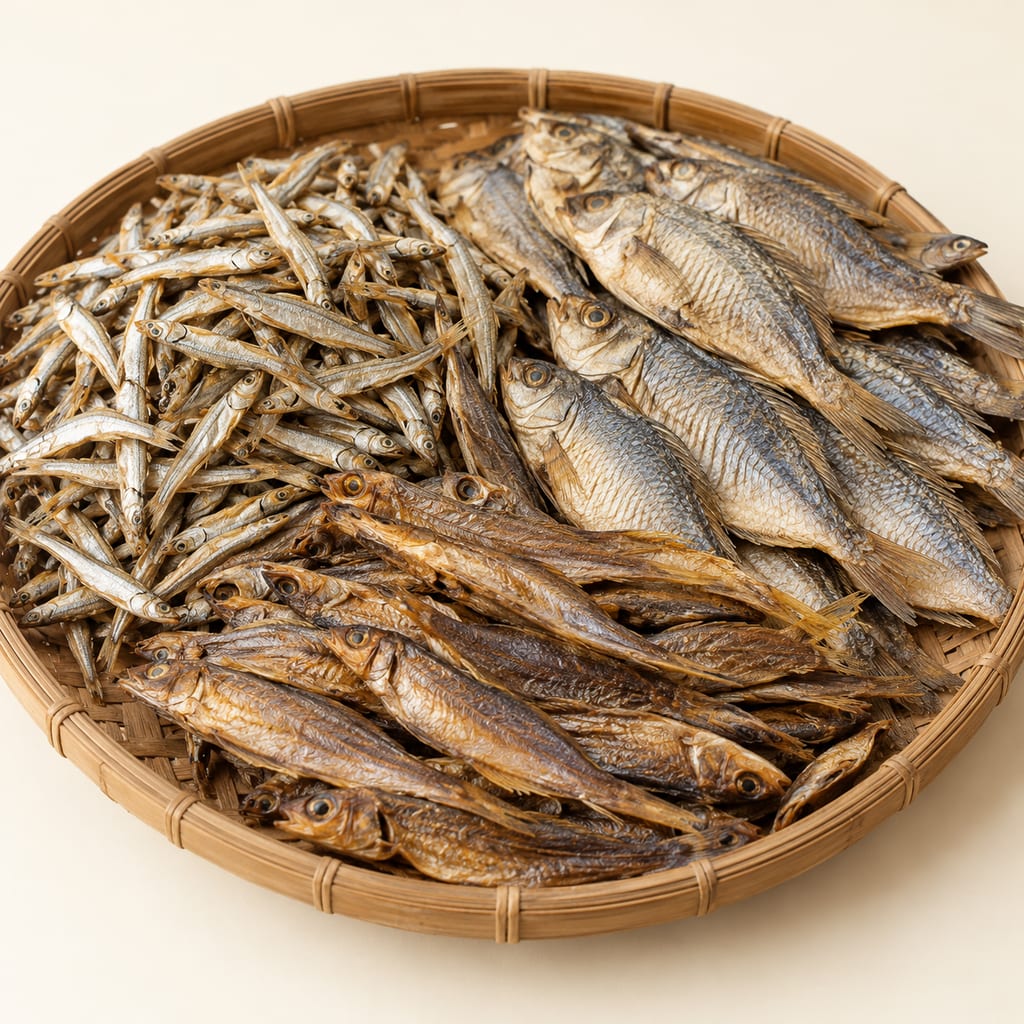
Solar-tent dried usipa, utaka and ndunduma
Small Lake Malawi fish, usipa, utaka and ndunduma, dried on racks inside UV-treated polythene solar tents. Tested in Malawi as a drier, less lossy alternative to open sun drying on racks.
 FermenteaWhere food goes to change
Substrates
Ndunduma is the Malawian name for small deep-water cichlids of the genus Diplotaxodon, caught in Lake Malawi and dried with usipa and utaka. The species in a given lot is often not recorded.
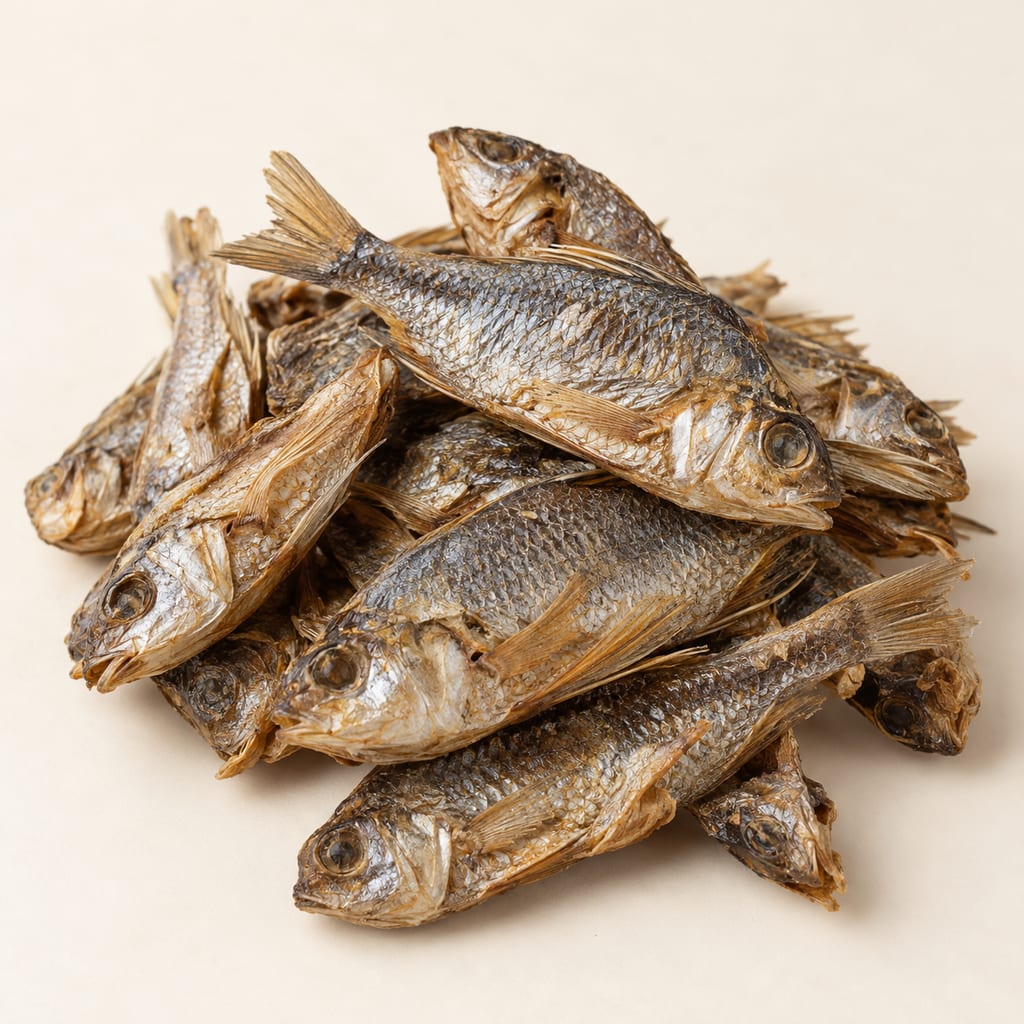
Diplotaxodon is a genus of cichlids endemic to Lake Malawi. Its species live in offshore and deep water rather than among the rocks of the shore. Wikipedia describes a small group of formally described species, with several undescribed ones; its own species list and its stated count disagree, so the exact number should be checked against a taxonomic source before it is quoted. Adults measure 10 to 30 cm total length.
The species that the sources describe most closely is Diplotaxodon limnothrissa, described by Turner in 1994. FishBase gives it a maximum length of 15.4 cm standard length, a pelagic habit in inshore and offshore water, and a depth range of 20 to 220 m. It is zooplankton-feeding, and FishBase calls it probably the most abundant species in Lake Malawi. Other Diplotaxodon species are zooplankton feeders too, and some larger ones eat small pelagic fish.
Ndunduma is a market name for the small dried cichlids of the open lake. The IDRC project that tested solar tents listed it as Diplotaxodon spp., alongside usipa and utaka. The Wikipedia article on the genus does not use the word ndunduma at all, so the link between the Malawian name and the genus rests on the trade and the project records rather than on a taxonomic source.
A solar-tent shelf-life study and a smoking and sun-drying study are both listed under the name Diplotaxodon limnothrissa (Ndunduma). Their titles name that species directly. This page does not use their results, because their full texts were not read. Until a lot is identified by species, the ingredient is best recorded at genus level.
Wikipedia reports that the genus is caught by small-scale methods, including Chirimila seines and baited hooks, and by trawling. Some seasonal fisheries heavily target the fish on their traditional breeding grounds. Because the fish are spread thinly across deep and offshore areas, they are hard to exploit economically, and the same article reports a potentially large stock, about 100,000 tonnes, with a sustainable yield around 20,000 tonnes. Those are the article’s figures and should be checked against the primary stock assessment before they are used for planning.
FishBase lists the species as commercially fished. Dried small-fish lots sold in Malawi are not always identified by species, so a lot may contain more than one fish.
Wikipedia reports that females lay about 16 to 40 eggs on average, each 5 to 7 mm across, and that most species breed between February and August. The whole life cycle takes place in open water, which is why these fish are rarely seen from the shore and why seasonal catches concentrate on the breeding grounds.
Those reproductive facts are relevant to a buyer as well as a biologist. The sources record the targeting of breeding grounds as a conservation concern, not as a drying rule.
The IDRC project tested solar tents on usipa, utaka and ndunduma as three groups of small Lake Malawi fish. The tent was a UV-treated polythene enclosure with low inlet vents, high outlet vents and racks inside. The project reports that drying time was similar to open sun drying in the dry season and shorter in the rainy season, and that dried fish from the tents had a seven-week shelf life against three weeks for sun-dried fish, under its own storage conditions.
The project figures are given for the three fish together. This page does not assign those results to ndunduma alone. The utaka study, which was opened for this record, measured moisture and bacterial counts for utaka only. The ndunduma tent results therefore need the species study before they can be quoted as the fish’s own.
The sources opened for this page do not give the nutrient content of ndunduma, its price, a dried-fish moisture target, a drying duration for this fish, a sample size for its tent results, or a conservation status for the genus. FishBase gives the trophic level of D. limnothrissa as 3.1 with a standard error of 0.46, which describes its diet but not its food value.
The sources also do not say whether all dried ndunduma is one species. Until a species study is read and cited, the record should not claim that every dried lot is D. limnothrissa.
No source in this record establishes a place.
Small Lake Malawi fish, usipa, utaka and ndunduma, dried on racks inside UV-treated polythene solar tents. Tested in Malawi as a drier, less lossy alternative to open sun drying on racks.
No community contributions have been published for this entry yet.
Sign in to contribute. Published comments and photos are free to read.
WikipediaIdentity · Biology · Fisheries
DiplotaxodonEndemic deep-water cichlid genus of Lake Malawi; formally described species count inconsistent in the article
Adults 10 to 30 cm; females 16 to 40 eggs on average, 5 to 7 mm; breeding February to August
Chirimila seines, baited hooks and trawling; stock about 100,000 t and sustainable yield about 20,000 t as stated in the article
Cited in: Deep-water cichlids of the open lake; What the name covers; Catching the fish; Breeding in open water
FishBaseIdentity · Biology
Diplotaxodon limnothrissa: fish and photo factsDiplotaxodon limnothrissa Turner, 1994; maximum 15.4 cm SL; pelagic, 20 to 220 m; zooplanktivore, trophic level 3.1 (SE 0.46)
Probably the most abundant species in Lake Malawi; commercially fished
Cited in: Deep-water cichlids of the open lake; Catching the fish; Unknowns
International Development Research Centre (IDRC)Method · History
Better processing and marketing of healthy fish products in MalawiSpecies group Diplotaxodon spp. (ndunduma) tested in solar tents with usipa and utaka
Shelf life seven weeks for solar-dried against three weeks for sun-dried fish; drying time pattern by season
Cited in: What the name covers; Drying in solar tents; Unknowns
Wikimedia CommonsImage
3diplos.jpg (image page)Image of three mature male Diplotaxodon species from a southern Lake Malawi trawl; public domain