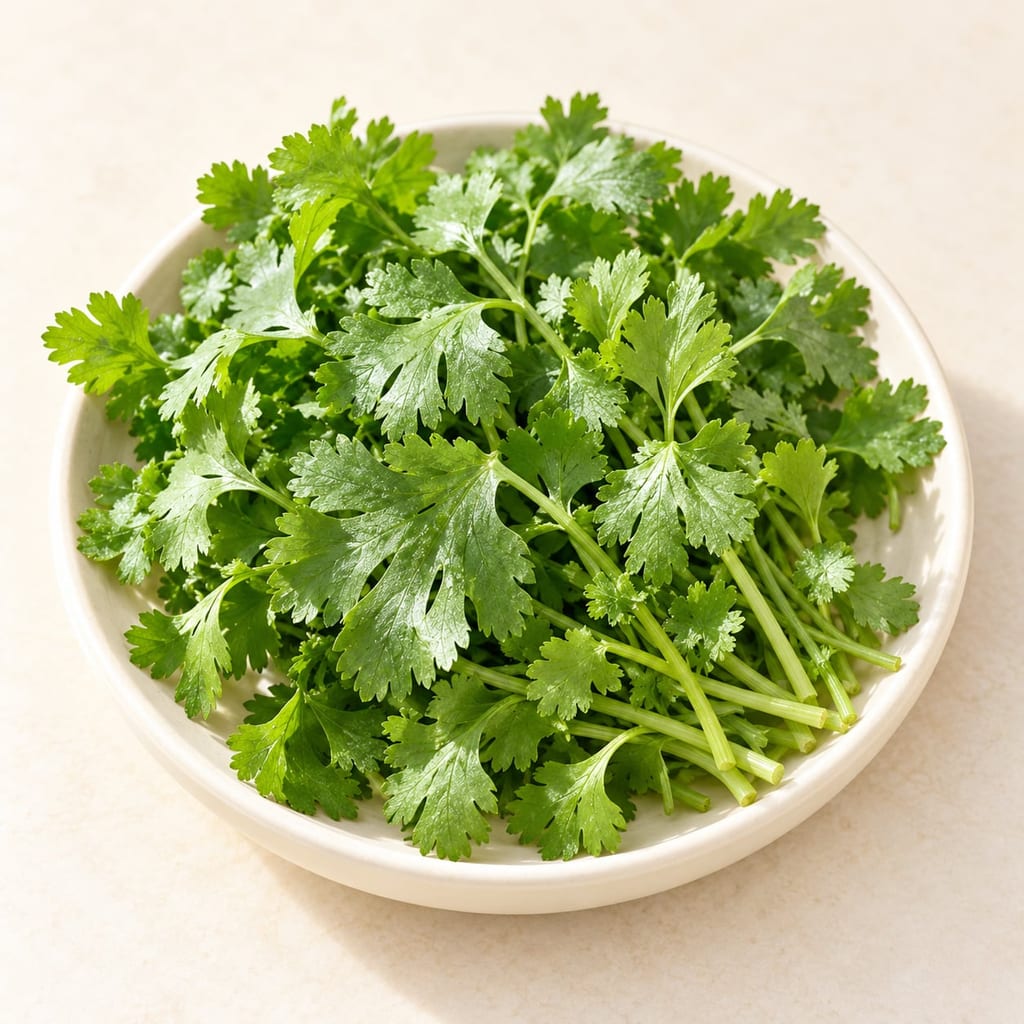
Cilantro
Cilantro is the fresh leafy herb of Coriandrum sativum, the same annual plant that produces coriander spice. Its green, aromatic leaves and fine stems bring a vivid herbal note to foods such as sai krok Isan.
 FermenteaWhere food goes to change
Mushrooms
A very large tropical bolete with historical records in Madagascar and documented food-market use in Thailand. Earlier Madagascar food evidence is explicitly uncertain; Thai records provide stronger evidence of seasonal collection and sale.
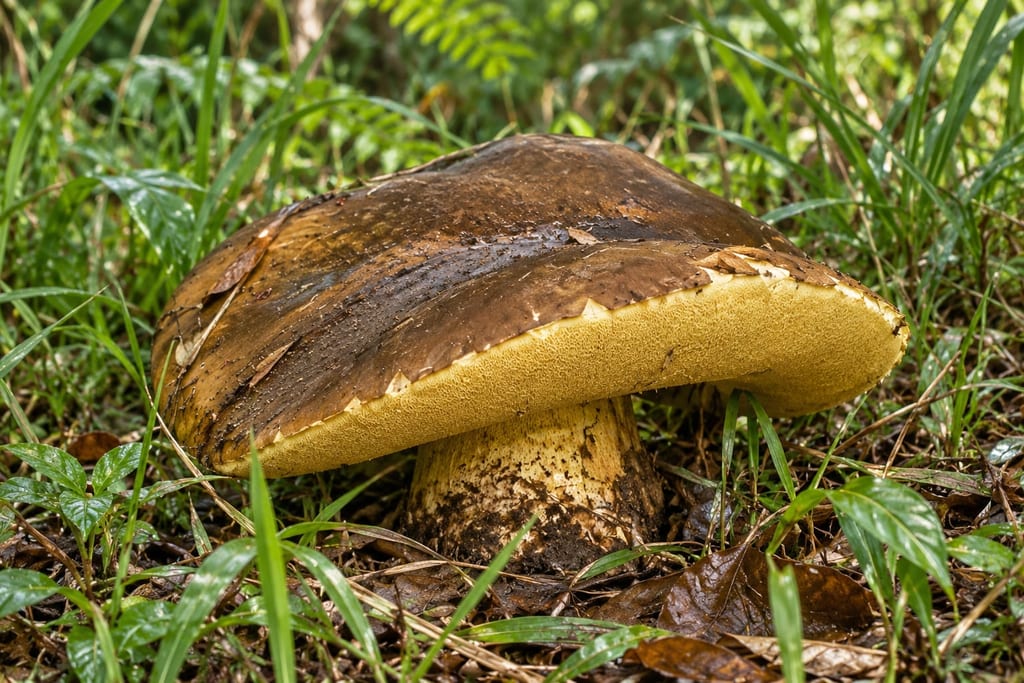
The currently accepted name is Phlebopus colossus (R. Heim) Singer. Boletus colossus R. Heim is the original name used in the supplied index and the basionym. The species belongs to Boletinellaceae. The protologue dates to 1936; taxonomic records link the species to a giant, dark-capped bolete.
The Madagascar type collection is recorded from Tampina, collected 24 November 1934 beneath coffee trees on recently cultivated ground. A later Madagascar overview describes it on the central plateau near ornamental trees such as coffee, mango and legumes, including trees left in planted fields. The tropical African literature also reports it in Madagascar and neighbouring regions, but records should be kept country- and source-specific.
A Thai study reports specimens from Chaiyaphum and Ubon Ratchathani in the northeast, Chiang Mai in the north, and Songkhla in the south; it describes the species as occasionally appearing during the rainy season and being sold in markets in those regions. A community-forest food study lists July–September for a local Thai “Boletus colossus” entry, but does not establish a general season across Thailand or Madagascar. These are regional observations, not a global calendar.
The Madagascar record is mixed in certainty: FAO places brackets around an early edible report of Boletus colossus, which its methods explain as uncertainty in the source; a separate entry lists Phlebopus colossus as edible based on a later literature source. Bart Buyck's 2008 review describes it as edible but difficult to digest. In Thailand, a field study documents market sale and local names Hed Tab Tao Dam, Hed Nam Phung and Hed Har; other Thai sources describe its sale, collection and use as food.
These records document reported use; they are not a species-specific toxicology assessment or a recommendation to forage. Avoid extrapolating from broad edible claims for the genus.
Phlebopus includes large, visually variable tropical boletes, and related taxa can be confused. The taxonomic name and historical photographs do not establish the identity of a wild lookalike. No species-specific clinical safety study was located for this account. The Madagascar literature describes the species as difficult to digest; do not present this entry as preparation or consumption advice.
The lectotype locality is Tampina (1934). FAO marks the early food-use claim uncertain; later literature reports edible but difficult-to-digest use.
Study reports Chiang Mai among P. colossus collection provinces and records market sales; not a universal seasonal calendar.
Study lists Chaiyaphum and Ubon Ratchathani and reports market sales in the region.
Study lists Songkhla and reports market sales in the region.
Cilantro is the fresh leafy herb of Coriandrum sativum, the same annual plant that produces coriander spice. Its green, aromatic leaves and fine stems bring a vivid herbal note to foods such as sai krok Isan.
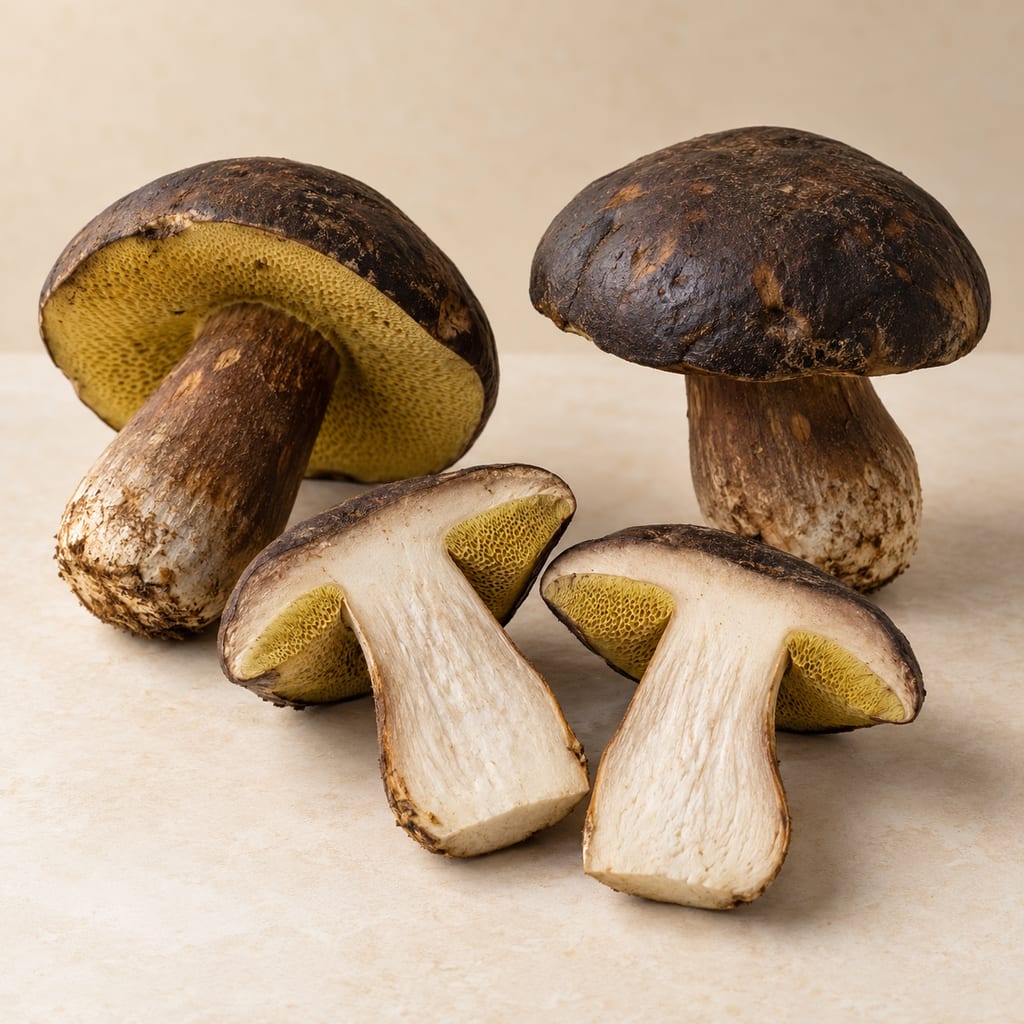
Phlebopus portentosus, the tropical black bolete, is a wild bolete prized in Yunnan and northern Thailand. It is one of the few boletes that has been fruited in culture on grain.
No community contributions have been published for this entry yet.
Sign in to contribute. Published comments and photos are free to read.
Index Fungorum / Royal Botanic Gardens, KewTaxonomy
Phlebopus colossus name recordAccepted combination Phlebopus colossus (R. Heim) Singer; Boletus colossus R. Heim is the basionym/original name; classification.
Fédération Française des Associations de MycologieTaxonomy · Geography · Habitat
Phlebopus colossus lectotype and collection recordLectotype material H73 from Tampina, Madagascar, 24 Nov 1934, under coffee trees on recently cultivated ground.
FAOUse · History
Les rapports nationaux sur les champignons sauvages utilesMadagascar table gives Boletus colossus [comestible] citing Bouriquet 1970, and Phlebopus colossus comestible citing Rammeloo & Walleyn 1993; FAO explains brackets mean uncertainty in source.
Economic BotanyUse · Geography · Habitat
The Edible Mushrooms of Madagascar: An Evolving EnigmaDescribes P. colossus as edible but difficult to digest; reports central-plateau occurrence near ornamental trees including coffee, mango and legumes.
Journal of Agricultural TechnologyGeography · Habitat · Season · Use · Images
Some Species of Wild Boletes in Thailand2000–2005 Thai collections; provinces; rainy-season occurrence and market sale; local names; Figure 6 species image lead.
Chiang Mai University LibraryUse · Season · Images
Participatory community forest foods database, Chapter 4Table 12 labels Boletus colossus; reports July–September, eating/selling/curry use and price; photo lead.
Thailand Department of Agricultural ExtensionTaxonomy · Images
Unlocking the secret of Hed Tab TaoIdentifies Phlebopus colossus, describes morphology and lookalike uncertainty; possible specimen photo lead, image/rights to verify before reuse.
iNaturalistImages · Geography
Observation 1128756: Phlebopus colossusResearch-grade observation, Mozambique, 2 Dec 2014; photo 1419135 attributed to i_c_riddell under CC BY.