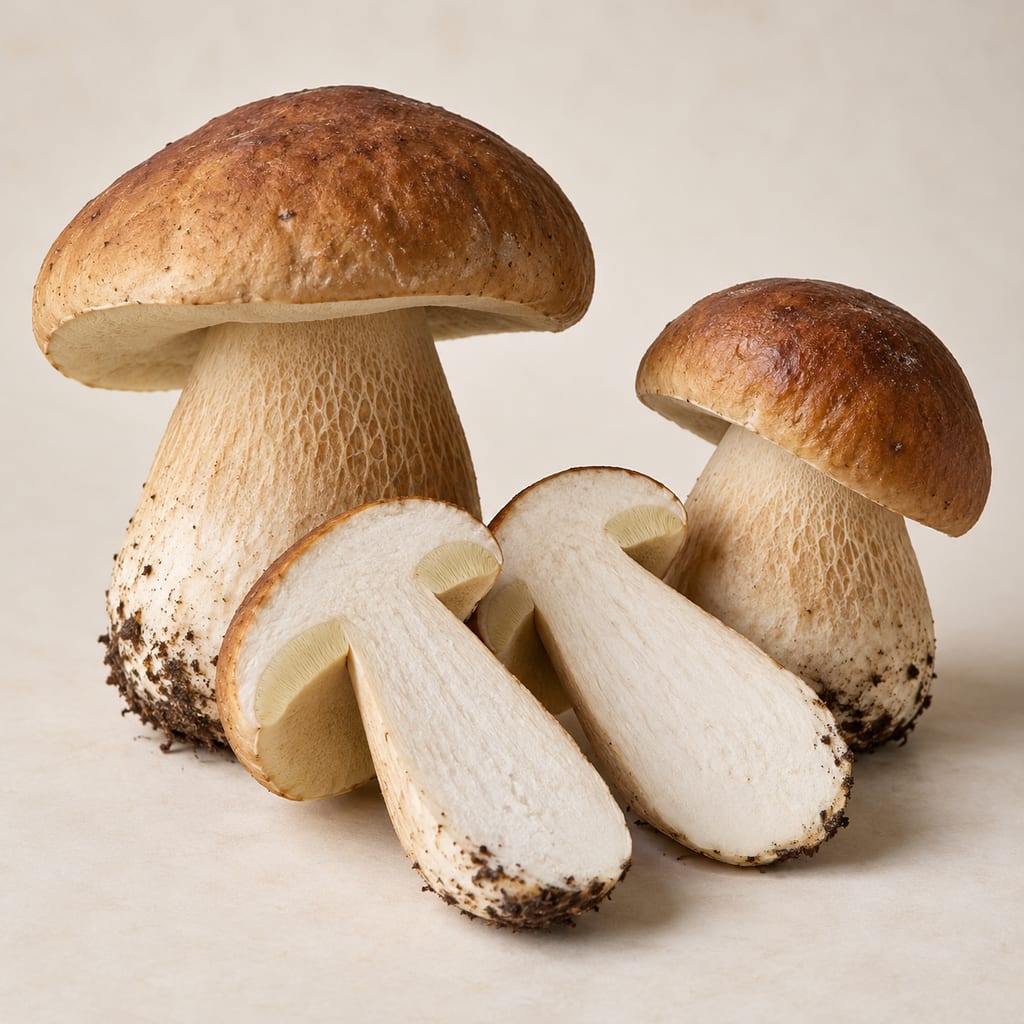
Summer cep
A wild European bolete with documented seasonal fruiting in broadleaf woods and culinary use. Sources treat Boletus reticulatus and B. aestivalis as synonyms, though taxonomic authorities differ on the preferred name.
 FermenteaWhere food goes to change
Mushrooms
Calocybe gambosa is a spring wild mushroom valued as food in several regions. Pale caps, crowded gills and a flour-like scent are descriptive traits, not a safe identification.
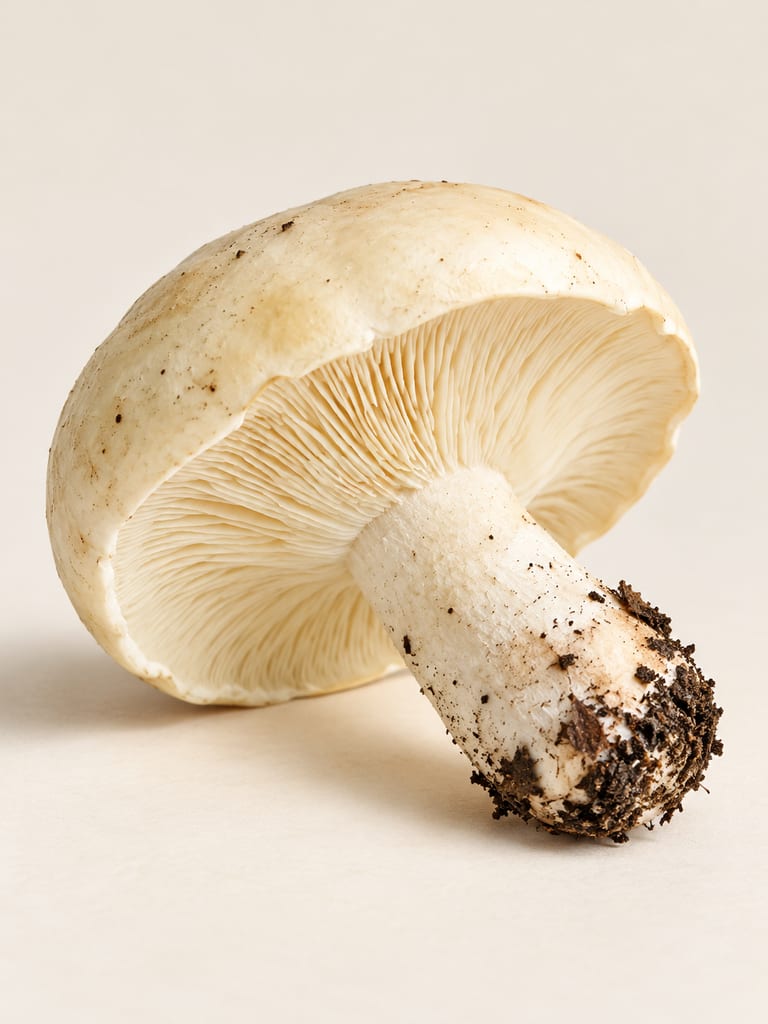
The accepted name is Calocybe gambosa (Fr.) Donk. Older references may use Tricholoma gambosum, Lyophyllum gambosum or the popular combination Tricholoma georgii. The pale fruit body is thick-fleshed, with a smooth matte cap ranging from white to cream or light ochre, tightly crowded white to cream gills, and a firm pale stem without a ring or veil remnants. The flesh has a strong fresh-flour smell and taste. These features describe the species but should not be used alone to identify a wild specimen for eating.
Regional accounts place the fungus mainly in open grassland, meadows and pasture, often in rings, near thorny Rosaceae such as hawthorn, blackthorn and wild rose, and on calcareous or neutral soil. Sources describe its ecology as saprotrophic or saprophytic; the available evidence does not justify assigning it a particular tree host or calling it ectomycorrhizal. Spring is characteristic, but dates vary: the Marche region account says April–May, Norway's university collection summary peaks in May–June, and the Basque field society records spring gatherings from March through June in different years. A regional Georgian reference also records spring and autumn, so the common name does not establish a universal calendar.
The species is treated as edible by official and mycological sources, and as a sought-after seasonal food in several places. Spain's environment ministry describes it as highly valued in Basque markets and restaurants. A regional food-and-veterinary information service for Italy's Marche region calls it edible and marketable, while the Georgian ethnobiology record lists it as edible and used fresh, citing a Georgian 2007 mushroom book. The word “fresh” there documents the source's use category; it is not advice to eat it raw. These records establish regional food use, not a single European recipe or a safe identification shortcut.
The official Vienna mushroom advisory lists poisonous lookalikes, including the large pink-gilled Entoloma sinuatum and brick-red Inocybe erubescens. Spain's Madrid regional health authority compares E. sinuatum directly with C. gambosa: both can have a farinaceous smell, but E. sinuatum's gills turn salmon-pink and it usually fruits in autumn; the authority warns it can still appear in rainy spring or early summer. The white cap and spring season alone therefore do not establish identity. The North American Mycological Association advises that mushroom identification relies on multiple features and a photograph is not enough. This page records edible use but is not foraging advice.
Documents regional food use and fruiting season; does not specify a preparation.
Regional agency describes it as edible and marketable; no recipe or foraging recommendation.
The record reports edible use when young and fresh, citing Georgian literature; “fresh” does not establish raw consumption.
A wild European bolete with documented seasonal fruiting in broadleaf woods and culinary use. Sources treat Boletus reticulatus and B. aestivalis as synonyms, though taxonomic authorities differ on the preferred name.
No community contributions have been published for this entry yet.
Sign in to contribute. Published comments and photos are free to read.
Index FungorumIdentity
Tricholoma gambosum name recordCurrent name Calocybe gambosa (Fr.) Donk; Tricholoma gambosum is a synonym.
Cited in: Name and field description
City of ViennaIdentity · Season · Safety
Mairitterling, GeorgsritterlingEdible; pale cap, crowded pale gills, no ring; spring to early summer; named poisonous lookalikes; guidance is not a substitute for expert assessment.
Cited in: Name and field description; Poisonous lookalikes and identification limits
VeSA, Regione MarcheIdentity · Habitat · Season · Food use
Calocybe gambosaApril–May fruiting; open habitats and thorny shrubs; edible and marketable; mealy aroma; local harvest size rule.
Cited in: Open-ground habitat and local season; Food use across regions
University of Oslo Natural History MuseumDistribution · Habitat · Season
Fact sheet: Calocybe gambosaNorwegian distribution concentrated on calcareous soils; open grassland and woodland-edge habitats; May–June peak in Norwegian records with a small number of autumn records.
Cited in: Open-ground habitat and local season
Ministerio para la Transición Ecológica y el Reto Demográfico, SpainHabitat · Season · Food use
Guía para la gestión de los matorralesSpring fruiting in grassland with thorny shrubs; highly valued in Basque markets and restaurants.
Cited in: Food use across regions
Aranzadi Science SocietyIdentity · Habitat · Season · Food use
Calocybe gambosaEdible and highly appreciated locally; pale cap and dense gills; spring grassland fruiting; dated field records from Basque provinces across March–June.
Cited in: Name and field description; Open-ground habitat and local season; Food use across regions
Ethnobiology of Fungi and Lichens of Georgia, Ilia State UniversityIdentity · Habitat · Season · Food use
Calocybe gambosa (Fr.) DonkKakheti distribution; edible food use cited to Georgian literature; young and fresh use; spring and autumn seasonal account.
Cited in: Open-ground habitat and local season; Food use across regions
Comunidad de Madrid, Salud PúblicaSafety · Identity
Entoloma sinuatum, Entoloma nidorosum y Entoloma rhodopolium: identification comparisonE. sinuatum is toxic and may smell farinaceous like C. gambosa; its gills turn salmon-pink and it usually fruits in autumn, but rainy springs can extend overlap.
Cited in: Poisonous lookalikes and identification limits
North American Mycological AssociationSafety
Wild Mushroom SafetyIdentification requires several features; a photograph is not enough for a safe identification.
Cited in: Poisonous lookalikes and identification limits