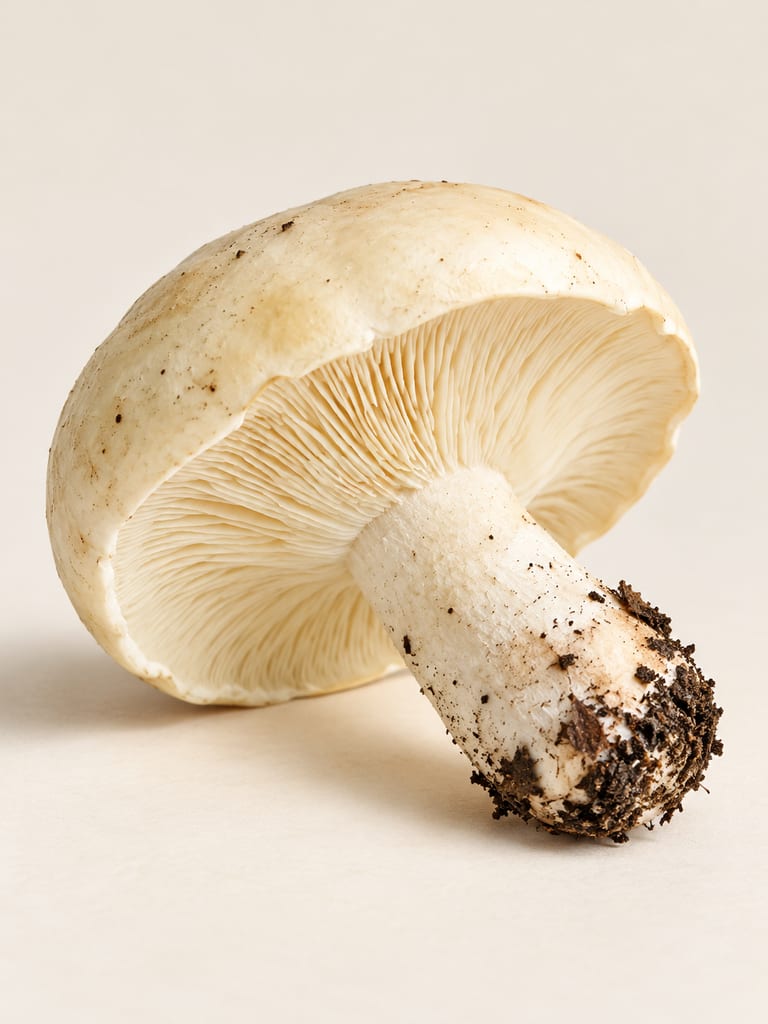
St George's mushroom
Calocybe gambosa is a spring wild mushroom valued as food in several regions. Pale caps, crowded gills and a flour-like scent are descriptive traits, not a safe identification.
 FermenteaWhere food goes to change
Mushrooms
A wild European bolete with documented seasonal fruiting in broadleaf woods and culinary use. Sources treat Boletus reticulatus and B. aestivalis as synonyms, though taxonomic authorities differ on the preferred name.
The supplied catalogue records Boletus reticulatus as the primary name and Boletus aestivalis as an alternate search name, and says to link them rather than count them twice. Index Fungorum and Species Fungorum currently place B. aestivalis in the synonymy of B. reticulatus. The 2023 French national mycota catalogue instead accepts B. aestivalis and treats B. reticulatus as a synonym. This page follows the catalogue’s paired species concept and names the authority whenever the distinction matters. A separate, malformed record written Boletus reticulatus (Hoffm.) Pers. refers to an unrelated polypore and should not be conflated with the summer cep.
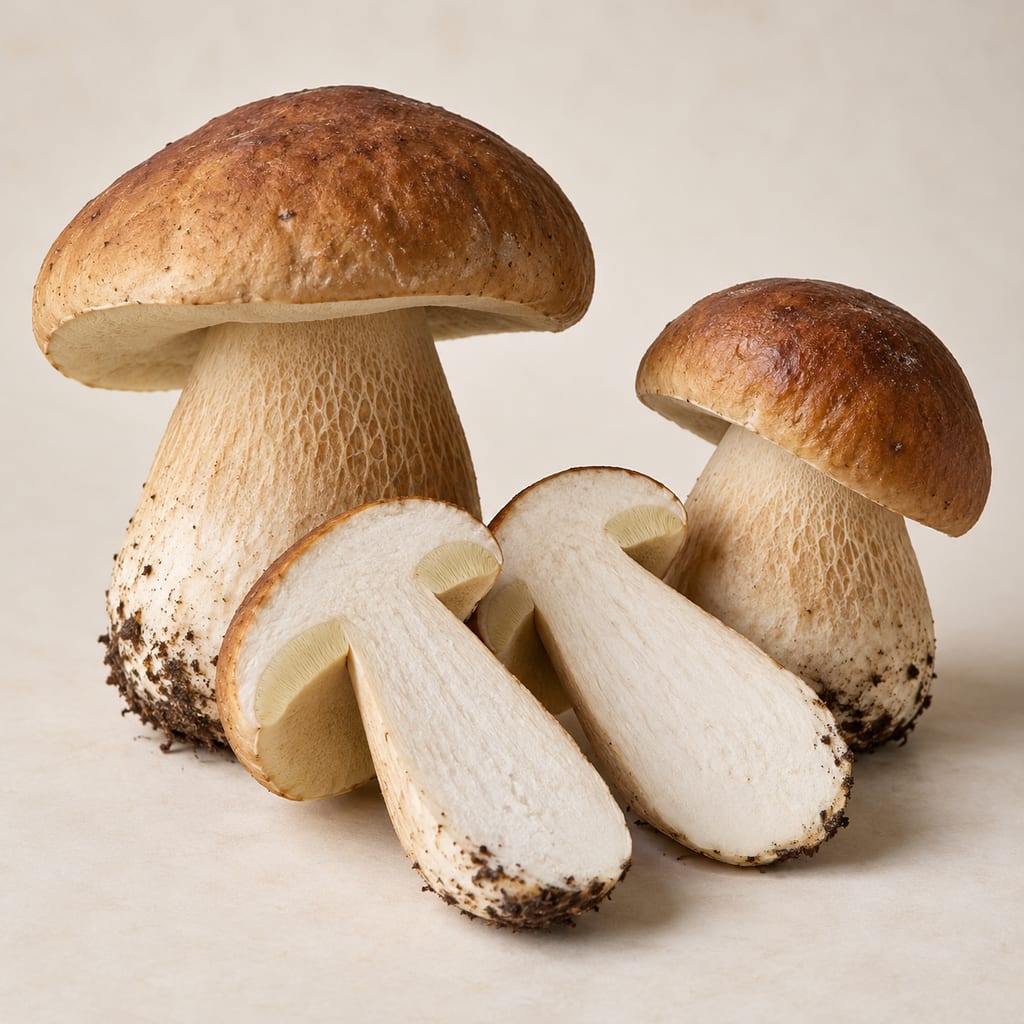
Field accounts describe a stout bolete with a dry pale-brown to chestnut cap, a pale stem with a raised net pattern, and a pore layer that matures from pale to yellow-green or olive. The flesh is reported as white and usually unchanged when cut. These variable natural-history details are not a consumer identification key.
The summer cep is ectomycorrhizal: it associates with living tree roots. European accounts most often report broadleaf hosts, including oak, beech and chestnut, though some regional records include conifers. Warm broadleaf woods recur as habitat, but the preferred trees and local distribution vary by region.
Reported fruiting runs from late spring into autumn in parts of Europe. A Czech atlas gives May to September, with October possible in a warm autumn; a British and Irish field guide gives June to October. These are regional observation windows, not a reliable calendar or guarantee of availability. Rainfall, temperature, host trees and local conditions affect fruiting.
The Nordic Council assessment describes the species as common in Denmark and the southern temperate parts of Norway and Sweden, occasional in hemiboreal parts of Finland, Norway and Sweden, and otherwise rare in the Nordic region. A dated Italian field account records it near Faete in the Monti Sibillini on 2 July 2014, in chestnut, beech and Erica arborea woodland. The Czech atlas names southern Moravia, Polabí, České středohoří and warm areas around the Berounka as richer areas. These are regional descriptions and records, not a complete global range.
The annotated catalogue describes a wild summer porcini-type culinary mushroom in Europe. The Nordic Council assessment calls B. reticulatus a very good edible mushroom and documents Nordic collection and use. Spain’s Royal Decree 30/2009 lists it among wild mushrooms eligible for fresh sale; the Community of Madrid likewise lists it as marketable fresh. These sources support documented European food and market context, not a worldwide practice, a particular recipe or a blanket claim about similar boletes.
The Nordic assessment reported no intoxications after consumption and no inherent toxicants identified at the time, while noting that lectins had been isolated and the effects of raw consumption were uncertain. Lack of reported poisoning is not a safety guarantee. Madrid’s official guide distinguishes marketable boletes from nonmarketable or toxic species, including the very bitter Tylopilus felleus. Identification and sale depend on local rules and competent expertise. This account is not foraging advice and makes no personal-consumption recommendation. The reviewed sources did not establish a species-specific recipe or processing protocol.
Boletus reticulatus is one of four porcini that DNA work in Europe separates clearly, with B. edulis, B. aereus and B. pinophilus. The forms inside the penny bun group, including a birch form, B. betulicola, and a pine-heath species, B. pinetorum, which Finnish authors keep apart, are not separated by DNA. The name B. reticulatus has also long covered two oak-associated species, which the Finnish authors call B. reticulatus and B. aff. reticulatus. Fechtner's bolete, once listed with the porcini, was moved to Butyriboletus after molecular data placed it far from the penny bun.
In short, from the sources. B. reticulatus has a dry, velvety to finely felted cap that cracks in dry weather to show white flesh, a strongly netted stout stem, and grows under oak, hazel and other broadleaf trees from early summer. Its young cap is ivory to yellowish white in the Finnish study but brown to rust in another account, so cap colour alone is a weak guide. B. aereus is darker, with a bronze-brown velvety cap, a brown to reddish stem and a hazelnut-like smell. B. edulis has a viscid cap, a fine white net clearest at the top of the stem, and appears later in cooler weather, mostly under spruce. B. pinophilus has a reddish-brown cap with a thicker, gelatinous skin and grows under Scots pine and other conifers.
The bitter bolete, Tylopilus felleus, is the classic confusion. Its pores are white when young and turn pink with age, and its stem carries a coarse dark brown net on a lighter ground. Its flesh is intensely bitter, cooking makes this worse, and sensitivity to the bitterness varies between people, so tasting is not a safe test. Red- and orange-pored boletes are a different hazard. Satan's bolete, Rubroboletus satanas, has yellow to orange pores that turn red and blue at a touch, a stem running from yellow to carmine at the base, and is described as moderately poisonous, especially raw. The bitter beech bolete, Caloboletus calopus, has a pink-red lower stem, pores that bruise blue and flesh that stays bitter after cooking.
This record is not a field guide. Identification has to be certain, from the whole mushroom and several features together, and checked by an experienced local identifier before anything is eaten. Smell, taste or colour change alone never establish safety.
The assessment documents edible use and regional occurrence, but the broad region does not imply equal frequency or identical practice throughout.
The sources establish eligibility and listing for sale, not a specific traditional preparation.
Dated occurrence record in woodland; no local food practice is claimed.
Regional atlas occurrence and fruiting context only; no local food tradition claimed.
Field guide seasonal occurrence context only; no local food practice is claimed.
Calocybe gambosa is a spring wild mushroom valued as food in several regions. Pale caps, crowded gills and a flour-like scent are descriptive traits, not a safe identification.
No community contributions have been published for this entry yet.
Sign in to contribute. Published comments and photos are free to read.
Index FungorumReference
Boletus reticulatus name recordCurrent name treatment of Boletus reticulatus Schaeff.
Cited in: Names and identity
Index FungorumReference
Boletus aestivalis name recordCurrent name record links Boletus aestivalis to B. reticulatus.
Cited in: Names and identity
Species FungorumReference
Boletus reticulatus synonymySynonymy of Boletus aestivalis and B. reticulatus.
Cited in: Names and identity
Inventaire national du patrimoine naturelReference
French national mycota catalogue (2023)French catalogue accepts B. aestivalis and lists B. reticulatus as synonym.
Cited in: Names and identity
Nordic Council of MinistersReference · Safety
Mushrooms Traded as Food, Volume II, section 2Edibility and Nordic food use; distribution across Nordic climate regions; broadleaf mycorrhizal associations; risk assessment statements and limits.
Cited in: Forest ecology and season; Documented places; Food use and safety context
Boletín Oficial del Estado, SpainReference · Market
Royal Decree 30/2009, Annex ALists B. reticulatus among species eligible for fresh sale in Spain.
Cited in: Food use and safety context
Community of MadridReference · Safety · Market
Commercialisation of wild mushroomsClassifies B. reticulatus/B. aestivalis as edible and marketable fresh in the Madrid guide; distinguishes unsafe or nonmarketable lookalikes.
Cited in: Food use and safety context
Czech mushroom atlasReference
Summer cep field accountWarm broadleaf habitat; regional Czech occurrence; May to September fruiting with possible October records in warm autumns.
Cited in: Forest ecology and season; Documented places
Mico AragónReference
The summer boleteBroadleaf/mycorrhizal ecology and late spring to autumn fruiting in the regional account.
Cited in: Forest ecology and season
First NatureReference
Boletus reticulatus: summer cepField guide reports June to October fruiting in Britain and Ireland and identifies regional seasonal variation.
Cited in: Forest ecology and season
Gruppo Micologico AnconaReference
Field record near Faete and the Monti SibilliniDated 2 July 2014 field record in chestnut, beech and Erica arborea woodland.
Cited in: Documented places
WikipediaIdentification
Boletus reticulatusVelvety cap that cracks when dry, strongly reticulated stem, oak and other deciduous hosts, summer fruiting; main comparison is B. edulis
Cited in: The European porcini compared
Karstenia 49, Finnish Mycological SocietyTaxonomy · Identification
A new boletoid fungus, Boletus pinetorum, in the Boletus section Boletus from FennoscandiaFinnish description of B. reticulatus and of an oak-associated B. aff. reticulatus; the name B. reticulatus long used for two species; four European lineages and the unseparated B. edulis group
Cited in: The European porcini compared
WikipediaIdentification
Boletus aereusCap, stem, hosts and season of B. aereus; how it differs from B. reticulatus and B. edulis
Cited in: The European porcini compared
WikipediaIdentification
Boletus pinophilusCap skin, stem network and hosts of B. pinophilus
Cited in: The European porcini compared
WikipediaTaxonomy
Butyriboletus fechtneri (Boletus fechtneri)Fechtner's bolete moved from Boletus to Butyriboletus after molecular data placed it in the Regius clade, distant from the B. edulis core clade
Cited in: The European porcini compared
WikipediaIdentification · Safety
Tylopilus felleusPores white then pink; coarse dark net on lighter stem; intensely bitter flesh, worse on cooking; sensitivity to the bitterness varies between people
Cited in: The European porcini compared
WikipediaIdentification · Safety
Rubroboletus satanasSatan's bolete: pore, stem and flesh colours, bluing, moderate poisoning with gastrointestinal symptoms
Cited in: The European porcini compared
WikipediaIdentification · Safety
Caloboletus calopusBitter bolete: pink-red lower stem, pores that bruise blue, intensely bitter flesh not removed by cooking; red stem distinguishes it from B. edulis
Cited in: The European porcini compared