Name, scope and botanical identity
This page uses wild chervil for the accepted species Anthriscus sylvestris (L.) Hoffm., in the carrot or Apiaceae family. Cow parsley is another established English name. Kew accepts the scientific name; the Royal Horticultural Society uses cow parsley and wild chervil for the same plant. Common names are less precise than the Latin name: chervil by itself often means garden chervil, Anthriscus cerefolium, a different species cultivated for its leaves. Neither plant should be substituted for the other merely because the names overlap.
The account concerns the raw plant used as a leafy herb, not a prepared condiment, medicinal product or fermented food. The item is an ingredient because it is gathered or grown and used as a plant; cutting or adding leaves to another food does not turn the plant into a preparation recipe. In the literature, the word “chervil” is applied to several unrelated or only distantly related Apiaceae. A recipe or market label that gives only that word therefore does not, by itself, establish which species it contains.
Kew places A. sylvestris in genus Anthriscus, family Apiaceae, order Apiales. Its accepted name dates from the early nineteenth-century botanical publication cited by Kew, but that nomenclatural date is not a date for culinary use. Taxonomic sources establish what the scientific name refers to; they do not establish that a plant gathered in a particular place, or sold under a common name, has been correctly identified.
Sources for this section
What the plant is like
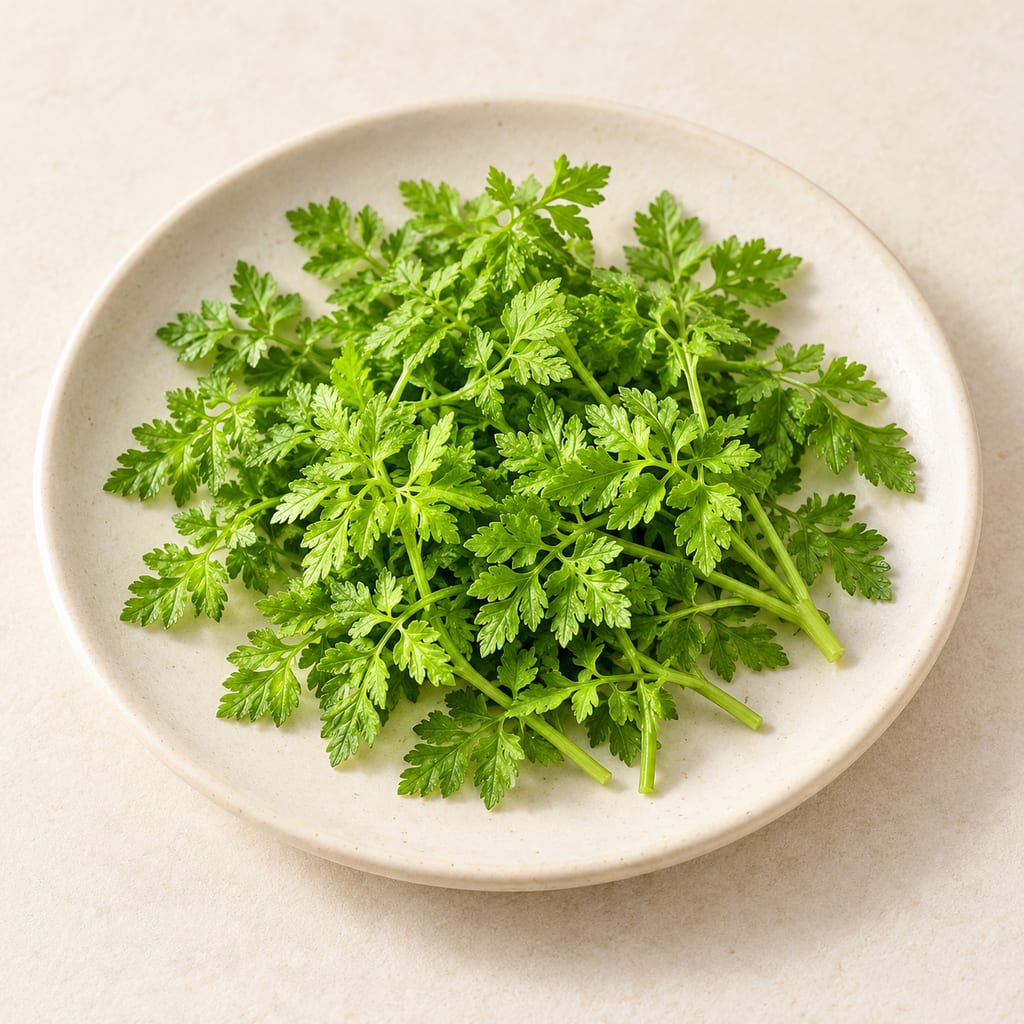
Wild chervil is a short-lived perennial or biennial herb. The Royal Horticultural Society describes fresh-green foliage divided into fine, fern-like leaflets and upright hollow stems that may be slightly hairy. Small white flowers are grouped in umbrella-like clusters, called umbels, and are followed by smooth oblong fruits that darken as they mature. Ontario’s crop-weed guide gives a broad height range, emphasizing that plant size varies with conditions rather than offering a dependable size test.
The species is native across temperate Eurasia and into tropical African mountain regions, according to Kew, and has been introduced in parts of North America. It grows in moist disturbed places such as meadows, field margins, ditches and hedgerows in the Ontario guide. Those are habitat descriptions, not evidence that a roadside patch is fit to eat: a plant’s taxonomic identity and the cleanliness of the place where it grows are separate questions.
The young leaves are the culinary form most directly described by the RHS: mildly aromatic and suitable for salads. Their finely divided outline can look delicate, but visual resemblance is precisely why the species needs careful handling in a food context. A photograph, even of a correctly identified plant, cannot establish the identity of an individual specimen in a different place or at a different stage.
Sources for this section
Fresh leaves and documented food forms
The simplest documented use is as a fresh green. The RHS describes young leaves added to salads, while Ernest Small’s culinary-herb account reports that young leaves are sometimes collected and cooked as a potherb. It also records fresh or dried leaves used as seasoning in foods such as soups, salads, baked potatoes, bean dishes, casseroles and omelets. These are reported culinary forms, not a tested set of recipes or a claim that every part of the plant is edible.
A potherb is a leafy plant cooked as a vegetable rather than used only as a small garnish. The distinction matters: the recorded account names young leaves for that use, not mature stems, flowers, seed or roots. Small’s entry notes that the species has been gathered only occasionally as a wild food. It does not provide harvest quantities, a standard cooking time, or a comparative flavor test. The page therefore does not prescribe a portion or assert that cooking removes a toxicity risk from a plant that has been misidentified.
Fresh and dried leaves are not identical ingredients. The literature records both forms as seasonings, but does not quantify aroma loss, drying conditions, storage time or a preferred substitution ratio. A reader can understand that drying is a documented way the leaves have been used without treating it as a validated preservation protocol. No shelf life or food-safety guarantee is inferred from the fact that a dried herb is described in a reference.
Sources for this section
Wild chervil in kambar
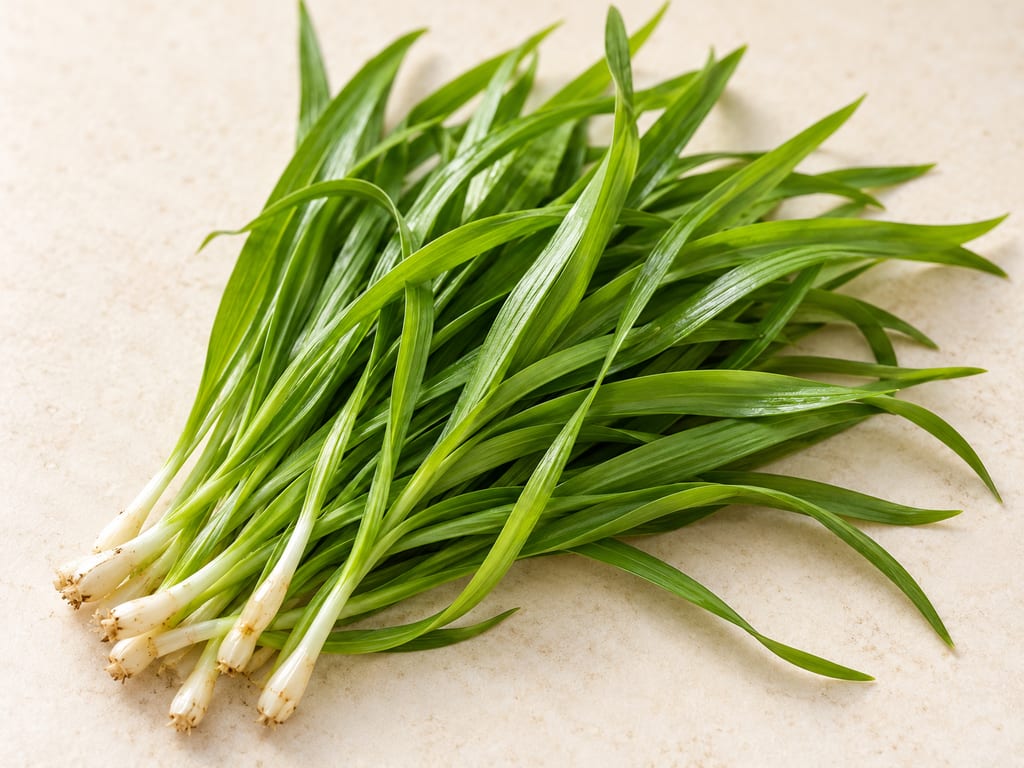
The strongest region-specific food account here comes from the 2023 paper “Ethnobotany of Dagestan.” Its authors describe a questionnaire survey conducted in 2022–2023 with more than 300 people from different ethnic groups across Dagestan. They record forty-eight commonly used wild plants. Within its account of kambar, kambar combines chopped fresh or pickled wild leek and wild chervil with homemade kefir, described as sour milk, and leaves the mixture to draw for one and a half to two days in a cool dark place in a small earthenware jug.
This places wild chervil as one of several named herbs in a particular sour-milk preparation. It is not the same as saying the plant ferments the milk, supplies a starter culture, or is essential to all kambar. The paper’s sentence does not specify a measured amount of chervil, whether it is always fresh, the proportion of herbs to dairy, a starter’s identity, vessel sanitation or a measured incubation temperature. Nor does it document the degree to which the practice is shared among the many communities in Dagestan.
The study is a contemporary ethnobotanical record, valuable for linking the plant to a named regional food practice. The survey dates evidence of recording, not the origin of the dish. Its account is not a controlled fermentation study and does not certify a procedure for home production. For those reasons this ingredient page identifies the reported use and links the related kambar item, but does not convert the short description into a fermentation recipe or safety recommendation.
Sources for this section
How it grows and what a gathered lot means
Kew describes A. sylvestris as a biennial or perennial, and the RHS as short-lived perennial or sometimes biennial. These descriptions allow for variation in life history and terminology; they do not imply that a particular plant’s age can be read reliably from a food-market bunch. The plant self-seeds readily in the RHS account. Ontario describes it as a crop competitor in some agricultural settings. In parts of North America it is treated as an introduced weed, while in Britain it is a familiar native wildflower. “Useful herb” and “weed” are descriptions from different human perspectives, not contradictory botanical identities.
The sources do not provide a controlled cultivation protocol for culinary production of wild chervil, a standard cultivar, or commercial grades for leaves. Garden chervil is grown as a culinary crop, but that is A. cerefolium. Advice about sowing or harvesting garden chervil cannot be silently transferred to wild chervil. Where a product is sold as wild chervil, a supplier’s species identification and lot provenance would be needed to establish what the reader has; this page has no batch-specific supply data.
For a gathered plant, locality also matters for reasons beyond identity. The Food Standards Agency says to avoid wild foods from visibly contaminated places and areas where pesticides may have been used, to wash a harvest, and to take only what is needed. Those general guidelines do not certify a particular site or remove the need to check land access and local collection rules. No source in this record establishes the origin, cultivation method or harvest conditions of an ingredient lot.
Sources for this section
A serious lookalike boundary
The principal food-safety limit is not a cooking technique but identity. Wild chervil belongs to a family containing plants with dangerous lookalikes. The RHS explicitly warns that cow parsley can be confused with poisonous hemlock. The University of Maryland Extension describes poison hemlock (Conium maculatum) as highly poisonous, with all parts poisonous and ingestion potentially fatal; it also notes that skin contact with the plant can cause dermatitis. The agency lists fern-like leaves and white umbels among its features, so those familiar broad shapes do not distinguish the safe species from a dangerous one.
Poison hemlock is often described with smooth, hollow stems bearing purple spots, while field guides contrast that with the more ridged or hairy stems associated with wild chervil. These can be useful comparative observations in botanical references, but they are not a stand-alone identification key. Ontario notes variation in wild-chervil size and foliage, and the University of Maryland warns that poison-hemlock stem spotting can be faint in its first-year rosette. A missing visible spot, an apparent hair, leaf shape, pleasant smell or a photograph must not be treated as proof of safety.
This page is not a foraging field guide and its image is not an identification aid. It does not tell readers to taste a specimen, rely on an app, or collect a plant from a photo. The Food Standards Agency says the forager must be certain of the identity because wild plants can be poisonous or deadly. For this species, an uncertain specimen should remain uneaten; a qualified local botanist or an authoritative region-specific field key is a safer route than a common-name match. Never handle a suspected poison hemlock as if it were food.
Sources for this section
What this plant contributes, and what is not known
As a leafy herb, wild chervil contributes plant matter and mild aromatic character. The RHS supports the descriptor “mildly aromatic” for its young leaves. The Dagestan ethnobotany paper records the chopped herb among ingredients added to sour dairy, but gives no chemical analysis of the leaves in kambar and no evidence about how their flavor changes through the reported resting period. Small records fresh and dried seasoning uses, but no standardized composition or measure of aroma.
In the documented kambar account, milk is already described as homemade kefir or sour milk. Wild chervil is listed as an addition; the paper does not identify it as a culture or show that it acidifies the dairy. It is therefore misleading to describe the plant as a fermenting agent. It may contribute flavor and texture as a chopped leafy ingredient, but those particular effects are not measured by the ethnobotanical survey. No conclusion is drawn about microbial behavior, acidity, preservation or pathogen control.
The available sources do not provide nutritional composition, allergen testing, medicinal efficacy, a safe therapeutic dose, a shelf life, or a validated preservation method for this ingredient. This account treats the plant as food only where the cited sources document food use. Published medicinal claims are not food instructions, and traditional use alone does not establish clinical benefit. A lack of data in the consulted sources is not proof that an effect or hazard is absent.
Sources for this section
Names, history and limits of the record
Wild chervil, cow parsley and Anthriscus sylvestris are names attached to this species in the cited English-language sources. The scientific name is the reliable anchor across those common names. In Dagestan the 2023 survey documents it in the context of kambar, but this record does not make a claim about a single local-language name across Dagestan’s many communities. The ethnobotanical paper itself emphasizes the region’s ethnic and landscape diversity, which is a reason to keep its finding local and specific rather than flattening it into a universal custom.
The literature available for this page does not establish when wild chervil first entered human diets, how its use spread, or whether a specific older text refers to this species rather than another Apiaceae called chervil or parsley. Historical dates for the name, distribution across a continent, and long-standing use of the plant family cannot substitute for a dated food attestation. The record consequently marks the earliest food-use period as unknown rather than borrowing the history of cultivated garden chervil.
Further work could clarify named local forms and language, regional harvest practices, whether kambar’s herb mix varies by community, and how the documented dairy preparation is made and evaluated today. It could also establish whether wild chervil is cultivated for food in any of the places where it is now gathered. Until those sources are available, the strongest account is narrow: a botanically accepted species, young-leaf culinary uses in general references, and one contemporary documented role in a Dagestan sour-milk dish.
Sources for this section
Places
Dagestan
Documented use · Region evidenceA 2022–2023 ethnobotanical questionnaire survey records wild chervil in kambar. This is a documented regional use, not proof of a uniform Dagestani practice or of any gathered lot's origin.