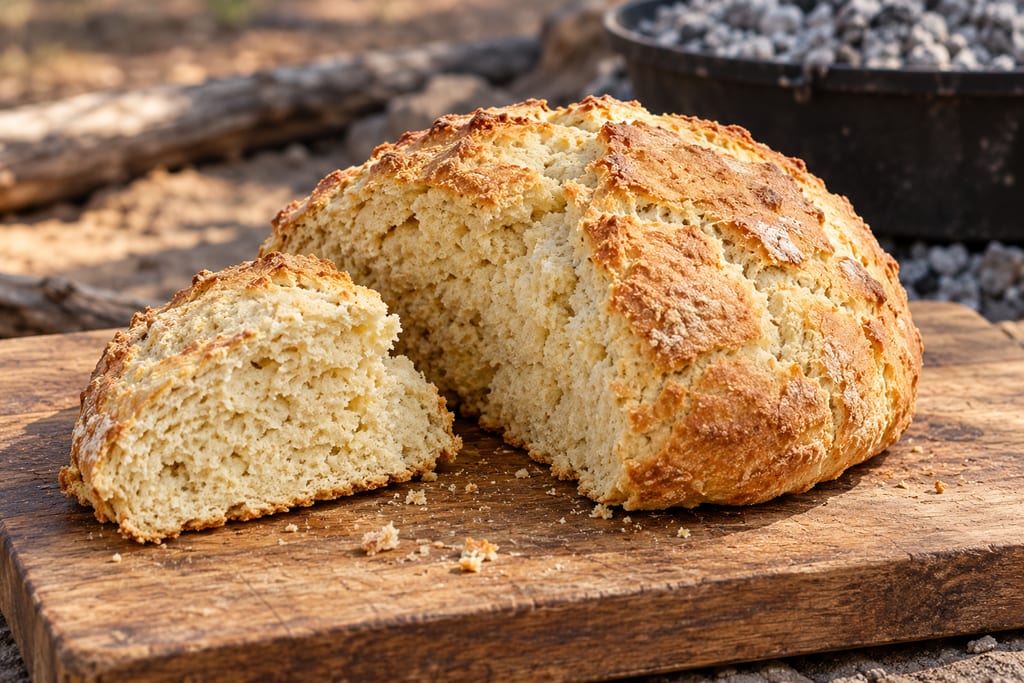
Johnno’s Damper: Queensland stockcamp version
A quick stockcamp loaf of self-raising flour, powdered milk, sugar, salt and water, mixed to a soft dough and baked in an oven or camp oven.
 FermenteaWhere food goes to change
Traditional method
barnji · Bunya nut storage · Bon-yi · Bunya nut cakes · Roasted bunya-nut meal cakes
Bunya nuts were cooked and kept in wet ground or water by peoples of south-eastern Queensland, and were also roasted, ground and pressed into cakes that could be cooked again and stored for later use.
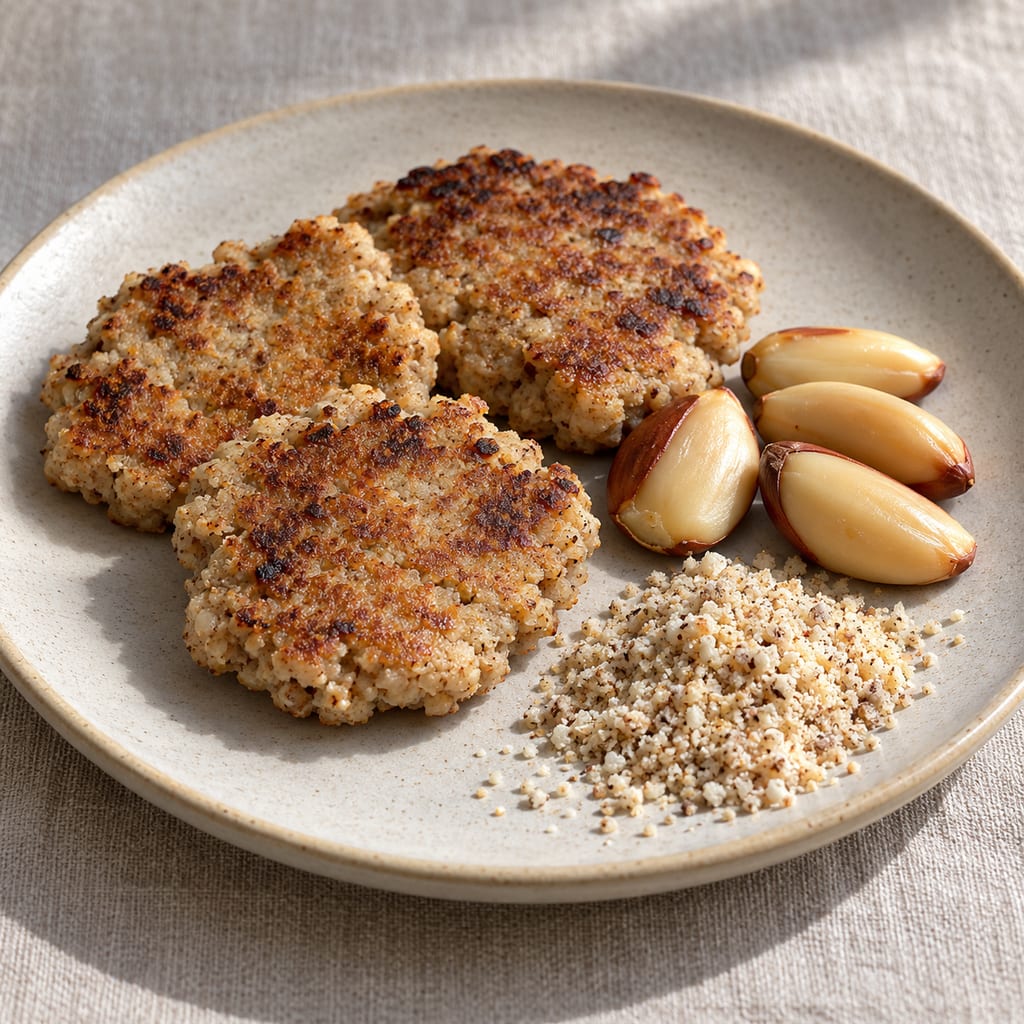
Bunya nuts are the seeds gathered at the bunya gatherings of south-eastern Queensland. The nut was one of the most important seasonal foods of the region, and the storage methods described for it show how a short harvest could be turned into a reserve for travel and for large meetings.
Two forms are recorded. Nuts could be cooked and kept in suitable wet ground or in water, sometimes with intentional sprouting. Nuts could also be roasted, ground into meal and formed into cakes, which were cooked again and stored. The second form combines heat, moisture reduction and compacting in one sequence.
The sources connect storage with travel and with gatherings that drew people from a wide area. A reserve that kept better than freshly gathered nuts allowed the harvest to be used after the season had passed.
Wet storage and fermentation can overlap in other traditions, but the record for bunya nuts does not show that buried nuts were lactic-fermented. The source is therefore careful to describe the nuts as stored, not fermented.
The sources give no quantities, temperatures, durations or storage limits, and they do not record how long the cakes kept. The method is historical testimony and is not a validated home storage method. Anyone attempting a modern version should not treat a historical reserve as a guarantee of safety.
Historical testimony connects bunya nut storage with travel and large gatherings. Nuts were cooked for immediate eating or stored in baskets in suitable wet ground or water, and some accounts describe intentional sprouting. A roasted, ground and re-cooked cake form is recorded as a reserve that lasted longer than freshly gathered nuts, without implying indefinite storage.
Scaling: source batch only
The sources describe nuts kept in wet ground or water, but do not establish conditions, duration or a safe limit. Buried nuts do not by themselves demonstrate lactic fermentation.
Hazard sourceDo not rely on this method for storage without process validation.
Control sourceThe sources record historical practice only. They are not a tested home storage method.
Bunya gatherings of south-eastern Queensland peoples; the source does not establish a precise community or site for the cakes.
A quick stockcamp loaf of self-raising flour, powdered milk, sugar, salt and water, mixed to a soft dough and baked in an oven or camp oven.
No community contributions have been published for this entry yet.
Sign in to contribute. Published comments and photos are free to read.
Queensland Government (parks.qld.gov.au)History · Method
https://parks.qld.gov.au/parks/bunya-mountains/about/cultureBunya nuts roasted, ground into meal, formed into cakes and cooked again before storage
Reserve lasted longer than fresh nuts without implying indefinite storage
Cited in: What it is; Why the storage matters; Limits of the record