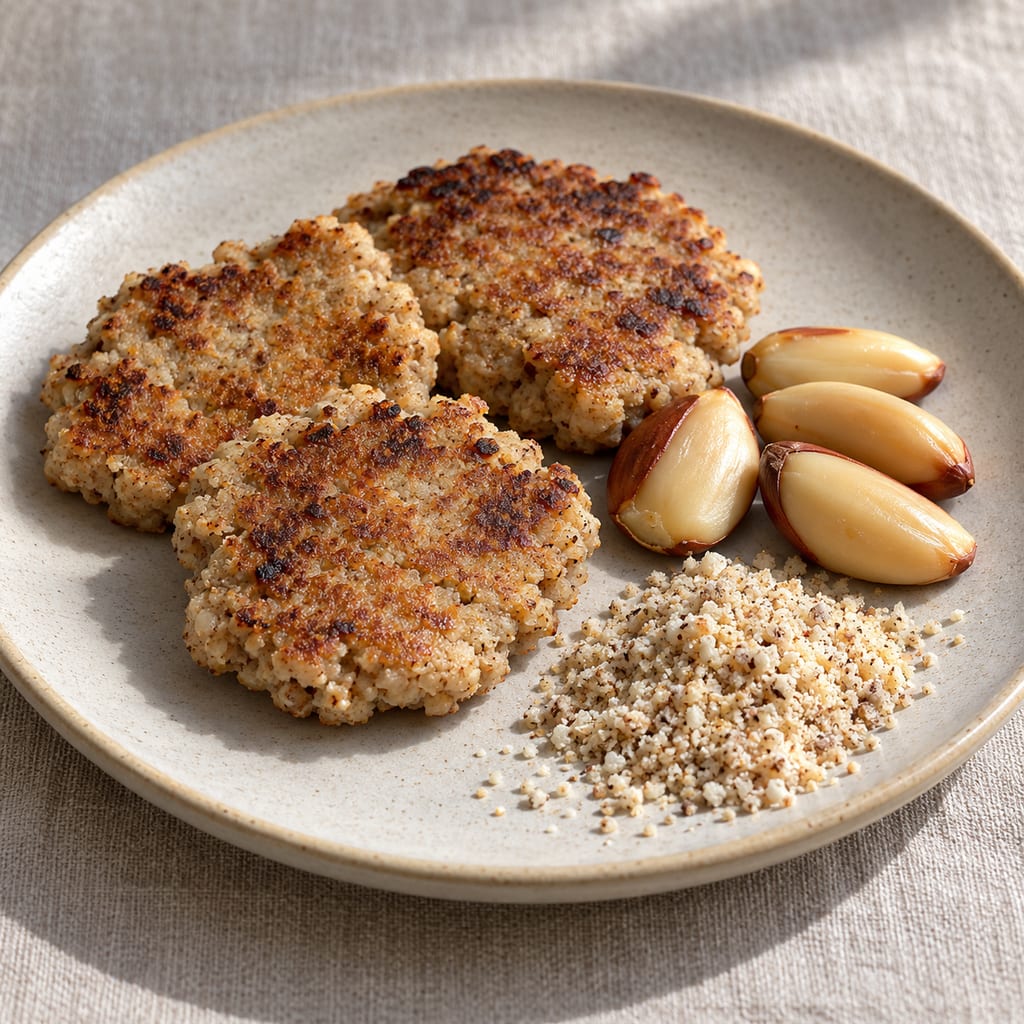
Bunya nut storage (barnji, bon-yi)
Bunya nuts were cooked and kept in wet ground or water by peoples of south-eastern Queensland, and were also roasted, ground and pressed into cakes that could be cooked again and stored for later use.
 FermenteaWhere food goes to change
Johnno's Damper · Australian damper · camp damper
A quick stockcamp loaf of self-raising flour, powdered milk, sugar, salt and water, mixed to a soft dough and baked in an oven or camp oven.
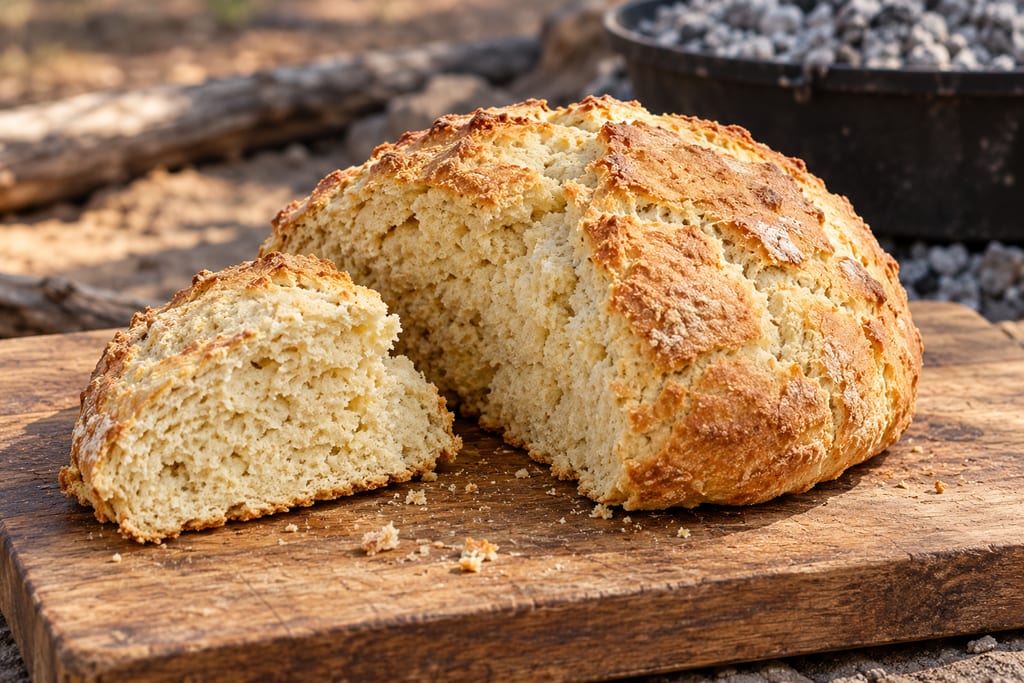
This entry follows the Australian Broadcasting Corporation’s Johnno’s Damper recipe. ABC attributes it to John “Johnno” Stewart, associated with Queensland Helicopters and Lawn Hill Station, and lists its yield as a stockcamp. That is the context for this particular version; it does not identify a birthplace for damper as a broader family.
The recipe uses self-raising flour, powdered milk, sugar, salt and water. Self-raising flour supplies the chemical leavener; there is no yeast or maintained culture in this batch. It is a quick bread and not a fermented dough. ABC suggests golden syrup when serving, but the syrup is not part of the dough formula.
ABC's four cups of flour and 500–600 mL water leave a broad hydration range, and the source does not identify its cup standard, loaf weight or number of servings. Keep the water range and undefined stockcamp yield visible rather than calculating a precise dough ratio or scaling the batch.
For the conventional oven route, heat the oven to 205°C (400°F). Sieve the self-raising flour into a large bowl, then add powdered milk, sugar and salt and mix them together. Make a well, add water within the source's 500–600 mL range and mix until the dough is soft.
Turn the dough onto a floured board and knead lightly. Put it on a greased and floured baking tray or place it in a camp oven. The source does not state how to manage the camp-oven fire, measure its heat, or adjust the bake time for outdoor conditions. Use the conventional oven setting as the fully specified route.
Bake for 45 minutes or until cooked. ABC suggests tapping the base and listening for a hollow sound. This is a traditional doneness cue in that recipe, not a measured food-safety endpoint. The source's 10-minute preparation and 45-minute cooking estimates imply about 55 minutes before cooling, but it gives no cooling or storage interval.
Sydney Living Museums discusses different colonial hearth breads and notes that damper's origins have been debated. The article quotes a Hobart Town Courier description from 1829: flour, water, salt and a little old leaven were mixed and kneaded, rested for an hour or two, then baked under hot ashes. The quoted account is a historical description, not a complete standardized formula.
That 1829 method contains old leaven and a rest, while ABC's Johnno’s Damper uses self-raising flour and does not specify ash cooking. Keep them as separate records of different methods. The museum article does not settle a single birthplace or the first use of the name, so this entry records the historical source's limits rather than assigning an origin date.
Uncooked flour can contain germs. Do not taste the dough before baking. Wash hands, bowls, utensils and work surfaces after handling flour or raw dough, and keep it away from ready-to-eat food.
The source supplies a conventional oven temperature, a bake time and a hollow-sound cue, but no validated internal temperature or other measured endpoint. Follow the recipe's bake guidance without treating sound alone as proof of safety. Camp-oven fire control and finished-bread storage are not described.
ABC presents Johnno Stewart's version as a Queensland stockcamp damper and labels it Australian. Sydney Living Museums discusses damper forms in early colonial baking and quotes a Hobart Town Courier description from 1829 that includes flour, water, salt and old leaven, baked under hot ashes. That account is distinct from this self-raising-flour recipe. It does not establish a single origin or first attestation.
Scaling: source batch only
Uncooked flour can carry germs; the dough should not be tasted before baking.
Hazard sourceDo not eat or taste the raw dough. Wash hands, bowls, utensils and work surfaces after handling flour or dough.
Control sourceABC gives 45 minutes or until cooked and suggests a hollow sound when the base is tapped. It gives no validated internal endpoint; do not use sound alone as proof of safety.
The source gives no dough-holding or finished-bread storage duration.
Camp ovens and open fires can cause burns; the source provides no fire or heat-control protocol.
ABC attributes Johnno's recipe to a Queensland stockcamp; this does not establish damper's origin.
The museum quotes a 1829 Hobart Town Courier description. This records a cited historical account and not a first-attestation or birthplace claim.
Bunya nuts were cooked and kept in wet ground or water by peoples of south-eastern Queensland, and were also roasted, ground and pressed into cakes that could be cooked again and stored for later use.
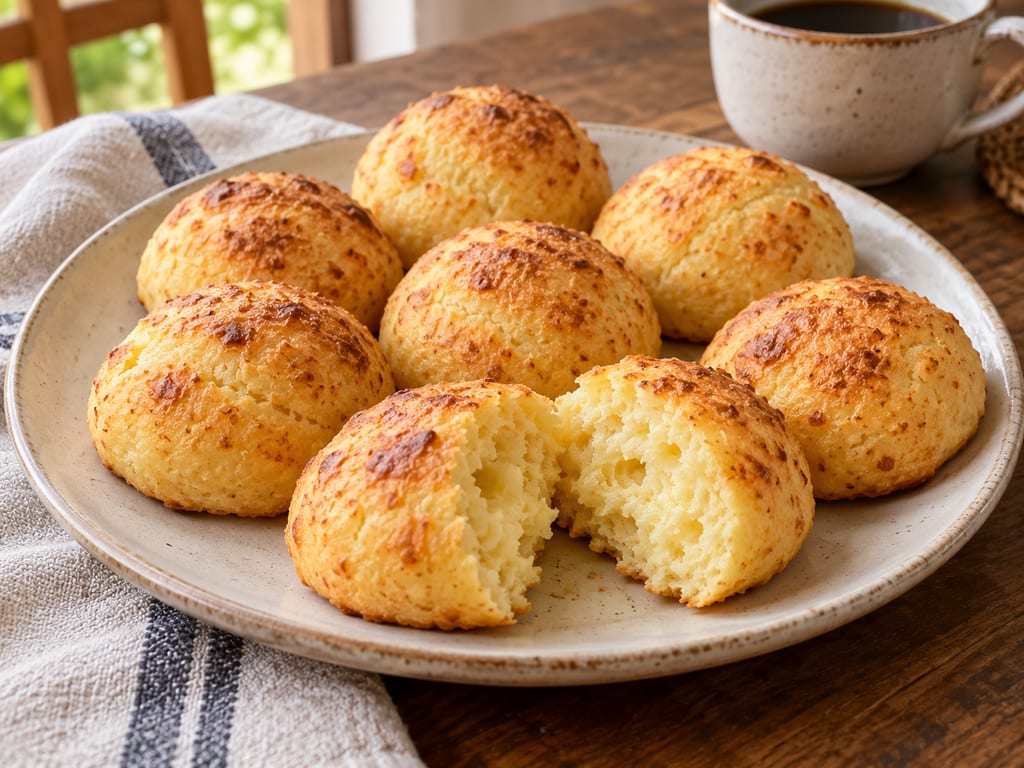
Small Colombian cheese breads made with precooked corn flour, queso fresco, mozzarella, eggs, milk and baking powder. This documented home version makes eight breads and is served warm.
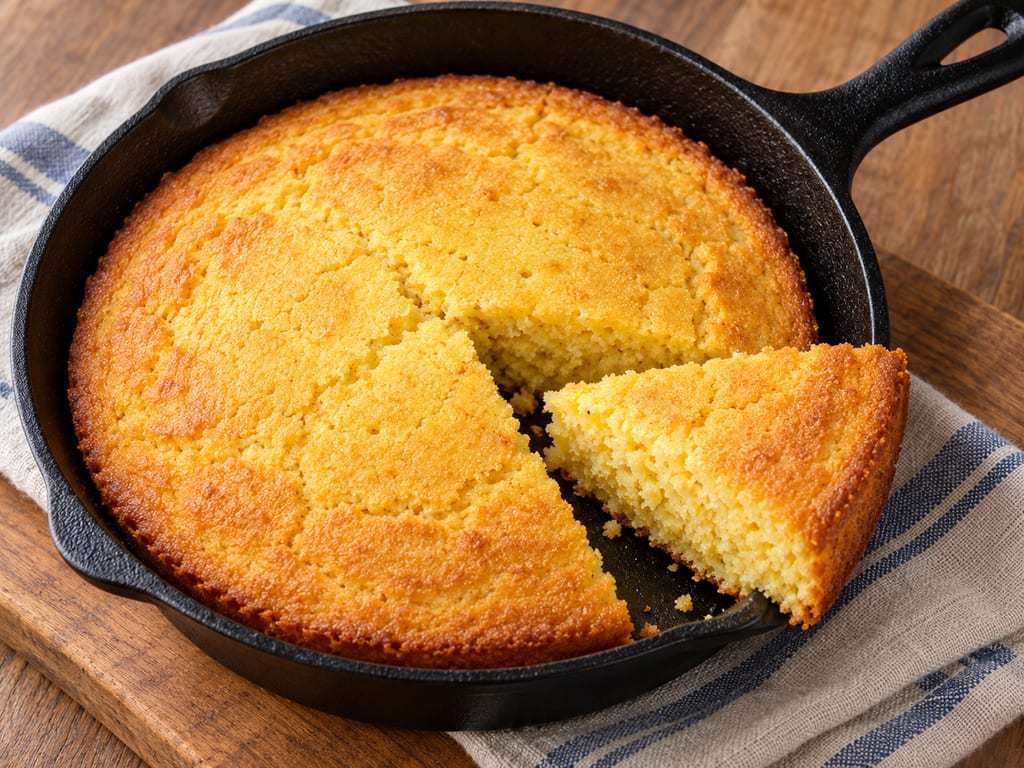
A modern cornmeal-and-wheat cornbread that King Arthur Baking describes as a compromise between Northern and Southern styles. The batter is baked in a pan or as muffins and served warm.
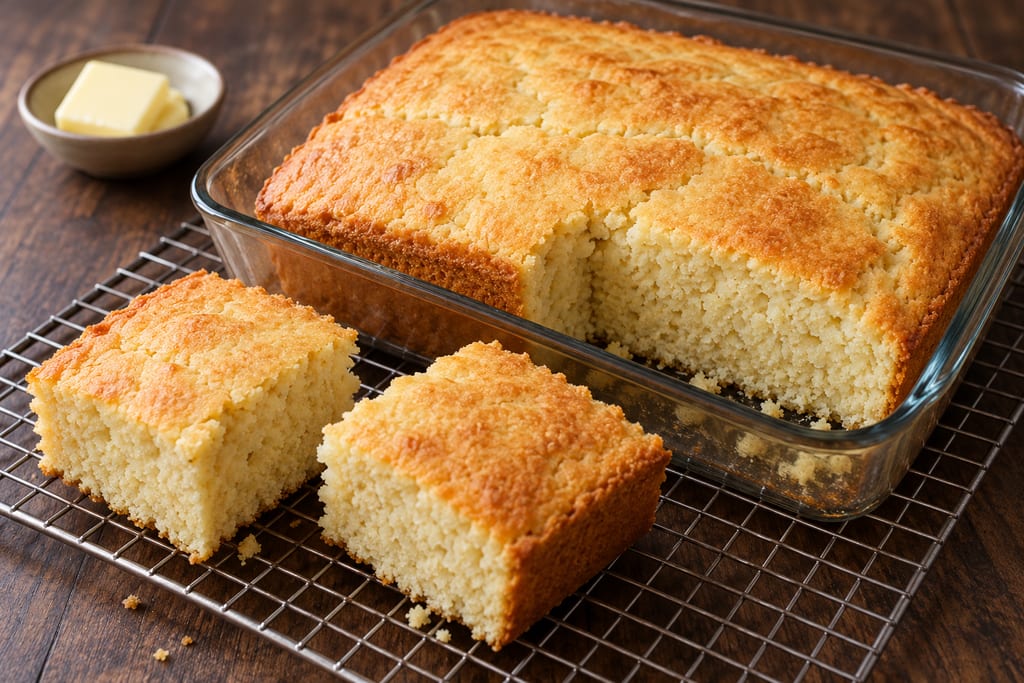
A soft, butter-rich Bahamian-style baked johnnycake made from flour, baking powder, sugar, butter and milk. The dough rests briefly in a square pan before baking.
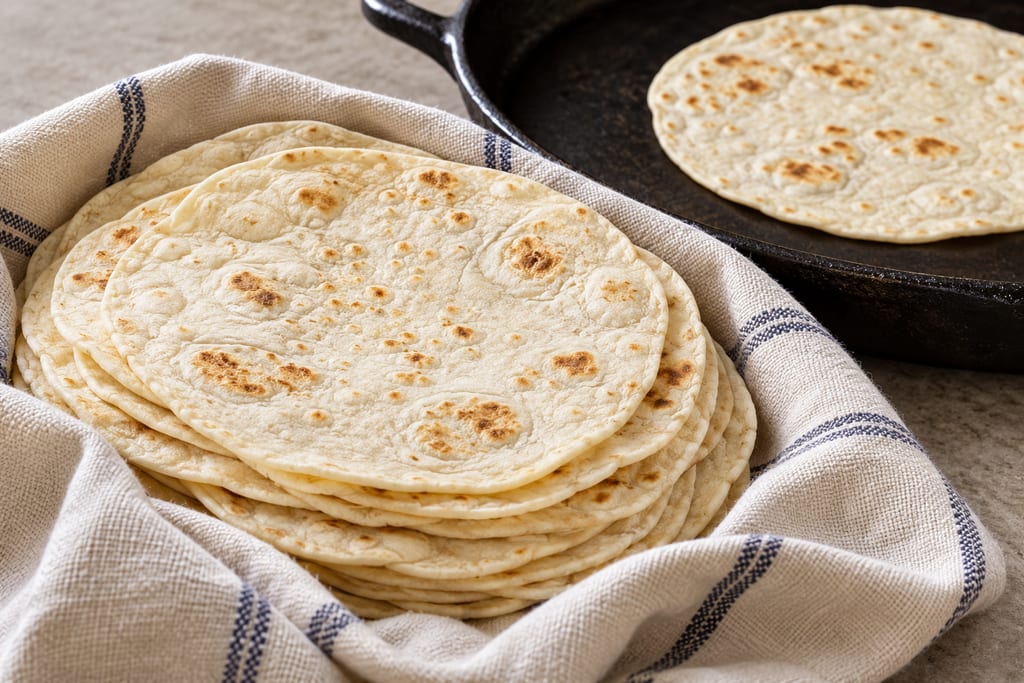
Soft wheat-flour rounds from an INCAP Honduran baleada recipe are rolled thin and cooked on a dry skillet; this record covers tortillas, not the filled dish.
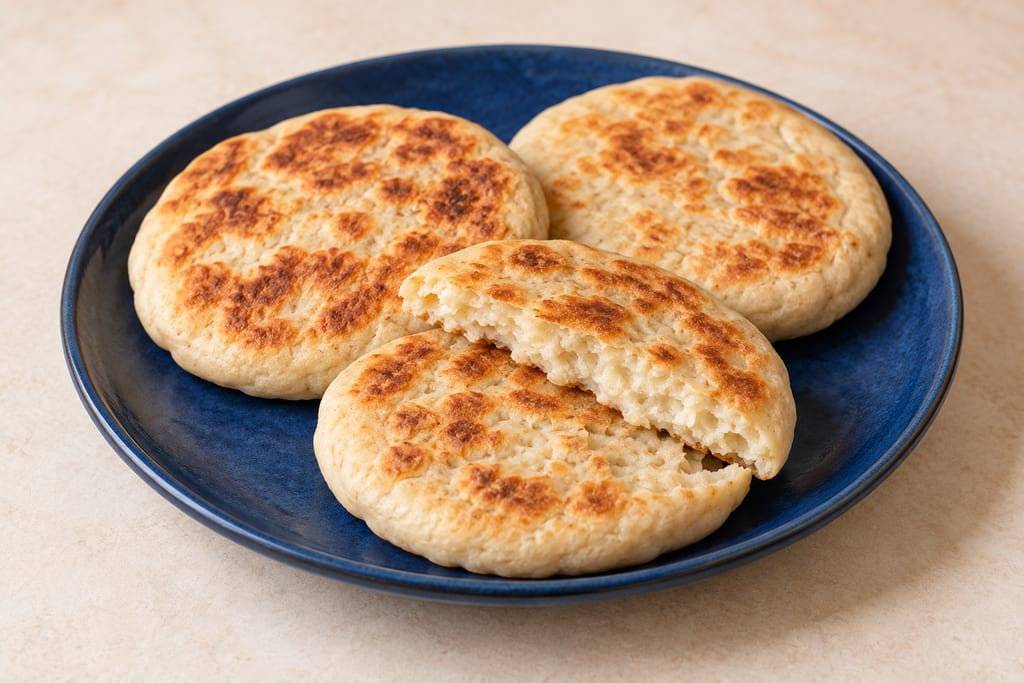
A Central Tibetan style pan bread made from flour, water and baking powder. Four dough balls are rested, rolled into rounds and cooked covered in a skillet, turning them several times.
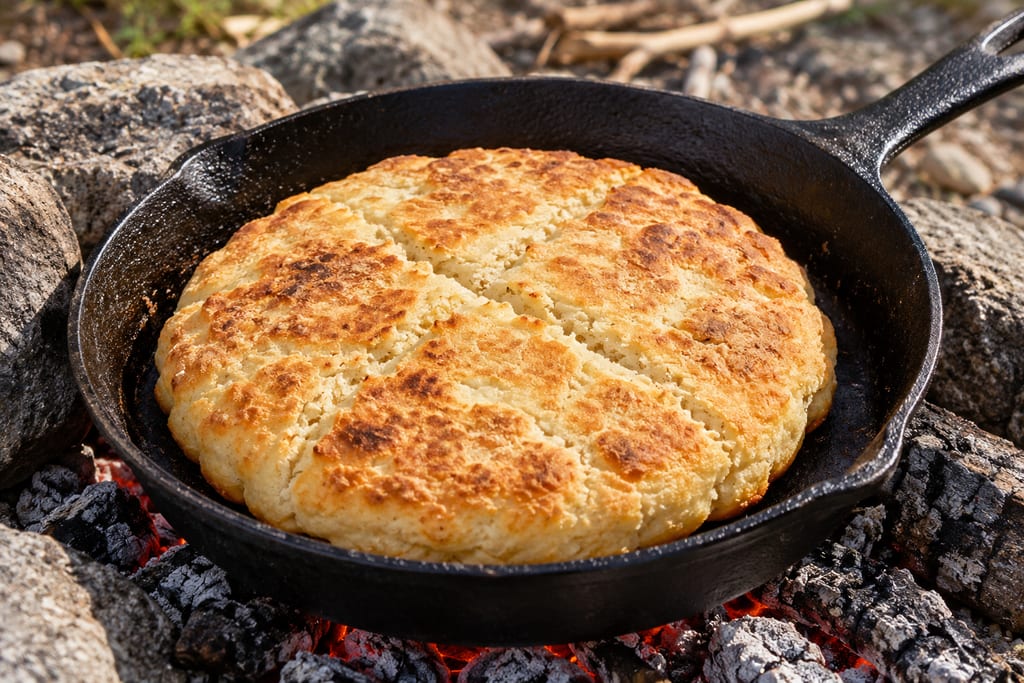
This flour, baking-powder and oil dough is Parks Canada’s contemporary Métis-interpreter version prepared at Rocky Mountain House; its specific recipe origin is unknown.
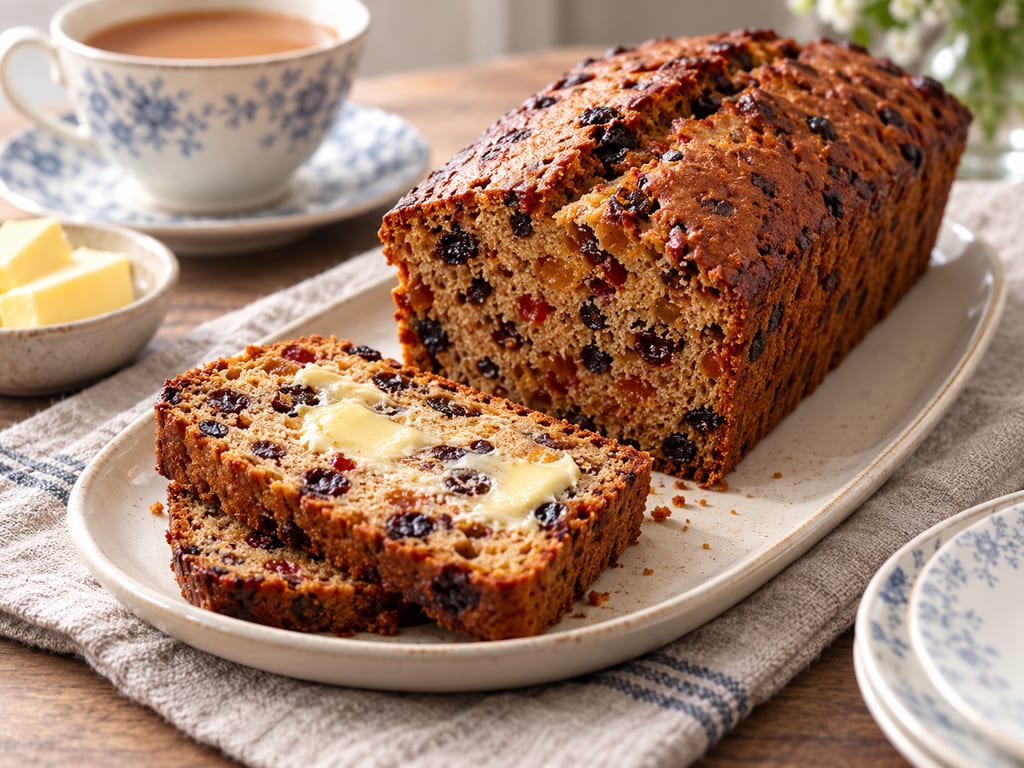
Bara brith is Wales’s speckled fruit loaf, made in both yeasted bread forms and the widely served modern tea-loaf style. This version soaks dried fruit in strong tea before mixing it with self-raising flour, spice, sugar and egg.
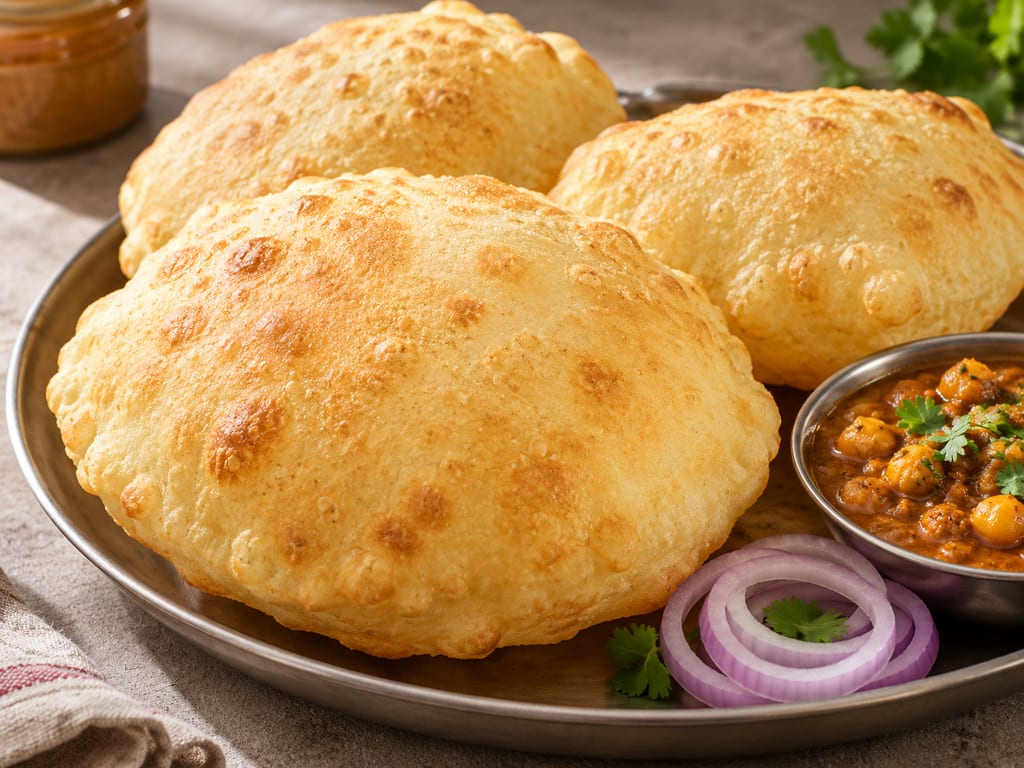
A North Indian fried bread made with yogurt, wheat flour and chemical leaveners. This source batch makes eight.
No community contributions have been published for this entry yet.
Sign in to contribute. Published comments and photos are free to read.
Australian Broadcasting CorporationInspiration · Recipe · Geography
Johnno's DamperABC attributes the recipe to John 'Johnno' Stewart and connects him with Queensland Helicopters and Lawn Hill Station; it describes a stockcamp batch.
The formula uses 4 cups self-raising flour, 2 tablespoons powdered milk, 1/2 tablespoon sugar, 1 teaspoon salt and 500–600 mL water.
ABC gives 10 minutes preparation, 45 minutes cooking, a 205°C conventional oven, an alternative camp oven and a hollow-sound base check.
Cited in: One contemporary stockcamp recipe; Mix and bake
Sydney Living Museums, The Cook and the CuratorHistory · Process context
Our daily breadSydney Living Museums discusses colonial hearth breads and notes debate about the origins of damper; it does not claim a settled origin.
The article quotes a Hobart Town Courier report from 1829 describing a flour, water, salt and old-leaven dough rested for an hour or two and baked under hot ashes. This is presented as a distinct historical account, not merged into ABC's contemporary formula.
Cited in: A different historical account
Centers for Disease Control and PreventionSafety
Raw Flour and DoughRaw flour can carry germs; CDC advises against eating raw dough and recommends washing hands, bowls, utensils and countertops after handling flour or dough.
Cited in: Raw dough and heat