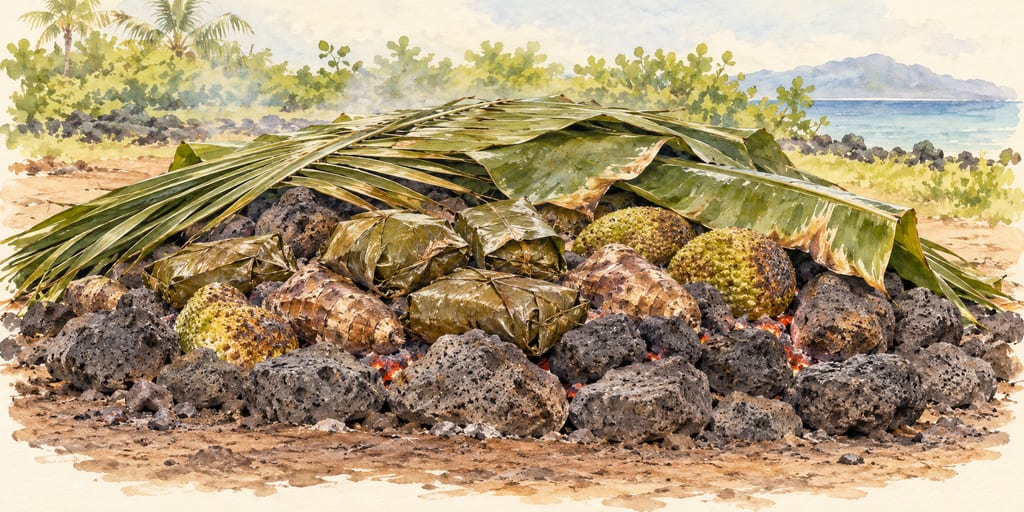
Samoan umu
The Samoan umu is an above-ground cooking build in which a fire heats volcanic stones, and foods cook on the surface beneath leaf coverings.
 FermenteaWhere food goes to change
Built structures · above-ground-stone-ovens
A fire-heated stone bed or mound holds food arranged on the stones and covered with leaves. The Samoan umu is one documented regional instance, not a universal blueprint.
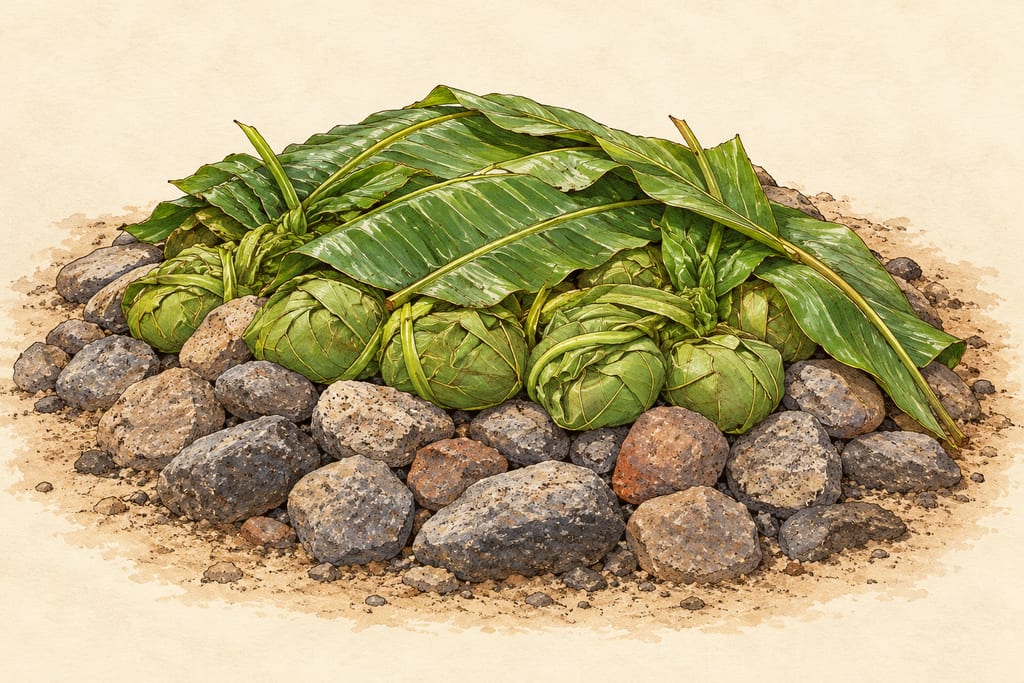
The construction handbook distinguishes an above-ground stone oven from a dug earth oven by how the heated stones and food are arranged: a fire heats a bed or pile of stones, then food is placed around or over the hot mass. Some methods add upper stones and coverings, leaving an insulated mound rather than a hole. This broad form is not one standardized design. Local names, construction and food arrangements belong to their own documented practices.
Samoa Tourism describes the umu as an above-ground oven of hot volcanic stones and says the practice continues in Samoan villages. Stones are heated in a fire; food goes on top, wrapped in banana leaves or coconut fronds, or placed in coconut halves, then more banana leaves cover the load. The authority lists seafood, meats, taro, bananas and other vegetables among foods cooked this way. It gives about two hours for its described Samoan umu, a contemporary indicative timing rather than a general rule for every above-ground oven. The Samoan umu remains a distinct named build, linked to this broader construction form as a variant.
The sources here support the general arrangement of fire-heated stones, food and insulation, with Samoa Tourism supplying a specific Samoan example. They do not establish a single material list, mound shape, stone mass, or construction sequence for all above-ground ovens. This record therefore explains the broad build distinction and keeps the local Samoan practice visible as an example without treating other Pacific ovens—or all stone mounds—as interchangeable. No fermentation takes place in the oven itself; it is a cooking structure.
Samoa Tourism describes the Samoan umu as a traditional above-ground oven still used in villages, without dating the earliest attestation of this construction.
A build is made where it stands: moving it means building it again.
This is a country-level association for the documented Samoan umu instance, not an origin claim for above-ground stone ovens generally.
The Samoan umu is an above-ground cooking build in which a fire heats volcanic stones, and foods cook on the surface beneath leaf coverings.
No community contributions have been published for this entry yet.
Sign in to contribute. Published comments and photos are free to read.
Samoa Tourism AuthorityMethod · Geography
UmuSamoan umu is an above-ground oven of hot volcanic stones; stones are heated first, food is arranged on them, and banana leaves cover the oven.
The source describes banana leaves, coconut fronds and coconut halves as food coverings or containers; it lists foods cooked in umu and gives about two hours as an indicative timing.
The source describes the practice as traditional and ongoing in Samoa's villages, without dating the earliest attestation.
Cited in: A stone mound rather than a pit; The Samoan umu is one regional instance; Limits of the record