A jar for salted fish
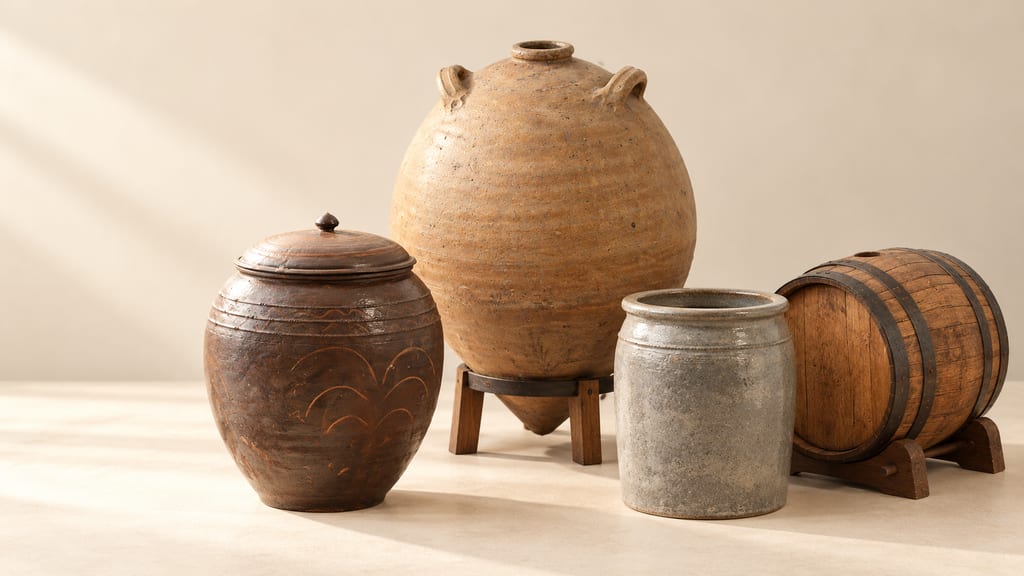
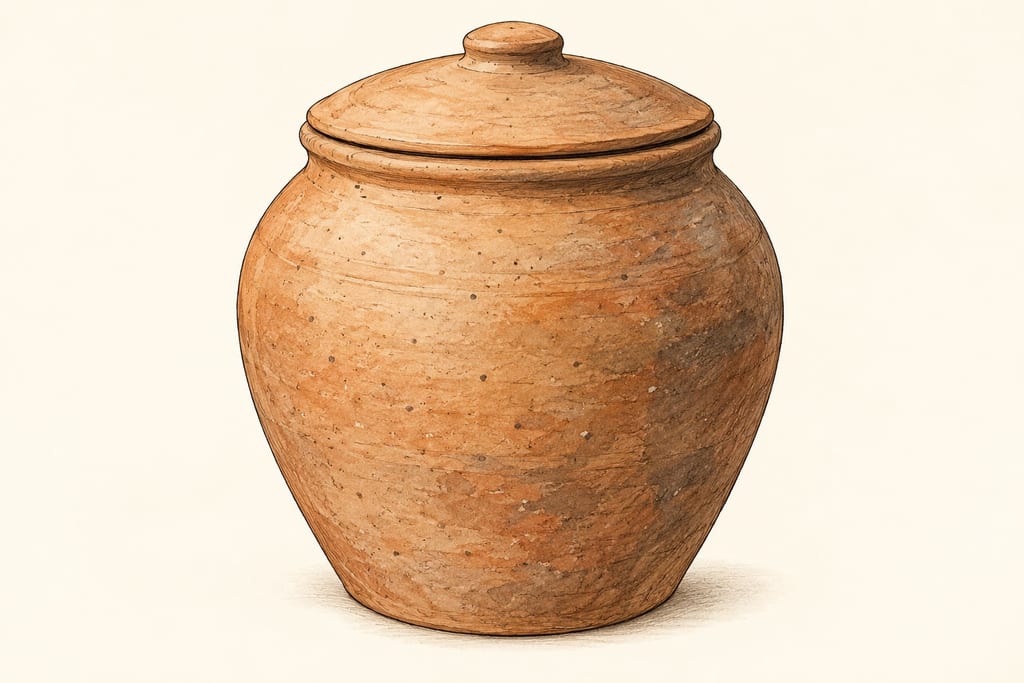
Budu is fermented in earthenware jars. A 2016 report from Ban Ba Khe, Narathiwat, describes 200-litre jars used for fish and salt; this is a documented local example, not a universal capacity. The sources reviewed here do not establish a standard jar profile, clay source, glaze or firing method.
JIRCAS documents whole sea or brackish-water fish packed tightly into an earthen jar with salt. Its Thai record names anchovies and small sardines among the fish used, while also describing budu as a home or village-industry product concentrated in the south. The sources document the vessel material and use, but do not give dimensions, capacity, clay source, glaze or firing method.
Sources for this section
Different coverings serve different production settings
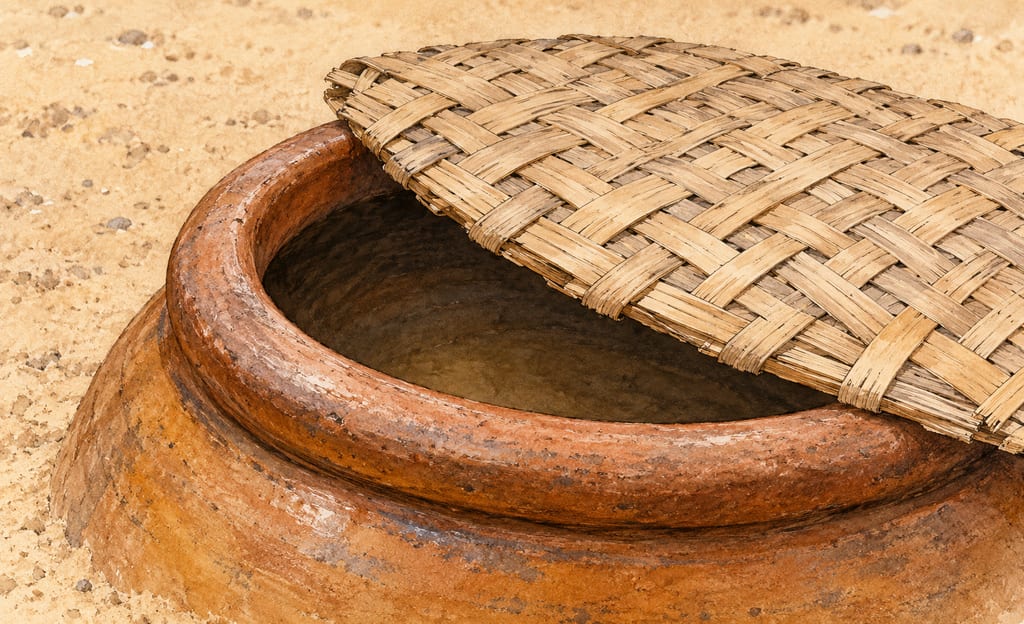
JIRCAS describes whole fish packed tightly into an earthen jar with salt, with extra salt over the packed fish and a bamboo mat covering the mouth before the jar is left in sun or shade. A study of a commercial plant in southern Thailand describes fresh anchovy and salt packed into earthen jars, then plastic bags and aluminum lids used to keep foreign material and insects out. That study sampled the batch through 360 days. In Ban Ba Khe, a 2016 report describes plastic with old wooden boards and newer stainless-steel covers. These accounts show varied coverings in distinct production settings; none establishes a universal arrangement.
The cover and any mat work with the jar rather than defining a single universal design. The available accounts do not establish a standard profile, that every jar is glazed, or that a particular clay surface causes a particular flavour. In the plant study, jars were used in production, but researchers did not compare earthenware with another vessel material.
Sources for this section
What the vessel contains and what remains unknown
Salted fish changes gradually inside the jar. In the plant study, researchers followed physicochemical and microbial changes as fish proteins broke down and soluble peptides and nitrogen compounds accumulated. The vessel contains this slow transformation; it does not perform it by itself. The study does not isolate a ceramic effect from the roles of salt, fish enzymes, microorganisms, time or the way the jar is covered.
Budu is also a traditional food of East Coast communities in Peninsular Malaysia. The JIRCAS and plant-study descriptions consulted here provide specific earthen-jar evidence for southern Thailand, while the Malaysian review establishes regional production but not this same jar configuration. The reviewed sources do not describe jar makers, procurement, cleaning between batches or useful life.
Sources for this section
History
Earthen jars are used in documented southern Thai budu making. Available records show current use but do not date when this jar form first appeared.
Equipment details
PowerAmbient or cellar No powered component is documented. JIRCAS describes jars left in sun or shade.
How you get oneNot established The inspected sources do not say whether the jar is made by a local potter, bought from a maker or obtained another way.
CareThe inspected sources do not describe cleaning, seasoning or storage of the empty jar between batches.
Made of
- Earthenware — Main vessel body
The sources identify an earthen jar but do not specify clay composition, glaze, firing method or dimensions.
Places
Southern Thailand
Documented preparation · Region evidenceJIRCAS and a commercial-plant study document earthen jars used for budu in southern Thailand.
East Coast of Peninsular Malaysia
Documented use · Region evidenceA 2022 review identifies budu as a traditional food of the East Coast; it does not establish this specific jar form there.