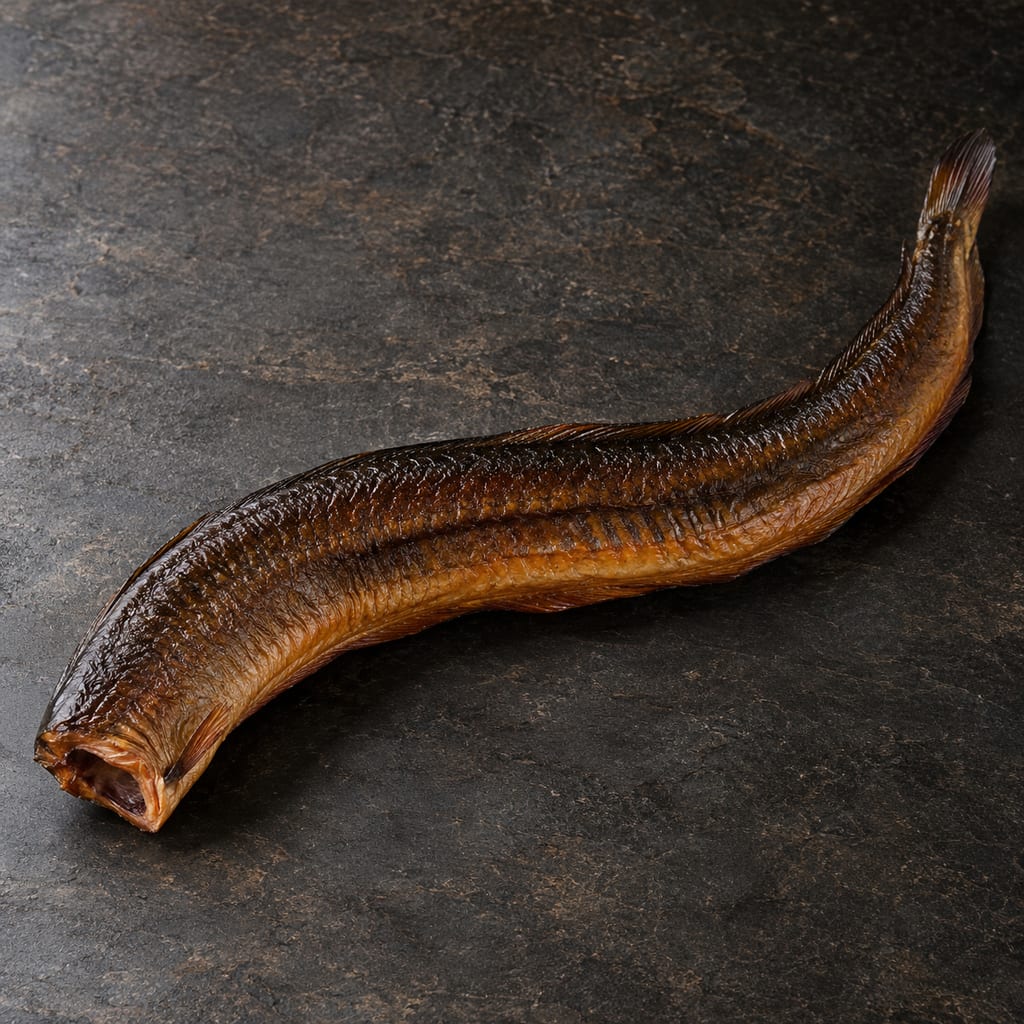
Gunditjmara smoked eel
Short-finned eels, kooyang, smoked for a sustained period in the hollows of large trees at Budj Bim in south-western Victoria, a combined heat, smoke and drying method of the Gunditjmara people.
 FermenteaWhere food goes to change
Place · smoking-trees
Gunditj Mirring describes hollowed Manna Gum and Red Gum trees used by Gunditjmara people to smoke eels and fish. At Kurtonitj, an identified smoking tree stands within the wider Budj Bim cultural landscape.
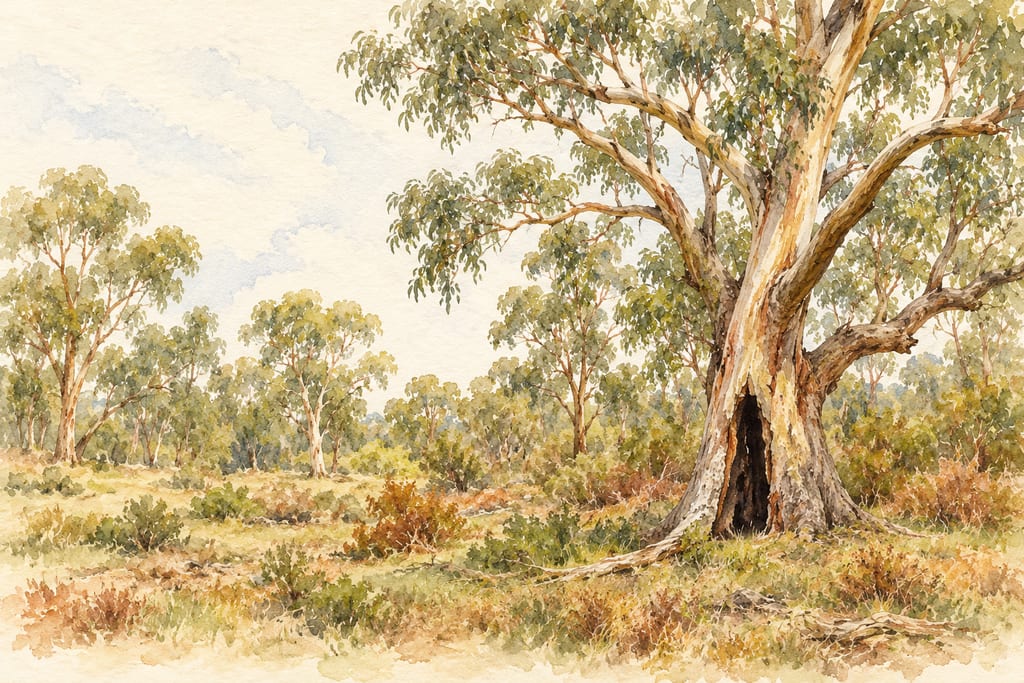
Gunditj Mirring describes smoking trees as hollowed trees used to preserve eels and fish. Existing hollows at the base of trees were expanded and burnt out into chimney-like cavities. Food was hung inside, above a small fire at the bottom; in some cases, stones helped retain heat. The trees were often Manna Gum or Red Gum. The form is distinctive because the tree itself supplied the fixed chamber: it is neither a portable smoker nor a timber hut built around a fire.
The account documents a practice, not a construction plan. It gives no common dimensions, standard cavity shape, fuel specification, or fixed smoking time. It also says the work did not kill the trees and that most smoking trees remained alive. Those details describe the reported Gunditjmara form; they should not be generalized into guidance for altering trees or operating a modern smoker.
Smoking made eels and fish available later, including when food was scarce, and the preserved food could be exchanged with other areas. The community account places smoking trees near fishing areas and stone-house villages, tying them to a larger food landscape rather than treating them as isolated curiosities. The official Kurtonitj visitor information identifies kooyang, the eel, as part of the tree’s documented use and presents the tree alongside traps, channels, and holding places.
The public description records that smoking trees were used throughout the year. It does not establish that eel harvesting followed one year-round calendar, nor does it provide a complete preparation sequence or storage limits. No exact date is assigned to the practice or to the particular tree at Kurtonitj.
Kurtonitj lies within the Budj Bim Cultural Landscape in southwestern Victoria, on Gunditjmara Country. The Traditional Owner-managed visitor map identifies a particular eel-smoking tree there and credits its photograph to Justin McManus of The Age. That identification supports the subject and location of the image; it does not date the tree or prove that every smoking tree had the same appearance.
The visitor information asks people to respect Gunditjmara cultural protocols around access to cultural sites. The official tour description is the appropriate public route for learning about Kurtonitj. The page therefore gives the named regional setting without coordinates or instructions for independent access.
The 2013 fact sheet records the community account but does not date the beginning or end of the practice. The identified Kurtonitj tree is not assigned an age by the visitor information.
The named site supports a regional location, not coordinates or an age for the tree.
Short-finned eels, kooyang, smoked for a sustained period in the hollows of large trees at Budj Bim in south-western Victoria, a combined heat, smoke and drying method of the Gunditjmara people.
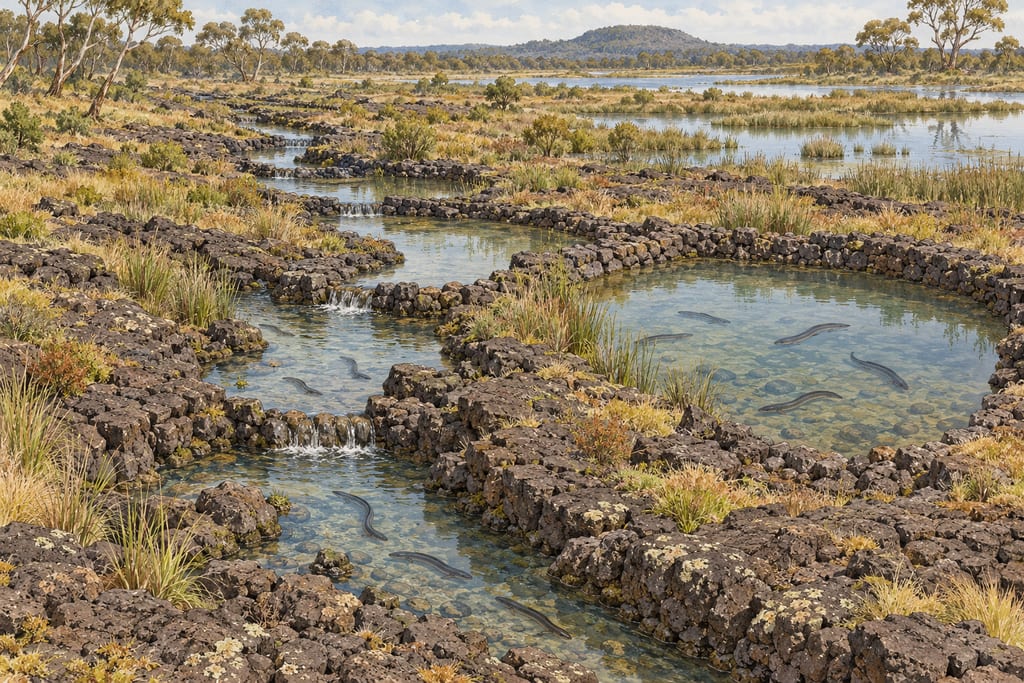
The Budj Bim system is a set of channels, weirs and holding ponds cut into a basalt lava flow in south-western Victoria, used by the Gunditjmara people to trap, hold and harvest eels.
No community contributions have been published for this entry yet.
Sign in to contribute. Published comments and photos are free to read.
Gunditj Mirring Traditional Owners Aboriginal Corporation / Gunditj Mirring Partnership ProjectTraditional Owner community fact sheet
Cultural Features of the Budj Bim Landscape: Smoking TreesHollowed trees used to smoke eels and fish; existing basal hollows expanded and burnt into chimney-like cavities; fish hung in the cavity above a small fire; stones retained heat in some cases; food stored for scarcity or traded; Manna Gum and Red Gum; trees near fishing areas and stone-house villages.
Cited in: A smoking chamber in a living tree; Kooyang, fish and keeping food
Budj Bim Cultural Landscape / Gunditj Mirring Traditional Owners Aboriginal CorporationTraditional Owner managed site information and image origin
Budj Bim Cultural Landscape — MapThe site is on Gunditjmara Country in south-eastern Victoria; the map page identifies the Kurtonitj tree as an eel-smoking tree and displays the photo credited to Justin McManus / The Age; it asks visitors to respect community cultural protocols.
Cited in: Kurtonitj on Gunditjmara Country
Budj Bim Cultural Landscape / Gunditj Mirring Traditional Owners Aboriginal CorporationTraditional Owner managed site information
Kooyang Yana Kooyang Walk Half Day TourKurtonitj has a smoking tree used for smoking kooyang, or eels, within a wider landscape of traps, channels, houses, and water-management features; access information is through a guided cultural tour.
Cited in: Kooyang, fish and keeping food; Kurtonitj on Gunditjmara Country