
African fermented foods, drinks and preservation
From sour breads and milk to savoury seeds, cassava staples and living beers, African fermentation follows the crop, the community and the work of transformation.
 FermenteaWhere food goes to change
Equipment · Gourds, calabashes and carved bowls
lahal · lahals · wooden lahal
A lahal is a wooden bowl used in household lait caillé preparation in northern Senegal. Repeated use leaves a surface biofilm that the documented household process uses as part of its fermentation ecology.
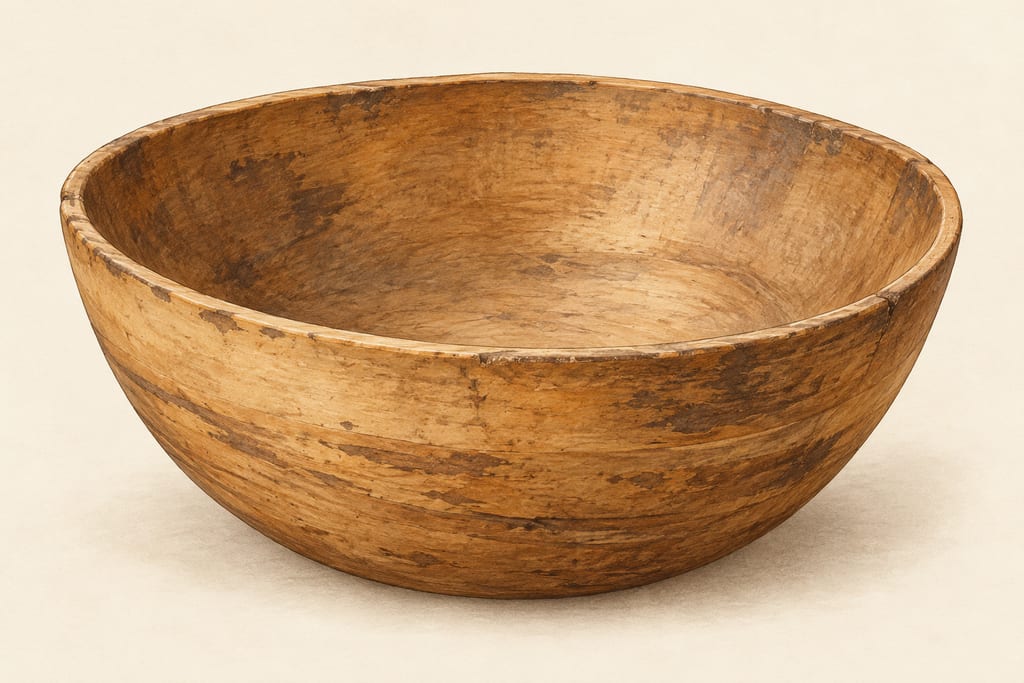
A lahal is a wooden bowl used to hold milk during a household preparation of lait caillé in northern Senegal. The field study by Parker and colleagues describes traditional wooden lahals in households across five communities near Richard Toll. Their photographs and method distinguish the bowl from cooking pots and from the plastic buckets used by shops in Gaé; those buckets belong to a different, modern production variant and are not lahals.
The study does not identify the wood species, dimensions, capacity, joinery or exact bowl profile. A lahal should therefore be understood here as the documented wooden fermentation bowl, not as one standardized shape or a generic term for all West African dairy containers.
In the household method observed in the study, milk is heated, allowed to cool, and transferred to a lahal, which is covered with straw. The bowl is used repeatedly. The authors describe a resident surface biofilm associated with earlier batches and report that this surface contributes to the household fermentation ecology. The lahal is thus both a container and a repeatedly used part of a particular process.
A second study of Senegalese lait caillé examined lahal surface communities across successive laboratory rounds. It supports the importance of vessel-surface communities to this research, but it does not establish that all wooden bowls have the same microbiology or that a lahal can be safely recreated by copying a laboratory procedure. The equipment entry does not give a cleaning or seasoning protocol.
The household wooden-bowl examples were documented in northern Senegal's Saint-Louis area, including Didjiery, Keur Mbaye Peuhl, Guilado, Medina Cheikh Mountaga and Pathé Badio. The same paper reports a separate boutique process in Gaé using plastic buckets. The contrast matters: contemporary equipment variation exists, but it does not replace the source-supported traditional wooden form described by the household method.
The articles provide no measured lahal capacity, dimensions, wood species, maker information or current retail route. They document the bowl's function and use in named research sites; they do not date the vessel's invention or establish a single regional design.
A field study published in 2018 documented household use of traditional wooden lahals in five communities in northern Senegal. This documents a practice at that time, not the vessel's origin date.
Parker et al. documented household lahal use in five communities near Richard Toll in northern Senegal; these are research sites, not a claim that the bowl originated there.
From sour breads and milk to savoury seeds, cassava staples and living beers, African fermentation follows the crop, the community and the work of transformation.
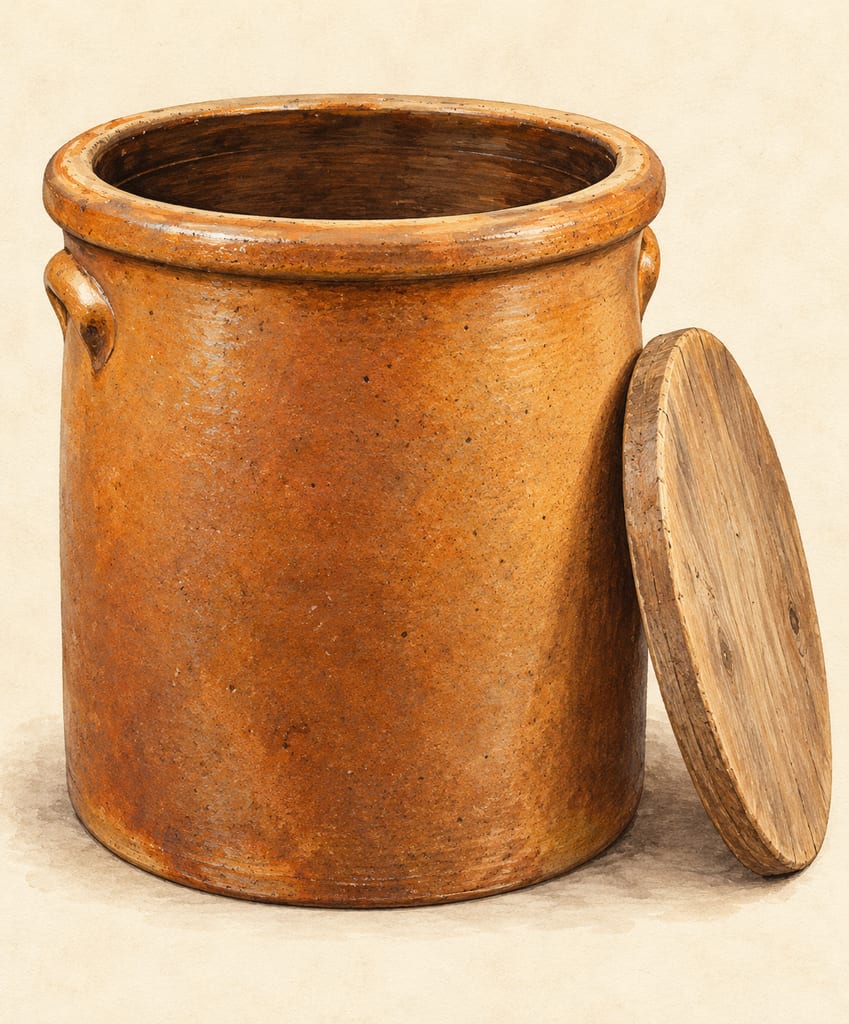
Containers for salt-curing fish and meat range from broad-mouthed stoneware crocks to tubs, cut-down barrels and chests. Their material, depth, cover and ability to retain or drain liquid shape how the food sits in salt or brine.
No community contributions have been published for this entry yet.
Sign in to contribute. Published comments and photos are free to read.
Frontiers in MicrobiologyEquipment form · Traditional use · Geography · Method
Naturally Fermented Milk From Northern Senegal: Bacterial Community Composition and Probiotic Enrichment With Lactobacillus rhamnosusThe 2018 field study describes traditional household wooden bowls called lahals in northern Senegal.
Five household communities in the Saint-Louis area used lahals; samples from Gaé boutiques used plastic buckets, a distinct process.
The household bowl is reused and the study describes a resident biofilm associated with fermentation.
Figure 2 includes photographs of the wooden bowl and documented household method.
Cited in: A wooden bowl with a specific role; A vessel reused between batches; Geography and limits of the record
PLOS ONEVessel surface research · Repeated use
Bacterial community dynamics in lait caillé, a traditional product of spontaneous fermentation from SenegalThe 2019 study examines surface communities on Senegalese lahals alongside lait caillé and describes their repeated use across fermentation rounds.
The study's laboratory work is not a household equipment-care or safety protocol.
Cited in: A vessel reused between batches; Geography and limits of the record