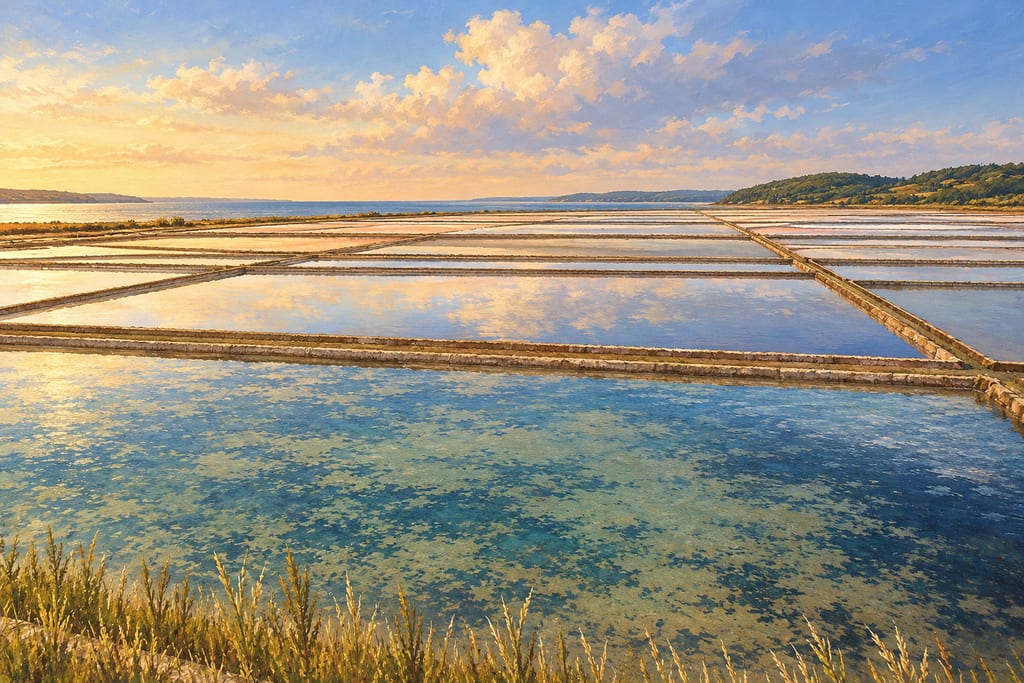
Sečovlje Salt Pans
A northern Adriatic saltworks in Slovenia where seawater passes through evaporation ponds into crystallisation beds, with the traditional petola layer and daily hand harvesting preserved.
 FermenteaWhere food goes to change
Place · salt-evaporation-pans-and-salina
Camillone saltworks · Salina Camillone di Cervia
Salina Camillone is Cervia’s surviving artisanal salt pan, where volunteers still hand-harvest salt by the pre-1959 multiple-collection method within the modernized saltworks.
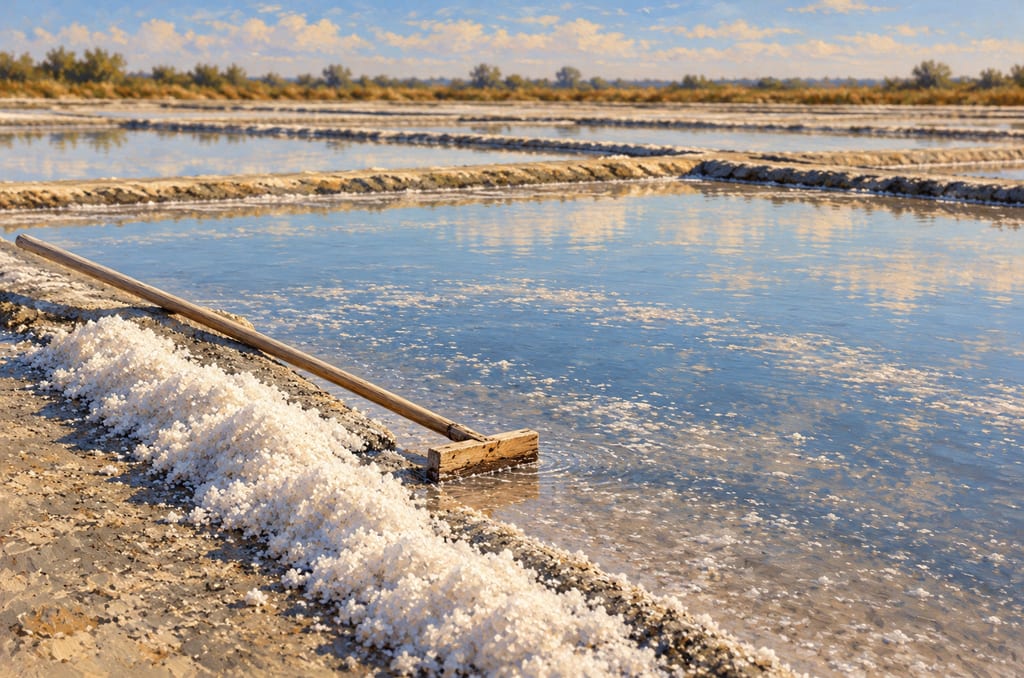
MUSA reports that the wider saltworks changed structure in 1959 and that Camillone continues the older artisan method. The Ecomuseum describes the Cervia method as datable to the Roman period, but does not use that claim to date the present Camillone fabric.
Visit by the official guided route; do not enter work areas or modify the salt pans without permission.
Reference point marked on the ecomuseum's published location map for Salina Camillone; it locates the working salt-pan site, not each basin or an entrance.
A northern Adriatic saltworks in Slovenia where seawater passes through evaporation ponds into crystallisation beds, with the traditional petola layer and daily hand harvesting preserved.
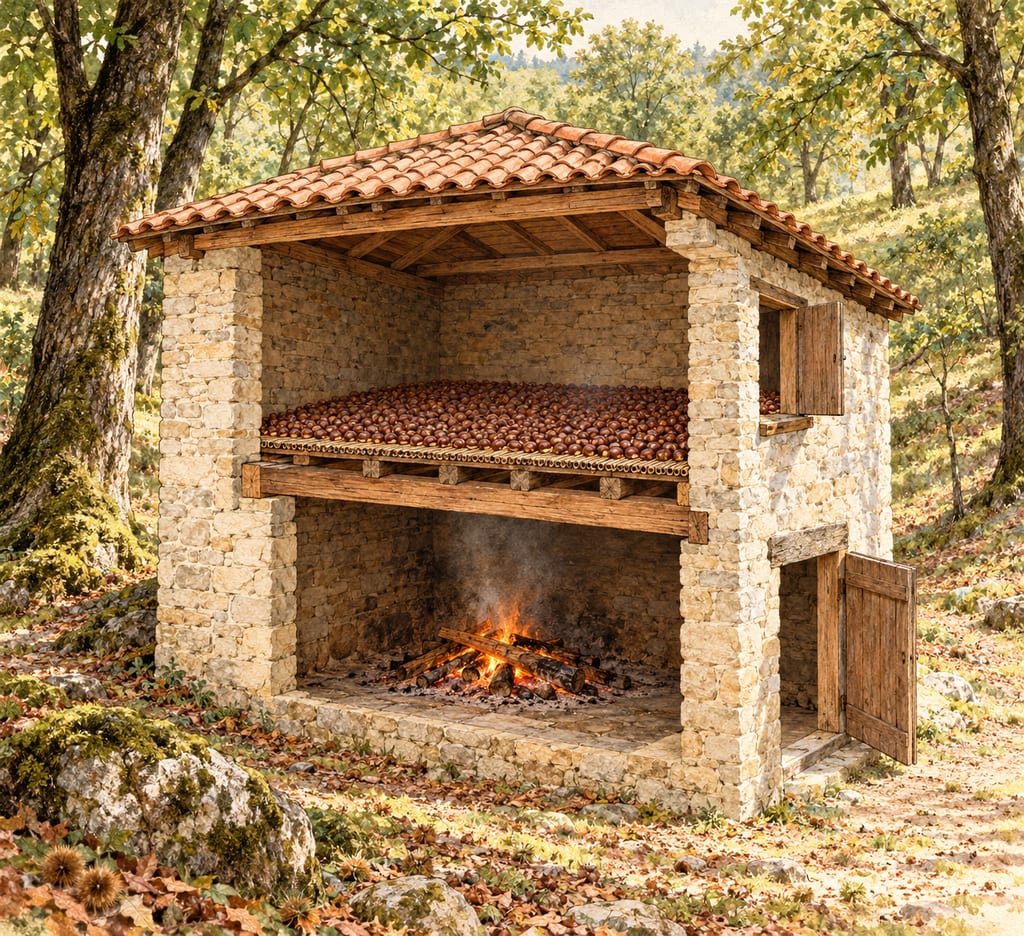
A metato is a small chestnut-drying building found in parts of Italy, with a slow fire below and an open timber floor above where chestnuts dry.
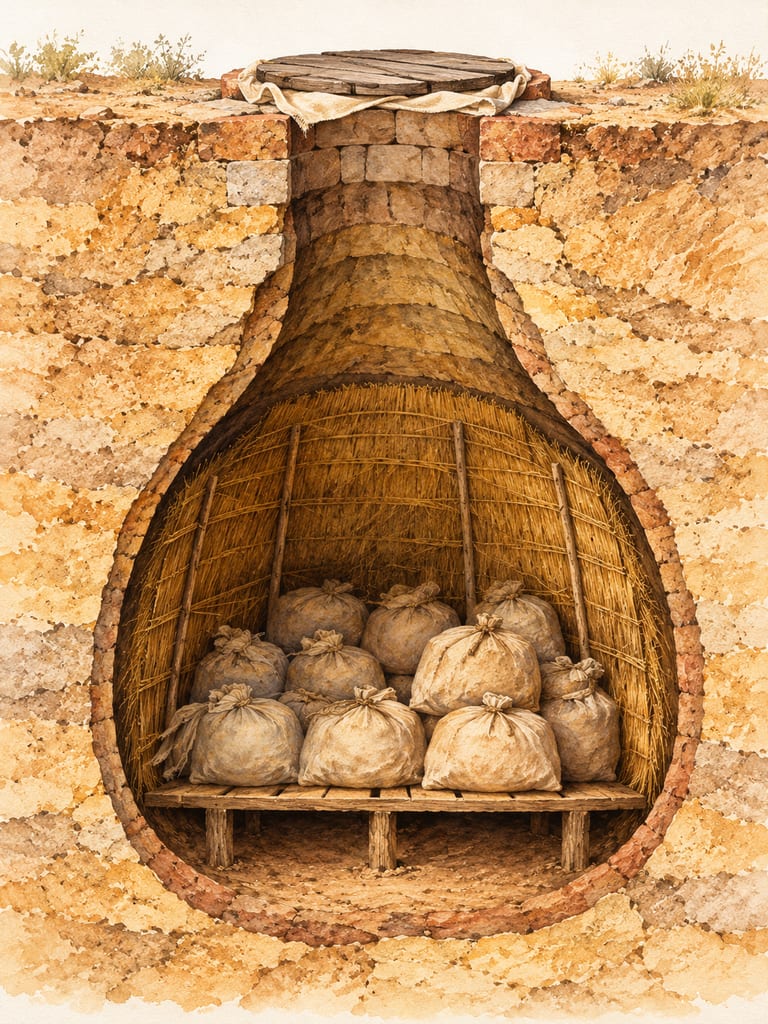
A sandstone pit near Sogliano al Rubicone finishes the ripening of already-made cheese. Sources describe flask-like forms, straw lining and sealed wooden lids, but no universal excavation plan.
No community contributions have been published for this entry yet.
Sign in to contribute. Published comments and photos are free to read.
MUSA - Museo del Sale di CerviaSite identity · Method · Harvesting
La Salina Camillone di CerviaCamillone is the last artisanal salt pan after about 150 such pans existed before the 1959 transformation.
Volunteers produce salt with the ancient Cervese method; wooden tools are used and manual harvest takes place in summer, daily alternating basins.
Camillone is an open-air section of the Cervia Salt Museum and Ecomuseum.
Ecomuseum of Salt and Sea of CerviaSite details · History · Craft
Salina CamilloneCamillone was formerly numbered 89 and described as a medium-small salt pan on sandy-clay ground with fresh-water veins.
Cervia's older salt-pan system is described as datable to the Roman period; the page does not date current Camillone structure.
The page describes family labour, skill in water and wind management, June–September work, the Armesa de sel commemoration and the Camillone hand-harvest method.
Parco della Salina di Cervia S.r.l.Geography · Seawater supply · Modern context
La Salina di CerviaThe Cervia saltworks admits Adriatic seawater through a channel network; sun and wind concentrate it until salt forms.
The wider system has over 50 basins; mechanized harvest dates to 1959, while Camillone is the exception where hand harvest continues. No dimensions of the specific Camillone pan are supplied.