A place-bound pit for cheese aging
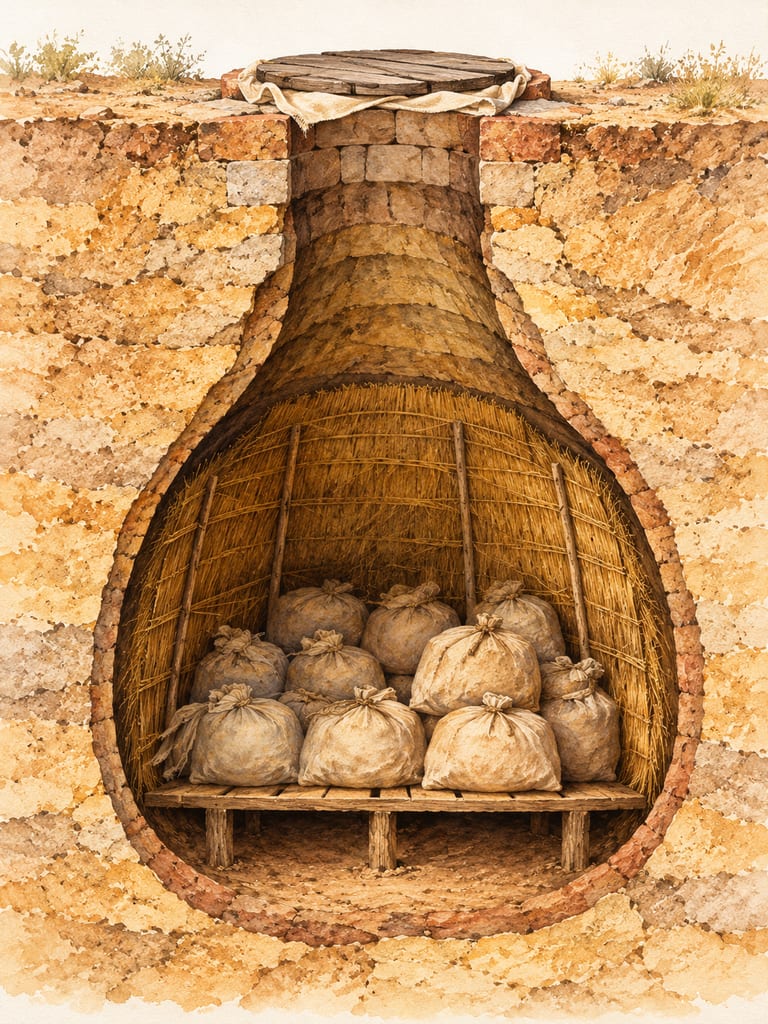
A fossa is an underground pit cut into sandstone and used in a local method of finishing the ripening of cheese. The Sogliano al Rubicone municipality describes old pits there as flask-shaped and about three metres deep. The regional PDO guide also describes truncated-cone or flask-shaped pits, noting that individual pits can differ in width and depth. Those descriptions support a generalized cutaway profile, but not a measured reconstruction of one named pit.
The pit is excavated in place and depends on its sandstone setting. Cheese is made and ripened before it enters the pit; the pit is the fixed structure, while cloth sacks and the wooden closure are separate parts of its documented use. This page concentrates on the site and its aging arrangement.
Sources for this section
Sandstone form and place
The local descriptions associate the pit with Sogliano al Rubicone, in Emilia-Romagna. The current PDO area extends more widely, but a broader area of cheese production does not mean every pit has the same shape or lies in the town. This account focuses on the Sogliano form because the candidate and its photographed reference name that locality.
The municipality gives a rough depth of about three metres. The regional guide says flask-shaped or truncated-cone pits may be up to about three metres in width and depth. These are broad descriptions, not standardized measurements for construction. The current product specification says pits are manually excavated into the local sandstone and left rough. It does not publish a common cross-section, support design, drainage plan or geological assessment for a new site.
Sources for this section
Lining and closure
The pit is prepared with materials described by the local municipality and the PDO specification. During a rest period it is kept closed with a wooden cover and stone or sand. Before reuse, the specification describes opening and airing the pit, burning a small amount of straw to dry it, then cleaning away residue. It describes a raised floor made of untreated wooden boards, with straw lining the walls and vertical canes supporting that lining. The municipality also describes horizontal ties or hoops around the canes.
The specification sets a minimum straw lining thickness of 10 cm. That figure belongs to the Sogliano product standard; it is not a generic lining rule. The linked Commons photograph looks down into an empty fossa and shows a particular stone opening and interior support arrangement. It anchors the physical site without showing a complete underground cross-section or a universal pit interior.
Sources for this section
Cheese enters only after earlier ripening
The pit does not make fresh curd into cheese. The Sogliano specification says cheese is first made and matured, then cleaned, placed in suitable cloth bags and lowered into the pit. The sacks are stacked to the mouth, covered with suitable cloth or straw, and closed with a wooden lid sealed using plaster or sandstone mortar. Once closed, the pit creates the local conditions for the final aging stage.
The current PDO specification gives an 80–100-day period for infossatura. That rule applies to this protected product, not to every cheese matured underground. Local sources describe seasonal spring and summer placements, with traditional autumn emptying. The fossa is therefore part of a specific Sogliano cheese practice, not a general cold store or a generic cellar.
Sources for this section
History and limits of the evidence
Local sources describe the practice as medieval. The PDO specification says the first documentation of pits and infossatura techniques comes from fourteenth-century Malatesta family archives; it also describes pits used for foods and grain in periods of siege, epidemic or shortage. This dates the documented practice, not the excavation of any individual pit that survives today.
The generated cutaway is editorial art based on the documented flask-like form, sandstone setting, straw lining, bagged cheese and wooden closure. Its proportions are deliberately general, not a scale drawing. The available references do not support a DIY excavation plan or structural advice. The current specification requires the pit to be aired before emptying and describes risks from stagnant gases; readers should treat it as a description of a regulated working practice, not an instruction to enter an underground pit.
Sources for this section
History
Local and PDO sources describe a medieval tradition of using sandstone pits for cheese preservation. The PDO specification cites the first documentation of pits and the infossatura technique in fourteenth-century Malatesta family archives; that evidence dates the practice, not the excavation of any particular surviving pit.
Site
SettingAn underground cheese-aging pit of the type documented at Sogliano al Rubicone, Emilia-Romagna, Italy. It is excavated in sandstone and used in place; this entry does not identify one particular pit.
GroundSandstone bedrock. The current PDO production specification describes manually excavated pits left rough, within local sandstone formations.
ClimateThe sealed pit creates particular temperature and humidity conditions for cheese ripening, but the sources used here do not specify a single temperature or humidity target for the pit interior.
FootprintThe Sogliano municipality describes a flask-shaped pit about three metres deep; regional PDO material says pits may be up to about three metres wide and deep. These are broad descriptions, not a standardized footprint.
NotesThe cutaway hero is editorial art based on documented flask-like form and documented lining and closure. It is not a measured reconstruction or an excavation plan. The pit is distinct from the movable cheese bags and the recipe that describes cheese production.
A build is made where it stands: moving it means building it again.
Places
Sogliano al Rubicone
Traditional use · Locality evidenceA documented local fossa form. The wider PDO area does not imply all pits share this location or geometry.