A local pot for a regional cheese
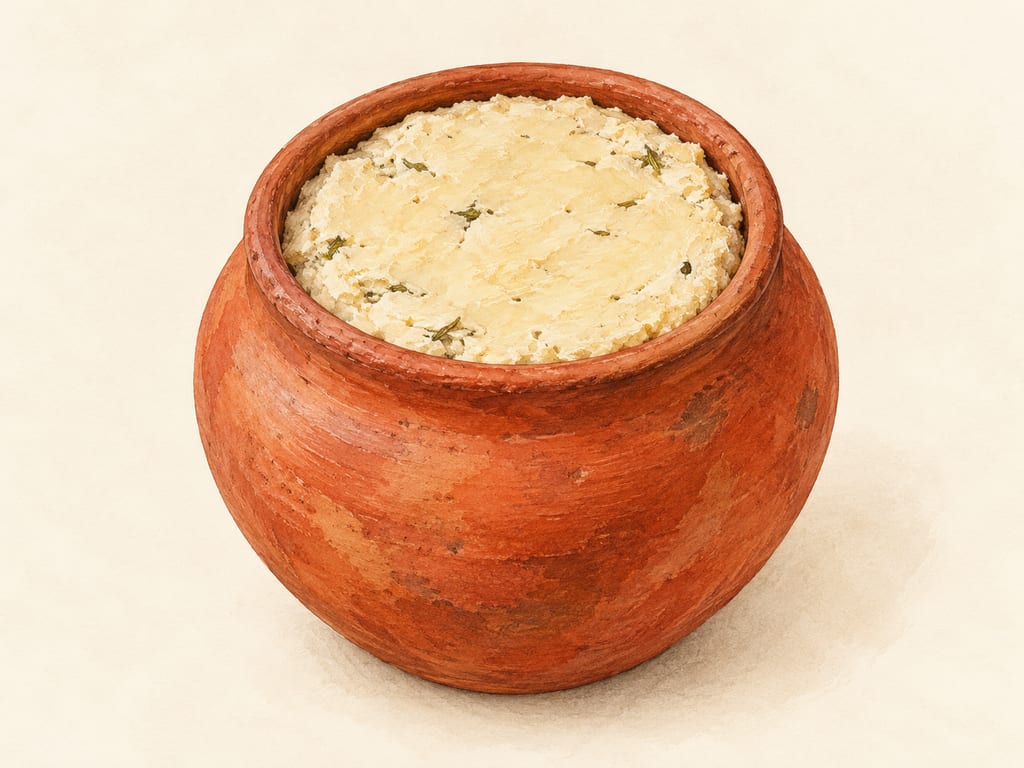
The terracotta motal vessel is a handmade clay pot used to mature the Armenian cheese made in Gegharkunik. The cheese is prepared from goat’s milk, drained and salted, then crumbled by hand and seasoned with mountain herbs before it is packed into the pot. This is not the animal-skin container associated with some other cheeses called motal: the research archive distinguishes Gegharkunik’s terracotta-matured cheese from Azerbaijani motal pendiri in sheep or goat skin.
The reports call the vessel a terracotta pot or bowl and describe it as locally made by hand. A photograph of one example shows a compact, rounded red-clay vessel with a broad opening. The sources do not establish that all motal pots share this exact shape, nor do they give capacity, height, diameter, clay recipe, glaze or firing technique.
Sources for this section
Packing, ash and the seal
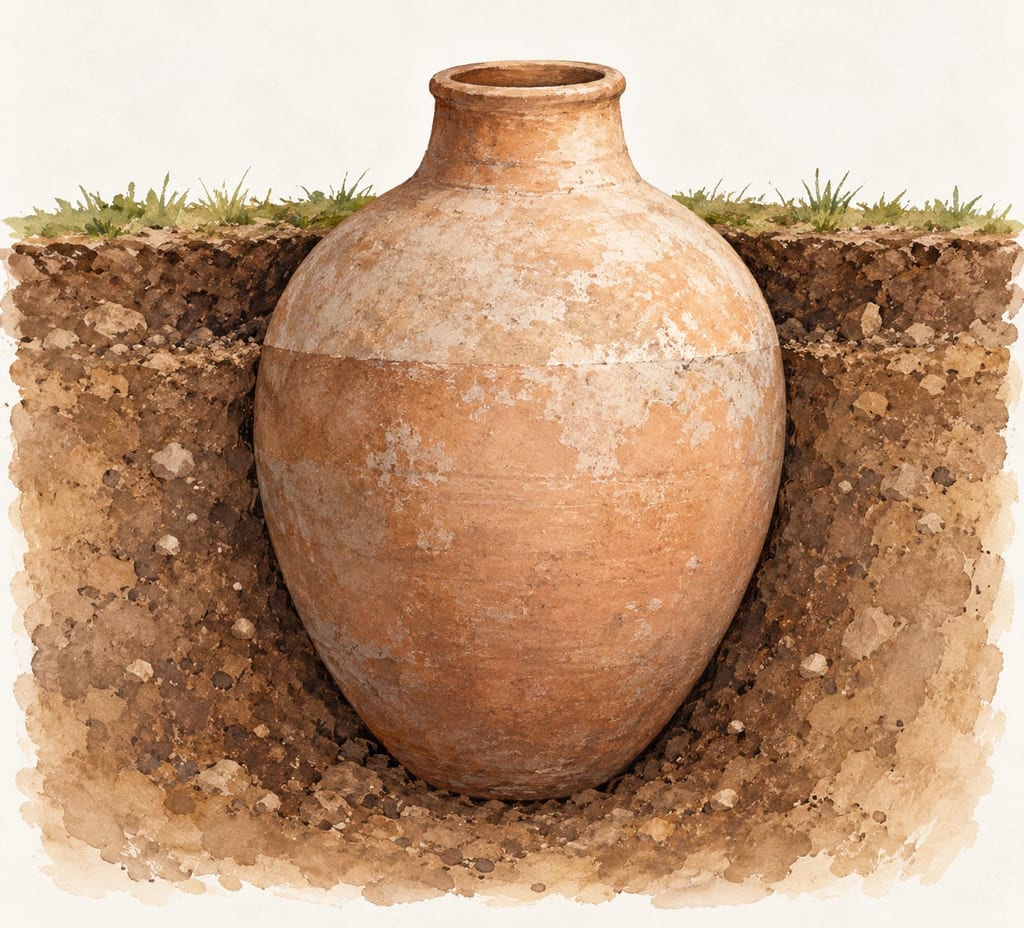
In the Slow Food account, the herb-seasoned curds are poured into terracotta pots and matured for 35 to 50 days. The pots are then sealed with beeswax and placed in cold, dry cellars, turned upside down and left on ashes; the cheese may age for more than six months. A report about a Gegharkunik producer describes a related sequence: the cheese is pressed tightly into handmade bowls, which rest upside down in wood ash for about a month while the ash is refreshed and liquid is removed, then the pot is sealed with beeswax.
The vessel therefore contains the packed curd during maturation and provides a surface for the final wax closure. The producer account says ash absorbs salt water draining from the cheese. Neither source characterizes the clay’s porosity or specifies a measurable temperature, moisture, capacity or seal depth, so those properties should not be inferred from the material alone.
Sources for this section
What the dates do and do not tell us
Slow Food describes terracotta production as one of Armenia’s oldest industries and says the tradition of preserving food in pots reaches back at least 5,000 years. This dates a broad practice, not the surviving design of the motal pot. A 2018 account documents the endangered local craft and its use in a revival of motal production; the evidence does not support a precise origin date for this particular vessel.
The published accounts also describe different ageing details. Slow Food gives 35–50 days in the pot followed by cellar ageing, while the producer’s account describes about a month in ash before sealing and a further period of storage. These records need not describe a single standardized vessel or maturation schedule. No source provides empty-pot cleaning instructions, a commercial supplier, dimensions or capacity.
Sources for this section
History
The Slow Food account describes an age-old motal method and says food preservation in Armenian terracotta pots dates back at least 5,000 years. That broad history does not date this particular motal vessel or prove an uninterrupted lineage for its form. Recent reporting documents locally handmade pots and the revival of the regional cheese process.
Equipment details
CapacityThe sources do not give a capacity.
SizeThe sources do not give dimensions.
PowerNo power The portable pot works without a powered mechanism.
How you get oneBought from a maker Sources describe locally made handmade terracotta pots, but do not identify a current potter, market or purchasing channel.
CareNo cleaning, curing or storage instructions for an empty pot are given in the sources.
Made of
- Terracotta — vessel body
The pot is locally made and handmade; no clay composition, firing method or glaze is specified. - Beeswax — seal
Applied after the cheese has matured in the pot.
Places
Gegharkunik
Traditional use · Region evidenceRegional association only; sources do not name a specific pottery workshop or locality.